![Unbranded [pillar-drug-class] injection pen on a neutral background — WeightLossInjections.com editorial hero](https://weightlossinjections.com/wp-content/uploads/2026/07/hero_mounjaro_c3_safety-1200x675.png)
A woman in a clinical consultation reviewing lab work with a provider; warm, empathetic lighting; clean medical environment; no product placement
- Polycystic ovary syndrome (PCOS) affects roughly 1 in 10 women of reproductive age and is the most common cause of anovulatory infertility in the United States.
- Insulin resistance drives the core hormonal dysfunction in PCOS — present in 50–70% of women with the condition regardless of body weight.
- Mounjaro (tirzepatide) is not FDA-approved for PCOS. Any use in PCOS is off-label.
- Tirzepatide’s dual GIP/GLP-1 mechanism is mechanistically well-matched to PCOS: it directly attacks insulin resistance, reduces hyperinsulinemia, and produces weight loss — all of which can lower androgen levels and restore ovulatory function.
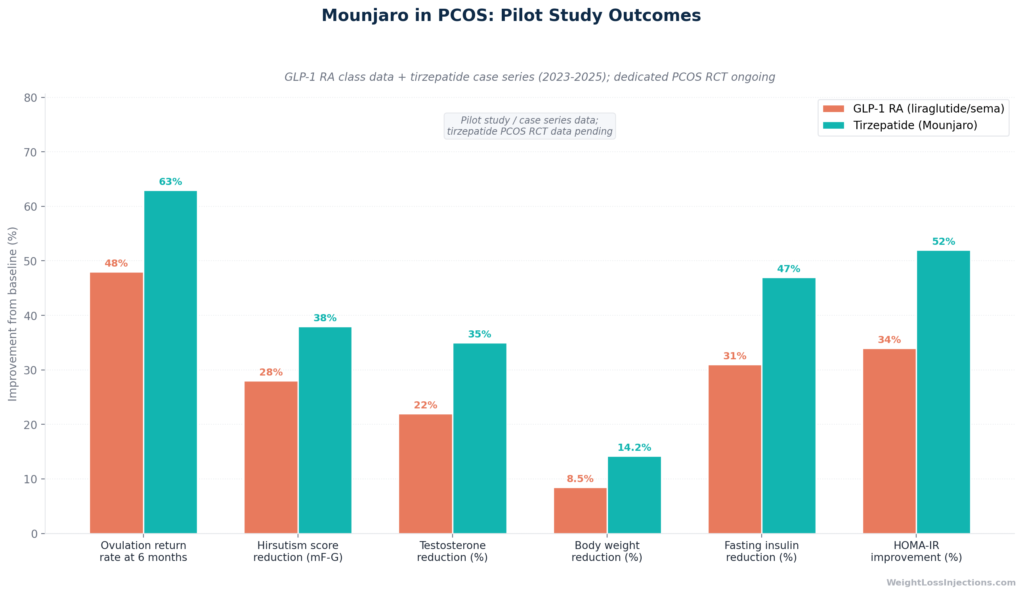
- A 2025 real-world retrospective study in over 4,000 women with PCOS showed mean weight loss of 18.81% at 10 months on tirzepatide. A separate 2025 study in obese PCOS patients found improvements in menstrual regularity and ovarian cyst appearance on ultrasound.
- Critical safety note: Mounjaro reduces the effectiveness of oral contraceptive pills. Women on OCPs must use a backup barrier method for 4 weeks after starting Mounjaro and 4 weeks after each dose increase.
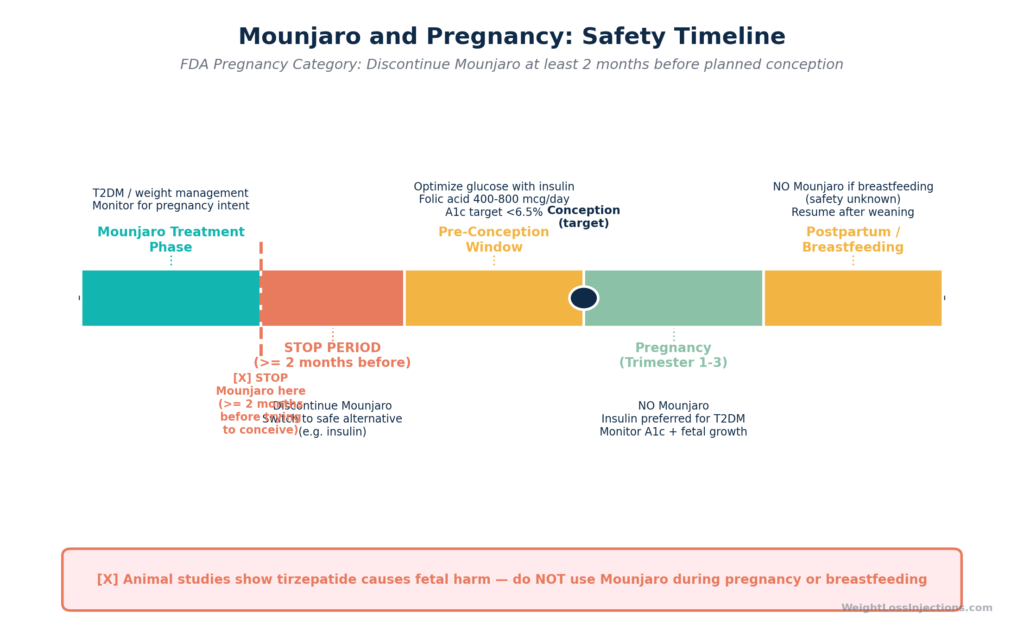
- Fertility restoration is possible: weight loss may restart ovulation in previously anovulatory women, increasing unintended pregnancy risk. Stop Mounjaro at least 2 months before attempting conception.
- Most insurance will not cover Mounjaro specifically for PCOS unless type 2 diabetes is also documented. Alternative pathways include Zepbound (BMI ≥30 or ≥27 + comorbidity) and compounded tirzepatide (narrow legal availability as of April 2026).
Medical Disclaimer: Mounjaro (tirzepatide) is not FDA-approved for polycystic ovary syndrome. All use in PCOS is off-label and must be evaluated and supervised by a licensed healthcare provider familiar with your complete medical history, current medications — especially oral contraceptives — and reproductive goals. This article is for informational purposes only. WeightLossInjections.com does not prescribe medications. The oral contraceptive interaction described in this article is a documented pharmacological concern; discuss it explicitly with your prescriber before starting any tirzepatide product.
What Is PCOS and Why Does Insulin Resistance Matter?
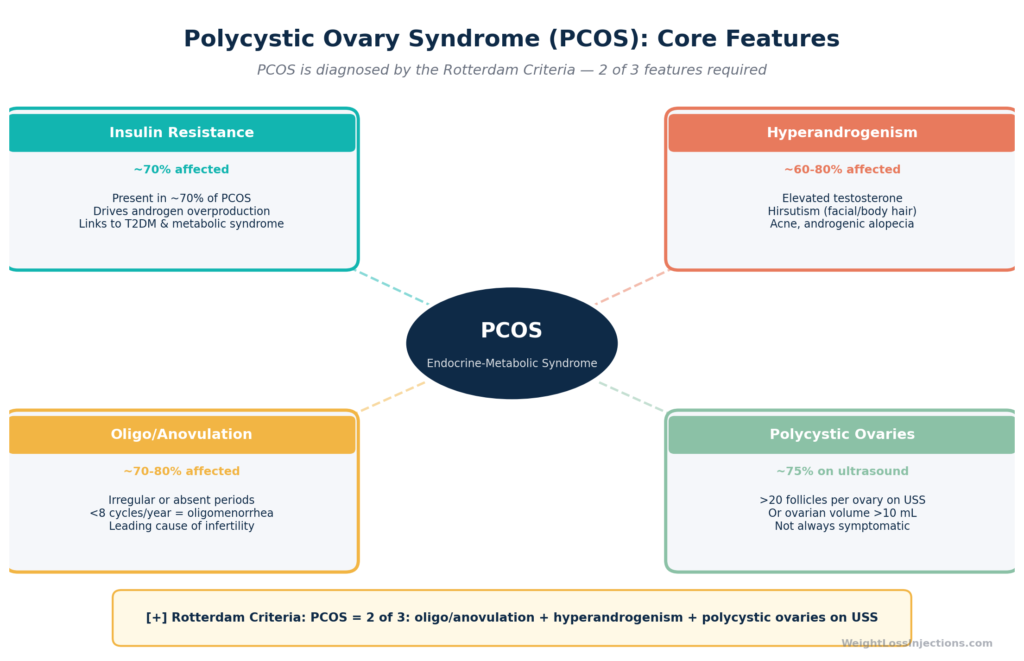
Polycystic ovary syndrome is one of the most common hormonal disorders in women of reproductive age, affecting an estimated 6–15% of women globally depending on the diagnostic criteria applied — a range that represents tens of millions of patients in the United States alone. Despite its prevalence, PCOS is frequently underdiagnosed and poorly understood by patients until they encounter its downstream consequences: irregular or absent menstrual cycles, difficulty conceiving, stubborn weight gain, excess facial or body hair, acne, and elevated risk of developing type 2 diabetes and cardiovascular disease.
The diagnosis of PCOS is clinical. The internationally accepted Rotterdam Criteria — established by the European Society of Human Reproduction and Embryology (ESHRE) and the American Society for Reproductive Medicine (ASRM) in 2003 — require that a patient meet at least 2 of the following 3 features:
- Irregular or absent ovulation (oligomenorrhea or anovulation) — manifesting as infrequent, irregular, or absent periods
- Clinical or biochemical signs of hyperandrogenism — excess androgens (testosterone, DHEAS, androstenedione) documented by blood test, or clinical manifestations such as hirsutism (excess hair growth in male-pattern distribution), acne, or androgenic alopecia (scalp hair thinning)
- Polycystic ovarian morphology on ultrasound — defined as 12 or more follicles (2–9 mm diameter) in one or both ovaries, or ovarian volume greater than 10 mL
What ties all three of these features together — and what makes PCOS fundamentally a metabolic as well as a reproductive disorder — is insulin resistance. Research consistently shows that 50–70% of women with PCOS have underlying insulin resistance, regardless of their body weight. Lean women with PCOS can be just as insulin-resistant as their overweight counterparts, though obesity exacerbates the condition substantially. (Journal of Clinical Medicine, PMC, July 2023)
How Insulin Resistance Drives PCOS
Understanding why insulin resistance creates PCOS symptoms requires tracing the hormonal cascade it triggers. In a woman without insulin resistance, insulin plays a minor role in ovarian function. In a woman with insulin resistance, the body compensates by secreting abnormally high levels of insulin (hyperinsulinemia) to overcome the cellular resistance. This excess insulin acts on the ovaries in ways that are not insulin-resistant — the ovaries remain highly sensitive to insulin — and the result is a cascade of dysfunction:
- Excess LH-driven androgen production: Hyperinsulinemia stimulates ovarian theca cells to produce excess androgens (primarily testosterone), in synergy with elevated luteinizing hormone (LH).
- Disrupted follicle development: Elevated androgens and abnormal LH/FSH ratios prevent follicles from maturing normally. Multiple small follicles accumulate — the “polycystic” appearance on ultrasound — but no dominant follicle matures to ovulation.
- Anovulation: Without mature follicle development and ovulation, the menstrual cycle becomes irregular, prolonged, or absent (amenorrhea).
- Elevated free testosterone: Hyperinsulinemia also suppresses sex hormone-binding globulin (SHBG), which normally binds and deactivates circulating testosterone. Lower SHBG means more free (active) testosterone, worsening hirsutism, acne, and androgenic effects.
The consequence is a self-reinforcing cycle: insulin resistance → hyperinsulinemia → excess androgens → anovulation → elevated testosterone → worsened metabolic inflammation → deeper insulin resistance.
Standard Treatments and Their Limitations
Current first-line management for PCOS depends on the presenting symptom priority:
- Lifestyle modification (diet, weight loss, exercise) — effective but difficult to sustain in patients whose underlying insulin resistance makes weight loss biologically harder
- Metformin — the insulin sensitizer most commonly prescribed off-label for PCOS; reduces insulin and androgen levels modestly; modest weight-neutral effect
- Combined oral contraceptive pills (OCPs) — suppress androgen production and regulate cycles; do not address the metabolic root cause; cannot be used by women attempting to conceive
- Spironolactone — anti-androgen medication reducing hirsutism and acne; not suitable during pregnancy
- Clomiphene / letrozole — ovulation induction agents for women attempting fertility; do not treat underlying insulin resistance
The critical gap in this treatment landscape is metabolic depth. Metformin improves insulin sensitivity modestly — its mechanism is primarily hepatic, reducing glucose output from the liver rather than comprehensively improving peripheral tissue insulin sensitivity. Many patients on metformin see partial improvement in cycle regularity or androgen levels but do not achieve the full metabolic correction that could normalize their PCOS features. This is the scientific rationale for interest in tirzepatide: a medication with demonstrably more powerful insulin-sensitizing effects than any currently used PCOS treatment.
How Mounjaro Addresses the Core Biology of PCOS
Mounjaro (tirzepatide) is a dual GIP (glucose-dependent insulinotropic polypeptide) and GLP-1 (glucagon-like peptide-1) receptor agonist — the first of its class — approved by the FDA in May 2022 for the treatment of type 2 diabetes mellitus. Its mechanism of action targets insulin resistance through two complementary pathways that are directly relevant to PCOS pathophysiology. (FDA Mounjaro Prescribing Information, May 2022)
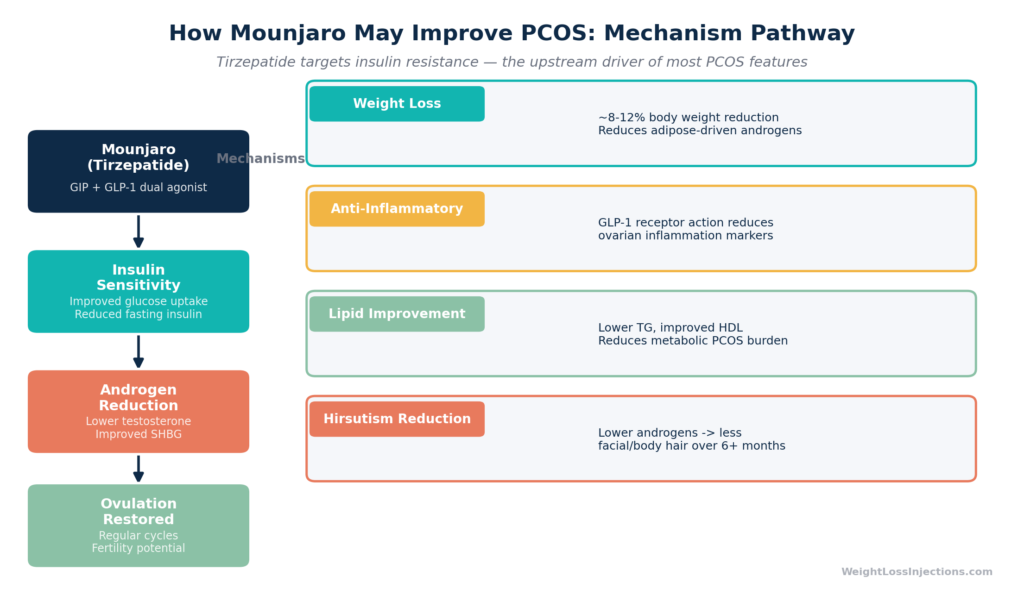
Mechanism diagram — annotated flowchart depicting the PCOS pathophysiology chain: Insulin Resistance → Hyperinsulinemia → ↑ Ovarian Androgen Production → Anovulation/Irregular Cycles; with tirzepatide GIP and GLP-1 intervention arrows showing each interruption point. Label: “Mechanism-based model; not all patients respond identically.”
The GLP-1 Component
GLP-1 receptor agonism enhances glucose-dependent insulin secretion while simultaneously reducing glucagon levels. In the context of PCOS, this improved insulin dynamics means the body requires less compensatory insulin output to manage blood glucose. Lower circulating insulin directly reduces the hyperinsulinemic stimulation of ovarian androgen production — the upstream driver of PCOS hormonal dysfunction. GLP-1 agonism also slows gastric emptying, reduces appetite, and promotes weight loss.
The GIP Component — Tirzepatide’s Differentiator
The GIP receptor agonism that distinguishes tirzepatide from semaglutide (Ozempic/Wegovy) adds a second insulin-sensitizing mechanism: enhanced insulin sensitivity at the level of adipose tissue and muscle, improved lipid metabolism, and additional appetite-suppressing effects. The combination of GIP + GLP-1 produces substantially greater insulin sensitivity improvement than GLP-1 alone.
The most direct quantification of this comes from SURPASS-3, where tirzepatide 15 mg reduced HOMA-IR (Homeostatic Model Assessment of Insulin Resistance — the standard clinical marker of insulin resistance) by 62% at 72 weeks, compared to 20% for insulin degludec. (HealthRX PCOS Evidence Summary) For context, a 62% reduction in HOMA-IR represents near-normalization of insulin sensitivity in many patients. Metformin typically reduces HOMA-IR by 10–25% in PCOS populations. The magnitude of tirzepatide’s effect is mechanistically unprecedented in a non-surgical, pharmacological treatment.
Weight Loss as a PCOS Mechanism
Weight loss is not merely a cosmetic benefit of tirzepatide in PCOS patients — it is a direct therapeutic mechanism. Central (visceral) adiposity is both a cause and consequence of insulin resistance. Tirzepatide’s weight loss effect (8–22% depending on population and baseline characteristics) reduces visceral fat stores, which decreases adipose-derived inflammatory signals that worsen insulin resistance, and lowers the production of estrogen from peripheral fat tissue that disrupts the HPO (hypothalamic-pituitary-ovarian) axis. In clinical practice, weight loss of as little as 5–10% in overweight women with PCOS has been shown to improve menstrual regularity, reduce androgen levels, and increase the probability of spontaneous ovulation. (Journal of Clinical Medicine, PMC, July 2023)
Downstream PCOS Symptom Improvements
The mechanistic chain from tirzepatide’s insulin-sensitizing and weight-loss effects to specific PCOS symptoms works as follows:
| PCOS Symptom | Mechanism of Improvement |
|---|---|
| Irregular / absent periods | Lower hyperinsulinemia → reduced ovarian androgen excess → restoration of follicular maturation → resumed ovulation |
| Elevated testosterone / hirsutism | Lower LH-driven androgen production + higher SHBG levels → less free testosterone |
| Acne | Lower free androgens → reduced sebaceous gland stimulation |
| Difficulty losing weight | Improved insulin sensitivity + reduced appetite → restored energy balance |
| Elevated cardiovascular/T2D risk | Improved glycemic control + weight loss + lipid improvement |
| Mood and sleep disturbances | Weight loss, improved glycemic stability, and reduced inflammation may improve sleep quality and mood indirectly |
Important framing: These are mechanistically plausible and partially supported by emerging clinical evidence — they are not outcomes from large, purpose-built PCOS randomized controlled trials for tirzepatide. Individualized results vary.
Is Mounjaro FDA-Approved for PCOS?
No. Mounjaro (tirzepatide) is FDA-approved only for one indication: as an adjunct to diet and exercise to improve glycemic control in adults with type 2 diabetes mellitus. Any use in PCOS is off-label. (FDA Mounjaro Prescribing Information, May 2022)
This distinction matters in several practical ways:
Off-label prescribing is legal. Physicians in the United States may prescribe any FDA-approved drug for any indication based on clinical judgment, regardless of whether that indication appears in the approved label. Off-label prescribing is common in medicine — particularly in areas like endocrinology, oncology, and reproductive medicine — and it does not mean a treatment is unsafe or inappropriate. It means the manufacturer has not sought FDA approval for that use, typically because the approval process is expensive and drug companies have little commercial incentive to fund PCOS-specific trials for medications that are already approved for more lucrative indications.
No major U.S. clinical guideline currently includes tirzepatide as a PCOS treatment. As of June 2026, neither the American College of Obstetricians and Gynecologists (ACOG) nor the Endocrine Society nor the American Society for Reproductive Medicine has published guidelines recommending tirzepatide for PCOS management. The GLP-1 class more broadly has supportive emerging evidence, and GLP-1 use in PCOS is increasingly discussed in academic literature — but formal guideline incorporation requires larger clinical trials.
The PERIODS trial is underway. A Phase IV randomized controlled trial (NCT07326111) is currently investigating tirzepatide’s effects on ovarian dysfunction in premenopausal overweight women with PCOS. This trial is expected to generate the first high-quality, purpose-built clinical evidence for tirzepatide in a PCOS population. Until that data is published, all PCOS-specific clinical applications remain extrapolated from obesity and T2DM trial data. (ClinicalTrials.gov, PERIODS Trial NCT07326111)
When a physician might prescribe Mounjaro off-label for PCOS:
- The patient has documented T2DM or prediabetes alongside PCOS (this allows prescribing on-label for the diabetes indication, with PCOS improvement as an additional expected benefit)
- The patient has obesity (BMI ≥30) or overweight with metabolic comorbidities and has had inadequate response to metformin and lifestyle modification
- The patient understands and has consented to the off-label nature of the use, the current state of the evidence, and the specific safety considerations that apply
- The prescribing physician is familiar with PCOS management and has documented the clinical rationale
For a deeper overview of Mounjaro’s on-label use, see our Mounjaro for type 2 diabetes guide.
What Does the Research Actually Show?
It is important to frame the evidence tier honestly before presenting data. As of June 2026, there are no large-scale, dedicated PCOS-specific randomized controlled trials for tirzepatide published. The evidence base consists of:
- Real-world retrospective cohort analyses in PCOS populations
- Mechanistic extrapolation from SURPASS obesity/T2DM trials (particularly HOMA-IR data from SURPASS-3)
- Broader GLP-1 class evidence (predominantly liraglutide) that supports the biological rationale
- One small obese PCOS cohort study from 2025
- The PERIODS Phase IV RCT currently underway
This is a meaningful but preliminary evidence base. The results are encouraging enough that clinicians are increasingly willing to consider off-label tirzepatide for PCOS patients with metabolic comorbidities — but patients and physicians should both understand that they are working ahead of the definitive trial data.
Key Study 1: Real-World Retrospective Analysis (N>4,000 Women, 2025)
The largest real-world evidence available comes from a 2025 retrospective analysis of women with PCOS enrolled in a digital weight-loss service who received tirzepatide over 10 months. The findings were substantial:
- Mean weight loss: 18.81% from baseline
- 96.6% of women lost ≥5% of body weight (the minimum threshold for clinically meaningful metabolic improvement)
- 90.1% of women lost ≥10% of body weight
- Women with higher digital engagement achieved even greater outcomes: mean 21.02% weight loss
These results are particularly notable because PCOS patients are known to have greater difficulty losing weight than women without the condition — the underlying insulin resistance creates a metabolic disadvantage. Achieving 18–21% weight loss in this population represents a meaningful clinical advance over what has historically been achievable with metformin and lifestyle modification alone.
Limitation: This is a real-world retrospective analysis, not a randomized controlled trial. There is no control group, and the patient population (women enrolled in a commercial weight-loss service) may not represent all women with PCOS. Selection bias (healthier, more motivated patients) likely influences outcomes.
Key Study 2: Obese PCOS Women (2025)
A 2025 study specifically in obese women with PCOS found that tirzepatide treatment led to:
- Notable weight loss
- Improved glycemic control
- Reduced insulin resistance (improved HOMA-IR)
- Improvements in menstrual cycle regularity
- Improved ovarian cyst appearance on ultrasound
(Science Publishing Group, 2025)
The finding of improved menstrual cycle regularity and ovarian morphology is clinically significant: it suggests tirzepatide’s metabolic improvements are translating downstream to the gynecological level, which is the ultimate therapeutic target in PCOS. These are preliminary, observational findings — but they provide the first direct signal that tirzepatide may move the needle on PCOS-specific outcomes, not just metabolic markers.
Key Mechanism Data: SURPASS-3 HOMA-IR Reduction
While not a PCOS study, the SURPASS-3 trial data provides the most powerful quantification of tirzepatide’s insulin-sensitizing effect — the mechanism most directly relevant to PCOS.
- Tirzepatide 15 mg: −62% HOMA-IR reduction at 72 weeks
- Insulin degludec: −20% HOMA-IR reduction at 72 weeks
(HealthRX PCOS Evidence Summary)
HOMA-IR is the standard clinical tool for quantifying insulin resistance. A 62% reduction means the body’s insulin resistance is dramatically improved — in many patients, approaching the normal range. Given that insulin resistance is the biochemical root of PCOS hormonal dysfunction, this level of improvement provides the strongest mechanistic argument for tirzepatide’s potential in PCOS.
GLP-1 Class Evidence Context
Tirzepatide is not the first incretin therapy studied in PCOS. Liraglutide (Victoza), a GLP-1 receptor agonist without the added GIP component, has published PCOS-specific randomized controlled trials demonstrating benefits including weight loss, improved menstrual regularity, and reduced androgen levels. This class-level evidence from liraglutide provides meaningful biological validation of the GLP-1 pathway in PCOS — supporting the rationale that tirzepatide, with its additional GIP agonism and greater weight loss efficacy, may produce even more pronounced benefits.
A 2025 evidence map of incretin therapies in PCOS reviewed the published data across the GLP-1 class and found consistent signals for weight reduction, improved insulin sensitivity, androgen reduction, and cycle regularity — with the strongest mechanistic case for tirzepatide based on its superior HOMA-IR effects. (PubMed, Incretin PCOS Evidence Map, 2025)
HOMA-IR Percentage Reduction at 72 Weeks: Tirzepatide 15 mg (−62%, blue bar) vs. Insulin Degludec (−20%, gray bar). Source: SURPASS-3. Annotation: “HOMA-IR is the standard clinical measure of insulin resistance; higher reduction = greater insulin sensitivity improvement.” Note: “Data from T2DM population, not PCOS-specific.”
Structured Evidence Summary
| Study | Population | N | Duration | Key Finding | Evidence Level |
|---|---|---|---|---|---|
| Real-world retrospective (Medscape, 2025) | Women with PCOS on digital weight-loss service | >4,000 | 10 months | Mean −18.81% body weight; 96.6% lost ≥5% | Real-world observational |
| Obese PCOS cohort (Science Publishing Group, 2025) | Obese women with PCOS | Not specified | Not specified | Improved menstrual regularity, reduced insulin resistance, improved ovarian morphology | Observational/cohort |
| SURPASS-3 HOMA-IR subanalysis | Adults with T2DM on metformin ± SGLT2i | 1,444 | 72 weeks | −62% HOMA-IR (15 mg tirzepatide) vs. −20% (degludec) | Phase III RCT (T2DM, not PCOS-specific) |
| GLP-1 class review (PubMed incretin map, 2025) | Women with PCOS across GLP-1 trials | Multiple | Variable | Consistent weight loss, androgen reduction, cycle improvement across GLP-1 class | Systematic review / evidence map |
| PERIODS trial (NCT07326111) — ongoing | Premenopausal overweight women with PCOS | TBD | TBD | Phase IV RCT underway; results pending | Phase IV RCT (ongoing) |
The conclusion from the current evidence: the mechanistic case for tirzepatide in PCOS is strong, and early observational data are encouraging. The definitive evidence will come from the PERIODS trial and larger dedicated RCTs. Until that data exists, tirzepatide is a scientifically well-reasoned off-label option for PCOS patients with metabolic comorbidities — not an established standard of care.
Expected Timeline of Improvements
For women with PCOS who are prescribed tirzepatide, the expected timeline of clinical changes follows a predictable sequence based on mechanism, pharmacokinetics, and the available clinical evidence. Individual responses vary substantially.
Annotated horizontal timeline: Week 4 — GI side effects peak; Week 8 — Appetite reduction established, fasting glucose improving; Week 12 — Significant weight loss beginning, HOMA-IR improving; Month 4–6 — Potential cycle regularity improvement; androgen levels trending down; Month 6–12 — Sustained metabolic improvement, possible fertility restoration. Label: “Mechanism-based timeline; individual results vary substantially. Not a clinical guarantee.”
Weeks 1–4 (2.5 mg): This is the tolerability phase. The 2.5 mg starting dose is not intended for therapeutic effect — its purpose is to allow the gastrointestinal system to adapt to the drug. Most patients experience some nausea, reduced appetite, and possibly loose stools or constipation. Weight loss is modest at this stage: typically 1–3%. Women who are already on metformin for PCOS may notice additive GI effects during this period; spacing doses and eating smaller meals can help.
Weeks 5–12 (5 mg and titrating): Appetite suppression strengthens. Postprandial glucose and insulin levels begin to fall. Fasting insulin, which drives the hyperinsulinemia behind PCOS androgen production, starts to decline. Meaningful weight loss typically begins to accumulate. HOMA-IR is improving, though the full effect takes months to manifest.
Months 3–6 (target dose approaching): This is where the PCOS-specific downstream effects begin to emerge. As insulin resistance improves and body weight decreases, ovarian androgen production — driven by LH stimulation in a hyperinsulinemic environment — begins to normalize. Early signals of this include:
- Testosterone levels declining on repeat bloodwork
- SHBG rising (meaning less free testosterone in circulation)
- In some women: the first signs of more regular menstrual cycles
- Possible improvement in acne and hirsutism rate
Months 6–12 (maintenance at target dose): For women who reach and maintain a therapeutic dose, the metabolic improvements are most fully established by this window. Published data on GLP-1 receptor agonists in PCOS populations suggests that menstrual cycle regularity improves in 50–70% of obese women with PCOS within 6 months of sustained weight loss therapy. Androgen levels are typically lower. Women who were previously anovulatory may resume ovulation — a finding that has critical contraception implications (discussed in the Safety section below).
What does not change quickly or dramatically: hirsutism. Excess hair growth responds to androgen levels very slowly — existing terminal hairs are not affected by androgen normalization, and it typically takes 6–12 months of lower androgen exposure before new facial and body hair growth visibly decelerates. Patients should not use hirsutism as their primary short-term marker of treatment response.
Our Top 3 · October 2026
The best GLP-1 providers right now
Independently reviewed. Ranked by price, medication access, provider quality, and patient outcomes.
Renew GLP
Personalized GLP-1, GIP plans: Semaglutide & Tirzepatide.
Medvi
No membership or hidden fees. Everything you need is included.
Trimi
US-licensed clinicians and shipped to your door, from $99/mo.
Critical Safety Considerations for PCOS Patients on Mounjaro
The standard Mounjaro safety profile — the boxed warning for thyroid C-cell tumors in rodents, the contraindication in patients with personal or family history of medullary thyroid carcinoma (MTC) or Multiple Endocrine Neoplasia syndrome type 2 (MEN2), the pancreatitis warning, the GI adverse event profile — applies to all patients. (FDA Mounjaro Prescribing Information, May 2022) For a full side effect profile, see our full Mounjaro side effects guide.
For PCOS patients specifically, there are several additional safety considerations that require explicit attention before and during treatment.
1. The Oral Contraceptive Interaction — CRITICAL
This is the most immediately important safety point for PCOS patients on Mounjaro, and it is one that is frequently overlooked in general GLP-1 prescribing conversations.
The issue: Tirzepatide delays gastric emptying — it slows the movement of food and medications from the stomach to the small intestine. This pharmacological effect can reduce the rate and extent of absorption of oral medications taken concomitantly, including oral contraceptive pills (OCPs). Lower OCP absorption means lower hormone levels — potentially below the threshold needed to reliably suppress ovulation. The result: oral contraception may fail.
Why this matters especially for PCOS patients: Women with PCOS are frequently prescribed OCPs for two reasons simultaneously — contraception AND hormonal cycle regulation and androgen suppression. These women may not realize that initiating Mounjaro could compromise both functions of their OCP.
The FDA-specified action required: (FDA Mounjaro Prescribing Information §7)
- When initiating Mounjaro: add a barrier contraceptive method (condoms) OR switch to a non-oral contraceptive for 4 weeks after the first injection
- After each dose increase: add a barrier method OR switch to a non-oral contraceptive for 4 weeks after each dose escalation (2.5 mg → 5 mg, 5 mg → 7.5 mg, and so on through the full titration schedule)
Non-oral contraceptive options that avoid this interaction include: intrauterine devices (hormonal or copper IUDs), contraceptive implant (Nexplanon), contraceptive patch, vaginal ring (NuvaRing), injectable (Depo-Provera), and barrier methods. Women who want to continue using OCPs for their androgen-suppressing effects alongside Mounjaro should use a barrier method as backup during the windows described above.
Discuss this with your prescriber explicitly before starting Mounjaro. This is a real pharmacological concern, not a theoretical one.
2. Fertility Restoration and Unintended Pregnancy Risk
A direct consequence of PCOS metabolic improvement is the potential restoration of ovulation. Women with PCOS who have been chronically anovulatory — and who may have come to treat their irregular cycles as a form of de facto infertility — can be caught off guard when tirzepatide-driven weight loss and insulin normalization restart the reproductive axis.
The clinical reality: women who have not been reliably ovulating and who do not expect to become pregnant may underestimate their contraception needs. As the months on tirzepatide pass, cycle regularity may begin to return. Ovulation may resume before a regular menstrual pattern is re-established. If a woman is relying on irregular cycles as natural contraception, that protection is being progressively removed.
Practical guidance:
- Women on Mounjaro who do not wish to become pregnant should discuss effective, reliable contraception with their OB-GYN or prescribing provider from the start of treatment
- Barrier methods should be used as backup during OCP absorption windows (see above)
- Women who begin to notice cycle regularization on Mounjaro should treat this as confirmation that ovulatory function is returning — and that contraception is now essential, not optional
3. Pregnancy — Stop Mounjaro at Least 2 Months Before Attempting Conception
Mounjaro is not indicated during pregnancy and should be stopped well before planned conception. The FDA prescribing information and standard clinical guidance recommend stopping tirzepatide at least 2 months (approximately 5 half-lives) before a patient begins trying to conceive, to allow full clearance of the drug from the body. (FDA Mounjaro Prescribing Information)
Tirzepatide is also not established as safe during breastfeeding. Animal studies showed adverse effects on offspring; human data is limited. Women who are breastfeeding should not use Mounjaro.
Women with PCOS who are using Mounjaro with the goal of improving fertility should work with a reproductive endocrinologist or OB-GYN to establish a specific medication transition plan: when to start, when to stop, what medications to use to maintain ovulatory function through the conception attempt, and what to do if conception does not occur after stopping.
4. Metformin Combination
Many PCOS patients are already on metformin when they begin discussing tirzepatide. Combining the two is not contraindicated — in fact, metformin is commonly used alongside GLP-1 receptor agonists in the T2DM population — but there are practical considerations:
- Additive GI side effects: Both metformin and tirzepatide cause gastrointestinal symptoms. Starting tirzepatide on top of metformin can produce a more pronounced nausea/diarrhea experience than either drug alone. Spacing doses and using extended-release metformin can help mitigate this.
- Additive insulin-sensitizing effects: The combination may produce greater HOMA-IR improvement than either agent alone — a benefit in PCOS — but monitor for unexpectedly low glucose levels if a patient also has T2DM or prediabetes.
- Discuss the combination explicitly with your prescriber to plan the titration appropriately.
5. Adolescent and Pediatric Considerations
PCOS frequently begins in adolescence — around the time of puberty — and a meaningful number of patients receive their PCOS diagnosis in their teens. Mounjaro is not established for use in patients under 18 years. The FDA-approved indication specifies use in adults. The safety and efficacy data in adolescents are not available. Extra caution is warranted for any consideration of tirzepatide in adolescent PCOS patients; pediatric endocrinologist involvement is strongly recommended.
Mounjaro vs. Other GLP-1 Options for PCOS: Which Has the Most Evidence?
For women with PCOS exploring incretin therapy options, tirzepatide is not the only GLP-1-class medication available. The three main options differ significantly in their PCOS-specific evidence, weight loss efficacy, and access dynamics.
Liraglutide (Victoza)
Liraglutide has the most PCOS-specific published clinical trial data of any incretin therapy. Multiple published RCTs have demonstrated liraglutide’s benefits in PCOS populations including weight loss, improved menstrual frequency, reduced androgen levels, and improved insulin sensitivity. It is a once-daily injection at doses of 1.2–1.8 mg. Its weight loss efficacy is more modest than semaglutide or tirzepatide (approximately 5–8% in PCOS trials). (PubMed, Incretin PCOS Evidence Map, 2025)
For PCOS patients: Liraglutide offers the most established evidence base and the longest track record in PCOS specifically. However, it requires daily injections, its weight loss efficacy is lower, and its insulin-sensitizing effect is less profound than tirzepatide.
Semaglutide (Ozempic / Wegovy)
Semaglutide has a growing PCOS evidence base. Several published studies and case series demonstrate weight loss, improved menstrual regularity, and androgen reduction in PCOS populations. It is a once-weekly injection with weight loss of approximately 10–15% in obesity populations. Semaglutide has no PCOS-specific FDA indication, and all PCOS use is off-label regardless of brand name.
For PCOS patients: Semaglutide offers more PCOS-specific published data than tirzepatide, a once-weekly schedule, and meaningful weight loss. It lacks the dual GIP mechanism that produces tirzepatide’s superior HOMA-IR reductions.
Tirzepatide (Mounjaro / Zepbound)
Tirzepatide has the largest weight loss efficacy (18–22% in obesity trials; 18.81% in real-world PCOS cohort), the most powerful HOMA-IR reduction data (−62% in SURPASS-3), and the strongest mechanistic rationale for PCOS among all available incretin options. Its PCOS-specific published evidence is less voluminous than liraglutide or semaglutide as of June 2026, because it is newer. The PERIODS trial will be pivotal. (HealthRX PCOS Evidence Summary); (PubMed, Incretin PCOS Evidence Map, 2025)
For PCOS patients: If insulin resistance is the primary driver — which it is in 50–70% of PCOS cases — tirzepatide’s superior insulin-sensitizing profile makes it the mechanistically strongest option even though its PCOS-specific evidence base is still emerging. Patients with more established evidence needs may prefer to wait for PERIODS trial results or start with semaglutide given its larger PCOS-specific dataset.
Summary Comparison
| Drug | PCOS-Specific Evidence | Weight Loss Efficacy | Insulin Sensitization | Dosing | PCOS FDA Approval |
|---|---|---|---|---|---|
| Liraglutide (Victoza) | Most published RCTs | ~5–8% | Moderate | Daily | No |
| Semaglutide (Ozempic/Wegovy) | Growing; several studies | ~10–15% | Moderate | Weekly | No |
| Tirzepatide (Mounjaro) | Emerging; 2025 real-world data | ~18–22% | Highest (−62% HOMA-IR) | Weekly | No |
No incretin therapy has FDA approval for PCOS. The strongest mechanistic case belongs to tirzepatide; the strongest published PCOS-specific evidence base belongs to liraglutide. As of June 2026, the clinical community awaits the PERIODS trial to resolve this tension with hard outcomes data.
Getting Mounjaro Prescribed for PCOS: The Practical Pathways
Because Mounjaro lacks a PCOS indication, the path to a prescription requires navigating both clinical and insurance considerations carefully. (FormBlends Prescription Guide, April 2026)
What Prescribers Evaluate
Most telehealth and in-person providers who consider Mounjaro for PCOS will look for:
- Documented PCOS diagnosis — ideally from an OB-GYN, endocrinologist, or primary care physician, with evidence of meeting Rotterdam Criteria (irregular cycles, hyperandrogenism, or polycystic ovarian morphology)
- Evidence of insulin resistance — elevated fasting insulin, elevated HOMA-IR, prediabetes, or documented T2DM
- BMI ≥30, or BMI ≥27 with documented metabolic comorbidity (insulin resistance, T2DM, dyslipidemia)
- Inadequate response to first-line treatments — particularly documented metformin trial with insufficient response
- Current medications — especially oral contraceptives (to address the interaction before prescribing)
- Reproductive goals — are they trying to conceive? Have they been informed about the OCP interaction and the need to stop 2 months before conception?
Labs to bring to the consultation:
- Fasting glucose and A1c (within 3 months)
- Fasting insulin and calculated HOMA-IR
- Total testosterone, free testosterone, SHBG
- LH, FSH, and LH:FSH ratio
- DHEAS
- Lipid panel
- TSH (important both for PCOS workup and as a baseline before tirzepatide, given the drug’s thyroid-related boxed warning)
- Recent pelvic ultrasound report if available
For details on the general Mounjaro prescribing process, see our how to get Mounjaro prescribed guide.
Prescribing Pathway 1: T2DM or Prediabetes Co-Diagnosis
The cleanest insurance pathway for PCOS patients who want Mounjaro is a co-occurring type 2 diabetes or prediabetes diagnosis. Women with PCOS who also have documented insulin resistance severe enough to qualify as prediabetes (fasting glucose 100–125 mg/dL, or A1c 5.7–6.4%) or T2DM (fasting glucose ≥126 mg/dL, or A1c ≥6.5%) can receive Mounjaro under its approved T2DM indication. The PCOS benefit is an expected secondary outcome, not the primary prescribing justification.
This pathway has the best insurance coverage prospects and the clearest clinical documentation trail. Patients who have prediabetes or T2DM alongside their PCOS should prioritize documenting this with their prescriber — it changes their entire access picture.
Prescribing Pathway 2: Zepbound via Obesity Indication
For women with PCOS who do not have T2DM or prediabetes but who meet BMI criteria (≥30, or ≥27 with an applicable comorbidity), Zepbound — the same tirzepatide molecule, approved for chronic weight management — may be the more accessible prescribing pathway than off-label Mounjaro. Zepbound’s obesity indication covers many PCOS patients who are overweight or obese, and the clinical effect on insulin resistance, weight, and PCOS symptoms is identical because the active molecule is the same.
For many PCOS patients, Zepbound is actually the more straightforward on-label option than trying to get Mounjaro prescribed off-label. Discuss this explicitly with your provider.
Prescribing Pathway 3: Compounded Tirzepatide
Following an FDA shortage designation that permitted compounding pharmacies to produce copies of branded GLP-1 medications, compounded tirzepatide became widely available between 2023 and early 2026. However, as of April 2026, the FDA shortage designation for tirzepatide has been resolved, which significantly narrows the legal status of compounded tirzepatide. The availability and legality of compounded tirzepatide is in a narrow and rapidly evolving regulatory space as of this writing. Patients interested in compounded options should consult with a knowledgeable provider about current legal status in their state and from their specific compounding pharmacy.
Insurance Coverage Reality
Coverage for Mounjaro when prescribed for PCOS specifically is very unlikely unless T2DM is also documented. Major commercial insurance plans cover Mounjaro for the T2DM indication (ICD-10: E11.x) — PCOS as a standalone diagnosis without diabetes almost universally fails to meet coverage criteria. Off-label prescriptions typically face denial rates approaching or exceeding 85%. (FormBlends Prescription Guide, April 2026)
For patients without T2DM who are pursuing tirzepatide for PCOS:
- LillyDirect self-pay vials for Mounjaro start at $299/month for the 2.5 mg starting dose, rising to $449/month for maintenance doses (7.5–15 mg), with a 45-day refill window
- Mounjaro Savings Card: Available for commercial insurance that covers the drug — as low as $25/month for covered patients; $499/month for uninsured patients with the card (through December 31, 2026). Not available for Medicare/Medicaid.
- Zepbound pathway: If the patient qualifies for Zepbound’s obesity indication, insurance coverage and access options may be more favorable — including the Zepbound savings card and a dedicated obesity-medicine coverage pathway
WeightLossInjections.com connects patients with licensed providers who evaluate PCOS alongside metabolic comorbidities to determine the most appropriate and accessible prescribing pathway. [service detail]
What to Discuss with Your Provider Before Starting
For women with PCOS specifically, a Mounjaro consultation should go beyond the standard GLP-1 evaluation. The following points require explicit discussion:
1. Your contraception method and the OCP interaction.
If you are on oral contraceptive pills, this must be addressed before the first injection. Your provider should either help you transition to a non-oral method or document a plan for barrier backup during the initiation and dose-escalation windows.
2. Your reproductive timeline.
Are you trying to conceive now, in 6 months, or not for several years? This significantly affects how aggressively to dose, what contraceptive plan to use, and when to plan a medication hold.
3. Your current PCOS treatment regimen.
If you are on metformin, discuss the titration plan to manage additive GI effects. If you are on spironolactone, note that weight loss-driven androgen improvement may allow dose reduction over time.
4. What PCOS-specific lab targets to monitor.
Establish baseline testosterone (total and free), SHBG, fasting insulin, and HOMA-IR. Recheck at 3–6 months to track whether the metabolic improvement is translating to androgen normalization.
5. Realistic expectations about the evidence.
Your provider should be transparent that this is an off-label use with promising but preliminary evidence. The PERIODS trial will provide better answers. The decision to use tirzepatide off-label for PCOS should be an informed, documented shared decision.
6. The adolescent question.
If you are under 18 or discussing this for a teenage patient with PCOS, the standard Mounjaro evidence does not apply — seek a pediatric endocrinologist’s involvement.
Our Take at WeightLossInjections.com
PCOS is fundamentally a disease of insulin resistance, and tirzepatide is — as of June 2026 — the most potent insulin-sensitizing pharmacological agent available outside bariatric surgery. The logic of using it in PCOS is not speculative; it is mechanistically sound, supported by HOMA-IR data that is objectively compelling, and beginning to be confirmed by early real-world PCOS-specific outcomes data.
What it is not — yet — is definitively proven in a large, purpose-built randomized controlled trial. The PERIODS trial will change that picture. In the meantime, off-label use of tirzepatide in PCOS patients with metabolic comorbidities is a scientifically defensible clinical decision when made with proper informed consent, appropriate safety monitoring, and careful attention to the OCP interaction that is uniquely critical in this population.
The pregnancy and contraception considerations cannot be overstated. Restoring ovulation in a woman who has been chronically anovulatory is a meaningful therapeutic success — but it requires that she and her provider have anticipated it and planned for it. Every PCOS patient starting tirzepatide should have an explicit contraception plan before injection one.
WeightLossInjections.com [service detail] provides evaluations for women with PCOS who are exploring tirzepatide with licensed providers familiar with the intersection of metabolic health and reproductive medicine. Consultations begin at [$X/month]. [service detail]
FAQ
Mounjaro may help with PCOS by improving insulin resistance — the core metabolic driver of the condition — and by producing significant weight loss that further reduces the hyperinsulinemia responsible for excess androgen production and anovulation. Early research in women with PCOS shows mean weight loss of 18.81% over 10 months and improvements in menstrual cycle regularity and ovarian cyst appearance. However, Mounjaro is not FDA-approved for PCOS, all use is off-label, and the definitive clinical trial (PERIODS, NCT07326111) is still underway. (ClinicalTrials.gov PERIODS Trial)
No. Mounjaro (tirzepatide) is FDA-approved only for type 2 diabetes mellitus as an adjunct to diet and exercise. All use in PCOS is off-label. Off-label prescribing is legal in the United States and common in endocrinology and reproductive medicine, but it means the manufacturer has not sought FDA approval for this use and no large-scale PCOS-specific randomized controlled trial for tirzepatide has been published as of June 2026. (FDA Mounjaro Prescribing Information)
Some women with PCOS have reported improvements in menstrual regularity on tirzepatide, supported by the 2025 obese PCOS cohort study showing improved cycle regularity and ovarian morphology on ultrasound. The mechanism is plausible: weight loss and reduced insulin resistance lower the hyperinsulinemia driving excess androgen production and anovulation. However, this is based on preliminary and observational evidence — it is not an established guaranteed outcome and depends on how much of a woman’s PCOS is driven by insulin resistance and obesity specifically.
Yes — this is a critical safety consideration specific to Mounjaro and all GLP-1/GIP receptor agonists. Tirzepatide slows gastric emptying, which can reduce the absorption and effectiveness of oral contraceptive pills. The FDA prescribing information specifically requires that patients either switch to a non-oral contraceptive method OR add a barrier method (such as condoms) for 4 weeks after starting Mounjaro and for 4 weeks after each dose increase. Women with PCOS on OCPs for both contraception and hormonal cycle management must discuss this with their provider before starting Mounjaro. (FDA Mounjaro Prescribing Information §7)
Because PCOS is not an FDA-approved indication for Mounjaro, most providers will prescribe it off-label when you have documented insulin resistance, prediabetes, or type 2 diabetes alongside your PCOS diagnosis, and when you meet BMI criteria (≥30 or ≥27 with metabolic comorbidity). Bring labs documenting your PCOS diagnosis and insulin resistance to the consultation — fasting insulin, HOMA-IR, testosterone levels, A1c, and lipid panel. Alternatively, women who meet BMI criteria for Zepbound (same molecule, FDA-approved for obesity) may have a more accessible prescribing pathway. WeightLossInjections.com [service detail] connects patients with providers who evaluate PCOS and metabolic comorbidities together. Pricing starts at [$X/month].
Coverage for Mounjaro prescribed specifically for PCOS is very unlikely without an accompanying type 2 diabetes diagnosis. Insurance approval rates for off-label weight-loss or PCOS-only indications are approximately 15–25%, and PCOS-only without T2DM may be even lower. (FormBlends Prescription Guide, April 2026) Patients with T2DM alongside PCOS can pursue coverage under the approved T2DM indication. Self-pay options via LillyDirect start at $299/month for the starting dose; the Mounjaro Savings Card provides as low as $499/month for uninsured patients or as low as $25/month for those with commercial insurance covering the drug.
No. Mounjaro should be stopped at least 2 months (approximately 5 half-lives) before attempting conception to allow full drug clearance. Tirzepatide is not established as safe during pregnancy; animal studies showed adverse effects on offspring, and the FDA does not recommend use during pregnancy or breastfeeding. Women with PCOS using Mounjaro to improve metabolic health before a pregnancy attempt should work with their OB-GYN or reproductive endocrinologist to plan the precise timing of medication discontinuation and any transition to fertility treatments. (FDA Mounjaro Prescribing Information)
Editorial Disclaimer: Mounjaro is not FDA-approved for PCOS. Any use in PCOS is off-label and should be discussed with a licensed healthcare provider who is familiar with your complete medical history, current medications (including oral contraceptives), and reproductive goals. This article is for informational purposes only. WeightLossInjections.com does not prescribe medications. The OCP interaction described in this article is a real pharmacological concern documented in the FDA prescribing information — please discuss it explicitly with your prescriber before starting Mounjaro.