![Unbranded [pillar-drug-class] injection pen on a neutral background — WeightLossInjections.com editorial hero](https://weightlossinjections.com/wp-content/uploads/2026/07/hero_mounjaro_c3_safety-1200x675.png)
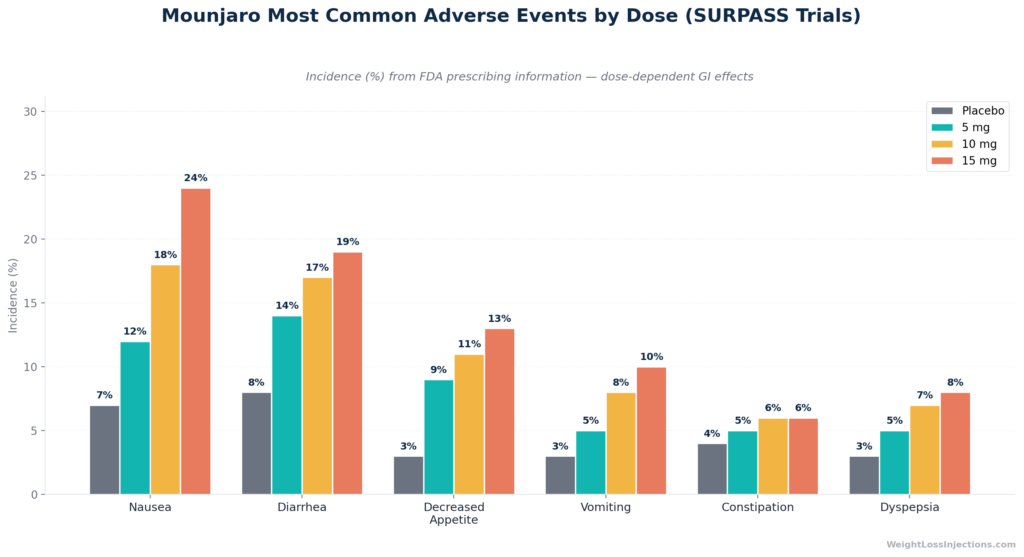
Hero — horizontal grouped bar chart comparing Mounjaro (tirzepatide) vs
- Mounjaro’s most common side effects — nausea, diarrhea, vomiting, constipation, and dyspepsia — are gastrointestinal and dose-dependent. They are most intense during the first 4–8 weeks of treatment and at each dose escalation step.
- Nausea is the single most common adverse reaction, affecting roughly 12–25% of patients depending on dose, per the FDA Mounjaro prescribing information.
- Most GI side effects improve substantially after 8–12 weeks on a stable dose. Decreased appetite often persists — that is the drug working, not a side effect to eliminate.
- Serious adverse events — pancreatitis, acute gallbladder disease, thyroid tumor symptoms, anaphylaxis — are uncommon but require immediate medical attention. The FDA label carries a boxed warning about thyroid C-cell tumors.
- Hair loss is widely reported by patients but is not on the FDA label; it is secondary to rapid weight loss (telogen effluvium), not a direct drug effect, and typically resolves as weight stabilizes.
- Do not stop Mounjaro without consulting your provider — for patients with type 2 diabetes, abrupt discontinuation affects blood sugar control.
WeightLossInjections.com editorial note: This article is an educational reference, not a substitute for medical advice. All adverse reaction frequency data in this article is sourced directly from the FDA Mounjaro prescribing information unless otherwise noted. If you are experiencing side effects from Mounjaro, contact your prescribing provider. Medical reviewer: the WeightLossInjections.com Staff
What the FDA Data Actually Says About Mounjaro Side Effects
Before going through individual side effects, it is worth establishing where the data comes from and what it means. All frequency figures cited in this article as “FDA label” rates are drawn directly from Table 1 of the Mounjaro prescribing information, Section 6 — the formal adverse reaction table derived from the SURPASS clinical trial program, which enrolled over 6,000 patients with type 2 diabetes across five pivotal trials.
Two important interpretive points:
First, the rates are lifetime-of-treatment averages across all doses, not week-one snapshots. A patient who experiences nausea for the first three weeks of titration and then never again still counts in the numerator. The 12–25% nausea figure is what it is — it does not mean nausea is guaranteed to persist indefinitely.
Second, the rates are dose-dependent. Higher doses produce more pronounced GI effects. The jump from 2.5 mg (the tolerability starting dose) to 5 mg, and then to each subsequent step, corresponds to a new peak of GI side effects that settles as the body adapts. This is why the FDA prescribing information recommends starting at 2.5 mg for four weeks — not for glycemic effect, but to allow the GI tract to acclimate before therapeutic doses begin.
The most clinically significant finding from the SURPASS-CVOT trial — the 13,299-patient cardiovascular outcomes study published in the New England Journal of Medicine in December 2025 — is that adverse events leading to drug discontinuation occurred in 13.2% of tirzepatide patients versus 10.1% of dulaglutide (Trulicity) patients. Nearly all of those discontinuations were GI in origin. That 3.1 percentage-point difference is the real-world cost of tirzepatide’s superior efficacy — and it is the figure worth understanding before you start treatment.
Most Common Mounjaro Side Effects
The following adverse reactions occur in at least 5% of patients treated with Mounjaro at one or more doses and at a greater rate than placebo, per Section 6 of the FDA Mounjaro prescribing information:
| Side Effect | Approximate Incidence | When It Peaks |
|---|---|---|
| Nausea | ~12–25% (dose-dependent) | Days 2–5 post-injection; each dose escalation |
| Diarrhea | Common (≥5%) | First weeks; declines after titration stabilizes |
| Decreased appetite | Common (≥5%) | Begins early; often persists — therapeutic effect |
| Vomiting | Common (≥5%) | Especially during titration steps |
| Constipation | Less common than nausea/diarrhea | Can persist beyond titration phase |
| Dyspepsia | Common (≥5%) | Includes abdominal discomfort, bloating, belching |
| Abdominal pain | Common (≥5%) | Variable; assess severity carefully |
Source: FDA Mounjaro Prescribing Information, §6
Why GI Side Effects Happen
Mounjaro is a dual GIP (glucose-dependent insulinotropic polypeptide) and GLP-1 (glucagon-like peptide-1) receptor agonist — the first medication in its class, per Section 12.1 of the FDA label. Both mechanisms contribute to GI side effects, primarily by slowing gastric emptying. When the stomach empties more slowly than usual, food sits longer, and the resulting mechanical distension — combined with altered gut motility throughout the GI tract — produces nausea, bloating, and inconsistent bowel patterns.
This is not the drug doing something unexpected. Slowed gastric emptying is part of how tirzepatide suppresses appetite and blunts postprandial glucose spikes. The GI side effects are the appetite-suppression mechanism experienced from the inside.
Injection Site Reactions
Injection site reactions — redness, itching, mild swelling, or brief stinging at the injection site — are common with any subcutaneous injectable. Per FDA prescribing information Section 6, rotating injection sites with each weekly dose (abdomen, thigh, or upper arm) reduces the frequency and severity of these reactions. Most injection site reactions resolve within 24–48 hours without intervention.
Hair Loss: What the FDA Label Actually Says
Hair loss is among the most commonly reported patient concerns on Mounjaro — but it is not listed on the FDA label as a Mounjaro adverse reaction. Per the FDA Mounjaro prescribing information Section 6, hair loss does not appear in the formal adverse reaction table.
The mechanism behind reported hair loss is telogen effluvium — a well-characterized, temporary shedding that occurs when the body experiences rapid caloric restriction or significant weight loss. When caloric intake drops sharply, as it does for many patients in the first months of Mounjaro treatment, hair follicles that are in their growth phase shift prematurely to their resting (telogen) phase and shed within two to four months. The shedding is not caused by tirzepatide itself; it is caused by the metabolic stress of rapid weight loss, which is consistent with reports of the same phenomenon in patients who lose weight rapidly from any cause. As Medical News Today’s Mounjaro side effects review notes, telogen effluvium typically resolves within three to six months as weight stabilizes and nutritional intake normalizes.
If you are experiencing significant hair shedding on Mounjaro, discuss it with your provider — they may recommend nutritional assessment, protein intake optimization, or referral to a dermatologist. But know that for most patients, this is temporary and self-resolving.
Serious Side Effects: The Warnings You Need to Know
Most patients on Mounjaro will never experience these — but understanding them enables you to recognize the difference between expected discomfort and a genuine emergency.
Boxed Warning: Thyroid C-Cell Tumors
The most prominent warning on the Mounjaro label is the FDA boxed warning regarding thyroid C-cell tumors. Verbatim from the FDA Mounjaro prescribing information boxed warning:
Tirzepatide causes thyroid C-cell tumors in rats and mice at clinically relevant exposures. It is unknown whether Mounjaro causes thyroid C-cell tumors, including medullary thyroid carcinoma (MTC), in humans. Mounjaro is contraindicated in patients with a personal or family history of MTC or in patients with Multiple Endocrine Neoplasia syndrome type 2 (MEN 2).
This requires careful reading. The animal data is real — tirzepatide does produce thyroid C-cell tumors in rodents. Whether this translates to humans is genuinely unknown; no human cases of MTC attributable to tirzepatide have been established. The boxed warning exists because the precautionary standard for YMYL medical content — and for FDA labeling — requires disclosure of a biologically plausible mechanism, even in the absence of confirmed human cases.
What this means in practice: If you have a personal or family history of medullary thyroid carcinoma or MEN2, Mounjaro is contraindicated for you. If you develop a neck lump, persistent hoarseness, difficulty swallowing, or unexplained shortness of breath while on Mounjaro, contact your provider promptly — these are potential symptoms of thyroid tumors and warrant evaluation.
Pancreatitis
Acute pancreatitis — including fatal and non-fatal hemorrhagic or necrotizing pancreatitis — has been observed with GLP-1 receptor agonists as a class. In Mounjaro’s clinical trial program, per Section 5.2 of the FDA prescribing information, there were 14 pancreatitis events in 13 tirzepatide patients (0.23 events per 100 patient-years) versus 3 events in 3 comparator patients (0.11 per 100 patient-years).
These rates are low in absolute terms — but pancreatitis is a potentially life-threatening condition that requires immediate care. If you experience severe abdominal pain that radiates to your back — with or without nausea and vomiting — stop taking Mounjaro and seek emergency care immediately. The FDA label is explicit: discontinue Mounjaro if pancreatitis is suspected; do not restart if pancreatitis is confirmed. Notably, Mounjaro has not been studied in patients with a history of pancreatitis — this history is considered a contraindication by most clinicians.
Acute Gallbladder Disease
GLP-1 receptor agonists reduce bile flow by slowing gallbladder emptying, which can allow cholesterol to supersaturate in the bile and form gallstones. Per Section 5.3 of the FDA Mounjaro prescribing information, cholelithiasis (gallstones) or cholecystitis (gallbladder inflammation) occurred in 0.6% of tirzepatide patients versus 0% with placebo in controlled trials.
Symptoms requiring prompt medical attention: pain in the upper right abdomen (particularly after eating), fever, nausea, and jaundice (yellowing of the skin or eyes). If you experience this combination, contact your provider the same day or go to an urgent care facility.
Hypoglycemia
Mounjaro alone — without insulin or sulfonylureas — carries very low hypoglycemia risk because its insulin-stimulating effects are glucose-dependent: the drug only triggers insulin release when blood glucose is elevated. However, per Section 5.4 of the FDA prescribing information, combining Mounjaro with insulin or an insulin secretagogue (such as a sulfonylurea like glipizide or glimepiride) significantly increases hypoglycemia risk, including severe hypoglycemia.
If you are prescribed Mounjaro alongside insulin or a sulfonylurea, your provider may need to reduce the dose of those medications when Mounjaro is initiated or dose is escalated. Know the symptoms of low blood sugar: shakiness, sweating, rapid heartbeat, confusion, blurred vision, and feeling faint. If you experience severe hypoglycemia, treat immediately with fast-acting glucose and contact your provider.
Acute Kidney Injury
Per Section 5.5 of the FDA prescribing information, GI adverse reactions — specifically severe or prolonged nausea, vomiting, and diarrhea — can cause sufficient dehydration to precipitate acute kidney injury (AKI). This is not a risk for patients experiencing mild nausea; it is relevant when GI symptoms are severe enough to prevent adequate fluid intake over multiple days. Patients with pre-existing renal impairment face higher risk and require closer monitoring.
The practical message: Stay hydrated. If vomiting or diarrhea prevents you from keeping fluids down for more than 24 hours, call your provider the same day — this is not a “wait and see” scenario.
Serious Hypersensitivity Reactions
Per Section 5.6 of the FDA prescribing information, serious hypersensitivity reactions have been reported with Mounjaro, including urticaria (hives) and eczema. Anaphylaxis and angioedema have been reported within the GLP-1 receptor agonist drug class. These reactions are uncommon but require immediate emergency response.
Signs of anaphylaxis: rapid heartbeat, hives spreading across the body, difficulty breathing, swelling of the face or throat, dizziness. Call 911 or go to an emergency room immediately if you experience these symptoms after a Mounjaro injection.
Diabetic Retinopathy Complications
Per Section 5.7 of the FDA prescribing information, Mounjaro has not been studied in patients with non-proliferative diabetic retinopathy requiring acute therapy, proliferative diabetic retinopathy, or diabetic macular edema. Patients with a history of diabetic retinopathy should be monitored for worsening of their eye condition during Mounjaro treatment. Rapid glycemic improvement — which Mounjaro can produce — has been associated with short-term progression of retinopathy in some patients, a phenomenon observed across the GLP-1 class.
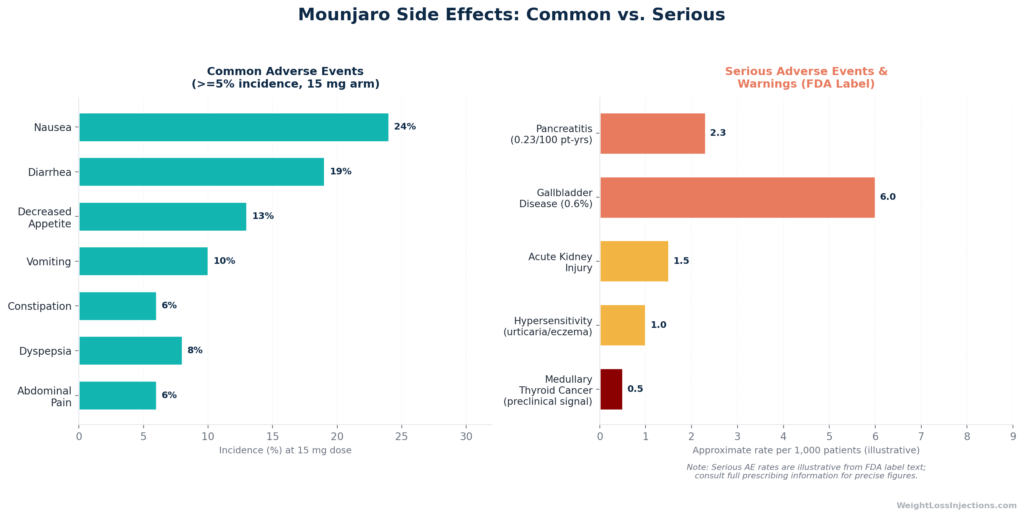
Three-tier severity classification table — Tier 1 (Emergency/Discontinue: pancreatitis symptoms, MTC/thyroid symptoms, anaphylaxis, severe hypoglycemia), Tier 2 (Contact Provider same day:…
Side Effects That Usually Resolve Over Time
This is the section that matters most for most patients, because the critical clinical question is not “what are the side effects” — it is “how long do they last?”
The answer, drawn from both the FDA Mounjaro prescribing information and the SURPASS trial program, is encouraging: the most common and burdensome side effects are heavily front-loaded. They are most intense during the first four to eight weeks of treatment and at each dose escalation step, and they decline substantially once patients reach a stable maintenance dose.
The SURPASS-CVOT trial published in NEJM December 2025 followed 13,299 patients for a median of approximately four years. GI discontinuation rates — the clearest measure of intolerable side effects — were concentrated in the titration phase. Once patients stabilized at their maintenance dose, the ongoing GI burden dropped markedly. This pattern is consistent across the SURPASS-1 through SURPASS-5 studies and is confirmed in the diaTribe tirzepatide clinical summary.
The Week-by-Week Timeline
Weeks 1–4 (2.5 mg starting dose): This is the tolerability ramp. The 2.5 mg dose is not a therapeutic glycemic dose — per the FDA label, it exists purely to allow the GI tract to adapt before the drug reaches effective concentrations. GI side effects at this dose are typically the mildest you will experience, though some patients do have noticeable nausea even here.
Weeks 5–8 (5 mg dose — first therapeutic dose): The step from 2.5 mg to 5 mg triggers the most significant GI reset in the entire titration sequence for most patients. Nausea typically peaks two to five days after the first 5 mg injection and begins improving by days six to seven. This is the window where most treatment discontinuations occur. Understanding this timeline before you reach week five is the most important preparation a patient can do.
Weeks 9–12 and beyond (7.5 mg and above, ongoing titration): Each subsequent dose increase follows the same pattern — a brief resurgence of GI symptoms that resolves within one to two weeks as the body adapts. The intensity of side effects at each step is moderated by the fact that the GI tract has already been adapting to tirzepatide for weeks; you are not starting from zero at each escalation. Per the SURPASS trial data reviewed by diaTribe, GI event rates decline substantially at stable maintenance doses.
After 8–12 weeks on a stable dose: Most patients who push through the titration phase find that GI effects become background noise rather than the defining feature of their day. The decreased appetite — the effect that drives weight loss — often persists throughout treatment, but that is the therapeutic mechanism, not a side effect to manage away.
Constipation: The Exception
Nausea and diarrhea tend to resolve with adaptation. Constipation has a different natural history — it can persist beyond the initial titration phase in some patients. This is because tirzepatide’s gastric-emptying delay effect on the upper GI tract translates to slower colonic transit in the lower GI tract, an effect that doesn’t simply adapt away the way nausea does. If constipation is persistent beyond the first few weeks, active management (see the GI management section below) is more important than waiting for it to resolve spontaneously.
Our Top 3 · October 2026
The best GLP-1 providers right now
Independently reviewed. Ranked by price, medication access, provider quality, and patient outcomes.
Renew GLP
Personalized GLP-1, GIP plans: Semaglutide & Tirzepatide.
Medvi
No membership or hidden fees. Everything you need is included.
Trimi
US-licensed clinicians and shipped to your door, from $99/mo.
How to Manage Gastrointestinal Side Effects
The dietary and behavioral strategies below are supported by the guidance embedded in the FDA Mounjaro prescribing information and aligned with the GI management principles documented across the SURPASS trial patient guidance. They are evidence-informed even where formal randomized evidence on individual interventions is limited.
See also: [/mounjaro-nausea-how-to-stop/] — detailed nausea management guide (Brief 05)
Dietary Strategies
Reduce meal volume before increasing restriction. Mounjaro significantly slows gastric emptying, which means a normal-sized meal now behaves like a large meal in terms of stomach fullness and emptying time. Shifting from three large meals to four to six smaller meals per day reduces the mechanical distension that drives nausea and bloating. Stop eating before feeling completely full — Mounjaro will make “full” arrive earlier and last longer than you are used to.
Avoid high-fat, fried, and greasy foods during the first weeks of each new dose. Fat slows gastric emptying more than protein or carbohydrate in any context; combined with tirzepatide’s gastric-emptying delay, fatty meals can produce pronounced nausea and vomiting that would not occur with a lower-fat meal. This dietary restriction is most critical during the first five days after each dose increase — the peak side-effect window.
Avoid spicy, highly acidic, and very sweet foods during peak side effect days (days 2–5 post-injection). These categories add stimulatory load to a GI tract that is already operating under altered motility.
Hydrate consistently throughout the day, not in large volumes with meals. Large volumes of fluid at mealtimes increase gastric distension. Spreading fluid intake across the day — small amounts frequently — reduces this burden while maintaining the hydration that is critical for AKI prevention.
For Nausea Specifically
Ginger — in the form of ginger tea, ginger chews, or ginger capsules — has demonstrated mild antiemetic properties in multiple systematic reviews and is a reasonable first-line non-pharmaceutical approach to nausea. Bland foods during peak nausea days (toast, plain crackers, oatmeal, plain broth) reduce gastric stimulation. Remaining upright for at least 30 minutes after eating avoids the reflux-related nausea exacerbation that occurs with recumbency after a meal.
Evening injections are a timing strategy some patients find helpful: because tirzepatide’s nausea onset typically follows a 24–72 hour lag after injection (corresponding to peak plasma concentration), injecting at bedtime means the worst nausea days may partially overlap with sleep or a weekend, reducing the functional impact on work and daily activities.
If nausea significantly impairs your ability to eat or function — defined as more than two days of significant impairment at a new dose — contact your provider about prescription antiemetics. Ondansetron (Zofran) is commonly used in this context; your provider can determine what is appropriate for your medication list.
For Diarrhea
The BRAT diet (bananas, rice, applesauce, toast) during active diarrhea flares provides easily digestible, low-fiber, low-fat nutrients that reduce stimulation to an irritated GI tract. Avoid high-fiber foods until diarrhea resolves — fiber increases stool bulk and motility and can worsen diarrhea acutely, even though it is beneficial for constipation prevention at other times. Prioritize hydration: diarrhea combined with Mounjaro’s gastric effects creates compounding dehydration risk. Oral rehydration solutions (electrolyte-containing fluids) are preferable to plain water if losses are significant.
If diarrhea persists beyond two weeks or is accompanied by blood in the stool, contact your provider. Diarrhea lasting more than two weeks is not expected from standard Mounjaro GI adaptation.
For Constipation
Constipation management on Mounjaro is largely about counteracting slowed colonic transit with increased fiber and fluid. Aim for 25–35 grams of dietary fiber per day, introduced gradually to avoid bloating — a sudden increase in fiber can worsen abdominal discomfort. Increase fluid intake to at least eight cups per day. Regular physical activity supports bowel motility and is one of the most consistent evidence-based interventions for constipation.
For OTC options: polyethylene glycol (MiraLax) is an osmotic laxative that draws water into the colon and is appropriate for constipation management alongside Mounjaro. Docusate sodium (Colace) is a gentle stool softener that can help. Discuss both with your provider before initiating, particularly if you are on other medications. See [/mounjaro-constipation-relief/] for a full management guide.
Dose Adjustments
The FDA Mounjaro prescribing information explicitly supports holding titration during significant GI adverse events and recommends considering dose reduction for persistent, intolerable nausea, vomiting, or diarrhea. If your GI side effects at a given dose are not becoming manageable after two weeks, ask your provider about pausing at the current dose for an additional four weeks before attempting the next escalation step. This is not treatment failure — it is the protocol working as designed.
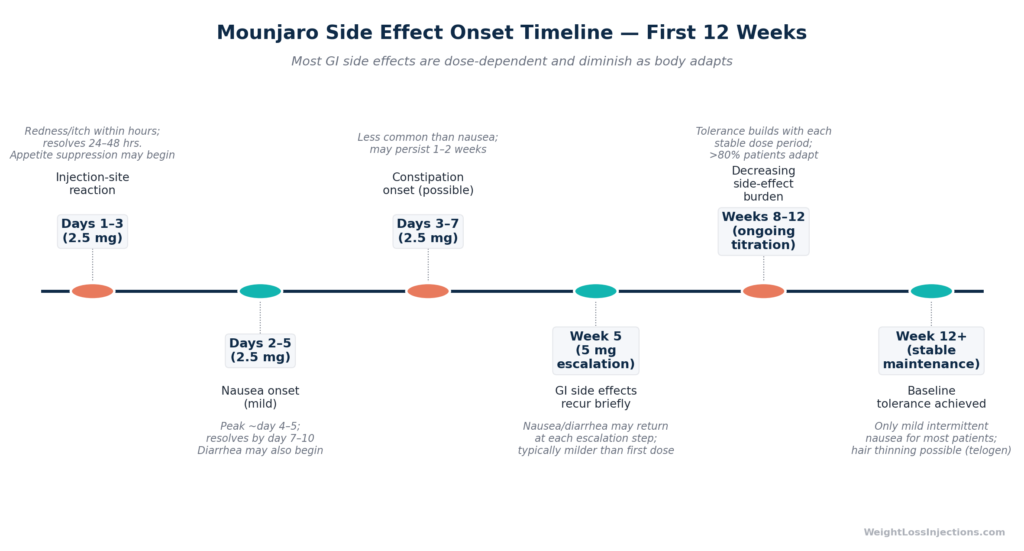
Management decision flowchart — “Experiencing GI side effects?” → severity assessment branches: Severe abdominal pain radiating to back → Emergency care (pancreatitis)
When to Contact Your Provider — and When to Call 911
The distinction between “manageable discomfort” and “medical emergency” is where preparation genuinely matters. The following is drawn from the Warnings and Precautions section of the FDA Mounjaro prescribing information §5.
Seek Emergency Care Immediately For:
- Severe abdominal pain radiating to the back — with or without nausea or vomiting. This is the classic presentation of acute pancreatitis. Stop Mounjaro and call 911 or go to an emergency room. Do not wait to see if it improves.
- Neck lump, persistent hoarseness, difficulty swallowing, or unexplained shortness of breath — potential symptoms of thyroid tumors. Seek same-day or emergency evaluation.
- Signs of anaphylaxis — hives spreading rapidly across the body, difficulty breathing, swelling of the face or throat, rapid heartbeat, severe dizziness. Call 911 immediately.
- Upper right abdominal pain with fever or jaundice — potential acute cholecystitis. Go to an urgent care or emergency room the same day; this can escalate quickly.
- Severe vomiting with inability to keep any fluids down, combined with signs of dehydration — dry mouth, no urination for 8+ hours, extreme fatigue, confusion. Call your provider immediately; this scenario carries AKI risk.
Contact Your Provider Promptly (Same Day to Within 24 Hours) For:
- Nausea or vomiting that prevents eating or drinking for more than 24 hours — even if it doesn’t feel like an emergency.
- Persistent diarrhea lasting more than two weeks.
- Constipation not relieved by dietary changes after one week of active management.
- Signs of low blood sugar if you are also taking insulin or a sulfonylurea: shakiness, sweating, rapid heartbeat, confusion, blurred vision.
- New or worsening eye symptoms — floaters, vision changes, or any visual symptoms in patients with a history of diabetic retinopathy.
- Injection site reactions that do not resolve after a few days: persistent lumps, spreading redness, or severe pain at the injection site.
An Important Note on Stopping Mounjaro
Do not stop Mounjaro without consulting your provider. For patients prescribed Mounjaro for type 2 diabetes, abrupt discontinuation removes active glycemic control that may have replaced or reduced other diabetes medications, and blood sugar can rise quickly. For patients experiencing significant weight loss benefit, the FDA prescribing information and emerging evidence both confirm that GLP-1/GIP agonist withdrawal results in rapid weight regain. These are not reasons to stay on a medication that is causing serious harm — but they are reasons to have a provider-guided plan rather than stopping independently.
Mounjaro Side Effects vs. Ozempic: Is There a Difference?
A significant share of patients considering Mounjaro are either switching from Ozempic (semaglutide) or comparing the two. Their GI side effect profiles are similar in kind — both drugs slow gastric emptying and produce nausea, diarrhea, and constipation through related mechanisms — but there are meaningful differences worth understanding.
The mechanism difference matters. Mounjaro is a dual GIP + GLP-1 receptor agonist; Ozempic is a GLP-1 agonist only. The additional GIP mechanism in tirzepatide contributes to both its superior efficacy and a potentially distinct GI tolerability profile. Some patients who switch from Ozempic to Mounjaro report different GI patterns — different timing, different predominance of nausea versus constipation — that likely reflect the GIP component acting on GI receptors differently than GLP-1 alone.
The head-to-head data: In SURPASS-2, published in NEJM in 2021 (Frías et al.), tirzepatide at all three doses (5, 10, and 15 mg) was compared directly to semaglutide 1 mg (Ozempic’s most common dose). The overall safety profile was similar — GI events occurred at comparable frequencies. This suggests that for patients who tolerated Ozempic, Mounjaro’s GI burden is in a similar range, though not identical.
The caveat: SURPASS-2 used semaglutide 1 mg, not the maximum approved Ozempic dose of 2 mg. The comparison at higher semaglutide doses — where GI effects are more pronounced — has not been tested head-to-head. As diaTribe’s tirzepatide clinical summary notes, this is a meaningful gap in the comparative evidence.
The discontinuation difference: In SURPASS-CVOT (NEJM 2025), tirzepatide showed 13.2% GI-driven discontinuation versus 10.1% for dulaglutide (Trulicity). This suggests a modestly higher GI intolerance rate for tirzepatide compared to GLP-1-only agonists — the trade-off for meaningfully superior HbA1c reduction (−1.66% vs. −0.88%) and weight loss (−11.6% vs. −4.5%) at the same follow-up period.
Patient-reported experience on switching varies significantly. Some patients who struggled with Ozempic’s GI side effects find Mounjaro more tolerable; others find the reverse. Individual GIP receptor expression and GI sensitivity vary, and there is no reliable way to predict which profile a given patient will tolerate better before trying both. If you are considering switching, see [/mounjaro-vs-ozempic/] for the full comparison, and discuss the evidence with your provider — including the option to trial Mounjaro with a provider who monitors the switch carefully.
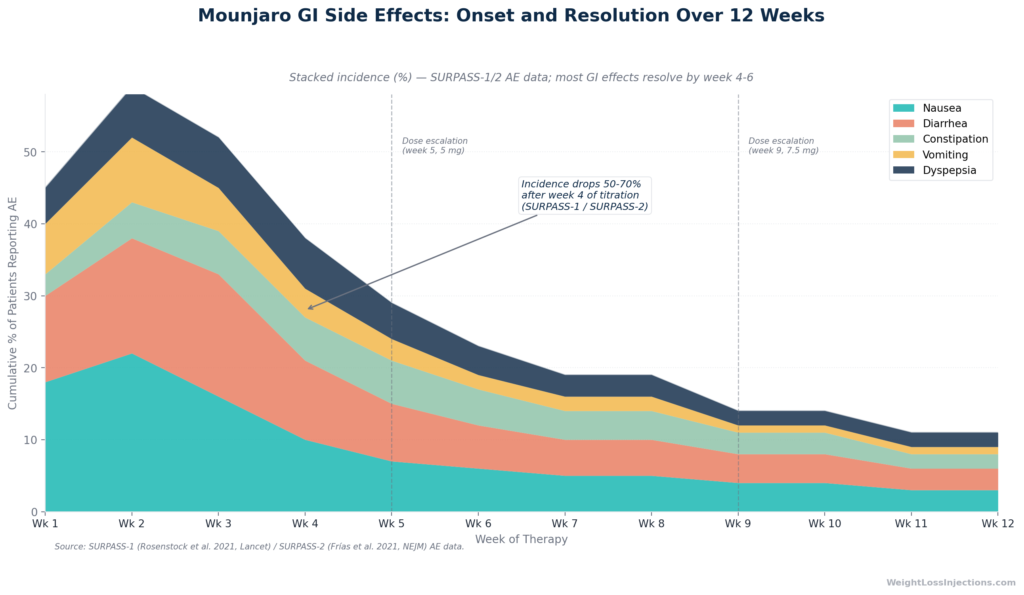
Timeline / annotated line chart — relative GI symptom intensity (Y-axis) across weeks of treatment (X-axis)
Our Take at WeightLossInjections.com
The most common reason patients stop Mounjaro is GI side effects during titration — typically weeks four through twelve. At WeightLossInjections.com, this is the clinical interval we pay the closest attention to with every patient, because the data are clear: the majority of patients who push through this window with structured dietary management, provider communication, and realistic expectations go on to tolerate the drug well long-term. The long-term benefits justify that investment — a mean HbA1c reduction of 2.0–2.4% at higher doses per the SURPASS trial program, meaningful weight loss, and — per SURPASS-CVOT — a 16% reduction in all-cause mortality versus an active comparator at four-year follow-up. These are not marginal outcomes.
What we see most often in patients who discontinue prematurely is not side effects that were inherently intolerable — it is side effects that were unexpected, unmanaged, and not accompanied by the “this is temporary, here’s what to do” guidance that changes the lived experience. Knowing that nausea peaks at days 2–5 post-injection and begins resolving by day 6–7, knowing that the 2.5 mg to 5 mg step is the hardest, knowing what to eat and what to avoid — these are not small things. They are the difference between a medication that changes your trajectory and one that ends up in the back of the refrigerator.
At WeightLossInjections.com, licensed telehealth providers walk every patient through Mounjaro titration with regular check-ins, proactive side-effect management protocols, and clear escalation criteria — for [$X/month] covering [service detail]. If you are concerned about Mounjaro side effects or want to start treatment with a provider who actively manages them rather than leaving you to figure it out, take our free eligibility assessment at WeightLossInjections.com.
Frequently Asked Questions
The most common Mounjaro side effects are gastrointestinal: nausea, diarrhea, decreased appetite, vomiting, constipation, dyspepsia (bloating, indigestion), and abdominal pain. These are listed in the formal adverse reaction table of the FDA Mounjaro prescribing information, Section 6 and occur in at least 5% of patients at one or more doses. Nausea is the most common individual adverse reaction, occurring in approximately 12–25% of patients depending on dose. Injection site reactions — mild redness, itching, or swelling — are also common. The majority of GI side effects are temporary and most intense during the first weeks of treatment and at each dose escalation step.
Most GI side effects — nausea, diarrhea, dyspepsia — are heaviest in the first four to eight weeks of treatment and during each dose escalation, then decline substantially as the body adapts to a stable dose. Per the SURPASS-CVOT data (NEJM 2025), GI discontinuation rates stabilized after the titration period in a four-year, 13,299-patient study, confirming that the early burden does not represent the long-term experience. Nausea typically peaks two to five days after each injection or dose increase and begins improving by days six to seven. Most patients find that by 8–12 weeks on a stable dose, GI effects have diminished to a manageable background level. Constipation may persist longer than nausea or diarrhea and often requires ongoing active management.
Hair loss is not listed as an adverse reaction in the FDA Mounjaro prescribing information, and it is not a direct drug effect. What patients are experiencing is telogen effluvium — a temporary hair shedding triggered by rapid caloric restriction and significant weight loss, not by tirzepatide itself. When the body experiences rapid weight change, hair follicles shift prematurely from their growth phase to their resting (telogen) phase and shed approximately two to four months later. As Medical News Today notes, telogen effluvium typically resolves within three to six months as weight stabilizes and nutritional intake normalizes. Maintaining adequate protein intake during active weight loss may help minimize the severity and duration of shedding.
The FDA Mounjaro label carries a boxed warning — the most prominent warning category on any drug label — stating that tirzepatide caused thyroid C-cell tumors in rats and mice at clinically relevant exposures. The key phrase is: it is currently unknown whether Mounjaro causes thyroid C-cell tumors, including medullary thyroid carcinoma (MTC), in humans, per the FDA Mounjaro prescribing information boxed warning. No human cases of MTC attributable to tirzepatide have been confirmed. Because of this animal data, Mounjaro is contraindicated in patients with a personal or family history of MTC or Multiple Endocrine Neoplasia syndrome type 2 (MEN 2). All patients on Mounjaro should be aware of thyroid tumor symptoms — neck lump, hoarseness, difficulty swallowing, shortness of breath — and report them to their provider promptly.
Acute pancreatitis has been observed with Mounjaro and with the GLP-1 receptor agonist drug class more broadly. In Mounjaro’s clinical trial program, 14 pancreatitis events occurred in 13 tirzepatide patients (0.23 events per 100 patient-years) compared to 3 events in 3 comparator patients (0.11 per 100 patient-years), per Section 5.2 of the FDA Mounjaro prescribing information. Mounjaro has not been studied in patients with a history of pancreatitis, and most clinicians consider prior pancreatitis a contraindication. The critical symptom to recognize is severe abdominal pain radiating to the back — this requires emergency evaluation, not a wait-and-see approach. If pancreatitis is confirmed, Mounjaro should be discontinued permanently.
You should stop Mounjaro immediately and seek emergency care if you experience severe abdominal pain radiating to your back (pancreatitis), a neck lump or difficulty swallowing (thyroid), signs of anaphylaxis (hives, breathing difficulty, face/throat swelling), or upper right abdominal pain with fever or jaundice (gallbladder). For less severe side effects — nausea, diarrhea, constipation — the FDA Mounjaro prescribing information supports dose holds and dose reductions rather than permanent discontinuation, and most patients find GI symptoms improve substantially with time and dietary management. Critically, do not stop Mounjaro on your own without talking to your provider first — for T2DM patients, abrupt discontinuation affects blood sugar control, and for all patients, rapid weight regain occurs with GLP-1 withdrawal. Work with your provider to distinguish intolerable from manageable, and to make a guided decision about continuing, dose-reducing, or switching medications.
This article is for educational purposes only and does not constitute medical advice. WeightLossInjections.com’s medical team reviews content quarterly; last medical review: June 2026. If you are considering Mounjaro or any GLP-1 medication, consult a licensed provider about your individual history and circumstances.