![Unbranded [pillar-drug-class] injection pen on a neutral background — WeightLossInjections.com editorial hero](https://weightlossinjections.com/wp-content/uploads/2026/07/hero_mounjaro_c1_cost-1200x675.png)
Flowchart: Which Mounjaro prescription pathway is right for you? T2DM pathway (left) and off-label weight-loss pathway (right), with provider and insurance decision points at each branch.
- Mounjaro is FDA-approved only for type 2 diabetes mellitus (T2DM). On-label prescribing requires a documented T2DM diagnosis (ICD-10: E11.x), typically with A1c ≥7.0%, per the FDA Mounjaro Prescribing Information.
- Off-label weight-loss prescribing is legal and widespread; most platforms require BMI ≥30 or BMI ≥27 plus a comorbidity, per FormBlends April 2026.
- Absolute contraindications — personal or family history of medullary thyroid carcinoma (MTC), Multiple Endocrine Neoplasia type 2 (MEN 2), pregnancy — disqualify you regardless of pathway, per the FDA label.
- Labs you’ll likely need: A1c, fasting glucose, CMP, lipid panel, TSH, and BMI documentation.
- Telehealth platforms can issue a prescription in 24–48 hours once labs are on file, per Medical News Today 2026; in-person routes with prior authorization typically take 1–4 weeks.
- With commercial insurance covering T2DM, the Lilly Mounjaro Savings Card reduces monthly cost to as low as $25/month, per NiceRx March 2026. Self-pay options via LillyDirect start at $299/month for the 2.5 mg starting dose.
WeightLossInjections.com editorial note: Mounjaro is a prescription medication that requires evaluation by a licensed healthcare provider. WeightLossInjections.com does not prescribe medications. The information in this article is for educational purposes and does not substitute for a clinical consultation. All prices and program terms reflect verified Q1–Q2 2026 data; confirm current details with your prescriber or mounjaro.lilly.com/savings-resources.
Introduction: Navigating the Path to a Mounjaro Prescription
Mounjaro (tirzepatide) is one of the most clinically powerful glucose-lowering and weight-management medications ever approved — a dual GIP and GLP-1 receptor agonist that outperformed every comparator in the SURPASS trial program for both A1c reduction and body weight loss. In SURPASS-2, all three tirzepatide doses achieved superiority over semaglutide 1 mg for A1c reduction, with mean reductions of 2.01% to 2.30% versus 1.86% for semaglutide, per NEJM August 2021 (Frías et al.). Given results like these, it is no surprise that demand for Mounjaro prescriptions has surged since FDA approval in May 2022.
Yet the path from “I want Mounjaro” to “I have Mounjaro in my hands” is not always straightforward. Two distinct patient populations pursue this medication: adults with type 2 diabetes seeking better glycemic control (the FDA-approved indication), and adults with obesity seeking significant weight loss (off-label use). The prescription requirements, insurance dynamics, and cost structures differ substantially between these two groups. Add to that the complexity of prior authorization, step therapy requirements, and a crowded telehealth marketplace, and it is easy to see why many motivated patients feel stuck at the starting line.
This guide walks you through the complete process — from determining whether you qualify, to preparing for your first appointment, to navigating insurance and filling your first prescription. By the end, you will know exactly what labs to have ready, what to say to your doctor, which telehealth platforms can help if your in-person provider is unavailable, and how to keep costs manageable. If you are ready to explore your telehealth options with WeightLossInjections.com partner platforms, [service detail] — the process starts with a brief intake form and a licensed clinician review.
Step 1: Determine Whether You Qualify — Eligibility Criteria
Before booking any appointment, understanding the eligibility framework will save you time and set realistic expectations about the prescription pathway you are entering.
The On-Label T2DM Pathway
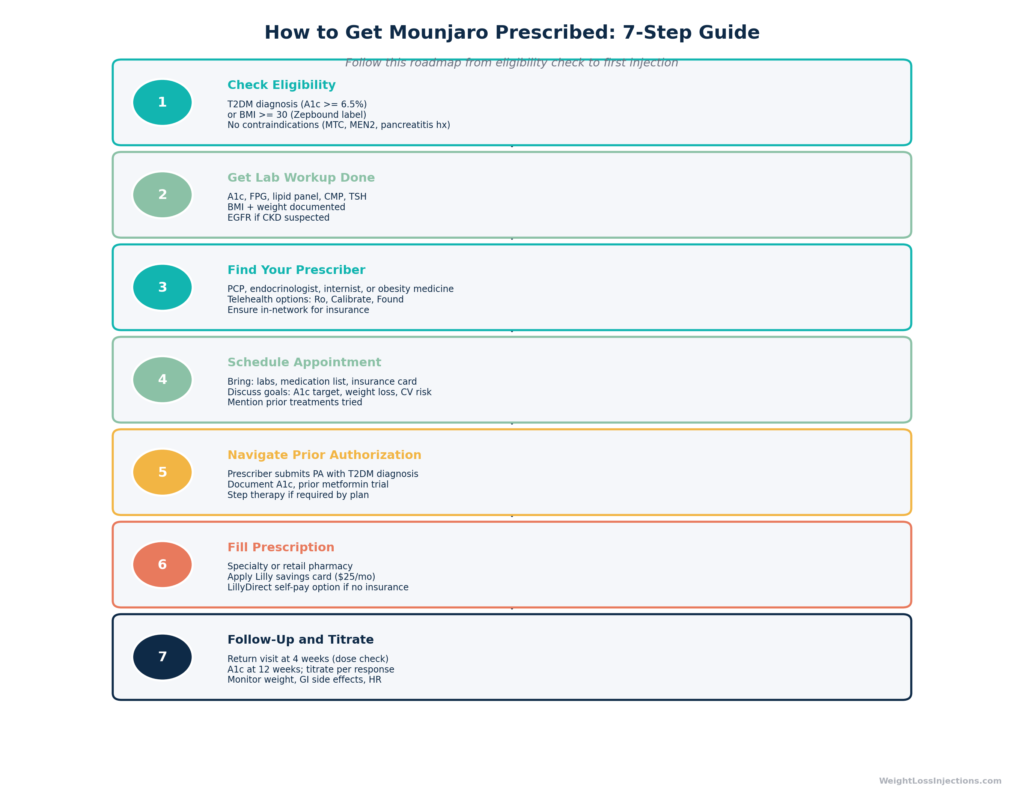
Mounjaro received FDA approval on May 13, 2022 as an adjunct to diet and exercise to improve glycemic control in adults with type 2 diabetes mellitus, per the FDA Mounjaro Prescribing Information. For this pathway, the core eligibility criteria are:
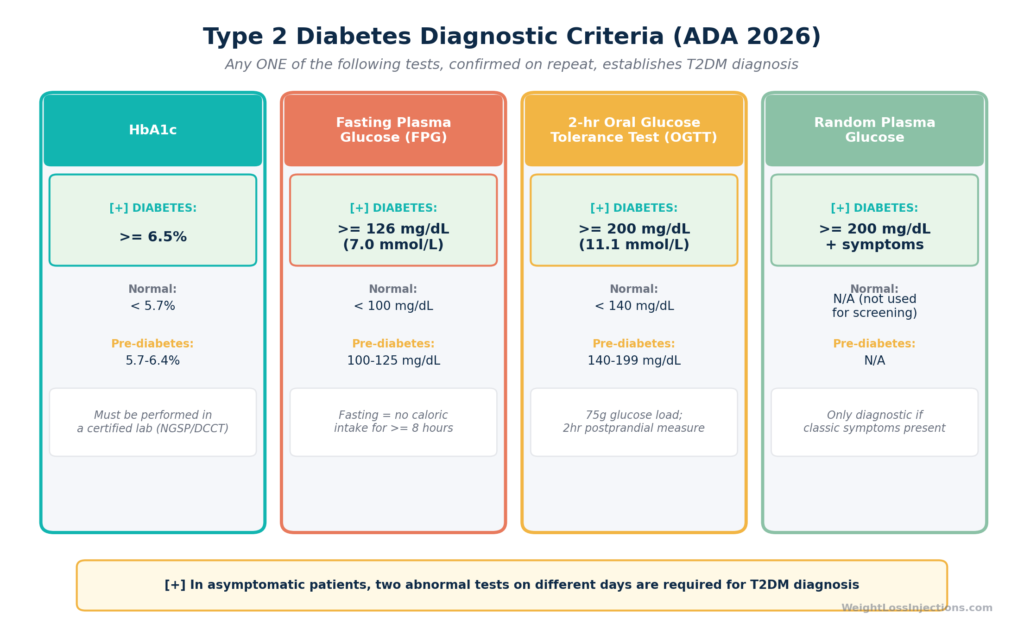
Documented T2DM diagnosis. You must have a confirmed type 2 diabetes diagnosis coded under ICD-10: E11.x. The standard diagnostic thresholds for T2DM — established by the American Diabetes Association — are any one of the following: A1c ≥6.5%, fasting plasma glucose ≥126 mg/dL, 2-hour plasma glucose ≥200 mg/dL during a 75 g oral glucose tolerance test, or a random plasma glucose ≥200 mg/dL in a patient with classic hyperglycemia symptoms, per ADA 2026 Standards of Care.
A1c level at time of prescribing. Insurers impose additional A1c hurdles beyond the diagnostic threshold. While the FDA label does not specify a minimum A1c for prescribing, most commercial insurance plans and state Medicaid programs require A1c ≥7.0% — and some require ≥8.0% — at the time of the prior authorization request, per Kaiser Permanente PA Form and Cigna PA Policy. A recent A1c — within the past three months — is almost universally required.
Prior metformin trial. The large majority of payers require documented use of metformin at the maximally tolerated dose (typically ≥2,000 mg/day) for at least three months, or documented contraindication or intolerance, per Cigna PA Policy. This is part of “step therapy” — the insurer’s attempt to ensure lower-cost options have been tried first. If you have never tried metformin and have no contraindication, expect your prescriber to initiate it before Mounjaro is authorized.
Not prescribed solely for weight management. Insurance plans specifically exclude coverage when Mounjaro is prescribed purely for weight loss without a T2DM diagnosis. The FDA limitation of use language reinforces this: Mounjaro is NOT indicated for chronic weight management — that is the role of Zepbound (the same molecule under a different FDA label), per the FDA label.
The Off-Label Weight-Loss Pathway
Off-label prescribing is entirely legal in the United States. Any licensed physician may prescribe an FDA-approved drug for any indication based on clinical judgment, and GLP-1/GIP agonists are not controlled substances, per Klarity Health 2026. Physicians prescribe Mounjaro off-label for weight loss for several practical reasons: Mounjaro may be on a patient’s formulary when Zepbound is not, commercial insurance may cover Mounjaro for patients with comorbid T2DM and obesity, or Zepbound may be unavailable. Mounjaro and Zepbound contain identical active ingredients at identical doses — only the FDA-approved indication differs, per WebMD.
For off-label weight-loss prescribing, the criteria most telehealth platforms apply are:
- BMI ≥30 (Class I obesity), OR
- BMI ≥27 with at least one weight-related comorbidity — type 2 diabetes, hypertension, dyslipidemia, obstructive sleep apnea, PCOS, or non-alcoholic fatty liver disease, per FormBlends April 2026.
Insurance rarely covers off-label Mounjaro for weight loss. Approval rates for the weight-loss-only indication run approximately 15–25%, compared with 60–70% for the T2DM indication, per FormBlends April 2026. Most patients pursuing Mounjaro off-label for weight loss will pay out of pocket — either through LillyDirect self-pay vials ($299–$449/month depending on dose) or through telehealth platform cash-pay programs at [$X/month], per BestMedsHub May 2026.
Important note on the Savings Card: The Lilly Mounjaro Savings Card — which can reduce monthly cost to as low as $25 — requires both commercial insurance that covers Mounjaro AND an FDA-approved T2DM indication. Off-label weight-loss prescriptions do not qualify for the $25 tier of the savings card, per meetaugust.ai 2026.
Absolute Contraindications — Who Cannot Get Mounjaro
Regardless of T2DM status, BMI, or comorbidities, the following conditions are absolute contraindications to Mounjaro per the FDA Prescribing Information Boxed Warning:
- Personal or family history of medullary thyroid carcinoma (MTC). Tirzepatide causes thyroid C-cell tumors in rodents at clinically relevant exposures; while human causation is not confirmed, the risk-benefit calculation in patients with MTC history is unfavorable.
- Multiple Endocrine Neoplasia syndrome type 2 (MEN 2). MEN 2 is associated with MTC and triggers the same contraindication.
- History of pancreatitis. Mounjaro has not been studied in patients with prior pancreatitis; acute pancreatitis has been reported with GLP-1 receptor agonists, per the FDA label.
- Pregnancy or breastfeeding. No adequate data on developmental risk exists; discontinue if pregnancy is detected.
- Type 1 diabetes mellitus. Mounjaro is not indicated for T1DM and has not been studied in this population.
Any prescriber — telehealth or in-person — will screen for these contraindications at intake. Disclosing them fully protects your health and prevents a prescription that could cause harm.
Step 2: Complete Your Diagnostic Workup — The Labs You Need
Arriving at your appointment with current labs already in hand shortens the time to prescription dramatically. This is especially valuable for telehealth platforms, where the prescriber cannot draw blood on-site — having labs ready can mean the difference between getting your prescription in 24 hours versus waiting an additional week for lab results.
Pre-appointment lab checklist: labs required or strongly recommended by most providers before prescribing Mounjaro.
Labs Required or Strongly Recommended
HbA1c (glycated hemoglobin). This is the cornerstone lab for any Mounjaro evaluation. Results within the past three months are almost universally required. For the T2DM pathway, most insurers need to see A1c ≥7.0% (some plans require ≥8.0%) to approve prior authorization. For diagnosis confirmation, A1c ≥6.5% meets the ADA diagnostic threshold for T2DM, per ADA 2026 Standards of Care. Bring the actual lab report — not just a verbal recollection of the number.
Fasting plasma glucose. A fasting glucose ≥126 mg/dL on two separate occasions meets diagnostic criteria for T2DM, per ADA 2026 Standards of Care. Even if your T2DM diagnosis is already established, a current fasting glucose is a useful baseline and is commonly required on PA forms.
Comprehensive Metabolic Panel (CMP). The CMP assesses kidney and liver function — both relevant to GLP-1 therapy monitoring. While Mounjaro does not require dose adjustment for renal impairment (pharmacokinetics are unchanged even through end-stage renal disease), per the FDA label, the eGFR (estimated glomerular filtration rate) is important context for the overall metabolic picture and for insurance PA documentation.
Lipid panel (fasting). Cardiovascular risk assessment is part of most T2DM management guidelines, and Mounjaro’s SURPASS-CVOT cardiovascular outcomes data make lipid documentation relevant. A lipid panel is typically required on commercial insurance PA forms, per Kaiser Permanente PA Form.
TSH (thyroid-stimulating hormone). TSH is required by many telehealth platforms as part of intake screening. Given Mounjaro’s boxed warning regarding thyroid C-cell tumors, a baseline TSH is both clinically reasonable and helps rule out pre-existing thyroid conditions. A normal TSH does not predict or prevent MTC, but an abnormal TSH may prompt additional thyroid workup before initiating therapy.
BMI/weight documentation. Height and weight recorded at your visit — or from a recent clinical encounter — are needed for both the prescriber’s clinical assessment and for insurance PA forms that require documented obesity or overweight status. For telehealth platforms, self-reported height and weight are typically accepted at intake, but a clinician note from a recent visit strengthens documentation.
Supporting Documents for Insurance Prior Authorization
If you are pursuing the T2DM pathway with commercial insurance or Medicaid, your prescriber will need additional documentation to submit the prior authorization request:
- Clinical notes from recent visits documenting the T2DM diagnosis, A1c trajectory, and current medications
- Documentation of prior metformin trial: dates, dose, duration, and reason for discontinuation if applicable — standard PA criteria per Cigna PA Policy
- Records of other prior diabetes medications — some plans (particularly BCBS plans with step therapy) require documented failure of a generic GLP-1 or DPP-4 inhibitor before approving Mounjaro, per Sprypt Step Therapy Guide
- Letter of medical necessity from the prescribing provider when PA is denied on first submission
If you have previously been on Ozempic, Trulicity, or another GLP-1 agonist, bring documentation of that use. Records showing prior GLP-1 use plus a clinical rationale for switching to Mounjaro (inadequate glycemic control, tolerability issues, dose ceiling) are useful for both clinical evaluation and insurance PA.
Step 3: Find the Right Prescriber
Mounjaro can be prescribed by any licensed clinician with prescriptive authority who determines it is clinically appropriate. The right prescriber for you depends on your clinical situation, how quickly you need an appointment, and how you prefer to manage your care.
Primary Care Physician (PCP)
For most patients with a documented T2DM diagnosis, the primary care physician is the most natural first call. T2DM management — including initiation of GLP-1 agonists — is well within the PCP’s scope of practice, and many PCPs are familiar with the SURPASS trial data and tirzepatide’s dual GIP/GLP-1 mechanism.
Advantages of the PCP pathway: You have an existing relationship and medical history on file. The PCP may already have your A1c, prior medication records, and labs in the chart, which streamlines PA documentation. Continuity of care means side effect management and dose titration happen within a relationship that knows your full health picture.
Disadvantages: PCP appointment availability varies widely — in many markets, new appointment wait times range from two to four weeks. Some PCPs remain uncomfortable prescribing newer GLP-1 agents off-label for weight loss, particularly if obesity medicine is outside their usual clinical focus, per Medical News Today 2026. If your PCP is hesitant, asking for a referral to an endocrinologist or obesity medicine specialist is entirely appropriate.
Endocrinologist
An endocrinologist is the most appropriate specialist for complex T2DM cases — patients with multiple diabetes comorbidities, those who have not responded to multiple prior agents, patients with proliferative diabetic retinopathy, or patients managing PCOS alongside T2DM. Endocrinologists typically have the most detailed familiarity with the full SURPASS trial program and are accustomed to navigating complex PA processes for newer diabetes agents.
Disadvantage: Specialist wait times are often longer than PCP appointments — four to eight weeks in many U.S. markets. If you need a Mounjaro prescription quickly and your situation is not clinically complex, the endocrinologist route may be slower than necessary.
Obesity Medicine Specialist
For patients seeking Mounjaro primarily for weight loss without a T2DM diagnosis, an obesity medicine specialist is the most appropriate in-person route. This is a growing specialty with board certification available through the American Board of Obesity Medicine (ABOM). Obesity medicine physicians are comfortable with off-label GLP-1 prescribing, understand the BMI-based eligibility criteria, and can help navigate insurance appeals for weight-related indications.
Telehealth Platforms
Telehealth has become the fastest and most accessible pathway to a Mounjaro prescription for many patients in 2026. The process is typically asynchronous or involves a brief video consultation with a licensed prescriber, and patients with labs already on file can receive a prescription within 24–48 hours of submitting an intake form, per FormBlends April 2026.
How telehealth prescribing works:
- Patient completes a digital intake form covering health history, current medications, height/weight, and screening questions for contraindications
- Licensed prescriber (physician, NP, or PA) reviews intake — synchronously (video) or asynchronously, depending on platform
- If recent labs are on file, prescription can be sent within 24–48 hours; if not, labs are ordered through a partner lab network
- Prescription is sent electronically to a pharmacy of the patient’s choice or through the platform’s pharmacy partner service
- Ongoing monitoring occurs through regular follow-up consultations — monthly or quarterly, depending on platform requirements
Major telehealth platforms prescribing Mounjaro (mid-2026):
- PlushCare — same-day appointments available; serves both T2DM and weight management patients
- Noom Med — integrated coaching plus prescribing; weight-management-focused
- Hims & Hers — weight management pathway; verify current T2DM vs. obesity labeling at time of service
- LillyDirect — connects T2DM patients directly with certified physicians via telehealth; self-pay vial pricing from $299/month, per BestMedsHub May 2026
- Klarity Health — California and multi-state availability
- WeightLossInjections.com partner platform — [service detail]; initial consultation at [$X/month]
Per Medical News Today 2026, telehealth consultations typically take 24–48 hours from intake to prescription when labs are on file. LillyDirect reported serving over one million patients monthly in 2025, per Yahoo Finance Eli Lilly JPM26, underscoring how mainstream the telehealth pathway has become.
What to avoid: Platforms that offer Mounjaro prescriptions without any clinical evaluation, that do not require labs or a health history, or that advertise prescription approval as guaranteed. Legitimate prescribers assess for contraindications, review your medications for interactions, and require follow-up — this is not bureaucratic friction but patient safety.
Step 4: Your First Appointment — What to Discuss and What to Bring
Whether your appointment is in-person or via telehealth, preparing a focused clinical history will make the conversation more efficient and improve the quality of the prescribing decision.
Medical History Points the Prescriber Will Ask About
Family and personal history of thyroid cancer. Given Mounjaro’s boxed warning, every prescriber will ask whether you or a first-degree family member has had medullary thyroid carcinoma or Multiple Endocrine Neoplasia type 2. Be honest and complete here — these are the only absolute contraindications that require not prescribing Mounjaro regardless of clinical benefit, per the FDA Prescribing Information.
Personal history of pancreatitis. Acute pancreatitis has been reported with GLP-1 class agents; the Mounjaro clinical development program excluded patients with prior pancreatitis, and the FDA label describes this as a population in whom Mounjaro has not been studied. Prior pancreatitis is not an absolute label contraindication, but most prescribers treat it as a relative or functional contraindication pending individual risk-benefit discussion, per the FDA label §5.
Current medications — especially insulin and sulfonylureas. Tirzepatide’s glucose-dependent insulin secretion can potentiate hypoglycemia when combined with sulfonylureas (e.g., glipizide, glimepiride) or insulin, per the FDA label §7. Your prescriber needs to know what you are currently taking so they can plan dose reductions of sulfonylurea or insulin at initiation. Do not omit any medications, including supplements.
Current use of oral contraceptives. Tirzepatide delays gastric emptying, which can reduce absorption of oral medications including hormonal contraceptives. The FDA label requires advising patients to switch to a non-oral method or add barrier contraception for four weeks after each initiation and dose escalation, per FDA label §7. This is especially relevant for patients with PCOS who may have both weight-loss goals and contraceptive needs.
History of diabetic retinopathy. Mounjaro has not been studied in patients with non-proliferative diabetic retinopathy requiring acute therapy, proliferative diabetic retinopathy, or diabetic macular edema. Patients with a retinopathy history should have ophthalmologic monitoring plans in place, per the FDA label §5.6.
Lifestyle and weight history. For both pathways, the prescriber will want to understand your dietary patterns, physical activity level, and history of weight-management attempts. For the T2DM pathway, this frames the adjunctive “diet and exercise” context required by the FDA label. For the off-label weight-loss pathway, documentation of prior attempts (diet programs, exercise programs, other weight medications) can support clinical rationale and, where applicable, insurance documentation.
Cost Discussion at the Appointment
This is a conversation patients often avoid, but your prescriber’s office deals with insurance questions daily and can help you understand your options. Key questions to raise:
- “Will my insurance cover Mounjaro for my indication? Do I need prior authorization?”
- “If I have commercial insurance and T2DM, can you enroll me in the Lilly Savings Card? That brings my cost to as low as $25/month with qualifying coverage.”
- “If insurance denies it, what are the self-pay alternatives — LillyDirect, compounded tirzepatide through a telehealth platform, or patient assistance programs?”
If your prescriber does not know the answers, ask to speak with the office’s prior authorization coordinator. Most practices that regularly prescribe GLP-1 agents have staff specifically trained on insurance navigation for these medications.
Step 5: Navigating Prior Authorization
Prior authorization (PA) is the formal insurance process through which a payer reviews clinical documentation before agreeing to cover a prescription. For Mounjaro, PA is nearly universal on commercial insurance and Medicaid plans — and understanding the process demystifies the delay between “prescription written” and “prescription filled.”
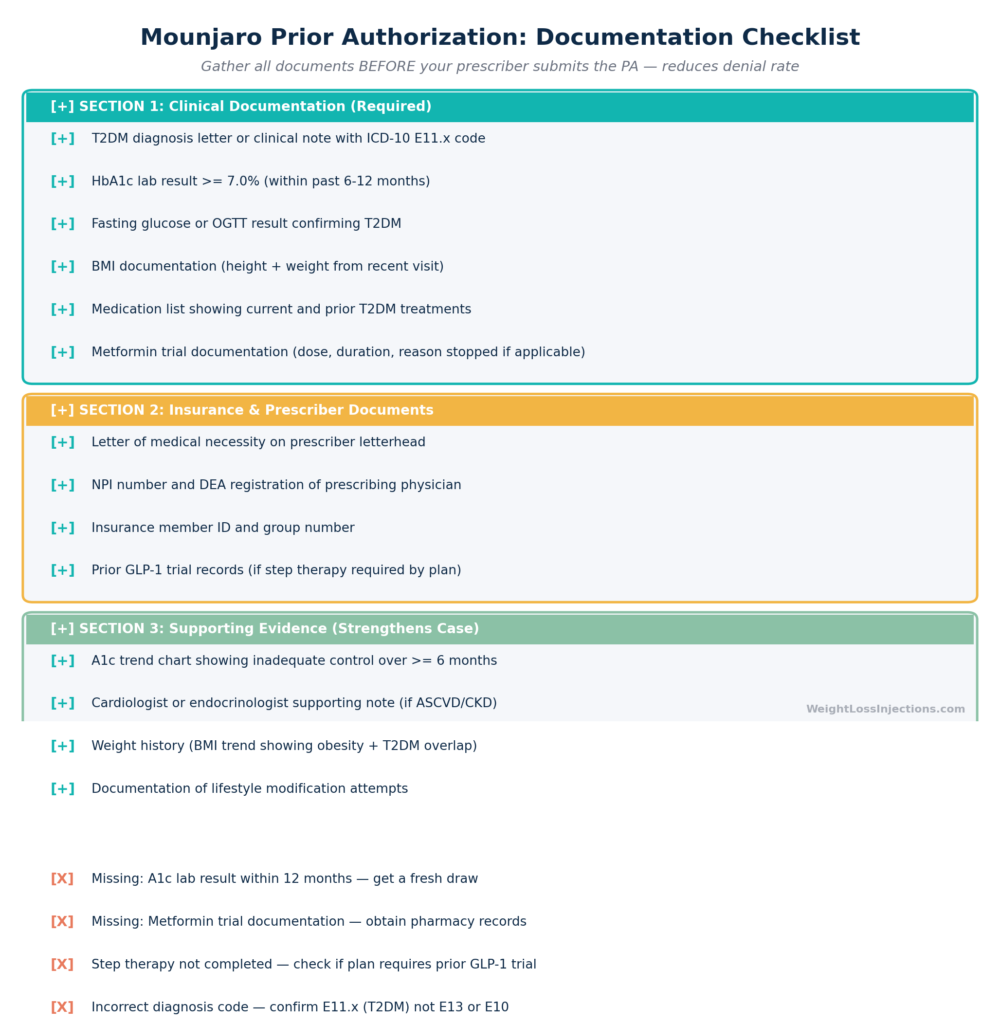
Typical PA Documentation Requirements
Based on Kaiser Permanente’s PA form and Cigna’s coverage position criteria, most commercial plans require:
- Documented T2DM diagnosis (ICD-10: E11.x) in clinical records
- Recent A1c (within 3 months), typically ≥7.0% or ≥8.0% depending on plan
- Documentation of metformin trial at maximally tolerated dose (≥2,000 mg/day) for ≥3 months, or documented intolerance or contraindication
- Confirmation that Mounjaro is not being prescribed solely for weight management
- Patient is not currently on another GLP-1 agonist or DPP-4 inhibitor (some plans)
- Supporting clinical notes and comorbidities documentation
For plans with step therapy requirements — most notably some BCBS plans — an additional step may require documented prior use of and inadequate response to a GLP-1 agonist such as Ozempic or Trulicity before Mounjaro is authorized, per Sprypt Step Therapy Guide. Not all plans require step therapy; many auto-adjudicate lower doses (2.5/5 mg) when a diabetes claim appears in the patient’s claims history, per Cigna PA Policy.
Typical PA Timeline
Most PA decisions take 1–2 weeks from the time the prescriber submits documentation. Urgent reviews — for example, when a patient is already on insulin with a compelling clinical need — can sometimes be completed in 72 hours. Initial authorization periods typically run 4–12 months; renewal requires documented A1c improvement (typically ≥0.5% reduction from baseline) and adherence to therapy, per the AACE Comprehensive Diabetes Management Algorithm 2025.
When PA Is Denied
Denial is not the end of the road. Common strategies after a PA denial include:
- First-level appeal: Most insurers offer a formal internal appeal. A letter of medical necessity from the prescribing clinician — addressing the specific denial reason — overturns a meaningful proportion of first-level denials.
- Peer-to-peer review: The prescriber requests to speak directly with the insurer’s medical reviewer. This is most effective when the denial rests on a clinical judgment call rather than a hard formulary exclusion.
- Exception request: If step therapy is the barrier, an exception can be requested citing clinical contraindication to step-therapy agents, prior adverse events, or the clinical urgency of starting Mounjaro specifically.
- Pivot to self-pay: If all appeals fail, LillyDirect self-pay vials ($299–$449/month depending on dose) or [$X/month] through WeightLossInjections.com partner platforms remove the insurance dependency entirely, per BestMedsHub May 2026.
Our Top 3 · October 2026
The best GLP-1 providers right now
Independently reviewed. Ranked by price, medication access, provider quality, and patient outcomes.
Renew GLP
Personalized GLP-1, GIP plans: Semaglutide & Tirzepatide.
Medvi
No membership or hidden fees. Everything you need is included.
Trimi
US-licensed clinicians and shipped to your door, from $99/mo.
Step 6: What to Say to Your Doctor About Mounjaro
This section is a preparation guide — not a manipulation script. Its purpose is to give you the clinical vocabulary and framing needed to have a productive, honest conversation with your prescriber.
Timeline comparison: telehealth Mounjaro prescription (top) vs. in-person with prior authorization (bottom). Telehealth labs-on-file pathway can deliver medication within one week; in-person PA pathway typically takes three to six weeks.
If You Have T2DM
The most effective approach is to frame the conversation around your specific clinical numbers and the SURPASS evidence base. Consider saying:
“My A1c is [X%] — I haven’t reached my target of less than 7% on [current medication]. I’ve reviewed the SURPASS-2 data showing tirzepatide achieved superior A1c reduction compared to semaglutide at all three doses. Is Mounjaro an appropriate next step for me given my history?”
Bring documentation of your metformin trial — dates, doses, and any side effects that limited dose escalation. If you have comorbid obesity, mention it explicitly: Mounjaro’s weight loss benefit in T2DM patients (mean −11.0% to −12.9% body weight at 15 mg in SURPASS-3) is clinically relevant to both glycemic control and cardiovascular risk, per The Lancet SURPASS-3 2021.
Questions to ask that signal clinical preparedness:
- “What dose will you start me on and what’s the titration plan?”
- “Will my insurance require prior authorization, and what documentation do you need from me to submit it?”
- “If I’m on a sulfonylurea, should we reduce the dose when I start Mounjaro to reduce hypoglycemia risk?”
- “What A1c improvement should we expect to see at my 90-day follow-up?”
If You Want Mounjaro for Weight Loss (Off-Label)
Acknowledge the off-label status proactively — a prescriber will respect that you understand the regulatory context:
“My BMI is [X]. I have [comorbidity — hypertension, dyslipidemia, PCOS, etc.]. I’ve tried [prior approaches — specific diet programs, prior medications] without achieving sustained success. I understand Mounjaro is prescribed off-label for weight loss and that Zepbound carries the weight-management indication — I’d like to discuss whether my clinical profile makes Mounjaro the right choice for me, or whether Zepbound is better supported given my insurance situation.”
Reference recent weight-related health impacts — a rising A1c trend, worsening blood pressure control, or joint pain exacerbated by weight — to build the medical case for treatment urgency. These are not embellishments; they are the clinical data your prescriber needs to justify the prescription in your chart and, if applicable, to an insurer.
If Your Doctor Is Hesitant
A prescriber’s hesitation is usually rooted in one of three things: unfamiliarity with the latest tirzepatide data, concerns about off-label use in their specific practice context, or a genuine clinical reason they have not yet articulated. You can address this productively:
- Ask for a referral to an endocrinologist (T2DM) or obesity medicine specialist (weight loss)
- Ask whether a telehealth second opinion would be appropriate
- Request that your prescriber note the reason for declining in your chart — this can be useful context for a telehealth consultation or an insurance appeal
Do not attempt to pressure a prescriber into writing a prescription they believe is clinically inappropriate. If the clinical case is strong, another qualified provider will agree.
Step 7: Filling Your First Prescription — Pharmacy, Cost, and Savings
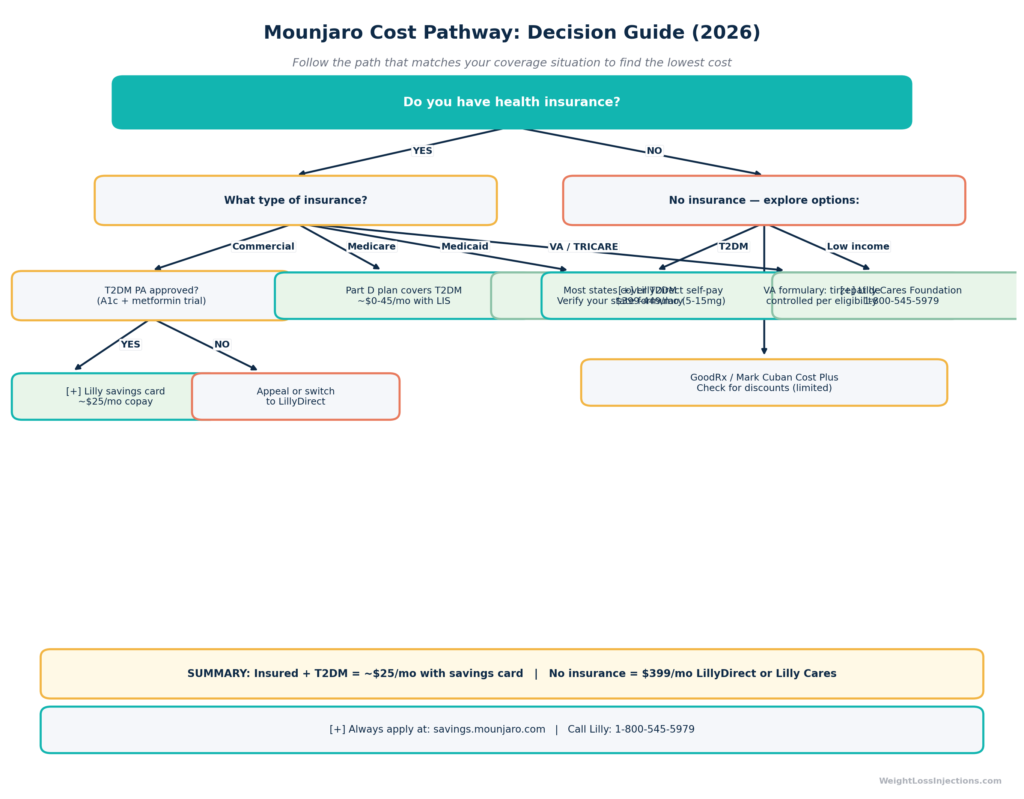
Once the prescription is written and any required PA is approved, the final step is filling and paying. This is where cost management strategies matter most.
Pharmacy Options
Retail pharmacy (in-person or mail-order). Mounjaro is available at all major pharmacy chains — CVS, Walgreens, Walmart, Costco, Rite Aid, Harris Teeter, and most independent pharmacies. Cash prices without any coupon or assistance range from approximately $980 to $1,193 per 28-day supply at major chains, with Costco generally the lowest at $850–$1,075, per FormBlends Q1 2026.
Mail-order pharmacy. Most commercial insurance plans offer 90-day mail-order supply options at reduced copay tiers. If your PA is approved for T2DM, switching to mail order can lower your per-month cost further. Some telehealth platforms route prescriptions through mail-order partners automatically.
LillyDirect. LillyDirect (startlilly.com) connects T2DM patients with certified physicians and provides self-pay tirzepatide vials at the lowest verified cash prices for branded Mounjaro. Monthly pricing as of 2026: $299 (2.5 mg), $399 (5 mg), $449 (7.5–15 mg), per BestMedsHub May 2026. These are the branded Mounjaro product in single-dose vials — not compounded tirzepatide.
The Lilly Mounjaro Savings Card
For patients with commercial insurance who are prescribed Mounjaro for T2DM, the Lilly Mounjaro Savings Card is the single most powerful cost-reduction tool available. Key terms as of 2026, per NiceRx March 2026:
| Situation | Monthly Cost with Card |
|---|---|
| Commercial insurance covers Mounjaro (T2DM) | As low as $25/month |
| Commercial insurance does NOT cover Mounjaro | As low as $499/month |
| Medicare or Medicaid | Not eligible |
- Up to 13 prescription fills per calendar year
- 3-month supply: as low as $75 total for covered patients
- Card valid through December 31, 2026
- Enroll at mounjaro.lilly.com/savings-resources or text “MJ” to 85099
Important caveat: The savings card does not apply during the deductible phase of your plan. Until your deductible is met, you will pay much more than $25 per fill even with the card, per FormBlends savings card explainer. Plan your first fill timing accordingly — the end of a plan year, after your deductible has been met, is the most cost-efficient window.
Coupon Options for Cash-Pay Patients
If you are paying cash without the savings card:
- GoodRx coupon: Reduces retail price to approximately $875–$1,000 at participating pharmacies, per the SHARED_SPEC pricing data
- SingleCare coupon: Approximately $872–$987 at participating pharmacies, per SingleCare pricing
- LillyDirect self-pay remains the cheapest branded option for uninsured patients at $299–$449/month
Lilly WAC Reference
Mounjaro’s published Wholesale Acquisition Cost (WAC) as of January 1, 2026 is $1,079.77 per 28-day supply, uniform across all six dose strengths, per the Lilly official WAC disclosure PDF. Annual cost at WAC without any assistance is approximately $12,957–$13,440, per Noom May 2026 cost analysis. The savings pathways above exist specifically to bridge this gap.
Step 8: Starting Therapy and Follow-Up — What to Expect
Getting the prescription in hand is the beginning of the process, not the end. Mounjaro requires thoughtful dose titration, monitoring, and follow-up to achieve optimal results and manage side effects.
Mounjaro dose titration schedule per FDA Prescribing Information: start 2.5 mg, increase by 2.5 mg every 4 weeks as tolerated, maximum 15 mg once weekly.
Initial Dose: 2.5 mg × 4 Weeks
Per the FDA Prescribing Information §2, the starting dose of Mounjaro is 2.5 mg once weekly subcutaneously. This dose is for treatment initiation and tolerability only — it is not intended to provide meaningful glycemic control on its own. After four weeks at 2.5 mg, the dose increases to 5 mg, and then in 2.5 mg increments at minimum four-week intervals as needed: 7.5 mg → 10 mg → 12.5 mg → 15 mg (maximum).
Why the slow start? The most common adverse effects of Mounjaro — nausea, diarrhea, vomiting, constipation, and decreased appetite — are dose-dependent and most prominent during titration. Starting at 2.5 mg and spending four weeks at each dose level gives the GI system time to adapt, which substantially reduces the proportion of patients who discontinue due to GI intolerance. If GI side effects are significant at any dose, the prescriber may hold titration at the current dose until they subside.
Injection technique: Once weekly, any time of day, with or without food. Inject subcutaneously into the abdomen, thigh, or upper arm — rotate sites with each dose. Mounjaro can be used in the same body region as insulin but not adjacent to an insulin injection site, per FDA label §2.2.
Missed Dose Protocol
If ≤4 days (96 hours) have passed since the scheduled dose: administer as soon as possible, then resume the regular weekly schedule. If more than 4 days have passed: skip the missed dose entirely and resume on the next regularly scheduled day. Do not double-dose, per FDA label §2.2.
30-Day Follow-Up
Most prescribers schedule a follow-up approximately four weeks after initiation. This appointment (in-person or telehealth) typically covers:
- Tolerability: Are GI side effects manageable? Is dose titration proceeding on schedule, or does it need to be held?
- Hypoglycemia review: Have you had any hypoglycemic episodes, particularly if you are also on a sulfonylurea or insulin?
- Weight and glucose log review: A brief interim check on progress
- Medication interaction concerns: Any new symptoms that might relate to drug interactions, particularly if you are on warfarin, levothyroxine, or oral contraceptives — all narrow-therapeutic-index or absorption-sensitive medications affected by delayed gastric emptying, per FDA label §7
- Prescription renewal and PA renewal: If you are within the initial PA authorization window, this visit generates the documentation needed for future renewals
90-Day A1c Recheck
At approximately 12 weeks, a repeat A1c is the primary objective biomarker of T2DM response. For most patients, A1c reductions begin to be detectable by weeks 8–12, with the full effect seen at the dose ceiling by 20–40 weeks. In SURPASS-1, mean A1c reductions at 40 weeks were −1.87% to −2.07% depending on dose, per The Lancet SURPASS-1 2021. For PA renewal, documented A1c improvement of ≥0.5% from baseline is typically required, per AACE Algorithm 2025.
What to Track at Home
- Weekly weight (if weight management is a goal) — use the same scale, same time of day, same conditions
- Weekly glucose readings — fasting glucose before breakfast provides the most consistent data point
- Side effect diary for the first 12 weeks — document any episodes of nausea, vomiting, or diarrhea, especially in relation to injection day and meals
- Blood pressure — particularly if hypertension is a comorbidity; Mounjaro’s weight-loss effect typically produces favorable blood pressure reductions over time
For patients on insulin or sulfonylureas, more frequent glucose monitoring is warranted in the first four to eight weeks to catch hypoglycemia early and guide dose reductions of those agents.
Telehealth vs. In-Person: Choosing the Right Path for Your Situation
The right path depends on how quickly you need a prescription, what your insurance situation looks like, and how comfortable you are with remote clinical management.
Choose telehealth if:
- You need a prescription within days rather than weeks
- You are pursuing off-label weight-loss treatment and expect to self-pay
- Your clinical situation is not complex (no multiple comorbidities requiring specialist coordination)
- You have had recent labs (within 6–12 months) that can be submitted digitally
- You live in an area with long PCP wait times
Choose in-person if:
- You have a complex T2DM case with multiple comorbidities or prior complications
- You are on insulin or multiple diabetes agents and need close titration support
- Your insurance requires in-person documentation for PA purposes
- You have concerns about contraindications (MTC history, pancreatitis history) that warrant in-depth clinical evaluation
- You want continuity with a provider who knows your full medical history
Both pathways can result in a successful, appropriate Mounjaro prescription. The telehealth route is faster and increasingly the standard for straightforward cases; the in-person route remains the gold standard for clinical complexity. Many patients use telehealth to initiate therapy and transition to PCP or specialist management once stable.
Frequently Asked Questions
How do I get a Mounjaro prescription?
You need a licensed healthcare provider — primary care physician, endocrinologist, obesity medicine specialist, or telehealth clinician — to evaluate you and issue the prescription. Requirements include a T2DM diagnosis (for on-label use) or BMI ≥30 with comorbidities (for off-label weight loss). Telehealth platforms with labs on file can prescribe within 24–48 hours, per FormBlends April 2026. WeightLossInjections.com partner platforms offer [service detail] for the consultation process.
What labs do I need before getting a Mounjaro prescription?
Most providers require a recent A1c (within 3 months), fasting glucose, TSH, and a comprehensive metabolic panel. A lipid panel and BMI documentation are also commonly requested. Telehealth platforms may accept labs from within the past 6–12 months for patients who have recent bloodwork on file, per Kaiser Permanente PA Form.
Can I get Mounjaro without having type 2 diabetes?
Yes, but only off-label. Physicians can legally prescribe Mounjaro for weight loss in patients without T2DM when they meet BMI criteria (≥30, or ≥27 with a comorbidity). Insurance rarely covers off-label prescribing; most patients self-pay at [$X/month] through LillyDirect or at lower rates through telehealth partner platforms. The $25 savings card is not available for off-label weight-loss prescriptions, per meetaugust.ai 2026.
Can I get Mounjaro through telehealth?
Yes. Multiple platforms — PlushCare, Noom Med, Hims & Hers, LillyDirect, and WeightLossInjections.com partner platforms — provide telehealth evaluations for Mounjaro. The process typically takes 24–48 hours from intake to prescription once labs are on file. Consultation fees vary at [$X/month] depending on platform, per Medical News Today 2026.
What if my doctor won’t prescribe Mounjaro?
Ask for a referral to an endocrinologist (T2DM) or obesity medicine specialist (weight loss), or book a telehealth consultation for a second opinion. Insurance denial is a separate issue from the prescribing decision — if you have a valid clinical indication, another qualified provider familiar with the SURPASS data may be more comfortable initiating therapy.
How long does it take to get a Mounjaro prescription?
Through telehealth with labs already on file: as fast as 24–48 hours from intake to prescription. Through an in-person provider with prior authorization: typically 1–4 weeks depending on appointment availability and insurance review timeline, per FormBlends April 2026.
What is the starting dose of Mounjaro?
2.5 mg once weekly subcutaneously, per FDA Prescribing Information §2. This initiation dose is for tolerability only. After four weeks, the dose increases to 5 mg and escalates in 2.5 mg increments every four weeks as needed, up to a maximum of 15 mg once weekly.
Medical Disclaimer and Editorial Review
Medical Disclaimer: Getting a Mounjaro prescription requires evaluation by a licensed healthcare provider. WeightLossInjections.com does not prescribe medications. The information in this article is for educational purposes and does not substitute for a clinical consultation. Mounjaro is a prescription-only medication with specific indications, contraindications, and monitoring requirements. Do not attempt to obtain Mounjaro without a valid prescription from a licensed provider.
Summary: How to Get Mounjaro Prescribed — The Complete Checklist
Step 1 — Determine your pathway:
- T2DM on-label: documented diagnosis (ICD-10: E11.x), A1c ≥7.0%, prior metformin trial
- Off-label weight loss: BMI ≥30 or BMI ≥27 + comorbidity; expect self-pay
- Confirm no absolute contraindications: MTC history, MEN 2, pancreatitis history, pregnancy
Step 2 — Get your labs:
- A1c (within 3 months), fasting glucose, CMP, lipid panel, TSH, BMI documentation
Step 3 — Choose your prescriber:
- PCP (fastest in-person route for established T2DM patients)
- Endocrinologist (complex T2DM cases)
- Obesity medicine specialist (weight-loss-primary patients)
- Telehealth platform (fastest overall; 24–48 hours with labs on file)
Step 4 — First appointment:
- Disclose full medication list (especially insulin, sulfonylureas, oral contraceptives)
- Bring lab results and documentation of prior therapy
- Discuss PA expectations and savings card eligibility
Step 5 — Navigate prior authorization:
- Submit A1c, metformin trial documentation, clinical notes
- Expect 1–2 weeks for PA decision
- If denied: appeal, peer-to-peer review, or pivot to self-pay
Step 6 — Fill your prescription:
- With T2DM + commercial insurance: Lilly Savings Card as low as $25/month, per NiceRx March 2026
- Without insurance: LillyDirect $299–$449/month, per BestMedsHub May 2026
- WeightLossInjections.com partner platform: [$X/month] — [service detail]
Step 7 — Start therapy:
- 2.5 mg × 4 weeks, then titrate per prescriber guidance
- 30-day follow-up, 90-day A1c recheck
- Track weight, glucose, and side effects weekly
For more detail on costs, see our guide on what Mounjaro costs without insurance. For the full breakdown of how insurance prior authorization and appeals work, see how Mounjaro insurance coverage and prior authorization works. For the complete dose escalation schedule, see our full Mounjaro titration schedule.