![Unbranded [pillar-drug-class] injection pen on a neutral background — WeightLossInjections.com editorial hero](https://weightlossinjections.com/wp-content/uploads/2026/07/hero_tirzepatide_c5_lifestyle-1200x675.png)
Bar chart comparing tirzepatide mean percent body weight loss across SURMOUNT-1 dose groups (5 mg −15.0%, 10 mg −19.5%, 15 mg −20.9%), SURMOUNT-5 tirzepatide MTD (−20.2%), SURMOUNT-4 continuation arm…
- In the pivotal SURMOUNT-1 trial published in the New England Journal of Medicine, tirzepatide produced mean body weight reductions of −15.0% at 5 mg, −19.5% at 10 mg, and −20.9% at 15 mg at 72 weeks — versus −3.1% on placebo.
- In SURMOUNT-4 (JAMA 2024), patients who continued tirzepatide after an initial 36-week lead-in reached a total of −25.3% from baseline at 88 weeks; those who stopped regained 14.0% of body weight and ended at only −9.9% from baseline.
- In SURMOUNT-5 (NEJM 2025), tirzepatide produced −20.2% weight loss versus −13.7% for semaglutide at maximum tolerated doses — approximately 47% greater loss.
- The highest outcomes in the entire trial program — up to −26.6% — came from SURMOUNT-3, which combined a 12-week intensive lifestyle lead-in with tirzepatide.
- Dose is the single strongest predictor of outcome; patients who cannot escalate beyond 5 mg will see proportionally less weight loss.
- Tirzepatide is a chronic therapy for most patients — stopping the drug reverses most of the weight loss within 12 months, per SURMOUNT-4 data.
- All clinical trial data reflects controlled conditions; individual results vary. This guide explains the full picture so you can set accurate expectations.
SURMOUNT Trial Results at a Glance — The Full Clinical Evidence
No competitor article synthesizes all four major SURMOUNT trials in one place. Here is that complete picture.
The Four Trials and What Each Adds
The SURMOUNT clinical program is the largest and most rigorous pharmaceutical weight management trial program conducted to date. Each trial answers a different clinical question.
SURMOUNT-1 is the foundational efficacy study for tirzepatide in weight management. Published in the New England Journal of Medicine in 2022, it enrolled 2,539 adults with obesity (BMI ≥30) or overweight (BMI ≥27 with at least one weight-related comorbidity) who did not have type 2 diabetes. The 72-week, randomized, double-blind, placebo-controlled design produced the most-cited weight loss efficacy figures in the field.
SURMOUNT-3 asked what happens when you layer a structured intensive lifestyle program onto tirzepatide treatment. After a mandatory 12-week intensive behavioral lead-in, participants who had already achieved ≥5% weight loss were then randomized to tirzepatide or placebo for a further 72 weeks. Mean weight loss from study entry reached up to 26.6% in the tirzepatide arm — the highest figure in the program — though this number includes the lifestyle lead-in phase, not tirzepatide alone.
SURMOUNT-4 is the most practically important trial for any patient asking “what happens if I stop?” It enrolled participants in a 36-week open-label tirzepatide lead-in, then randomized them 1:1 to either continue tirzepatide or switch to placebo for 52 more weeks. The withdrawal data it generated is covered in depth in its own section below.
SURMOUNT-5 is the headline head-to-head comparison: tirzepatide at maximum tolerated dose versus semaglutide at maximum tolerated dose, in 751 non-diabetic adults with obesity or overweight, for 72 weeks, published in the New England Journal of Medicine in 2025.
The Numbers Across All Four Trials
| Trial | Population | Duration | Key Weight Loss Result |
|---|---|---|---|
| SURMOUNT-1 | 2,539 adults with obesity/overweight, no T2D | 72 weeks | −15.0% (5 mg), −19.5% (10 mg), −20.9% (15 mg) vs. −3.1% placebo |
| SURMOUNT-3 | Obesity/overweight, post-12-week intensive lifestyle lead-in | 72 weeks (+ 12-week lead-in) | Up to −26.6% from study entry (tirzepatide + lifestyle lead-in) |
| SURMOUNT-4 | Withdrawal study — 36-week open-label lead-in, then randomized | 88 weeks total | −25.3% total from baseline (continuation arm); −9.9% total from baseline (discontinuation arm) |
| SURMOUNT-5 | 751 adults, no T2D, tirzepatide MTD vs. semaglutide MTD | 72 weeks | −20.2% (tirzepatide) vs. −13.7% (semaglutide) |
Sources: SURMOUNT-1, NEJM 2022; Lilly SURMOUNT-3/4 investor release; SURMOUNT-4, JAMA 2024; SURMOUNT-5, NEJM 2025.
Responder Rates — Beyond the Average
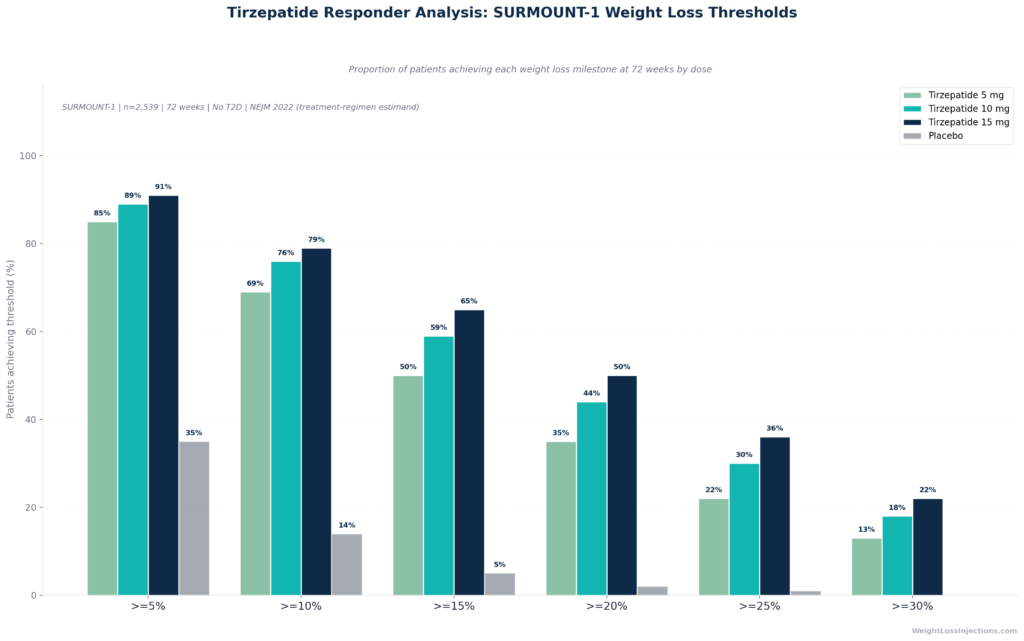
Mean weight loss figures tell part of the story. The responder analyses reveal the full distribution. In SURMOUNT-1 at the 15 mg dose, the proportion of patients achieving clinically meaningful thresholds was (NEJM 2022):
- ≥5% body weight loss: 91% on tirzepatide 15 mg vs. 35% on placebo
- ≥10% body weight loss: 84% vs. 18%
- ≥15% body weight loss: 69% vs. 9%
- ≥20% body weight loss: 57% vs. 3%
The 57% figure is striking in historical context. More than half of patients on the maximum dose lost at least one-fifth of their starting body weight — a threshold historically associated only with bariatric surgery. The dose-response pattern held across all responder thresholds, reinforcing that reaching and maintaining the maximum tolerated dose is the primary driver of outcome.
In SURMOUNT-5, at maximum tolerated doses, approximately 31% of tirzepatide users achieved ≥25% weight loss and 19.7% achieved ≥30% weight loss at 72 weeks, per Peptides:Enhanced SURMOUNT-5 analysis.
One critical context note: All of these figures come from controlled clinical trial populations. Participants received dietary counseling, regular clinical monitoring, and structured follow-up. Real-world outcomes may differ depending on adherence, lifestyle factors, comorbidities, and access to ongoing medical support. The numbers set the ceiling; individual results span a wide range below that ceiling.
What Typical Weight Loss Looks Like Month by Month
This timeline is built from the SURMOUNT-1 pharmacodynamic trajectory and the standard titration schedule — a 2.5 mg starting dose escalating by 2.5 mg increments every four weeks, up to a maximum of 15 mg — per StatPearls/NCBI Bookshelf and the GoodRx Mounjaro Dosage Guide. These are trial-derived population averages, not personal guarantees. Individual timing depends heavily on which dose you reach and when.
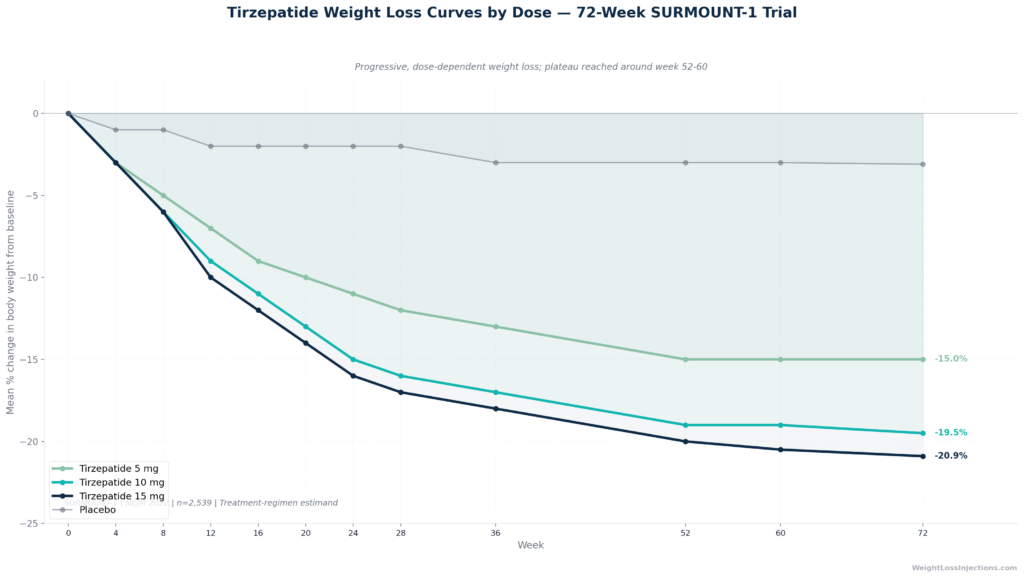
Multi-line chart showing tirzepatide weight loss trajectory over 72 weeks at 5 mg, 10 mg, and 15 mg doses versus placebo, based on SURMOUNT-1 approximate curve data
Months 1–2 (2.5–5 mg Phase): The Tolerability Window
The FDA-labeled starting dose of 2.5 mg is explicitly a tolerability step — it is not an approved maintenance dose, and it is not designed to produce peak weight loss. Appetite suppression is beginning to develop, but the drug has not yet reached the plasma concentrations that drive significant caloric restriction. Per SURMOUNT-1 data, most patients see modest early results: roughly 2–4% body weight reduction in this phase.
What you may notice even at this stage: slightly smaller portions at meals, earlier satiety, reduced interest in snacking between meals. These are signs the mechanism is working. The 5 mg dose, reached at week 5, is where appetite suppression becomes clinically noticeable for most patients — and where meaningful weight loss begins to appear on the scale.
For a person starting at 220 lbs, a 2–4% loss in the first two months represents approximately 4–9 lbs. This is not the full effect of the drug; it is the price of admission to the active treatment phase.
GI side effects — nausea, constipation, occasional vomiting — are most prominent during weeks 1–8 as the body adapts to each new dose. These typically attenuate within one to two weeks of each dose step.
Months 2–4 (5–7.5 mg Escalation): Appetite Suppression Becomes Real
By months two to four, most patients following standard titration have escalated from 5 mg to 7.5 mg. The appetite-suppression effect at this phase becomes genuinely noticeable — patients commonly describe a reduction in what some clinicians call “food noise,” the persistent background preoccupation with food and hunger signals that characterizes obesity for many people.
Average weight loss trajectories in SURMOUNT-1 suggest approximately 5–8% cumulative body weight reduction by months three to four among participants in the 10–15 mg arms (who passed through this dose range on their way to maximum dose). For a 220-lb patient, that translates to roughly 11–18 lbs. Clothes begin to fit differently. Blood pressure and fasting glucose typically begin improving.
This is the window where most patients first report: “This is actually working.”
Months 4–6 (7.5–10 mg): Peak Rate of Loss
Weeks 16–28 represent the steepest downward slope of the tirzepatide weight loss curve for most patients. Many have reached 10 mg or are approaching 12.5 mg. SURMOUNT-1 data at around the 24-week mark shows approximately 10–14% cumulative weight loss in the 15 mg dose arm — roughly corresponding to the period when patients in the trial were traversing the 7.5–12.5 mg range.
The scale moves more quickly here than at any other phase. Weekly losses of 1–2 lbs are common; monthly losses of 5–8 lbs are reported by many patients. Most dramatic changes in body shape and metabolic lab values occur during this phase.
For a 220-lb patient at month six, approximately 22–31 lbs of total loss places them in a body that functions measurably differently — lower resting blood pressure, improved insulin sensitivity, less mechanical stress on joints.
Months 6–12 (10–15 mg): Continued Loss, Decelerating Rate
Weight loss continues through months six to twelve but at a decelerating rate. The body begins mounting homeostatic resistance as it adapts to the lower weight — resting metabolic rate decreases, and appetite signals partially reassert themselves, working against the drug’s appetite-suppressing effect. By week 52 in SURMOUNT-1, patients on the 15 mg dose were approaching their peak trial values, with mean weight loss close to 18–20%.
The practical experience during this phase: the scale moves less than it did at months four to six, perhaps a half pound to one pound per week rather than one to two pounds. This is not treatment failure — it reflects a new metabolic equilibrium forming at a substantially lower body weight.
Month 12 and Beyond (Maintenance Phase): The Plateau
SURMOUNT-1 data shows that maximum effect is achieved around weeks 52–72 in the trial. Most of the lifetime weight loss on tirzepatide is captured by months 12–15. The plateau that emerges is the body successfully defending a new, lower weight while the drug continues to work.
What the SURMOUNT-4 continuation arm showed is instructive: patients who had already plateaued after a 36-week lead-in, and who continued tirzepatide for 52 more weeks, experienced an additional −5.5% weight loss. This suggests that the body continues to slowly adapt even past the apparent plateau — but the rate is considerably slower than the active loss phase.
Month-by-Month Benchmark Summary
| Timeframe | Dose Range | Approximate Cumulative Loss | What to Expect |
|---|---|---|---|
| Weeks 1–4 (Month 1) | 2.5 mg | ~1–3% | Appetite begins quieting; GI adaptation; modest scale change |
| Weeks 5–8 (Month 2) | 5 mg | ~3–5% | Appetite noticeably reduced; first clear scale movement |
| Weeks 9–12 (Month 3) | 7.5 mg | ~5–8% | Clothes fitting differently; energy improving |
| Months 4–6 | 10–12.5 mg | ~10–14% | Most dramatic visual changes; peak rate of loss |
| Months 7–12 | 12.5–15 mg | ~18–21% | Loss decelerates; body approaching new equilibrium |
| 12+ months | 15 mg maintenance | Up to ~21% (SURMOUNT-1 average) | Plateau; metabolic markers continuing to improve |
*Data derived from SURMOUNT-1 treatment-regimen estimand at 72 weeks. Source: SURMOUNT-1, *NEJM* 2022. These are population averages from controlled trial conditions — individual results vary and are not guaranteed.*
Factors That Influence Your Tirzepatide Results
The clinical trials establish what is possible on tirzepatide under optimal conditions. What happens in your body is shaped by several factors that push results higher or lower than the trial averages.
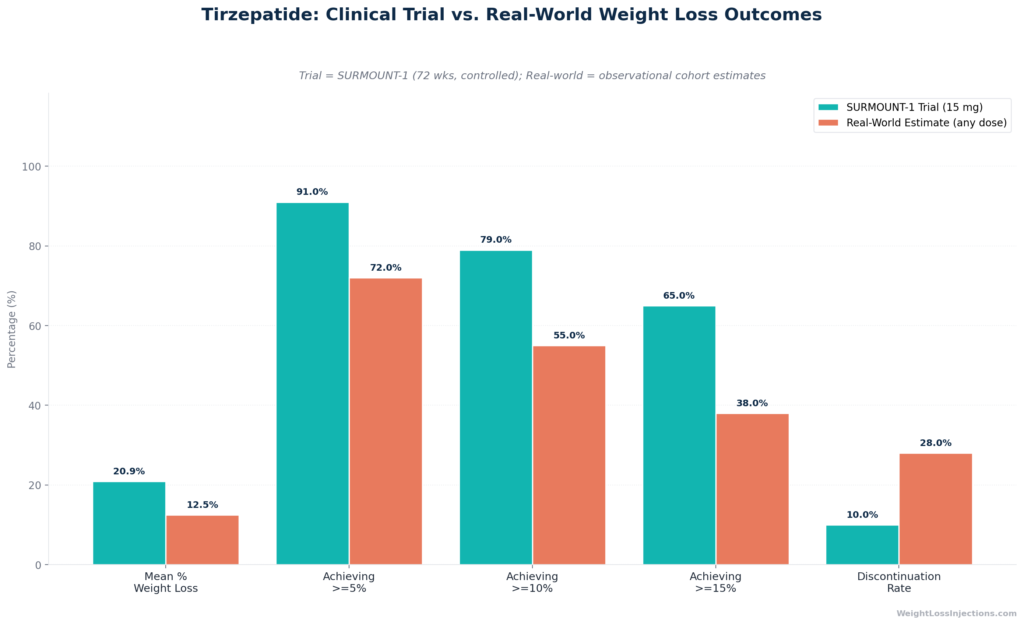
Dual-line or diverging bar chart comparing SURMOUNT-4 tirzepatide continuation arm (continuing loss from −20.9% at week 36 to −25.3% total at week 88, shown in teal/green) versus discontinuation arm…
1. Dose Achieved — The Strongest Single Predictor
The dose-response relationship in SURMOUNT-1 is unambiguous: every step up the dose ladder adds efficacy. The gap between 5 mg and 15 mg at 72 weeks is 5.9 percentage points of body weight — approximately 13 additional pounds for a 220-lb patient (NEJM 2022). Patients who cannot tolerate escalation beyond 5 mg will, on average, achieve proportionally less weight loss.
This is not a reason to rush escalation — tolerability is critical to staying on the drug long-term, and a patient who tolerates 5 mg consistently for a year outperforms one who rushes to 15 mg and discontinues due to side effects. The point is that reaching and sustaining your maximum tolerated dose is worth the effort.
For context on the full tirzepatide dosing chart, including the complete titration schedule, see WeightLossInjections.com’s dosing reference.
2. Presence of Type 2 Diabetes
Patients with type 2 diabetes (T2D) consistently show slightly less weight loss on tirzepatide than those without diabetes. SURPASS trial data (T2D populations) showed lower weight outcomes than SURMOUNT-1’s non-diabetic cohort — a pattern attributable to differences in insulin resistance, co-occurring medications that promote weight retention, and possibly blunted metabolic receptor signaling in the diabetic environment. Per StatPearls/NCBI Bookshelf, patients with T2D should calibrate expectations accordingly — outcomes remain clinically significant, but the 20.9% average from SURMOUNT-1 is a non-diabetic figure.
3. Dietary Adherence and Food Quality
SURMOUNT trials were conducted with dietary counseling and a reduced-calorie diet as a required adjunct. Tirzepatide suppresses appetite, but it does not prevent caloric intake from calorie-dense, highly palatable foods. Patients who use the drug’s appetite-suppression signal to shift toward a protein-forward, anti-inflammatory eating pattern consistently report better outcomes than those who maintain their prior dietary patterns at reduced quantities.
Adequate protein intake — aiming for at least 1 gram per kilogram of body weight daily — serves a dual purpose: it reduces hunger (protein is the most satiating macronutrient), and it protects lean muscle mass during rapid weight loss, which is metabolically important for long-term weight maintenance.
4. Physical Activity, Especially Resistance Training
Tirzepatide’s caloric-restriction effect can promote loss of both fat and lean muscle mass. Per StatPearls/NCBI Bookshelf, resistance training two to three times per week during active tirzepatide treatment helps preserve lean mass and improve body composition beyond what the scale alone reflects. This matters not just for aesthetics but for metabolic rate — muscle is metabolically active tissue, and preserving it during weight loss reduces the risk of weight regain if treatment is interrupted or doses are reduced.
Prioritizing resistance training over cardio alone is the evidence-supported approach during active pharmacological weight loss. This does not mean avoiding cardio — it means ensuring strength work is part of the routine.
5. Dose Adherence and Injection Consistency
Tirzepatide’s half-life is approximately five days, and steady-state plasma concentration is reached after approximately four weeks of consistent once-weekly dosing per FDA Clinical Pharmacology data. Missing doses or pausing treatment interrupts that steady state, reducing plasma drug levels and blunting appetite suppression. Consistent weekly injection timing — not just dose — is a meaningful predictor of outcome.
SURMOUNT-4 data makes the consequence of treatment interruption even clearer: even a planned, prolonged stop leads to rapid weight regain. The drug’s chronic mechanism requires chronic administration to sustain its effect.
6. Structured Behavioral Support
SURMOUNT-3 is the clearest trial evidence on this point: combining a 12-week intensive lifestyle intervention with tirzepatide produced mean weight loss from study entry of up to −26.6% — the highest sustained outcome in the entire SURMOUNT program — per the Lilly SURMOUNT-3/4 investor release. While the SURMOUNT-3 design selected for patients already responding to behavioral intervention, the directional finding is robust: structured dietary counseling and behavioral support amplify tirzepatide’s pharmacological effect.
Starting a structured behavioral or dietary program alongside tirzepatide — even a straightforward one involving regular dietitian check-ins, meal planning, and protein targets — can meaningfully expand your outcomes beyond what the drug produces on its own.
7. Genetic and Biological Individual Variation
GIP receptor sensitivity varies between individuals. Some patients appear to be inherently less responsive to the GIP agonism component of tirzepatide, potentially limiting the additive benefit of the dual mechanism. These differences are not currently predictable from pre-treatment testing. Per StatPearls/NCBI Bookshelf, the clinical implication is that true pharmacological non-response at therapeutic doses — while uncommon — does exist, and a structured clinical evaluation is more appropriate than simply stopping treatment if results are lower than expected.
Compounded Tirzepatide Weight Loss — Same Molecule, Do Results Differ?
Given the significant patient interest in compounded tirzepatide as a cost access pathway, this question deserves a direct, evidence-based answer. The short version: molecular equivalence exists, but quality control is the variable that matters.
The Current Legal Context (June 2026)
Mass-market compounded tirzepatide is not lawful as of June 2026. After the FDA declared tirzepatide’s shortage resolved in late 2024 — a determination upheld by federal court in March 2025 — the legal basis for routine compounding evaporated for both 503A and 503B facilities per the FDA GLP-1 Compounding Clarification Page.
A narrow 503A exception survives. A state-licensed pharmacy may compound tirzepatide if the prescriber documents a clinically significant individual difference — for example, a documented allergy to cresol, a preservative in the branded autoinjector pens, or a documented need for a dose strength not commercially available — and the pharmacy compounds ≤4 prescriptions per calendar month of that essentially-copy product, per April 2026 FDA guidance. A generic cost or preference reason does not qualify.
For patients who are currently using or evaluating compounded tirzepatide under this narrow pathway, the question of outcomes compared to Zepbound is relevant and answerable.
Molecular Equivalence
Compounded tirzepatide uses the same active pharmaceutical ingredient (API) as Mounjaro® and Zepbound®. At equivalent doses, the pharmacological mechanism is identical: the same dual GIP/GLP-1 receptor agonism, the same appetite suppression via hypothalamic signaling, the same gastric emptying effects. Per StatPearls/NCBI Bookshelf, there is no biological reason why properly compounded tirzepatide at the correct potency would produce a different weight loss outcome than the branded product at the same dose.
Where Results Could Differ
The differences are in delivery, not pharmacology:
Dose accuracy. Branded autoinjector pens deliver a factory-calibrated, pre-filled dose. Compounded tirzepatide typically comes as a multi-dose vial requiring patient-performed reconstitution and syringe drawing. Dosing errors — particularly in early treatment when patients are learning the process — can result in under-dosing (producing less weight loss than expected) or over-dosing (raising side-effect and safety risk). For a more detailed discussion of compounding safety considerations, see our guide on compounded tirzepatide safety at WeightLossInjections.com.
Potency consistency. Branded products are manufactured to FDA CGMP standards with validated lot-release testing. Compounded products from 503A pharmacies are subject only to state pharmacy board oversight. Subpotent batches deliver less active drug, producing less weight loss; superpotent batches risk overdose, with potentially severe GI and cardiovascular consequences. The FDA has documented adverse events from both, per Potere Health MD’s 2026 compounding overview.
Non-standard dosing protocols. Some compounded prescriptions use microdoses (sub-2.5 mg starting points) or custom escalation schedules designed for patients with high GI sensitivity. This may affect the weight-loss timeline — slower escalation delays reaching higher doses — but may improve tolerability for specific patients, supporting longer-term treatment adherence.
The Bottom Line on Compounded Tirzepatide
If compounded tirzepatide is legally prescribed, properly formulated at verified potency, and administered correctly, it should produce equivalent outcomes to branded tirzepatide at equivalent doses. Patients using this pathway should require a Certificate of Analysis (CoA) from an accredited third-party laboratory confirming API identity, potency, and sterility — and confirm their pharmacy’s USP <797> sterile compounding compliance.
WeightLossInjections.com patients receive [service detail] regarding compounding pharmacy partnerships and quality standards, including verified documentation requirements for any prescribed compounded product.
Our Top 3 · October 2026
The best GLP-1 providers right now
Independently reviewed. Ranked by price, medication access, provider quality, and patient outcomes.
Renew GLP
Personalized GLP-1, GIP plans: Semaglutide & Tirzepatide.
Medvi
No membership or hidden fees. Everything you need is included.
Trimi
US-licensed clinicians and shipped to your door, from $99/mo.
What Happens When You Stop Tirzepatide — The SURMOUNT-4 Regain Data
This section covers the most important long-term treatment data in the entire SURMOUNT program. Every patient considering tirzepatide for weight management deserves an honest account of it before starting.
SURMOUNT-4: Study Design
SURMOUNT-4, published in JAMA in 2024, enrolled non-diabetic adults with obesity or overweight into a 36-week open-label tirzepatide lead-in. All participants took tirzepatide during this phase. Mean weight loss by the end of the lead-in was −20.9% from baseline — already a clinically extraordinary result.
At week 36, participants were randomized 1:1 to either: (a) continue tirzepatide for 52 more weeks, or (b) switch to placebo for 52 weeks. The question was: what happens to weight when the drug is stopped after a successful initial course?
The Results: Continuation vs. Discontinuation
The findings from SURMOUNT-4 (JAMA 2024) are stark:
Tirzepatide continuation arm (weeks 36–88):
- Additional weight loss: −5.5% from the week-36 baseline
- Total weight loss from original baseline: −25.3%
- 89.5% of patients maintained ≥80% of their week-36 weight loss at week 88
Placebo arm / discontinuation (weeks 36–88):
- Weight regained: +14.0% from the week-36 baseline
- Total weight change from original baseline: only −9.9% — meaning less than half of the original 20.9% loss was preserved
- Only 16.6% of placebo patients maintained ≥80% of their week-36 weight loss
Horizontal lollipop chart showing factors that most influence individual tirzepatide weight loss outcomes
What This Means Clinically
The SURMOUNT-4 data is not a scare tactic — it is a description of how obesity biology works. When tirzepatide suppresses appetite, it is actively counteracting the neurobiological signals that drive the body back toward its prior weight. Once the drug is removed, those signals resume without opposition. The body’s adiposity set-point reasserts itself, driving appetite and food intake back toward pre-treatment levels. Weight regain in the placebo arm was not driven by behavioral failure — it occurred uniformly across the withdrawal group, per the JAMA SURMOUNT-4 full text.
The clinical analogy most physicians use: antihypertensives do not cure hypertension — they manage it continuously. When you stop them, blood pressure returns. Tirzepatide works the same way in most patients.
What this means for treatment planning: Stopping tirzepatide should be a deliberate, prescriber-supervised decision — not an impulsive one. If you are considering stopping — because you have reached your goal weight, because of cost, or for any other reason — discuss the SURMOUNT-4 data with your prescriber first and plan for the most likely outcome: meaningful weight regain.
The SURMOUNT-MAINTAIN trial, anticipated to complete in 2026, is investigating whether reducing tirzepatide from the maximum tolerated dose to 5 mg can sustain weight loss outcomes as a long-term maintenance strategy — potentially a more cost-effective and tolerable approach for patients who have reached their weight loss goal.
For a comprehensive deep-dive on plateau patterns and what to do when weight loss slows, see our guide on tirzepatide plateau and weight regain at WeightLossInjections.com.
Tirzepatide vs. Semaglutide: What SURMOUNT-5 Showed
For many patients evaluating tirzepatide, the direct comparison question is: how does it compare to semaglutide (Ozempic/Wegovy), the other leading GLP-1 weight loss medication?
SURMOUNT-5, published in the New England Journal of Medicine in 2025, provides the only prospective, randomized head-to-head comparison. The trial enrolled 751 non-diabetic adults with obesity (BMI ≥30) or overweight (BMI ≥27 with a comorbidity) and randomized them to either tirzepatide at maximum tolerated dose (10 or 15 mg) or semaglutide at maximum tolerated dose (1.7 or 2.4 mg), for 72 weeks.
Primary Results
- Tirzepatide: Mean body weight change of −20.2% (approximately 22.8 kg)
- Semaglutide: Mean body weight change of −13.7% (approximately 15.0 kg)
- Difference: 6.5 percentage points — tirzepatide produced approximately 47% greater weight loss (p<0.001)
Per the EASO/NEJM press summary, waist circumference reductions also favored tirzepatide: −18.4 cm versus −13.0 cm for semaglutide. High-threshold responders showed an even wider separation — approximately 31% of tirzepatide patients achieved ≥25% weight loss versus approximately 16% on semaglutide, per Peptides:Enhanced SURMOUNT-5 analysis.
GI-related discontinuation, a common concern with this drug class, was actually lower with tirzepatide (2.7% vs. 5.6% for semaglutide), per the ACC SURMOUNT-5 Journal Scan.
Important caveats: SURMOUNT-5 was open-label (neither patients nor investigators were blinded to treatment assignment) and was funded by Eli Lilly. The findings are consistent with the mechanistic rationale — dual GIP/GLP-1 agonism versus GLP-1 alone — but should be interpreted with those study-design considerations in mind.
For the complete comparison including mechanisms, cardiovascular data, and access considerations, see our guide on tirzepatide vs. semaglutide at WeightLossInjections.com.
How to Maximize Your Tirzepatide Weight Loss Results
Tirzepatide is one of the most effective pharmacological weight loss tools ever studied. But clinical trial participants received dietary counseling, regular clinical monitoring, and structured follow-up — advantages that amplified the drug’s native effects. The following strategies are grounded in SURMOUNT trial data and standard obesity medicine practice.
Build a Protein-Forward Diet
Adequate protein intake serves two functions during tirzepatide treatment: it amplifies satiety (compounding the drug’s appetite-suppression effect) and it protects lean muscle mass from being lost alongside fat mass during rapid weight loss. Per obesity medicine clinical guidance aligned with StatPearls/NCBI Bookshelf, aiming for at least 1 gram of protein per kilogram of body weight daily is the starting target — somewhat higher (1.2–1.6 g/kg) during phases of rapid loss.
Lean meats, fish, eggs, Greek yogurt, cottage cheese, and legumes provide protein without the caloric density that would undermine the drug’s effect. For a full breakdown of what to eat to maximize tirzepatide outcomes, see our guide on tirzepatide and food — what to eat at WeightLossInjections.com.
Prioritize Resistance Training
Resistance training two to three times per week — compound movements like squats, rows, presses, and deadlifts — protects lean mass during caloric restriction and improves body composition beyond what the scale reflects. Muscle is metabolically active tissue; preserving it supports resting energy expenditure and reduces the risk of weight regain if treatment is interrupted or doses are reduced.
Tirzepatide’s caloric deficit effect can promote muscle loss without exercise. SURMOUNT-1 showed significant fat mass reduction, but DXA substudy data confirmed lean mass also declined — a pattern common to any caloric-deficit weight loss. Strength training is the most evidence-based tool for counteracting that.
Maintain Dose Consistency
Take your tirzepatide injection on the same day each week. With a half-life of approximately five days, missing doses or shifting timing interrupts steady-state plasma levels and reduces appetite suppression between doses, per FDA Clinical Pharmacology data. If a dose is missed and fewer than four days have elapsed, take it as soon as possible and continue the weekly schedule. If more than four days have passed, skip that dose and resume on the next scheduled day.
Escalate Slowly if GI Tolerance Is an Issue
Tolerability is critical to staying on tirzepatide long enough to achieve and maintain results. It is better to spend eight to twelve weeks at 5 mg — tolerating it well, losing steadily — than to rush to 10 mg or 15 mg and discontinue due to intractable nausea. The dose-response data from SURMOUNT-1 shows that 5 mg produces −15.0% mean weight loss at 72 weeks — clinically meaningful even if the patient never escalates. More is better, but sustained treatment at any dose beats discontinued treatment at maximum dose.
Per GoodRx Mounjaro Dosage Guide, the labeled titration schedule allows up to four weeks at each dose step, and there is no clinical prohibition on spending longer at a given dose if tolerability warrants it. Discuss with your prescriber.
Add Structured Behavioral Support
SURMOUNT-3 demonstrated that combining a structured behavioral intervention with tirzepatide produced the highest outcomes in the program — up to −26.6% from study entry. Even a modest version of this — regular dietitian consultations, a food diary, or a structured meal-planning approach — adds meaningfully to what the drug produces on its own.
The drug manages appetite. What you choose to eat, how much you move, and how you engage with the process is the patient’s contribution to the outcome.
Plan for Long-Term Treatment
Given SURMOUNT-4 withdrawal data, patients and prescribers should plan from the outset for tirzepatide as a long-term or indefinite therapy — not a fixed course. Building a sustainable financial and logistical plan for continued treatment is as important as any short-term dose optimization strategy.
WeightLossInjections.com patients receive [service detail], including prescriber-supervised dose management throughout the treatment course. Starting from [$X/month].
Our Take at WeightLossInjections.com
The SURMOUNT trial data for tirzepatide is genuinely extraordinary — no pharmaceutical program in the history of weight management has produced these outcomes before. But the patients who achieve the best results are not passive recipients of those statistics.
They escalate to the maximum tolerated dose rather than settling at a comfortable lower level. They maintain consistent weekly injections and do not treat missed doses casually. They use the drug’s appetite-suppression signal to support better dietary choices — specifically, higher protein, lower caloric density — rather than simply eating less of whatever they were eating before. They protect lean mass with resistance training, knowing that what shows as weight loss on the scale is a mix of fat and muscle, and muscle is worth keeping. And they go into treatment with realistic, phase-appropriate expectations: modest scale movement in month one at 2.5 mg is not evidence the drug doesn’t work; it is the tolerability window before the active treatment phase begins.
Most importantly, they plan for the long term. SURMOUNT-4 makes the long-term biology of tirzepatide unmistakably clear: the drug manages obesity chronically, the way antihypertensives manage hypertension. Stopping it is a decision with predictable, substantial consequences that should be made with a prescriber, not impulsively after reaching a goal weight. The patients who understand this going in — and who plan accordingly — are the ones whose results at month 12 and month 24 look as good as their results at month six.
The data supports tirzepatide as one of the most effective tools available for weight management today. For patients at WeightLossInjections.com, that tool is paired with [service detail], qualified prescribers, and a medically supervised program designed to give you the best possible conditions to achieve what the clinical trials showed is genuinely achievable.
FAQ
Clinical trial data from SURMOUNT-1 (NEJM 2022) at 72 weeks showed mean body weight reductions of −15.0% at 5 mg, −19.5% at 10 mg, and −20.9% at 15 mg compared to −3.1% with placebo. In the SURMOUNT-4 continuation arm, patients who remained on tirzepatide through week 88 achieved a total of −25.3% from their original baseline. In SURMOUNT-5 (NEJM 2025), approximately 19.7% of tirzepatide patients achieved ≥30% weight loss at 72 weeks. Individual results vary based on dose achieved, dietary adherence, physical activity, diabetes status, and metabolic factors. These figures represent population means from controlled trial conditions, not guarantees of individual performance.
Most patients begin to notice appetite suppression and modest weight loss by weeks four to eight, once reaching the 5 mg dose. The 2.5 mg starting dose is a tolerability step, not a therapeutic maintenance dose, so minimal weight change in the first four weeks is expected and normal. Per SURMOUNT-1 trajectory data, mean weight loss in clinical trials was approximately 5–8% by months three to four, continuing to increase through 72 weeks. The full pharmacological effect of each dose step takes approximately four weeks to stabilize at steady-state plasma levels, per FDA Clinical Pharmacology data.
No. SURMOUNT-4 (JAMA 2024) shows that most patients who stop tirzepatide regain a significant portion of their lost weight. Participants who discontinued tirzepatide after a mean −20.9% loss during the 36-week lead-in regained approximately 14.0% of body weight over the following 52 weeks — ending at only −9.9% from their original starting weight, with less than half of the original loss preserved. Only 16.6% of patients who stopped treatment maintained ≥80% of their lost weight at week 88. Tirzepatide is best understood as a chronic therapy rather than a short-term course. Stopping should be a deliberate, prescriber-supervised decision with realistic expectations about the likely outcome.
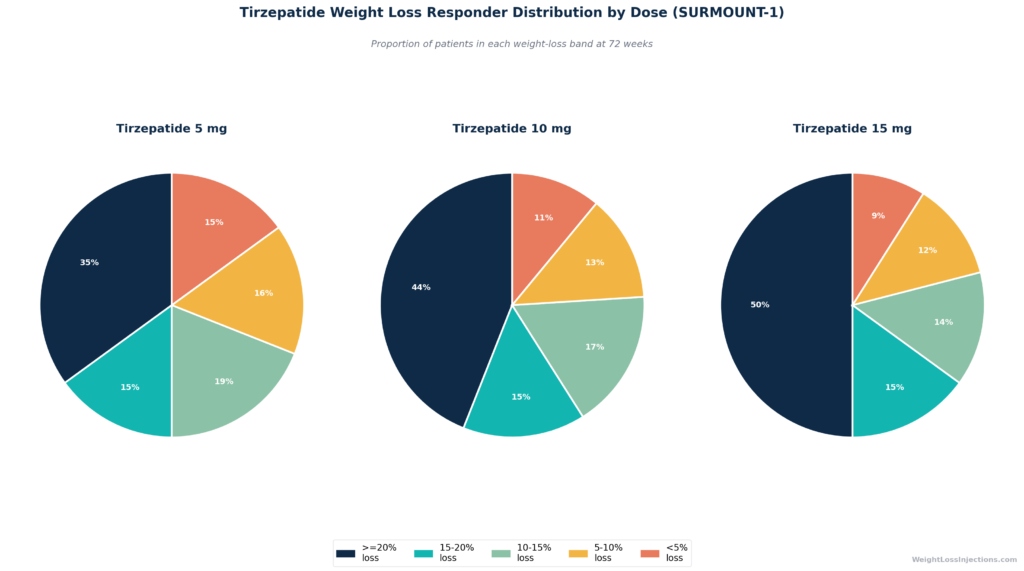
In SURMOUNT-1 (NEJM 2022) at the 15 mg dose, 57% of trial participants lost ≥20% of body weight at 72 weeks. At 10 mg, 45% reached that threshold; at 5 mg, 32%. In SURMOUNT-5 at maximum tolerated doses, approximately 31% of tirzepatide users achieved ≥25% weight loss, and 19.7% achieved ≥30% weight loss at 72 weeks. These figures come from controlled clinical trial populations; real-world rates may differ.
If properly compounded and dosed at equivalent amounts, compounded tirzepatide contains the same active pharmaceutical ingredient as Zepbound and should produce equivalent pharmacological effects, per StatPearls/NCBI Bookshelf. Quality control is the key variable — potency consistency, sterile technique, and accurate dosing are all critical. Subpotent batches produce less weight loss; dosing errors can produce unpredictable outcomes. Patients using compounded tirzepatide under the narrow lawful 503A pathway should request a Certificate of Analysis from their pharmacy and confirm USP <797> sterile compounding compliance, per FDA compounding guidance. Note that mass-market compounded tirzepatide is not lawful as of June 2026, per Potere Health MD 2026 overview.
A weight loss plateau on tirzepatide is normal and expected. The body adapts homeostatically — resting metabolic rate decreases and appetite signals partially reassert themselves as body weight falls, as explained in the JAMA SURMOUNT-4 discussion. If you have been at a stable dose for three or more months without further weight change, discuss with your prescriber whether dose escalation (if you have not reached your maximum tolerated dose), dietary adjustment, or an added resistance training program is appropriate. If you are on 2.5 mg or 5 mg and have plateaued, dose escalation is the primary clinical question. Do not stop tirzepatide without prescriber guidance — SURMOUNT-4 data shows substantial weight regain within 12 months of discontinuation. For a full discussion of plateau patterns, visit our guide on tirzepatide plateau and weight regain at WeightLossInjections.com.
This content is for informational purposes only and does not constitute medical advice. Individual weight loss results vary. Clinical trial outcomes are not guarantees of individual performance. Tirzepatide is an FDA-approved prescription medication; consult a licensed healthcare provider before starting, adjusting, or discontinuing any prescription therapy. WeightLossInjections.com’s editorial team reviews all content quarterly; last medical review: June 2026.