![Unbranded [pillar-drug-class] injection pen on a neutral background — WeightLossInjections.com editorial hero](https://weightlossinjections.com/wp-content/uploads/2026/07/hero_tirzepatide_c5_lifestyle-1200x675.png)
This content is for informational purposes only and does not constitute medical advice. Consult a licensed healthcare provider before adjusting your dose, stopping tirzepatide, or making any changes to your treatment plan.
Weight loss plateaus on tirzepatide are a predictable, biologically programmed response — not treatment failure. The SURMOUNT-1 trial (NEJM 2022) shows weight loss naturally decelerates after months 4–9 as your body adapts its metabolic rate and appetite signaling. The far more consequential finding comes from the SURMOUNT-4 withdrawal study (JAMA 2024): patients who stopped tirzepatide after achieving significant weight loss regained an average of 14.0% of their body weight within 52 weeks — recapturing roughly two-thirds of what they had lost. Only 16.6% of patients who stopped the drug maintained ≥80% of their weight loss at one year. This article explains why plateaus happen, what you can do to break through them, and how to plan a sustainable long-term maintenance strategy so that the weight you lose stays lost.
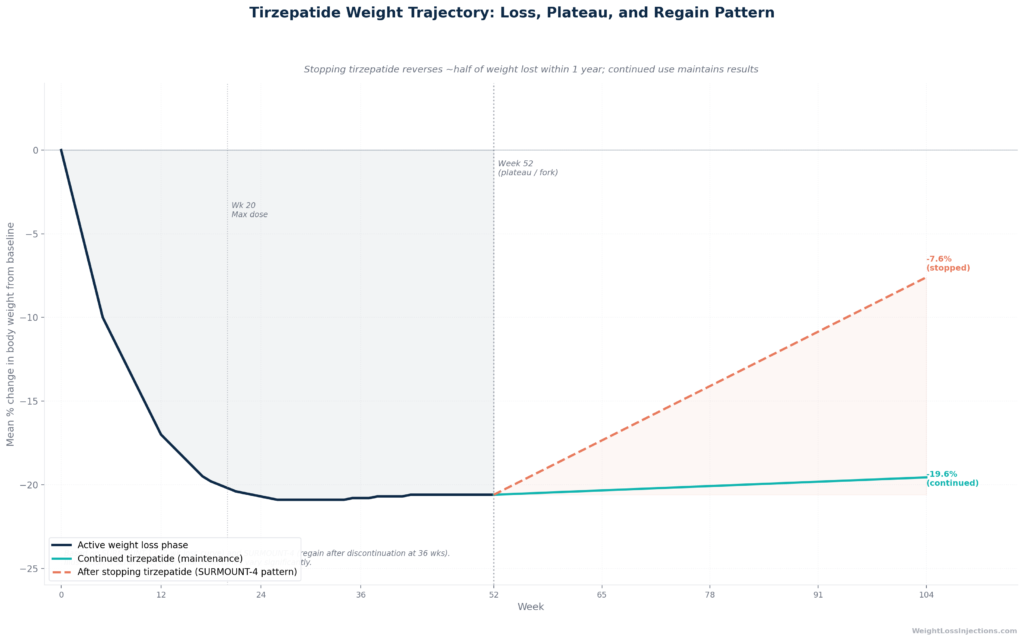
Tirzepatide Weight Loss Curve by Dose — SURMOUNT-1, NEJM 2022. Note the flattening trajectory after week 36–52 — the biological signature of adaptive metabolic response.
Why Weight Loss Plateaus Happen on Tirzepatide — The Biology
A plateau on tirzepatide is not a sign the medication stopped working. It is a predictable biological response to sustained weight loss that has been documented across every form of weight management — pharmacological, surgical, and behavioral. Understanding why it happens is the first and most important step toward addressing it.
Adaptive Thermogenesis: Your Body Fights Back
When you lose a significant amount of body weight, your resting metabolic rate (RMR) decreases — and not just by the amount you would expect from having less body mass to maintain. Research published in the Journal of the American Medical Association (SURMOUNT-4 discussion) and extensively analyzed in obesity physiology literature documents a phenomenon called adaptive thermogenesis: the body downregulates its metabolic rate beyond what fat loss alone would predict. Your metabolism becomes more efficient, burning fewer calories to perform the same activities.
The practical consequence: a patient who started tirzepatide at 250 pounds and has lost 40 pounds now has a resting caloric need approximately 300–400 kcal/day lower than when they started. If their dietary intake has not adjusted downward by a comparable amount, the caloric deficit that was driving weight loss is now gone — and the scale stops moving.
Reduced Absolute Caloric Need
A lighter body requires fewer calories to maintain itself. This is arithmetic, not pharmacology failure. As body weight decreases, the same meal that once represented a caloric deficit now represents maintenance calories. The diet that felt like restriction at 250 pounds may be essentially at caloric balance at 210 pounds. This recalibration explains why so many patients find that tirzepatide’s appetite suppression — which hasn’t changed — no longer translates into the same rate of weight loss it produced in earlier months. The target has moved.
Appetite Hormone Rebalancing: The Leptin-Ghrelin Shift
As fat mass decreases, the body’s hormonal signaling shifts in ways that counteract weight loss. Adipose tissue is the primary source of leptin, the satiety hormone that signals fullness and energy sufficiency to the hypothalamus. When fat stores shrink, leptin levels fall — and lower leptin levels send persistent hunger signals to the brain. At the same time, ghrelin (the primary hunger-stimulating hormone produced in the stomach) rises as weight loss progresses, further increasing appetite drive. These two changes work in concert against continued weight loss, as reviewed in StatPearls / NCBI Bookshelf (Tirzepatide pharmacology).
Tirzepatide works on GIP and GLP-1 receptors to suppress appetite and slow gastric emptying — but it does not permanently silence leptin and ghrelin signaling. As the drug suppresses appetite through central mechanisms, the body counteracts with increasingly strong homeostatic hunger signals as it defends its prior fat stores.
The Adiposity Set-Point: What Tirzepatide Cannot Override
The hypothalamus maintains a biological “target weight” — called the adiposity set-point — that it actively defends. This set-point is influenced by genetics, prior weight history, chronic inflammation, and hormonal environment. Once significant weight has been lost, the body increases multiple homeostatic drives to return to that prior set-point: lowering RMR, increasing appetite, and reducing spontaneous physical activity. Tirzepatide modulates these drives powerfully, but it does not reset the set-point itself, as the JAMA SURMOUNT-4 discussion makes clear. The drug is working against a body that is increasingly motivated to regain.
When tirzepatide reaches its maximum pharmacodynamic effect for your current biology, the body’s compensatory adaptations reach equilibrium with the drug’s appetite suppression — and weight loss stops. This equilibrium is the plateau.
Our take at WeightLossInjections.com: A plateau is not failure — it is a signal that your biology has adapted. The question is not “why did tirzepatide stop working?” but “what adjustments can help me continue making progress?” Most patients who plateau can restart progress with the right targeted interventions. The important thing is to understand the biology first, then respond strategically.
When Most Patients Hit a Plateau on Tirzepatide — The Timeline
Understanding when a plateau is likely to occur helps set appropriate expectations and reduces the alarm patients feel when the scale stops moving.
The SURMOUNT-1 Weight Loss Curve
SURMOUNT-1, published in the New England Journal of Medicine in 2022 and enrolling 2,539 adults with obesity or overweight without type 2 diabetes, provides the most detailed picture of tirzepatide’s weight loss trajectory across 72 weeks. The data reveals a consistent three-phase pattern across all dose arms:
Phase 1 — Rapid loss (weeks 1–24): Weight falls steeply, driven by strong appetite suppression during dose escalation and initial pharmacological effect. Patients at 15 mg lost approximately 14–16% of body weight by week 24.
Phase 2 — Decelerating loss (weeks 24–52): Weight continues to fall but at a progressively slower rate as metabolic adaptation sets in. Most patients have reached their maximum tolerated dose by this point. Cumulative loss approaches 18–20% by week 52 at 15 mg.
Phase 3 — Plateau (weeks 52–72+): Incremental loss per week drops to fractions of a pound. The curve flattens. Mean weight loss at week 72 was −15.0% (5 mg), −19.5% (10 mg), and −20.9% (15 mg) versus −3.1% for placebo, per SURMOUNT-1.
The SURMOUNT-4 Confirmation
The SURMOUNT-4 study (JAMA 2024) provides additional confirmation of the plateau pattern. Participants who had already lost a mean of −20.9% by week 36 — and then continued tirzepatide for another 52 weeks — added only a further −5.5% loss over that entire additional year. The incremental rate of loss after a full year on treatment is dramatically slower than in the first six months. The plateau is real, it is universal, and it is biologically inevitable.
Typical Plateau Timeline for Clinical Patients
Based on SURMOUNT-1 trial data and real-world clinical experience, the typical plateau pattern for patients on tirzepatide looks like this:
| Phase | Timeline | Weekly Loss Rate |
|---|---|---|
| Rapid loss | Months 1–4 | 1–2 lbs/week |
| Decelerating loss | Months 4–9 | 0.5–1 lb/week |
| Plateau | Months 9–18+ | Minimal additional loss |
Not all patients plateau at the same time. Patients who escalate to higher doses (10–15 mg) experience a longer active loss window but ultimately encounter the same biological ceiling. Patients who plateau on lower doses (5 mg or 7.5 mg) may have an additional pharmacological option available to them: dose escalation. Patients who have already reached 15 mg without achieving further weight loss have definitively reached their tirzepatide plateau, and the strategies below become critical.
Strategies to Break Through a Tirzepatide Plateau
This section provides specific, evidence-backed interventions. The most effective approach is usually not a single change but a combination of complementary strategies deployed simultaneously.
Strategy 1: Dose Escalation — The First Question to Ask
Before anything else, review whether the patient has been fully titrated. If a plateau is occurring at 5 mg, 7.5 mg, or 10 mg, escalating to the next dose increment often restarts meaningful weight loss. Per the FDA Zepbound NDA Medical Review (217806), the labeled titration schedule increases dose in 2.5 mg increments no sooner than every four weeks, with a maximum dose of 15 mg once weekly.
The SURMOUNT-1 dose-response data is unambiguous: each dose step adds meaningful additional weight loss. The gap between 5 mg and 15 mg at 72 weeks was 5.9 percentage points — which for a 220-pound patient represents approximately 13 additional pounds. If you have plateaued below your maximum tolerated dose, speak with your prescribing provider about escalation. GI side effects often temporarily increase with each dose step and then attenuate over 2–4 weeks, as documented in StatPearls. For more detail on the titration schedule, see our tirzepatide dosing chart.
Important: Do not self-escalate. Dose adjustments require provider oversight, particularly because GI adverse events — nausea, vomiting, diarrhea — are dose-dependent and can lead to dehydration. Review potential side effects at our tirzepatide side effects guide before discussing escalation with your provider.
the WeightLossInjections.com Staff: “In my clinical practice, a plateau on tirzepatide is my first signal to review the patient’s current dose. The majority of patients who hit a wall at 5 mg or 7.5 mg will restart meaningful loss when escalated to 10 or 15 mg — the biology simply requires more pharmacological signal to overcome the adaptation.”
Strategy 2: Recalibrate Protein Intake
Rapid weight loss — regardless of the mechanism — reduces lean muscle mass alongside fat. This matters metabolically because muscle tissue is the most metabolically active tissue in the body. Loss of muscle mass reduces resting metabolic rate, accelerating the very adaptation process that causes plateaus. Preserving and rebuilding lean mass is one of the most effective strategies to counteract metabolic adaptation.
The clinical target for protein intake in patients on GLP-1 agonists is 1.2–1.6 grams per kilogram of target body weight per day. Many tirzepatide patients, whose appetite suppression has reduced total caloric intake dramatically, are consuming far less protein than this threshold — often because small meal sizes crowd out protein in favor of carbohydrate-dense foods. A brief dietary audit almost always reveals this pattern.
High-protein diets also carry a meaningful thermodynamic advantage: the thermic effect of protein (25–30% of protein calories are expended in digestion and metabolism) is significantly higher than that of carbohydrates (5–10%) or fats (0–3%). Increasing protein intake as a proportion of total caloric intake adds a modest but real metabolic boost — and it keeps patients fuller on tirzepatide, which synergizes with the drug’s own satiety mechanism.
Strategy 3: Add or Intensify Resistance Training
Aerobic exercise alone contributes relatively little to caloric deficit at the intensities most non-athletes can sustain consistently. A 45-minute walk burns approximately 150–200 calories — easily undone by a slightly larger portion at dinner. Resistance training (2–3 sessions per week targeting major muscle groups) accomplishes something aerobic exercise cannot: it builds lean muscle mass, which raises resting metabolic rate permanently and counteracts the adaptive thermogenesis that drives plateaus.
Clinical data consistently shows that patients combining GLP-1 receptor agonists with structured resistance training preserve lean mass significantly better and achieve better long-term metabolic outcomes than patients on medication alone. In the context of tirzepatide-induced rapid weight loss, exercise is not optional maintenance activity — it is the primary tool for managing metabolic adaptation. A reasonable starting point for patients new to resistance training is two sessions per week using compound movements (squats, rows, presses) with progressive load increases.
Note an important nuance: tirzepatide itself does not cause muscle loss directly. Rapid calorie restriction without adequate protein and exercise does. The drug is weight-loss-neutral on lean mass when patients maintain protein intake and resistance training; the problem arises in sedentary patients eating very little protein, where lean mass loss is a predictable consequence of large caloric deficits.
Strategy 4: Recalibrate Caloric Targets
As body weight falls, caloric maintenance needs decrease proportionally — and the caloric deficit that was driving weight loss shrinks or disappears. A patient eating 1,600 calories per day when they weighed 250 pounds may have been in a 500-calorie deficit then. At 210 pounds, that same 1,600-calorie intake may represent caloric maintenance — explaining the plateau with mathematical precision.
A recalibration of caloric targets at each major weight milestone (every 15–20 lbs lost) is good clinical practice. Use updated weight, age, height, and activity level to recalculate total daily energy expenditure (TDEE) and re-establish an appropriate deficit. A registered dietitian experienced with GLP-1 agonists can guide this recalibration — a particularly useful step at the plateau phase.
Strategy 5: Audit for Calorie Creep
Portion sizes drift upward over time, even on tirzepatide. Restaurant meals, condiments, liquid calories (juice, alcohol, specialty coffee drinks), and foods marketed as “healthy” (nuts, granola, protein bars) can silently add 300–500 kcal/day without any conscious decision to eat more. This phenomenon — sometimes called calorie creep — is particularly insidious because the individual meal or snack does not feel significantly different from one week to the next, yet the cumulative effect over months stalls weight loss completely.
A brief food-tracking period of 1–2 weeks — logging every meal and snack with a calorie-counting application — at the plateau phase is one of the highest-yield interventions available. Most patients are surprised by what they find. The goal is not permanent obsessive tracking but a calibration reset to identify where the extra calories are coming from, then behavioral corrections.
Strategy 6: Evaluate Sleep, Stress, and Hormonal Factors
Several modifiable and non-modifiable factors contribute to plateau and weight loss resistance that are unrelated to diet or exercise:
Sleep: Poor sleep quality or duration (less than 7 hours per night) meaningfully worsens the ghrelin-leptin imbalance described above. Sleep deprivation increases ghrelin (hunger hormone) and decreases leptin (satiety hormone), directly counteracting tirzepatide’s appetite suppression. Treating underlying sleep apnea — which is highly prevalent in patients with obesity — often produces surprising improvements in weight loss response.
Chronic stress and elevated cortisol: Cortisol, the primary stress hormone, promotes fat storage (particularly visceral adiposity), stimulates appetite for calorie-dense foods, and impairs insulin sensitivity. Patients experiencing sustained psychosocial stress frequently plateau despite otherwise good adherence to medication and diet. Stress management interventions (cognitive behavioral therapy, structured relaxation, sleep hygiene) address this driver.
Thyroid function: Hypothyroidism is common in the general population and dramatically slows metabolic rate, stalling weight loss. If TSH has not been checked recently or if symptoms (fatigue, cold intolerance, constipation, dry skin, hair loss) are present, thyroid evaluation is warranted.
Medications: Several commonly prescribed medications contribute to weight gain or weight loss resistance: antidepressants (particularly mirtazapine, amitriptyline, paroxetine), antipsychotics (olanzapine, quetiapine), corticosteroids, beta-blockers (metoprolol, atenolol), and some anticonvulsants. Review the full medication list with your provider if weight loss has stalled, as reviewed in StatPearls.
Strategy 7: Verify Injection Technique and Adherence
An often-overlooked contributor to plateau is suboptimal injection technique or inadvertent dose errors. Tirzepatide is administered as a subcutaneous injection — into the fatty tissue beneath the skin of the abdomen, thigh, or upper arm. Injecting into muscle, skin folds with poor vascular supply, or previously used sites with lipohypertrophy (thickened scar tissue from repeated injections) can reduce absorption and effective serum levels.
Missed doses or inconsistent timing also reduce the drug’s sustained effect. Tirzepatide has a half-life of approximately five days per the FDA Clinical Pharmacology Review (NDA 215866), meaning the weekly dosing schedule is important for maintaining stable serum concentrations. Even one missed dose every few weeks can produce clinically meaningful reductions in average exposure.
At any plateau, a brief review of injection technique with your provider or pharmacist is worthwhile — especially if the patient has been self-administering for many months without review.
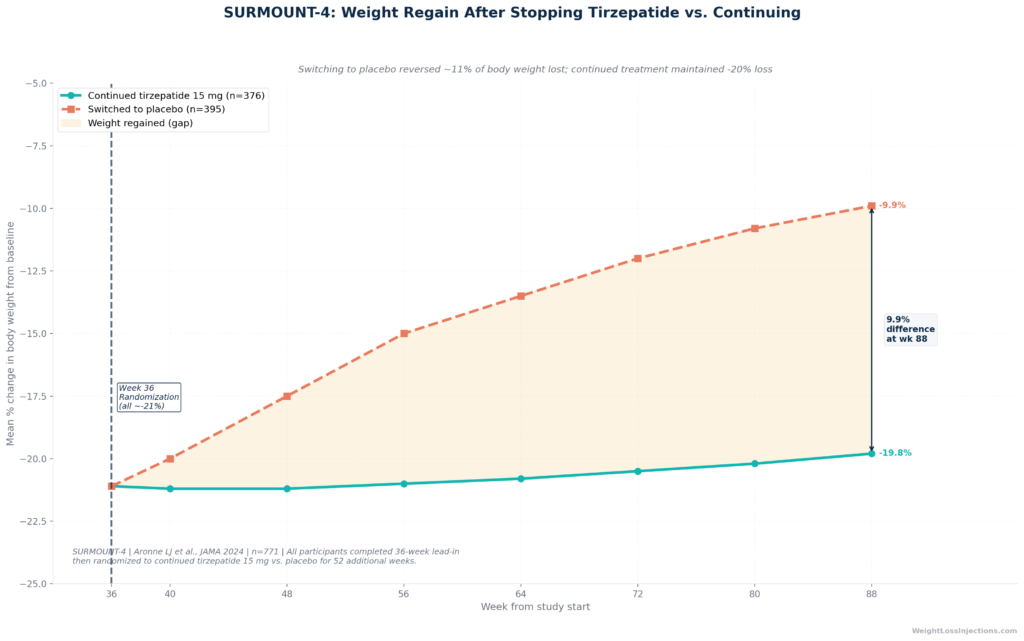
Tirzepatide Plateau Management: A Step-by-Step Clinical Decision Pathway
SURMOUNT-4: What the Data Shows About Stopping Tirzepatide
No section of this article carries more practical weight than this one. For patients who are considering stopping tirzepatide — whether due to cost, side effects, a sense that the treatment “worked” and is now “done,” or access challenges — the SURMOUNT-4 trial data should be the foundation of that conversation.
Study Design
SURMOUNT-4, published in JAMA in 2024, enrolled 670 adults with obesity without type 2 diabetes. All participants completed a 36-week open-label tirzepatide lead-in phase at their maximum tolerated dose (10 or 15 mg). By the end of week 36, participants had achieved a mean weight loss of −20.9% from their starting body weight — a substantial loss.
Participants were then randomized 1:1 to:
- Continue tirzepatide at their maximum tolerated dose for 52 additional weeks (through week 88)
- Switch to placebo for 52 additional weeks (effectively discontinuing tirzepatide)
The study design is critical to understand: this was not a study of patients starting tirzepatide fresh. These were patients who had already achieved clinically significant weight loss — and the question was what happens to that loss when the drug is continued versus stopped.
The Regain Data
The results at week 88 (end of the full study) were stark, as reported in the JAMA SURMOUNT-4 full-text publication:
| Group | Week 36 Status | Week 36→88 Change | Total Loss at Week 88 |
|---|---|---|---|
| Tirzepatide continued | −20.9% from baseline | Additional −5.5% | −25.3% from baseline |
| Placebo (stopped) | −20.9% from baseline | +14.0% regain | −9.9% from baseline |
The difference between the two groups at week 88 was 16.1 percentage points of body weight. Patients who stopped tirzepatide regained an average of 14.0% of their body weight within one year — effectively recovering about two-thirds of their initial weight loss.
The responder maintenance data is even more striking. Of patients who continued tirzepatide, 89.5% maintained ≥80% of their initial weight loss at week 88. Of patients who stopped tirzepatide, only 16.6% maintained ≥80% of their loss — meaning 83.4% of patients who stopped the drug lost most of the benefit they had worked for, per the JAMA SURMOUNT-4 full text.
Proportion Maintaining ≥80% of Initial Weight Loss at Week 88 — SURMOUNT-4, JAMA 2024. The stark difference between continuation and withdrawal captures the chronic disease nature of obesity.
Why Regain Happens After Stopping
The biology of regain after GLP-1/GIP discontinuation is mechanistically straightforward. Tirzepatide works by activating GIP and GLP-1 receptors — suppressing appetite through central hypothalamic pathways, reducing gastric emptying, and modulating adipose tissue metabolism. These effects persist only while the drug is present in meaningful concentrations. With a half-life of approximately five days, tirzepatide clears the system within roughly four weeks of the last dose.
Once the drug clears:
- Appetite hormones rebound immediately. Ghrelin rises. Leptin falls. The biological hunger drive that tirzepatide was suppressing reasserts — often with intensity, because the body has been defending its prior weight set-point throughout treatment.
- Gastric emptying returns to baseline. Meals no longer slow in transit through the stomach, so the sense of early fullness and prolonged satiety that was reducing caloric intake disappears.
- Metabolic adaptation remains. The resting metabolic rate adaptations that occurred during weight loss (reduced RMR, increased metabolic efficiency) persist after stopping the drug — meaning the body is now both hungrier and burning fewer calories at rest than before treatment.
The result is a rapid convergence of increased appetite and reduced metabolic rate that drives caloric intake upward and energy expenditure downward simultaneously — a metabolic state optimized for fat regain. This is why SURMOUNT-4 showed +14.0% regain within 52 weeks, not a gradual drift.
The JAMA SURMOUNT-4 discussion is explicit on this point: the regain is not a consequence of patients making worse food choices after stopping the drug. It is a predictable physiological response to the removal of pharmacological appetite suppression in a body that has not changed its biological set-point.
This Is Not Unique to Tirzepatide
The SURMOUNT-4 regain pattern mirrors what was observed in the STEP-4 withdrawal trial for semaglutide (Wegovy®), in studies of behavioral weight loss interventions, and in long-term bariatric surgery follow-up data. The common theme: obesity is a chronic disease characterized by biological drivers toward weight regain, and removing the treatment that was counteracting those drivers leads to regain. Tirzepatide is not uniquely fragile — it is consistent with what every effective obesity treatment shows when discontinued.
This context is important for two reasons. First, it validates the clinical experience: patients who regain weight after stopping tirzepatide are not doing anything wrong. Second, it frames the clinical decision correctly: stopping tirzepatide should be understood as an active choice to remove an effective chronic disease treatment, with predictable consequences.
The framing that aligns with the clinical evidence: tirzepatide for obesity is most accurately understood as a chronic disease treatment, analogous to antihypertensives for high blood pressure or statins for hypercholesterolemia — not as a finite “course of treatment” that produces durable results after stopping.
[Callout box — SURMOUNT-4 key numbers]
- −25.3% total weight loss at 88 weeks: tirzepatide continuation
- −9.9% total weight loss at 88 weeks: tirzepatide stopped (placebo)
- +14.0% average regain in 52 weeks after stopping
- 89.5% of continuation patients maintained ≥80% of their loss
- 16.6% of patients who stopped maintained ≥80% of their loss
Source: SURMOUNT-4, JAMA 2024
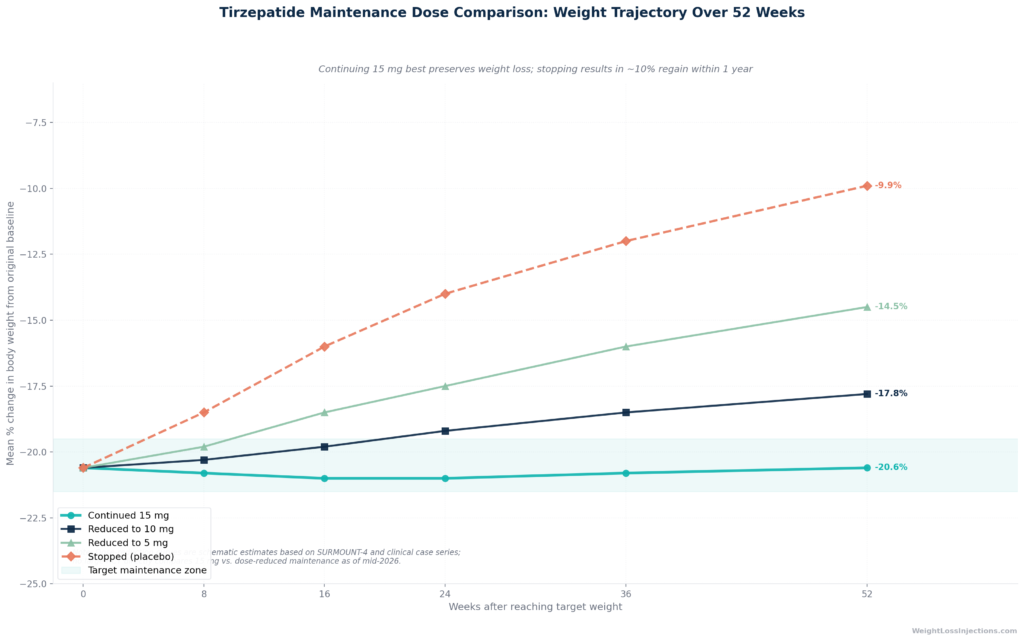
SURMOUNT-4: Tirzepatide Continuation vs. Withdrawal — Diverging Weight Trajectories, Weeks 36–88. The visual captures why “stopping the drug” is not a neutral decision. Source: JAMA 2024.
Our Top 3 · October 2026
The best GLP-1 providers right now
Independently reviewed. Ranked by price, medication access, provider quality, and patient outcomes.
Renew GLP
Personalized GLP-1, GIP plans: Semaglutide & Tirzepatide.
Medvi
No membership or hidden fees. Everything you need is included.
Trimi
US-licensed clinicians and shipped to your door, from $99/mo.
Long-Term Maintenance: How to Keep the Weight Off
The SURMOUNT-4 data establishes the problem clearly. The practical question is: what does a sustainable long-term maintenance strategy look like for patients who have achieved significant weight loss on tirzepatide?
Option 1: Continue at Maximum Tolerated Dose Indefinitely
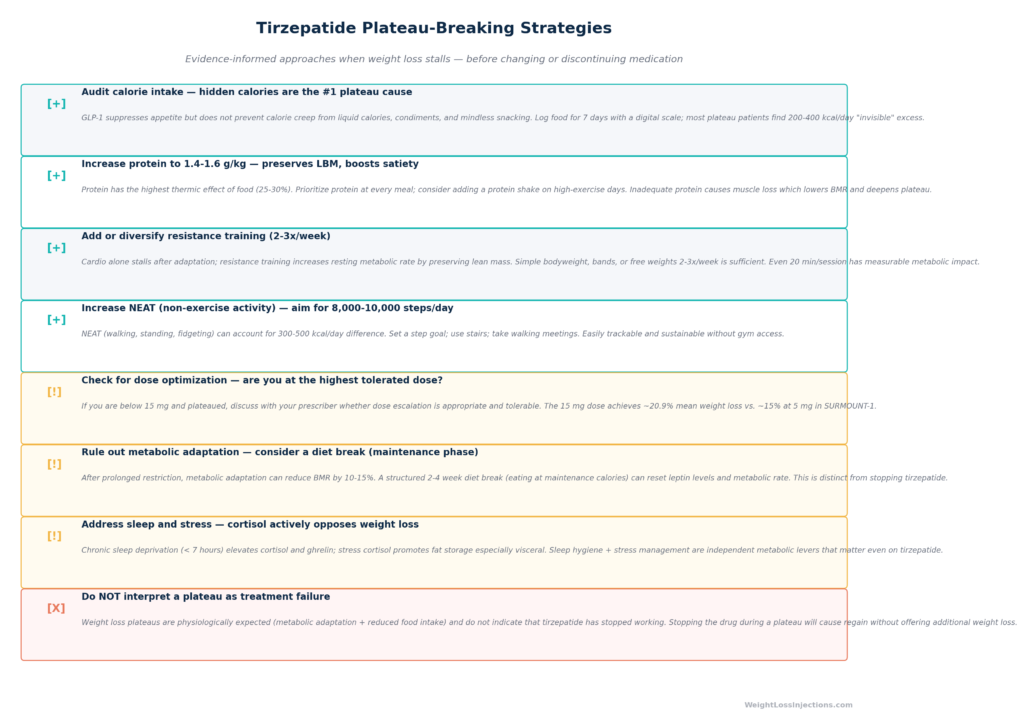
The most evidence-supported approach, based on current data, is simply continuing tirzepatide at the maximum tolerated dose (10 or 15 mg) indefinitely. This is the approach reflected in the current FDA label for Zepbound: a chronic-use medication with no specified stopping point, analogous to other chronic disease medications. The SURMOUNT-4 continuation arm shows that patients who remain on the drug not only avoid regain but continue to lose a small additional amount (further −5.5%) over the following year.
For patients who can maintain access and tolerate the medication well, continuation at maximum tolerated dose is the clearest path to sustained outcomes. The conversation with your provider should shift from “when do I stop?” to “how do I manage long-term access?”
Option 2: Reduction to a Lower Maintenance Dose (Under Investigation)
Current prescribing practice at many centers includes reducing patients from their maximum tolerated dose (10–15 mg) to a lower maintenance dose (5 mg or 7.5 mg) once they have achieved their target weight, rather than full discontinuation. The rationale: a lower dose may still suppress appetite sufficiently to prevent regain, with fewer GI side effects and potentially lower cost.
This approach is currently not FDA-approved as a labeled strategy — the FDA-approved label is for the maximum tolerated dose throughout treatment. However, the SURMOUNT-MAINTAIN trial (PMC trial design) is directly evaluating this question in a prospective randomized design: comparing continued maximum tolerated dose versus 5 mg maintenance dose versus placebo for weight maintenance. Results are anticipated in 2026. Until SURMOUNT-MAINTAIN reports, the dose-reduction maintenance approach is based on clinical judgment rather than Level 1 evidence. Discuss it explicitly with your prescribing provider before attempting it, and ensure close monitoring for weight regain during any dose reduction.
Option 3: Adjunct Medications
For patients who cannot maintain tirzepatide at full dose indefinitely due to cost, side effects, or access, adjunct medications may help partially offset the hormonal drivers of regain:
Metformin: An oral biguanide with a decades-long safety record in type 2 diabetes management. It modestly reduces appetite, improves insulin sensitivity, and may partially blunt the post-tirzepatide metabolic rebound. It is not FDA-approved for weight maintenance after GLP-1 discontinuation, but it is inexpensive, well-tolerated, and widely prescribed off-label in metabolic care.
SGLT2 inhibitors (empagliflozin, dapagliflozin, canagliflozin): This drug class reduces body weight through glycosuric caloric loss and has favorable cardiovascular and renal data in patients with obesity and metabolic disease. Some providers use SGLT2 inhibitors as an adjunct to tirzepatide during treatment or as a bridging strategy if tirzepatide must be reduced or temporarily stopped. They carry meaningful side effects (urogenital infections, rare euglycemic DKA) that require informed provider discussion.
Topiramate or bupropion/naltrexone (Contrave®): Older oral anti-obesity agents with different mechanisms. Less effective than tirzepatide but potentially useful as adjuncts or partial substitutes in cost-driven scenarios. Clinical benefit is modest; discuss with your provider.
None of these adjuncts replicate the efficacy of continued tirzepatide. They are harm-reduction tools for patients facing access barriers, not equivalents.
The Compounded Tirzepatide Landscape in 2026
For patients managing long-term access and cost considerations, understanding the current compounding landscape is important context. As of June 2026, mass-market compounded tirzepatide is not legally available in the United States. Tirzepatide was removed from the FDA shortage list in December 2024, and FDA enforcement discretion for 503A and 503B compounding pharmacies ended by March 19, 2025, per the FDA GLP-1 Compounding Clarification Page.
A narrow 503A exception continues to apply: a traditional state-licensed compounding pharmacy may compound tirzepatide for an individual patient if the prescriber documents a specific, clinically significant difference justifying compounding — such as an allergy to an inactive ingredient (e.g., cresol, present in branded pens), or a need for a dose strength not commercially available — and the pharmacy compounds no more than four such prescriptions per calendar month. Per the April 1, 2026 FDA guidance update, cost or patient preference does not qualify as a sufficient clinical justification.
For most patients seeking long-term maintenance, the realistic cost pathway is:
- LillyDirect self-pay vials: Zepbound single-dose vials starting at $299/month (2.5 mg) up to $699/month for higher maintenance doses, per Healthy Meals Incentives (April 2026).
- Insurance coverage: Commercial insurance coverage is inconsistent; many plans exclude anti-obesity medications. The Zepbound savings card reduces out-of-pocket costs to as low as $25/fill for commercially insured patients.
- Mounjaro for patients with T2D: Patients who also have type 2 diabetes may achieve better coverage under the T2D indication (Mounjaro®), which is more broadly covered.
For a full breakdown of cost options, see our guide at WeightLossInjections.com/compounded-tirzepatide-cost/.
WeightLossInjections.com editorial note: The framing of tirzepatide as a “course of treatment” is medically inconsistent with the SURMOUNT-4 data — which clearly shows that discontinuation leads to substantial regain for the large majority of patients. If you or your provider are considering stopping tirzepatide, we strongly encourage a detailed conversation about maintenance strategies, lower-dose options, and behavioral plans before making that decision. Stopping treatment without a maintenance plan is not the same as completing treatment — obesity is a chronic disease, and the SURMOUNT-4 findings should inform every cessation conversation. The goal is sustainable long-term health outcomes, not a fixed treatment window.
Behavioral Maintenance: The Foundation That Outlasts Any Drug
Regardless of what pharmacological strategy you adopt for the long term, behavioral habits built during tirzepatide treatment are the single greatest predictor of outcomes after any dose reduction or discontinuation. The SURMOUNT-4 minority — the 16.6% of patients who stopped the drug and still maintained ≥80% of their weight loss — are not genetically exceptional. They are patients who built durable lifestyle changes that partially offset the biological drive to regain.
What “Behavioral Maintenance” Actually Means
This is not a platitude about “eating healthy and exercising.” It is a specific set of evidence-based habits that create metabolic conditions less favorable to regain:
1. Protein-anchored eating patterns. Habitual high-protein meal construction (targeting 1.2–1.6 g/kg/day) preserves lean mass, increases satiety, and raises the thermic effect of eating. This is the single most impactful dietary habit for weight maintenance.
2. Resistance training as non-negotiable routine. Two to three resistance training sessions per week, continued for life, preserves the lean mass built during tirzepatide treatment and maintains a higher resting metabolic rate than sedentary patients who lose the same amount of weight.
3. Daily weight monitoring. Studies of the National Weight Control Registry (NWCR) — a database of over 10,000 individuals who have maintained ≥30 lb weight loss for ≥1 year — consistently show that daily or near-daily self-weighing is one of the strongest predictors of long-term weight maintenance. Early regain detection (a 3–5 lb upward drift) enables early intervention before it becomes a significant setback.
4. Structured eating patterns. Regular meal timing, consistent breakfast consumption, and avoiding prolonged fasting followed by large compensatory eating are behavioral patterns associated with weight maintenance in long-term follow-up data.
5. Ongoing behavioral support. Regular check-ins with a provider, dietitian, or structured behavioral program — even monthly or quarterly — significantly improve weight maintenance outcomes compared to patients who disengage from care after achieving their goal weight.
The Role of Your Clinical Team
Weight maintenance is not a solo project. Providers who specialize in metabolic health can adjust your treatment plan as your biology, life circumstances, and access to medication evolve over time. The shift from weight-loss phase to maintenance phase is a distinct clinical transition that benefits from intentional planning rather than gradual drift.
When a Plateau May Signal Something More
Most tirzepatide plateaus are normal metabolic adaptation — addressable with the strategies above. But there are specific scenarios that warrant prompt provider evaluation rather than self-management:
Weight regain on medication: If you are gaining weight while still taking tirzepatide at a consistent dose with consistent adherence, this is not a normal plateau. It suggests either dose insufficiency, adherence issues (missed doses, injection technique problems), or an undiagnosed condition driving weight gain that overcomes tirzepatide’s effect. A provider evaluation is warranted.
Plateau at a dose far below maximum without GI reasons for not escalating: Patients who plateau at 2.5 mg or 5 mg and have not escalated because they feel “it’s working well enough” should understand they may be leaving meaningful additional weight loss on the table. Reassess the dose decision with your provider.
Unintended weight loss: If you are losing weight faster than expected or experiencing loss without the drug (e.g., during a break from treatment), investigate potential medical causes including hyperthyroidism, malignancy, or other metabolic conditions.
Prolonged plateau despite maximal dose and all behavioral optimizations: If a patient has been at 15 mg for six months, has optimized protein intake, is engaging in resistance training, has addressed sleep and stress, and still has not lost any additional weight — this is a genuine non-response scenario. At this point, conversations about alternative strategies — including bariatric surgery consultation — are clinically appropriate. Bariatric procedures (sleeve gastrectomy, Roux-en-Y gastric bypass) can produce 25–35% total body weight loss and have durable evidence base for patients who do not achieve adequate pharmacological response.
Continuing Your Tirzepatide Journey with WeightLossInjections.com
Managing a tirzepatide plateau and planning a sustainable maintenance strategy are exactly the kinds of clinical decisions where ongoing provider support makes the greatest difference. Recognizing when a plateau warrants dose escalation versus behavioral adjustment, determining whether a lower maintenance dose is appropriate for your specific situation, and building a long-term plan that accounts for cost, access, and your metabolic goals — these are not decisions to make based on a Google search alone.
At WeightLossInjections.com, our licensed providers offer [service detail] starting at [$X/month], with access to ongoing monitoring, dose management, and maintenance planning. Whether you are hitting a plateau and want to restart progress, or you are approaching your goal weight and thinking about long-term maintenance, we can help you build a plan grounded in the same clinical evidence reviewed in this article.
the WeightLossInjections.com Staff: “The patients I see who maintain their weight loss long-term are the ones who made the mental shift early — from ‘I’m on a drug to lose weight’ to ‘I’m managing a chronic disease that requires ongoing medical care.’ That reframe changes everything about how they approach plateaus, maintenance dosing, and the occasional setback.”
Experiencing a plateau or concerned about what happens if you stop tirzepatide? Our licensed providers can help you build a maintenance plan tailored to your biology, goals, and circumstances. [Get started →]
For related reading, explore our guides on tirzepatide weight loss results, how tirzepatide works, and tirzepatide for non-diabetics.
Frequently Asked Questions
Why have I stopped losing weight on tirzepatide?
Weight loss plateaus on tirzepatide are a normal biological response. As you lose weight, your body reduces its resting metabolic rate and increases hunger signals (ghrelin rises, leptin falls), partially counteracting the drug’s effects. Most patients hit a slower-loss phase after 4–9 months on treatment. Dose escalation (if below 15 mg), recalibrating protein intake to 1.2–1.6 g/kg/day, adding resistance training, and auditing for calorie creep can often restart progress. Review strategies with your prescribing provider. (SURMOUNT-1, NEJM 2022; StatPearls)
How much weight do you regain after stopping tirzepatide?
The SURMOUNT-4 trial found that patients who stopped tirzepatide after 36 weeks of treatment regained an average of 14.0% of their body weight within one year — effectively recovering about two-thirds of their initial weight loss. Only 16.6% of patients who stopped tirzepatide maintained ≥80% of their weight loss at one year after stopping. (SURMOUNT-4, JAMA 2024)
Is weight regain after stopping tirzepatide inevitable?
For most patients who stop the drug without durable lifestyle modifications in place, significant regain is likely based on the SURMOUNT-4 clinical trial data. Patients who combine tirzepatide treatment with lasting behavioral changes — high-protein eating patterns, regular resistance training, daily weight monitoring, and ongoing medical engagement — tend to regain less weight after stopping or reducing their dose. Ongoing maintenance dosing at the lowest effective dose is an option to discuss with your provider. (SURMOUNT-4, JAMA 2024; SURMOUNT-MAINTAIN trial design, PMC)
What is the maximum weight loss possible with tirzepatide?
SURMOUNT-4 participants who continued tirzepatide through 88 weeks achieved a mean of −25.3% body weight loss from their original baseline. In the head-to-head SURMOUNT-5 trial, approximately 31% of tirzepatide patients achieved ≥25% weight loss at 72 weeks. Individual results vary based on dose reached, diabetes status, duration of treatment, and lifestyle factors. (SURMOUNT-4, JAMA 2024; SURMOUNT-5, NEJM 2025)
Should tirzepatide be taken indefinitely?
Current evidence strongly suggests that for patients seeking sustained weight loss, tirzepatide is most effective as a long-term therapy. The SURMOUNT-MAINTAIN trial (anticipated results 2026) is evaluating whether a lower maintenance dose of 5 mg can preserve weight loss with fewer side effects and lower cost compared to continuing at the maximum tolerated dose. Until that data is available, continuing at maximum tolerated dose remains the most evidence-supported approach for patients seeking sustained outcomes. (SURMOUNT-MAINTAIN, PMC)
How do I know if my tirzepatide plateau is normal or a sign of a problem?
A plateau after several months of good weight loss is almost always normal metabolic adaptation. Signs that warrant prompt provider evaluation: weight loss has completely stalled despite being at maximum dose with good dietary adherence and consistent exercise, or — more urgently — you are actively gaining weight while still on the medication. The latter suggests dose insufficiency, adherence issues (injection technique, missed doses), or an undiagnosed condition (hypothyroidism, Cushing’s syndrome, a weight-promoting medication) requiring evaluation. (StatPearls; JAMA SURMOUNT-4)
Citations
- SURMOUNT-1 — NEJM 2022 (PubMed) — Weight loss curve and dose-response data at 72 weeks in non-diabetic obesity
- SURMOUNT-4 — JAMA 2024 (PubMed) — Withdrawal and weight regain data; 36-week lead-in design
- SURMOUNT-4 — JAMA 2024 (Full Text) — Responder maintenance statistics, adiposity set-point discussion, chronic therapy framing
- SURMOUNT-MAINTAIN Trial Design — PMC — Prospective evaluation of lower maintenance dosing strategy
- SURMOUNT-5 — NEJM 2025 (Full Text) — Tirzepatide vs. semaglutide; responder data ≥25% weight loss
- FDA Zepbound NDA 217806 Medical Review — Dose escalation schedule; safety data
- FDA Clinical Pharmacology Review, NDA 215866 — Half-life ~5 days; pharmacokinetic parameters
- StatPearls / NCBI Bookshelf — Tirzepatide — Mechanism of action; hormonal physiology; side effect context
- Healthy Meals Incentives — Tirzepatide Cost 2026 — LillyDirect self-pay pricing; insurance coverage overview
- FDA GLP-1 Compounding Clarification Page (including April 2026 update) — 503A/503B compounding status; narrow exception criteria
- Eli Lilly SURMOUNT-3/4 Investor Release — Supporting SURMOUNT-4 context
Last reviewed June 2026. This article is for informational purposes only and does not constitute medical advice. Consult a licensed healthcare provider before making any changes to your tirzepatide regimen.