![Unbranded [pillar-drug-class] injection pen on a neutral background — WeightLossInjections.com editorial hero](https://weightlossinjections.com/wp-content/uploads/2026/07/hero_tirzepatide_c5_lifestyle-1200x675.png)
Hero: split composition showing a person reviewing weight-loss progress on a scale or tape measure beside a Zepbound autoinjector pen on a clean clinical surface; warm but clinical tone
- Tirzepatide is FDA-approved for weight loss without diabetes under the brand name Zepbound (approved November 2023) — you do not need a type 2 diabetes diagnosis to qualify.
- Eligibility requires a BMI of 30 or higher, or a BMI of 27 or higher with at least one weight-related health condition (high blood pressure, high cholesterol, sleep apnea, or cardiovascular disease).
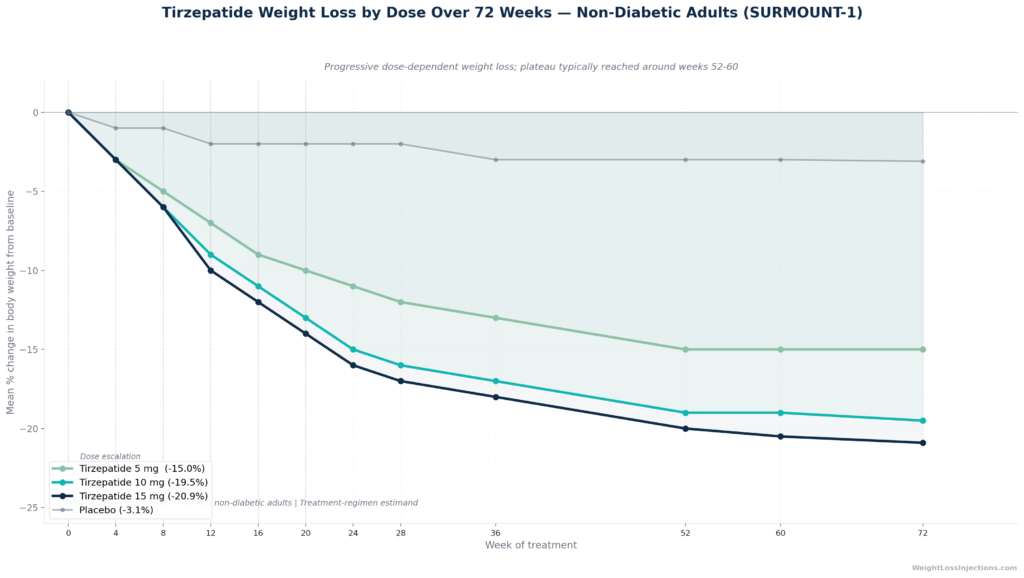
- In the SURMOUNT-1 clinical trial — conducted entirely in non-diabetic adults — participants on the 15 mg dose lost a mean of 20.9% of body weight at 72 weeks, compared to 3.1% on placebo.
- Tirzepatide beat semaglutide (Wegovy) head-to-head in non-diabetic adults in SURMOUNT-5: −20.2% vs. −13.7%, a difference of roughly 47%.
- You can get a prescription through your primary care physician, an obesity medicine specialist, or a telehealth platform such as WeightLossInjections.com [service detail].
- Insurance coverage for Zepbound is inconsistent in 2026; self-pay options via LillyDirect start at $299/month for the lowest dose; the retail cash price is approximately $1,086 per 28-day supply.
- Weight loss is not permanent after stopping the drug — SURMOUNT-4 showed patients who discontinued regained an average of 14% of body weight within 52 weeks.
Medical Disclaimer: This article is for informational purposes only and does not constitute medical advice. Individual eligibility for tirzepatide depends on a clinical evaluation by a licensed healthcare provider. Consult your physician or a board-certified obesity medicine specialist before starting any prescription weight-loss treatment.
Yes, Tirzepatide Is FDA-Approved for Weight Loss Without Diabetes
The single most common misconception about tirzepatide is that it is a diabetes drug. That is understandable — Mounjaro, the first brand to reach market, was approved in May 2022 specifically for type 2 diabetes management. But in November 2023, the FDA approved a second tirzepatide brand — Zepbound — for chronic weight management in adults who do not have type 2 diabetes and who meet BMI-based eligibility criteria. (StatPearls / NCBI Bookshelf)
The two brands — Mounjaro and Zepbound — contain the exact same active molecule: tirzepatide, a synthetic 39-amino acid dual agonist of the glucose-dependent insulinotropic polypeptide (GIP) receptor and the glucagon-like peptide-1 (GLP-1) receptor. (StatPearls / NCBI Bookshelf) They use the same autoinjector pen design. They come in the same six dose strengths: 2.5 mg, 5 mg, 7.5 mg, 10 mg, 12.5 mg, and 15 mg. The difference between them is the FDA-labeled indication and, consequently, the prescribing pathway, insurance coverage rules, and manufacturer access programs.
What the distinction means in practice:
- Mounjaro is prescribed for type 2 diabetes. If you have T2D, your physician may prescribe Mounjaro and weight loss is a recognized secondary benefit.
- Zepbound is prescribed for chronic weight management. This is the label relevant to non-diabetic patients who want tirzepatide specifically for obesity treatment.
- Prescribers can and do prescribe Mounjaro off-label for obesity in non-diabetic patients, but Zepbound is the on-label, FDA-designated pathway for weight-loss-only treatment.
Key fact: The FDA approved Zepbound specifically for adults without diabetes who have obesity (BMI ≥30) or overweight (BMI ≥27) with a weight-related health condition. The drug requires a prescription regardless of which brand name is used. (Zepbound HCP site — Lilly)
The FDA’s Zepbound approval (NDA 217806) was based on the SURMOUNT clinical trial program, which enrolled non-diabetic adults with obesity and overweight and demonstrated the most significant weight-loss efficacy ever seen in a pharmacotherapy for obesity up to that point. (FDA Zepbound NDA Medical Review) The data behind that approval — and what it means for your eligibility — are the subject of this guide.
Who Qualifies for Tirzepatide for Obesity: The Eligibility Criteria
Tirzepatide (Zepbound) is a prescription medication, and a licensed healthcare provider must determine whether you meet the clinical eligibility criteria before writing a prescription. The FDA labeling defines the threshold, but your prescriber will apply clinical judgment alongside it.
The FDA-Labeled BMI Criteria
The FDA-approved indication for Zepbound covers two populations: (Zepbound HCP site — Lilly)
| Eligibility Group | BMI Threshold | Additional Requirement |
|---|---|---|
| Obesity | ≥30 kg/m² | None — BMI alone qualifies |
| Overweight | ≥27 kg/m² | At least one weight-related comorbidity |
Weight-related comorbidities that satisfy the second category include: hypertension, type 2 diabetes, dyslipidemia (high cholesterol/triglycerides), obstructive sleep apnea (OSA), or established cardiovascular disease. (FDA Zepbound NDA Medical Review)
How to calculate your BMI: BMI = weight (kg) ÷ height (m)². In U.S. units: [weight (lb) ÷ height (in)²] × 703. If you weigh 200 lbs and stand 5′7″ (67 inches), your BMI is approximately 31.3 — meeting the obesity threshold.
Note that BMI is an imperfect proxy for metabolic risk: it does not distinguish between muscle and fat mass, and it may underestimate cardiometabolic risk in certain ethnic populations (including South Asian individuals, for whom some clinical guidelines use lower cutoffs). A prescriber who takes your full clinical picture into account may have relevant discretion even near threshold values.
Contraindications Your Prescriber Will Evaluate
A clinical evaluation for Zepbound is not merely a BMI check, it also involves ruling out conditions where tirzepatide carries known risk. These include:
- Personal or family history of medullary thyroid carcinoma (MTC) or Multiple Endocrine Neoplasia type 2 (MEN2): This is a boxed warning on both Mounjaro and Zepbound. Tirzepatide caused dose-dependent thyroid C-cell tumors in rodent studies; human relevance is undetermined, but the FDA mandates contraindication pending further data. (StatPearls / NCBI Bookshelf)
- History of acute pancreatitis: Tirzepatide has not been studied in patients with prior pancreatitis, and pancreatitis has been observed as a serious adverse event in SURMOUNT clinical trials. (StatPearls / NCBI Bookshelf)
- Severe gastrointestinal disease (e.g., gastroparesis): Tirzepatide slows gastric emptying as part of its mechanism; this can worsen pre-existing motility disorders.
- Pregnancy or planned pregnancy: GLP-1/GIP receptor agonists are not recommended during pregnancy. Providers typically recommend transitioning off tirzepatide at least two months before attempting conception.
What Insurance Plans and Telehealth Platforms May Add
Even when a patient meets the FDA criteria, commercial insurers and some telehealth platforms apply additional prior authorization requirements. Common additional hurdles include: documented evidence of prior weight-loss treatment attempts (e.g., a structured diet program), a minimum duration on lifestyle modification therapy, or body weight documentation by a licensed provider. These are administrative barriers — not medical eligibility requirements — and they vary by plan and platform.
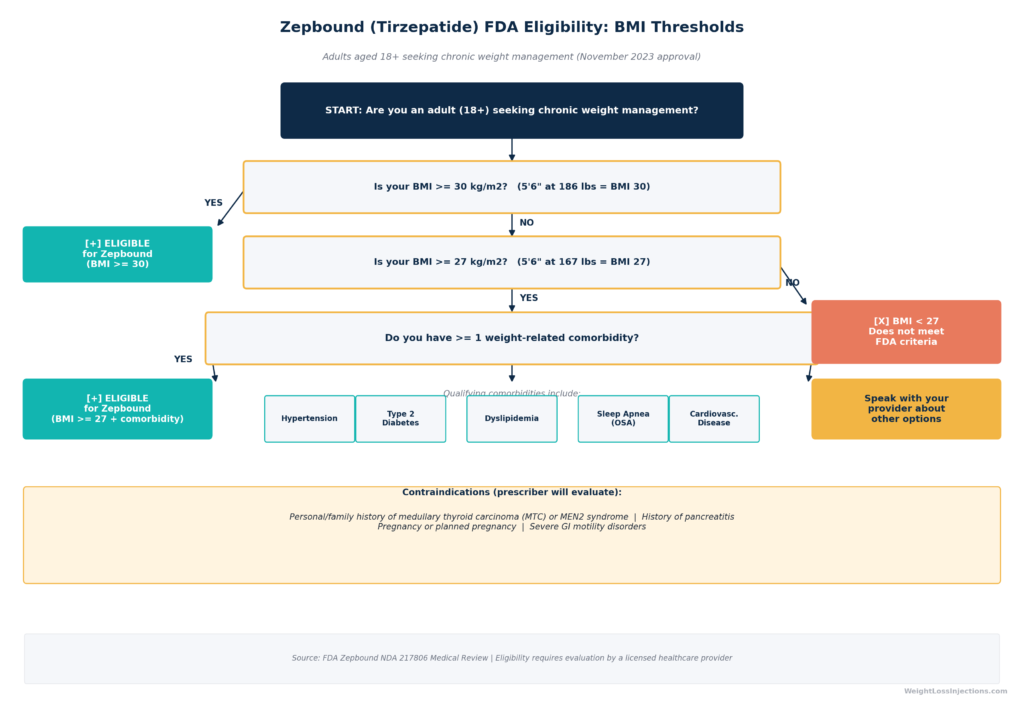
Eligibility Decision Tree — clean flowchart: “Is your BMI ≥30?” → Yes → “You may qualify for Zepbound.” → “Is your BMI ≥27?” → Yes → “Do you have high blood pressure, sleep apnea, high cholesterol,…
The SURMOUNT Trials — Weight Loss Data Specifically for Non-Diabetics
The FDA’s approval of Zepbound rests on a dedicated clinical trial program — the SURMOUNT series — conducted specifically in non-diabetic adults. This is not diabetes-trial data being extrapolated to a different population. The pivotal studies enrolled non-diabetic individuals with obesity or overweight and measured weight loss as the primary endpoint.
SURMOUNT-1: The Foundational Study
SURMOUNT-1, published in the New England Journal of Medicine in 2022 (Jastreboff et al.), enrolled 2,539 non-diabetic adults with BMI ≥30 or ≥27 with at least one comorbidity. The 72-week, double-blind, placebo-controlled trial randomized participants to tirzepatide 5 mg, 10 mg, or 15 mg, or placebo — all with diet and lifestyle counseling.
Mean body weight loss at 72 weeks (treatment-regimen estimand):
| Dose | Mean % Body Weight Loss | vs. Placebo |
|---|---|---|
| 5 mg | −15.0% | −11.9 percentage points |
| 10 mg | −19.5% | −16.4 percentage points |
| 15 mg | −20.9% | −17.8 percentage points |
| Placebo | −3.1% | — |
Source: SURMOUNT-1, NEJM 2022
These are population averages. The responder analysis fills in what those averages represent:
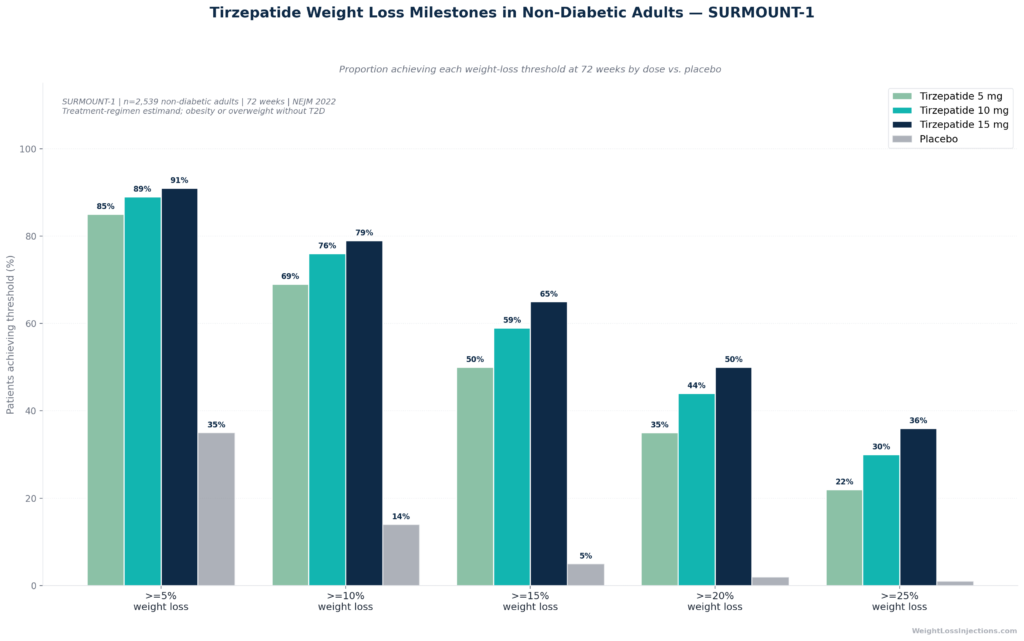
- ≥5% weight loss (clinically meaningful threshold): 85% (5 mg), 89% (10 mg), 91% (15 mg) vs. 35% placebo
- ≥10% weight loss: 69% (5 mg), 83% (10 mg), 84% (15 mg) vs. 18% placebo
- ≥20% weight loss: 32% (5 mg), 45% (10 mg), 57% (15 mg) vs. 3% placebo
At the maximum dose, more than half of non-diabetic trial participants lost at least 20% of their starting body weight — an outcome previously associated primarily with bariatric surgery. For a person starting at 250 lbs, 20% means losing 50 lbs.
SURMOUNT-3: What Happens With Structured Lifestyle + Drug
SURMOUNT-3, published in 2023, ran a structured 12-week intensive lifestyle intervention before randomizing participants to tirzepatide or placebo. Patients who received tirzepatide after that lead-in achieved up to 26.6% total body weight loss from study entry — approaching outcomes seen after sleeve gastrectomy at one year. (Lilly SURMOUNT-3/4 press release)
This study does not mean every patient will lose 26%. SURMOUNT-3 selected for people who had already demonstrated they could respond to a structured lifestyle program, and the total figure includes both the lifestyle lead-in and the drug phase. However, it demonstrates clearly that tirzepatide and structured lifestyle are additive — the drug does not require perfect dietary compliance to produce results, but pairing it with intentional behavior change amplifies the outcome.
SURMOUNT-4: What Happens When You Stop
SURMOUNT-4, published in JAMA in 2024, answers the question patients often do not think to ask before they start: what happens when I stop? After a 36-week tirzepatide lead-in (mean −20.9% weight loss), participants were randomized to continue tirzepatide or switch to placebo for 52 additional weeks.
Results:
- Continuation: Additional −5.5% loss → total −25.3% from baseline; 89.5% maintained ≥80% of lead-in weight loss
- Discontinuation: +14.0% regain from week-36 baseline → net −9.9% from original starting weight; only 16.6% maintained ≥80% of lead-in weight loss
This is not a product failure — it is a reflection of obesity biology. The same central appetite-regulating mechanisms that tirzepatide suppresses begin to recover when the drug is removed, driving the body toward its original set-point weight. Most obesity medicine specialists who discuss this data with patients recommend planning for ongoing — likely indefinite — treatment, similar to how antihypertensives are not stopped once blood pressure normalizes.
SURMOUNT-5: Head-to-Head Against Semaglutide (Wegovy)
For patients comparing tirzepatide to the other major weight-loss injectable, semaglutide (Wegovy), SURMOUNT-5, published in the New England Journal of Medicine in 2025, provides direct head-to-head data in non-diabetic adults.
Design: 751 adults with obesity (BMI ≥30) or overweight (BMI ≥27 + comorbidity), no type 2 diabetes; tirzepatide at maximum tolerated dose (10 or 15 mg) vs. semaglutide at maximum tolerated dose (1.7 or 2.4 mg); 72-week open-label study. (NEJM 2025, SURMOUNT-5)
Primary endpoint — mean % body weight change at week 72:
- Tirzepatide: −20.2% (~22.8 kg)
- Semaglutide: −13.7% (~15.0 kg)
- Difference: 6.5 percentage points; tirzepatide produced approximately 47% greater weight loss (p<0.001)
Responder thresholds:
- ≥15% weight loss: 64.6% (tirzepatide) vs. 40.1% (semaglutide)
- ≥25% weight loss: ~31% vs. ~16%
- ≥30% weight loss: 19.7% vs. 6.9%
An important caveat: SURMOUNT-5 was open-label (participants knew which drug they were receiving) and was funded by Eli Lilly, tirzepatide’s manufacturer. These factors do not invalidate the findings — the study used rigorous endpoints and independent adjudication — but they are relevant context when interpreting magnitude.
SURMOUNT-5 Head-to-Head Bar Chart — side-by-side bars: Tirzepatide −20.2% (blue) vs
On tolerability: SURMOUNT-5 also found that GI-driven treatment discontinuation was lower with tirzepatide (2.7%) than semaglutide (5.6%) — a finding of practical relevance for patients who have previously stopped GLP-1 medications due to nausea or vomiting. (ACC SURMOUNT-5 Journal Scan)
What realistic results look like for individual patients: SURMOUNT trial data presents population means. Individual outcomes vary based on dose reached, dietary adherence, activity level, starting BMI, metabolic factors, and time on treatment. The 5% and 10% weight-loss thresholds — achievable by the large majority of patients across all tirzepatide doses — carry clinically meaningful improvements in blood pressure, lipids, and insulin sensitivity even without reaching the 20% headline figure. Do not interpret trial averages as personal guarantees.
How to Get a Tirzepatide Prescription If You Don’t Have Diabetes
Tirzepatide requires a valid prescription from a licensed healthcare provider — regardless of whether you are being treated for diabetes or for weight management. No telehealth platform, pharmacy, or online service can legally dispense Zepbound or Mounjaro without a prescription supported by a clinical evaluation. If a service is offering tirzepatide without requiring that evaluation, it is operating outside FDA-compliant prescribing norms.
There are three primary pathways through which non-diabetic patients obtain a tirzepatide prescription:
Pathway 1: Primary Care Physician or Internist
Most non-diabetic adults who qualify for Zepbound have an established relationship with a primary care provider. Prescribing rates for anti-obesity medications by primary care physicians have increased meaningfully since Zepbound’s 2023 approval, as awareness of the SURMOUNT trial data has spread and national obesity medicine guidelines have emphasized that pharmacotherapy is a standard-of-care option, not a last resort.
Advantages: Your physician knows your medical history. They can order labs, coordinate with existing specialists (endocrinologist, cardiologist), and manage any prescribing nuances involving your other medications. For patients with complex medical histories or multiple concurrent medications, this is often the preferred pathway.
Practical note: Not all primary care physicians are equally informed about or comfortable prescribing GLP-1/GIP agonists for weight management. If your physician dismisses obesity pharmacotherapy without adequate clinical discussion, requesting a referral to an obesity medicine specialist is entirely appropriate.
Pathway 2: Obesity Medicine Specialist
Physicians certified by the American Board of Obesity Medicine (ABOM) provide the most specialized clinical evaluation for weight management. These are physicians — typically with backgrounds in endocrinology, internal medicine, or family medicine — who have completed dedicated training in obesity as a disease and in the full spectrum of treatment options including pharmacotherapy, behavioral intervention, and bariatric surgery evaluation.
Advantages: Deep expertise in anti-obesity medication selection, dose optimization, and management of side effects. Familiar with the full SURMOUNT clinical program. More likely to advocate for insurance coverage and assist with prior authorization documentation.
Consideration: Obesity medicine specialists can have waitlists of 3–6 months or longer in major metro areas. If access is a concern, telehealth is an effective alternative for patients who meet straightforward eligibility criteria.
Pathway 3: Telehealth Platform
Telehealth prescribing of tirzepatide for weight management is permitted in the majority of U.S. states. Tirzepatide is not a controlled substance, which removes a significant regulatory restriction on remote prescribing that applies to medications like stimulants or opioids. State-specific regulations on telehealth prescribing vary; state availability for any given platform should be confirmed before beginning an evaluation.
WeightLossInjections.com [service detail]: Our platform connects qualifying patients with licensed providers for a clinical evaluation that includes review of medical history, current medications, BMI and comorbidity assessment, and screening for contraindications. [Service detail on evaluation process, state availability, and turnaround time.] Pricing starts at [$X/month]. Start your evaluation at WeightLossInjections.com.
What the clinical evaluation involves — regardless of pathway:
- Medical history review: Current medications, past diagnoses, surgical history, family history of thyroid cancer or MEN2
- BMI calculation and comorbidity documentation: Height, weight, blood pressure, and any relevant diagnoses
- Contraindication screening: Ruling out MTC/MEN2 history, prior pancreatitis, severe GI motility disorders, and pregnancy
- Treatment goals and expectation-setting: What outcomes are realistic given your starting weight, diabetes status, and target dose
- Cost and access planning: Insurance verification, savings card eligibility, LillyDirect access
Documents to prepare before your evaluation:
- Recent lab work (A1c, fasting glucose, lipid panel, TSH, kidney/liver function if available)
- Complete current medication list (including OTC supplements — tirzepatide slows gastric emptying and can affect absorption of other drugs)
- Prior weight-loss history, including prior anti-obesity medications if any
- Insurance card and formulary information
For more on what to expect during dose escalation, see our tirzepatide dosing chart guide.
Our Top 3 · October 2026
The best GLP-1 providers right now
Independently reviewed. Ranked by price, medication access, provider quality, and patient outcomes.
Renew GLP
Personalized GLP-1, GIP plans: Semaglutide & Tirzepatide.
Medvi
No membership or hidden fees. Everything you need is included.
Trimi
US-licensed clinicians and shipped to your door, from $99/mo.
Will Insurance Cover Tirzepatide for Weight Loss in 2026?
Insurance coverage for Zepbound remains one of the most practically important and frustrating aspects of non-diabetic tirzepatide access. The clinical evidence is compelling; the coverage landscape is not.
Commercial Insurance
Coverage for Zepbound among commercial (employer-sponsored) insurance plans is inconsistent and expanding but still far from universal. Anti-obesity medications (AOMs) were historically excluded from many employer formularies — a legacy policy position that has begun to shift as the cardiovascular outcomes data and cost-effectiveness evidence strengthened. Plans that do cover Zepbound typically require:
- Documentation of BMI meeting the FDA threshold (30+ or 27+ with comorbidity)
- Prior authorization with clinical justification
- Evidence of prior failed weight-management attempts (commonly a documented 6-month supervised diet and exercise program)
If your plan covers Zepbound, the Zepbound Savings Card from Eli Lilly can reduce your out-of-pocket cost to as low as $25 per fill (28-day supply) — a substantial benefit for commercially insured patients. Current savings card terms and eligibility can be confirmed at Zepbound.com. (Healthy Meals Incentives, April 2026)
Medicare Part D
Standard Medicare Part D does not cover Zepbound for weight-loss-only indications. The Social Security Act (§1862(a)(1)) includes a longstanding exclusion for anti-obesity medications from Part D coverage. Some Medicare Advantage plans offer supplemental benefits that may include AOM coverage — but this is plan-specific and not guaranteed. Legislative proposals to overturn the Medicare AOM exclusion have been introduced in recent congressional sessions but had not been enacted as of June 2026.
For Medicare-eligible patients without coverage, the LillyDirect self-pay pathway and patient assistance programs (see below) are the primary access options.
Medicaid
Medicaid coverage for Zepbound varies by state. Some state Medicaid programs have added anti-obesity medications to their formularies as a result of updated federal guidance and state-level budget analyses; others have not. Check your state’s Medicaid formulary directly or ask your prescribing provider to assist with a coverage inquiry.
Self-Pay Options: LillyDirect Vials
Eli Lilly launched LillyDirect as a self-pay pathway that bypasses commercial pharmacy pricing. Via LillyDirect, Zepbound single-dose vials are available at the following self-pay prices (as of April 2026):
- 2.5 mg: ~$299/month
- 5 mg and higher doses: up to ~$699/month
(Healthy Meals Incentives, April 2026)
These prices are substantially below the retail cash price of approximately $1,086 per 28-day supply at a standard pharmacy. (Healthy Meals Incentives, April 2026) LillyDirect vials require a valid prescription from a licensed provider — they are not available without a clinical evaluation.
Patient Assistance Programs
Eli Lilly’s patient assistance programs provide access to Zepbound at reduced or no cost for income-qualified patients. Patients with household income below approximately 400% of the federal poverty level may qualify for substantially subsidized or free medication. Your healthcare provider or a patient advocate at your prescribing practice can assist with the application.
FSA/HSA Eligibility
Tirzepatide when prescribed for obesity management — a recognized medical diagnosis — is generally eligible for payment via Flexible Spending Accounts (FSA) and Health Savings Accounts (HSA). A purely cosmetic weight-loss goal without a clinical diagnosis may not qualify. Confirm with your FSA/HSA plan administrator before submitting.
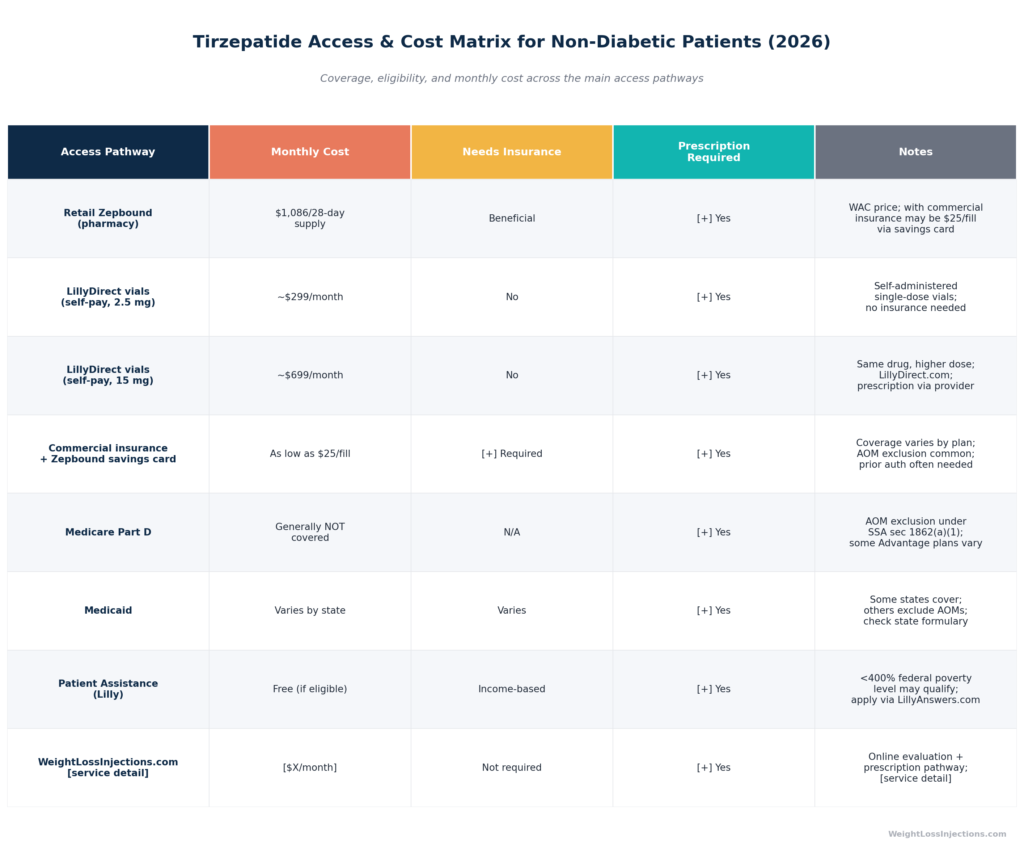
Monthly Cost Comparison Table (visual) — styled chart with columns: Option | Monthly Cost | Requires Insurance | Requires Prescription; rows: Retail Zepbound ($1,086), LillyDirect 2.5 mg ($299),…
Telehealth vs. In-Person Prescribing — Pros and Cons for Non-Diabetic Patients
Once you have decided to pursue a tirzepatide prescription, the choice between telehealth and in-person care is practical rather than clinical. Both pathways can produce the same prescription and the same drug. The question is which fits your situation — your geography, schedule, insurance, and medical complexity.
Telehealth: Advantages
Speed of access. Telehealth evaluations are typically completed within days rather than the weeks-to-months wait typical of in-person obesity medicine specialists. For patients who have already determined they meet the BMI criteria and have no complex contraindication flags, the evaluation can be efficient and straightforward.
Geographic reach. Obesity medicine specialists are concentrated in urban centers. Patients in rural or underserved areas may have no in-person specialist within a reasonable distance. Telehealth eliminates this barrier.
No controlled-substance restriction. Unlike stimulants, opioids, or benzodiazepines, tirzepatide is not a federally scheduled controlled substance. Telehealth prescribing of non-controlled drugs is subject to far fewer state-level restrictions, and in most states, tirzepatide can be lawfully prescribed via a synchronous video evaluation or even an asynchronous questionnaire-based evaluation (state-specific).
Integrated support. Quality telehealth weight-loss platforms include ongoing provider check-ins, dose escalation support, and side-effect management — not just an initial prescription. This continuity matters for a medication that requires careful titration over 5+ months.
WeightLossInjections.com [service detail]: Our clinical team provides evaluations for qualifying non-diabetic patients [service detail — state availability, provider credentials, evaluation format]. Pricing at [$X/month]. Learn more and start your evaluation at WeightLossInjections.com.
Telehealth: Considerations
No physical examination. Telehealth providers rely on patient-reported measurements and history. Conditions that would be caught during a physical exam — palpable thyroid nodules, undetected hypertension, signs of secondary weight causes — may be missed. Patients with complex or unstable medical histories should have an in-person evaluation.
Insurance prior authorization complexity. Some commercial insurance plans require in-person documentation for prior authorization approval. A telehealth prescription is valid, but the prior auth process may require records from a prescriber your insurer recognizes in specific ways. A telehealth provider can still generate the documentation — this is a potential administrative friction, not a barrier to care.
State availability variability. While telehealth prescribing of tirzepatide is broadly available, specific platforms are licensed in specific states. Always confirm your state is covered before beginning a paid evaluation.
In-Person: Advantages
Comprehensive physical evaluation. Labs can be drawn on-site, a full physical examination is performed, and the provider can assess findings that cannot be self-reported — relevant for patients with complex medical profiles.
Specialist coordination. Patients already under the care of an endocrinologist, cardiologist, or bariatric surgeon benefit from prescribing physicians who can communicate directly with those specialists. This coordination is easier in an in-person setting, particularly within integrated health systems.
Complex medication management. Patients on warfarin, levothyroxine, oral contraceptives, or multiple cardiometabolic medications benefit from an in-person evaluation that can assess interactions more comprehensively. (Tirzepatide’s gastric-emptying effects can influence absorption of levothyroxine and oral contraceptives; the latter may require backup contraception for 4 weeks after each dose increase and at initiation.) (Reproductive Health Access Project)
In-Person: Considerations
Wait times. ABOM-certified obesity medicine specialists in high-demand markets can have waitlists of 3–6 months. If you need access within weeks rather than months, telehealth is the practical option.
Visit costs. In-person specialist visits, when not fully covered by insurance, carry facility and professional fees that a telehealth evaluation typically does not. Ongoing in-person monitoring adds to this cost.
For patients with straightforward obesity or overweight and no complex medical history, telehealth is a clinically appropriate and increasingly common prescribing channel. For patients with multiple comorbidities, complex medication regimens, or histories of serious GI or endocrine disease, in-person evaluation provides a more thorough clinical foundation.
For more on how tirzepatide compares with semaglutide for non-diabetic patients, see our tirzepatide vs. semaglutide comparison.
What to Expect Once You Start: Timeline, Side Effects, and Long-Term Considerations
Starting tirzepatide is a commitment that extends over many months, not weeks. Setting realistic expectations before the first injection is one of the most important things a provider can do — and one of the most common things that goes underdone.
The Titration Schedule
Tirzepatide is initiated at 2.5 mg once weekly. This is not a therapeutic dose — it is a tolerability step designed to minimize the GI side effects (nausea, diarrhea, constipation) that are most common during dose escalation. The approved titration schedule increases the dose by 2.5 mg increments no sooner than every four weeks: 2.5 → 5 → 7.5 → 10 → 12.5 → 15 mg. (FDA Zepbound NDA Medical Review) Reaching the maximum dose of 15 mg requires a minimum of 20 weeks from initiation. Not everyone needs or tolerates the maximum dose — maintenance at 5 mg or 10 mg is clinically valid and produces meaningful results, though the SURMOUNT-1 dose-response data clearly shows each step up adds efficacy.
What the First Months Look Like
During weeks 1–4 at 2.5 mg, most patients experience modest scale movement — roughly 1–3% body weight loss — alongside the drug’s appetite-suppression effects beginning to emerge. Hunger at meals decreases. Portion sizes shrink naturally. Cravings for calorie-dense foods often diminish. These effects strengthen as the dose escalates.
By months 3–6, patients who have reached 10–15 mg are typically in the steepest portion of the weight-loss curve. SURMOUNT-1 data shows the most rapid loss occurring between weeks 20 and 40, with deceleration toward a plateau by weeks 52–72. The plateau at 72 weeks is not treatment failure — it reflects a new homeostatic equilibrium at a lower body weight. For a full dose-by-dose timeline, see our tirzepatide weight loss results guide.
Common Side Effects
GI side effects are the most common adverse effects of tirzepatide, and they are most pronounced during dose escalation:
- Nausea: Up to 30% of patients at higher doses in obesity trials; typically worst in the first 1–2 weeks after each dose increase, then attenuates. (StatPearls / NCBI Bookshelf)
- Diarrhea: Up to 24% at obesity-indication doses.
- Constipation: Up to 17%; often alternates with diarrhea during adaptation.
- Vomiting: Up to 12%.
These effects are dose-dependent and usually manageable with slower titration, dietary adjustments (smaller meals, avoiding high-fat foods at initiation), and adequate hydration. For patients who cannot tolerate escalation, maintaining a lower dose rather than discontinuing is a clinically valid and evidence-supported option.
More serious but rare adverse events — including pancreatitis, gallbladder disease, hypersensitivity reactions, and acute kidney injury from dehydration — are discussed in detail in our tirzepatide side effects guide. Patients should report sustained abdominal pain, significant vomiting, signs of dehydration, or any allergic symptoms to their prescriber promptly.
Long-Term Treatment Planning
SURMOUNT-4’s discontinuation data is the clearest signal that tirzepatide, for most patients, is a long-term or indefinite medication. This is not a flaw in the drug — it reflects the chronic biological nature of obesity as a disease. Just as antihypertensives do not cure hypertension (blood pressure returns when the drug stops), tirzepatide does not cure obesity. It manages it, effectively, as long as treatment continues.
Before starting tirzepatide, it is worth having an explicit conversation with your provider about: what your maintenance plan looks like, how long treatment is expected to continue, and what the plan is if you need to stop the medication for any reason (surgery, pregnancy, financial constraints). SURMOUNT-4 data can inform that conversation directly.
For context on how to make tirzepatide work alongside lifestyle changes, see our guide on how tirzepatide works.
Our Take at WeightLossInjections.com
The non-diabetic tirzepatide story is, in many ways, cleaner than the diabetes story. The SURMOUNT-1 and SURMOUNT-5 data were conducted entirely in non-diabetic adults and produced some of the strongest efficacy signals ever seen in obesity pharmacotherapy. The drug’s FDA-approved brand — Zepbound — was designed specifically for this population. The eligibility criteria are clear and measurable. The prescribing pathway, via telehealth or in-person, is accessible to the majority of qualifying adults in the United States.
What the data also shows — clearly, without ambiguity — is that this is not a short course of treatment. SURMOUNT-4 documented substantial weight regain when tirzepatide was discontinued. Patients who approach Zepbound as a six-month “reset” and plan to stop once they hit a goal weight are reading only the first half of the clinical story. The second half is that stopping the drug largely reverses its benefits. Providers who discuss this data upfront, before the first injection, set their patients up for better long-term decision-making.
The bottom line for non-diabetic adults researching their options: the clinical evidence for tirzepatide in obesity management without diabetes is among the strongest in the pharmacotherapy field. You don’t need a diabetes diagnosis to access it. You need a BMI that meets the threshold, a licensed prescriber who can evaluate you properly, and a realistic understanding of what the treatment involves.
WeightLossInjections.com [service detail] offers clinical evaluations for qualifying non-diabetic patients, with licensed providers, [service detail on state availability and evaluation process], and pricing starting at [$X/month]. If you meet the eligibility criteria outlined in this article, completing an evaluation is a reasonable next step.
FAQ
Yes. Tirzepatide is FDA-approved for chronic weight management in non-diabetic adults under the brand name Zepbound, approved by the FDA in November 2023. (Zepbound HCP site — Lilly) To qualify, you typically need a BMI of 30 or higher (obesity), or a BMI of 27 or higher (overweight) with at least one weight-related health condition — including high blood pressure, high cholesterol, obstructive sleep apnea, or cardiovascular disease. A licensed healthcare provider must evaluate your eligibility and write a prescription.
The FDA-labeled indication for Zepbound requires a BMI of at least 30 (the threshold for obesity), or at least 27 (overweight) with at least one weight-related comorbidity such as hypertension, dyslipidemia, obstructive sleep apnea, or established cardiovascular disease. (FDA Zepbound NDA Medical Review) Your healthcare provider will calculate your BMI and document whether you meet one of these two criteria. Additional insurer-specific requirements may apply when seeking coverage.
In SURMOUNT-1 — a 72-week clinical trial enrolling 2,539 non-diabetic adults — participants on tirzepatide 15 mg lost a mean of 20.9% of body weight, compared to 3.1% on placebo. (SURMOUNT-1, NEJM 2022) At 10 mg, the mean was −19.5%; at 5 mg, −15.0%. More than half of participants on the maximum dose achieved ≥20% weight loss. Individual results vary based on dose reached, diet, physical activity, and time on treatment — and clinical trial averages do not represent a personal guarantee.
Standard Medicare Part D does not cover Zepbound for weight loss due to the anti-obesity medication exclusion in the Social Security Act. Some Medicare Advantage plans may offer limited supplemental AOM coverage, but this is plan-specific. For Medicare patients without coverage, LillyDirect self-pay vials are available starting at approximately $299/month for the lowest dose. (Healthy Meals Incentives, April 2026) Legislative proposals to change the Medicare AOM exclusion have been introduced but not enacted as of June 2026.
Yes. Zepbound (tirzepatide) is a prescription medication regardless of indication. A licensed healthcare provider must evaluate your eligibility — including BMI, comorbidity status, contraindications, and current medications — before issuing a prescription. Any platform or vendor offering tirzepatide without a clinical evaluation is operating outside FDA-compliant prescribing standards. WeightLossInjections.com [service detail] provides licensed clinical evaluations for qualifying patients at [$X/month].
Yes, in most U.S. states. Tirzepatide is not a controlled substance, which means telehealth prescribing is permitted under a wider range of state regulations than apply to scheduled medications. Platforms like WeightLossInjections.com [service detail] offer online evaluations with licensed providers and ongoing support for qualifying non-diabetic patients. State availability varies; [service detail — confirm your state before beginning an evaluation].