![Unbranded [pillar-drug-class] injection pen on a neutral background — WeightLossInjections.com editorial hero](https://weightlossinjections.com/wp-content/uploads/2026/07/hero_tirzepatide_c5_lifestyle-1200x675.png)
Conceptual diagram of tirzepatide’s 39-amino-acid peptide structure with C20 fatty diacid moiety annotated — peptide backbone in blue, fatty moiety in teal/amber, albumin binding labeled “enables…
- Tirzepatide is the first-in-class dual GIP + GLP-1 receptor agonist — the only FDA-approved drug that simultaneously activates both the glucose-dependent insulinotropic polypeptide (GIP) receptor and the glucagon-like peptide-1 (GLP-1) receptor, earning it the nickname “twincretin.” (StatPearls / NCBI Bookshelf)
- It is the active molecule in both Mounjaro® (FDA-approved for type 2 diabetes, May 2022) and Zepbound® (FDA-approved for chronic weight management, November 2023) — same API, different labeled indications.
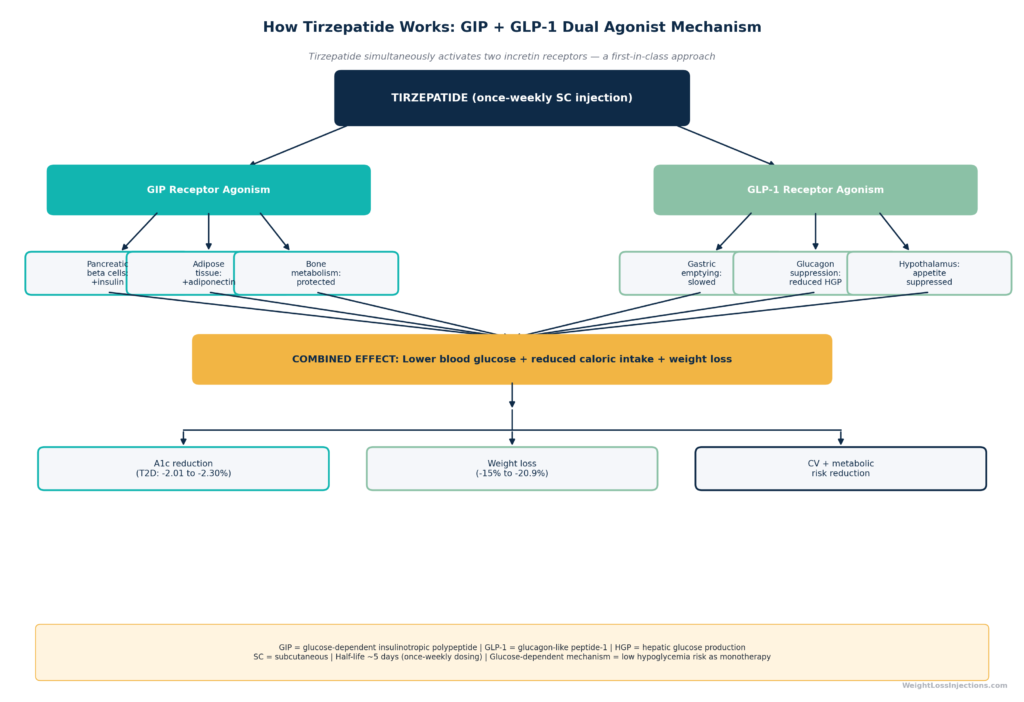
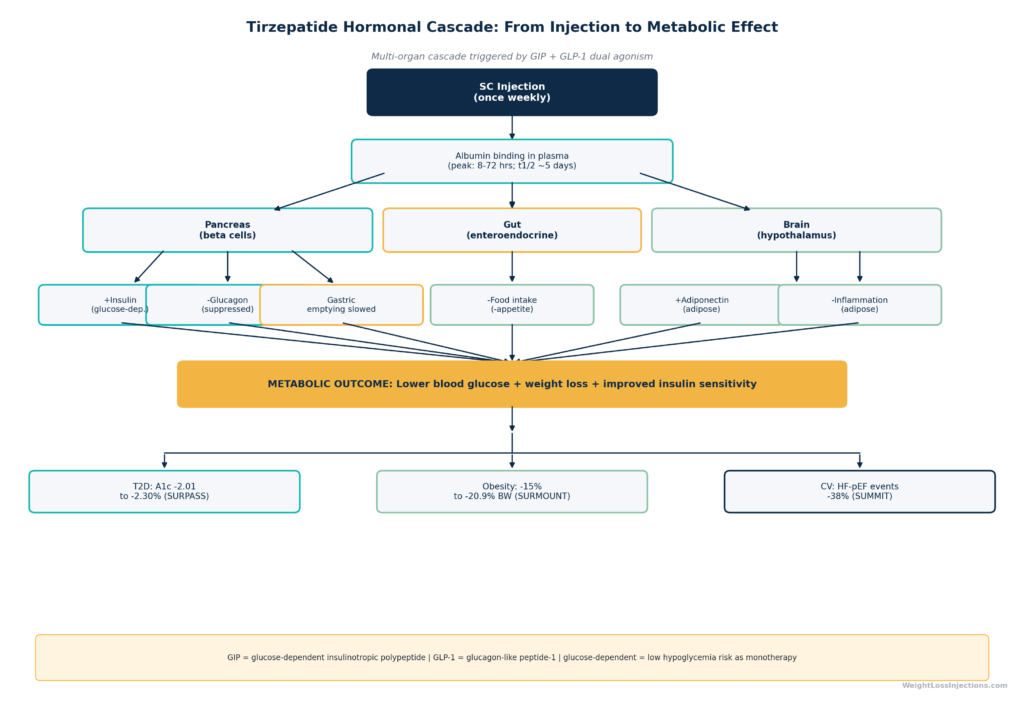
- The GLP-1 receptor pathway suppresses appetite via the brain’s hypothalamus, slows gastric emptying to prolong fullness, stimulates glucose-dependent insulin secretion, and suppresses glucagon.
- The GIP receptor pathway adds further insulin stimulation, increases adiponectin (a fat-regulating hormone), and may directly affect fat cells — the key mechanism that distinguishes tirzepatide from every other drug in the GLP-1 class.
- In the SURMOUNT-5 head-to-head trial, tirzepatide produced approximately 47% greater weight loss than semaglutide (Ozempic/Wegovy) — −20.2% vs. −13.7% — illustrating the real-world contribution of the GIP component. (NEJM SURMOUNT-5, 2025)
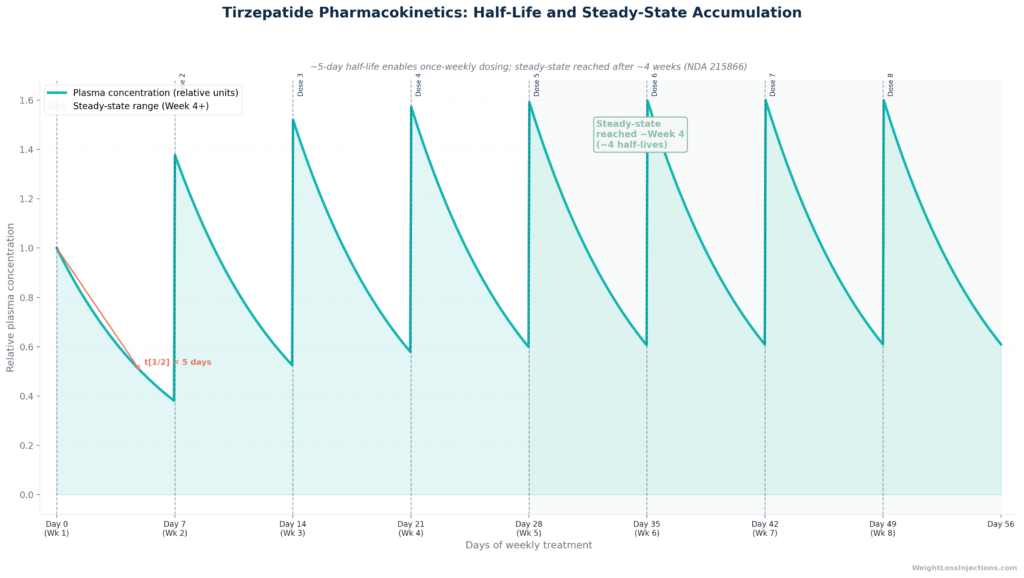
- A fatty diacid molecular modification enables tirzepatide to bind to albumin in the blood, extending its half-life to approximately 5 days and making once-weekly subcutaneous injection pharmacologically appropriate. (FDA Clinical Pharmacology Review NDA 215866)
- Steady-state plasma levels are reached after approximately 4 weeks of weekly dosing — which is why dose escalation steps are spaced at least 4 weeks apart.
- Compounded tirzepatide (when lawfully prepared under the narrow 503A personalized-medicine exception) contains the same active pharmaceutical ingredient and works via the exact same mechanism.
Introduction
Something fundamentally different happened in anti-obesity medicine when tirzepatide entered clinical trials. For decades, researchers had sought a drug capable of producing the kind of sustained, dramatic weight loss that surgery could deliver — without the operating room. Tirzepatide came closer than anything before it, and understanding why requires understanding its mechanism: tirzepatide is the first drug ever approved that turns on two distinct metabolic receptor systems at the same time.
That dual activation — of the GIP receptor and the GLP-1 receptor — is not merely a pharmacological curiosity. It translates, in clinical trials involving thousands of patients, into weight loss of 20% or more of body weight over 72 weeks. It produces better glycemic control in type 2 diabetes than semaglutide, which was itself considered a breakthrough. And it does so with a tolerability profile that, in the head-to-head SURMOUNT-5 trial, produced fewer GI-driven discontinuations than the comparison drug, despite greater weight loss. (ACC SURMOUNT-5 Journal Scan)
This guide is the most comprehensive plain-language explanation of tirzepatide’s mechanism available online. By the time you finish reading, you will understand exactly what GIP and GLP-1 receptors do, why activating both simultaneously matters, how appetite is suppressed at the brain level, why weekly dosing works from a pharmacokinetics standpoint, and how the clinical trial data connects back to the underlying biology. You will also understand how tirzepatide compares to semaglutide at the receptor level — and why the gap between them in outcomes is not a marketing claim but a predictable consequence of mechanism.
A note on compounded tirzepatide: compounded versions prepared under the narrow 503A personalized-medicine exception contain the same active pharmaceutical ingredient as Mounjaro and Zepbound. The mechanism described in this article applies equally. The legal and quality-control considerations around compounding are separate from the mechanism and are covered in detail in our companion article on is compounded tirzepatide legal 2026.
What Is Tirzepatide? The Molecule Explained
Tirzepatide is a synthetic 39-amino-acid peptide — a precisely engineered chain of amino acids that mimics and activates natural hormones produced in the gut after eating. It is not a small-molecule drug like a statin or a blood pressure pill; it is a peptide, structurally related to the body’s own incretin hormones, manufactured to perform the same signaling functions those hormones do — but more powerfully, more selectively, and far more durably. (StatPearls / NCBI Bookshelf)
Drug class: first-in-class “twincretin”
Tirzepatide’s official drug classification is dual GIP + GLP-1 receptor agonist. No other FDA-approved drug belongs to this exact class as of June 2026. The nickname “twincretin” is a portmanteau of “twin” and “incretin” — incretins are the gut hormones (GIP and GLP-1) that signal the pancreas to release insulin in response to food. By activating both incretin receptors at once, tirzepatide earns its twin prefix. (StatPearls / NCBI Bookshelf)
The molecular engineering trick: albumin binding
The native forms of GIP and GLP-1 circulate in the bloodstream with half-lives measured in minutes — typically less than 2 minutes for GLP-1, and around 5–7 minutes for GIP. These hormones are secreted in a burst after eating and quickly degraded by the enzyme DPP-4. A drug with such a fleeting half-life would require multiple daily injections — impractical for chronic disease management.
Tirzepatide’s designers solved this with a structural modification: a C20 fatty diacid moiety (a 20-carbon fatty-acid chain) attached via a linker to the peptide backbone. This fatty-acid tail allows tirzepatide to bind reversibly to albumin, the most abundant protein in human blood plasma. Think of albumin as a slow-release reservoir: tirzepatide docks to albumin, circulates protected from rapid degradation, and is gradually released back into active form over days. (FDA Clinical Pharmacology Review NDA 215866)
The result: a half-life of approximately 5 days — transforming a molecule that would otherwise vanish in minutes into one that sustains therapeutic plasma concentrations across an entire week with a single injection.
Tirzepatide’s 39-amino-acid backbone is slightly shorter than native human GIP (42 amino acids) and is structurally an analog of GIP, not GLP-1 — yet it retains potent activity at both receptors. This is the elegant molecular engineering that underlies the whole mechanism: one synthetic peptide, two receptor targets, one weekly dose. (StatPearls / NCBI Bookshelf)
Two brand names, one molecule
- Mounjaro® — tirzepatide approved by the FDA in May 2022 for the treatment of type 2 diabetes mellitus in adults, as an adjunct to diet and exercise.
- Zepbound® — the same tirzepatide molecule approved by the FDA in November 2023 for chronic weight management in adults with a BMI of 30 or higher, or 27 or higher with at least one weight-related comorbidity.
The molecule is identical. The FDA approval, labeling, and clinical indication differ. (Zepbound HCP dosage page — Lilly)
Both products are administered via the same subcutaneous autoinjector pen, at doses of 2.5, 5, 7.5, 10, 12.5, and 15 mg once weekly. When a compounding pharmacy prepares tirzepatide under the lawful 503A personalized-medicine exception — for a patient with a documented individual clinical need, such as an allergy to an inactive ingredient in the branded product — it uses the same active pharmaceutical ingredient. The mechanism is unchanged.
The Dual Mechanism: GIP Receptor + GLP-1 Receptor Agonism Explained
Understanding tirzepatide’s mechanism starts with two questions: what is an “agonist,” and what do the GIP and GLP-1 receptors actually do?
What does “agonist” mean?
An agonist is a molecule that binds to a receptor and activates it — turning it “on” — just as the natural ligand for that receptor does. Tirzepatide is an agonist at both the GIP receptor and the GLP-1 receptor, meaning it binds to and activates both, producing the downstream biological effects those receptors evolved to generate.
Flow diagram showing tirzepatide injection branching into GIP receptor activation (top: insulin secretion, adiponectin increase, fat cell effects) and GLP-1 receptor activation (bottom: insulin…
GLP-1 receptor agonism: the familiar pathway
GLP-1 — glucagon-like peptide-1 — is a hormone naturally released by intestinal L-cells within minutes of eating. It signals the body that food has arrived and coordinates a cascade of metabolic responses. By activating the GLP-1 receptor, tirzepatide reproduces and amplifies these responses:
Glucose-dependent insulin secretion. GLP-1 receptor activation in pancreatic beta cells stimulates the release of insulin — but only when blood glucose is elevated. This glucose-dependence is mechanistically critical: it means tirzepatide’s insulin-stimulating effect automatically switches off when blood sugar is in the normal range. This is why hypoglycemia risk with tirzepatide as monotherapy is low — the drug cannot drive insulin secretion when there is no excess glucose to clear. (StatPearls / NCBI Bookshelf)
Glucagon suppression. GLP-1 receptor activation also suppresses glucagon, the hormone released by pancreatic alpha cells that instructs the liver to dump stored glucose into the bloodstream. In type 2 diabetes, glucagon secretion is often dysregulated — continuing inappropriately even when blood glucose is already elevated. Suppressing it reduces hepatic glucose output, directly lowering blood sugar. (FDA Mounjaro label NDA 215866)
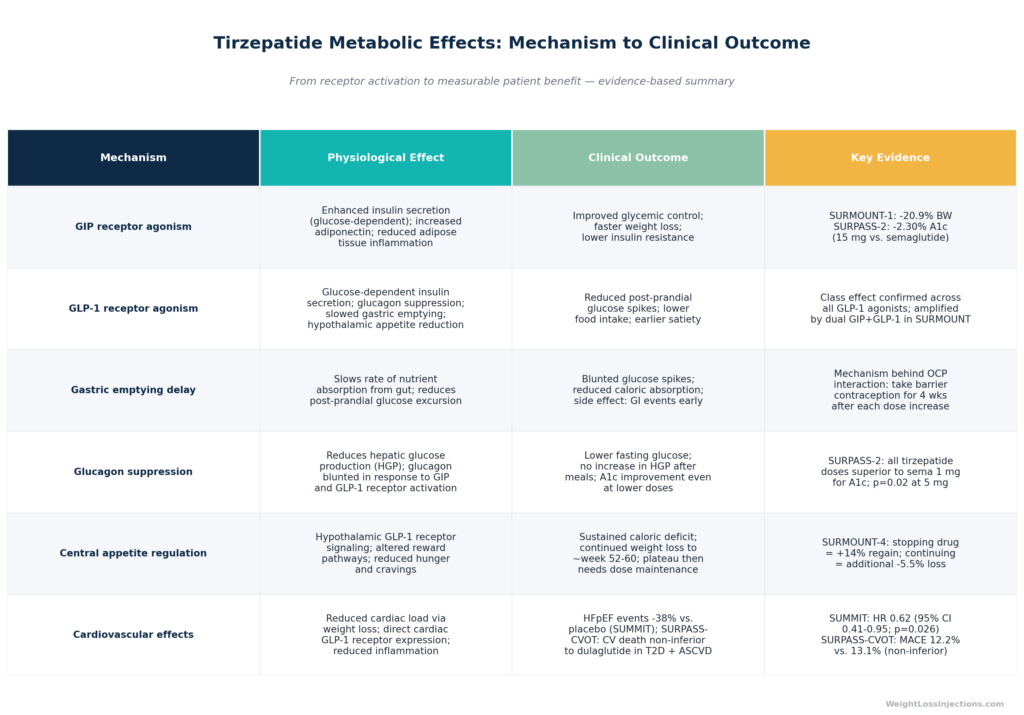
Slowed gastric emptying. Tirzepatide slows the rate at which food leaves the stomach and enters the small intestine — a process called gastric emptying. Slower emptying produces two tangible effects: it prolongs the sensation of fullness after a meal, and it blunts the sharp post-meal blood glucose spikes that occur when food is rapidly absorbed. (StatPearls / NCBI Bookshelf)
Central appetite suppression. The GLP-1 receptor is expressed not only in the pancreas but also in key brain regions, including the hypothalamus (the brain’s appetite-control center) and the brainstem nucleus tractus solitarius, which processes satiety signals from the gut. Tirzepatide activates these central receptors, reducing what patients often call “food noise” — the persistent, intrusive drive to eat that is a biological feature of obesity, not a personal failing. This is a pharmacological effect on appetite signaling, not a matter of willpower. (StatPearls / NCBI Bookshelf)
GLP-1 receptor agonism is the mechanism shared between tirzepatide and the entire GLP-1 drug class: semaglutide (Ozempic, Wegovy), liraglutide (Victoza, Saxenda), dulaglutide (Trulicity), and others. Where tirzepatide diverges — and where it gains its clinical advantage — is what comes next.
GIP receptor agonism: the differentiating mechanism
GIP — glucose-dependent insulinotropic polypeptide — is a hormone secreted by intestinal K-cells, primarily in response to dietary fat and carbohydrates. Like GLP-1, it is an incretin hormone that enhances insulin secretion after eating. But its role in weight regulation has historically been more complex and controversial than GLP-1’s — and tirzepatide’s clinical success has been central to resolving that controversy.
By activating the GIP receptor, tirzepatide produces effects that no GLP-1-only drug can replicate:
Additive insulin secretion. GIP receptor activation in pancreatic beta cells stimulates insulin release independently of the GLP-1 receptor pathway — also in a glucose-dependent manner. Both axes working simultaneously produce greater insulin secretion for any given blood glucose level than either receptor activation alone. (PMC Tirzepatide mechanism review 2025)
Adiponectin increase. One of tirzepatide’s most metabolically significant GIP-mediated effects is an increase in circulating adiponectin — a hormone produced by fat cells (adipocytes) that plays a central role in regulating insulin sensitivity and fat metabolism. Higher adiponectin is associated with lower body fat percentage, reduced insulin resistance, and lower risk of metabolic syndrome. Post-hoc biomarker analyses from tirzepatide clinical trials show greater improvements in adiponectin, insulin sensitivity, and beta-cell function compared to GLP-1-only agonists at equivalent levels of weight loss — suggesting the GIP component adds genuine metabolic benefit independent of the weight loss itself. (StatPearls / NCBI Bookshelf)
Direct effects on adipocytes. GIP receptors are expressed on fat cells, and tirzepatide’s GIP agonism may directly modulate adipocyte function — enhancing fat mobilization, reducing fat storage, and supporting preferential loss of fat mass rather than lean mass. The precise mechanisms in humans are still being characterized in ongoing research, but the directional evidence from clinical trials is consistent with a GIP-mediated contribution to adipose tissue regulation. (PMC Tirzepatide mechanism review 2025)
Central appetite modulation via GIP receptors. GIP receptors are also expressed in the brain, and emerging evidence suggests GIP receptor activation may contribute to central appetite suppression in a manner additive to the GLP-1 pathway. This research is still developing, but it is consistent with the greater appetite-suppressing effect observed with tirzepatide versus GLP-1-only agents in clinical trials. (PMC Tirzepatide mechanism review 2025)
A note on the GIP receptor controversy
The scientific history of GIP in weight regulation is worth briefly acknowledging, because it illuminates why the GIP component of tirzepatide was considered bold pharmacology at the time of its development. Earlier research — primarily in rodent models — suggested that blocking the GIP receptor might actually reduce obesity, leading to years of uncertainty about whether activating GIP would help or harm weight loss efforts. Tirzepatide’s dramatic clinical success has largely resolved this debate in humans: activating GIP receptors simultaneously with GLP-1 receptors is beneficial. The leading hypothesis is that GIP agonism in the context of concurrent GLP-1 receptor activation produces a synergistic or complementary effect that neither receptor produces alone — and that the rodent models may not have accurately predicted human biology in this context. (PMC Tirzepatide mechanism review 2025)
The combined effect
The sum of both pathways working simultaneously is a mechanism that:
- Suppresses appetite from multiple angles — peripheral satiety signals from the gut and direct central signaling in the hypothalamus and brainstem
- Slows gastric emptying to prolong fullness and blunt glucose excursions
- Stimulates insulin secretion from both the GIP and GLP-1 pathways simultaneously — glucose-dependently and synergistically
- Suppresses the glucagon-mediated hepatic glucose release that drives fasting hyperglycemia
- Improves insulin sensitivity in peripheral tissues via adiponectin and direct adipocyte effects
- May directly modulate fat cell biology in ways that enhance fat mass reduction
No single-receptor GLP-1 agonist produces this full profile. This is why tirzepatide is correctly described not as a “better GLP-1 drug” but as a drug in a new class. (FDA Mounjaro label NDA 215866)
Effects on Appetite, Gastric Emptying, Insulin, and Fat Metabolism: What Patients Actually Experience
The receptor-level science described above translates into four distinct physiological effects that patients notice during tirzepatide treatment. Understanding the mechanism behind each effect helps patients anticipate both the benefits and the side effects.
Appetite suppression: turning down the volume on hunger
The most transformative effect of tirzepatide for most patients is a profound reduction in appetite — specifically, a reduction in what the research literature calls “food reward signaling” and what patients describe as “food noise.” This is the constant internal background hum of hunger, cravings, and preoccupation with eating that characterizes obesity at the biological level.
Tirzepatide suppresses this through GLP-1 receptor activation in the hypothalamus and brainstem — brain regions that integrate signals about hunger, satiety, and food reward. Patients commonly report that food simply becomes less compelling: they reach satiety more quickly, they are less likely to eat out of boredom or craving, and they find it easier to stop eating when physiologically satisfied.
This is not willpower. The hypothalamic GLP-1 receptors that tirzepatide activates are the same receptors that the body’s own GLP-1 acts on in healthy individuals to generate the feeling of fullness after a meal. Tirzepatide provides a sustained, pharmacological version of this signal — present not just for the brief post-meal window when native GLP-1 peaks, but continuously throughout the week at steady-state. The emerging evidence on central GIP receptor agonism suggests the appetite suppression may be even further amplified through a second neural pathway, though this research is ongoing. (PMC Tirzepatide mechanism review 2025)
Gastric emptying: why you feel full longer and why nausea can occur
Tirzepatide slows gastric emptying — the process by which the stomach contracts and pushes food through the pylorus into the small intestine. Under tirzepatide’s influence, food leaves the stomach more slowly, with two direct consequences:
Prolonged satiety. A stomach that empties slowly keeps you feeling full for longer after a meal. Patients often report that a smaller portion of food than they previously would have eaten produces complete satiety — and that the feeling of fullness lasts well past what they previously experienced.
Blunted post-meal glucose spikes. When food moves slowly into the intestine, glucose is absorbed into the bloodstream more gradually, flattening the sharp post-prandial glucose excursion that can drive insulin spikes and hunger cycles. This is particularly relevant for patients with type 2 diabetes or insulin resistance.
The nausea connection. Slowed gastric emptying is also the primary mechanism behind tirzepatide-induced nausea — the most common side effect. When food sits in the stomach longer than usual, particularly during dose escalation, it can trigger nausea and occasionally vomiting. This is why the titration schedule for tirzepatide increases the dose gradually, in 2.5 mg steps spaced at least 4 weeks apart — giving the gastrointestinal tract time to adapt. (FDA Mounjaro label NDA 215866) Nausea typically attenuates as the dose stabilizes, and most patients tolerate tirzepatide well at maintenance doses.
Glucose-dependent insulin secretion: why hypoglycemia risk is low as monotherapy
Tirzepatide stimulates insulin release from pancreatic beta cells through both GLP-1 and GIP receptor pathways — but only when blood glucose is elevated above the normal range. This is the glucose-dependent mechanism, and it is a crucial safety feature.
In contrast to older diabetes medications such as sulfonylureas — which stimulate insulin secretion continuously, regardless of blood sugar level — tirzepatide’s insulin-stimulating effect automatically modulates with blood glucose. When blood glucose is normal or low, the drug’s insulinotropic signal is minimal. When blood glucose rises after a meal, the signal amplifies. The insulin is released where it is metabolically needed, then the signal subsides.
This is why hypoglycemia (dangerously low blood sugar) is rare with tirzepatide monotherapy — the drug’s own pharmacology acts as a safety governor. The important caveat: when tirzepatide is used in combination with insulin or sulfonylureas, additive hypoglycemia risk exists, and prescribers routinely reduce insulin doses by 10–20% when initiating tirzepatide. (StatPearls / NCBI Bookshelf)
Fat metabolism: the GIP component’s systemic role
Beyond the more familiar appetite and insulin effects, tirzepatide’s GIP receptor agonism contributes to fat metabolism through several channels:
Adiponectin. By increasing circulating adiponectin, tirzepatide improves the cellular machinery for fat metabolism — enhancing fatty acid oxidation in muscle and liver tissue, reducing ectopic fat deposition, and improving insulin signaling throughout the body. This effect appears to be partially independent of weight loss itself, which means patients may gain metabolic benefits from tirzepatide even before substantial weight reduction has occurred. (StatPearls / NCBI Bookshelf)
Direct adipocyte effects. GIP receptors on fat cells respond to tirzepatide’s activation by modulating lipid storage and mobilization. The net effect, observed in clinical trial biomarker data, is preferential reduction of fat mass rather than lean mass during weight loss — a clinically important distinction for preserving muscle function and metabolic rate during treatment.
Secondary metabolic improvements. As body weight falls — driven by caloric reduction from appetite suppression and the other mechanisms above — insulin resistance improves progressively, circulating inflammatory markers decrease, liver fat reduces, and the full metabolic syndrome begins to resolve. These downstream effects compound the direct receptor-mediated benefits. The result, across 72 weeks in SURMOUNT-1, was mean weight loss of −15.0% at 5 mg, −19.5% at 10 mg, and −20.9% at 15 mg, compared to −3.1% with placebo — translating to 85%, 89%, and 91% of patients achieving clinically meaningful weight loss of 5% or more. (PubMed SURMOUNT-1, NEJM 2022)
Our Top 3 · October 2026
The best GLP-1 providers right now
Independently reviewed. Ranked by price, medication access, provider quality, and patient outcomes.
Renew GLP
Personalized GLP-1, GIP plans: Semaglutide & Tirzepatide.
Medvi
No membership or hidden fees. Everything you need is included.
Trimi
US-licensed clinicians and shipped to your door, from $99/mo.
Why GIP Co-Agonism Enhances Weight Loss Beyond GLP-1 Alone: The SURMOUNT Evidence
The mechanistic argument for why tirzepatide should outperform GLP-1-only drugs is compelling on theoretical grounds. But science ultimately rests on data — and the data from the SURMOUNT clinical trial program provides the clearest available illustration of what the GIP component actually contributes in living patients.
Vertical bar chart comparing mean % body weight change at 72 weeks: Placebo (−3.1%), Semaglutide MTD GLP-1 only, Tirzepatide 5 mg dual, Tirzepatide 10 mg dual,…
SURMOUNT-5: the head-to-head proof of mechanism
The most direct evidence comes from SURMOUNT-5, a phase 3b randomized trial published in the New England Journal of Medicine in May 2025. (NEJM SURMOUNT-5, 2025) The design was straightforward: 751 adults with obesity (BMI ≥30) or overweight (BMI ≥27 with at least one comorbidity) without type 2 diabetes were randomized to either tirzepatide at maximum tolerated dose (10 or 15 mg) or semaglutide at maximum tolerated dose (1.7 or 2.4 mg) for 72 weeks.
The result: tirzepatide produced mean body weight change of −20.2% (approximately 22.8 kg), versus −13.7% (approximately 15.0 kg) with semaglutide — a difference of 6.5 percentage points, representing approximately 47% greater relative weight loss (p<0.001). (NEJM SURMOUNT-5, 2025)
In terms of the proportion of patients achieving specific weight-loss thresholds, the gap was even starker:
- ≥15% weight loss: 64.6% (tirzepatide) vs. 40.1% (semaglutide)
- ≥25% weight loss: ~31% vs. ~16%
- ≥30% weight loss: 19.7% vs. 6.9%
Waist circumference reduction — a direct measure of visceral (abdominal) fat — was −18.4 cm with tirzepatide vs. −13.0 cm with semaglutide. (ACC SURMOUNT-5 Journal Scan)
What this tells us about the GIP component
The SURMOUNT-5 comparison is the closest available experimental approximation of isolating the GIP contribution in humans. Both drugs share the GLP-1 mechanism — both activate GLP-1 receptors, suppress appetite centrally, slow gastric emptying, and stimulate glucose-dependent insulin release. Tirzepatide adds GIP receptor agonism on top. The ~6.5 percentage point difference in weight loss — observed in a controlled trial, at maximum tolerated doses of both drugs — represents the best current estimate of what GIP receptor co-agonism contributes to weight loss in vivo.
This is mechanism becoming outcome. The dual receptor hypothesis, developed in the laboratory, is validated in the clinic.
The tolerability paradox
One of the most intriguing findings in SURMOUNT-5 was what did not happen. Greater weight loss with a GLP-1 mechanism typically correlates with more severe GI side effects — the dose-response relationship between nausea/vomiting and weight loss is well established across the GLP-1 class. Yet tirzepatide, despite producing substantially greater weight loss, showed lower GI-driven discontinuation than semaglutide: 2.7% vs. 5.6%. (ACC SURMOUNT-5 Journal Scan)
The leading hypothesis is that GIP receptor co-agonism modulates GI tolerability — perhaps through GIP’s effects on gut motility or through anti-inflammatory effects at the intestinal level — allowing tirzepatide to achieve greater metabolic effect with fewer GI-related discontinuations than a pure GLP-1 amplification would predict. The precise mechanism is not fully understood and remains an active area of investigation.
Important caveats
SURMOUNT-5 was an open-label trial (neither participants nor investigators were blinded to treatment assignment) and was funded by Eli Lilly. Post-hoc biomarker analyses support the GIP contribution hypothesis, but the full mechanistic story of how GIP and GLP-1 co-agonism interact is still being characterized in the scientific literature. These caveats are worth noting without dismissing the overall evidence base, which across multiple large trials is internally consistent. (NEJM SURMOUNT-5, 2025)
SURMOUNT-1: dose-response as mechanism illustration
The SURMOUNT-1 trial, published in the New England Journal of Medicine in 2022, also illustrates the potency of the dual mechanism. Over 72 weeks in 2,539 non-diabetic adults with obesity or overweight, tirzepatide produced mean body weight changes of −15.0% (5 mg), −19.5% (10 mg), and −20.9% (15 mg) versus −3.1% with placebo. (PubMed SURMOUNT-1, NEJM 2022) These figures substantially exceeded the weight loss previously achieved by GLP-1-only agents in comparable populations and were considered landmark results that prompted reconsideration of what was pharmacologically achievable in obesity treatment.
Half-Life, Weekly Dosing Rationale, and Pharmacokinetics
Understanding why tirzepatide works pharmacokinetically — how it behaves in the body — is both scientifically interesting and practically important for patients. It explains why weekly dosing makes sense, why it takes a month to feel the full effect of a given dose, and what happens if a dose is missed.
Dual-element line chart on a 0–8 week x-axis and 0–100% relative plasma concentration y-axis: (1) single-dose exponential decay curve illustrating ~5-day half-life; (2) weekly dosing accumulation…
The albumin binding mechanism: from minutes to days
The native GLP-1 hormone, released naturally from the gut after eating, has a half-life of less than 2 minutes in the bloodstream. It is rapidly cleaved by the enzyme DPP-4 and quickly excreted. This is biologically appropriate for a short-burst post-meal signal — but useless for a therapeutic drug.
Tirzepatide’s molecular engineers attached a C20 fatty diacid chain (a 20-carbon fatty-acid tail) via a linker to the peptide backbone. In plasma, this fatty-acid tail reversibly binds to albumin — the most abundant protein in blood serum. Albumin is large, has a long circulatory half-life itself, and is protected from renal filtration and enzymatic degradation. By hitching a molecular ride on albumin, tirzepatide is shielded from the rapid degradation mechanisms that would otherwise eliminate it in minutes.
The drug is in a dynamic equilibrium: bound to albumin (protected, inactive depot) and free in plasma (pharmacologically active, small fraction). As free tirzepatide is slowly eliminated, more is released from albumin stores, maintaining active drug levels throughout the week. The net pharmacokinetic result: a half-life of approximately 5 days. (FDA Clinical Pharmacology Review NDA 215866)
Key pharmacokinetic parameters
| Parameter | Value | Source |
|---|---|---|
| Half-life | ~5 days | FDA Clinical Pharmacology Review NDA 215866 |
| Time to peak concentration (Tmax) | 8–72 hours post-SC injection | StatPearls / NCBI Bookshelf |
| Steady state | ~4 weeks of weekly dosing | FDA Clinical Pharmacology Review NDA 215866 |
| Route | Subcutaneous injection only | — |
| Volume of distribution | Low; primarily albumin-bound | — |
| Renal/hepatic impairment | No dose adjustment required | PMC Population PK Tirzepatide 2024 |
Steady state: the 4-week principle
A fundamental concept in pharmacokinetics is “steady state” — the point at which the amount of drug entering the body with each dose equals the amount eliminated between doses, producing stable plasma concentrations. For any drug, steady state is reached after approximately 4 to 5 half-lives of regular dosing.
Tirzepatide’s half-life of ~5 days means steady state is reached after approximately 4 weeks of once-weekly dosing. (FDA Clinical Pharmacology Review NDA 215866)
This has direct implications for patients:
Why dose escalation waits 4 weeks. At each dose step in the titration schedule — 2.5 mg for weeks 1–4, 5 mg for weeks 5–8, and so forth — the drug has not reached its full steady-state concentration until week 4 of that dose. Escalating sooner would mean evaluating the drug’s tolerability before it has reached its pharmacological plateau, and the side effect profile at steady state might differ from what is seen in the first week or two at a new dose.
Why the first month at a dose understates its effect. A patient who has just moved to 5 mg and notices modest appetite suppression in week 1 is experiencing the effect of sub-steady-state plasma concentrations. By week 4 at 5 mg, tirzepatide has reached its full pharmacological effect at that dose. Appetite suppression, weight loss, and glycemic improvement typically become more apparent as steady state is approached.
Missed doses. Tirzepatide’s 5-day half-life provides a useful clinical cushion. If a missed dose is taken within 4 days (96 hours) of the scheduled day, the plasma trough remains acceptable and the normal schedule can continue. Beyond 4 days, the missed dose should be skipped and the next scheduled injection taken on the usual day.
Metabolism and excretion: why CYP450 interactions don’t apply
Tirzepatide is metabolized via two routes:
- Proteolytic cleavage — enzymes in the blood and tissues sequentially cleave the peptide backbone into its constituent amino acids, which are recycled or excreted.
- Fatty-acid beta-oxidation — the C20 fatty diacid chain is processed through the same beta-oxidation pathway that metabolizes dietary fatty acids.
Critically, tirzepatide is not metabolized by the cytochrome P450 (CYP450) enzyme system — the enzyme superfamily responsible for metabolizing the majority of conventional small-molecule drugs. (PMC Population PK Tirzepatide 2024) This means that the extensive network of CYP450-based drug-drug interactions that complicates management of patients on multiple medications largely does not apply to tirzepatide. Statins, antihypertensives, antidepressants, anticoagulants, antifungals — all metabolized by CYP450 — do not interact with tirzepatide through this pathway.
The one important exception is indirect: tirzepatide slows gastric emptying, which can delay the absorption rate (though not the total amount absorbed) of oral medications taken around the time of injection. This is clinically relevant for drugs with narrow therapeutic windows where absorption timing matters — oral contraceptives, levothyroxine, and warfarin in particular. (See our companion article on tirzepatide drug interactions for full guidance.)
Excretion: approximately 33% renal, with the remainder via fecal and other routes. (PMC Population PK Tirzepatide 2024)
Renal and hepatic impairment: no dose adjustment needed
Population pharmacokinetic modeling across patients with a range of renal and hepatic function shows no clinically significant impact of mild-to-severe renal impairment or hepatic impairment on tirzepatide exposure. (PMC Population PK Tirzepatide 2024) No dose adjustment is required for these populations. Age, sex, and race also show no clinically meaningful covariate effects on pharmacokinetics. This simplifies prescribing for the broad and medically complex populations who present for tirzepatide therapy.
How Tirzepatide Differs From Semaglutide at the Receptor Level
Patients and providers frequently ask how tirzepatide compares to semaglutide — the active ingredient in Ozempic and Wegovy, the best-known members of the GLP-1 drug class. The answer at the mechanism level is precise: they share one receptor pathway, and tirzepatide adds a second.
What they share: GLP-1 receptor activation
Both tirzepatide and semaglutide are GLP-1 receptor agonists. Both produce appetite suppression via hypothalamic and brainstem GLP-1 receptor activation, gastric emptying delay with its satiety and glucose-smoothing effects, glucose-dependent insulin stimulation, and glucagon suppression. A patient switching from semaglutide to tirzepatide will recognize these same effects — the underlying GLP-1 pathway is operating in both cases. (StatPearls / NCBI Bookshelf)
Semaglutide has approximately 94% structural homology to native human GLP-1 and binds the GLP-1 receptor with high selectivity. It has negligible GIP receptor activity. Its half-life of approximately 7 days (enabled by a different albumin-binding modification than tirzepatide’s) also supports once-weekly dosing. Semaglutide has a robust long-term cardiovascular outcomes dataset — including the LEADER and SUSTAIN-6 trials in diabetes and the SELECT trial in non-diabetic cardiovascular disease — that tirzepatide’s newer clinical program is still building toward. (PMC Tirzepatide mechanism review 2025)
What tirzepatide adds: GIP receptor activation
Tirzepatide adds co-agonism at the GIP receptor — producing the additional insulin-stimulating, adiponectin-increasing, and potential direct adipocyte effects described throughout this article. It is structurally an analog of GIP (not GLP-1), modified to retain activity at both receptors.
At lower concentrations, tirzepatide has approximately equal affinity for GIP and GLP-1 receptors. At the higher plasma concentrations achieved at therapeutic doses (7.5–15 mg), GLP-1 receptor activity tends to dominate — but GIP receptor activity continues to contribute meaningfully throughout the dosing range. (PMC Tirzepatide mechanism review 2025)
The practical consequence: different clinical outcomes
The receptor-level difference produces clinical differences that are both statistically significant and clinically meaningful:
- Greater weight loss (as demonstrated in SURMOUNT-5, SURMOUNT-1, and SURPASS-2)
- Greater A1c reduction in type 2 diabetes (in SURPASS-2: −2.30% at 15 mg tirzepatide vs. −1.86% with semaglutide 1 mg) (PubMed SURPASS-2, NEJM 2021)
- Greater improvements in adiponectin and insulin sensitivity biomarkers
- Potentially different GI tolerability profile — lower discontinuation in SURMOUNT-5 despite greater weight loss
The GIP component is not an incremental add-on. The 47% greater weight loss observed in SURMOUNT-5 is a large and clinically consequential difference, representing the pharmacological yield of a second receptor pathway operating simultaneously. For patients for whom the weight-loss goal is central, the mechanism directly predicts the outcome advantage. (NEJM SURMOUNT-5, 2025)
Getting Started With Tirzepatide at WeightLossInjections.com
Understanding how tirzepatide works is the first step — but translating mechanism into outcome requires appropriate medical supervision, individualized dosing, and ongoing monitoring. Tirzepatide’s dose-escalation schedule exists specifically to allow the gastrointestinal tract to adapt, and the decision about which maintenance dose is appropriate varies by individual patient — not every patient needs to reach 15 mg to achieve their treatment goals.
At WeightLossInjections.com, [service detail — telehealth consultation format, state availability, Rx process], patients work with licensed prescribers who evaluate candidacy, design an individualized titration plan, and provide ongoing medical supervision throughout treatment. The mechanism is powerful — appropriate patient selection, careful dose management, and regular follow-up are what translate that power into safe, sustained outcomes.
Our consultations start at [$X/month] [service detail]. We support patients through the titration process with clinical oversight at each dose step and evidence-based guidance on managing the GI side effects that accompany dose escalation.
For patients interested in whether compounded tirzepatide may be appropriate for their individual circumstances — for example, due to an allergy to an inactive ingredient in the branded product, or a need for a dose not commercially available — our prescribers are familiar with the narrow 503A personalized-medicine pathway and can evaluate eligibility based on documented clinical criteria. Mass-market compounded tirzepatide is not lawfully available under the current FDA framework, but legitimate personalized-medicine exceptions exist and are assessed on a case-by-case basis by a licensed prescriber. (FDA GLP-1 Compounding Clarification Page)
Our Take at WeightLossInjections.com
Tirzepatide represents a genuine scientific advance in anti-obesity medicine — not an iteration on existing GLP-1 drugs but a mechanistically distinct molecule that activates a receptor pathway that no other approved drug reaches. The GIP receptor co-agonism is not a marketing feature; it is a measurable contributor to clinical outcomes, evidenced in the largest head-to-head obesity pharmacotherapy trial ever conducted.
What the mechanism explains, and what patients deserve to understand before starting treatment, is this: tirzepatide is working on appetite, insulin, fat metabolism, and gut physiology through two converging molecular pathways, not one. That is why the weight loss is greater. That is why the metabolic improvements — adiponectin, insulin sensitivity, beta-cell function — are more profound than weight loss alone would predict. And that is why the clinical trial data consistently shows outcomes that were considered implausible before tirzepatide’s development.
The mechanism also explains what tirzepatide does not do: it does not permanently reset the body’s metabolic set-point. SURMOUNT-4 demonstrated clearly that when tirzepatide is discontinued, the biological drive toward the prior body weight reasserts itself — patients in the placebo (withdrawal) arm regained an average of 14.0% of body weight over the subsequent year after stopping treatment. (PubMed SURMOUNT-4, JAMA 2024) This is not a failure of the drug; it is the underlying biology of obesity reasserting itself when the pharmacological signal is removed. Tirzepatide, like antihypertensives or statins for their respective conditions, is most effective when understood as likely long-term therapy for most patients.
For patients on this medication, and for providers prescribing it, we believe the mechanism deserves to be understood in full — not just as reassurance that the drug “works” but as genuine insight into why it works, what effects to expect and when, and how to interpret the clinical course of treatment in light of the pharmacology. We built this article to provide that foundation.
This content is for informational purposes only and does not constitute medical advice. Consult a licensed healthcare provider before starting tirzepatide or any weight management medication.
FAQ
Tirzepatide activates two receptors — GIP (glucose-dependent insulinotropic polypeptide) and GLP-1 (glucagon-like peptide-1) — that regulate appetite, insulin secretion, and fat metabolism. GLP-1 receptor activation suppresses appetite via hypothalamic and brainstem signaling and slows gastric emptying to prolong satiety. GIP receptor activation adds further insulin stimulation, increases adiponectin (a fat-regulating hormone that improves insulin sensitivity), and may directly affect fat cells to enhance fat mobilization. Together, these effects produce sustained caloric reduction and systemic metabolic improvements that drive substantial, sustained weight loss in clinical trials. (StatPearls / NCBI Bookshelf)
Tirzepatide activates the GLP-1 receptor, so it is often grouped with GLP-1 drugs — but it is more precisely classified as a dual GIP + GLP-1 receptor agonist. Unlike semaglutide (Ozempic, Wegovy), which is a pure GLP-1 receptor agonist, tirzepatide simultaneously activates both the GLP-1 and GIP receptors. This dual mechanism distinguishes it from every other drug in the GLP-1 class and is the pharmacological basis for its greater clinical efficacy. (StatPearls / NCBI Bookshelf)
Tirzepatide takes approximately 4 weeks to reach steady-state plasma concentrations at any given dose, due to its ~5-day half-life and weekly dosing interval. (FDA Clinical Pharmacology Review NDA 215866) Most patients begin to notice meaningful appetite suppression once they reach the 5 mg dose (around weeks 5–8 of the standard titration schedule). Measurable weight loss typically becomes apparent by months 1–2 and continues progressively through 72 weeks in clinical trials, with the greatest rate of loss occurring in the first 24–36 weeks.
Tirzepatide’s molecular structure includes a fatty diacid chain (C20) that allows it to bind reversibly to albumin, a protein abundant in blood plasma. Albumin acts as a slow-release reservoir — protecting tirzepatide from rapid enzymatic degradation and releasing it gradually over days. The result is a half-life of approximately 5 days, compared to native GLP-1’s half-life of less than 2 minutes. This extended half-life makes once-weekly subcutaneous dosing pharmacologically sufficient to maintain therapeutic plasma concentrations throughout the week. (FDA Clinical Pharmacology Review NDA 215866)
As monotherapy, tirzepatide has a low hypoglycemia risk because both its GIP and GLP-1 effects on insulin secretion are glucose-dependent — the drug stimulates insulin release only when blood glucose is elevated above the normal range. When blood glucose is normal or low, the insulinotropic signal is minimal. However, clinically significant hypoglycemia risk exists when tirzepatide is combined with insulin or sulfonylureas (which stimulate insulin independently of blood glucose). Prescribers routinely reduce basal insulin doses by 10–20% when initiating tirzepatide in patients already on insulin. (StatPearls / NCBI Bookshelf)
Ozempic and Wegovy contain semaglutide — a GLP-1 receptor agonist only. Tirzepatide (Mounjaro/Zepbound) activates both GLP-1 and GIP receptors. In the SURMOUNT-5 head-to-head trial published in the New England Journal of Medicine in 2025, tirzepatide at maximum tolerated dose produced approximately 47% greater weight loss than semaglutide at maximum tolerated dose — mean −20.2% versus −13.7% body weight change at 72 weeks (p<0.001). (NEJM SURMOUNT-5, 2025) The additional GIP receptor mechanism is the pharmacological reason for tirzepatide’s greater clinical efficacy in weight management. Semaglutide, by contrast, has a longer track record in cardiovascular outcomes data, which is still being established for tirzepatide.