![Unbranded [pillar-drug-class] injection pen on a neutral background — WeightLossInjections.com editorial hero](https://weightlossinjections.com/wp-content/uploads/2026/07/hero_tirzepatide_c4_compare-1200x675.png)
Side-by-side diagram comparing tirzepatide dual GIP+GLP-1 receptor agonism versus semaglutide single GLP-1 receptor agonism, with arrows showing downstream metabolic effects for each pathway
- Tirzepatide (Mounjaro/Zepbound) activates two receptors — GIP and GLP-1. Semaglutide (Ozempic/Wegovy) activates the GLP-1 receptor only. That molecular difference now has direct head-to-head clinical evidence behind it.
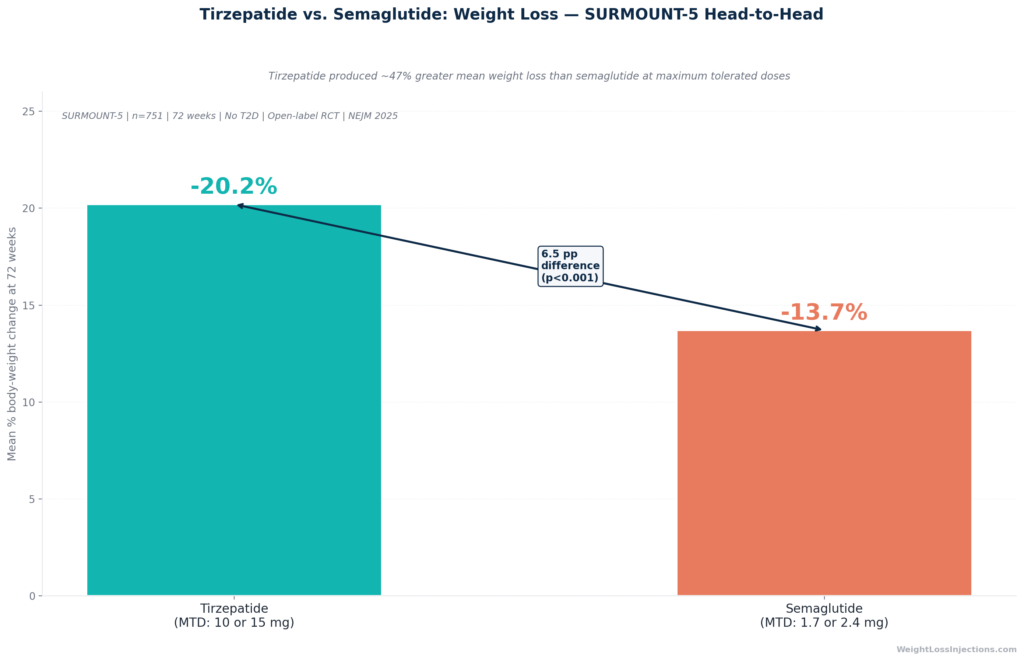
- In SURMOUNT-5 — the first large phase 3b randomized trial comparing the two molecules head-to-head — tirzepatide produced −20.2% mean body weight loss versus −13.7% for semaglutide at 72 weeks, a 47% greater relative advantage (p<0.001), per Aronne et al., NEJM 2025.
- In the SURPASS-2 trial in type 2 diabetes, tirzepatide was superior to semaglutide 1 mg on A1c reduction and weight loss across all doses, per PubMed SURPASS-2.
- Semaglutide currently holds the longer cardiovascular outcomes track record, including the SELECT trial (20% MACE reduction in obesity/CVD). Tirzepatide’s cardiovascular evidence base is newer but growing.
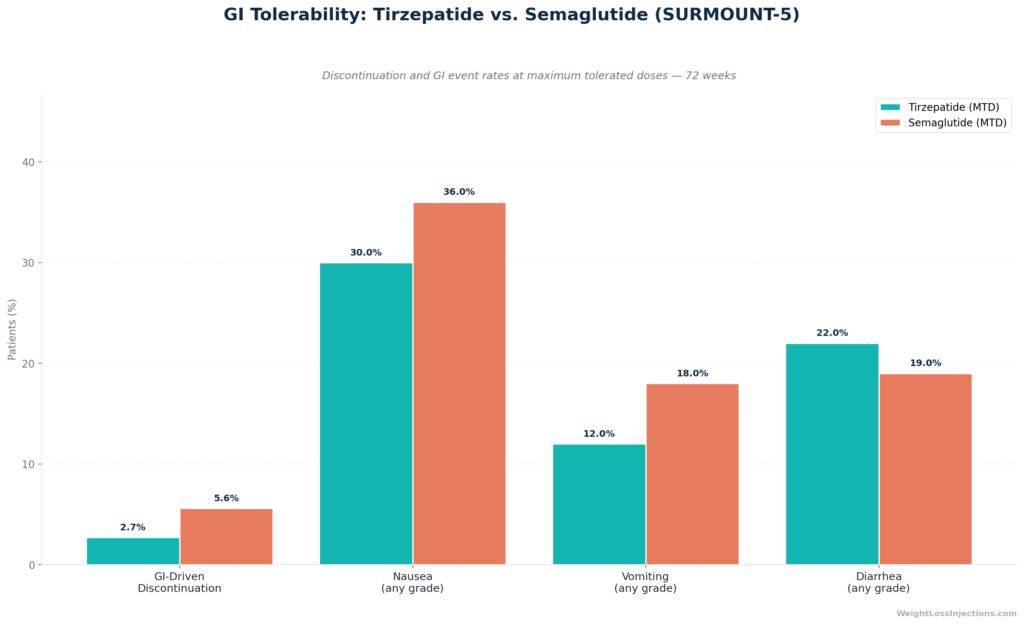
- In SURMOUNT-5, tirzepatide had lower GI-driven discontinuation (2.7% vs. 5.6%), suggesting comparable or better tolerability at maximum tolerated doses, per the ACC SURMOUNT-5 Journal Scan.
- Tirzepatide has a unique oral contraceptive drug interaction that semaglutide does not share — clinically important for patients on combined hormonal OCP.
- Cost in 2026 differs meaningfully: semaglutide has broader generic/compounded options following its March 2026 composition patent expiry; tirzepatide has no generic equivalent before approximately 2036.
- Neither drug is the universal “better” choice — the right answer depends on your cardiovascular history, contraceptive use, cost situation, and weight loss goals. This article gives you the evidence to have that conversation with your prescriber.
Tirzepatide and Semaglutide: What They Are
Both tirzepatide and semaglutide are injectable, once-weekly medications used for type 2 diabetes management and chronic weight management. Both work through incretin hormone pathways — the gut-derived hormonal signals that regulate blood sugar and appetite after eating. But the two molecules are not the same drug. One activates a single receptor. The other activates two.
Tirzepatide is the active pharmaceutical ingredient in Mounjaro® (FDA-approved for type 2 diabetes, May 2022) and Zepbound® (FDA-approved for chronic weight management, November 2023), both manufactured by Eli Lilly. It is a synthetic 39-amino-acid peptide and the first-in-class dual GIP + GLP-1 receptor agonist, meaning it simultaneously engages both the glucose-dependent insulinotropic polypeptide (GIP) receptor and the glucagon-like peptide-1 (GLP-1) receptor. No other FDA-approved drug in this exact class exists as of June 2026, per StatPearls / NCBI Bookshelf.
Semaglutide is the active ingredient in Ozempic® (FDA-approved for type 2 diabetes, December 2017) and Wegovy® (FDA-approved for chronic weight management, June 2021), both manufactured by Novo Nordisk. It is a selective GLP-1 receptor agonist only — highly potent at the GLP-1 receptor with approximately 94% structural homology to native human GLP-1. Semaglutide has a longer real-world track record than tirzepatide and a more established cardiovascular outcomes dataset.
For readers comparing these drugs in 2026, the question is no longer “does tirzepatide work better?” — a head-to-head trial has now answered that for weight loss. The more clinically important questions are: Why does tirzepatide produce more weight loss? What does the cardiovascular evidence actually say? What are the real tolerability differences? And how do cost and access realities factor into the choice for your specific situation?
This guide answers all of those questions using primary clinical trial data.
Mechanism Comparison: Dual Agonism vs. Single Agonism
The core mechanistic difference between these two molecules explains nearly everything downstream — the difference in weight loss magnitude, the potential tolerability profile, and the distinct drug interaction that tirzepatide carries.
How Tirzepatide Works: Two Receptors, One Molecule
Tirzepatide’s structure is based on the GIP peptide backbone, modified with a C18 fatty-acid chain that enables albumin binding and produces a half-life of approximately five days — long enough for once-weekly subcutaneous dosing, per the FDA Clinical Pharmacology Review for Mounjaro NDA 215866. That fatty-acid linkage also confers tirzepatide’s dual-receptor activity by allowing it to engage both the GIP receptor and the GLP-1 receptor with distinct pharmacological profiles at each.
Here is what each receptor contributes:
GLP-1 receptor agonism (the pathway shared with semaglutide):
- Slows gastric emptying, which blunts post-meal glucose spikes and reduces the pace of caloric intake
- Suppresses glucagon secretion, reducing hepatic glucose output
- Stimulates insulin secretion from pancreatic beta cells in a glucose-dependent manner — meaning insulin release only occurs when blood glucose is elevated, keeping hypoglycemia risk low as monotherapy
- Reduces appetite through central signaling in the hypothalamus, creating a meaningful reduction in caloric intake
GIP receptor agonism (the additional pathway tirzepatide adds):
- Stimulates insulin secretion through its own glucose-dependent mechanism, augmenting the GLP-1 effect
- Increases adiponectin — a fat-regulating adipokine that improves insulin sensitivity
- Has direct effects on adipose tissue: GIP receptors on fat cells mediate reductions in adipogenesis and fat accumulation
- Suppresses glucagon in the postprandial state
- Post-hoc biomarker analyses from the SURPASS clinical program show greater improvement in insulin sensitivity and beta-cell function with tirzepatide compared to GLP-1-only agonists, per StatPearls / NCBI Bookshelf
The combined effect of both pathways on appetite and fat metabolism is hypothesized to explain why tirzepatide produces greater weight loss than semaglutide at maximum tolerated doses. The GIP receptor’s role in human metabolism is still being characterized scientifically — but the clinical outcome data from head-to-head trials now confirms that the dual-agonism mechanism translates into meaningfully greater weight loss in practice, per the PMC tirzepatide mechanism review 2025.
How Semaglutide Works: The Established GLP-1 Pathway
Semaglutide activates only the GLP-1 receptor — but it does so with high potency and selectivity, binding with approximately 94% structural homology to native human GLP-1. Its mechanism covers all the GLP-1 effects described above: gastric emptying delay, glucagon suppression, glucose-dependent insulin secretion, and hypothalamic appetite reduction.
Semaglutide’s single-receptor mechanism comes with a significant practical advantage: a longer and more thoroughly characterized safety record. Ozempic entered clinical use in 2017. The semaglutide clinical trial program spans over a decade of cardiovascular outcomes data, including the landmark LEADER trial for liraglutide (as class precedent), SUSTAIN-6, and the SELECT trial. This accumulated evidence base is something tirzepatide’s newer clinical program — despite its impressive efficacy data — cannot yet match by simple virtue of time.
The Critical Difference for Drug Interactions
One mechanistic consequence of tirzepatide’s stronger gastric-emptying effect is a clinically significant drug interaction that semaglutide does not share: tirzepatide reduces oral contraceptive (OCP) absorption by approximately 20% due to delayed gastric emptying. Semaglutide does not cause this interaction to the same clinically relevant extent. This difference is addressed in detail in the side effects section below, per the Reproductive Health Access Project.
Head-to-Head Weight Loss Data: SURMOUNT-5 Results
Grouped vertical bar chart of SURMOUNT-5 head-to-head results comparing tirzepatide vs semaglutide at multiple weight-loss thresholds: mean weight loss (20.2% vs 13.7%), ≥15% responders (64.6% vs…
For years, comparisons between tirzepatide and semaglutide on weight loss were inherently indirect — drawing from SURMOUNT-1 and the STEP-1 semaglutide trial, which were conducted in different populations, at different time points, and with different placebo responses. The only valid conclusion from those trials was directional: tirzepatide appeared to produce greater weight loss than semaglutide. SURMOUNT-5 changed that.
SURMOUNT-5: Study Design
SURMOUNT-5 was a phase 3b, randomized, open-label, 72-week trial that enrolled 751 adults with obesity (BMI ≥30) or overweight (BMI ≥27 plus at least one comorbidity) without type 2 diabetes, conducted at 32 sites across the U.S. and Puerto Rico. Participants were randomized to tirzepatide at their maximum tolerated dose (10 mg or 15 mg) versus semaglutide at their maximum tolerated dose (1.7 mg or 2.4 mg). The open-label design — meaning participants knew which drug they were taking — was necessary because the pen devices for the two drugs are distinguishable, but it represents a design limitation that should be acknowledged when interpreting results, per Aronne et al., NEJM 2025.
The trial was funded by Eli Lilly, manufacturer of tirzepatide. This does not invalidate the findings, but it is standard scientific practice to note funder relationships when evaluating trial data.
Primary Endpoint Results
The primary endpoint was mean percent body weight change at 72 weeks:
- Tirzepatide: −20.2% (approximately −22.8 kg, or ~50 lbs)
- Semaglutide: −13.7% (approximately −15.0 kg, or ~33 lbs)
- Difference: 6.5 percentage points — tirzepatide produced approximately 47% greater relative weight loss (p<0.001)
That is an average of approximately 17 additional pounds lost over 72 weeks with tirzepatide compared to semaglutide at maximum tolerated doses, per Aronne et al., NEJM 2025 and the EASO/NEJM SURMOUNT-5 press summary.
Waist circumference reduction also favored tirzepatide: −18.4 cm versus −13.0 cm for semaglutide, per the ACC SURMOUNT-5 Journal Scan.
Responder Thresholds
The secondary responder data reinforces the primary finding at every threshold:
| Weight Loss Threshold | Tirzepatide | Semaglutide |
|---|---|---|
| ≥15% body weight | 64.6% | 40.1% |
| ≥25% body weight | ~31% | ~16% |
| ≥30% body weight | 19.7% | 6.9% |
Source: Peptides:Enhanced SURMOUNT-5 analysis.
In practical terms: nearly two-thirds of tirzepatide patients lost at least 15% of their body weight, compared to fewer than half on semaglutide. At the highest threshold — ≥30% body weight loss, equivalent to 60 lbs for a 200-lb person — nearly 20% of tirzepatide patients achieved this versus only 7% on semaglutide. These are not marginal differences.
Tolerability in SURMOUNT-5
One of the more clinically unexpected SURMOUNT-5 findings was that tirzepatide produced lower GI-driven discontinuation rates despite producing greater weight loss: 2.7% versus 5.6% for semaglutide, per the ACC SURMOUNT-5 Journal Scan. This finding is discussed further in the side effects section, but it deserves emphasis here: tirzepatide’s superior weight loss was not achieved at the cost of worse tolerability — if anything, the opposite was observed in this trial.
SURPASS-2: The Type 2 Diabetes Head-to-Head
SURMOUNT-5 enrolled adults without type 2 diabetes. The landmark head-to-head comparison in patients with T2D is SURPASS-2.
SURPASS-2 was a 40-week, open-label, phase 3 trial enrolling 1,879 adults with type 2 diabetes on metformin, randomized to tirzepatide (5, 10, or 15 mg) versus semaglutide 1 mg — an important caveat, because this compares tirzepatide to the lower diabetes dose of semaglutide, not the higher 2.4 mg weight-management dose used in SURMOUNT-5, per PubMed SURPASS-2.
A1c reduction results (tirzepatide versus semaglutide 1 mg):
- Tirzepatide 5 mg: −2.01%
- Tirzepatide 10 mg: −2.24%
- Tirzepatide 15 mg: −2.30%
- Semaglutide 1 mg: −1.86%
All three tirzepatide doses were statistically noninferior and superior to semaglutide 1 mg (p=0.02 to p<0.001), per PubMed SURPASS-2.
Weight loss results (tirzepatide versus semaglutide 1 mg):
- Tirzepatide 5 mg: −7.6 kg
- Tirzepatide 10 mg: −9.3 kg
- Tirzepatide 15 mg: −11.2 kg
- Semaglutide 1 mg: −5.7 kg
Per the Lilly SURPASS-2 press release, tirzepatide’s weight loss advantage in T2D patients was consistent with the pattern seen in non-diabetic SURMOUNT-5 participants. Note, however, that SURPASS-2 used semaglutide 1 mg — the approved dose for T2D management, not the 2.4 mg weight-management dose. This comparison therefore reflects what a T2D patient is likely to receive clinically but does not represent the highest weight-loss potential of semaglutide.
Side Effect Profiles Compared
Both tirzepatide and semaglutide share a core GI side-effect profile rooted in their shared GLP-1 receptor activity. Where they differ — and the differences are clinically meaningful — is in relative rates at maximum tolerated doses, and in one pharmacokinetically important drug interaction that is unique to tirzepatide.
Shared GI Side Effects
The GLP-1 pathway slows gastric emptying and alters appetite signaling in ways that commonly produce gastrointestinal symptoms, particularly during the dose-escalation phase. For both drugs, these symptoms are most prominent during initiation and dose increases, and typically attenuate once a stable maintenance dose is established.
The most common GI effects for both molecules include:
- Nausea — the most frequently reported; dose-dependent; typically peaks during dose escalation
- Diarrhea — common during titration and at higher doses
- Vomiting — less frequent than nausea but reported across both drug programs
- Constipation — reported with both; can coexist with diarrhea at different phases of treatment
- Abdominal pain and dyspepsia — reported in 6–10% of patients across both programs
Both molecules carry a black box warning for thyroid C-cell tumors based on rodent data. The FDA labels both drugs as contraindicated in patients with a personal or family history of medullary thyroid carcinoma (MTC) or Multiple Endocrine Neoplasia syndrome type 2 (MEN 2), per the FDA Mounjaro label NDA 215866. The human relevance of this rodent finding remains undetermined for both drug classes.
Additional shared serious adverse events include pancreatitis, gallbladder disease, acute kidney injury (typically secondary to dehydration from GI effects), and hypoglycemia risk when combined with insulin or sulfonylureas, per StatPearls / NCBI Bookshelf.
Comparative Tolerability at Maximum Tolerated Doses
SURMOUNT-5 provides the most direct comparison of tolerability at maximum tolerated doses. GI-driven discontinuation was 2.7% for tirzepatide versus 5.6% for semaglutide — tirzepatide was better tolerated despite producing greater weight loss, per the ACC SURMOUNT-5 Journal Scan. The proposed mechanism is that tirzepatide’s GIP component may modulate GI tolerability, though this has not been definitively established. The trial was not powered specifically to compare tolerability as a primary endpoint, so this finding should be interpreted cautiously.
This directional finding is consistent with GI data from each drug’s separate clinical programs. Tirzepatide’s common GI rates from the obesity trials (Zepbound 15 mg) run lower than semaglutide’s published rates from Wegovy labeling at 2.4 mg — nausea approximately 28% versus 44%, diarrhea 23% versus 30%, vomiting 13% versus 24%, and constipation 11% versus 24%. These figures come from separate trials with different populations and should be treated as directional guidance rather than a definitive comparative tolerability verdict. Per the StatPearls / NCBI Bookshelf, discontinuation due to adverse events is dose-dependent for tirzepatide and reaches approximately 10% at the 15 mg dose in the broader SURPASS program, including in diabetic populations where GI tolerability data from SURPASS-CVOT showed 13.2% vs. 10.1% GI discontinuation, per TCTMD SURPASS-CVOT.
The OCP Drug Interaction: Tirzepatide-Specific
This is the most clinically important differential side effect between the two molecules, and it is relevant to a large portion of the population likely to consider these medications.
Tirzepatide’s stronger gastric-emptying delay — a direct consequence of its dual GIP+GLP-1 mechanism — reduces oral contraceptive (OCP) absorption by approximately 20%. This is a pharmacokinetic interaction that has been documented in a dedicated PK study. The FDA-approved labeling for tirzepatide (Mounjaro/Zepbound) therefore recommends using barrier contraception or switching to a non-oral contraceptive method for 4 weeks after starting tirzepatide and 4 weeks after each dose increase, when a patient is taking combined hormonal oral contraceptives. Per the Reproductive Health Access Project: this interaction is unique to tirzepatide — semaglutide does not cause this OCP interaction to the same clinical magnitude, and Wegovy’s label does not carry the same specific 4-week backup contraception requirement.
The practical implication: patients who are currently on combined hormonal oral contraceptives and are considering tirzepatide should discuss this interaction with their prescriber before starting. Patients who are on semaglutide and considering a switch to tirzepatide need to account for this interaction at the time of the switch and at each tirzepatide dose increase.
Hair Loss
Both drugs can cause hair loss (telogen effluvium) — a well-characterized secondary effect of rapid weight loss in which significant caloric restriction or metabolic change pushes hair follicles into a resting phase, causing diffuse shedding typically beginning 2–4 months after weight loss starts. This is weight-loss-mediated, not a direct pharmacological effect of either drug, per GoodRx. Because tirzepatide produces greater average weight loss than semaglutide, the relative risk of telogen effluvium may be proportionally higher with tirzepatide — though this is a consequence of greater efficacy, not differential drug toxicity. Hair loss from telogen effluvium is typically temporary and reverses once weight stabilizes.
Our Top 3 · October 2026
The best GLP-1 providers right now
Independently reviewed. Ranked by price, medication access, provider quality, and patient outcomes.
Renew GLP
Personalized GLP-1, GIP plans: Semaglutide & Tirzepatide.
Medvi
No membership or hidden fees. Everything you need is included.
Trimi
US-licensed clinicians and shipped to your door, from $99/mo.
Cardiovascular Outcomes: What the Evidence Shows
![Parallel horizontal timelines comparing cardiovascular clinical trial histories for semaglutide (top track]](https://weightlossinjections.com/wp-content/uploads/2026/07/tirz_art08_img3-1024x637.png)
Parallel horizontal timelines comparing cardiovascular clinical trial histories for semaglutide (top track: SUSTAIN-6 2016, SELECT 2023) and tirzepatide (bottom track: SUMMIT 2024, SURMOUNT-5…
This section addresses the question that matters most for patients who have heart disease, have had a stroke or heart attack, or carry significant cardiovascular risk factors: which drug has better cardiovascular outcomes evidence?
The short answer is that semaglutide currently holds the longer and more established cardiovascular outcomes track record, while tirzepatide’s cardiovascular evidence base is newer but growing rapidly with promising results across multiple trial programs.
Semaglutide’s Cardiovascular Advantage: The SELECT Trial
The pivotal cardiovascular outcomes trial for semaglutide in the weight management population is the SELECT trial, which enrolled 17,604 adults with established cardiovascular disease (previous MI, stroke, or peripheral arterial disease) and obesity or overweight without type 2 diabetes — the same obesity/no-T2D population as SURMOUNT-5.
SELECT demonstrated that semaglutide 2.4 mg reduced major adverse cardiovascular events (MACE — cardiovascular death, non-fatal MI, non-fatal stroke) by 20% (HR 0.80; 95% CI 0.72–0.90; p<0.001) compared to placebo, over a median follow-up of approximately 3.3 years. This trial underpins the FDA’s March 2024 approval of Wegovy for cardiovascular risk reduction — a label indication that tirzepatide does not hold.
The SELECT trial is the strongest cardiovascular outcome data available for either molecule in the weight management setting (non-T2D, obesity). This is the primary reason semaglutide may be the preferred option for patients with established cardiovascular disease, regardless of SURMOUNT-5’s weight loss findings.
Tirzepatide’s Cardiovascular Data: SURPASS-CVOT and SUMMIT
SURPASS-CVOT (NEJM, December 2025) was the first large cardiovascular outcomes trial for tirzepatide in a high-risk population. The trial enrolled patients with type 2 diabetes and atherosclerotic cardiovascular disease (ASCVD) and compared tirzepatide against dulaglutide (another GLP-1 agonist, also from Eli Lilly) over approximately four years, per TCTMD SURPASS-CVOT.
- 3-point MACE (CV death, MI, stroke): Tirzepatide 12.2% versus dulaglutide 13.1% — non-inferior (p=0.003 for non-inferiority); not superior (p=0.09)
- Expanded MACE-4 (adding coronary revascularization): Significantly reduced with tirzepatide (HR 0.88; 95% CI 0.88–0.96)
- All-cause mortality: Numerically lower with tirzepatide, driven by non-cardiovascular death reduction
SURPASS-CVOT establishes that tirzepatide is cardiovascularly safe and non-inferior to an established GLP-1 agonist on hard MACE outcomes in T2D patients with ASCVD. The expanded MACE-4 endpoint was significantly reduced — a meaningful secondary finding. Importantly, this trial compared tirzepatide to a GLP-1 agonist, not to placebo, so it does not provide the same type of cardiovascular benefit quantification as the SELECT trial (placebo-controlled).
The SUMMIT trial examined a different cardiovascular patient population entirely: patients with heart failure with preserved ejection fraction (HFpEF) and obesity — one of the most challenging-to-treat cardiovascular conditions, and one where obesity-driven hemodynamic and inflammatory changes are central to pathophysiology. SUMMIT demonstrated that tirzepatide reduced the composite of cardiovascular death or worsening heart failure events by 38% versus placebo (HR 0.62; 95% CI 0.41–0.95; p=0.026), per Circulation SUMMIT full results. This was accompanied by a 38% reduction in worsening HF events, significant improvements in quality of life (KCCQ-CSS +6.9 points), 6-minute walk distance, and meaningful weight loss (~11–12% greater vs. placebo), per the ACC SUMMIT trial summary. The SUMMIT result is a landmark finding for HFpEF — a condition affecting millions of older adults with obesity where no prior pharmacological therapy had shown this magnitude of benefit.
SURMOUNT-5 post-hoc CVD risk analysis: A post-hoc analysis of SURMOUNT-5 predicted 10-year CVD risk using validated risk scores. Predicted 10-year CVD risk reduction was −23.7% with tirzepatide versus −13.6% with semaglutide — suggesting the greater weight and cardiometabolic risk factor improvement with tirzepatide translates into a larger predicted cardiovascular benefit, per Peptides:Enhanced SURMOUNT-5 analysis. This is a post-hoc analysis from an unblinded trial and should be treated as hypothesis-generating, not definitive.
Cardiovascular Evidence Summary
| Cardiovascular Evidence | Semaglutide | Tirzepatide |
|---|---|---|
| Years of CV outcomes data | ~10 years (Ozempic since 2017) | ~3 years (Mounjaro since 2022) |
| MACE reduction vs. placebo in obesity/no-T2D | ✓ SELECT: 20% MACE reduction | No equivalent placebo-controlled CVOT yet |
| MACE outcomes in T2D/ASCVD | SUSTAIN-6 (non-inferior vs. placebo) | SURPASS-CVOT (non-inferior vs. dulaglutide; MACE-4 significantly reduced) |
| HFpEF outcomes | No dedicated HFpEF CVOT | ✓ SUMMIT: 38% CV death/worsening HF reduction |
| FDA CV risk reduction indication | ✓ (March 2024, Wegovy) | No |
For patients with established cardiovascular disease, the prescriber conversation should center on this evidence asymmetry. Semaglutide’s SELECT data provides direct evidence of MACE reduction in the cardiovascular disease + obesity population. Tirzepatide’s cardiovascular data is promising — particularly SUMMIT for HFpEF — but does not yet include a placebo-controlled CVOT in non-diabetic patients with established CVD equivalent to SELECT. This is expected to change as tirzepatide’s cardiovascular program matures.
Cost and Access Comparison in 2026
Horizontal bar chart comparing monthly costs of tirzepatide and semaglutide branded options in 2026: Zepbound retail ($1,086), Zepbound LillyDirect maintenance ($449), Wegovy retail (~$1,349), Wegovy…
Cost is frequently the deciding factor for patients who are clinically eligible for either drug. The 2026 pricing landscape has shifted significantly relative to two years ago — for both molecules — and a meaningful asymmetry exists between them on the generic/compounding access front that affects long-term cost planning.
Branded Tirzepatide Pricing (Zepbound)
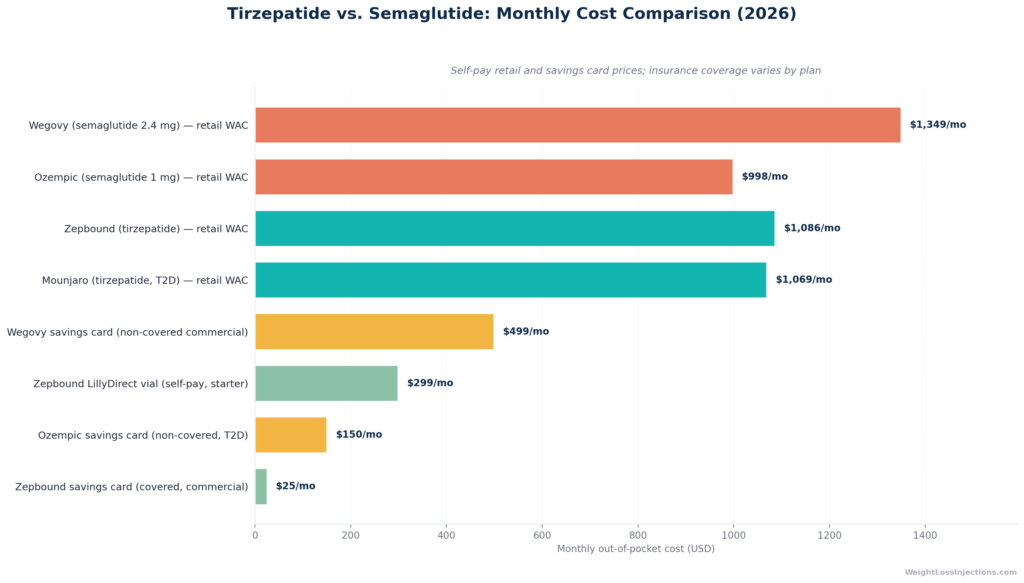
At retail list price, Zepbound runs approximately $1,086 per 28-day supply, regardless of dose strength, per Healthy Meals Incentives. This is the wholesale acquisition cost — the number almost no patient pays out of pocket.
The most practical self-pay options for tirzepatide in 2026:
- LillyDirect vials (Self Pay Journey Program): Eli Lilly sells single-dose tirzepatide vials directly to self-pay patients at $299–$699/month depending on dose (2.5 mg starting dose at $299/month; higher maintenance doses at $449–$699/month). These prices apply only through the LillyDirect program, per Healthy Meals Incentives.
- Commercial insurance + Zepbound savings card: Eligible commercially insured patients may pay as little as $25 per fill, per Healthy Meals Incentives.
- WeightLossInjections.com program: [$X/month] — [service detail].
Branded Semaglutide Pricing (Wegovy)
Wegovy carries a retail list price of approximately $1,300–$1,600 per month for the weekly injection, making it more expensive than Zepbound at wholesale acquisition cost. Novo Nordisk savings programs reduce this for eligible patients, and NovoCare self-pay pricing for Wegovy injection is approximately $199–$349/month depending on dose, with a 12-month subscription program available from March 2026 at $249/month.
The 2026 Generic/Compounding Asymmetry: Semaglutide’s Cost Advantage
This is where the cost comparison becomes structurally different between the two molecules:
Semaglutide’s composition-of-matter patent expired in March 2026. This patent expiry has opened a broader generic and compounding access pathway for semaglutide that does not exist for tirzepatide. Generic oral semaglutide (equivalent to Rybelsus/Ozempic oral) became available as of the March 2026 expiry date, with injectable generic timelines more complex but accelerating, per Biology Insights — GLP-1 generic timeline. Compounded semaglutide — which still requires prescriber oversight and individual clinical assessment — benefits from a more permissive legal environment in 2026 than compounded tirzepatide.
Tirzepatide has no equivalent generic pathway before approximately 2036. Tirzepatide’s composition-of-matter patent expires approximately December 30, 2036, per the NCE + patent term adjustment timeline, and Eli Lilly’s formulation and method-of-use patents extend protection further, to approximately 2039–2041, per Biology Insights. The first Paragraph IV ANDA challenge to a tirzepatide patent was filed by Empower Pharmacy on May 22, 2025 — but patent challenges of this complexity typically require years of litigation before any generic launch, per Peptide Journal — tirzepatide patent/biosimilar pipeline. Eli Lilly retains statutory exclusivity until at least June 2027.
What “compounded tirzepatide” means in 2026: Mass-market compounded tirzepatide is not legal. The FDA determined tirzepatide’s shortage resolved in December 2024; the 503A enforcement grace period closed March 10, 2025; the 503B grace period ended March 19, 2025, per the Alliance for Pharmacy Compounding and the FDA GLP-1 Compounding Clarification Page. As of June 2026, a narrow 503A personalized-medicine exception survives: a state-licensed compounding pharmacy may compound tirzepatide for an individual patient if the prescriber documents a specific clinically significant difference — such as a documented allergy to an inactive ingredient in the branded product (e.g., the cresol preservative in the Mounjaro/Zepbound pens) or a dose strength that is not commercially available — and the pharmacy compounds no more than four such prescriptions per calendar month. “Patient preference” or cost savings alone do not qualify as clinically significant differences under this exception, per the FDA GLP-1 Compounding Clarification Page (April 1, 2026 update). Compounded tirzepatide in legitimate personalized cases runs approximately $150–$600/month, per Healthy Meals Incentives.
Insurance Coverage for Both Drugs
Coverage for both Zepbound and Wegovy under commercial insurance varies significantly by employer plan structure, and many commercial plans still exclude anti-obesity medications. Medicare Part D generally does not cover either drug for the weight management indication under the statutory AOM exclusion. Notable exceptions: Wegovy may be covered under Medicare Part D when prescribed for its cardiovascular risk reduction indication; Zepbound may be covered when prescribed for obstructive sleep apnea (OSA) — an indication specific to tirzepatide.
The WeightLossInjections.com care team can walk you through coverage verification and self-pay options at [service detail].
2026 Cost Verdict
For self-pay patients who want a branded injection, Zepbound via LillyDirect ($299–$449/month) is competitive with or more affordable than Wegovy’s injection self-pay pricing, despite Wegovy’s lower retail list price. For patients focused on the lowest-cost option in 2026, compounded semaglutide — where legally and clinically appropriate — offers a cost pathway that has no tirzepatide equivalent. For patients with commercial insurance and access to savings card programs, both drugs are available at comparable low out-of-pocket costs. The long-term cost trajectory favors semaglutide generics becoming broadly available mid-2020s onward; for tirzepatide, meaningful price competition from generics or biosimilars is a mid-2030s event at earliest.
Which Should You Choose? A Framework for the Conversation With Your Prescriber
This is not a self-selection decision — it is a prescriber decision. No comparison article, however data-rich, can substitute for a licensed clinician reviewing your complete medical history, current medications, insurance situation, and weight loss goals. What follows is a clinical decision framework designed to help you have a more informed conversation with your provider.
Factors That May Favor Tirzepatide (Mounjaro/Zepbound)
Greater weight loss potential: If maximum weight loss is the primary clinical goal and there are no overriding comorbidities or contraindications, SURMOUNT-5’s 47% greater relative weight loss favors tirzepatide at maximum tolerated doses, per Aronne et al., NEJM 2025. The average 17-lb additional weight loss over 72 weeks is a clinically meaningful difference that could affect downstream outcomes including blood pressure, A1c, sleep apnea severity, and joint load.
Suboptimal response to semaglutide: Patients who have completed a full titration on semaglutide and have not achieved sufficient weight loss are candidates for a prescriber-guided switch. The additional GIP receptor mechanism in tirzepatide provides a qualitatively different pharmacological approach. Clinical practice data and SURMOUNT-5’s responder rates suggest a meaningful proportion of semaglutide partial-responders may achieve better results with tirzepatide.
Type 2 diabetes with weight loss goals: SURPASS-2 demonstrated tirzepatide’s superior A1c reduction across all doses compared to semaglutide 1 mg in T2D patients, per PubMed SURPASS-2. For patients who want both superior glycemic control and maximum weight loss, tirzepatide’s dual mechanism provides advantages over GLP-1 monotherapy.
Heart failure with preserved ejection fraction (HFpEF) and obesity: The SUMMIT trial’s 38% reduction in cardiovascular death or worsening HF events makes tirzepatide a compelling option for this underserved patient population, per Circulation SUMMIT full results. This is a condition where obesity-driven hemodynamic stress is central to pathophysiology, and tirzepatide’s weight loss and direct metabolic effects appear to translate into meaningful benefit.
GI side effects on semaglutide: SURMOUNT-5’s finding of lower GI-driven discontinuation rates with tirzepatide suggests that patients who experienced intolerable GI effects on semaglutide at maximum dose may tolerate tirzepatide at its maximum tolerated dose, per the ACC SURMOUNT-5 Journal Scan. A prescriber-supervised switch with appropriate titration is required.
Factors That May Favor Semaglutide (Ozempic/Wegovy)
Established cardiovascular disease: The SELECT trial’s 20% MACE reduction in patients with established CVD and obesity without T2D gives semaglutide a direct FDA-approved cardiovascular risk reduction indication that tirzepatide does not hold. For patients who have had a heart attack, stroke, or have established peripheral arterial disease, this evidence asymmetry is clinically significant. Prescribers often default to semaglutide in this population until equivalent tirzepatide data in non-diabetic CVD patients is available.
Oral contraceptive users: Tirzepatide’s documented ~20% reduction in OCP absorption makes semaglutide the more straightforward option for patients on combined hormonal oral contraceptives who do not wish to change their contraceptive method or add barrier backup, per the Reproductive Health Access Project. If a patient is unwilling or unable to use backup contraception during tirzepatide initiation and dose escalation, semaglutide avoids this interaction entirely.
Cost/access in 2026: Semaglutide’s March 2026 composition patent expiry opens a generic and compounding access pathway that tirzepatide will not have until the mid-2030s. For patients for whom long-term cost is the overriding concern and who have medically appropriate access to generic or compounded semaglutide under prescriber supervision, semaglutide may offer meaningful long-term savings not available with tirzepatide.
Meaningful weight loss goals without requiring maximum loss: Not every patient needs to lose 20% of body weight. For patients who are targeting a modest-to-moderate weight loss goal — 5–10% body weight — and who are comfortable with semaglutide’s well-established safety and tolerability profile, the additional efficacy of tirzepatide may not outweigh the relative novelty of its longer-term safety dataset or the OCP interaction.
Neither Drug Is Right For You If
Both drugs are contraindicated in patients with a personal or family history of medullary thyroid carcinoma or Multiple Endocrine Neoplasia syndrome type 2. Neither has been studied in patients with prior pancreatitis — prescribers should assess this history carefully. Neither should be combined with the other drug or with any other GLP-1 receptor agonist. Both are not recommended during pregnancy.
A Note on Switching
Switching between semaglutide and tirzepatide in either direction is medically feasible and done in clinical practice. There is no established cross-titration protocol. The general approach is to start the new drug at its initiation dose approximately one week after the last dose of the prior drug and re-titrate on the new drug’s standard schedule. Patients switching from semaglutide to tirzepatide should be specifically counseled on the OCP interaction at the time of switch and at each tirzepatide dose increase. Always coordinate a switch with your prescriber — do not self-manage.
The WeightLossInjections.com team — including the WeightLossInjections.com Staff and our licensed prescribing clinicians — can help you evaluate your individual profile, review your current medications for the OCP interaction, and determine whether tirzepatide, semaglutide, or another approach fits your clinical situation. [service detail]
This content is for informational purposes only and does not constitute medical advice. Consult a licensed healthcare provider before starting, changing, or stopping any medication.
Our Take at WeightLossInjections.com
The SURMOUNT-5 head-to-head trial has settled the core efficacy question as definitively as any open-label comparison can: tirzepatide’s dual GIP+GLP-1 mechanism produces approximately 47% greater weight loss than semaglutide at maximum tolerated doses, with every responder threshold — from 15% to 30% body weight loss — favoring tirzepatide by a substantial margin, per Aronne et al., NEJM 2025. That is a clinically meaningful difference for most patients, not a statistical artifact.
At the same time, “better on the primary endpoint of a 72-week weight loss trial” is not the same as “better for every patient.” Semaglutide’s SELECT cardiovascular outcomes data is the most compelling reason to choose semaglutide over tirzepatide for patients with established cardiovascular disease — and it is a reason that no weight loss efficacy comparison overrides. Similarly, tirzepatide’s OCP interaction is clinically real and should factor into the decision for a meaningful subset of patients.
The cost landscape in 2026 adds another dimension. Tirzepatide via LillyDirect is now genuinely self-pay accessible at $299–$449/month — but semaglutide’s March 2026 patent expiry opens a longer-term cost advantage through generics and expanded compounding options that tirzepatide will not have until the mid-2030s. For patients making a multi-year treatment plan, this trajectory matters.
Our recommendation is what it always is: bring this evidence to a licensed clinician who knows your complete medical history. The right drug is the one that your prescriber matches to your cardiovascular profile, your medications, your contraceptive situation, your weight loss goal, and your realistic long-term cost picture. If you want to understand which option fits your specific case, connect with a licensed clinician through WeightLossInjections.com via [service detail] for [$X/month] — our team can review your full profile and recommend the appropriate path.
FAQ
Is tirzepatide better than semaglutide for weight loss?
In the SURMOUNT-5 head-to-head trial (NEJM 2025), tirzepatide at maximum tolerated dose produced approximately 47% greater relative weight loss than semaglutide at maximum tolerated dose — −20.2% versus −13.7% mean body weight at 72 weeks (p<0.001), per Aronne et al., NEJM 2025. Nearly 20% of tirzepatide patients lost ≥30% of body weight, versus 6.9% of semaglutide patients, per Peptides:Enhanced SURMOUNT-5 analysis. However, “better” depends on the individual: cardiovascular history, oral contraceptive use, cost, and specific clinical goals all affect which drug is appropriate. Consult your prescriber.
What is the difference between tirzepatide and semaglutide mechanistically?
Tirzepatide activates two receptors simultaneously — the GIP receptor (glucose-dependent insulinotropic polypeptide receptor) and the GLP-1 receptor (glucagon-like peptide-1 receptor). Semaglutide activates only the GLP-1 receptor. The additional GIP receptor agonism in tirzepatide stimulates insulin secretion through a separate pathway, increases adiponectin, and directly affects adipose tissue metabolism — mechanisms that GLP-1 agonism alone cannot replicate, per StatPearls / NCBI Bookshelf. This dual-receptor engagement is the proposed mechanistic basis for tirzepatide’s superior weight loss in head-to-head data, per the PMC tirzepatide mechanism review 2025.
Are the side effects of tirzepatide and semaglutide the same?
Both cause GI side effects — nausea, diarrhea, vomiting, constipation — through the shared GLP-1 mechanism. In SURMOUNT-5, GI-driven discontinuation rates were lower with tirzepatide (2.7% vs. 5.6%), per the ACC SURMOUNT-5 Journal Scan. The key differential side effect is tirzepatide’s OCP interaction: tirzepatide reduces oral contraceptive absorption by approximately 20% due to stronger gastric-emptying delay. Semaglutide does not cause this interaction to the same clinical extent, per the Reproductive Health Access Project. Both drugs share the thyroid C-cell tumor black box warning and contraindications for pancreatitis history and pregnancy.
Does tirzepatide or semaglutide have better cardiovascular data?
Semaglutide currently has the longer and more established cardiovascular outcomes track record, including the SELECT trial (20% MACE reduction in obesity without T2D) that underpins Wegovy’s FDA cardiovascular risk reduction indication. Tirzepatide’s cardiovascular evidence is newer: SURPASS-CVOT (December 2025) demonstrated non-inferiority on MACE in T2D versus a GLP-1 comparator, with significant MACE-4 reduction, per TCTMD SURPASS-CVOT; the SUMMIT trial showed a 38% reduction in cardiovascular death or worsening HF events in HFpEF, per Circulation SUMMIT full results. For patients with established CVD, the evidence asymmetry currently favors semaglutide; for HFpEF specifically, tirzepatide’s SUMMIT data is compelling.
Can I switch from semaglutide to tirzepatide?
Switching is possible and done in clinical practice, but it requires a prescriber’s supervision. There is no established cross-titration protocol. The general clinical approach is to start tirzepatide at its 2.5 mg initiating dose approximately one week after the last semaglutide dose and re-titrate on the standard tirzepatide schedule. Patients switching from semaglutide to tirzepatide who are on combined hormonal oral contraceptives must use barrier backup contraception for four weeks after starting tirzepatide and four weeks after each dose increase, per the Reproductive Health Access Project. Never take both drugs simultaneously.
Is compounded tirzepatide available like compounded semaglutide in 2026?
The legal pathways differ significantly between the two molecules in 2026. Semaglutide’s composition-of-matter patent expired in March 2026, opening a broader generic and compounding access pathway. Compounded tirzepatide is restricted to a narrow 503A personalized-medicine exception: a state-licensed pharmacy may compound tirzepatide only when the prescriber documents a specific individualized clinical need (such as an allergy to an inactive ingredient or a dose not commercially available) and compounds no more than four prescriptions per calendar month of that product. Mass-market compounding of tirzepatide ended in March 2025, per the Alliance for Pharmacy Compounding and FDA GLP-1 Compounding Clarification Page. Tirzepatide’s composition patent does not expire until approximately 2036, per Biology Insights.