![Unbranded [pillar-drug-class] injection pen on a neutral background — WeightLossInjections.com editorial hero](https://weightlossinjections.com/wp-content/uploads/2026/07/hero_tirzepatide_c3_safety-1200x675.png)
Grouped horizontal bar chart comparing tirzepatide GI side effect rates (nausea, diarrhea, vomiting, constipation) in T2D trials (SURPASS) vs
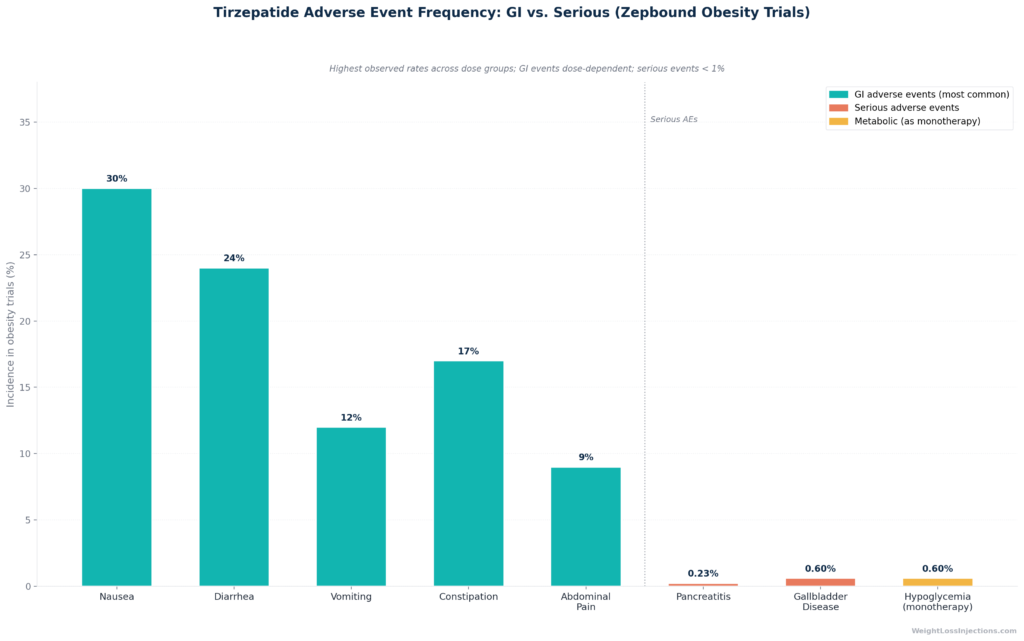
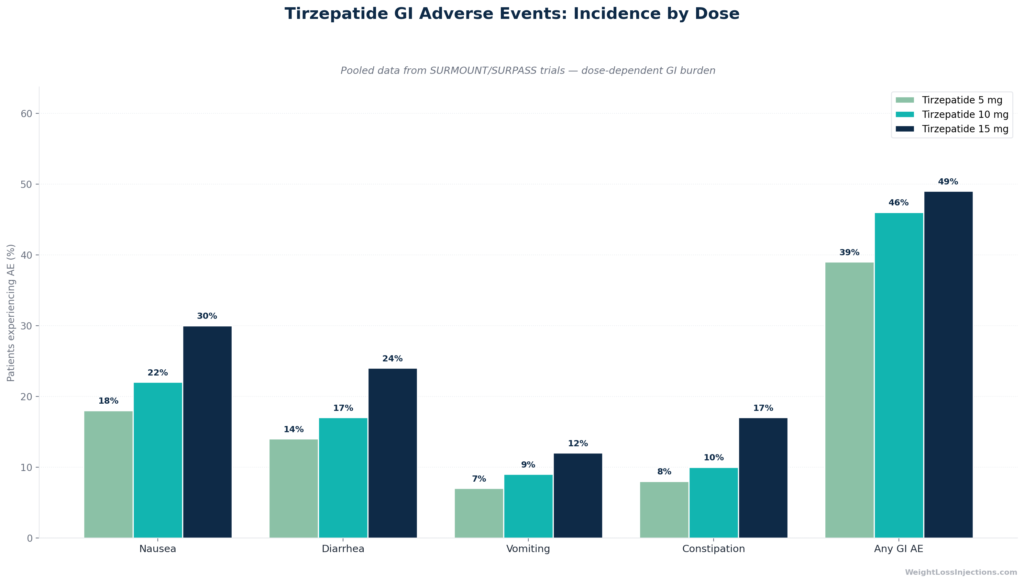
- GI side effects — nausea, diarrhea, vomiting, constipation — are the most common adverse events with tirzepatide, occurring in up to 49% of patients at the 15 mg dose across pooled clinical trial data.
- Nausea affects up to 30% of patients in obesity trials (SURMOUNT) and is worst during dose escalation; it typically attenuates significantly once a stable dose is maintained.
- Hair loss (telogen effluvium) has been reported and is listed in Zepbound labeling; it is linked to rapid weight loss rather than a direct drug effect on follicles, and most cases are temporary.
- Tirzepatide carries a boxed warning for thyroid C-cell tumors and is contraindicated in patients with a personal or family history of medullary thyroid carcinoma (MTC) or Multiple Endocrine Neoplasia syndrome type 2 (MEN 2).
- Serious adverse events — pancreatitis, gallbladder disease, severe hypoglycemia (with insulin co-use), and hypersensitivity reactions — are uncommon (≤1% for most) but require immediate clinical attention.
- Practical strategies — small low-fat meals on injection day, strategic injection timing, adequate hydration, and slow escalation — meaningfully reduce GI burden for most patients.
- Side-effect rates are largely identical for compounded tirzepatide (same molecule), but compounded products carry additional risks: dosing errors from reconstitution, contamination, and unproven combination additives such as B12.
Introduction
Gastrointestinal side effects are the number-one reason patients discontinue tirzepatide — yet for the majority of people, they are predictable, temporary, and manageable with the right preparation. Understanding what to expect, when to expect it, and how to reduce the burden makes the difference between patients who push through and build tolerance versus those who stop prematurely and miss the substantial clinical benefits the medication offers.
Tirzepatide is a dual GIP (glucose-dependent insulinotropic polypeptide) and GLP-1 (glucagon-like peptide-1) receptor agonist — the first of its class — sold as Mounjaro® for type 2 diabetes and Zepbound® for chronic weight management. The side-effect profile is mechanistically driven: tirzepatide slows gastric emptying and alters gut motility as part of how it works, and those same mechanisms are the source of the GI symptoms most patients encounter, particularly early in treatment or during dose escalation.
This guide covers all clinically significant tirzepatide side effects — drawing frequency data from the SURMOUNT (obesity) and SURPASS (type 2 diabetes) clinical trial programs — along with serious adverse events to monitor, the hair-loss question (the most-searched “unexpected” side effect), a week-by-week side-effect timeline tied to the dose escalation schedule, and practical evidence-based strategies to reduce GI discomfort. It closes with compounding-specific risks that patients using non-branded tirzepatide should understand, and a clear list of red-flag symptoms that require immediate medical attention.
A note on data: side-effect rates referenced below are drawn primarily from SURMOUNT-1 (Jastreboff et al., NEJM 2022) and the SURPASS clinical trial program for type 2 diabetes, as well as the FDA Zepbound NDA Medical Review 217806. Real-world experience may differ. And because compounded tirzepatide contains the same active pharmaceutical ingredient as Mounjaro and Zepbound, the molecule-level side-effect profile is identical — though compounded formulations carry additional, distinct risks addressed in a dedicated section below.
Most Common Tirzepatide Side Effects — GI Symptoms
GI side effects are the defining tolerability challenge of tirzepatide, and they are dose-dependent, mechanism-driven, and for most patients, temporary. The mechanism is direct: tirzepatide activates GLP-1 receptors throughout the gastrointestinal tract, slowing gastric emptying and altering gut motility. When the stomach empties more slowly than the brain and GI system expect, nausea follows. Altered intestinal transit produces diarrhea, constipation, or both at different stages.
The clinical trial data quantify the burden clearly. In SURPASS trials (type 2 diabetes patients at doses typically not exceeding 10–15 mg) and SURMOUNT trials (obesity patients, where higher doses are the norm), GI adverse event rates differ meaningfully because of dose differences across populations — a fact worth understanding before reviewing the numbers.
| Side Effect | T2D Trials (SURPASS) | Obesity Trials (SURMOUNT) |
|---|---|---|
| Nausea | 12–18% | Up to 30% |
| Diarrhea | 12–17% | Up to 24% |
| Vomiting | 6–10% | Up to 12% |
| Constipation | 6–11% | Up to 17% |
| Dyspepsia / abdominal pain | 6–9% | Similar range |
Source: Fella Health Tirzepatide Side Effects Guide; PubMed SURMOUNT-1, NEJM 2022
When GI adverse events are pooled across all symptoms and patients in the obesity trial program, the dose-response relationship is stark: approximately 39% of patients at 5 mg experienced at least one GI adverse event, rising to 46% at 10 mg and 49% at 15 mg (Dr. Oracle — Tirzepatide Adverse Effects). Discontinuation due to adverse events is also dose-dependent, reaching up to 10% at 15 mg.
Nausea is the single most frequently reported symptom. It typically begins within the first one to three days after each injection and attenuates by day five to seven as gastric adaptation progresses. The worst nausea occurs during dose-escalation windows — the first week at each new dose level — and substantially improves once a stable dose is maintained for several weeks. For most patients, nausea is a predictable nuisance rather than a treatment-ending event.
Diarrhea reflects altered intestinal transit and tends to appear in a similar early post-injection window. It is usually acute rather than persistent, though some patients experience episodic loose stools throughout treatment. Adequate hydration is especially important during diarrhea episodes to avoid secondary dehydration.
Constipation is often underappreciated in early discussions of tirzepatide tolerability. It tends to emerge later in treatment than nausea and diarrhea — sometimes becoming the dominant GI complaint after the early nausea resolves. It can also be more persistent, lasting weeks rather than days. Dietary fiber and consistent hydration are the primary management tools (StatPearls / NCBI Bookshelf — Tirzepatide).
Dyspepsia and abdominal discomfort — bloating, upper-abdominal fullness, and mild cramping — occur in the 6–9% range across doses and are typically managed through the same dietary modifications that reduce nausea.
Beyond GI symptoms, injection-site reactions (mild redness, itching, or brief discomfort) are common and typically resolve within 24–48 hours. Mild heart rate elevation, a class effect across GLP-1 agonists, has also been reported. Some patients notice facial fat loss with significant overall weight loss — cosmetically notable but not a safety concern.
Serious Tirzepatide Side Effects — What You Must Know
Serious adverse events from tirzepatide are uncommon, but several are clinically significant enough to warrant explicit awareness. Knowing the warning signs — and acting on them quickly — is part of safe use of this medication.
Boxed Warning: Thyroid C-Cell Tumors
Tirzepatide carries a regulatory boxed warning — the most prominent safety alert the FDA issues — for thyroid C-cell tumors. In rodent studies, tirzepatide caused dose- and duration-dependent thyroid C-cell adenomas and carcinomas at clinically relevant exposures. As of June 2026, human relevance remains undetermined, and no confirmed cases of medullary thyroid carcinoma (MTC) attributed to tirzepatide have been documented in clinical trials (FDA Mounjaro label NDA 215866; StatPearls / NCBI Bookshelf).
Tirzepatide is contraindicated in patients with a personal or family history of medullary thyroid carcinoma (MTC) or Multiple Endocrine Neoplasia syndrome type 2 (MEN 2). Before starting tirzepatide, patients should discuss any thyroid history with their prescriber. Symptoms to report immediately during treatment include a neck lump or swelling, persistent hoarseness, difficulty swallowing (dysphagia), or shortness of breath — any of which could indicate thyroid involvement.
Acute Pancreatitis
Acute pancreatitis has been observed in SURPASS clinical trials: 14 events occurred in 13 tirzepatide patients (0.23 per 100 patient-years) versus 3 events in comparator groups (0.11 per 100 patient-years). While the rate remains ≤1% across all doses, tirzepatide has not been studied in patients with a prior history of pancreatitis — making this population one requiring careful prescriber discussion before initiation (Dr. Oracle — Tirzepatide Adverse Effects).
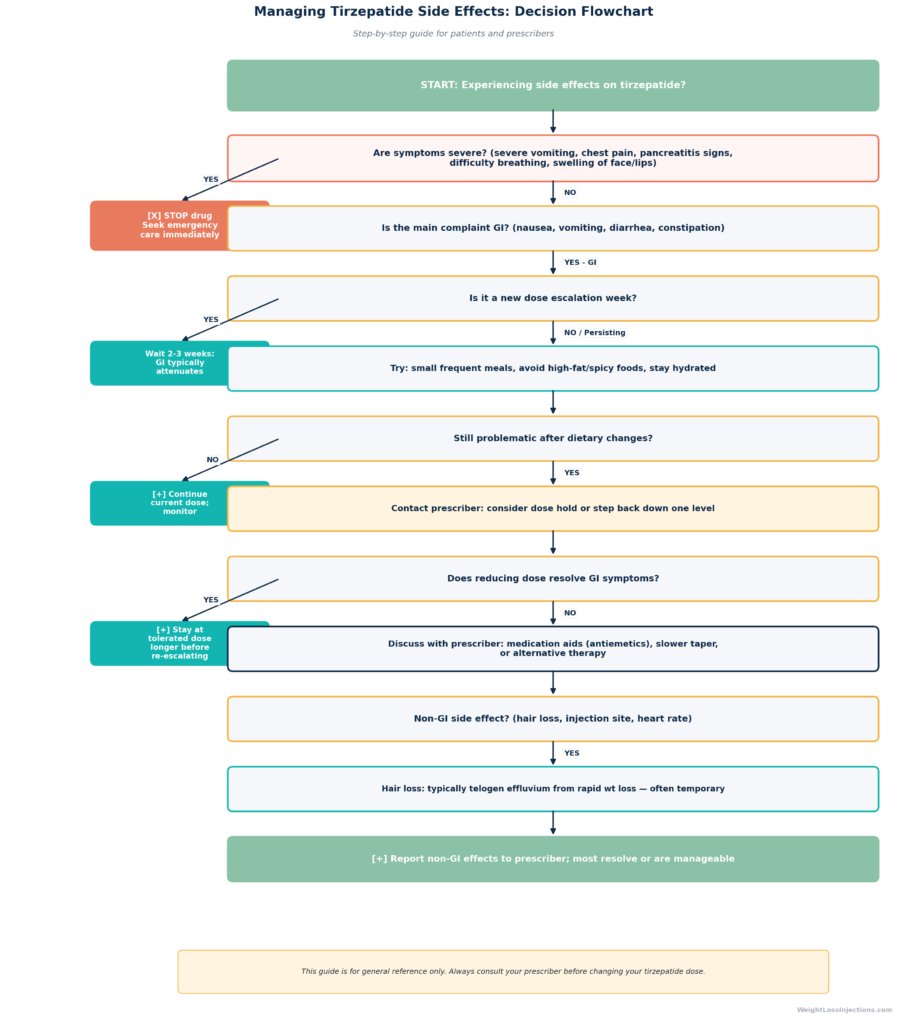
Symptoms that require immediate medical attention: severe abdominal pain, particularly pain that radiates to the back and is accompanied by nausea or vomiting. If pancreatitis is suspected, tirzepatide should be discontinued and not restarted without a provider evaluation.
Gallbladder Disease
Cholelithiasis (gallstones) and cholecystitis (gallbladder inflammation) have been reported with tirzepatide at rates ≤1% across doses (StatPearls / NCBI Bookshelf). This is most likely related to rapid weight loss — a known independent risk factor for gallstone formation — rather than a direct pharmacological effect of the drug. Symptoms to report: upper right quadrant abdominal pain, fever, or yellowing of the skin or whites of the eyes (jaundice).
Hypoglycemia
As monotherapy, tirzepatide carries a low risk of hypoglycemia. This is by design: tirzepatide stimulates insulin secretion only when blood glucose is elevated (glucose-dependent mechanism), so it does not drive insulin release in a fasting or low-glucose state. However, the risk increases significantly when tirzepatide is combined with insulin or sulfonylureas (such as glipizide or glimepiride) — medications that stimulate insulin secretion independently of blood glucose levels. Prescribers should reduce the insulin dose by 10–20% at tirzepatide initiation and monitor blood glucose closely during the adjustment period (StatPearls / NCBI Bookshelf).
Acute Kidney Injury
Acute kidney injury (AKI) has been reported, typically as a secondary consequence of severe dehydration caused by prolonged vomiting or diarrhea. Adequate hydration throughout treatment is not merely a comfort measure — it is a protective one. If GI symptoms are severe enough to prevent adequate fluid intake for more than 24 hours, contact your provider the same day (NCBI LiverTox / NIH — Tirzepatide).
Hypersensitivity Reactions
Anaphylaxis and angioedema have been reported rarely with tirzepatide. Emergency care is required for any of the following: throat tightening or difficulty breathing, widespread hives or rash, or rapid heartbeat with dizziness occurring after an injection. These are distinct from the expected mild injection-site reactions and require calling emergency services — not waiting to see if symptoms resolve (StatPearls / NCBI Bookshelf).
Suicidal Ideation and Behavior
Suicidal ideation and behavior are listed in Zepbound labeling and have been reported in the broader GLP-1 drug class. Patients and caregivers should monitor for new or worsening depression, unusual mood changes, or any thoughts of self-harm and report them to the prescribing provider immediately (NCBI LiverTox / NIH — Tirzepatide).
Diabetic Retinopathy
In patients with type 2 diabetes and pre-existing diabetic retinopathy, rapid glycemic improvement from tirzepatide can transiently worsen retinopathy. Patients in this category should have ophthalmology monitoring established before starting tirzepatide and should discuss their retinal history with their prescriber.
Tirzepatide and Hair Loss — What the Evidence Shows
Hair loss is the most-searched “unexpected” side effect associated with tirzepatide, and it generates considerable anxiety among patients — often disproportionate to its clinical significance. Getting the facts right matters, because the mechanism and prognosis are meaningfully different from what most patients fear.
What’s Actually Happening: Telogen Effluvium, Not Follicle Damage
The hair shedding associated with tirzepatide use is not a direct pharmacological attack on hair follicles. Tirzepatide does not target follicle biology. Instead, the mechanism is telogen effluvium — a well-documented form of diffuse, temporary hair shedding triggered by physiological stress. In the context of tirzepatide treatment, that stress is rapid weight loss combined with significant caloric restriction. The body, interpreting this state as a metabolic challenge, shifts a larger percentage of hair follicles from the active growth phase (anagen) into the resting phase (telogen) simultaneously. When those follicles then shed — which is the normal end of the telogen phase — the shedding is diffuse and more noticeable than normal because so many follicles are cycling together (GoodRx — Tirzepatide Side Effects; MSK Cancer Center patient education — Tirzepatide).
Clinical Trial Data
Hair loss is listed as an adverse event in Zepbound labeling — reflecting that it was reported in the clinical trial program. It occurs at higher rates in obesity trials (where weight loss is greatest and most rapid) than in type 2 diabetes trials. The incidence varies across trial populations, and not all patients experience it. Framing tirzepatide as definitively causing hair loss in all users would overstate the evidence: many patients complete months or years of treatment without reporting meaningful shedding (NCBI LiverTox / NIH).
Horizontal annotated timeline showing tirzepatide-related hair loss milestones — “Weight loss accelerates (weeks 8–16)” → “Telogen effluvium trigger” → “Hair shedding begins (months 2–4)” → “Peak…
Timeline and Prognosis
The typical pattern: hair shedding begins two to four months after the onset of significant rapid weight loss, or after a notable acceleration in weight loss pace. This delay reflects the length of the telogen phase before shedding occurs — the hair that falls out in month three was triggered in month one. Peak shedding generally occurs between months three and five. For most patients, shedding is self-limiting and begins to resolve within six to twelve months as the body stabilizes at a new weight and the hair cycle normalizes.
Risk Factors and Management
Several factors increase the likelihood of telogen effluvium during tirzepatide treatment: rapid pace of weight loss, inadequate protein intake (protein deficiency directly impairs hair cycle maintenance), and micronutrient deficiencies — particularly low iron (ferritin), zinc, and biotin. Because tirzepatide’s appetite suppression can significantly reduce caloric intake, patients may inadvertently reduce protein below what is needed.
Practical protective steps:
- Maintain protein intake of at least 1 g per kilogram of body weight per day
- Ask your provider to check serum ferritin and zinc levels if hair shedding develops
- Avoid aggressive caloric restriction beyond what the medication naturally produces — do not layer on extreme dieting
What does not help: there is no evidence base for recommending over-the-counter hair supplements (biotin, collagen, etc.) specifically for tirzepatide-related shedding, and patients should not begin supplements without discussing with their provider.
When to see a dermatologist: If hair loss is patchy rather than diffuse (which may indicate alopecia areata rather than telogen effluvium), if shedding persists beyond 12 months without improvement, or if other causes need to be ruled out, a dermatology referral is appropriate.
Our Top 3 · October 2026
The best GLP-1 providers right now
Independently reviewed. Ranked by price, medication access, provider quality, and patient outcomes.
Renew GLP
Personalized GLP-1, GIP plans: Semaglutide & Tirzepatide.
Medvi
No membership or hidden fees. Everything you need is included.
Trimi
US-licensed clinicians and shipped to your door, from $99/mo.
Tirzepatide Side Effect Timeline — When Symptoms Peak and Ease
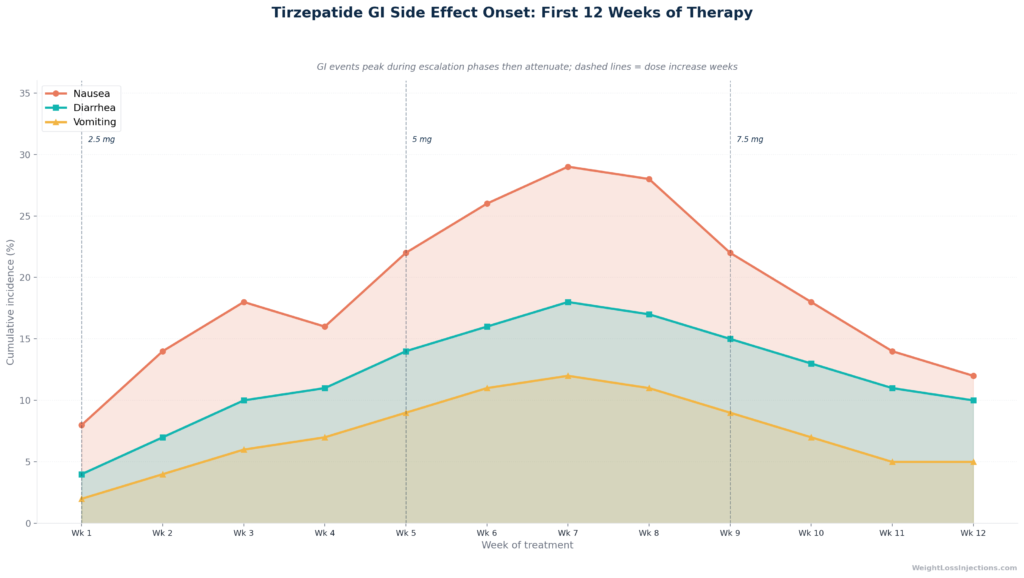
One of the most useful things to understand about tirzepatide side effects is that they follow a predictable pattern tied directly to the dose escalation schedule. Side effects do not worsen continuously throughout treatment — they recur in waves at each dose step, then attenuate as the body adapts to that dose level. Knowing this timeline removes much of the uncertainty that causes patients to panic and stop treatment prematurely.
The standard FDA-labeled dose escalation for Zepbound is a minimum of four weeks at each level: 2.5 mg → 5 mg → 7.5 mg → 10 mg → 12.5 mg → 15 mg. The full escalation from starting dose to maximum dose takes a minimum of 20 weeks by design, because each four-week window is the adaptation period the GI system needs before the next increase. Rushing escalation without prescriber guidance predictably increases side-effect burden (FDA Zepbound NDA Medical Review 217806).
Line chart with shaded dose escalation bands, x-axis week 0–24, y-axis qualitative side-effect severity index, three lines: nausea (solid), constipation (dashed), hair loss (dotted, delayed onset…
Weeks 1–4 (2.5 mg Starting Dose)
The 2.5 mg dose is a tolerability step — the FDA labels it explicitly as the initiation dose, not an approved maintenance dose. Because this is the lowest pharmacologically active concentration patients will encounter, GI side effects are at their minimum possible intensity. Most patients describe weeks one through four as manageable. Mild nausea is possible in the one to three days after injection but is typically brief, and many patients experience no GI symptoms at all during this phase.
Appetite suppression often begins during this phase, even at 2.5 mg. Patients sometimes interpret the absence of dramatic side effects as evidence the medication is not working — but early appetite reduction is the mechanism operating as intended.
Weeks 5–8 (5 mg)
The first dose escalation marks the first meaningful side-effect test for most patients. Nausea may emerge or intensify in the 24 to 72 hours following the first 5 mg injection. This dose range is also where the most meaningful early weight loss begins — which is clinically relevant because the weight loss itself contributes to the physiological stress that eventually triggers telogen effluvium months later.
Side effects at 5 mg are often the most unpredictable of the entire escalation sequence, because patients do not yet have a strong baseline sense of how their body responds to dose changes. The most important message for this window: the side effects typically begin improving by day five to seven and should not persist at full intensity throughout the four-week dose period.
Weeks 9–16 (7.5–10 mg)
This range represents the peak GI side-effect window for many patients. Pooled GI adverse event rates at 10 mg reach approximately 46% (Dr. Oracle — Tirzepatide Adverse Effects). Nausea is typically worst in the one to three days following each new injection at these doses, then settles substantially by day five to seven. Constipation often becomes more prominent in this phase than it was earlier in treatment — some patients who had no early GI issues begin experiencing it at 7.5–10 mg.
Weight loss is often most visible in this phase, with a meaningful acceleration that patients notice on the scale and in how clothes fit.
Weeks 17–21+ (12.5–15 mg)
Counterintuitively, many patients report that GI side effects are less disruptive at 12.5–15 mg than they were at earlier escalation steps. Several factors explain this: the body has had months to adapt to tirzepatide’s mechanism; patients have refined their dietary and injection-timing strategies; and the body’s GI tolerance to gastric motility changes has built progressively. The 15 mg dose data from SURMOUNT-1 shows that while adverse event rates remain elevated in absolute terms, GI-driven discontinuation at the highest dose was only marginally higher than at lower doses (Fella Health Tirzepatide Side Effects Guide).
Weight loss often continues to accelerate at this stage. Hair shedding, for patients who experience it, typically emerges in this phase — reflecting the telogen effluvium trigger from the rapid weight loss of months two through four.
Long-Term Maintenance
Once a patient reaches their maintenance dose (not all patients need 15 mg — 5 mg, 10 mg, and 12.5 mg are viable maintenance doses), GI side effects largely attenuate. Most patients on stable maintenance doses report minimal ongoing GI symptoms compared to the escalation period. Hair shedding, if it occurred, typically begins resolving by months six to twelve as the body reaches a new stable weight.
A critical caveat: side effects are not linear across patients. Some individuals experience more at lower doses than others; individual variation in GI sensitivity is real. The timeline above describes the typical pattern, not a guaranteed trajectory.
Practical Strategies to Reduce Tirzepatide GI Side Effects
GI side effects on tirzepatide are not simply a matter of endurance — specific, evidence-informed strategies meaningfully reduce their severity. The following approaches address the mechanism directly: if tirzepatide slows gastric emptying, the dietary and behavioral strategies that ease gastric load reduce the downstream side effects.
Annotated infographic with 6 icon + text panels on a clean clinical background — panels: Meal size reduction, Injection timing, Hydration, Slow escalation, Protein intake, When to call prescriber —…
Meal Composition on and Around Injection Day
The most impactful single intervention is modifying what you eat on injection day and the 24–48 hours that follow. High-fat meals significantly amplify tirzepatide’s gastric emptying delay because fat itself is the strongest dietary inhibitor of gastric emptying under normal physiology — adding tirzepatide’s mechanism on top creates a pronounced effect. Avoiding large, fatty, or rich meals on injection day is not a minor tip; it is the most direct way to reduce nausea severity during the peak side-effect window.
Practical guidance:
- Eat small meals (50–70% of typical portion size) on injection day and the following day
- Choose low-fat, low-spice, easily digestible foods: plain rice, toast, boiled chicken, plain vegetables, broth
- Avoid fried foods, fatty meats, rich sauces, and high-fiber raw vegetables during peak symptom days
- Eliminate carbonated beverages and alcohol around injection day — carbonation increases gastric distension; alcohol can worsen nausea and, in patients also on insulin or sulfonylureas, increases hypoglycemia risk
Strategic Injection Timing
Some patients significantly reduce functional disruption from tirzepatide side effects by choosing an injection day and time that places the peak symptom window during low-obligation periods. Injecting on a Friday evening, for example, means days two through five of the post-injection window — the typical peak nausea period — falls over the weekend. This does not reduce the biological side effects, but it reduces their impact on work and daily function.
Consistency matters: irregular injection intervals can produce plasma concentration fluctuations that worsen GI symptoms. Pick a consistent day each week and keep to it.
Hydration
Aim for at least 64 oz (approximately 8 glasses) of water per day. Adequate hydration serves two distinct purposes in tirzepatide management: it is the primary prevention strategy for constipation (one of the most persistent GI complaints), and it directly mitigates the risk of acute kidney injury from dehydration caused by vomiting or diarrhea (FDA Zepbound NDA Medical Review 217806).
During episodes of nausea, switch to small frequent sips of still water or mild herbal tea rather than large quantities at once, which can trigger additional nausea through gastric distension. Oral electrolyte solutions are appropriate if diarrhea or vomiting is causing significant fluid losses.
Slow Escalation
The four-week minimum between dose increases is a tolerability protection, not an arbitrary schedule. If GI side effects are problematic during a given dose step, discuss with your prescriber whether to extend the time at that dose — eight to twelve weeks at a single dose step, rather than four, is a clinically valid option. The FDA Zepbound NDA Medical Review explicitly supports extended dose-step duration as a strategy for improving tolerability. Do not attempt to skip a dose step upward to “get through escalation faster” — this reliably worsens side effects.
What not to do: Do not reduce your dose unilaterally or stop tirzepatide abruptly without consulting your prescriber. Dose changes must be prescriber-directed.
Managing Nausea Specifically
Several approaches reduce nausea intensity without prescription medications:
- Ginger — in tea, chew, or capsule form — has evidence for mild antiemetic benefit and is a reasonable first-line option
- Small, frequent meals throughout the day (rather than two or three larger ones) maintain gastric emptying in a lower-burden rhythm
- Avoiding lying down for at least 30 minutes after eating reduces reflux-type nausea
For moderate to severe nausea that is not responding to dietary management, prescription antiemetics such as ondansetron (Zofran) may be appropriate. This requires a prescriber conversation — do not self-medicate with prescription antiemetics.
Managing Constipation Specifically
Constipation on tirzepatide is often underaddressed until it becomes uncomfortable. Proactive strategies:
- Gradually increase dietary fiber (aiming for 25–30 g per day), noting that a sudden large increase in fiber without adequate hydration can worsen discomfort
- Maintain consistent hydration (see above) — fiber absorbs water; without it, increased fiber worsens constipation
- Docusate sodium (a gentle stool softener, not a stimulant laxative) can be appropriate for persistent constipation — discuss with your prescriber or pharmacist
- Stimulant laxatives are generally not the right first-line choice for tirzepatide-related constipation; they address the symptom acutely but do not address the underlying motility pattern
Protein and Nutrient Intake
Maintaining adequate protein — at minimum 1 g per kilogram of body weight per day — is not just a weight management recommendation. It directly preserves lean muscle mass during weight loss and reduces the risk of telogen effluvium. Tirzepatide’s appetite suppression can make it easy to fall significantly short of protein targets without realizing it. Tracking protein intake, at least during the first several months of treatment, helps patients stay above the threshold.
Side Effects Specific to Compounded Tirzepatide
Compounded tirzepatide — which was widely available during the period of FDA drug shortage from December 2022 through early 2025 — contains the same active pharmaceutical ingredient as Mounjaro and Zepbound. At equivalent doses, the molecular side-effect profile is mechanistically identical: nausea, diarrhea, constipation, the thyroid boxed warning, pancreatitis risk, and all other mechanism-driven effects apply equally.
However, compounded tirzepatide carries additional, distinct risks that branded products do not, and patients using compounded formulations should understand them.
The Current Legal Status
Mass-market compounded tirzepatide is not lawful as of March 2025. Following FDA’s determination that the tirzepatide drug shortage was resolved (confirmed by declaratory order in December 2024), the legal basis for compounding essentially-copy tirzepatide under 503A (state-licensed pharmacies) ended on March 10, 2025, and under 503B (FDA-registered outsourcing facilities) on March 19, 2025 (FDA GLP-1 Compounding Clarification Page). A narrow exception survives: a 503A pharmacy may compound tirzepatide for an individual patient with a documented clinically significant difference (such as a confirmed allergy to an inactive ingredient in the branded pen, or a need for a dose strength not commercially available), subject to a ≤4 prescriptions per month per pharmacy limit.
Patients who believe they are receiving compounded tirzepatide from an online service offering it at any dose, any quantity, as a subscription without individualized prescriber assessment should be aware that this model likely falls outside current FDA guidance.
Compounding-Specific Safety Risks
Contamination and sterility failure. FDA adverse event reports have documented subpotent and superpotent batches, as well as contamination from non-inspected compounding facilities. A contaminated sterile injectable can cause injection-site infection, abscess, or systemic infection — risks entirely absent from FDA-approved Mounjaro and Zepbound, which are manufactured under current Good Manufacturing Practices with full lot traceability (StatPearls / NCBI Bookshelf).
Dosing errors from reconstitution. Many compounded tirzepatide products are dispensed as lyophilized (freeze-dried) powder that the patient must reconstitute by mixing with a diluent before injection. A reconstitution error — too little diluent — can deliver five to ten times the intended dose. This is a compounding-specific risk with no analog in Zepbound’s autoinjector pen, which pre-fills the correct dose in a sealed cartridge. Superpotent accidental doses carry risk of severe vomiting, dangerous hypoglycemia (in patients on insulin), and acute kidney injury from resulting dehydration (NCBI LiverTox / NIH).
B12 and combination formulations. Some compounders add high-dose cyanocobalamin (vitamin B12) or other compounds — lipotropics, L-carnitine, etc. — to their tirzepatide formulations. There is no evidence base supporting the addition of B12 to tirzepatide for weight management. More importantly, chronic high-dose cyanocobalamin in patients with renal impairment carries a risk of cyanide accumulation — a toxicity concern with no basis in the standard tirzepatide regimen (FDA GLP-1 Compounding Clarification Page).
Patients using or considering compounded tirzepatide should verify pharmacy licensure through their state pharmacy board, request a Certificate of Analysis (CoA) from a third-party lab confirming API identity and potency, and ensure their prescription documents a specific individualized clinical need — not cost alone.
When to Call Your Doctor — Red Flags
Most tirzepatide side effects are self-managed at home and resolve over days to weeks. But a meaningful subset of symptoms require immediate clinical attention or emergency evaluation. Knowing the difference is not optional — it can prevent serious harm.
Symptoms Requiring Emergency Care or Same-Day Provider Contact
Severe abdominal pain radiating to the back. This pattern is a classic presentation of acute pancreatitis. Do not wait to see if it resolves. Discontinue tirzepatide and seek evaluation immediately.
Yellowing of the skin or whites of the eyes (jaundice), combined with upper right abdominal pain or fever. This triad suggests gallbladder disease — cholelithiasis or cholecystitis — which requires urgent evaluation.
Neck lump, persistent hoarseness, difficulty swallowing, or shortness of breath. These symptoms align with the thyroid concerns addressed in the boxed warning. Report promptly to your prescriber.
Difficulty breathing, throat tightening, widespread hives, rapid heartbeat, or dizziness following an injection. These are signs of anaphylaxis or serious hypersensitivity. Call emergency services immediately. This is not a “call your prescriber tomorrow” scenario.
Inability to keep fluids down for more than 24 hours. Persistent vomiting preventing adequate hydration creates real acute kidney injury risk. This warrants same-day provider contact.
Unusual mood changes, new depression, or any thoughts of self-harm. Report these to your prescriber immediately. Suicidal ideation and behavior are listed in Zepbound labeling and require clinical assessment without delay.
Signs of severe dehydration: extreme thirst, very dark urine, significant dizziness or lightheadedness. Combined with GI losses from vomiting or diarrhea, this picture warrants same-day clinical evaluation.
Symptoms Warranting a Scheduled Call (Non-Emergency, Within a Few Days)
Nausea or vomiting that is not improving after two to three weeks at a dose. Side effects should attenuate within two weeks of stabilizing at a dose. Persistent severity suggests a prescriber conversation about dose extension or management strategies.
Constipation lasting more than a week despite hydration and dietary fiber adjustments. Persistent constipation warrants clinical guidance — a prescriber can advise on appropriate options.
Hair shedding that is dramatic, sudden, or does not begin improving after several months. Most tirzepatide-related hair loss is self-resolving, but hair loss that is patchy, involves the eyebrows or eyelashes, or has not begun improving after 12 months warrants dermatology evaluation.
WeightLossInjections.com patients can reach the prescribing team directly through [service detail] for side-effect questions, dose management guidance, or clinical concerns during treatment.
Our Take at WeightLossInjections.com
The side-effect profile of tirzepatide is real — and manageable. In clinical practice, the patients who struggle most are not those with the worst initial GI sensitivity; they are those who were not prepared for what to expect and did not have a prescriber readily available when symptoms felt alarming. Knowing the timeline — that nausea peaks days two through five after each new dose step, that constipation often emerges later than nausea, that hair shedding reflects weight loss stress rather than follicle damage — converts anxiety into expectation management.
At WeightLossInjections.com, our licensed providers walk every patient through the side-effect profile before the first dose, establish a management plan calibrated to individual history, and are available throughout escalation for dose-adjustment guidance. Starting tirzepatide without clinical support means navigating the predictable early weeks alone. With a prescriber who knows your history and responds when you need them, the side-effect burden — which is real but temporary for most patients — becomes a manageable part of the journey toward clinically meaningful weight loss.
Explore your eligibility and connect with a WeightLossInjections.com provider for [$X/month] including [service detail]. The data on tirzepatide’s outcomes are compelling; the side-effect timeline is manageable with the right foundation.
This content is for informational purposes only and does not constitute medical advice. Consult a licensed healthcare provider before starting, changing, or stopping any medication.
FAQ
Nausea is the most frequently reported side effect of tirzepatide, occurring in up to 30% of patients in obesity clinical trials (SURMOUNT) at higher maintenance doses. It is typically worst during dose escalation — peaking in the one to three days after each new dose step — and attenuates significantly once patients stabilize at a given dose. For most patients, nausea improves substantially or resolves with continued treatment and dietary management (PubMed SURMOUNT-1, NEJM 2022).
Hair shedding (telogen effluvium) has been reported with tirzepatide and is listed as an adverse event in Zepbound labeling. The mechanism is physiological stress from rapid weight loss — it is not a direct pharmacological effect of tirzepatide on hair follicles. Most cases are temporary and begin resolving within six to twelve months. Not all patients experience it; those with the highest weight-loss rates and those with inadequate protein intake are at greatest risk. If shedding is patchy rather than diffuse, or persists beyond twelve months, a dermatology evaluation is appropriate (GoodRx — Tirzepatide Side Effects; MSK Cancer Center patient education).
GI side effects (nausea, diarrhea, vomiting) are most prominent during dose escalation and typically improve significantly once patients stabilize at a dose. For most patients, symptoms peak in the first one to three days after each new dose and subside by day five to seven. Long-term maintenance users often report minimal ongoing GI symptoms compared to the escalation period. Hair shedding, if it occurs, typically begins resolving by months six to twelve of treatment (Fella Health Tirzepatide Side Effects Guide).
Serious adverse events are uncommon but include acute pancreatitis (0.23 events per 100 patient-years in SURPASS trials), gallbladder disease (≤1% across doses), and hypersensitivity reactions. Tirzepatide also carries a regulatory boxed warning for thyroid C-cell tumors based on animal studies, and is contraindicated in patients with a personal or family history of medullary thyroid carcinoma (MTC) or Multiple Endocrine Neoplasia syndrome type 2 (MEN 2). Contact your prescriber immediately if you experience severe abdominal pain, a neck lump or persistent hoarseness, or difficulty breathing (FDA Mounjaro label NDA 215866; Dr. Oracle — Tirzepatide Adverse Effects).
Eating small, low-fat meals on injection day and the following day is the most effective single intervention. Staying well hydrated, avoiding alcohol and carbonated beverages, and timing your injection to place the peak nausea window during lower-activity periods (e.g., a Friday evening injection) also help. Ginger tea or ginger chews provide modest antiemetic benefit. If nausea is severe and not improving, contact your prescriber — extending the time at your current dose before escalating, or a short course of prescription antiemetics, may be appropriate. Do not reduce your dose or stop treatment independently (FDA Zepbound NDA Medical Review 217806).
Tirzepatide has not been studied in patients with a history of pancreatitis, and the prescribing guidelines recommend caution in this population. Patients with a prior pancreatitis history should have a detailed discussion with their prescriber before starting tirzepatide — weighing the potential benefit against the undetermined risk given the absence of trial data in this group. If pancreatitis symptoms (severe abdominal pain radiating to the back, sudden severe nausea/vomiting) develop during treatment, discontinue tirzepatide and seek evaluation immediately (Dr. Oracle — Tirzepatide Adverse Effects).