![Unbranded [pillar-drug-class] injection pen on a neutral background — WeightLossInjections.com editorial hero](https://weightlossinjections.com/wp-content/uploads/2026/07/hero_tirzepatide_c4_compare-1200x675.png)
Medical Disclaimer: This content is for informational purposes only and does not constitute medical advice. Consult a licensed healthcare provider about which tirzepatide indication and prescription path is appropriate for your situation. Mounjaro® is FDA-approved for type 2 diabetes mellitus. Zepbound® is FDA-approved for chronic weight management. Although both products contain the same active ingredient, prescribing rules, clinical populations, and insurance coverage differ significantly by indication.
- Tirzepatide is a single active pharmaceutical ingredient — a synthetic dual GIP/GLP-1 receptor agonist made by Eli Lilly — sold under two brand names for two distinct FDA-approved indications.
- Mounjaro® (NDA 215866): FDA-approved May 13, 2022, for glycemic control in adults with type 2 diabetes mellitus (T2DM).
- Zepbound® (NDA 217806): FDA-approved November 8, 2023, for chronic weight management in adults with obesity (BMI ≥30) or overweight (BMI ≥27 with a weight-related comorbidity).
- Both products use the same KwikPen autoinjector, the same six dose strengths (2.5 mg through 15 mg), and the same once-weekly subcutaneous injection schedule.
- The clinical trials differ: SURPASS trials (Mounjaro/T2DM) measured A1c reduction as the primary endpoint; SURMOUNT trials (Zepbound/obesity) measured weight loss as the primary endpoint.
- Weight loss outcomes differ by population, not by drug: T2DM patients in SURPASS-2 lost −11.2 kg at 15 mg over 40 weeks; non-diabetic obesity patients in SURMOUNT-1 lost −20.9% body weight (approximately −24 kg) at 15 mg over 72 weeks.
- Insurance coverage diverges sharply: Mounjaro is widely covered for T2DM; Zepbound faces variable coverage under anti-obesity medication (AOM) formularies.
- Roughly 50–80% of T2DM patients have obesity — many qualify for both indications simultaneously.
One Molecule, Two FDA Approvals — Mounjaro (2022) and Zepbound (2023)
The most important thing to understand about tirzepatide for diabetes versus tirzepatide for weight loss is that you are talking about the same drug. Tirzepatide is a 39-amino-acid synthetic peptide — the active pharmaceutical ingredient (API) in both Mounjaro and Zepbound, manufactured by Eli Lilly to identical specifications (StatPearls / NCBI Bookshelf). It is the world’s first and, as of June 2026, only FDA-approved drug in its class: a dual agonist of both the GIP (glucose-dependent insulinotropic polypeptide) receptor and the GLP-1 (glucagon-like peptide-1) receptor, giving it a uniquely powerful metabolic footprint across both blood sugar control and body weight.
Why two brand names? FDA drug approval is indication-specific. A pharmaceutical company cannot market a drug for one condition, observe that it also helps another condition, and simply label it for both without running a separate clinical program and submitting a separate New Drug Application. Eli Lilly ran two parallel clinical programs:
- The SURPASS program — six phase 3 trials in adults with type 2 diabetes, with A1c reduction as the primary endpoint — supported Mounjaro’s approval for T2DM on May 13, 2022 (NDA 215866), per the FDA Mounjaro Prescribing Information.
- The SURMOUNT program — four phase 3 trials in adults with obesity or overweight, with weight loss as the primary endpoint — supported Zepbound’s approval for chronic weight management on November 8, 2023 (NDA 217806), per the FDA Zepbound NDA 217806 Medical Review.
This regulatory architecture means that the brand name on your prescription is not a cosmetic detail — it is the signal that tells your insurer which clinical program validated the drug’s use, which formulary benefit applies, and which savings programs you can access.
Quick Reference: Mounjaro vs. Zepbound
| Mounjaro® | Zepbound® | |
|---|---|---|
| Indication | Type 2 diabetes mellitus (T2D) | Chronic weight management (obesity/overweight) |
| FDA approval date | May 13, 2022 | November 8, 2023 |
| NDA number | 215866 | 217806 |
| Who qualifies | Adults with T2DM | Adults, BMI ≥30 or ≥27 + comorbidity |
| Clinical trial program | SURPASS (A1c reduction primary) | SURMOUNT (weight loss primary) |
| Same molecule? | ✓ Yes — tirzepatide | ✓ Yes — tirzepatide |
| Same doses? | ✓ 2.5–15 mg once weekly | ✓ 2.5–15 mg once weekly |
| Same pen? | ✓ KwikPen autoinjector | ✓ KwikPen autoinjector |
| LillyDirect vials? | ✓ Available | ✓ Available |
Both products are delivered via the same subcutaneous injection device. Both have the same titration schedule — starting at 2.5 mg for the first four weeks, then increasing by 2.5 mg increments no sooner than every four weeks, up to a maximum of 15 mg once weekly per the Zepbound HCP Dosage and Administration page. Both share the same boxed warning (thyroid C-cell tumors), the same contraindications (medullary thyroid carcinoma history, MEN 2), and the same side effect profile dominated by dose-dependent gastrointestinal effects.
The practical implication for patients: your prescription and your insurance coverage depend on which indication your provider uses, even though you receive the same medication. This single distinction drives enormous differences in coverage and cost.
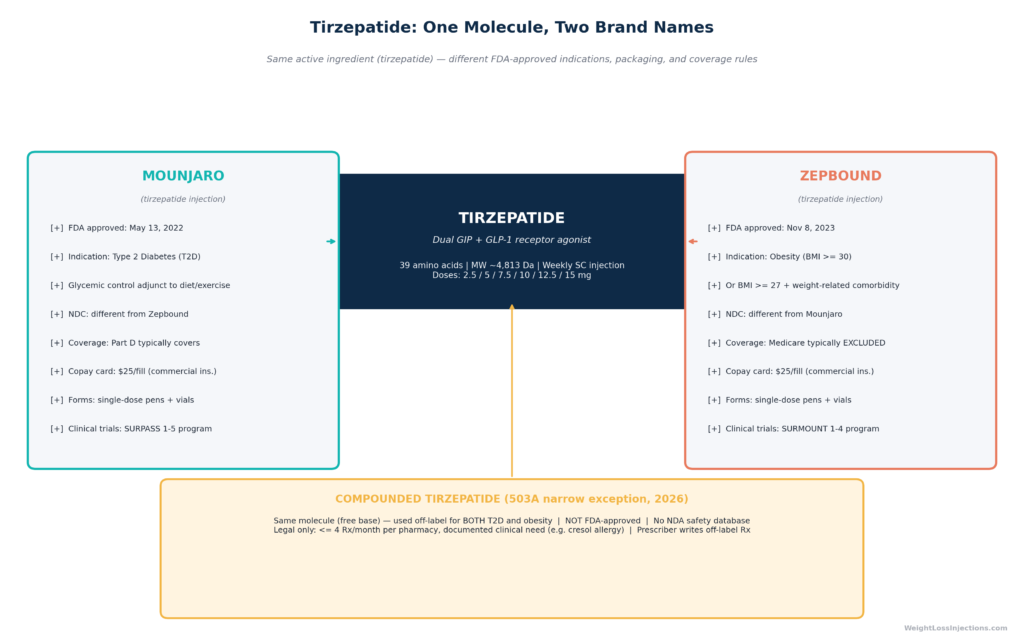
Split-panel quick-reference comparison table — Mounjaro vs. Zepbound side by side, showing indication, approval date, who qualifies, trial program, and cost pathways. Sources: FDA NDA 215866; FDA NDA 217806; Zepbound HCP Lilly
How Tirzepatide Lowers Blood Sugar — The Type 2 Diabetes Mechanism
Tirzepatide’s mechanism of action makes it uniquely well-suited to type 2 diabetes. Unlike pure GLP-1 receptor agonists such as semaglutide (Ozempic, Wegovy), tirzepatide simultaneously activates both the GIP receptor and the GLP-1 receptor — a dual action that earned it the nickname “twincretin” and places it in a pharmacological class with no other FDA-approved competitor (StatPearls / NCBI Bookshelf).
Here is what that dual mechanism produces at the cellular level for T2DM patients:
Glucose-dependent insulin secretion. Tirzepatide stimulates pancreatic beta cells to release insulin — but only when blood glucose is elevated. This glucose-dependent mechanism is the reason monotherapy with tirzepatide carries a low risk of hypoglycemia. When blood sugar is normal, the drug does not push insulin release further (StatPearls / NCBI Bookshelf).
Glucagon suppression. Tirzepatide suppresses glucagon release from alpha cells, reducing hepatic glucose output (glycogenolysis and gluconeogenesis). This lowers fasting glucose — often one of the most stubborn components of T2DM management.
Improved insulin sensitivity. Beyond stimulating insulin secretion, tirzepatide improves peripheral insulin sensitivity and increases adiponectin. These effects are additive to weight loss and occur independent of it — meaning a T2DM patient who has not yet lost significant weight still benefits from improved insulin signaling (StatPearls / NCBI Bookshelf).
Slowed gastric emptying. Food enters the duodenum more slowly, blunting post-prandial glucose excursions. This reduces the spike in blood sugar that typically follows a meal — a pharmacological effect that benefits both A1c control and appetite suppression.
SURPASS-2: Head-to-Head Against Semaglutide in T2DM
The clearest demonstration of tirzepatide’s glycemic potency comes from SURPASS-2, a 40-week phase 3 trial enrolling 1,879 adults with type 2 diabetes on metformin background therapy. Tirzepatide at 5 mg, 10 mg, and 15 mg was compared head-to-head against semaglutide 1.0 mg (the dose of Ozempic used for T2DM) (SURPASS-2, NEJM 2021).
The results were unambiguous on the primary A1c endpoint:
- Tirzepatide 5 mg: −2.01% A1c reduction
- Tirzepatide 10 mg: −2.24% A1c reduction
- Tirzepatide 15 mg: −2.30% A1c reduction
- Semaglutide 1.0 mg: −1.86% A1c reduction
All three tirzepatide doses were statistically noninferior to semaglutide and, for the 10 mg and 15 mg doses, statistically superior (p<0.001) (Lilly SURPASS-2 press release). At the 15 mg dose, 92% of tirzepatide patients achieved the target A1c below 7.0% — a benchmark for diabetes control. The GIP receptor agonism appears to add an incremental insulinotropic effect beyond GLP-1 alone, explaining why tirzepatide consistently outperforms pure GLP-1 receptor agonists in head-to-head T2DM trials.
Weight loss was a meaningful secondary outcome in SURPASS-2: −7.6 kg at 5 mg, −9.3 kg at 10 mg, and −11.2 kg at 15 mg, compared to −5.7 kg for semaglutide 1.0 mg (Lilly SURPASS-2 press release). Weight loss was not the primary endpoint for Mounjaro’s approval — but it matters enormously for T2DM patients, since obesity underlies and amplifies insulin resistance.
Cardiovascular Outcomes in T2DM: SURPASS-CVOT
For patients with T2DM who also carry established cardiovascular disease, cardiovascular outcome data matters as much as A1c numbers. SURPASS-CVOT — a large randomized trial comparing tirzepatide against dulaglutide (Trulicity) in T2DM patients with atherosclerotic cardiovascular disease — published results in the New England Journal of Medicine in December 2025 (SURPASS-CVOT, TCTMD December 2025).
Key findings:
- 3-point MACE (CV death, MI, stroke): Tirzepatide 12.2% vs. dulaglutide 13.1% — non-inferior (p=0.003), but not statistically superior on this endpoint.
- Expanded MACE-4 (adding coronary revascularization): Significantly reduced with tirzepatide (HR 0.88, 95% CI 0.88–0.96).
- All-cause mortality: Numerically lower with tirzepatide.
For T2DM patients with high cardiovascular risk, SURPASS-CVOT confirms that tirzepatide’s cardiovascular risk profile is at least as favorable as an established GLP-1 agonist with an existing CVOT track record.
How Tirzepatide Causes Weight Loss — Why It Outperforms Other GLP-1s for Obesity
Weight loss is not the primary pharmacological target written into Mounjaro’s T2DM label — but it is a major clinical effect of the molecule and the entire basis for Zepbound’s approval. Understanding why tirzepatide produces such exceptional weight loss requires understanding what GIP receptor agonism adds to the GLP-1 story.
Central appetite regulation. GLP-1 receptor agonism activates hypothalamic circuits that reduce hunger and caloric intake. Tirzepatide’s GIP agonism appears to contribute additional central effects — potentially via distinct neural pathways — that amplify the appetite-suppressing signal beyond what GLP-1 alone can achieve (StatPearls / NCBI Bookshelf).
Gastric emptying. By slowing the rate at which food moves from the stomach to the small intestine, tirzepatide prolongs satiety after meals. Patients eat less because they feel full for longer, and the physiological signal that food has arrived is sustained.
Adipose tissue effects. GIP receptor agonism may also enhance thermogenesis in adipose tissue and contribute to fat oxidation pathways — a mechanism that goes beyond appetite suppression and may explain why the weight loss with tirzepatide is more durable and less plateau-prone than some comparators (StatPearls / NCBI Bookshelf).
The synergy between T2DM benefit and weight loss benefit. Weight loss reduces insulin resistance, and reduced insulin resistance improves glycemic control. The two effects are biologically circular and self-reinforcing. For a patient with both T2DM and obesity, tirzepatide produces a dual benefit that no other single-agent therapy can replicate — A1c reduction and body weight reduction simultaneously, through overlapping but distinct mechanisms.
SURMOUNT-1: The Flagship Obesity Trial
SURMOUNT-1 enrolled 2,539 adults with obesity or overweight but without type 2 diabetes — the purest test of tirzepatide’s weight-loss potential in a non-diabetic population — for 72 weeks (SURMOUNT-1, NEJM 2022). The results:
- Tirzepatide 5 mg: mean body weight change −15.0% vs. −3.1% placebo
- Tirzepatide 10 mg: mean body weight change −19.5% vs. −3.1% placebo
- Tirzepatide 15 mg: mean body weight change −20.9% vs. −3.1% placebo
At the 15 mg dose, the average patient lost approximately 24 kg over 72 weeks. Clinically meaningful weight loss (≥5%) was achieved by 85%, 89%, and 91% of patients at 5/10/15 mg doses respectively, versus 35% for placebo (SURMOUNT-1, NEJM 2022). These are the figures most widely cited in media coverage of tirzepatide as a weight loss drug — and they derive specifically from the non-diabetic SURMOUNT-1 population.
SURMOUNT-5: Tirzepatide vs. Semaglutide Head-to-Head for Obesity
The definitive weight-loss comparison between tirzepatide and the leading GLP-1-only agent — semaglutide 2.4 mg (Wegovy) — arrived with SURMOUNT-5, published in the New England Journal of Medicine in May 2025. This 72-week randomized trial enrolled 751 adults with obesity or overweight but without T2DM, comparing tirzepatide at maximum tolerated dose (10 or 15 mg) against semaglutide at maximum tolerated dose (1.7 or 2.4 mg) (SURMOUNT-5, NEJM 2025).
Primary endpoint (mean % body-weight change at 72 weeks):
- Tirzepatide: −20.2% (approximately 22.8 kg)
- Semaglutide: −13.7% (approximately 15.0 kg)
- Difference: 6.5 percentage points; tirzepatide produced approximately 47% greater weight loss (p<0.001) (SURMOUNT-5, NEJM 2025)
Responder thresholds make the difference even more striking: 64.6% of tirzepatide patients achieved ≥15% weight loss versus 40.1% on semaglutide; approximately 31% of tirzepatide patients achieved ≥25% weight loss versus approximately 16% on semaglutide. GI-driven discontinuation was actually lower with tirzepatide (2.7% vs. 5.6%) (ACC SURMOUNT-5 Journal Scan).
The GIP receptor agonism is the likely differentiating factor — it adds an adipose tissue thermogenic component and enhanced insulinotropic effect beyond what GLP-1 alone can produce (StatPearls / NCBI Bookshelf).
Why the Obesity Trials Show More Weight Loss Than the Diabetes Trials
Patients often ask: “If Mounjaro and Zepbound are the same drug, why do the weight-loss numbers from Zepbound’s trials look higher?” The answer is not the drug — it is the population.
Three factors explain the gap between SURPASS weight loss figures and SURMOUNT weight loss figures:
- Different patient populations. SURPASS enrolled T2DM patients, who experience greater metabolic resistance to weight loss. Insulin resistance, beta-cell dysfunction, and often longer-standing metabolic disruption blunt the magnitude of weight change. SURMOUNT-1 enrolled non-diabetic patients who, despite having obesity, have metabolically healthier baseline conditions.
- Different trial duration. SURPASS-2 ran 40 weeks; SURMOUNT-1 ran 72 weeks. Weight loss on tirzepatide continues to accrue beyond 40 weeks, so longer trials capture more of the total effect.
- Different primary endpoints. SURPASS was powered and designed to show A1c reduction, not maximal weight loss. Dosing and retention strategies were optimized for glycemic outcomes. SURMOUNT was designed to show maximal weight loss, with protocols optimized accordingly.
The drug itself behaves identically in both contexts. A T2DM patient taking Mounjaro at 15 mg is receiving the same molecule at the same dose as a non-diabetic patient taking Zepbound 15 mg — they will simply see somewhat less weight loss because of their underlying metabolic profile, not because their drug is different.
![Side-by-side grouped bar chart comparing weight loss outcomes at 5/10/15 mg dose arms: SURPASS-2 (T2DM, 40 weeks, −7.6/−9.3/−11.2 kg) vs. SURMOUNT-1 (non-T2DM obesity, 72 weeks, −15.0%/−19.5%/−20.9%). Annotates population and duration differences. Sources: SURPASS-2 NEJM 2021; SURMOUNT-1 NEJM 2022]](https://weightlossinjections.com/wp-content/uploads/2026/07/tirz_art20_img2-1024x578.png)
Side-by-side grouped bar chart comparing weight loss outcomes at 5/10/15 mg dose arms: SURPASS-2 (T2DM, 40 weeks, −7.6/−9.3/−11.2 kg) vs. SURMOUNT-1 (non-T2DM obesity, 72 weeks, −15.0%/−19.5%/−20.9%). Annotates population and duration differences. Sources: SURPASS-2 NEJM 2021; SURMOUNT-1 NEJM 2022]
Getting Tirzepatide Prescribed — T2DM Pathway vs. Obesity Pathway
Despite the identical molecule, the path from patient to prescription differs substantially between the two indications. Understanding which pathway applies — and what documentation it requires — can mean the difference between a streamlined approval and months of insurance back-and-forth.
T2DM (Mounjaro) Prescribing Pathway
Mounjaro is prescribed when a patient has a confirmed type 2 diabetes mellitus diagnosis and needs improved glycemic control as an adjunct to diet and exercise (FDA Mounjaro Label, NDA 215866).
Who can prescribe: Any physician managing T2DM — endocrinologists, primary care physicians, internists, family medicine practitioners. Telehealth providers in most states can prescribe for established T2DM patients.
What documentation is required:
- Confirmed T2DM diagnosis (ICD-10: E11.x)
- Recent A1c ≥6.5% (or documented T2DM diagnosis by fasting glucose criteria)
- For insurance: documentation of prior metformin trial or contraindication/intolerance
Dose initiation: Begin at 2.5 mg once weekly for four weeks. This initiation dose is not a therapeutic dose — it exists solely to minimize GI side effects during adjustment. Advance to 5 mg at week five, with subsequent increases of 2.5 mg increments no sooner than every four weeks based on clinical response and tolerability (FDA Mounjaro Label, NDA 215866).
Pediatric use note: For adolescent T2DM patients ages 10–17, Mounjaro is indicated (a notable recent expansion), but the maximum approved dose is 10 mg once weekly — not 15 mg.
Obesity/Weight Loss (Zepbound) Prescribing Pathway
Zepbound is prescribed when a patient meets BMI-based criteria, regardless of whether they have T2DM (Zepbound HCP Dosage and Administration, Eli Lilly).
Who qualifies:
- BMI ≥30 kg/m² (obesity), OR
- BMI ≥27 kg/m² with at least one weight-related comorbidity: hypertension, T2DM, dyslipidemia, obstructive sleep apnea, or established cardiovascular disease
Important: A patient with T2DM and BMI ≥27 technically qualifies for Zepbound under the obesity indication in addition to qualifying for Mounjaro under the T2DM indication. Both labels are simultaneously on-label for this patient.
Who can prescribe: Increasingly primary care and telehealth providers. The democratization of obesity medicine through telehealth platforms has significantly expanded access to the Zepbound prescribing pathway. WeightLossInjections.com connects patients with licensed providers who can evaluate both indications and help determine the optimal prescribing path.
Dosing: Same titration schedule as Mounjaro — 2.5 mg initiation, increasing by 2.5 mg no sooner than every four weeks, to a maximum of 15 mg once weekly (Zepbound HCP Dosage and Administration).
For Patients with Both T2DM and Obesity
This is not an edge case. Estimates suggest that 50–80% of patients with T2DM also have obesity — meaning a large proportion of Mounjaro patients also qualify for the Zepbound obesity indication. For these patients, the prescribing decision is primarily a coverage and access question:
- Mounjaro under T2DM indication: often has better insurance coverage; well-established T2DM formulary pathways; Mounjaro Savings Card down to $25/month with covered commercial insurance
- Zepbound under obesity indication: opens LillyDirect self-pay pricing ($299–$699/month); accesses Medicare GLP-1 Bridge Program (July–December 2026); may qualify for Zepbound savings card
The optimal choice depends on the patient’s specific insurance plan, Medicare status, and financial situation. A licensed provider evaluation of both pathways before the prescription is written is worth the investment.
Our take at WeightLossInjections.com: The T2DM + obesity patient population is where tirzepatide provides the most comprehensive metabolic benefit — simultaneous A1c reduction and body weight reduction, each reinforcing the other. For this population, the prescribing decision should be made after evaluating both coverage pathways with the patient’s actual insurer. the WeightLossInjections.com Staff reviews both indication pathways with every patient who has overlapping diagnoses, optimizing for the most accessible and affordable route to the same clinical goal.
Our Top 3 · October 2026
The best GLP-1 providers right now
Independently reviewed. Ranked by price, medication access, provider quality, and patient outcomes.
Renew GLP
Personalized GLP-1, GIP plans: Semaglutide & Tirzepatide.
Medvi
No membership or hidden fees. Everything you need is included.
Trimi
US-licensed clinicians and shipped to your door, from $99/mo.
Insurance Coverage Differences — Diabetes vs. Weight Loss Indication in 2026
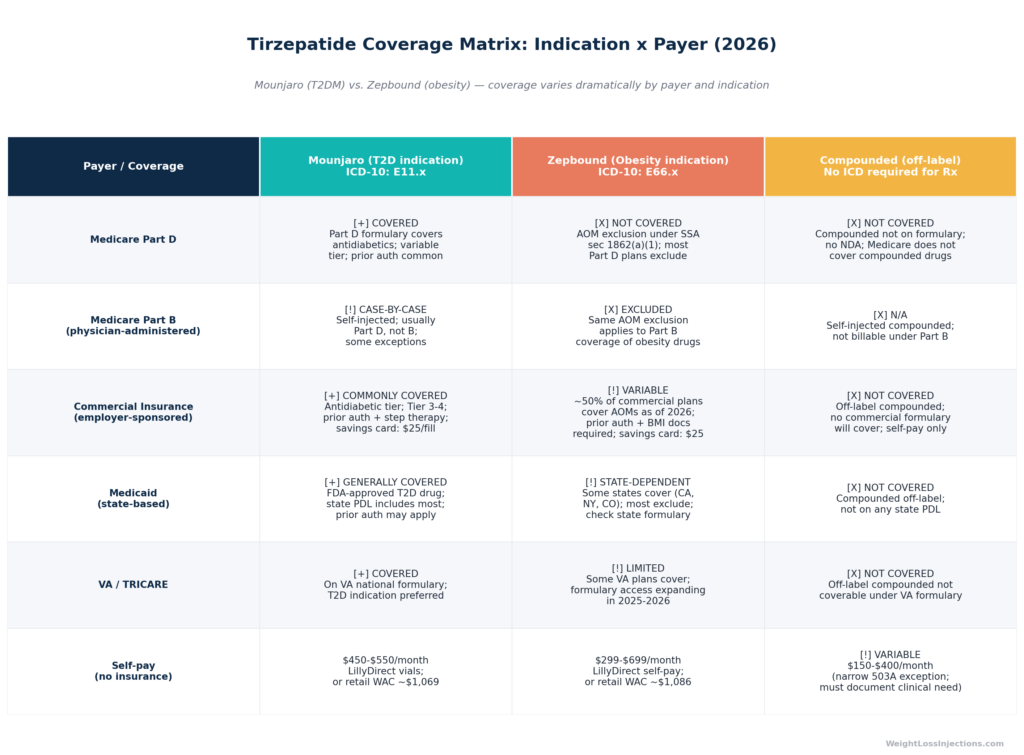
The insurance section is where the Mounjaro vs. Zepbound distinction produces the largest real-world consequences. The same drug, the same dose, the same pen — and a coverage difference that can run to thousands of dollars per year.
Mounjaro (T2DM Indication) — Insurance Coverage
Mounjaro is covered more broadly by commercial insurance when prescribed for T2DM. Most major employer-sponsored plans and ACA marketplace plans include Mounjaro on the diabetes drug formulary, subject to prior authorization. Approval rates for Mounjaro under the T2DM indication with commercial insurance run approximately 60–70% for commercially insured patients.
Medicare Part D: Covered for the T2DM indication on many plans. This is significant because Medicare Part D historically excluded anti-obesity medications (AOM) — but the T2DM label provides an access pathway that the weight-loss label does not.
Prior authorization criteria (typical):
- Documented T2DM diagnosis (ICD-10 E11.x)
- Recent A1c ≥7.0% or ≥8.0% (plan-dependent)
- Documentation of metformin trial at maximally tolerated dose or contraindication
- Clinical notes supporting medical necessity
Mounjaro Savings Card: For patients with commercial insurance that covers Mounjaro under T2DM, the Eli Lilly Mounjaro Savings Card can bring out-of-pocket cost to as low as $25/fill (approximately $25/month for covered patients). The card provides up to 13 fills per calendar year. Critical restriction: this $25/month rate applies only to on-label T2DM use — patients prescribed Mounjaro off-label for weight loss without a T2DM diagnosis are not eligible for this rate.
Zepbound (Weight Loss Indication) — Insurance Coverage
Coverage for Zepbound under the obesity indication is highly variable and, in many cases, significantly more limited than Mounjaro under T2DM.
Commercial insurance: Many employer-sponsored plans explicitly exclude anti-obesity medications (AOM) from their formularies. Coverage is growing — major employers and large group plans have been expanding AOM benefits — but exclusions remain common. Without AOM coverage, the retail price for branded Zepbound runs approximately $1,086/month (Healthy Meals Incentives, tirzepatide cost 2026).
Zepbound savings card: Available for commercially insured patients whose plans cover obesity medications — brings cost to as low as $25/fill. Available through zepbound.lilly.com.
LillyDirect self-pay vials: For patients without insurance coverage for Zepbound, Eli Lilly’s LillyDirect program offers Zepbound directly at substantially reduced self-pay pricing: $299/month for 2.5 mg doses, up to $699/month for higher doses (Healthy Meals Incentives). This below-list pricing is accessible only via the Zepbound label — not Mounjaro.
Medicare Part D: Generally does not cover weight-loss-only indications (AOM exclusion) for most beneficiaries. However, the Medicare GLP-1 Bridge Program, launched July 1, 2026, provides eligible Part D enrollees access to Zepbound at $50/month for patients meeting obesity criteria (BMI ≥35 or ≥27 with qualifying comorbidities). This is a Zepbound-specific program — Mounjaro is not eligible under it.
Medicaid: Coverage varies widely by state. Most states do not cover anti-obesity medications for the weight-loss indication. Mounjaro for T2DM is covered in all 50 states through standard diabetes drug benefit formularies.
WeightLossInjections.com editorial note: The AOM exclusion landscape is gradually shifting as evidence for tirzepatide’s cardiometabolic benefits accumulates (SURPASS-CVOT for T2DM, SUMMIT for HFpEF). For patients whose commercial plan does not cover Zepbound, LillyDirect self-pay vials at $299–$699/month represent the most predictable out-of-pocket pathway to branded tirzepatide. For patients with T2DM, the Mounjaro T2DM coverage pathway — with the $25/month savings card — often delivers a more affordable route to the same molecule.
The Off-Label Coverage Debate
Some patients with obesity but without T2DM have had providers write a Mounjaro prescription (rather than Zepbound) with the goal of accessing diabetes formulary coverage. This is technically off-label prescribing for the provider and is legal under U.S. prescribing law. However, insurance systems have increasingly been trained to flag this: prior authorization reviewers check diagnosis codes against indication, and a Mounjaro prescription submitted with obesity-only codes will typically be denied or converted to a Zepbound prior authorization review. The practical effectiveness of this approach has diminished as insurers have tightened their AOM exclusion enforcement.
Compounded Tirzepatide and Insurance
The compounding landscape for tirzepatide changed fundamentally between 2024 and 2026. The FDA declared the tirzepatide shortage resolved and, after a legal challenge and grace period, ended enforcement discretion for 503A pharmacy compounding on March 10, 2025 and for 503B outsourcing facilities on March 19, 2025 (FDA GLP-1 Compounding Clarification Page). As of June 2026, mass-market compounded tirzepatide is not lawful (FDA GLP-1 Compounding Clarification Page).
A narrow 503A exception survives: a licensed compounding pharmacy may compound tirzepatide if the prescriber documents a clinically significant difference for the individual patient — such as an allergy to the cresol preservative in branded pens, or a need for a dose strength not commercially available — and the pharmacy compounds no more than four such prescriptions per month. Regardless of this narrow pathway, compounded tirzepatide is not covered by any insurance plan under any circumstances. It is a self-pay-only product.
Clinical Outcomes: Does the Indication Change How Well It Works?
The short answer is no. The same molecule produces the same pharmacological effects regardless of which brand name is on the prescription. A Mounjaro 15 mg prescription does not produce a different metabolic effect than a Zepbound 15 mg prescription — the drug’s interaction with GIP receptors and GLP-1 receptors is identical in either case.
What changes across clinical trials is not the drug — it is the patient population, the trial duration, and the primary endpoint that determined how the study was designed.
Head-to-Head Trial Data by Indication
SURPASS-2 (T2DM, 40 weeks):
- A1c reduction: −2.01% / −2.24% / −2.30% at 5/10/15 mg (primary endpoint)
- Weight loss: −7.6 / −9.3 / −11.2 kg at 5/10/15 mg (secondary endpoint)
- Comparator: semaglutide 1.0 mg (A1c −1.86%, weight loss −5.7 kg)
- Source: SURPASS-2, NEJM 2021
SURMOUNT-1 (non-T2DM obesity, 72 weeks):
- Weight loss: −15.0% / −19.5% / −20.9% at 5/10/15 mg (primary endpoint)
- A1c: Already near-normal in this non-diabetic population; glycemic secondary endpoints favorable
- Comparator: Placebo (−3.1%)
- Source: SURMOUNT-1, NEJM 2022
Why the Same Molecule Shows Different Weight Loss by Population
The SURMOUNT-1 participants lost approximately twice as much weight as the SURPASS-2 participants at the same 15 mg dose. Three factors explain this:
- Metabolic baseline differences. T2DM patients have established insulin resistance, impaired beta-cell function, and often longer-standing central adiposity. These factors limit the magnitude of GLP-1/GIP-driven weight loss relative to metabolically healthier obese patients.
- Trial duration. SURPASS-2 measured outcomes at 40 weeks; SURMOUNT-1 at 72 weeks. Weight loss with tirzepatide continues to accumulate beyond 40 weeks before plateauing — so longer trials capture a larger fraction of the drug’s total weight loss potential.
- BMI composition of trial cohorts. SURMOUNT-1 enrolled patients specifically selected for higher BMI (obesity ≥30 or ≥27 with comorbidity) with no T2DM. SURPASS-2 enrolled T2DM patients whose obesity was a comorbidity rather than the enrollment criterion, meaning baseline BMI distributions differed.
For a patient with both T2DM and obesity — the most common real-world tirzepatide prescribing scenario — the clinical outcomes are uniquely comprehensive. Tirzepatide simultaneously delivers:
- A1c reduction of 2+ percentage points (glycemic control benchmark)
- Body weight reduction of 10–15% or more (depending on duration and dose)
- Insulin resistance improvement independent of weight loss
- Cardiovascular risk reduction (SURPASS-CVOT and SUMMIT data)
Cardiovascular Data: Both Indications Benefit
For T2DM patients (SURPASS-CVOT): Tirzepatide demonstrated non-inferiority to dulaglutide for 3-point MACE in patients with T2DM and established ASCVD, with a statistically significant reduction in expanded MACE-4 outcomes at median approximately four-year follow-up (SURPASS-CVOT, TCTMD December 2025).
For obesity patients (SUMMIT): In the SUMMIT trial enrolling patients with heart failure with preserved ejection fraction (HFpEF) and obesity, tirzepatide reduced the composite of cardiovascular death or worsening heart failure events by 38% versus placebo (HR 0.62; 95% CI 0.41–0.95; p=0.026) (SUMMIT, Circulation March 2025). Significant improvements in quality-of-life scores, 6-minute walk distance, and Kansas City Cardiomyopathy Questionnaire scores were also observed.
For a patient at the intersection of T2DM and obesity — which describes the majority of patients in both populations — the cardiovascular benefit case is supported from both directions.
The Overlap Population: T2DM + Obesity
Approximately 50–80% of adults with type 2 diabetes also have obesity as defined by BMI ≥30 or overweight with comorbidities. This population sits at the precise intersection where tirzepatide’s two approved indications converge. These patients often stand to benefit the most:
- The glycemic improvement reduces downstream vascular complications
- The weight loss reduces insulin resistance, sometimes enabling insulin dose reduction or even discontinuation of other antihyperglycemic agents
- The cardiovascular risk reduction operates through both pathways simultaneously
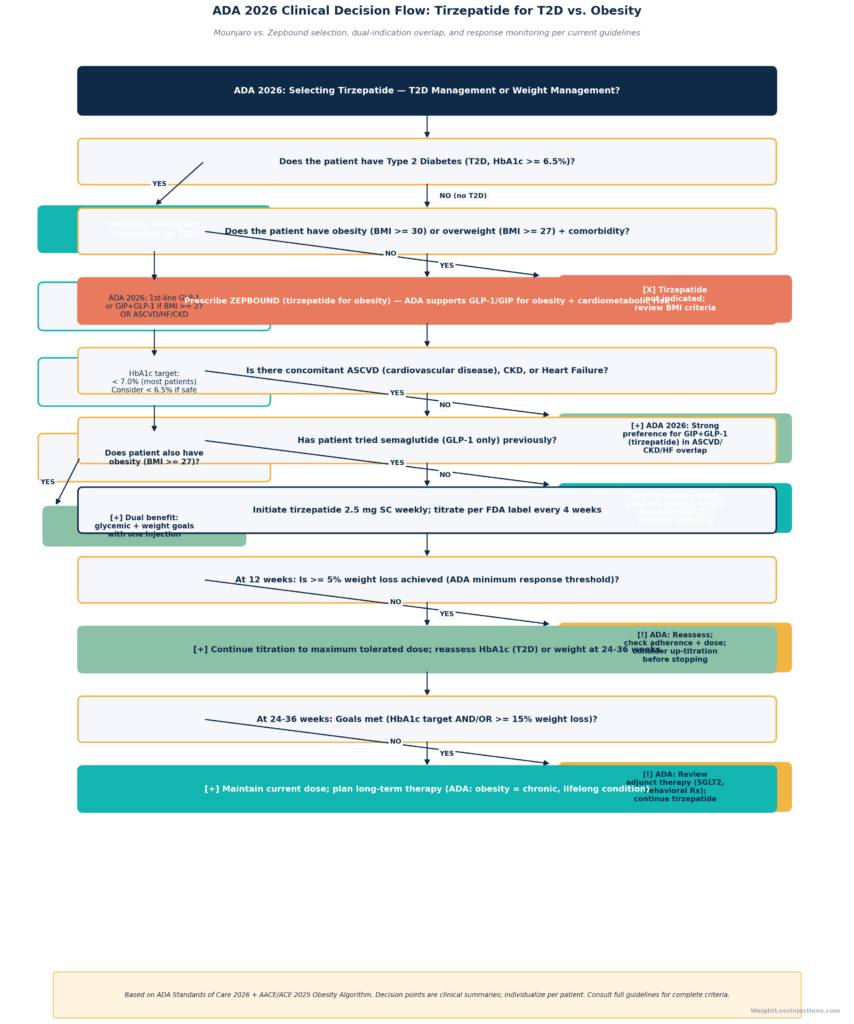
For the prescribing clinician, ADA 2026 Standards of Care now position GIP/GLP-1 dual agonists — including tirzepatide — as preferred agents in T2DM patients who also have established cardiovascular disease, heart failure, chronic kidney disease, or obesity, based on the combined metabolic and cardiorenal benefit profile.
Side Effects Are Identical Regardless of Indication
One question patients ask frequently: “Will tirzepatide affect me differently if I’m taking it for diabetes versus weight loss?” The pharmacological answer is no. The molecule, the dose, and the mechanism are identical. The side effect profile is the same whether the prescription says Mounjaro or Zepbound.
Boxed Warning (both products): Thyroid C-cell tumors observed in rodents at clinically relevant exposures. Both Mounjaro and Zepbound are contraindicated in patients with a personal or family history of medullary thyroid carcinoma (MTC) or multiple endocrine neoplasia syndrome type 2 (MEN 2) (FDA Mounjaro Label, NDA 215866).
Most common adverse effects (dose-dependent, typically highest during dose escalation):
- Nausea: up to 30% in obesity trials at higher doses; typically attenuates after the escalation phase
- Diarrhea: 12–24% across trial populations
- Vomiting: 6–12%
- Constipation: 6–17%
- Dyspepsia and abdominal pain: 6–9%
Hypoglycemia: Low risk as monotherapy due to glucose-dependent mechanism. Risk increases significantly when combined with insulin or sulfonylureas — reducing insulin dose by 10–20% at tirzepatide initiation is standard practice (StatPearls / NCBI Bookshelf).
Oral contraceptive interaction: A clinically important and underrecognized interaction — tirzepatide’s gastric emptying slowing reduces the AUC of oral contraceptives by approximately 20% in pharmacokinetic studies. Use barrier contraception for four weeks after tirzepatide initiation and after each dose increase, or switch to a non-oral contraceptive method. This interaction does not occur with semaglutide and is specific to tirzepatide.
The dosing schedule is also identical regardless of indication: same 2.5 mg initiation, same 2.5 mg increment escalation, same maximum 15 mg, same once-weekly injection (Zepbound HCP Dosage and Administration).
Cost Comparison: Mounjaro vs. Zepbound in 2026
At list price (wholesale acquisition cost), both brands are priced similarly at approximately $1,079–$1,086/month for a 28-day supply. The meaningful differences emerge in the savings programs and insurance coverage structure.
| Cost Scenario | Mounjaro (T2DM) | Zepbound (Obesity) |
|---|---|---|
| List price (WAC) | ~$1,079/month | ~$1,086/month |
| With savings card + covered commercial insurance | As low as $25/month | As low as $25/month |
| With savings card + no commercial coverage | As low as $499/month | As low as $499/month |
| LillyDirect self-pay (2.5 mg) | $299/month | $299/month |
| LillyDirect self-pay (higher doses) | Up to $699/month | Up to $699/month |
| Medicare (T2DM indication) | Part D formulary coverage (plan-dependent) | Not applicable |
| Medicare GLP-1 Bridge (obesity, July–Dec 2026) | Not eligible | $50/month |
| Medicaid | All 50 states for T2DM | ~4 states for obesity |
Sources: Healthy Meals Incentives, tirzepatide cost 2026
Key insight for patients with T2DM: The Mounjaro $25/month savings card rate is the most affordable pathway to branded tirzepatide for patients with commercial insurance that covers diabetes medications — and it is tied specifically to the T2DM indication.
Key insight for non-diabetic patients: Zepbound via LillyDirect at $299–$699/month is the most predictable self-pay pathway for patients without AOM insurance coverage. The LillyDirect pricing is accessible only via the Zepbound label for patients seeking tirzepatide primarily for weight management.
Key insight for Medicare patients: The Medicare GLP-1 Bridge Program’s $50/month Zepbound rate (July–December 2026) is the most transformative coverage development for Medicare-eligible obesity patients in 2026. Patients with both T2DM and obesity who are approaching Medicare eligibility should evaluate the Zepbound Bridge alongside their existing Mounjaro T2DM coverage before deciding which label to pursue.
WeightLossInjections.com — Navigating Both Pathways
For patients sitting at the intersection of type 2 diabetes and obesity — or for non-diabetic patients trying to understand whether Mounjaro or Zepbound applies to their situation — the single most valuable step is a licensed provider evaluation before the prescription is written.
WeightLossInjections.com connects patients with licensed providers who evaluate both the T2DM and weight-loss indications, assess insurance coverage options, and help navigate the prescribing pathway that provides the best clinical and financial outcome. Whether you have T2DM, obesity, or both — a provider who understands both indications and both coverage landscapes produces better outcomes than one who defaults to whichever label is most familiar.
Starting from [$X/month] — [service detail]. Includes a full review of your diagnosis, insurance coverage pathways, and savings programs applicable to your situation.
“For patients with both T2DM and obesity, I always run both coverage pathways before I write the prescription. The drug is the same — but the label can mean the difference between $25/month and $1,086/month for the identical pen. That decision belongs in the consult room, not at the pharmacy counter.”
— the WeightLossInjections.com Staff, reviewed June 2026
Soft CTA: Not sure whether Mounjaro or Zepbound is the right path for your situation? A licensed provider can evaluate both indications, check your insurance coverage, and help you start on the right prescription the first time. [Start your evaluation →]
Frequently Asked Questions
Mounjaro and Zepbound are the same medication — tirzepatide, a dual GIP/GLP-1 receptor agonist made by Eli Lilly. Mounjaro (NDA 215866) is FDA-approved for type 2 diabetes mellitus (May 2022); Zepbound (NDA 217806) is FDA-approved for chronic weight management (November 2023). Both use identical pens, the same six dose strengths (2.5–15 mg), and the same once-weekly injection schedule. The difference is the FDA indication, which determines your insurance coverage pathway, savings card eligibility, and access to LillyDirect self-pay pricing.
Yes — tirzepatide significantly lowers blood sugar in T2DM patients AND produces meaningful weight loss in both diabetic and non-diabetic patients. Patients with both conditions often receive the most comprehensive benefit: simultaneous A1c reduction and body weight reduction, each reinforcing the other by reducing insulin resistance. Depending on your diagnosis, your provider will determine whether Mounjaro (T2DM label) or Zepbound (obesity label) is the appropriate prescription — and in patients with both conditions, both are simultaneously on-label.
It is effective for both, with the magnitude of benefit shaped by the clinical population. In T2DM trials (SURPASS-2), A1c reductions of −2.01 to −2.30% exceeded semaglutide and represented superior glycemic control. In obesity trials (SURMOUNT-1), weight loss of up to −20.9% at 72 weeks in non-diabetic patients was the largest documented for any pharmaceutical except metabolic surgery. Non-diabetic obesity patients tend to lose more weight than T2DM patients across trials — not because the drug differs, but because T2DM creates metabolic resistance to weight loss that the non-diabetic population does not have.
Coverage is highly variable. Many commercial plans exclude anti-obesity medications (AOM) from their formularies. Medicare Part D generally does not cover Zepbound for weight loss only under its standard formulary — though the Medicare GLP-1 Bridge Program (July–December 2026) covers Zepbound at $50/month for eligible Part D enrollees. LillyDirect self-pay vials start at $299/month as an alternative to insurance. If you have T2DM, Mounjaro under the T2DM indication may have broader and more predictable commercial insurance coverage.
If you have type 2 diabetes, Mounjaro is the on-label option for your diagnosis and typically offers better insurance coverage. Your doctor may be prescribing Mounjaro because your commercial insurance covers it under the diabetes formulary benefit — potentially with the Mounjaro Savings Card bringing your cost to $25/month. The same drug is working regardless of which brand you receive. If weight management is also a goal and you want to explore the Zepbound label’s specific savings structures, ask your provider to evaluate whether your insurance covers Zepbound under an obesity benefit as well.
Yes. Both Mounjaro and Zepbound use the same six dose strengths (2.5–15 mg once weekly) and the same titration schedule: start at 2.5 mg for four weeks, then increase by 2.5 mg increments no sooner than every four weeks, based on clinical response and tolerability. The maximum approved dose is 15 mg once weekly for adults under both indications. Pediatric Mounjaro (T2DM, ages 10–17) has a maximum of 10 mg per week (Zepbound HCP Dosage and Administration).