![Unbranded [pillar-drug-class] injection pen on a neutral background — WeightLossInjections.com editorial hero](https://weightlossinjections.com/wp-content/uploads/2026/07/hero_tirzepatide_c3_safety-1200x675.png)
Medical review notice: This article provides general educational information about tirzepatide’s interaction profile. It does not replace individualized medical advice from your prescriber or pharmacist. Always disclose your full medication list before starting tirzepatide. We reviewed this article for clinical accuracy as of June 2026.
Safety notice: This content is for informational purposes only and does not constitute medical advice. Consult a licensed healthcare provider before making any changes to your medications. Drug interaction management requires individualized clinical judgment.
Tirzepatide is now among the most widely prescribed medications in the United States — dispensed as Mounjaro® for type 2 diabetes and Zepbound® for chronic weight management. Millions of patients starting tirzepatide are already managing other chronic conditions: type 2 diabetes polypharmacy, thyroid disease, cardiovascular risk, or contraception. Before the first injection, one of the most important clinical conversations is about the medications already in the cabinet.
The good news is that tirzepatide’s interaction profile is more limited than many patients fear. Because tirzepatide is a synthetic peptide and is not metabolized by liver enzymes, it avoids the large category of drug-drug interactions that complicate so many other medications. But the interactions it does have are clinically significant — and two of them, involving oral contraceptives and insulin, are important enough to warrant dedicated prescriber guidance at every dose escalation step.
This article covers the complete tirzepatide drug interaction profile: the physiological mechanisms behind the interactions, a comprehensive reference table, in-depth analysis of the highest-priority interactions, a list of medications that do not interact meaningfully, and a pre-start checklist you can bring to your prescriber. Whether you are a patient reviewing your medication list or a clinician seeking a quick reference, this guide provides the clinical specificity that brief product summaries typically omit.
This content is for informational purposes only and does not constitute medical advice. Consult a licensed healthcare provider.
How Tirzepatide Creates Drug Interactions — The Mechanism
Before reviewing individual drugs, understanding why tirzepatide interacts with certain co-medications makes the entire interaction list easier to remember and apply. There are two primary interaction mechanisms, and a large category of interactions that simply does not apply to tirzepatide.
Mechanism 1: Delayed Gastric Emptying and Altered Oral Drug Absorption
Tirzepatide is the first approved dual GIP (glucose-dependent insulinotropic polypeptide) and GLP-1 (glucagon-like peptide-1) receptor agonist — a “twincretin” — and both receptor pathways contribute to slowing the rate at which the stomach empties its contents into the small intestine. (StatPearls / NCBI Bookshelf) This delayed gastric emptying is intentional from a therapeutic standpoint: it blunts post-meal glucose spikes, prolongs satiety, and reduces overall caloric intake. But the same mechanism that delays food also delays oral medications.
When oral drugs take longer to transit from stomach to small intestine, their pharmacokinetic profile changes. The peak plasma concentration (Cmax) may be reduced, the time to reach peak concentration (Tmax) is extended, and in some cases the total amount absorbed — quantified as area under the concentration-time curve, or AUC — is reduced. For most medications, a modest delay in absorption is clinically irrelevant. But for drugs with narrow therapeutic windows, rapid-absorption requirements, or dose-dependent efficacy thresholds, even a 10–20% reduction in AUC can shift clinical outcomes.
This gastric emptying effect is not limited to the hours immediately following an injection. With a half-life of approximately five days, tirzepatide is active throughout the full week between doses. (FDA Clinical Pharmacology Review NDA 215866) Steady state is reached after approximately four weeks of weekly dosing, at which point the gastric emptying effect is present around the clock, not just on injection day. Patients and prescribers should plan for this continuous — not intermittent — absorption effect when managing co-medications.
Tirzepatide Gastric Emptying Effect — Weekly Timeline
Mechanism 2: Potentiated Glucose Lowering
Tirzepatide’s second interaction mechanism is pharmacodynamic rather than pharmacokinetic: it lowers blood glucose. Tirzepatide stimulates insulin secretion from pancreatic beta cells, suppresses glucagon secretion, and improves insulin sensitivity. (StatPearls / NCBI Bookshelf) When co-administered with other glucose-lowering agents — particularly exogenous insulin or insulin secretagogues such as sulfonylureas — the combined effect can drive blood glucose below safe thresholds. This is the most clinically dangerous interaction category and the one requiring the most proactive dose management.
Critically, tirzepatide’s glucose-lowering mechanism is glucose-dependent: it amplifies insulin secretion only when blood glucose is elevated. As monotherapy, it carries a very low risk of hypoglycemia precisely because the mechanism self-limits at near-normal glucose concentrations. The hypoglycemia risk emerges when agents that do act independently of glucose level — exogenous insulin, sulfonylureas — are co-administered.
What Does NOT Create Significant Interactions: No CYP450 Metabolism
This is the most clinically reassuring aspect of tirzepatide’s pharmacology, and one that competitor articles frequently fail to explain clearly.
Tirzepatide is a 39-amino-acid synthetic peptide. It is metabolized by proteolytic cleavage of the peptide backbone, and the fatty-acid moiety undergoes beta-oxidation — a metabolic pathway entirely separate from the hepatic cytochrome P450 (CYP450) enzyme system. (FDA Clinical Pharmacology Review NDA 215866) This means tirzepatide does not inhibit or induce CYP3A4, CYP2C9, CYP2D6, or other major CYP enzymes responsible for metabolizing the vast majority of common pharmaceuticals.
In practical terms: statin drugs, antiretrovirals, many antibiotics, antifungals, calcium channel blockers, most antidepressants, and hundreds of other CYP-metabolized drugs do not interact with tirzepatide through enzyme-based mechanisms. Patients on complex regimens who have experienced frustrating drug interactions with other medications will find tirzepatide’s CYP-free pharmacology to be a clinical advantage.
Master Drug Interaction Table
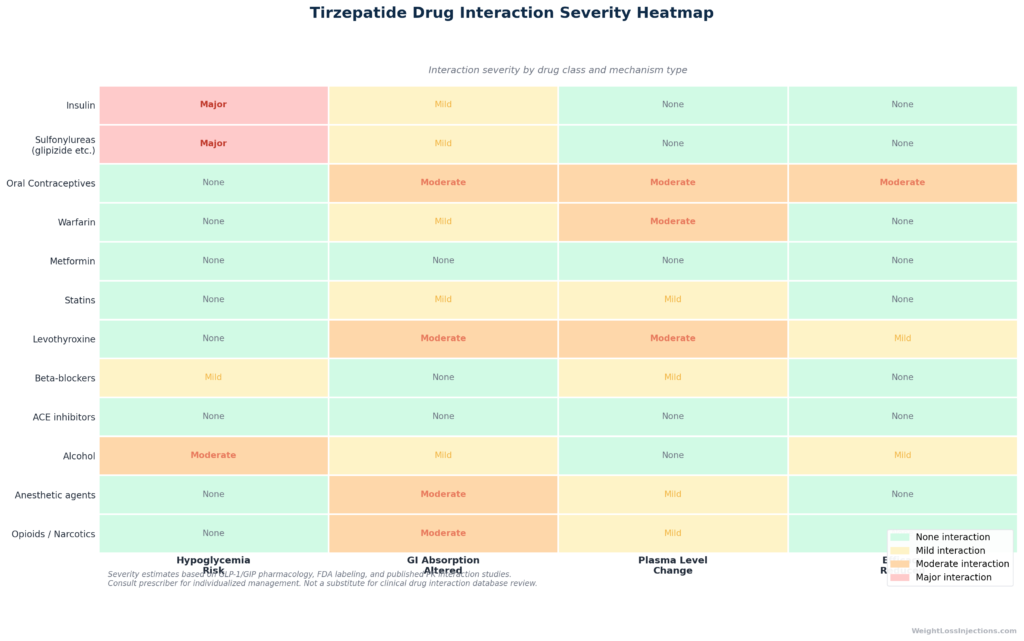
The table below provides a comprehensive reference across all clinically evaluated drug classes. Interaction severity classifications use the following standard framework: HIGH = requires proactive dose adjustment and close monitoring; MODERATE = warrants clinical attention and potential adjustment; MINIMAL = no routine dose adjustment needed.
| Drug / Drug Class | Interaction Type | Clinical Significance | Recommended Action |
|---|---|---|---|
| Insulin (basal/bolus) | Additive glucose lowering → hypoglycemia | HIGH | Reduce basal insulin by 10–20% at tirzepatide initiation; titrate further as A1c improves. Monitor blood glucose closely. (StatPearls) |
| Sulfonylureas (glipizide, glimepiride, glyburide) | Insulin secretagogue + GIP/GLP-1 effect → additive hypoglycemia | HIGH | Consider reducing SU dose or switching to shorter-acting agent; monitor blood glucose closely. (StatPearls) |
| Oral contraceptives (combined hormonal) | Delayed gastric absorption → ~20% reduction in OC AUC | MODERATE — unique to tirzepatide, not semaglutide | Use barrier contraception for 4 weeks after each initiation or dose increase, OR switch to non-oral contraceptive method. (Reproductive Health Access Project) |
| Levothyroxine | Delayed absorption → estimated 10–15% reduction in AUC | LOW-MODERATE | Take levothyroxine ≥30–60 min before food on tirzepatide injection day; monitor TSH 4–6 weeks after starting and after each dose increase. |
| Warfarin | Delayed absorption kinetics; weight loss alters distribution volume | LOW-MODERATE | Monitor INR every 2–4 weeks for the first 3 months; adjust warfarin dose as indicated. (FDA Mounjaro label NDA 215866) |
| Narrow therapeutic index drugs (digoxin, cyclosporine, tacrolimus, phenytoin) | Delayed gastric absorption may affect peak and trough levels | MODERATE | Consult prescriber managing NTI drug; increase monitoring frequency during tirzepatide initiation and each dose escalation. |
| Metformin | No clinically significant PK interaction | MINIMAL | No dose adjustment. Continue as prescribed; commonly co-administered in T2D. (StatPearls) |
| CYP450-metabolized drugs (e.g., most statins, antifungals) | Minimal — tirzepatide is not CYP-metabolized | MINIMAL | No dose adjustment needed for most co-medications metabolized by CYP3A4/2C9/2D6. (FDA Clinical Pharmacology Review NDA 215866) |
| NSAIDs / acetaminophen | No clinically meaningful PK interaction | MINIMAL | No specific action required; standard GI precautions for NSAIDs apply. |
| Blood pressure medications (ACE inhibitors, ARBs, diuretics) | Indirect: weight loss from tirzepatide often lowers blood pressure over time | INDIRECT — BENEFICIAL | Monitor blood pressure as weight loss progresses; prescriber may reduce antihypertensive dose — this is expected and beneficial. |
| Statins (atorvastatin, rosuvastatin, simvastatin) | No clinically significant PK interaction | MINIMAL | Continue as prescribed. No dose adjustment needed. |
| SSRIs/SNRIs (antidepressants) | No known clinically significant interaction | MINIMAL | Continue as prescribed; monitor mood per standard care. |
| Alcohol | No direct PK interaction; indirect hypoglycemia risk if on insulin or SU | LOW (elevated if on insulin/SU) | Counsel patients on hypoglycemia symptom recognition; particularly relevant for patients on insulin or sulfonylureas. |
| Tetracyclines / ciprofloxacin (narrow-absorption-window antibiotics) | Delayed gastric transit may affect absorption timing | LOW-MODERATE | Short antibiotic courses typically unaffected; inform prescriber for extended courses. |
| Antiseizure medications (phenytoin, valproate, carbamazepine) | Variable; delayed absorption could affect drug levels | LOW-MODERATE | Consult the prescriber managing seizure therapy; consider level monitoring during titration. |
| Proton pump inhibitors (omeprazole, pantoprazole) | No significant interaction | MINIMAL | Continue as prescribed. |
| Diuretics | No direct PK interaction; GI fluid losses from tirzepatide may compound dehydration | LOW | Monitor hydration, especially during GI side-effect periods; notify prescriber if nausea/vomiting is severe. |
Insulin and Sulfonylureas — The Hypoglycemia Risk Deep Dive
For patients with type 2 diabetes managing their blood glucose with insulin or sulfonylureas, the transition to tirzepatide requires the most careful pre-planning of any drug interaction category. This is not a reason to delay or avoid tirzepatide — it is one of the most effective glucose-lowering agents available. But without proactive dose adjustment, the combined hypoglycemia risk is real and predictable.
Why Tirzepatide Alone Has Low Hypoglycemia Risk
Understanding why tirzepatide does not cause hypoglycemia as monotherapy makes the combination risk easier to grasp. Tirzepatide stimulates insulin secretion in a glucose-dependent manner — meaning it amplifies the pancreatic beta cell’s insulin output only when blood glucose is elevated above normal. (StatPearls / NCBI Bookshelf) When glucose falls to near-normal or low-normal concentrations, tirzepatide’s insulin-stimulating effect self-attenuates. This glucose-dependence is a core safety advantage over sulfonylureas and exogenous insulin, which act independently of blood glucose level.
As a result, tirzepatide used alone in patients without diabetes produces hypoglycemia at rates comparable to placebo in clinical trials. The risk profile changes fundamentally when the drug is combined with agents that operate regardless of glucose concentration.
Insulin Co-Administration
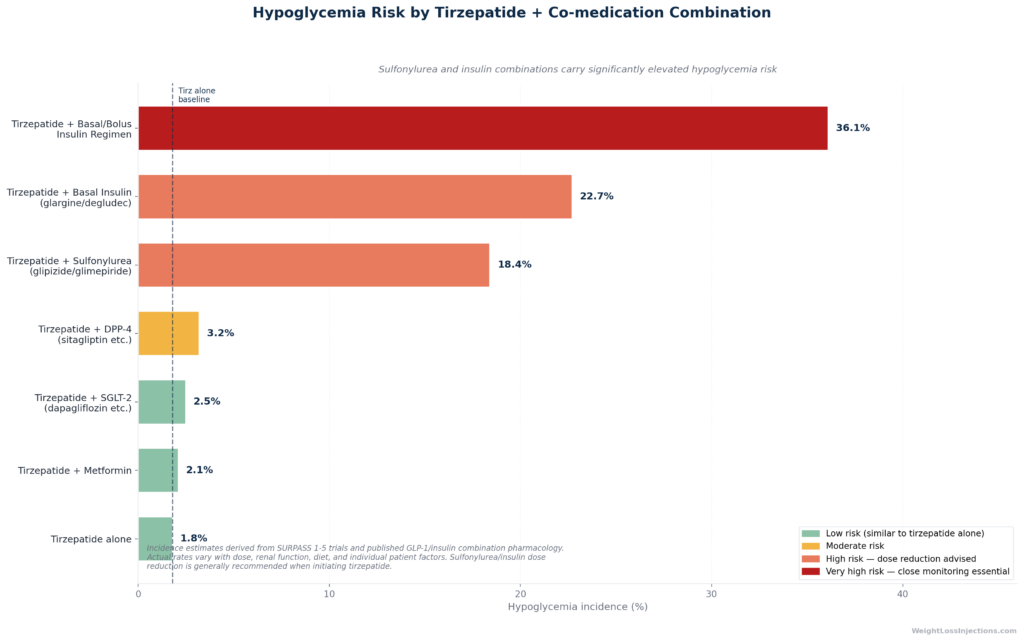
When tirzepatide is added to an existing insulin regimen, the combined effect on blood glucose creates significant hypoglycemia risk, particularly during fasting, exercise, and delayed meals. The standard prescriber guidance is to reduce basal insulin dose by 10–20% at the time tirzepatide is initiated, while monitoring blood glucose closely. (StatPearls / NCBI Bookshelf)
This initial reduction is typically just the first adjustment. As tirzepatide takes effect over the following 8–12 weeks — improving insulin sensitivity, reducing glucagon, and promoting weight loss — most patients on combined therapy will require further insulin dose reductions. The FDA Mounjaro prescribing information specifically identifies insulin as a co-medication requiring dose reduction to reduce hypoglycemia risk. (FDA Mounjaro label NDA 215866)
For patients on bolus (mealtime) insulin, the picture is more nuanced. Tirzepatide’s appetite suppression commonly reduces meal size significantly, which means less post-prandial glucose load — and consequently less bolus insulin need. However, reducing bolus insulin requires careful self-monitoring because the required reduction is patient-specific and changes over time as weight loss progresses. This is not a “reduce the dose once and forget it” adjustment; it requires ongoing prescriber dialogue through the titration period and into maintenance dosing.
Sulfonylurea Co-Administration
Sulfonylureas — including glipizide, glimepiride, and glyburide — stimulate insulin secretion from pancreatic beta cells independent of blood glucose level. When combined with tirzepatide’s glucose-lowering effect, the combined pharmacodynamic load can push blood glucose into hypoglycemic ranges.
No FDA-labeled percentage reduction is specified for sulfonylureas as it is for insulin, but clinical practice typically involves one of two approaches: reducing the sulfonylurea dose by approximately half when initiating tirzepatide, or switching from a longer-acting sulfonylurea (glyburide) to a shorter-acting one (glipizide) to reduce the duration of glucose-independent insulin drive. The prescriber managing the patient’s diabetes regimen should guide this decision based on baseline A1c and glucose monitoring data.
Recognizing Hypoglycemia
Every patient starting tirzepatide alongside insulin or a sulfonylurea should receive explicit instruction on hypoglycemia recognition and response. Symptoms of low blood glucose include:
Early symptoms: Shakiness or trembling · Diaphoresis (unusual sweating) · Palpitations or rapid heartbeat · Anxiety or irritability · Hunger · Pale skin
Moderate symptoms: Confusion or difficulty concentrating · Headache · Blurred vision · Weakness or fatigue · Clumsiness or impaired coordination
Severe symptoms: Seizure · Loss of consciousness · Inability to swallow
What to do: If blood glucose is below 70 mg/dL and the patient is conscious and able to swallow, consume 15–20 grams of fast-acting carbohydrate: 4 glucose tablets, 4 ounces of orange juice, or 4 ounces of regular (non-diet) soda. Recheck glucose in 15 minutes and repeat if still below 70 mg/dL. Inform the prescribing provider of any hypoglycemic episodes — dose adjustments are typically needed.
Patients on insulin and tirzepatide combination therapy should carry fast-acting glucose at all times and ensure household members know the signs of severe hypoglycemia and how to use injectable glucagon if needed.
Oral Contraceptives — The Interaction Unique to Tirzepatide
Of all tirzepatide’s drug interactions, the oral contraceptive (OC) interaction is the most clinically distinctive — and the most important for prescribers to address proactively at every dose escalation visit. This interaction separates tirzepatide from the broader GLP-1 agonist class in a way that has direct implications for reproductive health planning.
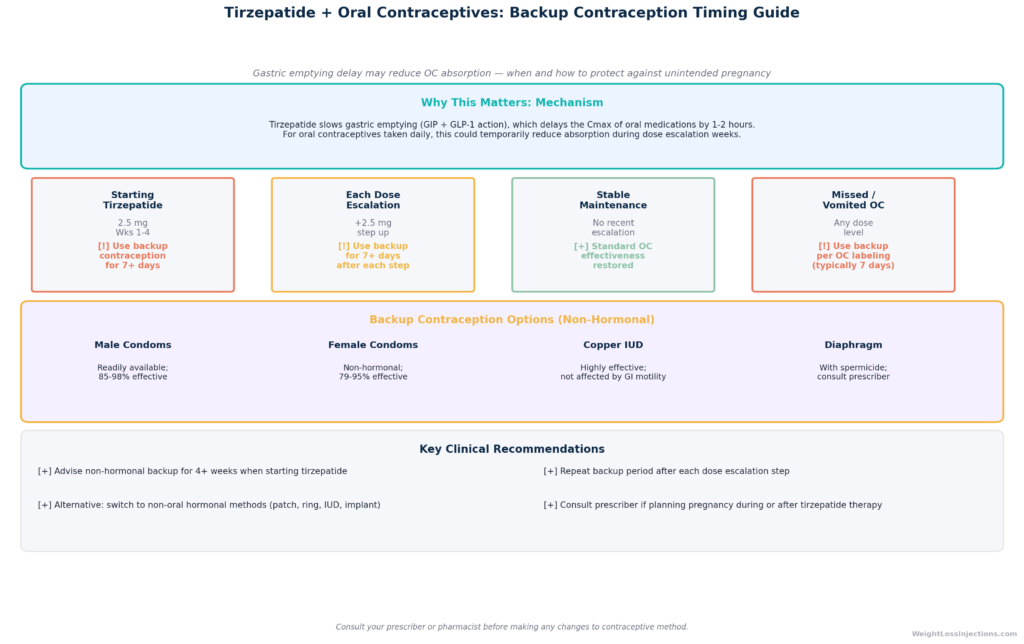
Action required: If you take combined oral contraceptive pills (the birth control pill) and are starting or increasing tirzepatide, use a backup contraceptive method (such as condoms) for at least 4 weeks, OR discuss switching to a non-oral hormonal contraceptive method with your prescriber. This is FDA-labeled guidance — not a precautionary suggestion.
What the Pharmacokinetic Data Shows
Combined oral contraceptives (COCs) containing ethinyl estradiol are absorbed in the small intestine. Tirzepatide’s delay of gastric emptying slows the transit of orally ingested substances from the stomach to the small intestinal absorption site. A dedicated pharmacokinetic sub-study found approximately a 20% reduction in oral contraceptive area under the concentration-time curve (AUC) when co-administered with tirzepatide at therapeutic doses. (Reproductive Health Access Project) A 20% reduction in hormonal exposure is clinically meaningful: the contraceptive efficacy of COCs depends on maintaining ethinyl estradiol and progestin concentrations above threshold levels throughout the monthly cycle.
The FDA prescribing information for both Mounjaro and Zepbound explicitly addresses this interaction, advising the use of a non-oral hormonal contraceptive or an additional barrier method for at least four weeks after initiation of tirzepatide and after every dose increase. (FDA Mounjaro label NDA 215866) This four-week window applies at each dose escalation step in the titration schedule — not just at initiation. Since the standard titration schedule involves dose increases every four weeks through the 20-week escalation period, patients who escalate as labeled should maintain backup contraception for the majority of their first year on tirzepatide.
Oral Contraceptive AUC Reduction with Tirzepatide Co-Administration
Why This Interaction Is Specific to Tirzepatide
This is a clinically important distinction: the oral contraceptive absorption interaction appears specific to tirzepatide and is not observed with semaglutide (Ozempic/Wegovy) at the same level. (Reproductive Health Access Project) The likely explanation is that tirzepatide’s dual GIP and GLP-1 receptor agonism produces a more pronounced gastric emptying delay than GLP-1–only agonists at comparable clinical doses. Patients who have switched from semaglutide to tirzepatide may not be aware that this interaction risk has changed with the medication change, making explicit prescriber counseling at the transition visit essential.
Prescribers who have been managing patients on semaglutide without an OCP interaction concern should revisit contraceptive planning at the tirzepatide initiation visit.
Practical Options for Patients on Oral Contraceptives
Option A — Add a barrier method: Use condoms (male or female) as a backup during the four-week window after each dose step change. This is the most straightforward option for patients who prefer to remain on their current OCP.
Option B — Switch to a non-oral hormonal method: Hormonal contraceptives delivered through other routes are not subject to the gastric emptying absorption effect. Options include: transdermal patch, vaginal ring, injectable progestogen (Depo-Provera), hormonal intrauterine device (IUD), or subdermal implant. These methods maintain efficacy regardless of gastric emptying rate and remove the need for ongoing backup contraception during tirzepatide dose escalation.
Option C — Barrier-only contraception: Non-hormonal methods (copper IUD, condoms) are unaffected by tirzepatide’s gastric emptying effect.
For patients using OCPs to manage PCOS or hormonal symptoms — rather than primarily for contraception — the dose-reliability concern applies equally. Reduced ethinyl estradiol exposure may affect symptom control for conditions including polycystic ovarian syndrome, endometriosis, and dysmenorrhea that are being managed with OCPs. Discuss with the prescribing provider whether switching to a non-oral hormonal formulation would maintain the intended hormonal effect.
For patients interested in pregnancy: Tirzepatide is associated with improvements in insulin sensitivity and metabolic parameters that may improve fertility in patients with PCOS or obesity-related anovulation. If pregnancy is the goal, tirzepatide is not recommended during pregnancy (per FDA labeling), and contraceptive planning should account for the drug’s five-day half-life and appropriate washout period — a discussion for the prescribing provider.
Levothyroxine, Warfarin, and Other Orally Absorbed Drugs
The third major interaction category covers the “long tail” of orally administered drugs where tirzepatide’s gastric emptying delay may shift pharmacokinetics enough to require monitoring — particularly for medications with narrow therapeutic windows.
Levothyroxine (Thyroid Hormone Replacement)
Levothyroxine has one of the narrowest therapeutic windows in common clinical use and is exquisitely sensitive to changes in absorption. Even modest reductions in levothyroxine AUC — on the order of 10–15% — can shift thyroid-stimulating hormone (TSH) levels enough to produce clinical hypothyroidism in previously well-controlled patients.
Tirzepatide’s delayed gastric emptying is estimated to reduce levothyroxine AUC by approximately 10–15% based on the pharmacokinetic principle of delayed small-intestinal transit. The practical consequence is that a patient who was TSH-stable on their levothyroxine dose before starting tirzepatide may develop rising TSH (and hypothyroid symptoms including fatigue, cold intolerance, constipation, and cognitive slowing) within the first few weeks — not because their thyroid status has changed, but because their medication is being less efficiently absorbed.
Mitigation strategies:
- Take levothyroxine on an empty stomach, at least 30–60 minutes before any food, other medications, or the tirzepatide injection, on injection days. Levothyroxine should ideally be taken first thing in the morning, before coffee, food, or other medications.
- Monitor TSH levels 4–6 weeks after initiating tirzepatide and after each dose escalation. Early detection of rising TSH allows levothyroxine dose adjustment before clinical hypothyroid symptoms develop.
- Maintain consistent injection timing relative to levothyroxine administration. Variability in timing introduces variability in levothyroxine absorption that complicates dose optimization.
For patients with severe or medically complex hypothyroidism being managed in hospitalized or critical-care settings where oral absorption is unreliable, consultation with endocrinology regarding intravenous thyroid hormone administration may be warranted — though this situation is rare in the outpatient tirzepatide population.
Warfarin (Oral Anticoagulation)
Warfarin’s interaction with tirzepatide involves two distinct mechanisms operating simultaneously. First, delayed gastric emptying from tirzepatide can alter warfarin absorption kinetics, potentially affecting peak plasma concentration and time to peak. Second — and potentially more significant over time — tirzepatide-associated weight loss alters the volume of distribution and metabolic clearance of warfarin. Warfarin’s pharmacokinetics are affected by body composition, adiposity, and the metabolic changes that accompany significant weight loss. (FDA Mounjaro label NDA 215866)
The practical recommendation is to monitor INR every two to four weeks for the first three months after starting tirzepatide, and to adjust the warfarin dose as INR trends outside the therapeutic range. Patients on warfarin should not discontinue tirzepatide without notifying their anticoagulation provider, because the reverse — stopping tirzepatide after INR has stabilized on an adjusted dose — will shift warfarin requirements again as the absorption and distribution effects reverse.
Patients in anticoagulation management clinics should notify their anticoagulation pharmacist or nurse when starting tirzepatide so that the INR monitoring schedule can be adjusted proactively.
Digoxin
Digoxin is the textbook narrow-therapeutic-index cardiac glycoside: the difference between a therapeutic concentration and a toxic one is small, and monitoring serum digoxin levels is standard practice in patients on this medication. Tirzepatide’s delayed gastric absorption could theoretically affect both peak digoxin levels and absorption consistency. Monitor digoxin levels after initiating tirzepatide. Any symptoms suggesting possible digoxin toxicity — nausea (distinct from tirzepatide-related nausea), visual disturbances (yellow halos, blurred vision), bradycardia, or irregular heartbeat — require prompt clinical evaluation.
Cyclosporine and Tacrolimus (Transplant Immunosuppressants)
Cyclosporine and tacrolimus are critical narrow-therapeutic-index medications for solid organ transplant recipients. Both are fat-soluble and lipophilic, meaning that in addition to the gastric emptying effect on absorption timing, weight loss-associated changes in adipose tissue distribution may affect drug distribution and trough concentrations. (FDA Mounjaro label NDA 215866)
More frequent monitoring of cyclosporine or tacrolimus trough levels during tirzepatide initiation and dose escalation is prudent. Transplant patients considering tirzepatide should loop in their transplant team before starting, as managing the interaction requires coordination between the prescriber ordering tirzepatide and the team managing immunosuppression.
Antiseizure Medications (Phenytoin, Valproate, Carbamazepine)
For patients with epilepsy managed on antiseizure medications, delayed absorption from tirzepatide’s gastric slowing could theoretically alter drug levels — most relevantly for phenytoin (Dilantin), which has its own narrow therapeutic index and dose-dependent toxicity. Consult the neurologist or prescriber managing the seizure disorder before starting tirzepatide, and consider checking drug levels after initiation and each dose increase if clinical concern warrants.
Antibiotics with Narrow Absorption Windows
Certain antibiotics — including tetracyclines (doxycycline, minocycline) and fluoroquinolones (ciprofloxacin) — have absorption profiles that can be affected by delayed gastric transit. For short courses of antibiotics (the typical outpatient scenario), the interaction is unlikely to be clinically significant. For extended antibiotic courses or in patients with serious infections where adequate drug levels are essential, notify the prescribing provider that tirzepatide is being taken.
Practical Rule of Thumb
If your prescriber or pharmacist monitors blood levels of any medication you take, tell them you are starting tirzepatide. The increased monitoring window during the first 8–12 weeks of tirzepatide — covering initiation through the early dose escalation period — is the most important period to track level-dependent drugs, because both the gastric emptying effect and the early weight loss are most dynamic during this time. (Population PK Tirzepatide — CPT: PSP, 2024 (PMC))
Tirzepatide Drug Interaction Severity Matrix by Drug Class
Our Top 3 · October 2026
The best GLP-1 providers right now
Independently reviewed. Ranked by price, medication access, provider quality, and patient outcomes.
Renew GLP
Personalized GLP-1, GIP plans: Semaglutide & Tirzepatide.
Medvi
No membership or hidden fees. Everything you need is included.
Trimi
US-licensed clinicians and shipped to your door, from $99/mo.
Medications That Are NOT Significantly Affected by Tirzepatide
This section exists for an important clinical reason: many patients on complex medication regimens experience unnecessary anxiety about polypharmacy when starting tirzepatide. For the large majority of common chronic-disease medications, tirzepatide’s non-CYP metabolism means that the typical drug-drug interaction framework simply does not apply. Reassurance — when evidence-based — is as important as caution.
Metformin
No clinically significant pharmacokinetic interaction exists between tirzepatide and metformin. Metformin was the most common background medication in the SURPASS clinical trial program for type 2 diabetes, and metformin continuation is standard practice when tirzepatide is added to a T2D regimen. (StatPearls / NCBI Bookshelf) No dose adjustment is needed. Continue metformin as prescribed.
Statins
No clinically significant interaction exists between tirzepatide and commonly prescribed statins including atorvastatin (Lipitor), rosuvastatin (Crestor), simvastatin, or pravastatin. Statins are predominantly metabolized by CYP3A4 and CYP2C9 — enzyme systems that tirzepatide does not affect. (FDA Clinical Pharmacology Review NDA 215866) Additionally, tirzepatide does not meaningfully inhibit OATP1B1 transporter pathways relevant to statin disposition. Continue statins as prescribed.
A clinically interesting indirect effect: tirzepatide-associated weight loss typically improves lipid profiles over time, often reducing LDL cholesterol and triglycerides. This may lead to eventual statin dose reductions — but that is a beneficial metabolic outcome, not an interaction requiring immediate action.
ACE Inhibitors, ARBs, Beta-Blockers, Calcium Channel Blockers
No direct pharmacokinetic interaction exists between tirzepatide and these blood pressure medication classes. The CYP-independence of tirzepatide is again the key factor. However, a clinically relevant indirect dynamic develops over time: tirzepatide-driven weight loss typically lowers blood pressure substantially. Patients who were previously requiring antihypertensive medications to manage weight-related hypertension may find their blood pressure dropping to low-normal or below as they lose weight on tirzepatide. Ongoing blood pressure monitoring and eventual antihypertensive dose reduction is expected and clinically appropriate — this is a beneficial indirect effect, not an interaction requiring concern at initiation.
SSRIs and SNRIs (Antidepressants)
No clinically significant pharmacokinetic interaction exists between tirzepatide and selective serotonin reuptake inhibitors (SSRIs) or serotonin-norepinephrine reuptake inhibitors (SNRIs). These medications are primarily metabolized by CYP2D6 and CYP3A4 pathways that tirzepatide does not affect. Continue antidepressants as prescribed. Notify your prescriber of any significant mood changes during tirzepatide treatment, per standard monitoring protocols.
Some patients report subjective mood improvement during tirzepatide treatment, often attributed to the psychological benefits of weight loss and improved metabolic health. This is not an interaction — it is a downstream benefit.
Proton Pump Inhibitors
No significant interaction between tirzepatide and PPIs including omeprazole, pantoprazole, lansoprazole, or esomeprazole has been identified. Continue as prescribed.
NSAIDs and Acetaminophen
No meaningful pharmacokinetic interaction exists between tirzepatide and commonly used analgesics including ibuprofen, naproxen, or acetaminophen. Standard GI precautions for NSAID use apply as usual — take with food to reduce gastric irritation, avoid prolonged use without prescriber guidance. Tirzepatide’s own GI effects (nausea, delayed emptying) may make the GI side effect profile of NSAIDs slightly more noticeable, though no specific dose adjustment is indicated.
For post-surgical patients requiring analgesics: tirzepatide’s gastric emptying delay means that orally administered analgesics may take longer to achieve peak effect. For procedures requiring acute pain management, informing the surgical and anesthesia team about tirzepatide therapy — ideally at least one week before an elective procedure — is recommended. Gastric emptying delay has implications for aspiration risk during anesthesia induction and for the timing of post-operative oral medication administration.
Why CYP-Independence Matters for Complex Patients
For patients managing multiple chronic conditions — HIV, fungal infections, cardiac arrhythmias, neurological disorders — the drug regimen often includes CYP3A4 inducers or inhibitors: rifampin, ketoconazole, carbamazepine, clarithromycin, and others. These agents have intricate interaction webs with small-molecule drugs. Because tirzepatide is not CYP-metabolized, it sits entirely outside this interaction matrix. The prescriber managing a complex polypharmacy patient can add tirzepatide without triggering a CYP-based interaction cascade. (FDA Clinical Pharmacology Review NDA 215866)
Drug-Disease Interactions and Contraindications
In addition to drug-drug interactions, tirzepatide carries several contraindications and precautions based on underlying disease states that are clinically important to review before prescribing.
Medullary Thyroid Carcinoma (MTC) and MEN 2 — Absolute Contraindication
Tirzepatide carries a boxed warning for thyroid C-cell tumors based on rodent studies showing dose- and duration-dependent thyroid C-cell adenomas and carcinomas at clinically relevant exposures. Human relevance has not been established. However, tirzepatide is contraindicated in patients with a personal or family history of medullary thyroid carcinoma (MTC) or multiple endocrine neoplasia syndrome type 2 (MEN 2), per FDA labeling. (FDA Mounjaro label NDA 215866) This is an absolute contraindication — tirzepatide should not be used in these patients regardless of other clinical considerations.
Personal History of Pancreatitis
Acute pancreatitis has been observed in tirzepatide clinical trials: 14 events in 13 patients across the SURPASS clinical trial program (0.23 per 100 patient-years vs. 0.11 per 100 patient-years in comparators). (StatPearls / NCBI Bookshelf) Tirzepatide has NOT been studied in patients with prior pancreatitis. The FDA label recommends discontinuing tirzepatide if pancreatitis is suspected and not restarting if confirmed. For patients with a history of pancreatitis, the decision to initiate tirzepatide requires careful individual risk-benefit assessment by the treating physician.
Severe Gastroparesis
Severe gastroparesis — a condition characterized by delayed gastric emptying in the absence of mechanical obstruction — is a relative contraindication to tirzepatide. Adding a medication that further delays gastric emptying to a patient with already-impaired gastric motility can significantly worsen symptoms (nausea, vomiting, bloating, early satiety) and may exacerbate nutritional compromise. Patients with known gastroparesis should discuss the risk-benefit profile explicitly with their gastroenterologist and endocrinologist before initiating tirzepatide.
Renal and Hepatic Impairment — No Dose Adjustment Required
Population pharmacokinetic modeling of tirzepatide shows no clinically significant impact of renal impairment — from mild through severe — on tirzepatide exposure. No dose adjustment is required for patients with chronic kidney disease. (Population PK Tirzepatide — CPT: PSP, 2024 (PMC)) Similarly, hepatic impairment does not meaningfully alter tirzepatide exposure. No dose adjustment is required for hepatic impairment. This is a clinical advantage for patients with diabetic nephropathy or non-alcoholic steatohepatitis — common comorbidities in the tirzepatide patient population.
Compounded Tirzepatide: Same Molecule, Same Interactions
Compounded tirzepatide — whether obtained through a 503A traditional compounding pharmacy under the narrow lawful pathway that survived the FDA’s March 2025 enforcement deadline, or through any other source — contains the same active pharmaceutical ingredient (API) as Mounjaro and Zepbound. The tirzepatide molecule is identical regardless of who manufactures or compounds it. This means all of the drug interactions described in this article apply equally to compounded tirzepatide.
The current legal framework for compounded tirzepatide is narrow. As of June 2026, mass-market compounding of tirzepatide is unlawful; the narrow exception permits 503A pharmacies to compound tirzepatide only when the prescriber documents a clinically significant individualized need — such as a documented allergy to an inactive ingredient in the branded product or a need for a dose strength not commercially available — and the pharmacy compounds no more than four such prescriptions per month. (FDA GLP-1 Compounding Clarification Page) Mass-market compounding operations that do not meet this standard are operating outside the FDA’s current enforcement posture.
For patients who have been obtaining compounded tirzepatide under one of the legitimate narrow pathways: the interaction profile is the same. Discuss the same interaction concerns with your prescriber regardless of the source of your medication.
Anesthesia and Perioperative Considerations
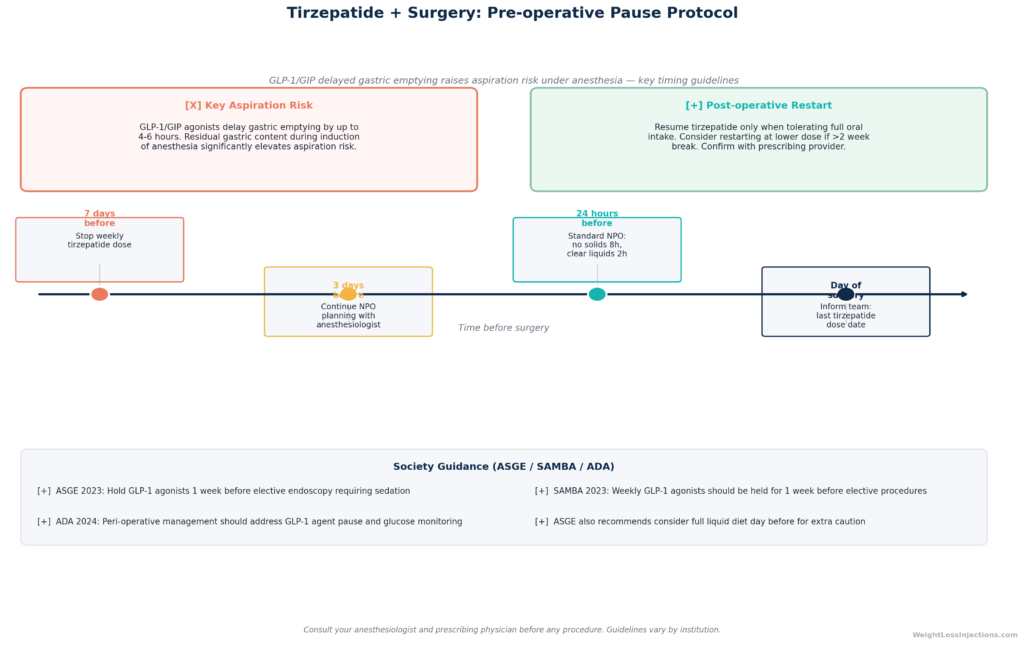
Tirzepatide’s gastric emptying delay has meaningful implications for patients undergoing surgical procedures requiring general anesthesia. Delayed gastric emptying increases the risk of aspiration during anesthetic induction — the passage of gastric contents into the airway in an incompletely-emptied stomach. Tirzepatide prescribing information recommends that patients inform their anesthesia team that they are taking tirzepatide at least one week before any elective surgical or procedural intervention. (FDA Mounjaro label NDA 215866)
In practice, this typically means:
- Elective procedures: Notify the surgical and anesthesia team at the pre-procedure consultation. The anesthesia team may modify the standard pre-operative fasting protocol — potentially extending the nil-by-mouth (NPO) window or requesting a longer solid food fast than standard guidelines for patients not on GLP-1/GIP agonists.
- Emergency procedures: Inform the anesthesia team of tirzepatide use as early as possible. Rapid-sequence intubation technique may be preferred to reduce aspiration risk.
- Post-operative oral medications: Because gastric emptying remains delayed post-procedure, orally administered analgesics and other post-operative medications may have delayed onset of action. The clinical team should account for this when selecting immediate post-operative pain management strategies.
The American Society of Anesthesiologists (ASA) has issued evolving guidance on GLP-1 agonist management in the perioperative period. The developing clinical consensus is toward a more cautious approach to pre-operative fasting for patients on GLP-1 and GIP/GLP-1 agonists. Patients and prescribers should verify current institutional guidelines when planning any surgical intervention.
What to Tell Your Doctor Before Starting Tirzepatide — Pre-Start Checklist
The following checklist is designed to be printed or shared with your prescriber at the consultation visit before starting tirzepatide. A thorough medication review before initiation prevents the most common avoidable adverse events and allows the prescriber to put a proactive monitoring plan in place. Bringing this list — or a complete medication list — to your appointment takes ten minutes and may prevent a hospitalization.
Pre-Start Tirzepatide Medication Review Checklist
☐ Complete medication list — including all prescription medications, over-the-counter drugs, supplements, vitamins, and herbal products. Certain herbal supplements affect blood glucose (berberine, chromium, bitter melon) or thyroid function (iodine-containing supplements) and should be disclosed.
☐ Current insulin regimen and doses — your prescriber needs baseline insulin doses to plan the recommended 10–20% reduction at initiation.
☐ Sulfonylurea use — flag glipizide, glimepiride, or glyburide for potential dose reduction or agent switch at initiation.
☐ Oral contraceptive use — discuss switching to a non-oral hormonal method or adding barrier contraception for 4 weeks after each dose escalation step.
☐ Thyroid medication (levothyroxine) — discuss timing optimization and TSH monitoring schedule (4–6 weeks after starting and after each dose increase).
☐ Anticoagulants (warfarin) — notify anticoagulation team; request INR monitoring every 2–4 weeks for the first 3 months.
☐ Narrow therapeutic index drugs — flag transplant immunosuppressants (cyclosporine, tacrolimus), cardiac glycosides (digoxin), and antiepileptics (phenytoin) for specialist coordination and level monitoring.
☐ History of pancreatitis — disclose; clinical risk-benefit assessment required.
☐ History of medullary thyroid carcinoma or MEN 2 — disclose; tirzepatide is contraindicated in these conditions.
☐ Known or suspected gastroparesis — disclose; significant caution required.
☐ Planned surgical or procedural intervention — inform anesthesia team at least one week in advance.
☐ Alcohol use — discuss hypoglycemia symptom recognition if also on insulin or sulfonylureas.
☐ Pregnancy plans or current contraception method — discuss contraceptive adjustment and implications of weight loss on fertility.
“A thorough medication review before starting tirzepatide takes ten minutes and prevents the most common avoidable adverse events. There is no such thing as too much information at the first consultation.”
— the WeightLossInjections.com Staff
Ready to start tirzepatide with full medical oversight? WeightLossInjections.com connects you with licensed prescribers who review your complete medication list before writing your prescription. [service detail] starting at [$X/month]. [STATE-SPECIFIC DISCLAIMER]
Pre-Start Tirzepatide Medication Checklist — Key Disclosure Items
Frequently Asked Questions
Does tirzepatide interact with metformin?
No significant pharmacokinetic interaction exists between tirzepatide and metformin. Metformin is commonly co-prescribed with tirzepatide in type 2 diabetes patients and was a standard background medication in the SURPASS clinical trials. No dose adjustment is needed for either drug. (StatPearls / NCBI Bookshelf)
Does tirzepatide affect birth control effectiveness?
Yes — tirzepatide delays gastric emptying, which can reduce the absorption of oral contraceptive pills by approximately 20%. The prescribing information for Mounjaro and Zepbound advises using barrier contraception or a non-oral hormonal method for four weeks after starting tirzepatide and after each dose increase. (FDA Mounjaro label NDA 215866) This interaction appears specific to tirzepatide and is not seen with semaglutide at the same magnitude.
Can I take tirzepatide with insulin?
Yes, but with proactive dose adjustment. Tirzepatide lowers blood glucose, and combining it with insulin significantly increases hypoglycemia risk. Most prescribers reduce basal insulin by 10–20% when starting tirzepatide and monitor closely as A1c improves and further dose reductions become appropriate. (StatPearls / NCBI Bookshelf)
Does tirzepatide interact with thyroid medication?
Tirzepatide’s gastric emptying delay may reduce levothyroxine absorption by an estimated 10–15%. To minimize this, take levothyroxine at least 30–60 minutes before any food or your tirzepatide injection. Your prescriber may check TSH levels 4–6 weeks after starting or adjusting tirzepatide.
Does tirzepatide have CYP drug interactions?
No. Unlike many small-molecule drugs, tirzepatide is a synthetic peptide and does not undergo CYP450 metabolism. This means it does not inhibit or induce the enzymes responsible for metabolizing most common medications — an important clinical advantage for patients on complex regimens. (FDA Clinical Pharmacology Review NDA 215866)
What medications should I avoid while on tirzepatide?
“Avoid” is rarely the correct framing. Most medications can be co-administered with appropriate monitoring and, in some cases, dose adjustment. The highest-priority interactions are insulin and sulfonylureas (hypoglycemia risk) and oral contraceptives (potential reduction in contraceptive efficacy). Narrow therapeutic index drugs (warfarin, levothyroxine, digoxin, cyclosporine, tacrolimus) require increased monitoring rather than avoidance. Always provide your prescriber and pharmacist with your complete medication list before starting. (FDA Mounjaro label NDA 215866)
Related Articles on WeightLossInjections.com
- Tirzepatide Side Effects
- How Does Tirzepatide Work
- Tirzepatide and Alcohol
- Tirzepatide Dosing Chart
- Tirzepatide for Diabetes vs. Weight Loss
- Tirzepatide Pharmacokinetics and Half-Life
This content is for informational purposes only and does not constitute medical advice. Consult a licensed healthcare provider before making any changes to your medications or treatment plan.
WeightLossInjections.com — Medically reviewed content. Last updated June 2026.