
Key Takeaways
- Data from injectable GLP-1 trials — particularly STEP-4 (semaglutide) and SURMOUNT-4 (tirzepatide) — show that a substantial portion of lost weight tends to return within about a year after stopping treatment, and this pattern is generally believed to extend to oral GLP-1s given the shared underlying mechanism.
- Obesity is widely treated in clinical guidelines as a chronic condition, meaning oral GLP-1s like Foundayo, the Wegovy pill, and Rybelsus are generally intended as long-term therapies rather than short courses.
- Whether to taper off a GLP-1 gradually or stop more abruptly is a decision for a prescriber, based on the individual’s dose, health status, and reason for stopping.
- Common reasons people discontinue include side effects, cost or insurance coverage changes, and reaching a personal goal weight — each of which may call for a different discussion with a healthcare provider.
- No one should stop or adjust an oral GLP-1 medication without consulting the prescribing provider first.
Why This Question Matters So Much
Discontinuing a GLP-1 medication is one of the most consequential decisions in the entire treatment journey, yet it’s often given far less attention than starting one. Whether someone is considering stopping Foundayo (orforglipron), the Wegovy pill, or Rybelsus, the same fundamental question applies: what happens to the weight that was lost, and what happens to the underlying appetite and metabolic effects the medication was providing?
The honest, evidence-based answer is that available data — most of it from injectable GLP-1 trials rather than the still-newer oral options — suggests weight regain is common after stopping, and that the effects driving weight loss are not permanent once the medication is discontinued.
What STEP-4 and SURMOUNT-4 Show
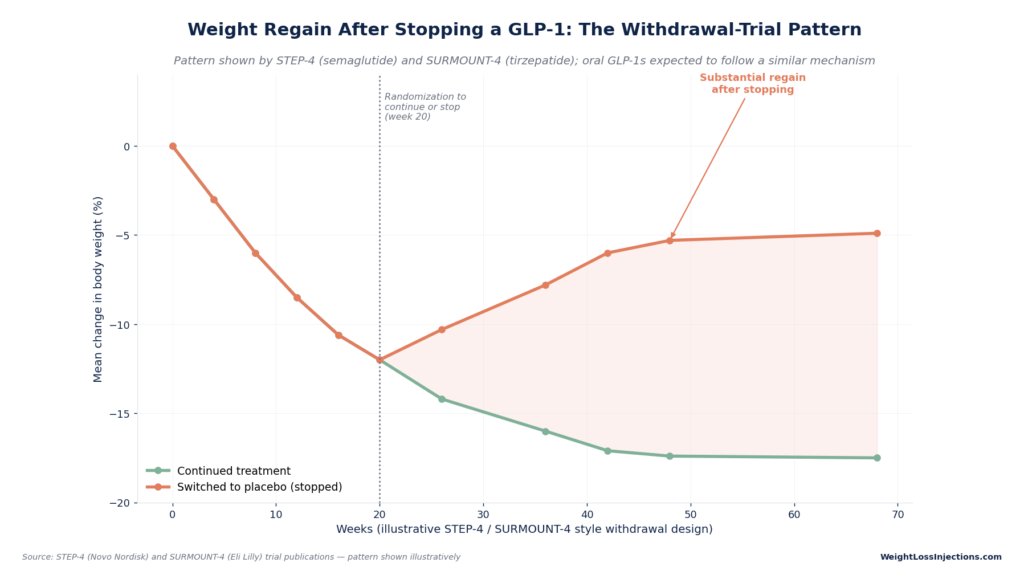
The most relevant published data on GLP-1 discontinuation comes from two injectable trials: STEP-4, which studied injectable semaglutide (the active ingredient in Ozempic and Wegovy), and SURMOUNT-4, which studied tirzepatide (the active ingredient in Mounjaro and Zepbound). Both trials included a withdrawal design, where some participants continued treatment while others were switched to placebo after an initial period of active treatment.
In both trials, participants who were switched to placebo — effectively stopping active treatment — regained a substantial portion of the weight they had lost during the active treatment period, while those who continued treatment generally maintained or continued to lose weight. This pattern has become one of the most cited pieces of evidence in obesity medicine for framing GLP-1 and GIP/GLP-1 therapy as a long-term, ongoing treatment rather than a finite course, similar in concept to how blood pressure or cholesterol medications are typically continued indefinitely to maintain their effect.
Neither Foundayo nor the Wegovy pill has published discontinuation data of the same depth as STEP-4 or SURMOUNT-4, simply because both are newer to market — the Wegovy pill launched in January 2026 and Foundayo was approved in April 2026. However, because all GLP-1 receptor agonists work through the same core hormonal pathway, clinicians and researchers generally expect a broadly similar regain pattern after discontinuation, though the specific magnitude and timeline for oral options have not yet been established in long-term published trials. For more on Foundayo’s own long-term efficacy data, see our guide to Foundayo’s long-term results from ATTAIN-1.
Why Regain Happens
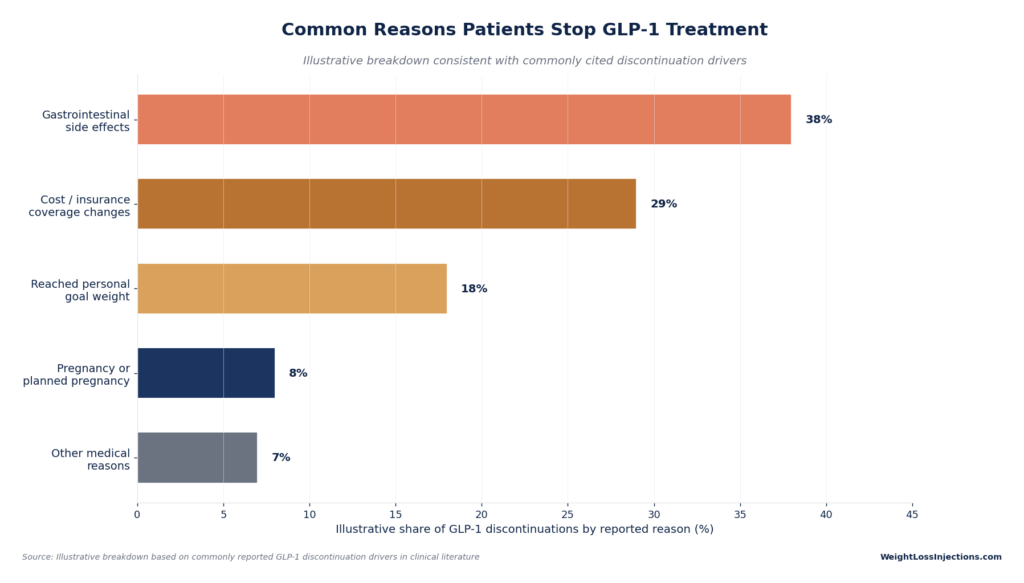
The biological explanation behind post-discontinuation regain relates to how GLP-1 receptor agonists work in the first place. These medications slow gastric emptying, increase feelings of fullness, and reduce hunger signals originating in the brain’s appetite-regulating centers. Once the medication is stopped, these effects fade relatively quickly, and the body’s original hunger and satiety signaling generally returns to something closer to its pre-treatment baseline. Combined with the body’s natural tendency to defend a previously established higher body weight — a phenomenon well documented in obesity research broadly, independent of GLP-1 therapy — this typically results in increased appetite and, for many people, gradual weight regain absent other significant intervention.
This is not a reflection of personal failure or lack of willpower; it reflects the underlying biology of appetite regulation and why obesity is increasingly treated as a chronic condition requiring sustained management, similar to hypertension or type 2 diabetes.
Our Top 3 · September 2026
The best GLP-1 providers right now
Independently reviewed. Ranked by price, medication access, provider quality, and patient outcomes.
Renew GLP
Personalized GLP-1, GIP plans: Semaglutide & Tirzepatide.
Medvi
No membership or hidden fees. Everything you need is included.
Trimi
US-licensed clinicians and shipped to your door, from $99/mo.
Tapering vs. Stopping Cold
Whether to taper off an oral GLP-1 gradually — stepping back down through lower doses before stopping entirely — or to stop at the current dose without a taper is a clinical decision that depends on several factors: the current dose, how long the person has been on treatment, why they’re stopping, and their individual health profile. There isn’t a single universal protocol published for tapering oral GLP-1s off treatment, and prescribers make this determination case by case.
Some clinicians favor a gradual dose reduction, reasoning that it may ease the transition and reduce the intensity of appetite rebound, while others may determine that stopping at the current dose is appropriate depending on the specific circumstances. This decision should always be made in partnership with the prescribing provider — self-directed tapering or abrupt discontinuation without medical guidance is not recommended, particularly for anyone who has been on a stable maintenance dose for an extended period.
Common Reasons People Stop and What Each One Means
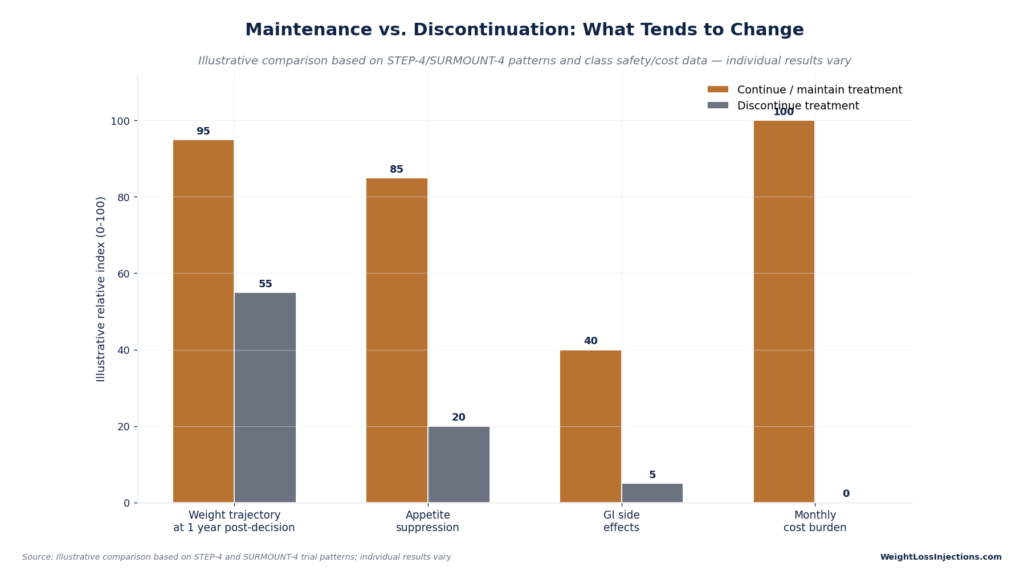
Side effects. Gastrointestinal side effects like nausea, vomiting, or diarrhea are the most common reason people discontinue any GLP-1 medication, oral or injectable. If side effects are the driver, a prescriber may first explore options like adjusting the dose, extending time at a current dose level, or switching to a different oral GLP-1 with a different side-effect profile before concluding that discontinuation is the right path. For more on managing side effects before considering discontinuation, see our guide to oral GLP-1 side effects.
Cost or insurance coverage changes. GLP-1 medications, including oral options, can be expensive, and insurance coverage for weight-loss indications varies significantly and can change year to year or with employer plan changes. When cost forces a stop, it’s worth discussing alternatives with a prescriber — including switching to a different oral GLP-1 with a different pricing structure, exploring manufacturer savings programs, or discussing a structured discontinuation plan if no other option is financially feasible.
Reaching a goal weight. Some patients reach a personal target weight and consider stopping treatment at that point. Given the regain data from STEP-4 and SURMOUNT-4, this decision deserves particular care — a prescriber can help discuss whether a lower maintenance dose, continued treatment, or a carefully monitored discontinuation with a maintenance plan (increased structured attention to diet and exercise) makes the most sense for that individual’s long-term goals.
Pregnancy or planned pregnancy. GLP-1 medications are generally not recommended during pregnancy, and anyone who is pregnant or planning to become pregnant should discuss discontinuation timing directly with their healthcare provider, as this scenario often calls for more urgent planning than other reasons for stopping.
What to Expect in the Weeks and Months After Stopping
Based on the general pattern seen in STEP-4 and SURMOUNT-4 for injectable GLP-1s, appetite typically begins returning toward baseline over the weeks following discontinuation, as drug levels clear from the body and the medication’s effects on gastric emptying and appetite signaling fade. Weight regain in these trials tended to occur gradually over the months following discontinuation rather than immediately, giving people a window of time to implement supportive strategies — such as the dietary and exercise habits discussed in our guide to diet and lifestyle while taking oral GLP-1s — before regain becomes significant.
It’s worth setting realistic expectations: even with continued healthy habits, appetite regulation without the medication’s pharmacological support is generally more difficult, and this is precisely why obesity medicine increasingly frames these drugs as chronic-use therapies rather than short-term interventions.
Is There a Way to Stop Without Regaining Weight?
There’s no guaranteed strategy to fully prevent weight regain after stopping a GLP-1 medication, based on currently available trial data. Some general factors that may help support weight maintenance after discontinuation include a gradual, prescriber-guided taper rather than an abrupt stop, continued attention to protein intake and resistance training to help preserve muscle mass gained or maintained during treatment, and structured ongoing support — whether through a healthcare provider, dietitian, or behavioral program — to help manage appetite and habits without pharmacological support. None of these strategies has been shown in trial data to fully eliminate regain, and expectations should be set accordingly in conversation with a prescriber.
FAQ
Will I regain weight after stopping Foundayo, the Wegovy pill, or Rybelsus?
Data from injectable GLP-1 discontinuation trials — STEP-4 for semaglutide and SURMOUNT-4 for tirzepatide — show substantial weight regain after stopping treatment. Oral GLP-1s work through the same underlying mechanism, so a similar pattern is generally expected, though long-term published discontinuation data specific to oral options is still limited given how recently they were approved.
Should I taper off my oral GLP-1 or just stop taking it?
This depends on your individual situation — current dose, treatment duration, and reason for stopping — and should be decided together with your prescriber. There is no single universal tapering protocol for oral GLP-1s, and self-directed tapering or abrupt discontinuation without medical guidance isn’t recommended.
What if I want to stop because of side effects?
Talk to your prescriber before stopping. They may explore other options first, such as adjusting your dose or switching to a different oral GLP-1, before concluding that discontinuation is the best path.
Are oral GLP-1s meant to be taken forever?
Current clinical guidance generally treats obesity as a chronic condition requiring ongoing management, and oral GLP-1s are approved and studied as long-term therapies rather than short courses. Whether and when to stop is an individualized decision to make with a healthcare provider.
What should I do if I can no longer afford my oral GLP-1?
Discuss the situation with your prescriber before stopping abruptly. They may be able to suggest manufacturer savings programs, a different oral GLP-1 with different pricing, or a structured discontinuation plan that accounts for the likelihood of weight regain.
Medical Disclaimer
Medical disclaimer: This article is for informational purposes only and does not constitute medical advice, diagnosis, or treatment recommendations. Foundayo (orforglipron), Wegovy pill (oral semaglutide 25 mg), and Rybelsus (oral semaglutide 3/7/14 mg) are prescription medications with important safety information and contraindications. Discuss any medication decision, including discontinuation, with a qualified healthcare provider. Content published by WeightLossInjections.com, your complete resource for GLP-1 medications — injections and pills alike.
Sources: STEP-4 trial publications (Novo Nordisk); SURMOUNT-4 trial publications (Eli Lilly); ATTAIN-1 FDA prescribing information (April 2026); Foundayo, Wegovy pill, and Rybelsus FDA-approved prescribing information; FDA Drugs@FDA — Foundayo approval, April 1, 2026.