Key Takeaways
- Oral GLP-1s — Foundayo (orforglipron), the Wegovy pill (oral semaglutide 25 mg), and Rybelsus (oral semaglutide 3/7/14 mg) — reduce appetite and slow gastric emptying, which changes how much and how often most people naturally eat.
- General nutrition guidance (not medical advice) often emphasizes adequate protein intake, commonly discussed in the range of roughly 0.8-1.2 grams per kilogram of body weight, to help support muscle mass during weight loss.
- Resistance training alongside GLP-1 therapy is widely discussed as a strategy to help preserve lean muscle mass while losing fat, since a portion of weight lost on any calorie-deficit-driven therapy can come from lean tissue.
- Hydration deserves particular attention on GLP-1 medications, since reduced food and fluid intake combined with GI side effects like vomiting or diarrhea can raise dehydration risk.
- Extreme calorie restriction on top of a GLP-1’s own appetite-suppressing effect is generally discouraged; a registered dietitian or prescriber can help ensure adequate nutrition during treatment.
How Oral GLP-1s Change Eating Patterns
All three approved oral GLP-1 medications work through the same underlying hormone pathway — they mimic glucagon-like peptide-1, which slows gastric emptying and signals satiety to the brain. In practice, this means most people taking Foundayo, the Wegovy pill, or Rybelsus notice they feel full sooner, want less food overall, and sometimes lose interest in foods they used to crave, particularly higher-fat or highly processed options.
This appetite reduction is the mechanism behind the weight loss seen in trials like ATTAIN-1 (Foundayo) and OASIS 4 (Wegovy pill), but it also creates a nutritional challenge: eating meaningfully less food, by definition, makes it harder to get adequate nutrients — especially protein, fiber, vitamins, and minerals — from a smaller volume of food. This is why diet quality tends to matter more, not less, once someone starts a GLP-1 medication.
Protein: Why It Gets So Much Attention
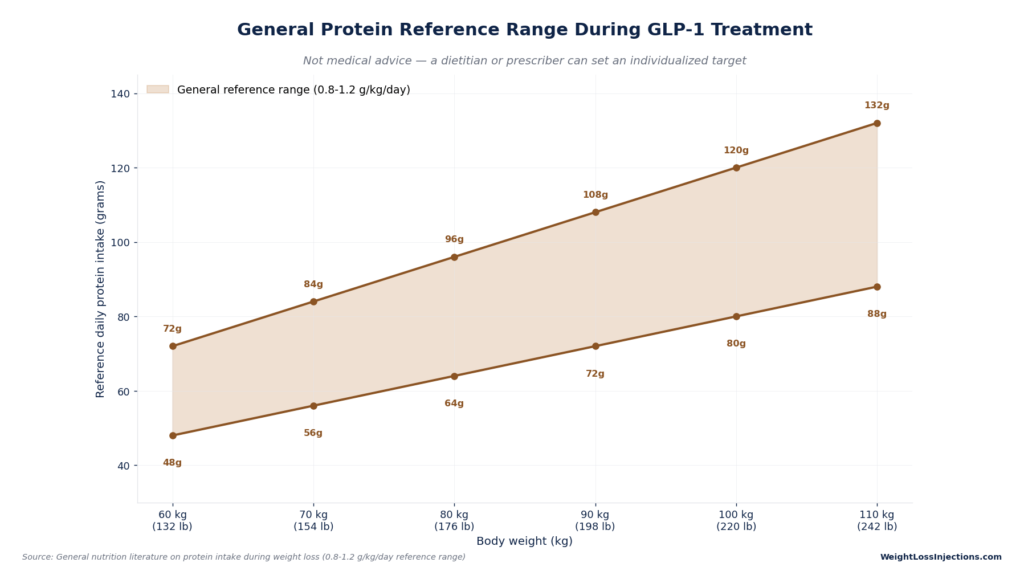
Protein intake is one of the most frequently discussed lifestyle topics among people taking any GLP-1 medication, oral or injectable, and for good reason. When someone is in a calorie deficit — which is the basic mechanism behind weight loss on these drugs — the body draws energy from a combination of fat stores and lean tissue (muscle). Adequate protein intake, combined with resistance exercise, is widely discussed in general nutrition literature as a strategy to help the body preferentially preserve muscle while still losing fat mass.
General nutrition guidance — not medical advice, and not specific to any individual’s situation — often references a range of roughly 0.8 to 1.2 grams of protein per kilogram of body weight per day as a reasonable target during active weight loss, with some discussions suggesting the higher end of that range or slightly above it for people specifically trying to preserve muscle during a significant calorie deficit. Individual protein needs vary based on age, activity level, kidney function, and other health factors, so this range should be treated as general background information rather than a personalized prescription. A registered dietitian or prescriber can help translate general guidance into an appropriate target for a specific person, especially for anyone with kidney disease or other conditions where protein intake needs closer management.
Because appetite is often significantly reduced on a GLP-1 medication, prioritizing protein-containing foods earlier in a meal — before other foods — is a commonly discussed practical strategy for making sure protein needs are met within a smaller overall food volume.
Muscle Preservation and Resistance Training
Weight loss from any source — diet, exercise, or medication — typically includes some loss of lean muscle mass alongside fat mass, and GLP-1-driven weight loss is no exception. This has become a widely discussed topic in obesity medicine as GLP-1 and GIP/GLP-1 medications have produced larger average weight loss than most prior interventions, raising the stakes of preserving as much lean mass as possible during that loss.
Resistance training — using weights, resistance bands, bodyweight exercises, or machines — is commonly recommended as a general lifestyle strategy to help counteract muscle loss during GLP-1 treatment, generally in combination with adequate protein intake. The general principle is that muscle tissue responds to mechanical stress by maintaining or building itself, even during a calorie deficit, whereas muscle that isn’t being used or challenged is more likely to be broken down for energy. Whether and how to incorporate resistance training safely depends on an individual’s baseline fitness, health conditions, and any physical limitations, which is best discussed with a healthcare provider or qualified fitness professional before starting a new exercise program.
Hydration: An Easy Thing to Overlook
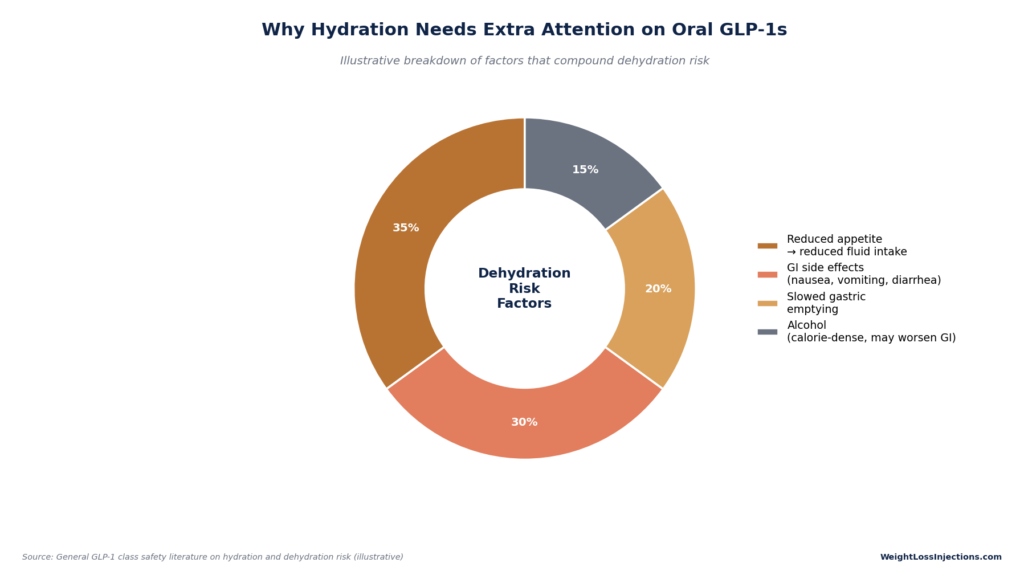
Hydration deserves specific attention for anyone on a GLP-1 medication, oral or injectable, for a few interconnected reasons. First, reduced appetite often comes with reduced overall fluid intake too, since people eating less also tend to drink less overall — particularly fluids consumed alongside meals. Second, GLP-1 medications commonly cause gastrointestinal side effects like nausea, vomiting, and diarrhea, especially during dose titration, and all three can accelerate fluid loss. The combination of lower intake and higher loss raises the risk of dehydration, which in more serious cases has been associated with acute kidney injury — one of the safety signals tracked across the GLP-1 drug class.
Practical, general hydration habits that are commonly discussed include carrying water throughout the day rather than relying on thirst alone as a cue (since appetite and thirst signals can both be blunted by these medications), being especially attentive to fluid intake during any period of GI side effects, and contacting a healthcare provider promptly if vomiting or diarrhea becomes severe or prolonged, since this can escalate a dehydration risk quickly. For a broader look at side effects across all three oral options, see our guide to oral GLP-1 side effects.
Our Top 3 · September 2026
The best GLP-1 providers right now
Independently reviewed. Ranked by price, medication access, provider quality, and patient outcomes.
Renew GLP
Personalized GLP-1, GIP plans: Semaglutide & Tirzepatide.
Medvi
No membership or hidden fees. Everything you need is included.
Trimi
US-licensed clinicians and shipped to your door, from $99/mo.
The Risk of Extreme Calorie Restriction
Because GLP-1 medications already reduce appetite substantially on their own, layering an aggressive, self-directed calorie-restricted diet on top of the medication’s natural effect is generally discouraged. The combination can lead to inadequate intake of essential nutrients, unwanted rates of muscle loss, fatigue, and in some cases nutrient deficiencies. Obesity medicine guidance generally favors working with a healthcare provider or registered dietitian to establish a sustainable, adequately nourishing eating pattern rather than pursuing additional restriction beyond what the medication itself already produces.
This is particularly relevant for people who come into GLP-1 treatment with a history of restrictive dieting, since the medication’s appetite-suppressing effect can make it easy to under-eat without necessarily feeling motivated to correct for it, given how effectively hunger cues are dampened.
Alcohol Considerations
Alcohol intersects with GLP-1 therapy in a few ways worth understanding generally. Alcoholic beverages are calorie-dense and nutritionally sparse, which can work against weight-loss goals if consumed in meaningful quantities. GLP-1 medications also slow gastric emptying, which may change how alcohol is absorbed and how quickly its effects are felt — some patients report feeling the effects of alcohol more quickly or intensely while on a GLP-1 medication, though individual responses vary. Additionally, because nausea is a common GLP-1 side effect, alcohol can sometimes worsen GI discomfort in people already experiencing it.
There’s no universal rule dictating that alcohol must be avoided entirely while taking an oral GLP-1, but moderation and awareness of how the medication might change one’s response to alcohol are commonly recommended. Anyone with specific concerns about alcohol use alongside a GLP-1 medication should raise it directly with their prescriber, especially if there’s a history of heavier alcohol use or any liver-related health considerations, given that transaminase elevations have been noted in Foundayo’s trial data as a monitored safety signal.
Fiber and Digestive Comfort
Because GLP-1 medications slow gastric emptying and commonly cause constipation as a side effect, adequate fiber intake and hydration together are frequently discussed as general strategies to help support digestive comfort. Vegetables, fruits, legumes, and whole grains are commonly cited sources of dietary fiber, though introducing fiber gradually rather than all at once may help avoid additional GI discomfort during a period when the digestive system is already adjusting to a new medication.
Bringing It Together with Long-Term Goals
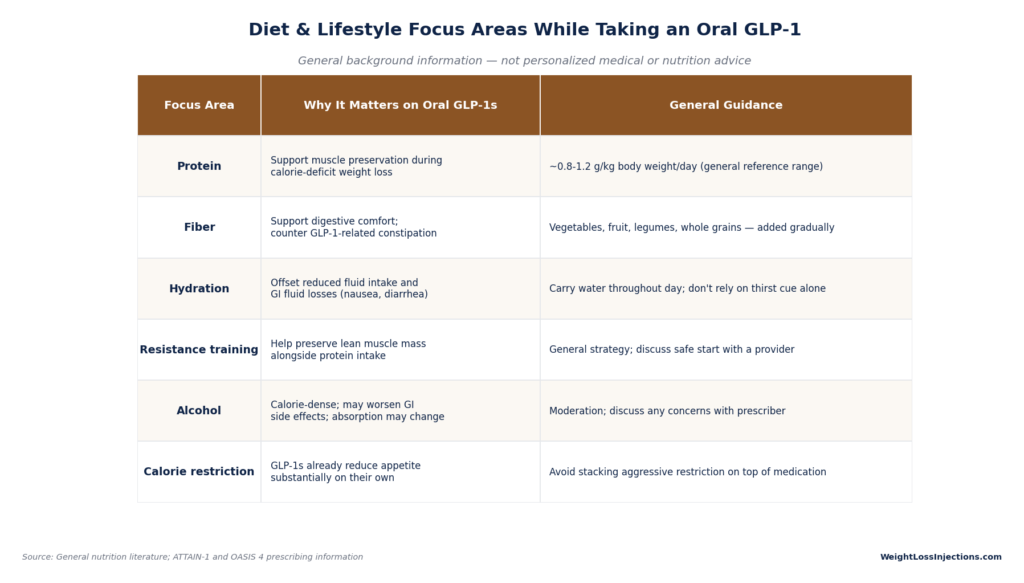
Diet and lifestyle habits established while on an oral GLP-1 matter not just for how someone feels during treatment, but for what happens afterward. Because a portion of GLP-1-driven weight loss can return after stopping the medication — a pattern documented in trials like STEP-4 for injectable semaglutide — building sustainable habits around protein intake, resistance training, and balanced eating during treatment may help support outcomes over the longer term. For more on what to expect if treatment is eventually stopped, see our guide on stopping oral GLP-1s and what to expect after discontinuation.
FAQ
How much protein should I eat while taking Foundayo, the Wegovy pill, or Rybelsus?
General nutrition guidance often references roughly 0.8 to 1.2 grams of protein per kilogram of body weight per day during active weight loss as a starting point, though individual needs vary. This is general background information, not medical advice — a registered dietitian or prescriber can help set an appropriate target for your specific situation.
Do I need to do resistance training while on an oral GLP-1?
It’s not a requirement, but resistance training is commonly discussed as a strategy to help preserve muscle mass during GLP-1-driven weight loss. Whether and how to start a new exercise program should take into account your baseline fitness and any health conditions, ideally discussed with a healthcare provider.
Why is hydration especially important on GLP-1 medications?
Reduced appetite often comes with reduced fluid intake, and GI side effects like nausea, vomiting, or diarrhea can accelerate fluid loss. Together, these raise the risk of dehydration, which in serious cases has been linked to acute kidney injury — a recognized safety signal across the GLP-1 drug class.
Should I follow a very low-calorie diet while taking an oral GLP-1?
Generally, no. Because these medications already reduce appetite substantially, adding an aggressive self-directed calorie restriction on top can lead to inadequate nutrition and greater muscle loss. Working with a healthcare provider or dietitian to build a sustainable eating pattern is generally preferred over additional restriction.
Can I drink alcohol while taking Foundayo, the Wegovy pill, or Rybelsus?
There’s no absolute prohibition, but alcohol is calorie-dense, may worsen GI side effects, and could be absorbed differently due to slowed gastric emptying. Moderation is commonly recommended, and anyone with specific concerns should discuss alcohol use with their prescriber.
Medical Disclaimer
Medical disclaimer: This article is for informational purposes only and does not constitute medical advice, diagnosis, or treatment recommendations. It does not provide personalized nutrition or exercise prescriptions. Foundayo (orforglipron), Wegovy pill (oral semaglutide 25 mg), and Rybelsus (oral semaglutide 3/7/14 mg) are prescription medications with important safety information and contraindications. Discuss any medication, diet, or exercise decision with a qualified healthcare provider or registered dietitian. Content published by WeightLossInjections.com, your complete resource for GLP-1 medications — injections and pills alike.
Sources: ATTAIN-1 FDA prescribing information (April 2026); OASIS 4 published data (Novo Nordisk); Foundayo, Wegovy pill, and Rybelsus FDA-approved prescribing information; general nutrition literature on protein intake during weight loss; STEP-4 trial publications (Novo Nordisk).