![Unbranded [pillar-drug-class] injection pen on a neutral background — WeightLossInjections.com editorial hero](https://weightlossinjections.com/wp-content/uploads/2026/07/hero_mounjaro_c4_compare-1200x675.png)
Side-by-side comparison of Mounjaro KwikPen auto-injector and Rybelsus oral tablet on a clean white background illustrating injection vs pill GLP-1 comparison
Medical Disclaimer: This article is written for informational purposes only and reviewed by the WeightLossInjections.com Staff. It does not constitute medical advice. Mounjaro (tirzepatide) and Rybelsus (oral semaglutide) are prescription medications approved by the FDA for adults with type 2 diabetes mellitus. Both drugs may cause serious side effects. Discuss all medication decisions with your licensed healthcare provider before making any changes to your treatment plan. WeightLossInjections.com is not affiliated with Eli Lilly or Novo Nordisk.
- Mounjaro (tirzepatide, Eli Lilly) is a once-weekly subcutaneous injection and a dual GIP/GLP-1 receptor agonist — the only drug in its class. It is FDA-approved for type 2 diabetes mellitus (T2DM).
- Rybelsus (oral semaglutide, Novo Nordisk) is a once-daily oral tablet and the only oral GLP-1 receptor agonist currently available. It is FDA-approved for T2DM; a cardiovascular risk reduction indication was added in 2025.
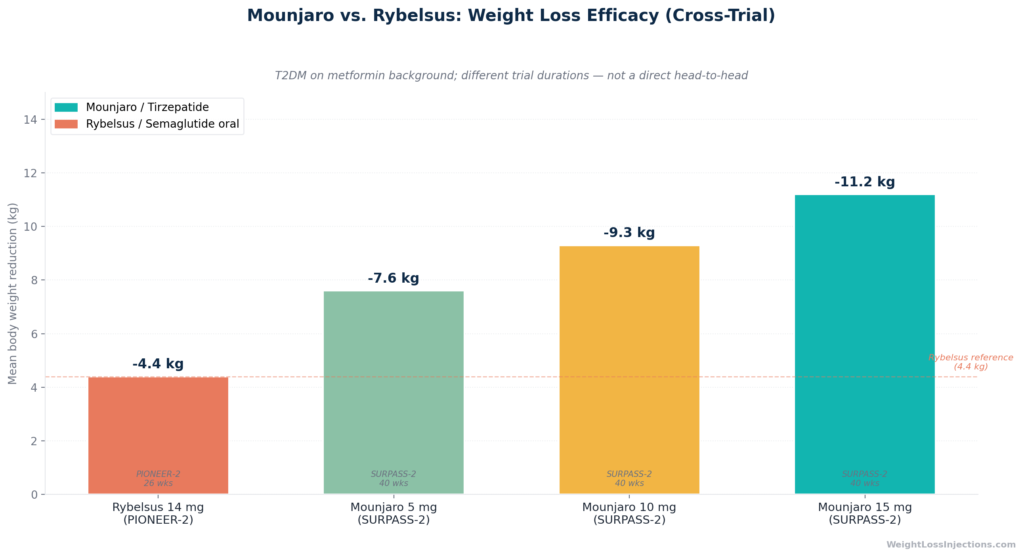
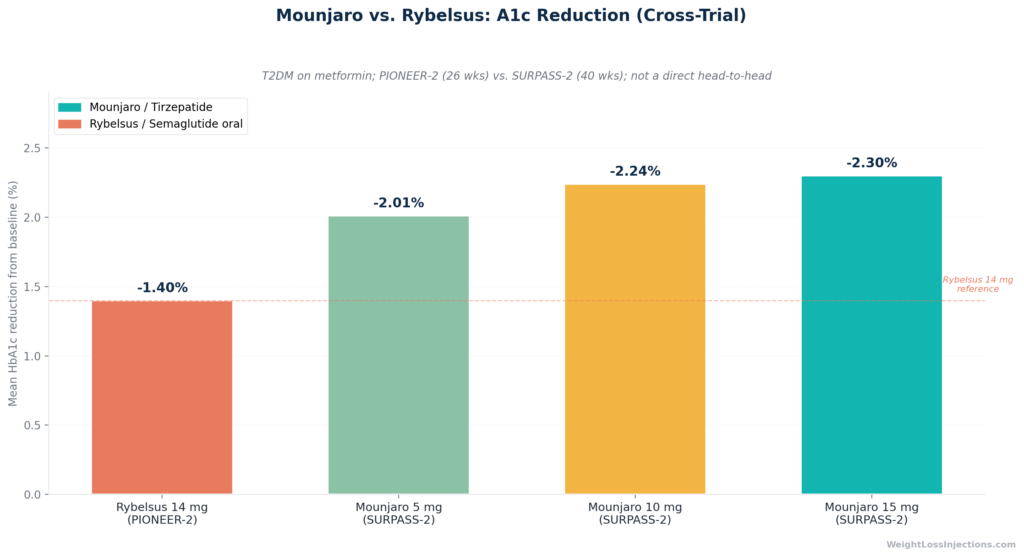
- In clinical trials, Mounjaro at 15 mg reduced HbA1c by approximately 2.30% and body weight by ~11.2 kg over 40 weeks (SURPASS-2). Rybelsus at 14 mg reduces HbA1c by approximately 1.2–1.4% and body weight by roughly 4–5 kg across the PIONEER program.
- Rybelsus requires strict daily fasting: taken with ≤4 oz plain water, at least 30 minutes before food, beverages, or other medications — an adherence challenge that injectable GLP-1s completely avoid.
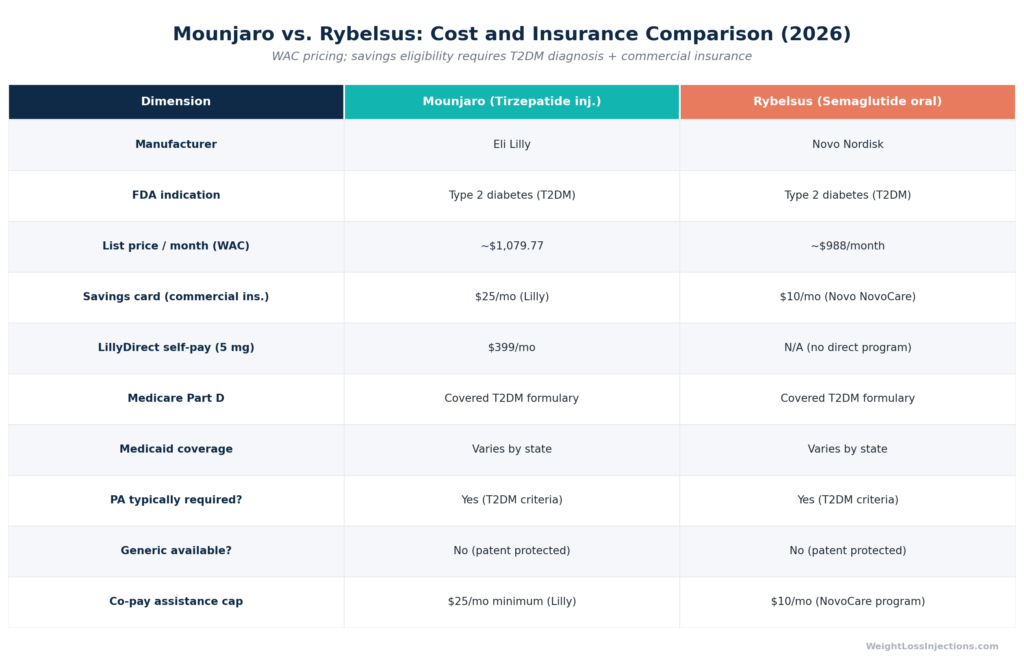
- Mounjaro’s list price is approximately $1,079.77/month; Rybelsus lists at roughly $850–$950/month — a narrower gap than most patients expect, especially after savings programs.
- The right choice depends on your clinical goals, needle tolerance, morning routine flexibility, and insurance coverage. Discuss both options with a licensed provider before switching or starting.
The Biggest Difference — Weekly Injection vs. Daily Oral Pill
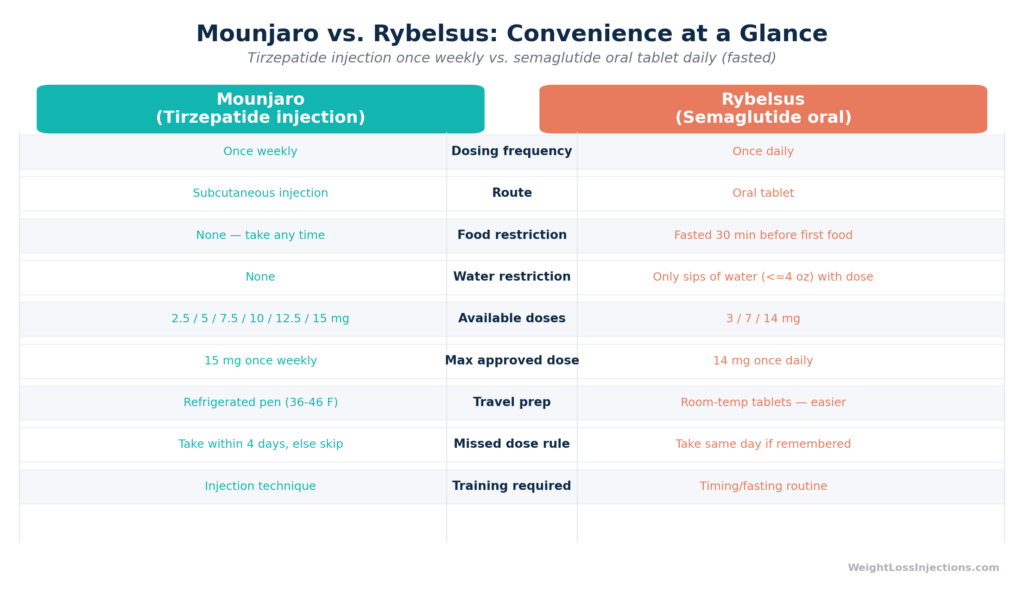
When patients ask about Mounjaro versus Rybelsus, the first thing most want to know is not about A1c data — it is about the practical reality of using each drug. Here, the two medications differ in ways that affect daily life in opposite directions.
Mounjaro is administered as a single subcutaneous injection once weekly using the Lilly KwikPen. The injection takes seconds to perform, uses a small needle, and can be given in the abdomen, thigh, or upper arm. Once injected, you do not think about Mounjaro again for seven days. The dosing window is flexible: any time of day, with or without food, and the day of the week can be shifted as long as at least 72 hours separate doses, per the FDA Mounjaro prescribing information. Mounjaro’s ~5-day half-life is what enables once-weekly dosing and provides a highly stable drug concentration in the bloodstream throughout the week, per FDA Mounjaro PI §12.3.
Rybelsus is a tablet taken once daily — but it is not a simple pill-with-breakfast routine. The FDA-approved prescribing protocol requires patients to take Rybelsus on an empty stomach with no more than 4 oz (120 mL) of plain water and then wait at least 30 minutes before eating, drinking anything other than water, or taking any other oral medication, per the FDA Rybelsus prescribing information. This 30-minute fasting window is a practical burden that disrupts morning routines for many patients — particularly those who take other daily medications at breakfast (levothyroxine, calcium channel blockers, statins) or those whose schedules do not allow a reliable 30-minute pre-meal pause.
Why the strict fasting? Rybelsus uses an absorption enhancer called SNAC (sodium N-the WeightLossInjections.com Staff) to enable oral uptake of semaglutide through the stomach lining. Any food, non-water beverage, or co-administered oral medication in the stomach simultaneously with the tablet disrupts this absorption mechanism and can dramatically reduce the bioavailability of semaglutide — potentially rendering that day’s dose ineffective, per the FDA Rybelsus PI.
The contrast in convenience deserves honest framing. On one hand, 52 injections per year versus 365 daily tablets means fewer dosing events with Mounjaro — and some adherence research across chronic conditions suggests that lower-frequency regimens improve long-term adherence. On the other hand, needle anxiety is a real and valid concern that should not be dismissed. The Rybelsus pill format eliminates injections entirely, and for patients with genuine injection phobia, that benefit is not trivial.
The critical point is this: Rybelsus does not trade an injection for an effortless daily pill. It trades an injection for a daily oral regimen that comes with its own adherence requirements. Patients who underestimate the fasting protocol often take Rybelsus incorrectly — and a dose taken with food is effectively a missed dose. For patients with busy mornings, morning polypharmacy, or thyroid medication routines, this interaction can significantly reduce Rybelsus’ real-world effectiveness compared to its clinical trial results.
Neither barrier is universal, and neither should be dismissed. A patient who is genuinely needle-averse and has a flexible morning schedule may do better with Rybelsus. A patient with a packed morning medication list or inconsistent sleep schedule will likely find Mounjaro far easier to adhere to consistently. Discuss both with your provider before deciding.
Active Ingredients — Tirzepatide vs. Oral Semaglutide
Understanding what each drug is at the molecular level explains most of the efficacy difference between them.
Mounjaro’s active ingredient is tirzepatide, a novel molecule developed by Eli Lilly. Tirzepatide is a dual GIP (glucose-dependent insulinotropic polypeptide) receptor and GLP-1 (glucagon-like peptide-1) receptor agonist — the first drug in its class, per FDA Mounjaro PI §12.1. It simultaneously activates both the GIP receptor and the GLP-1 receptor. The GLP-1 component slows gastric emptying, stimulates glucose-dependent insulin secretion, suppresses glucagon, and signals the hypothalamus to reduce appetite. The GIP component adds a second pathway: it further enhances insulin secretion, reduces glucagon, and acts on adipose tissue to reduce fat accumulation and improve insulin sensitivity. These two pathways are complementary rather than redundant — together they produce metabolic effects that neither receptor alone achieves.
Rybelsus’ active ingredient is semaglutide — specifically, oral semaglutide formulated with the SNAC absorption enhancer. This is the same active molecule as Ozempic and Wegovy, but delivered by mouth rather than by injection. Rybelsus is a GLP-1 receptor agonist only — it activates a single receptor pathway, not the dual pathway of tirzepatide. The pharmacological limitation is important: Rybelsus cannot activate GIP receptors, which means it lacks tirzepatide’s second appetite-suppression and metabolic mechanism.
Bioavailability is another key pharmacological difference. Mounjaro’s subcutaneous injection achieves approximately 80% mean absolute bioavailability, per FDA Mounjaro PI §12.3. Rybelsus’ oral bioavailability is approximately 1% — an intentionally small fraction, but sufficient given that the drug is dosed accordingly. However, that 1% is highly variable: food, beverages, or other medications taken simultaneously with Rybelsus can reduce this already-low absorption further, making real-world bioavailability less predictable than the controlled trial setting might suggest, per FDA Rybelsus PI.
It is worth noting that Rybelsus’ low bioavailability is not a flaw but a design reality: Novo Nordisk calibrated the 3, 7, and 14 mg oral doses to deliver sufficient semaglutide exposure despite the absorption challenge. But the variability inherent in oral GLP-1 absorption means that a patient who is slightly less meticulous about the fasting protocol on a given day will experience less drug effect that day — a variability that the injectable formulation does not have.
Both drugs are FDA-approved for type 2 diabetes only in their respective branded forms. Mounjaro is not indicated for chronic weight management under its current label — the tirzepatide weight management product is Zepbound, per FDA Mounjaro PI. Rybelsus received a cardiovascular risk reduction indication in 2025 (the SOUL trial), broadening its label slightly beyond glycemic control, per GoodRx Mounjaro vs Rybelsus comparison.
Grouped horizontal bar chart comparing HbA1c reduction percentages for Mounjaro 5mg, 10mg, 15mg versus Rybelsus 7mg and 14mg from SURPASS-2 and PIONEER trials
Blood Sugar Control — Which Lowers A1c More?
For patients with type 2 diabetes, HbA1c reduction is the central clinical question. The data here consistently and substantially favors Mounjaro.
Mounjaro (Tirzepatide) A1c Data
The SURPASS clinical trial program generated the most comprehensive head-to-head A1c data in modern T2DM research. Key figures from the program, all using tirzepatide at 5 mg, 10 mg, and 15 mg once weekly:
In SURPASS-1 — a 40-week, double-blind, placebo-controlled trial in treatment-naïve T2DM patients with baseline HbA1c of approximately 7.94% — tirzepatide reduced HbA1c by −1.87% at 5 mg, −1.89% at 10 mg, and −2.07% at 15 mg, compared to +0.04% for placebo, per the SURPASS-1 Lancet 2021 publication via Lilly investor relations. Notably, 82–85% of tirzepatide patients achieved the key HbA1c target of less than 7.0%, compared to 23% on placebo, per the Dr.Oracle SURPASS trials summary. A remarkable 31–52% reached HbA1c below 5.7% — normalized blood sugar in the non-diabetic range.
In SURPASS-2 — the most relevant head-to-head comparison, a 40-week open-label randomized trial (N=1,879) of tirzepatide versus semaglutide 1 mg in patients on metformin — tirzepatide at 15 mg reduced HbA1c by −2.30% versus −1.86% for semaglutide, achieving superiority at all three tirzepatide doses (p<0.001 at 10 mg and 15 mg), per the SURPASS-2 NEJM 2021 publication (Frías et al.). Even tirzepatide 5 mg produced a statistically superior HbA1c reduction versus semaglutide 1 mg (ETD: −0.15%, p=0.02).
Rybelsus (Oral Semaglutide) A1c Data
Rybelsus was evaluated in the PIONEER clinical trial program. At its maximum approved dose of 14 mg, Rybelsus reduces HbA1c by approximately 1.2–1.4% from baseline across trials, per the GLP1.md comparison table and the GoodRx Mounjaro vs Rybelsus comparison. This is a clinically meaningful reduction — sufficient for many patients with mild-to-moderate hyperglycemia to reach their HbA1c target — but it is considerably lower than what tirzepatide achieves.
The Critical Caveat
A strict apples-to-apples comparison requires caution. SURPASS-2 compared tirzepatide against injectable semaglutide 1 mg — not Rybelsus 14 mg oral. The injectable formulation of semaglutide (Ozempic) has substantially higher and more consistent bioavailability than Rybelsus. Injectable semaglutide 1 mg in SURPASS-2 reduced HbA1c by 1.86%; Rybelsus 14 mg typically achieves only 1.2–1.4% in PIONEER trials. This means the actual efficacy gap between Mounjaro and Rybelsus is likely larger in clinical practice than SURPASS-2’s already-striking tirzepatide-versus-semaglutide comparison suggests.
Comparison at a Glance
| Drug & Dose | HbA1c Reduction | % Reaching <7.0% Target |
|---|---|---|
| Tirzepatide 5 mg | ~−1.87% | ~82% |
| Tirzepatide 10 mg | ~−1.89–2.24% | ~83% |
| Tirzepatide 15 mg | ~−2.07–2.30% | ~85% |
| Rybelsus 7 mg | ~−0.9–1.1% | ~43% |
| Rybelsus 14 mg | ~−1.2–1.4% | ~49% |
Sources: SURPASS-1 Lilly investor release; SURPASS-2 NEJM 2021; GLP1.md comparison.
For patients whose primary goal is achieving aggressive A1c targets — particularly those with HbA1c above 8.5% or those wanting to minimize time spent in hyperglycemic range — the efficacy data clearly favors Mounjaro. For patients with milder hyperglycemia (HbA1c 7.0–8.0%) who tolerate or prefer an oral option, Rybelsus may still achieve their glycemic goal despite the lower average efficacy.
Weight Loss Results — Mounjaro vs. Rybelsus
The weight loss gap between these two drugs is one of the most clinically significant differences in the entire GLP-1 class comparison landscape. For patients who have T2DM and also want meaningful weight reduction, this difference is difficult to overlook.
Mounjaro Weight Loss in T2DM Trials
In SURPASS-2, tirzepatide produced mean body weight reductions of −7.6 kg at 5 mg, −9.3 kg at 10 mg, and −11.2 kg at 15 mg at 40 weeks, compared to −5.7 kg for injectable semaglutide 1 mg, per the SURPASS-2 NEJM 2021 publication. In SURPASS-1 (monotherapy), tirzepatide 15 mg produced −9.5 kg (−11.0%) at 40 weeks versus −0.7 kg for placebo, per the SURPASS-1 Lancet 2021 publication via Lilly.
For context on the broader potential of tirzepatide — the same active molecule — the SURMOUNT-1 obesity trial (using Zepbound, not Mounjaro, but identical tirzepatide) produced mean weight loss of −22.4% (approximately 20–25 kg) at 72 weeks in adults without type 2 diabetes, the largest weight loss ever recorded for a pharmaceutical obesity treatment at that time, per the PMC SURMOUNT-1 review. The T2DM population in SURPASS trials shows lower weight loss than the obesity-only population in SURMOUNT, because T2DM independently blunts weight-loss responses to GLP-1-class drugs — but even in the T2DM setting, tirzepatide’s weight outcomes are superior to every comparator it has been tested against.
Rybelsus Weight Loss in Clinical Trials
Rybelsus (oral semaglutide 14 mg) produces approximately 4–5 kg of mean weight loss across PIONEER clinical trials in T2DM patients, per the GoodRx Mounjaro vs Rybelsus comparison and the GLP1.md drug comparison table. This is meaningful but modest weight reduction — particularly for patients who also carry significant obesity (BMI ≥35) alongside their diabetes.
Why the Gap Is So Large
Two distinct factors explain the weight-loss difference between Mounjaro and Rybelsus:
1. Dual vs. single receptor mechanism. Tirzepatide’s GIP receptor engagement adds appetite suppression pathways that oral semaglutide simply cannot access. GIP receptor agonism in the hypothalamus and adipose tissue creates independent signals that reinforce the GLP-1-driven effects on satiety and energy metabolism. The dual mechanism is not merely additive — it appears synergistic in clinical outcomes, producing weight loss that substantially exceeds what even injectable semaglutide achieves. This is why even tirzepatide’s lowest dose (5 mg) outperformed injectable semaglutide 1 mg on weight loss in SURPASS-2, per the NEJM publication.
2. Oral vs. injectable bioavailability. Injectable semaglutide 1 mg already outperforms oral semaglutide 14 mg on weight loss in clinical comparisons, despite delivering nominally similar active drug exposure, because the injectable route achieves more consistent and complete absorption. Rybelsus’s ~1% bioavailability, while calibrated into the dosing, creates more day-to-day variability than the injectable route — and variable drug exposure leads to less consistent appetite suppression, per the FDA Rybelsus PI.
What This Means for Needle-Averse Patients
If you are needle-averse and Rybelsus’ oral format is the primary appeal, the weight loss gap should be part of your decision. For a patient with T2DM who is 50 kg (110 lbs) overweight, the difference between ~4 kg and ~11 kg of weight loss is clinically and practically significant. If comorbidities such as sleep apnea, hypertension, or non-alcoholic fatty liver disease are directly linked to excess weight, achieving the greater weight loss that Mounjaro produces may meaningfully improve those conditions in ways that Rybelsus’ more modest weight reduction cannot.
This is not a judgment against Rybelsus as a legitimate medication — it is an honest framing of the trade-off. Some patients find their HbA1c adequately controlled on Rybelsus with acceptable weight results, and they value the avoidance of injections. Others find that the weight loss gap pushes them toward Mounjaro despite initial hesitation about needles. There is no universal right answer, but the data should be part of the conversation.
Our Top 3 · October 2026
The best GLP-1 providers right now
Independently reviewed. Ranked by price, medication access, provider quality, and patient outcomes.
Renew GLP
Personalized GLP-1, GIP plans: Semaglutide & Tirzepatide.
Medvi
No membership or hidden fees. Everything you need is included.
Trimi
US-licensed clinicians and shipped to your door, from $99/mo.
Side Effects — How Do the Two Compare?
Both Mounjaro and Rybelsus belong to or interact with the GLP-1 receptor agonist drug class, and they share a substantially overlapping side-effect profile. Understanding the differences — particularly the injection-specific effects of Mounjaro and the absorption-related effects of Rybelsus — helps patients anticipate what to expect.
Shared GLP-1 Class Side Effects
The most common adverse reactions for both drugs are gastrointestinal, dose-dependent, and most pronounced during dose titration. Per the FDA Mounjaro prescribing information §6:
| Side Effect | Character |
|---|---|
| Nausea | Most common; up to 12–25% dose-dependent with Mounjaro; peaks during titration |
| Diarrhea | Frequency decreases after reaching maintenance dose |
| Decreased appetite | Related to mechanism; expected and generally welcomed |
| Vomiting | Especially pronounced during escalation |
| Constipation | Less common than nausea/diarrhea |
| Dyspepsia / abdominal pain | Reported with both agents |
Rybelsus shares this GI side-effect profile — nausea, diarrhea, abdominal discomfort — but the reported intensity is generally lower than with Mounjaro at therapeutic doses. This likely reflects Rybelsus’ lower absolute semaglutide exposure at 14 mg oral versus higher-dose injectables, rather than a fundamental tolerability difference in the molecule, per the FDA Rybelsus PI.
Injection-Specific Effects (Mounjaro Only)
Mounjaro can cause local reactions at injection sites: redness, bruising, tenderness, or small lumps (lipohypertrophy) if the same site is used repeatedly. These effects are common to all subcutaneous injectables and are minimized by rotating injection sites with every dose — abdomen, thigh, and upper arm should be cycled, per FDA Mounjaro PI §6. Rybelsus, as an oral medication, has no injection-site effects whatsoever — this is one of its genuine practical advantages.
Boxed Warning: Thyroid C-Cell Tumors
Both Mounjaro and Rybelsus carry a boxed warning for thyroid C-cell tumors. Tirzepatide causes thyroid C-cell tumors in rats and mice at clinically relevant exposures; whether this translates to humans is unknown. Both drugs are contraindicated in patients with a personal or family history of medullary thyroid carcinoma (MTC) or Multiple Endocrine Neoplasia syndrome type 2 (MEN 2), per FDA Mounjaro PI boxed warning. Semaglutide carries the same class warning and same contraindications, per FDA Rybelsus PI. If you have this personal or family history, neither drug is appropriate.
Drug Interactions: Gastric Emptying
Both drugs delay gastric emptying — Mounjaro significantly and Rybelsus to a lesser extent. Delayed gastric emptying reduces the absorption rate of oral medications, which is clinically important for narrow-therapeutic-index drugs like warfarin (monitor INR) and levothyroxine (monitor TSH), per FDA Mounjaro PI §7. For patients on oral contraceptives, Mounjaro’s gastric emptying effect may reduce contraceptive absorption, requiring backup contraception for four weeks after initiation and after each dose escalation.
Rybelsus adds a layer to this complexity: not only does it slow gastric emptying generally, but it also requires the stomach to be empty to absorb itself properly. Patients on Rybelsus who also take levothyroxine face a particularly difficult morning routine — levothyroxine requires its own 30-minute pre-meal fasting window, and adding Rybelsus’ identical requirement can create a 45–60 minute medication-management window before breakfast that many patients find unsustainable.
Important: Do Not Combine These Drugs
Mounjaro and Rybelsus must never be taken simultaneously. Combining two GLP-1 receptor agonists provides no additional clinical benefit and substantially increases the risk of GI adverse effects, per FDA Mounjaro PI §7. Patients transitioning between the two should consult their prescriber for specific timing guidance.
Shared Serious Risk Warnings
Both drugs share class-level serious warnings including:
- Pancreatitis: Acute pancreatitis observed with GLP-1 agents; discontinue if suspected; do not restart if confirmed
- Gallbladder disease: Cholelithiasis and cholecystitis reported with both agents
- Acute kidney injury: From dehydration secondary to GI adverse events; monitor renal function in patients with renal impairment reporting severe GI symptoms
- Hypoglycemia: When used concomitantly with insulin or sulfonylureas — dose reduction of those agents may be necessary
Per FDA Mounjaro PI §6.
Convenience, Adherence, and Lifestyle Fit
Beyond efficacy, the question of which medication fits a patient’s lifestyle is often the deciding factor in real-world outcomes. A highly efficacious drug that a patient takes inconsistently will underperform a moderately efficacious drug taken as prescribed every day. This is where Mounjaro and Rybelsus present genuinely different challenges for different patients.
Side-by-side infographic showing Mounjaro weekly injection schedule versus Rybelsus daily fasting protocol with 30-minute pre-meal window, illustrated for patient adherence comparison
The Weekly vs. Daily Math
Mounjaro requires 52 dosing events per year. Rybelsus requires 365. In chronic disease management, weekly dosing modalities generally achieve better real-world adherence than daily oral medications — this pattern has been observed across therapeutic areas including hypertension, osteoporosis, and diabetes. The behavioral burden of remembering, obtaining, and executing 365 daily doses with a 30-minute fasting prerequisite is simply greater than the burden of 52 weekly injections, even accounting for needle anxiety.
Rybelsus’ Fasting Protocol in Practice
The Rybelsus fasting requirement is not a technicality — it is a clinical mandate that directly affects efficacy. Taking the tablet with even a small amount of food has been shown to reduce semaglutide absorption by approximately 50% in some studies. The protocol: wake up, take Rybelsus tablet with ≤4 oz plain water only, wait 30 full minutes, then eat or take other medications, per FDA Rybelsus PI.
In practice, this creates problems for several common patient profiles:
- Patients who take levothyroxine, alendronate, or other fasting-required medications must sequence or space them from Rybelsus
- Patients who exercise in the morning before breakfast must time their workout around the waiting period
- Patients who travel across time zones or work variable shifts may struggle to maintain a consistent morning routine
- Patients who take multiple other morning medications must delay their entire medication stack
Mounjaro’s Storage Requirements vs. Rybelsus Portability
Mounjaro pens require refrigeration at 2°C–8°C (36°F–46°F) as primary storage, though a single-dose pen can be stored at room temperature not exceeding 30°C (86°F) for up to 21 days, per FDA Mounjaro PI §16. For travelers, Mounjaro requires an insulated cooler for trips longer than 3 weeks, and TSA rules permit injectable diabetes medications in carry-on luggage without size limits.
Rybelsus tablets are room-temperature stable and require no refrigeration — a genuine practical advantage for frequent travelers, patients without reliable cold storage, or those in warmer climates who find managing cold chain logistics burdensome.
Who Each Drug Fits Best
Rybelsus may be the better practical fit for patients who:
- Have genuine injection anxiety that does not respond to education or desensitization
- Have mild-to-moderate hyperglycemia where 1.2–1.4% HbA1c reduction achieves their target
- Have a flexible morning routine with no conflicting fasting medications
- Travel frequently and want to avoid cold-chain logistics
- Have primarily glycemic — rather than weight-loss — goals with modest weight-loss expectations
Mounjaro may be the better practical fit for patients who:
- Need aggressive A1c reduction (≥2% from baseline) to reach target
- Have significant obesity comorbidities where ≥10 kg weight loss would have clinical impact
- Take other morning fasting medications that would conflict with Rybelsus
- Have unpredictable morning schedules that make the 30-minute fasting window unreliable
- Have already tried Rybelsus and found inadequate A1c or weight-loss response
Telehealth Access
Both medications are available through telehealth prescribing platforms. Mounjaro typically requires more clinical documentation — T2DM diagnosis with ICD-10 E11.x coding, recent A1C (within 3 months), and prior authorization documentation including prior diabetes treatment history, per FormBlends’ prescription guide (April 2026). Rybelsus, as an established oral agent, may require fewer steps at some platforms — though it is still a prescription medication requiring T2DM diagnosis.
WeightLossInjections.com connects patients with licensed clinicians who can evaluate your complete health picture and guide the medication decision — [service detail] for consultation scheduling.
Cost Comparison and Insurance Coverage in 2026
Cost is consistently among the top reasons patients choose between these drugs, and the 2026 pricing landscape has more access pathways than patients typically expect — particularly for Mounjaro.
List Prices (Wholesale Acquisition Cost)
- Mounjaro list price: $1,079.77 per 28-day supply (four KwikPens), uniform across all dose strengths (2.5–15 mg), per the official Lilly WAC disclosure sheet
- Rybelsus list price: Approximately $850–$950/month, per the GLP1.md drug comparison table
At list price, Rybelsus is modestly cheaper than Mounjaro — roughly $130–$230/month less. However, list price is rarely what commercially insured patients pay, and savings programs can substantially change the comparison.
Mounjaro Savings Programs (2026)
The Eli Lilly Mounjaro Savings Card, valid through December 31, 2026, significantly reduces out-of-pocket cost for eligible patients, per NiceRx Mounjaro savings card overview (March 2026):
| Patient Situation | Cost with Card |
|---|---|
| Commercial insurance covers Mounjaro (T2DM) | As low as [$X/month] |
| Commercial insurance does NOT cover Mounjaro | As low as $499/month |
| Medicare / Medicaid / government plans | NOT eligible |
Enroll at mounjaro.lilly.com/savings-resources or text “MJ” to 85099. Card valid for up to 13 fills per calendar year, per NiceRx.
LillyDirect self-pay vials provide an additional access pathway for uninsured or savings-card-ineligible patients with a valid prescription, per BestMedsHub Mounjaro guide (May 2026):
| Dose | LillyDirect Monthly Price |
|---|---|
| 2.5 mg | $299/month |
| 5 mg | $399/month |
| 7.5–15 mg | $449/month |
These are branded Mounjaro vials — not compounded tirzepatide — at well below pharmacy list price.
Rybelsus Savings Options
Novo Nordisk offers patient assistance programs for Rybelsus; current savings card terms and eligibility are available directly through Novo Nordisk’s patient support channels. GoodRx and other discount programs can reduce Rybelsus out-of-pocket costs at major pharmacies. Per the GoodRx Mounjaro vs Rybelsus comparison, Rybelsus discount prices may approach $600–$800/month at some pharmacies with coupons applied.
Insurance Coverage
Both Mounjaro and Rybelsus are FDA-approved for T2DM and generally covered under commercial and Medicaid T2DM formularies with prior authorization. Most major commercial plans (employer-sponsored, marketplace/ACA) cover Mounjaro for T2DM — commercial approval rates are estimated at approximately 60–70% for the on-label T2DM indication, per FormBlends’ coverage guide (April 2026).
Rybelsus, as an established oral agent with a longer market history, may face fewer step-therapy barriers on some commercial formularies. Some plans place oral diabetes agents like Rybelsus at an earlier step than injectable agents like Mounjaro in their treatment sequencing protocols, per the Healthline step therapy guide.
Medicare Part D may cover both drugs for T2DM when prescribed under ICD-10 E11.x and appearing on the plan formulary. Neither drug is covered by Medicare for weight loss (the obesity indication is on Zepbound, not Mounjaro). The 2026 Medicare Part D out-of-pocket cap is $2,100 under IRA provisions, per meetaugust.ai Medicare guide (2026). Neither Mounjaro nor Rybelsus savings cards are available to Medicare or Medicaid beneficiaries due to federal anti-kickback statutes.
Step therapy note: Some commercial plans require sequential trials of diabetes agents before approving Mounjaro — a typical step sequence runs: metformin → generic oral agent or DPP-4 inhibitor → GLP-1 agonist (e.g., Ozempic) → Mounjaro, per Healthline step therapy guide. Rybelsus as an oral GLP-1 may actually serve as a required step before Mounjaro on certain formularies — meaning that a patient already on Rybelsus who wants to switch to Mounjaro may be well-positioned from a step therapy standpoint, having already documented a GLP-1 trial.
Grouped bar chart showing monthly cost comparison for Mounjaro and Rybelsus across three scenarios: list price, with commercial insurance plus savings card, and LillyDirect/self-pay cash options
When Doctors Recommend Switching from Rybelsus to Mounjaro
One of the most clinically relevant questions for patients on Rybelsus is whether — and when — it makes sense to step up to Mounjaro. This is a conversation that should always happen with a qualified prescriber, but the following clinical framework can help patients recognize when the switch may be warranted.
Clinical Indicators for Stepping Up
Several situations typically prompt a prescriber to discuss switching from Rybelsus to Mounjaro:
Inadequate A1c control on Rybelsus 14 mg. If a patient has been titrated to the maximum approved Rybelsus dose of 14 mg and their HbA1c remains above the 7.0% target after an adequate trial (typically ≥3 months at the therapeutic dose), this is the most straightforward clinical signal that more potent treatment is needed. Given that Mounjaro produces 2.0–2.4% HbA1c reduction versus Rybelsus’ 1.2–1.4%, the pharmacological case for switching is strong, per SURPASS-2 NEJM 2021.
Suboptimal weight loss with obesity-related comorbidities. A patient losing only 3–5 kg on Rybelsus who has significant obesity-related conditions — sleep apnea, non-alcoholic fatty liver disease, hypertension, or knee osteoarthritis — may benefit substantially from Mounjaro’s greater weight-loss profile. If weight reduction is a meaningful clinical goal alongside glycemic control, the ~7–11 kg additional weight loss that Mounjaro typically adds over Rybelsus is clinically significant.
Adherence failures with the fasting protocol. If a patient is inconsistently following Rybelsus’ 30-minute pre-meal fasting requirement — due to morning medication conflicts, irregular schedules, or morning nausea that makes fasting difficult — real-world efficacy will be lower than trial data suggests. Switching to a weekly injectable eliminates this adherence variable entirely.
Progression of glycemic disease. As T2DM progresses, beta cell function declines and HbA1c targets become harder to achieve with the same medication. Patients who previously responded well to Rybelsus but are experiencing gradual HbA1c drift upward over time may benefit from the more potent dual-mechanism coverage of tirzepatide.
Switching Protocol
Patients and providers considering the Rybelsus-to-Mounjaro transition should note: no washout period is required when transitioning from Rybelsus to Mounjaro. Both drugs target GLP-1 receptors but are different molecules with different formulations, and there is no pharmacokinetic reason to delay starting Mounjaro after stopping Rybelsus, per ADA 2025 guidance referenced in Helimeds’ switching guide. Standard practice is to start Mounjaro at the 2.5 mg initiation dose regardless of the current or prior Rybelsus dose — the 2.5 mg dose is a tolerability-focused starting dose for Mounjaro, not a therapeutic dose, and all patients titrate from there regardless of prior GLP-1 experience.
What to bring to your prescriber when requesting the switch: your most recent A1c result (ideally within the last 3 months), your current weight, documented Rybelsus dose and duration, any adherence challenges or GI side effects experienced, and any insurance documentation or prior authorization history. Coming prepared with this information makes the prior authorization process smoother, as insurers will likely require a new authorization for Mounjaro.
WeightLossInjections.com editorial note: The Rybelsus-to-Mounjaro transition is becoming increasingly common in clinical practice as patients seek better glycemic control and weight outcomes. Telehealth platforms that prescribe Mounjaro typically handle the prior authorization process with their own clinical staff — WeightLossInjections.com can connect you with a licensed clinician for [service detail] regarding the transition assessment and prescription process.
Our Take at WeightLossInjections.com
Our take at WeightLossInjections.com: The Mounjaro versus Rybelsus comparison is genuinely interesting because it is one of the few GLP-1 comparisons that involves a meaningful lifestyle trade-off — not just a matter of which drug is stronger.
On efficacy, there is no ambiguity: Mounjaro is substantially more effective at reducing HbA1c and driving weight loss in T2DM patients. The roughly 1–1.2 percentage point advantage in A1c reduction and the ~6–7 kg additional weight loss at equivalent therapeutic doses are clinically meaningful differences that translate directly into patient outcomes. The mechanism explains why: dual GIP+GLP-1 agonism versus GLP-1 monotherapy is not a marginal distinction. Tirzepatide was engineered with a second receptor precisely because GLP-1 agonism alone — even at high injectable doses — has a ceiling that the GIP pathway helps to bypass.
But efficacy alone does not tell the whole story for patients choosing between these drugs. Rybelsus has a real clinical use case: the patient with genuine, persistent needle phobia who has tried and failed to overcome the injection barrier; the patient with mild hyperglycemia (HbA1c 7.0–7.5%) where Rybelsus 14 mg can plausibly achieve the treatment target; the patient who travels constantly and does not want to manage cold-chain storage; the patient for whom the cardiovascular data from Rybelsus’ SOUL trial is clinically relevant. These are not hypothetical edge cases — they reflect real-world patient diversity.
Where we see the most important clinical gap is in patients who underestimate the Rybelsus fasting protocol. It is common for patients to hear “once-daily pill” and assume simplicity. The 30-minute fasting window, the ≤4 oz water restriction, the morning medication conflicts — these create a daily compliance challenge that injectable GLP-1s simply do not have. Patients who do not consistently follow this protocol are not getting the Rybelsus that PIONEER trial participants received; they are getting an inconsistent, lower-bioavailability version of it.
For patients who have tried Rybelsus and found it adequate, there is no compelling reason to switch simply because Mounjaro exists. For patients who have tried Rybelsus and are not reaching their HbA1c or weight goals, Mounjaro is the logical and well-supported next step — and the transition protocol is straightforward with no required washout.
The bottom line: if injection tolerance is achievable — even after initial hesitation — Mounjaro is the more effective T2DM treatment on every clinical metric we can measure. If true injection intolerance is the deciding factor, Rybelsus is a legitimate, FDA-approved option, but only if the patient is genuinely committed to the fasting protocol. A pill that is not consistently absorbed correctly will underperform relative to its clinical trial data in ways that an injection will not.
Work with a licensed provider to make this decision based on your full health picture — not just the convenience factor.
Physician Review Block: This article was reviewed for medical accuracy by the WeightLossInjections.com Staff. Reviewed June 2026.
FAQ
No. Rybelsus (oral semaglutide 14 mg) produces approximately 4–5 kg of weight loss in T2DM trials across the PIONEER program, per the GoodRx Mounjaro vs Rybelsus comparison. Mounjaro (tirzepatide 15 mg) produces approximately 11.2 kg of weight loss in SURPASS-2’s T2DM population, per the NEJM SURPASS-2 publication (Frías et al.) — and the same molecule as Zepbound produces up to 22.4% body weight reduction in obesity trials (SURMOUNT-1), per PMC SURMOUNT-1 review. The weight loss gap is large and consistent across trials. Mounjaro’s dual GIP+GLP-1 mechanism produces substantially greater appetite suppression and fat reduction than oral semaglutide’s single-receptor action.
No. Combining two GLP-1 receptor agonists provides no additional clinical benefit and increases the risk of GI adverse effects including severe nausea, vomiting, and diarrhea, per FDA Mounjaro PI §7. Both drugs work on the same receptor pathway; there is no pharmacological rationale for combining them, and doing so is not supported by clinical evidence. If transitioning between the two, consult your prescriber — no washout period is required when switching from Rybelsus to Mounjaro, but they should not be taken simultaneously, per ADA 2025 guidance via Helimeds.
Both are FDA-approved for T2DM and typically require prior authorization under commercial plans. Rybelsus, as an established oral agent with a longer market history, may face fewer step-therapy barriers on some formularies. Mounjaro faces more step-therapy requirements on certain plans but has a robust savings card program — as low as [$X/month] for T2DM patients with commercial insurance coverage via the Lilly savings program documented by NiceRx. Some commercial plans actually require a prior oral GLP-1 trial (like Rybelsus) before approving Mounjaro, so patients already on Rybelsus may be well-positioned for a Mounjaro prior authorization, per Healthline step therapy guide.
You should not take both simultaneously — but no washout period is required between stopping Rybelsus and starting Mounjaro. Consult your prescriber for timing guidance specific to your situation. The standard practice per ADA 2025 guidance is to begin Mounjaro at the 2.5 mg initiation dose regardless of your current Rybelsus dose, then titrate according to the standard 4-week schedule, per the Helimeds ADA 2025 switching guide. Expect some GI re-adjustment as your body adapts to tirzepatide’s added GIP receptor engagement. Submit a new prior authorization for Mounjaro before your last Rybelsus dose to minimize any treatment gap.
Rybelsus uses the absorption enhancer SNAC (sodium N-the WeightLossInjections.com Staff) to facilitate oral uptake of semaglutide through the gastric mucosa, per FDA Rybelsus PI. SNAC temporarily increases local gastric pH and permeability at the site of absorption. Food, beverages other than a small amount of plain water, and other oral medications taken simultaneously with the tablet interfere with this mechanism — they occupy the absorptive capacity of the gastric lining, dilute the local drug concentration, or alter pH in ways that dramatically reduce bioavailability. Missing the fasting window even occasionally can meaningfully reduce the drug’s effectiveness for that day and over time erode overall glycemic control.
Rybelsus eliminates injections entirely and is the only oral GLP-1 receptor agonist currently available — if avoiding injections completely is your primary requirement, it is the only option in the GLP-1 class. However, the trade-offs are significant: meaningfully lower A1c reduction (approximately 1.2–1.4% vs. 2.0–2.3% for Mounjaro), substantially less weight loss (~4–5 kg vs. ~9–11 kg), and a demanding daily fasting protocol. Some patients find that the strict Rybelsus morning routine is equally or more burdensome than a weekly injection once they understand what it actually requires. If needle anxiety is the primary barrier, ask your provider about injection training and auto-injector technique — many patients find the Mounjaro KwikPen significantly less intimidating than a traditional syringe. For patients with genuine and persistent injection intolerance after education, Rybelsus remains a clinically appropriate and FDA-approved T2DM option. Discuss both alternatives at WeightLossInjections.com with a licensed provider — [service detail].