![Unbranded [pillar-drug-class] injection pen on a neutral background — WeightLossInjections.com editorial hero](https://weightlossinjections.com/wp-content/uploads/2026/07/hero_mounjaro_c5_lifestyle-1200x675.png)
Jump to section:
Is Hair Loss an Official Side Effect? ·
Why Rapid Weight Loss Causes Shedding ·
How Long Does It Last? · Tips to Minimize Thinning ·
Does Stopping Mounjaro Help? ·
Our Take ·
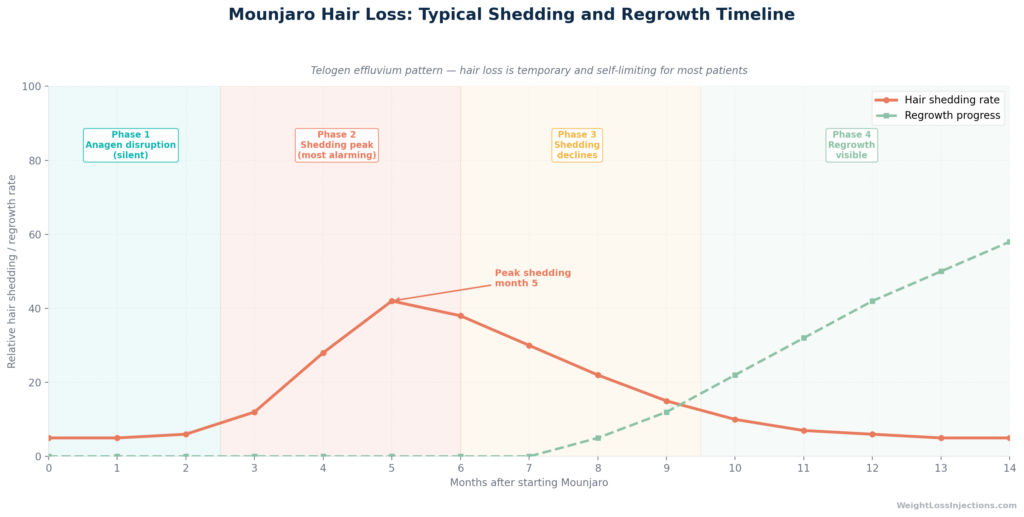
Hero — line chart showing hair shedding timeline on Mounjaro: months 1–2 (silent anagen disruption), months 3–5 (shedding peak), months 6–9 (decline), months 9–14 (regrowth)
- Hair loss is not listed on the Mounjaro FDA label as an adverse reaction — but it is widely reported by patients and clinicians, and the underlying mechanism is well understood.
- The cause is telogen effluvium: a temporary, diffuse shedding triggered by rapid weight loss, not by tirzepatide directly damaging hair follicles.
- Shedding typically begins 2–4 months after starting Mounjaro, peaks during the fastest phase of weight loss, and resolves within 6–12 months for most patients.
- Protein intake is the single most modifiable risk factor. Patients not meeting 1.2–1.6 g per kg of body weight per day are at substantially higher risk.
- Iron, zinc, and vitamin D deficiencies also increase severity. Test serum ferritin before or early in treatment.
- Stopping Mounjaro is generally not the right intervention — the root cause is nutritional stress, not the drug molecule itself.
- Shedding that continues beyond 6 months, is patchy rather than diffuse, or is accompanied by scalp changes warrants evaluation by a dermatologist.
Medical Disclaimer: This article is for informational purposes only and does not constitute medical advice. Hair loss associated with Mounjaro (tirzepatide) is not an FDA-listed adverse reaction; the content below is based on clinical evidence for telogen effluvium and patient-reported experience. Any concerns about hair loss should be discussed with a licensed healthcare provider. WeightLossInjections.com does not prescribe medications directly.
You have lost 20 pounds in three months on Mounjaro. The scale is moving, your clothes fit differently, and then one morning you notice it: a clump of hair in the shower drain that seems far larger than usual. Or you run a brush through your hair and the bristles come away with far more than they should.
You search the Mounjaro prescribing information looking for answers and find nothing. Hair loss does not appear in the adverse reactions section. And yet here you are, clearly losing hair — with thousands of other Mounjaro patients online reporting the exact same experience.
This disconnect between what the FDA label says and what patients actually experience is real and explainable. Hair loss on Mounjaro is not a mystery, a nocebo effect, or an overblown social media panic. It has a specific biological mechanism, a predictable timeline, and evidence-based interventions that meaningfully reduce its severity. This article explains all three.
Is Hair Loss an Official Mounjaro Side Effect? {#official}
The direct answer is no — and that “no” requires important context.
The FDA prescribing information for Mounjaro (tirzepatide) does not list hair loss or alopecia as an adverse reaction. This is the primary reason patients are confused and unsatisfied when they search for official information: the drug’s label simply does not address the complaint. To understand why, you need to understand what the label is — and what it isn’t.
The Mounjaro label was built from the SURPASS clinical trial program, which was designed and powered to measure outcomes in adults with type 2 diabetes: HbA1c reduction, weight loss, cardiovascular endpoints, and direct drug toxicity. The SURPASS trials were not primarily designed to capture every downstream physiological consequence of significant weight loss. Hair shedding that occurs because patients are losing weight rapidly — rather than because tirzepatide directly poisons hair follicles — would not necessarily be captured as a drug adverse event in a diabetes outcomes trial.
Compare this with the Zepbound label (Zepbound is tirzepatide at identical doses, approved for chronic weight management rather than T2DM). The SURMOUNT weight-loss trials captured alopecia explicitly, and the Zepbound prescribing information does list it: approximately 5.7% of tirzepatide-treated patients across pooled SURMOUNT data vs. 1% on placebo — and 7.1% of women specifically. Critically, the label notes that hair loss reactions were “associated with weight reduction” — the same regulatory language that implies the mechanism is the weight loss process, not direct drug toxicity.
Because Mounjaro and Zepbound are chemically identical molecules at identical doses, the SURMOUNT data is directly applicable to Mounjaro patients. If you are losing weight rapidly on Mounjaro — which is the whole point of using it — you face essentially the same hair-shedding risk as a Zepbound user losing the same amount of weight.
The FDA Adverse Event Reporting System (FAERS) database also includes hair loss reports for GLP-1 receptor agonists broadly, and a 2026 systematic review by Gupta and colleagues (Science Progress, 2026) assessed 133 studies across GLP-1 medications and found a 3.4-fold higher risk of alopecia on GLP-1 drugs compared with placebo, with tirzepatide most frequently linked with telogen effluvium specifically — a consequence, the authors noted, of its producing the greatest magnitude of weight loss of any approved agent in the class.
The bottom line: “not on the Mounjaro label” does not mean “not real.” It means the causal pathway is indirect, mediated through rapid weight loss rather than direct drug toxicity on hair follicles. For patients experiencing it, that distinction may feel academic — but it is clinically important because it determines both the prognosis (good: it resolves) and the intervention (address nutrition, not the drug).
Medical News Today’s review of Mounjaro side effects and GoodRx’s Mounjaro side effect summary both note hair loss as a commonly reported patient concern despite the label gap, reflecting the clinical reality that prescribers and pharmacists field this question regularly.
Telogen Effluvium Explained: Why Rapid Weight Loss Causes Shedding
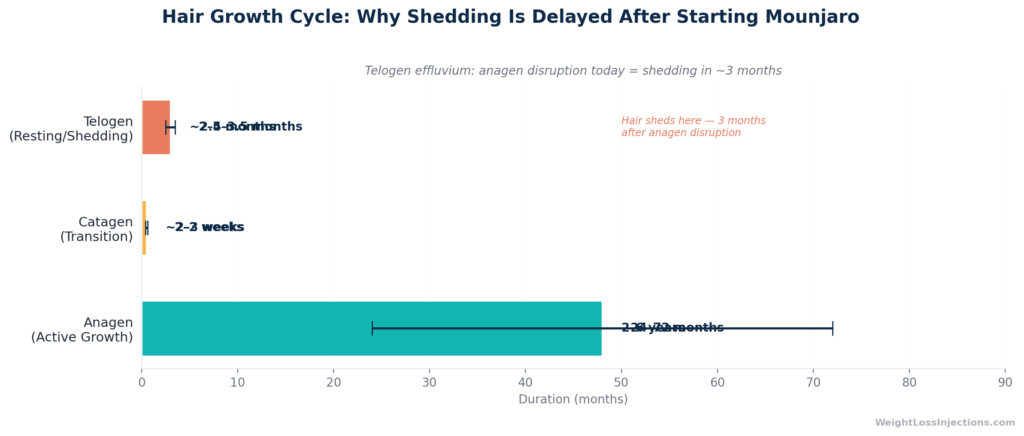
Horizontal bar chart showing hair growth cycle phase durations
To understand what is happening to your hair on Mounjaro, you need a basic mental model of how hair grows — because the timing and character of telogen effluvium are impossible to understand without it.
The Three Phases of the Hair Growth Cycle
Your scalp contains approximately 85,000–100,000 individual hair follicles, each cycling through three phases independently of its neighbors:
- Anagen (growth phase): The active growth period. Lasts 2–6 years for most scalp follicles. At any given moment, approximately 85–90% of your hairs are in anagen, growing at roughly 0.5 inches per month.
- Catagen (transition phase): A brief 2-week period during which the follicle detaches from its blood supply and prepares to rest. Only about 1% of follicles are in catagen at any time.
- Telogen (resting/shedding phase): The follicle rests for approximately 3 months before the old hair shaft is shed and a new anagen hair begins beneath it. Roughly 10–15% of follicles are in telogen at any given time. This accounts for the normal shedding of 50–100 hairs per day that healthy individuals experience without noticing.
The reason healthy people do not go bald despite constant shedding is that these phases are staggered across follicles: at any moment, the vast majority of follicles are growing, and only a small, distributed fraction are resting and shedding.
What Telogen Effluvium Is — and Why It Happens on Mounjaro
Telogen effluvium (TE) is a form of diffuse, temporary hair shedding that occurs when a significant physiological stressor forces a large cohort of follicles to simultaneously exit the growth phase and enter the resting phase. The follicles themselves are not damaged — the dermal papilla (the root of each follicle) remains intact and capable of regrowth. What changes is the synchronized timing: instead of the normal staggered pattern, a mass of follicles enter telogen together, and approximately 3 months later, they shed together.
The stressors that trigger this response include surgery, severe illness, childbirth, extreme psychological stress — and, critically, rapid caloric restriction and significant weight loss. A 2024 retrospective study of 140 telogen effluvium patients published in the Annals of Dermatology (PMC) found that TE induced by weight loss occurred at a mean weight loss percentage of 15.21% and a mean rate of approximately 3.54 kg per month. Many Mounjaro patients — particularly at higher doses and during the active escalation phase — meet or exceed both thresholds.
The mechanism on Mounjaro is nutritional and metabolic, not pharmacological. Tirzepatide dramatically reduces appetite and caloric intake via its dual GIP/GLP-1 receptor agonism, per the FDA prescribing information. That appetite suppression is the point — it is what produces weight loss. But the same reduction in caloric intake that shrinks fat mass also constitutes a physiological stress signal to the body’s non-essential systems, and the body responds by downregulating energy-intensive processes like hair growth.
A second mechanism is purely nutritional. Hair is composed primarily of keratin, a structural protein. Keratin synthesis depends on a continuous supply of amino acids — particularly cysteine, methionine, and lysine — derived from dietary protein. When overall food intake drops sharply (as it does on Mounjaro, which can reduce caloric intake by 20–30% or more in motivated patients), protein intake frequently falls below the minimum required to sustain normal keratin production. The body’s hierarchy of priorities places hair growth well below organ function, immune defense, and muscle maintenance. When amino acids are scarce, hair follicles are among the first systems to feel the shortfall.
Iron deficiency adds a third layer. A 2021 study in Clinical, Cosmetic and Investigational Dermatology (PMC) found serum ferritin levels significantly lower in TE patients than in healthy controls, with the average ferritin in TE patients at 24.27 ng/mL. The study identified a ferritin cut-off of approximately 24.45 ng/mL for distinguishing TE patients from healthy subjects. Premenopausal women — the demographic most commonly using Mounjaro for weight loss — frequently begin treatment with borderline-low ferritin reserves, and reduced dietary intake further depletes iron stores as weight loss progresses.
The Brazilian Journal of Hair Health 2025 narrative review of TE in modern weight-loss therapies confirms the overall picture: “TE in these contexts is a clinical marker of transient systemic disequilibrium rather than permanent follicular damage.” The follicles are stressed, not destroyed. That distinction is the basis for the good news about recovery.
Why the Delay? Understanding the 2–4 Month Lag
One of the most disorienting aspects of Mounjaro-related hair loss is the timing: patients start the medication, see their weight drop, feel great — and then two to four months later, suddenly notice significant shedding. The medication is working, so why is hair falling out now?
The answer is built into the biology of telogen. When the physiological stress signal (rapid weight loss) begins in months 1–2 of Mounjaro therapy, it triggers follicles to enter telogen prematurely. But those follicles then spend the next ~3 months cycling through the resting phase before the old hair shaft is pushed out by the emerging new hair. The shedding you see in months 3–5 is the delayed consequence of the stress that happened at months 1–2. It is not a sign that things are getting worse — it is the normal biological expression of a process that was set in motion earlier.
This 2–4 month lag is a defining feature of all forms of telogen effluvium, regardless of cause. It is the same phenomenon that causes new mothers to shed hair 2–4 months after delivery, or post-surgical patients to notice diffuse thinning 3 months after their operation.
How Long Does Hair Loss Last on Mounjaro? {#duration}
This is the question patients want answered most urgently, and the evidence supports a genuinely reassuring answer for the majority of cases.
For most patients, Mounjaro-related telogen effluvium follows a self-limiting arc. Shedding typically peaks during the fastest phase of weight loss — usually months 3–6 of treatment — and begins to taper as the rate of weight loss decelerates at higher, maintenance doses. The physiological stressor (the rate of caloric restriction and weight change) diminishes as the body approaches a new set point, and follicles that have completed their telogen phase cycle back into anagen.
The Annals of Dermatology retrospective cohort study (PMC) measured recovery in 140 weight-loss TE patients and found a mean recovery period of 4.83 months — and all patients in the cohort improved without any treatment whatsoever. The self-limiting nature of the condition, once the triggering stress is addressed or attenuates naturally, is one of the most consistent findings in the TE literature.
Practical timeline expectations for Mounjaro patients:
- Months 1–2 on Mounjaro: Anagen disruption occurring silently in follicles; no visible shedding yet
- Months 3–5: Shedding becomes noticeable; peaks during the period of most rapid weight loss
- Months 6–9: Shedding declines as weight loss rate decelerates toward maintenance dose levels
- Months 9–14: Regrowth becomes visible; new hairs emerge at approximately 0.5 inches per month
Full hair density restoration from peak shedding can take 6–12 months — not because follicle recovery is slow, but because new hair emerging at the scalp requires time to grow to visible length. Patients often ask “is my hair growing back?” and struggle to see it. The honest answer is: it is likely already growing back, but new hairs are short, fine, and not yet visible in the mirror at the angles where thinning is most noticeable. Consistent with GoodRx’s Mounjaro side effect guidance, the typical clinical reassurance is that regrowth begins within 3–6 months of the shedding peak.
Patients who reach a stable maintenance dose of Mounjaro — where weight loss rate slows and caloric intake stabilizes — tend to see shedding taper first. The stabilization of physiological stress reduces the biological signal driving follicles into telogen, and the cycle gradually corrects itself. Online patient communities (including r/Mounjaro) consistently report that shedding resolves for most users by months 9–12, with outliers in either direction.
When the timeline should prompt evaluation: Shedding that continues to worsen beyond 6 months, that has not plateaued or begun to improve by month 9, or that is accompanied by scalp changes, patchy loss, or systemic symptoms is not consistent with simple telogen effluvium and warrants clinical investigation (see the “When to See a Dermatologist” section below).
Medical News Today’s Mounjaro side effects overview reinforces that ongoing shedding does not mean ongoing permanent loss — the visible shedding phase is the expression of a normal follicle cycle disruption, not evidence that new damage is occurring.
Our Top 3 · October 2026
The best GLP-1 providers right now
Independently reviewed. Ranked by price, medication access, provider quality, and patient outcomes.
Renew GLP
Personalized GLP-1, GIP plans: Semaglutide & Tirzepatide.
Medvi
No membership or hidden fees. Everything you need is included.
Trimi
US-licensed clinicians and shipped to your door, from $99/mo.
Tips to Minimize Hair Thinning: Protein, Nutrition, and Scalp Care
Telogen effluvium cannot always be prevented entirely — if the body undergoes significant, rapid weight loss, some degree of follicle disruption is a predictable biological outcome. But the severity of shedding is meaningfully modifiable through nutritional strategies and behavioral choices. The following interventions are ranked by evidence quality.
1. Protein Intake: The Highest-Leverage Intervention
Adequate protein intake is the most important and most modifiable factor in Mounjaro-related hair loss. Hair is essentially compressed, keratinized protein. Without enough dietary protein, keratin synthesis slows, follicles in the growth phase are deprioritized by the body’s metabolic hierarchy, and TE severity worsens.
Clinical nutrition guidelines for patients on GLP-1 medications recommend a minimum of 1.2 g of protein per kg of body weight per day, with a target of 1.5 g/kg/day during the active weight loss phase. Healthline’s Mounjaro dietary guidance and clinical GLP-1 nutrition protocols align on this target. For a patient weighing 180 lbs (82 kg), this translates to approximately 98–123 g of protein per day — an amount that is genuinely difficult to achieve on a Mounjaro-suppressed appetite without deliberate planning.
Practical strategies:
- Eat protein first at every meal. Fill half the plate with protein-dense food before anything else. Mounjaro’s appetite suppression means most patients feel satisfied early; allocating that limited hunger capacity to protein rather than carbohydrates or fat is the most efficient way to hit targets.
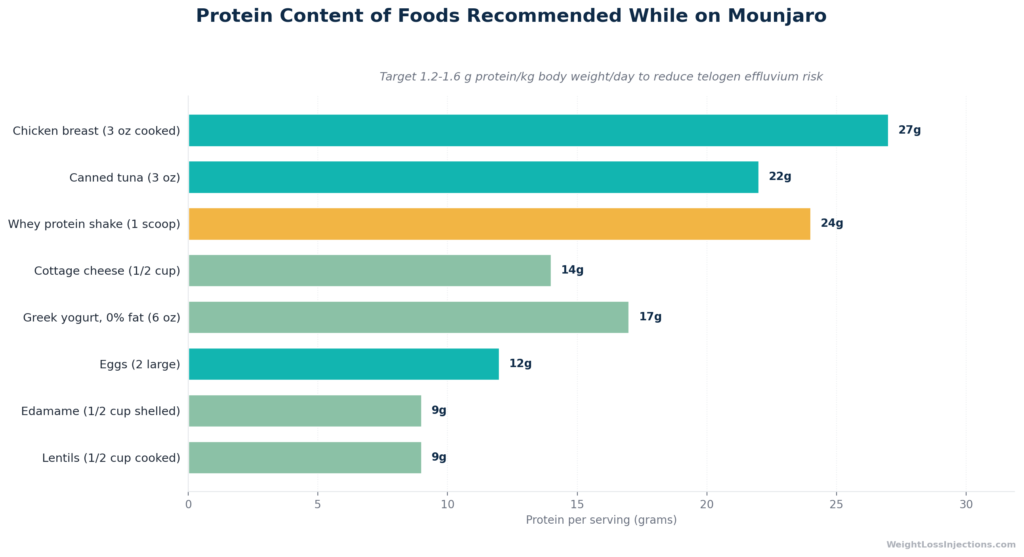
- Choose protein-dense, low-volume foods. The following options provide substantial protein per serving without requiring large meal volumes (see Image 3):
- Chicken breast (3 oz): ~27 g
- Whey or plant-based protein shake (1 scoop): ~24 g
- Canned tuna (3 oz): ~22 g
- Greek yogurt, 0% fat (6 oz): ~17 g
- Cottage cheese (½ cup): ~14 g
- Eggs (2 large): ~12 g
- Do not skip meals even when not hungry. Mounjaro-induced satiety can cause patients to skip meals entirely, which dramatically reduces daily protein. Even small, protein-focused meals every 4–5 hours are preferable to eating nothing.
- Use protein shakes strategically. When nausea or satiety makes solid food difficult — particularly during titration — a protein shake can contribute 24–30 g of protein without the volume or palatability challenge of a full meal.
2. Iron and Ferritin: Test Before You Start (or Early in Treatment)
Given the consistent evidence linking low serum ferritin to telogen effluvium, testing ferritin before beginning Mounjaro — or early in the first month — is practical preventive medicine. The Clinical, Cosmetic and Investigational Dermatology study (PMC) identified ~24–30 ng/mL as the ferritin range most associated with elevated TE risk. Many dermatology clinicians use a more conservative threshold of 40–70 ng/mL as the target for hair health optimization.
If your ferritin is below 30 ng/mL at the start of Mounjaro therapy, supplementing iron before or during the weight-loss phase is a well-supported clinical strategy. Iron supplementation requires provider guidance — excess iron has toxicity risks, and absorption is affected by multiple variables including timing relative to meals and co-administration with calcium or vitamin C.
Women of premenopausal age are at highest risk. Menstrual blood loss is a significant ongoing drain on iron reserves, and the dietary iron reduction that comes with Mounjaro-suppressed caloric intake compounds this baseline vulnerability.
3. Zinc, Biotin, and Vitamin D: The Supporting Cast
These three micronutrients are widely discussed in patient communities in relation to hair loss, and each has a legitimate (if sometimes overstated) role:
Zinc: Required for cell division in the hair matrix and for keratin synthesis. Dietary sources include pumpkin seeds, beef, oysters, and lentils. The bariatric surgery literature — the most applicable evidence base for rapid-weight-loss TE — documents that low serum zinc is significantly associated with post-surgical hair loss. A multivitamin containing zinc (RDA: 8 mg for women, 11 mg for men) is a reasonable minimum; supplementation at higher doses for confirmed deficiency has shown benefit in zinc-deficient patients.
Biotin (vitamin B7): Biotin supplementation is the most heavily marketed intervention for hair loss and the one with the weakest evidence relative to its promotional volume. Biotin is essential for keratin synthesis, and true biotin deficiency does impair hair growth. However, genuine biotin deficiency is rare in people eating any varied diet, and supplementing biotin in non-deficient patients produces modest to no benefit. Adequate intake (≥30 µg/day, easily met by diet alone) is sufficient for most patients. One practical note: high-dose biotin supplementation (≥5 mg/day) interferes with several laboratory tests, including thyroid function panels — a concern for Mounjaro patients who may be monitoring TSH. Always tell your lab before blood draws if taking high-dose biotin.
Vitamin D: Deficiency is common in the general population and more common during caloric restriction, when intake of vitamin D–rich foods (fatty fish, fortified dairy) may decrease. Vitamin D deficiency is associated with multiple forms of alopecia. A standard vitamin D3 supplement (1,000–2,000 IU/day) is low-risk and commonly recommended during weight management programs.
4. Scalp and Hair Care During Active Shedding
The following mechanical practices reduce unnecessary mechanical shedding during the TE phase, though they do not address the biological root cause:
- Use a wide-tooth comb or detangling brush on wet hair after applying conditioner. Hair is weakest when wet; pulling or aggressive brushing at this stage increases mechanical breakage.
- Reduce heat styling. Blow dryers, flat irons, and curling tools do not cause TE but amplify fragility and breakage when hair is already stressed.
- Avoid harsh chemical treatments — perms, relaxers, and bleaching — during active shedding.
- Scalp massage: A 2016 standardized scalp massage study published in ePlasty (PMC) found that daily 4-minute standardized scalp massage for 24 weeks increased hair shaft thickness in healthy subjects, though it did not increase follicle count. The mechanism is thought to involve improved dermal blood flow and mechanical stimulation of follicle cells. While the evidence is limited and derives from studies in non-TE populations, scalp massage is low-risk, costs nothing, and may provide modest supportive benefit during the recovery phase.
- Use sulfate-free shampoos. Harsh sulfates can strip scalp oils and exacerbate fragility during active shedding.
5. What Does Not Work
Two interventions are frequently suggested in patient communities but are not evidence-based for this indication:
- Topical biotin shampoos. No evidence supports benefit for telogen effluvium. Biotin applied to the scalp is not absorbed into follicles in meaningful quantities.
- Stopping Mounjaro as the primary anti-hair-loss strategy. Mounjaro itself is not the direct cause of TE — the weight loss is. Stopping the medication does not guarantee a halt in shedding (if nutritional deficits persist, the trigger continues), and it carries significant risks of weight regain. This is addressed in detail in the “Does Stopping Mounjaro Reverse Hair Loss?” section below.
6. If Shedding Is Severe: Consider Topical Minoxidil
For patients with significant density loss affecting quality of life, or shedding that continues beyond 6 months, topical minoxidil (2% or 5%) is a pharmacological option worth discussing with a dermatologist. A 2025 open-label clinical trial in the Journal of Dermatology (PMC) enrolled 12 subjects with telogen effluvium (including crash-diet–induced cases) and applied 5% topical minoxidil twice daily for 24 weeks. Terminal hair count increased significantly by week 4, and at week 24, all investigators and all subjects reported improvement. The authors noted that minoxidil’s shortening of the telogen phase may accelerate the natural recovery process, effectively bringing forward the regrowth timeline that would occur anyway. There is no known pharmacokinetic interaction between tirzepatide and topical minoxidil, but as with any new medication, discuss it with your prescribing provider.
When to See a Dermatologist {#derm}
The majority of Mounjaro-related hair loss is self-limiting telogen effluvium that does not require specialist evaluation. For most patients, the appropriate response is to optimize protein intake, address micronutrient gaps, and wait — knowing that the natural history of TE is resolution within months.
However, several clinical presentations are not consistent with simple telogen effluvium and warrant prompt evaluation:
See a dermatologist or your provider if:
- Hair loss is patchy or asymmetric rather than diffuse. Patchy, coin-shaped areas of hair loss are the hallmark of alopecia areata — an autoimmune condition in which the immune system attacks hair follicles. Alopecia areata is not caused by Mounjaro but can coincide with the Mounjaro treatment period. It requires different management entirely.
- Scalp changes are present — redness, scaling, crusting, itching, or painful areas. These may indicate tinea capitis (fungal infection), seborrheic dermatitis, or scarring alopecia patterns. Telogen effluvium presents with a normal-appearing scalp.
- Significant hairline recession is occurring. Diffuse shedding all over the scalp is characteristic of TE; progressive recession at the temples or crown, or widening of the central part, is more consistent with androgenetic alopecia (pattern hair loss), which requires different treatment and does not resolve on its own.
- Hair shedding persists beyond 6 months with no sign of slowing. This timeline mismatch with typical TE warrants investigation for other causes: thyroid dysfunction, iron deficiency anemia, autoimmune conditions, or medication effects.
- Eyebrows, eyelashes, or body hair are also involved. Telogen effluvium affects scalp hair almost exclusively. Concurrent loss in other areas suggests a systemic or autoimmune cause.
- You have a personal or family history of thyroid disease. Hypothyroidism independently causes hair loss and is more prevalent in the type 2 diabetes and obesity populations that most commonly use Mounjaro. A TSH that is even mildly out of range can produce TE that mimics or compounds Mounjaro-related shedding.
Baseline labs to request before seeing a dermatologist (or to request from your PCP early in Mounjaro treatment):
- CBC (complete blood count)
- Serum ferritin
- TSH (thyroid-stimulating hormone)
- 25-OH vitamin D
- Serum zinc
- B12
A dermatologist can perform a pull test (gently tugging a cluster of hairs to assess the ratio in telogen vs. anagen phase) and trichoscopy (dermoscopic scalp evaluation) to accurately characterize the pattern of hair loss and distinguish TE from androgenetic alopecia, alopecia areata, or scarring conditions. For complex cases, trichoscopy can confirm whether follicles retain their regrowth potential — providing definitive reassurance when the clinical presentation is ambiguous.
For the vast majority of Mounjaro patients, that reassurance is the conclusion: the follicles are intact, and regrowth is coming. Addressing protein intake is the most impactful single step you can take today.
Have questions about managing Mounjaro side effects with support from a qualified provider? WeightLossInjections.com connects patients with licensed clinicians who understand the full GLP-1 experience — [$X/month] for [service detail].
Does Stopping Mounjaro Reverse Hair Loss?
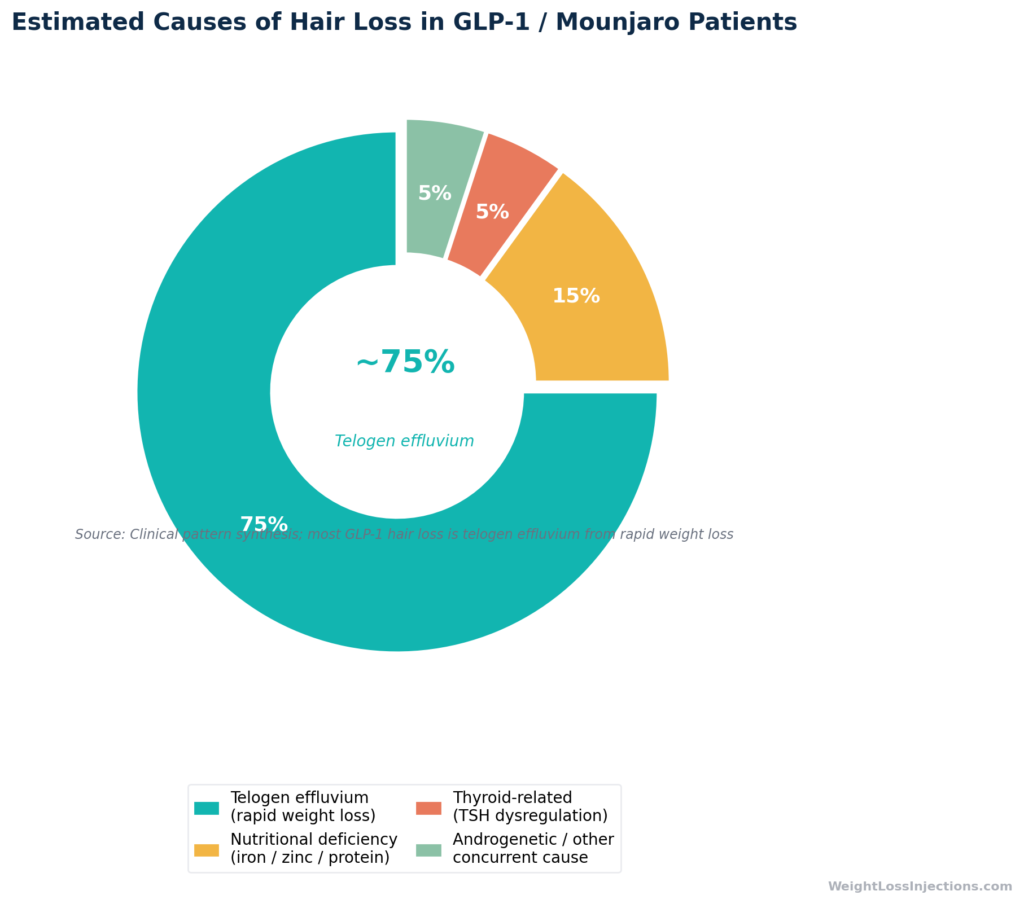
Pie/donut chart showing estimated causes of hair loss in GLP-1 medication patients
This is one of the most common questions in Mounjaro patient communities — and the answer requires careful nuance.
Stopping Mounjaro does not directly reverse hair loss, because Mounjaro is not the direct cause. The indirect cause is nutritional and metabolic stress from rapid weight loss. Whether stopping the medication improves the shedding depends on what happens next:
If stopping Mounjaro leads to weight regain and stabilized caloric intake, the physiological stressor does diminish. As caloric restriction eases and the body re-achieves a nutritional equilibrium, the TE trigger signal reduces. Some patients who stop Mounjaro notice shedding tapers within 2–3 months — but this is because weight loss stopped, not because tirzepatide cleared from their system. The same outcome could have been achieved by slowing the rate of weight loss while staying on the medication.
If stopping Mounjaro is followed by continued caloric restriction through dieting (trying to maintain weight loss without the medication), the stressor continues and hair shedding may not improve.
The weight regain risk is substantial and should be factored into any decision to stop. The SURMOUNT-4 trial, published in JAMA (2023), documented a mean weight regain of +14.0% over 52 weeks in patients who transitioned from tirzepatide to placebo after a period of successful weight loss. This weight regain represents both a direct health risk and, potentially, a new physiological stressor that can trigger a second episode of TE — negating whatever hair-related benefit stopping the drug might have produced.
The more productive clinical question is: “How do I keep the weight loss while stopping the hair loss?” Evidence-based answers:
- Prioritize protein intake immediately — this is the most modifiable factor and can reduce TE severity without any change to the medication.
- Test and correct micronutrient deficiencies — iron, zinc, vitamin D — before or early in weight-loss treatment.
- Consider slowing the titration pace. Staying longer at a given dose before escalating (for example, 6–8 weeks instead of 4 weeks at each step) modestly reduces the rate of weight loss and therefore the intensity of the TE trigger. The FDA prescribing information for Mounjaro specifies a minimum of 4 weeks between dose increases but places no upper limit on how long a patient may remain at any given dose. Extending the titration schedule is a clinical option, not a treatment failure — discuss it with your provider if hair loss is significantly affecting your quality of life.
- Anticipate the natural timeline. Telogen effluvium is self-limiting. For most patients, continuing Mounjaro at a stable maintenance dose while addressing nutrition will result in hair regrowth as weight loss decelerates — without the metabolic disruption of stopping treatment.
According to GoodRx’s Mounjaro side effect summary, the clinical consensus is consistent: hair loss associated with Mounjaro is temporary and resolves as the underlying nutritional balance is restored. Stopping the medication is not a necessary step in that restoration for the majority of patients.
Our Take at WeightLossInjections.com {#our-take}
Hair loss is the Mounjaro side effect that surprises patients most — not because it is the most common (nausea wins that category comfortably) but because it arrives late, when patients are feeling their best about the medication’s results. You have lost 20 pounds. Your blood sugar is down. You feel better. And then the shower drain tells a different story.
The medical facts are genuinely reassuring, but the reassurance needs to be paired with proactive action — not just passive waiting. Our clinical position at WeightLossInjections.com is this:
Every patient starting Mounjaro should be counseled about telogen effluvium at initiation — not to cause alarm, but to enable preparation. Patients who know the mechanism, know the timeline, and know the interventions are significantly better positioned than patients who discover hair loss three months in and assume the worst. Surprises are harder than prepared patients.
The hierarchy of interventions is clear from the evidence: protein first, ferritin next, then zinc and vitamin D. Topical biotin shampoos and biotin megadoses should not crowd out these evidence-based priorities. Stopping Mounjaro should not be the automatic first response to hair shedding — for most patients, it trades a temporary cosmetic concern for a significant reversal of meaningful health gains.
For patients with substantial hair loss, persistent shedding beyond 6 months, or hair loss that does not fit the TE pattern, dermatologist referral is appropriate and productive. Trichoscopy in that setting provides definitive reassurance when the clinical picture is ambiguous.
WeightLossInjections.com providers include nutritional planning and side-effect counseling as standard components of Mounjaro support — because effective weight management means managing the whole treatment experience, not just the prescription. Reach out to discuss your individual situation: [$X/month] for [service detail].
Reviewed by: the WeightLossInjections.com Staff
Last reviewed: June 2026
FAQ {#faq}
Is hair loss a known side effect of Mounjaro?
Hair loss is not listed on Mounjaro’s FDA prescribing information as an adverse reaction, but it is widely reported by patients and clinicians (FDA Prescribing Information). The mechanism is telogen effluvium — a temporary form of diffuse hair shedding caused by rapid weight loss, not by tirzepatide directly damaging hair follicles. Because the SURPASS trials (which built the Mounjaro label) were designed around diabetes outcomes rather than all consequences of weight loss, this indirect side effect was not captured in the adverse events table. The Zepbound label (identical molecule, weight-management indication) does list alopecia in approximately 5.7% of tirzepatide-treated patients vs. 1% placebo, providing the relevant incidence data for patients on Mounjaro experiencing similar weight loss.
When does hair loss start on Mounjaro?
Hair shedding typically begins 2–4 months after starting Mounjaro, reflecting the characteristic delayed timeline of telogen effluvium. When rapid weight loss begins in months 1–2 of treatment, follicles receive the stress signal and shift into the telogen (resting) phase prematurely. Those follicles then spend approximately 3 months traversing the rest phase before shedding — which is why the visible shedding commonly appears at months 3–5 of treatment, well after the medication has already been working. This timing is consistent with the broader TE literature: the Annals of Dermatology retrospective study (PMC) measured the mean onset of weight-loss TE at 1.12 months after weight loss began, with a range extending to 6 months.
Will my hair grow back after Mounjaro hair loss?
For the vast majority of patients, yes. Telogen effluvium is a reversible process. Follicles temporarily shift from the growth phase to the resting/shedding phase under metabolic stress, then cycle back to active growth as the stressor resolves or diminishes. The Annals of Dermatology cohort study (PMC) found that all 140 weight-loss TE patients improved without any treatment, at a mean recovery period of 4.83 months. Regrowth typically becomes visible within 3–6 months of the shedding peak, with full density restoration taking up to 6–12 months from peak shedding, because new hairs need time to grow to visible length after emerging at the scalp.
Does taking biotin help with Mounjaro hair loss?
Biotin supplementation is popular but evidence is modest for this indication. Adequate intake of biotin (≥30 µg/day, easily met by a normal diet) supports hair health, but supplementing biotin at high doses in non-deficient patients does not reliably reduce telogen effluvium — because the mechanism of TE is not primarily a biotin deficit. The higher-impact nutritional interventions are adequate protein intake (≥1.2 g/kg/day), correcting iron/ferritin deficiency (test serum ferritin before or early in treatment), and addressing zinc and vitamin D deficiencies if present (Healthline Mounjaro diet guidance). Consult your provider before starting new supplements. Note that high-dose biotin (≥5 mg/day) can interfere with thyroid and other laboratory tests.
Should I stop Mounjaro to prevent further hair loss?
Stopping Mounjaro is generally not recommended as the primary intervention for hair loss. Tirzepatide is not directly causing the shedding — the physiological stress of rapid weight loss is. Stopping the medication does not guarantee that shedding will stop, particularly if caloric restriction continues or nutritional deficiencies persist. Moreover, the risk of weight regain following Mounjaro discontinuation is substantial: the SURMOUNT-4 trial documented mean weight regain of +14.0% over 52 weeks after stopping tirzepatide (JAMA 2023). The more productive approach is to address protein intake and micronutrient levels, and if shedding is severe, to discuss with your provider whether extending the time between dose escalations to slow the rate of weight loss is appropriate.
How much hair loss is normal on Mounjaro?
Normal daily shedding is approximately 50–100 hairs per day. During peak telogen effluvium on Mounjaro, patients may notice 150–300 hairs shed daily, which is visible in the shower drain, on pillows, and on brushes. This level of shedding is typical at the peak TE phase and does not, by itself, constitute an emergency or indicate permanent damage. What warrants medical attention is hair loss that is patchy rather than diffuse, accompanied by scalp inflammation or itching, involves eyebrows or eyelashes, or continues to worsen beyond 6 months without any sign of plateau (Medical News Today Mounjaro side effects). A dermatologist can confirm via trichoscopy whether follicles retain their regrowth potential and whether the loss pattern is consistent with TE or suggests a concurrent condition.
This article is for educational purposes only and is not a substitute for professional medical advice, diagnosis, or treatment. WeightLossInjections.com’s medical team reviews content regularly; last medical review: June 2026. Always consult your licensed healthcare provider before making any changes to your medication regimen.