![Unbranded [pillar-drug-class] injection pen on a neutral background — WeightLossInjections.com editorial hero](https://weightlossinjections.com/wp-content/uploads/2026/07/hero_mounjaro_c5_lifestyle-1200x675.png)
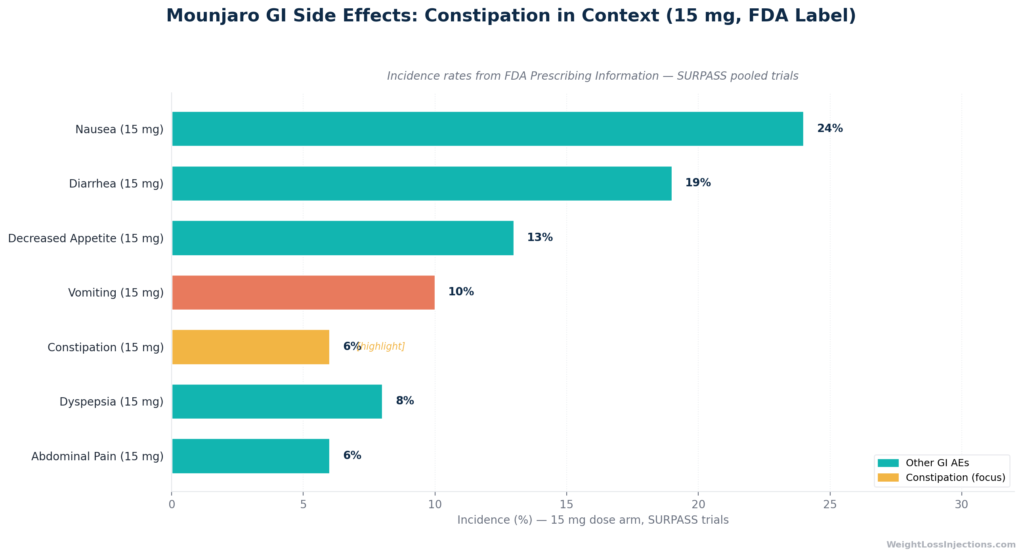
Horizontal bar chart showing GI side effect frequency on Mounjaro from FDA label data — nausea (~12–25%), diarrhea (~12–17%), decreased appetite (~9–12%), vomiting (~6–9%), constipation (~5–7%),…
You finally started Mounjaro. The appetite suppression is working — you’re eating less, your blood sugar is trending down, and the scale is moving in the right direction. But now you haven’t had a bowel movement in four days, your abdomen feels full and uncomfortable, and no one warned you this was coming.
Constipation is one of the most persistent GI complaints among Mounjaro patients, and it is also one of the least discussed — overshadowed by the more dramatic complaints of nausea and vomiting that tend to dominate early-treatment conversations. The reality is that constipation on Mounjaro (tirzepatide) has a clear physiological cause, a predictable timeline, and a practical management plan that works for the vast majority of patients.
This guide covers all three: why Mounjaro slows your gut, how common constipation actually is across dose levels, and a step-by-step relief protocol — from dietary changes and hydration to OTC laxative options and the clinical warning signs that mean it’s time to call your provider.
Reviewed by the WeightLossInjections.com Staff. All clinical claims are cited to primary sources. This article is for informational purposes only and does not substitute for individualized medical advice.
- Constipation is an FDA-confirmed adverse reaction to Mounjaro, affecting approximately 5–7% of patients in clinical trials — and likely higher in real-world use.
- The cause is mechanical: tirzepatide’s dual GIP and GLP-1 receptor agonism slows gastric emptying and colonic transit, causing stool to dry out and harden in transit.
- Constipation peaks during dose escalation steps (especially the 2.5 mg → 5 mg transition) and typically improves within 2–6 weeks after stabilizing at a new dose.
- Patients eating less also consume less fiber and fluid, compounding the pharmacological effect with a nutritional one.
- First-line fixes: soluble fiber (25–35 g/day), 64–80 oz of water daily, and a 20–30 minute daily walk.
- Safe OTC escalation: osmotic laxatives (MiraLax/polyethylene glycol) first; stimulant laxatives (senna, bisacodyl) as short-term rescue only.
- Contact your provider if no bowel movement for 7+ days despite interventions, or if you develop severe abdominal pain, bloating, or blood in stool.
- For most patients, constipation is self-limiting — the gut adapts, and the SURPASS clinical data show GI adverse events declining significantly after weeks 12–16.
Why Mounjaro Slows Your Gut (The GIP/GLP-1 Mechanism)
To understand why Mounjaro causes constipation, you need to understand what it actually does to your digestive system — because the gut-slowing effect is not a malfunction. It is the mechanism.
Mounjaro (tirzepatide) is a dual GIP (glucose-dependent insulinotropic polypeptide) receptor and GLP-1 (glucagon-like peptide-1) receptor agonist — the first drug in its class to activate both receptors simultaneously, as established in the FDA Prescribing Information §12.1. GLP-1 receptors are distributed not just in the pancreas but throughout the enteric nervous system — the network of neurons embedded in the gut wall that controls motility from esophagus to rectum. When tirzepatide activates GLP-1 receptors, it directly slows gastric emptying — a class effect shared by every GLP-1 receptor agonist on the market, from Ozempic to Victoza to Trulicity. This slowed emptying is purposeful: it reduces postprandial glucose spikes by delaying the rate at which food enters the small intestine, and it prolongs feelings of fullness, which is how Mounjaro suppresses appetite, per Medical News Today’s clinical summary.
The GIP component adds a second layer. GIP receptors are also present in gut tissue, and tirzepatide’s dual-agonist mechanism may produce a stronger gastroparetic effect on the GI tract than single-agonist GLP-1 drugs — though the precise additive contribution of GIP receptor activation to motility is still being characterized in published pharmacology research. What is clearly established is the downstream consequence: when the stomach empties slowly, the entire GI conveyor belt slows down with it.
Think of your gut as a production line. Under normal conditions, food moves from stomach to small intestine to colon at a pace that keeps stool moist and easy to pass. Mounjaro has slowed the line to half speed. The same amount of food is still moving through — but it spends significantly more time in transit. In the colon especially, longer transit time means more water is reabsorbed from the stool back into the body. The result is stool that becomes progressively harder, drier, and more difficult to pass.
This also explains the blunting of the gastrocolic reflex — the normal physiological response where eating triggers colon movement. When the stomach empties slowly, the sensory signal that would ordinarily set the colon in motion is delayed and weakened. Patients on Mounjaro often notice that their usual post-meal urge to use the bathroom disappears entirely during the first weeks of treatment. That is the gastrocolic reflex, suppressed by design.
The critical clinical point: because this mechanism is pharmacological and intentional, constipation cannot be “fixed” by eating less or avoiding certain foods. It can be managed — and managed well — but it requires a deliberate counterstrategy rather than a passive wait.
How Common Is Constipation on Mounjaro?
Constipation is listed in the FDA Mounjaro Prescribing Information §6 as a common adverse reaction with ≥5% incidence, making it one of only seven GI side effects meeting that threshold in clinical trials. In the SURPASS program — the five pivotal phase 3 trials underlying Mounjaro’s FDA approval — GI adverse events as a category were the most common reason providers held or delayed dose escalation, according to Lilly’s SURPASS-1 results published in The Lancet in 2021.
The relative frequency picture matters for putting constipation in context:
| GI Adverse Reaction | Approximate Incidence (Mounjaro, all doses) |
|---|---|
| Nausea | ~12–25% (highest, dose-dependent) |
| Diarrhea | ~12–17% |
| Decreased appetite | ~9–12% |
| Vomiting | ~6–9% |
| Constipation | ~5–7% |
| Dyspepsia | ~4–6% |
Source: FDA Mounjaro Prescribing Information, §6
Nausea and diarrhea are more common, but they tend to be acute — patients notice them immediately and they typically resolve within days to a few weeks at each dose level. Constipation, as GoodRx’s Mounjaro side effect overview notes, is less common in frequency but more persistent in duration. Patients who develop nausea on Mounjaro usually know about it within 24 hours of their first injection. Patients who develop constipation often don’t notice for several days, by which point it has already become uncomfortable.
Constipation severity is clearly dose-dependent and peaks at each titration step. The transition from 2.5 mg to 5 mg is typically where constipation first becomes noticeable for most patients — the jump from a tolerability-only starting dose to the first true therapeutic dose is often when the full GI motility effect becomes apparent. Each subsequent escalation step (5 → 7.5 mg, 7.5 → 10 mg, and so on) can trigger a recurrence of constipation symptoms as the body adjusts to the new drug level. Most patients report improvement within 2–6 weeks after stabilizing at a given dose, consistent with the partial gut adaptation pattern documented in the SURPASS trial program.
There is also a compounding nutritional factor that the FDA trial data don’t fully capture. Patients eating significantly less food due to Mounjaro-driven appetite suppression are also consuming less dietary fiber and less fluid — both of which are essential for normal bowel function. A patient who previously ate 2,200 calories per day and now eats 1,400 may have cut their daily fiber intake nearly in half without realizing it. The pharmacological slowing of motility and the nutritional reduction in fiber and fluid work together, which is why real-world constipation rates on Mounjaro may exceed the 5–7% figure seen in the tightly controlled SURPASS trials.
Step-by-Step Relief Plan: Fiber, Hydration, and Movement
The most effective approach to Mounjaro constipation is tiered: lifestyle and dietary interventions first, then OTC supplements if needed, then escalation to pharmacy options in coordination with your provider. Most patients resolve constipation at Step 1 or 2, before reaching the OTC tier, as noted in Healthline’s Mounjaro dietary management guide.
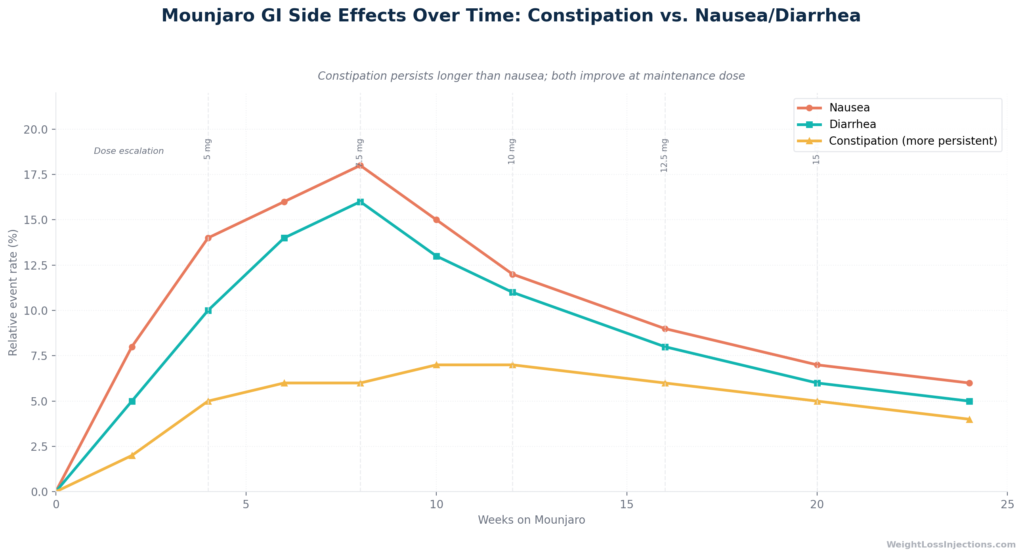
Tiered pyramid/waterfall diagram showing constipation relief protocol — Tier 1 (fiber + hydration + movement), Tier 2 (OTC osmotic laxatives), Tier 3 (stimulant laxatives, short-term), Tier 4…
Step 1 — Fiber: The Foundation
Most American adults consume approximately 15 grams of dietary fiber per day — roughly half the recommended 25–35 grams. Mounjaro patients eating less than usual are likely consuming even less. Restoring adequate fiber is the single most important dietary change for managing constipation on tirzepatide.
Soluble fiber first. For Mounjaro patients specifically, soluble fiber — the type that dissolves in water and forms a gel-like consistency — is preferred over insoluble fiber as the primary supplement. Soluble fiber draws water into stool, softening it and aiding passage; insoluble fiber (wheat bran, vegetable skins) adds mechanical bulk, which can worsen bloating and cramping when motility is already suppressed. Good soluble fiber sources include:
- Psyllium husk (Metamucil): 5 g of soluble fiber per tablespoon — the best-studied fiber supplement for medication-related constipation
- Oats (½ cup cooked): ~4 g fiber
- Black beans (½ cup): ~7.5 g fiber
- Lentils (½ cup cooked): ~8 g fiber
- Avocado (½ medium): ~5 g fiber
- Apples (1 medium with skin): ~4 g fiber
Increase gradually. Rapid fiber increases cause gas, bloating, and cramping — symptoms Mounjaro patients are often already managing. Add approximately 5 grams of fiber per week until you reach your target. A patient currently eating 12 g/day should aim to reach 25+ g/day over 2–3 weeks, not overnight.
The non-negotiable caveat: Bulk-forming fiber supplements, especially psyllium, must always be taken with at least 8 oz of water per serving. Psyllium taken without adequate fluid can form a gel mass in a sluggish gut and worsen obstruction. If you are not adequately hydrated, start with hydration before adding fiber supplements.
Step 2 — Hydration: The Most Underestimated Fix
Dehydration concentrates stool and is extremely common on Mounjaro. When appetite is suppressed, fluid intake drops alongside food intake — both because food itself contains water and because hunger-associated drinking is blunted. Electrolyte loss from nausea and occasional vomiting compounds the problem.
Target at least 64–80 oz (8–10 cups) of water per day. This is a floor, not a ceiling — patients who are active, sweating, or dealing with concurrent GI symptoms should aim higher.
Practical strategies:
- A full glass of water first thing in the morning, before coffee
- Warm liquids (warm water with lemon, herbal tea) at the start of the day — warmth stimulates peristaltic movement in the stomach and small intestine
- A glass of water at the start of each meal or snack, regardless of thirst
- Electrolyte drinks (low-sugar versions) for patients also managing nausea — they replace minerals lost through GI distress and make adequate hydration more palatable
Hunger and thirst signals are both blunted by tirzepatide. Do not rely on thirst to guide your fluid intake while on Mounjaro. Build hydration into your routine as a timed habit rather than a demand-driven response.
Step 3 — Movement: The Zero-Cost Intervention
Physical activity is a direct stimulant of colonic peristalsis. Even light aerobic movement — a 20–30 minute walk after meals — measurably increases gut transit speed. A 2020 analysis in Colorectal Disease confirmed that sedentary behavior is independently associated with higher rates of constipation and longer colonic transit time, and that walking is the most accessible intervention.
For Mounjaro patients who may be experiencing fatigue during early caloric restriction, a low-effort approach matters. Options include:
- A 15–30 minute walk at any time of day — post-meal timing is modestly better but any movement helps
- Yoga poses that apply gentle mechanical pressure to the abdomen: seated spinal twists, knee-to-chest (apanasana), child’s pose
- Avoiding prolonged sitting within 30–60 minutes of eating
Movement is particularly important because it is the one intervention that addresses both the pharmacological mechanism (stimulating otherwise-blunted peristalsis) and the nutritional mechanism (improving overall metabolic function and gut motility) simultaneously.
Step 4 — Meal Timing and Composition
Smaller, more frequent meals are easier for a Mounjaro-slowed gut to process than large, infrequent ones. Three large meals may produce significant stagnation in a gut already operating at half speed; four or five smaller meals maintain a more consistent stimulus for peristalsis throughout the day.
Additional dietary adjustments:
- Limit high-fat foods: Fat is the most potent inhibitor of gastric emptying — and tirzepatide’s drug effect on emptying compounds the fat-satiety reflex. High-fat meals (fried foods, fatty meats, cream sauces) further slow a gut that is already running slowly.
- Probiotic-rich foods: Yogurt, kefir, and other fermented foods support gut microbiome balance, which influences motility. While probiotic evidence for medication-related constipation specifically is limited, these foods have a favorable overall GI profile and no downside for Mounjaro patients.
- Warm morning routines: A warm beverage and a fiber-containing breakfast (oatmeal with fruit, for example) at the same time each day trains the gastrocolic reflex to activate consistently — helpful when Mounjaro has otherwise suppressed it.
Our Top 3 · October 2026
The best GLP-1 providers right now
Independently reviewed. Ranked by price, medication access, provider quality, and patient outcomes.
Renew GLP
Personalized GLP-1, GIP plans: Semaglutide & Tirzepatide.
Medvi
No membership or hidden fees. Everything you need is included.
Trimi
US-licensed clinicians and shipped to your door, from $99/mo.
OTC Options That Are Safe to Use With Mounjaro
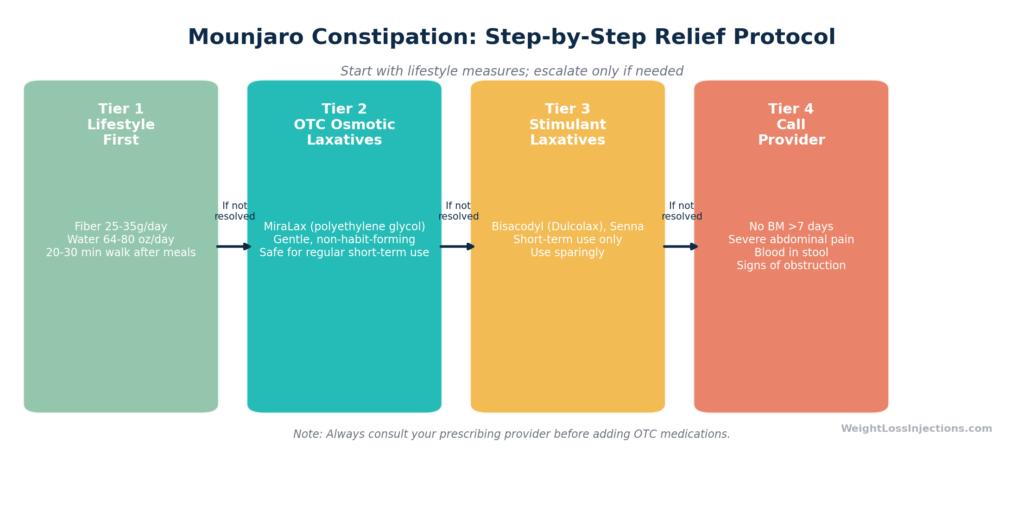
Horizontal bar chart showing fiber content of Mounjaro-friendly foods — psyllium husk 1 tbsp (5g), lentils ½ cup (8g), black beans ½ cup (7.5g), oats ½ cup (4g), avocado ½ medium (5g), broccoli 1 cup…
When lifestyle measures alone are insufficient after 3–5 days, OTC medications provide the next tier of management. The following overview covers the options most commonly used and generally well-tolerated alongside tirzepatide — but the standing caveat applies: always consult your prescribing provider before adding any OTC medication to your regimen, particularly if you are managing multiple conditions or taking other oral medications.
The FDA Prescribing Information §7 for Mounjaro notes that tirzepatide delays gastric emptying and therefore has the potential to delay the absorption of concomitantly administered oral medications. While this interaction is most clinically relevant for drugs with narrow therapeutic windows (warfarin, levothyroxine, oral contraceptives), it is a reason to separate any oral medication from the injection-day schedule by a few hours as a general practice. OTC laxatives taken separately from your Mounjaro injection day present no known pharmacokinetic interaction.
Osmotic Laxatives: First-Line Recommendation
Polyethylene glycol (MiraLax) is the best-supported first-line choice for tirzepatide-related constipation. It works by drawing water into the colon osmotically, softening stool and stimulating bowel movements without being absorbed systemically. It is non-habit-forming, safe for regular extended use, and produces no known interactions with tirzepatide. Standard adult dosing is 17 grams (one capful) dissolved in 8 oz of water, once daily. Expect 1–3 days to produce a bowel movement from a starting baseline.
The reason PEG is preferred over stimulant laxatives for Mounjaro patients is mechanistic: GLP-1-related constipation is primarily a motility problem — stool transit is too slow and too much water is absorbed. Osmotic agents work by correcting the water content of the stool rather than by forcing muscular contractions. This makes them more physiologically appropriate for the mechanism of constipation at play, as noted in GoodRx’s overview of Mounjaro GI side effects.
Stool Softeners
Docusate sodium (Colace) reduces surface tension in stool, allowing water to penetrate the stool mass and soften its consistency. Standard adult dose: 100 mg twice daily. Docusate is most useful as a complement to PEG when stool is hard and painful to pass — it is not effective as a standalone treatment for the underlying motility problem. It has a favorable safety profile for regular short-term use and no known interactions with tirzepatide.
Stimulant Laxatives — Second-Line, Short-Term Only
Bisacodyl (Dulcolax) and senna (Senokot) work by directly stimulating the muscles and nerves of the intestinal wall to contract and expel stool. They are effective — typically producing a bowel movement within 6–12 hours — but they are not appropriate for regular daily use.
Use stimulant laxatives sparingly: as rescue agents when more than 3–4 days have passed without a bowel movement and osmotic agents have not been adequate, or for short-term management during a particularly difficult titration step. Chronic use of stimulant laxatives can lead to dependence (the colon becomes reliant on stimulation rather than its own motility) and electrolyte disturbances, particularly with prolonged daily use.
What to Avoid
Bulk-forming fiber supplements without adequate water — as noted above, psyllium and similar products can form a gel obstruction in a severely slowed gut when not accompanied by sufficient fluid intake. If you are dehydrated, address hydration first.
Mineral oil laxatives — not studied with tirzepatide; mineral oil has a potential for fat-soluble vitamin malabsorption with regular use, and its interaction with tirzepatide’s delayed gastric emptying has not been characterized. Avoid during active Mounjaro therapy.
Magnesium citrate (high-dose oral) — generally safe for one-time use in acute constipation, but not appropriate for routine management in Mounjaro patients due to risk of electrolyte imbalance in the setting of reduced food intake and potential fluid losses from other GI side effects.
When Constipation Is Serious Enough to Adjust Your Dose
For most patients, Mounjaro constipation is a manageable nuisance that responds to the steps outlined above. But there are clinical signals that require provider contact — and some that require prompt evaluation regardless of what OTC measures you have tried.
Contact Your Provider If:
- No bowel movement for more than 7 days despite dietary interventions and OTC use — this meets the clinical threshold for evaluation and management beyond standard self-care
- Severe or progressively worsening abdominal pain — pain that is more than mild cramping, or that does not improve after a bowel movement, warrants evaluation to rule out ileus, bowel obstruction, or other serious GI complications
- Bloating severe enough to cause shortness of breath or interfere with daily activity
- Blood in stool or rectal bleeding — not an expected consequence of Mounjaro; requires investigation to identify the cause
- Inability to pass gas combined with abdominal distension and vomiting — these are the classic signs of bowel obstruction, which is a medical emergency
Dose Titration Hold and Reduction
Per the FDA Mounjaro Prescribing Information §2, clinicians are explicitly instructed to hold dose escalation during significant GI adverse events, and to consider dose reduction for intolerable GI symptoms. Constipation that is severe, persistent, and unresponsive to OTC management is a legitimate reason to pause titration at the current dose rather than advancing to the next step.
In practice, a temporary reduction — for example from 7.5 mg back to 5 mg — can meaningfully reduce the GI burden while maintaining therapeutic benefit for blood sugar control and weight management. The FDA label §2 also notes that Mounjaro is not recommended in patients with severe gastroparesis — pre-existing gut motility disorders are a clinical contraindication that applies before starting the medication, not just during its use.
The decision to reduce, hold, or continue should be made collaboratively with your prescribing provider. Do not adjust your Mounjaro dose unilaterally — particularly in a downward direction — without medical guidance, as this can affect glycemic control in patients using Mounjaro for type 2 diabetes.
Distinguishing Constipation From Pancreatitis
One important safety point that every Mounjaro patient should know: severe upper abdominal pain is not constipation. In the SURPASS clinical program, acute pancreatitis was observed at a rate of 0.23 events per 100 patient-years in tirzepatide patients, as reported in the FDA Prescribing Information §5.2. Pancreatitis presents with constant, severe upper abdominal pain that often radiates to the back — not with the diffuse bloating and lower abdominal discomfort typical of constipation. If you experience upper abdominal pain that is severe, constant, and accompanied by vomiting, this is not a constipation symptom. It requires emergency evaluation regardless of your Mounjaro dose schedule.
Experiencing persistent constipation on Mounjaro? A licensed clinician at WeightLossInjections.com can review your dose schedule and recommend an adjusted plan. Access clinical support starting at [$X/month] for [service detail].
Can Constipation Improve Over Time on Mounjaro?
Yes — and this is one of the most important reassurances for patients managing early-treatment GI symptoms. For the majority of people, Mounjaro-related constipation is worst during dose escalation phases and improves substantially once a maintenance dose is reached and the body has had time to adapt.
The physiological explanation is a phenomenon sometimes called GLP-1 receptor desensitization — the gut’s own enteric nervous system partially adapts to sustained receptor activation over weeks to months, partially restoring its normal peristaltic rhythm even in the continued presence of the drug. This is not full normalization — gastric emptying remains slower than baseline throughout therapy — but the most acute disruption to colonic transit tends to moderate as steady-state drug levels are reached and maintained.
The SURPASS trial data support this adaptation pattern. The SURPASS-1 results published in The Lancet (2021) demonstrated that GI adverse events were predominantly concentrated in the first 12–16 weeks of treatment, with significant decline thereafter for the majority of participants. Patient community experience on platforms such as r/Mounjaro consistently reports meaningful GI normalization around the 3–4 month mark — though this is self-reported data rather than controlled trial evidence.
What does not improve on its own is constipation that is primarily nutritional rather than pharmacological. If your constipation persists at a maintenance dose beyond month 3–4, the cause is almost certainly inadequate fiber and fluid intake rather than ongoing drug effect — and the fix is dietary intervention, not waiting for further adaptation.
A critical caveat that should not be glossed over: persistent severe constipation at a maintenance dose after 16+ weeks should be re-evaluated by a provider. It may indicate a separate GI condition — hypothyroidism, irritable bowel syndrome, pelvic floor dysfunction, structural obstruction — that exists independently of Mounjaro and would require its own diagnosis and treatment. Mounjaro can unmask conditions that were previously subclinical; constipation that does not follow the expected adaptation arc warrants investigation, not indefinite self-management.
Finally: patients who are concerned about constipation should not discontinue Mounjaro without provider consultation. The weight-loss, glucose-control, and cardiovascular benefits of tirzepatide are well-established in the SURPASS program and are preserved even after GI side effects improve. Stopping the medication over manageable GI effects trades a fixable problem for loss of meaningful therapeutic benefit.
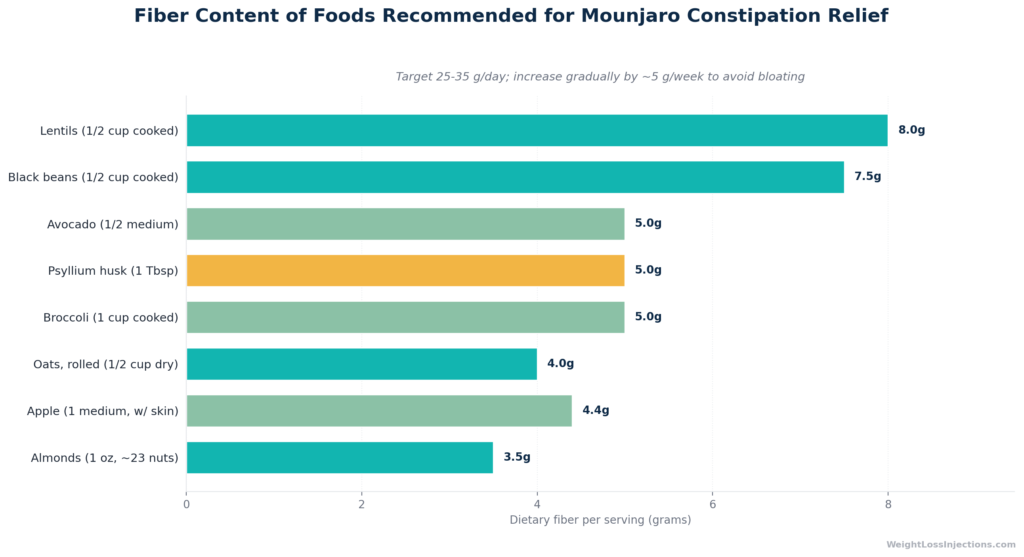
Line chart showing GI adverse event timeline during Mounjaro titration — nausea/diarrhea events peak weeks 4–8 then decline; constipation events plateau through weeks 4–16 then decline; both below 5%…
Our Take at WeightLossInjections.com
Constipation is the GI side effect that catches Mounjaro patients off guard — not because it’s the worst symptom, but because it’s the one nobody mentions at the start. Nausea gets all the attention. Constipation compounds quietly, day by day, until it becomes uncomfortable enough to actually disrupt quality of life and, in some cases, make patients question whether staying on the medication is worth it.
At WeightLossInjections.com, our clinical perspective is direct: if you start Mounjaro without a constipation prevention strategy in place, you are making this unnecessarily hard on yourself. The pharmacological mechanism — slowed gastric emptying and blunted colonic transit — is predictable and starts at the first injection. The nutritional mechanism — reduced fiber and fluid from eating less — compounds it within days. Both are anticipatable. Both are manageable.
Our standard recommendation for every patient starting Mounjaro or stepping up a dose: begin fiber optimization and hydration targets before you develop constipation, not after. Start psyllium husk or increase dietary fiber by 5 g/day in the week before your first injection or dose increase. Establish a daily water target of at least 80 oz and log it for the first two weeks until it becomes automatic. Add a post-meal walk, even 15 minutes, as a non-negotiable daily habit from day one.
The patients who sail through Mounjaro titration without significant GI disruption are the ones who understood that appetite suppression without dietary compensation is a setup for constipation, and acted on that understanding preemptively. The ones who struggle are almost always the ones who were not told that the problem was coming. Our job at WeightLossInjections.com is to make sure you know it’s coming — and that you have everything you need to prevent or resolve it.
If you are already in the middle of it, the four-step protocol in this article — fiber, hydration, movement, and OTC escalation as needed — resolves constipation for the vast majority of Mounjaro patients without dose adjustment. If those steps haven’t worked after a week of consistent application, that’s the moment to bring your provider in, not the moment to stop your medication.
Medical Disclaimer: This article is for informational purposes only and does not constitute medical advice. Mounjaro (tirzepatide) is an FDA-approved prescription medication for type 2 diabetes mellitus. All treatment decisions, including dose adjustments for GI side effects, should be made in consultation with a licensed healthcare provider. WeightLossInjections.com does not prescribe medications directly.
Reviewed by: the WeightLossInjections.com Staff
Last reviewed: June 2026
FAQ
Not always. Constipation is a common but not universal side effect of tirzepatide, listed in the FDA Mounjaro Prescribing Information §6 at ≥5% incidence in clinical trials. Real-world rates may be higher due to the compounding effect of reduced food and fluid intake on top of the pharmacological motility-slowing mechanism. Constipation is most likely during the first weeks of each dose escalation step and less likely after the gut has had time to partially adapt at a stable dose. Patients who proactively maintain adequate fiber and hydration from the start of treatment have substantially lower rates of symptomatic constipation than those who do not.
For most patients, the worst constipation occurs in the first 4–12 weeks of starting Mounjaro or at each dose increase, then improves as the body partially adapts to the slower gut motility. SURPASS trial data, including the SURPASS-1 results in The Lancet (2021), showed that GI adverse events declined significantly after the first 12–16 weeks for the majority of participants. Constipation that persists beyond 3–4 months at a stable dose is more likely nutritional in origin — inadequate fiber or fluid intake — than pharmacological, and requires dietary intervention rather than waiting for further adaptation.
Osmotic laxatives such as polyethylene glycol (MiraLax) are the generally preferred first-line OTC option for Mounjaro-related constipation. PEG works by drawing water into the colon to soften stool and is non-habit-forming, safe for extended use, and free of known interactions with tirzepatide. Stool softeners (docusate sodium/Colace) can be added as an adjunct. Stimulant laxatives (bisacodyl/Dulcolax, senna/Senokot) are appropriate for short-term rescue use when there has been no bowel movement for 3 or more days, but should not be used as daily maintenance. Always consult your prescribing provider before adding any OTC medication to your regimen.
Short-to-medium term daily use of polyethylene glycol is generally considered safe for adults, and it is non-habit-forming. However, if you find yourself relying on daily MiraLax for more than 2–3 weeks, that is a signal to address the underlying dietary causes — particularly fiber and fluid intake — rather than treating the symptom indefinitely. Daily laxative dependence should be discussed with your provider if constipation persists beyond a few weeks despite dietary and lifestyle interventions, as this may warrant investigation for an underlying GI condition or a change in dose management strategy.
The FDA Mounjaro Prescribing Information §2 explicitly allows for dose reduction or titration hold for intolerable GI symptoms — so this is clinically supported. However, the decision should be made collaboratively with your prescribing provider, not unilaterally. Dose reduction affects glycemic control in patients using Mounjaro for type 2 diabetes, and the right answer for your specific situation depends on clinical factors your provider is best positioned to evaluate. If constipation is severe enough that you are considering reducing your dose, that is the moment to schedule a provider visit, not to adjust the medication on your own.
Most of the time, no. Mounjaro-related constipation is a predictable, mechanism-based side effect that responds to dietary and OTC interventions in the vast majority of cases. However, constipation accompanied by severe abdominal pain, inability to pass gas, abdominal distension, blood in stool, or fever is not typical and warrants urgent medical evaluation. These symptoms can indicate bowel obstruction, ileus, or — in rare cases — pancreatitis, which is a known serious adverse event associated with GLP-1 receptor agonists per the FDA Prescribing Information §5.2. When in doubt, contact your provider rather than waiting to see if symptoms resolve.
This article is for educational purposes only and is not a substitute for professional medical advice, diagnosis, or treatment. WeightLossInjections.com’s medical team reviews content regularly; last medical review: June 2026. Always consult your licensed healthcare provider before making any changes to your medication regimen.