Mounjaro Before and After: What to Expect at Every Stage
Medically reviewed by WeightLossInjections.com Staff•Updated July 23, 2026•20 min readMedically reviewed
⤢
Medical Disclaimer: The results described on this page are based on published clinical trial data and aggregated patient-reported information. Individual results vary. Mounjaro is FDA-approved for type 2 diabetes management; off-label use for weight loss should be discussed with a licensed provider. WeightLossInjections.com does not provide medical advice. Consult your physician or a qualified telehealth provider before starting or changing any medication.
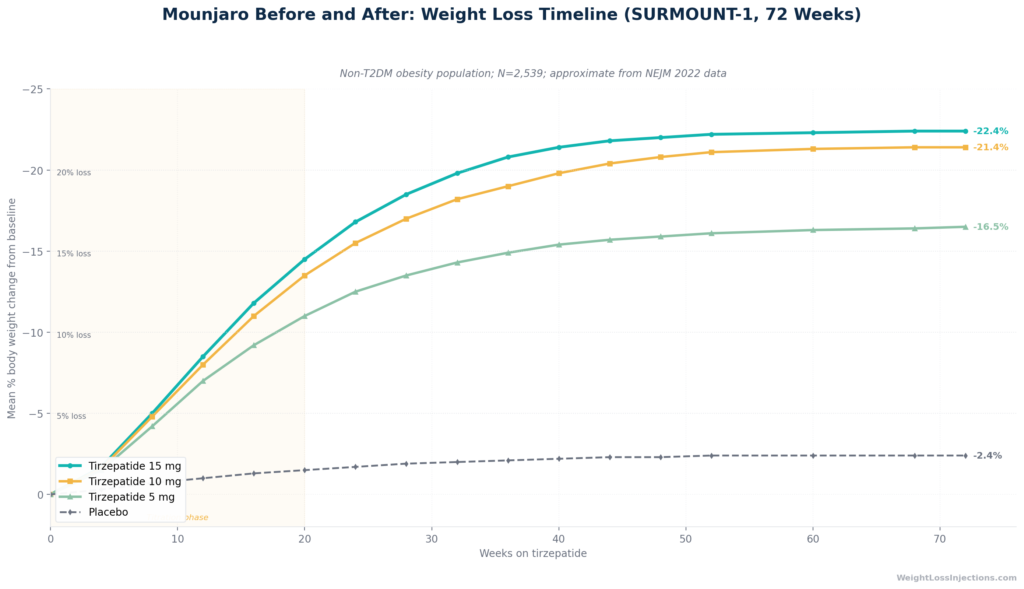
Line chart titled “Average % Body Weight Lost by Dose Over 72 Weeks (SURMOUNT-1)” — X-axis: weeks (0, 12, 24, 36, 52, 72); Y-axis: mean % body weight change from baseline; four lines for tirzepatide…
Mounjaro (tirzepatide) is FDA-approved for type 2 diabetes; its weight-loss effects stem from the same dual GIP/GLP-1 mechanism as Zepbound — the same active molecule. SURMOUNT-1 NEJM data applies to both products.
Weeks 1–4: 2.5 mg titration dose — minimal scale change, but appetite suppression begins within days. Expect 1–3% body weight loss in the first month.
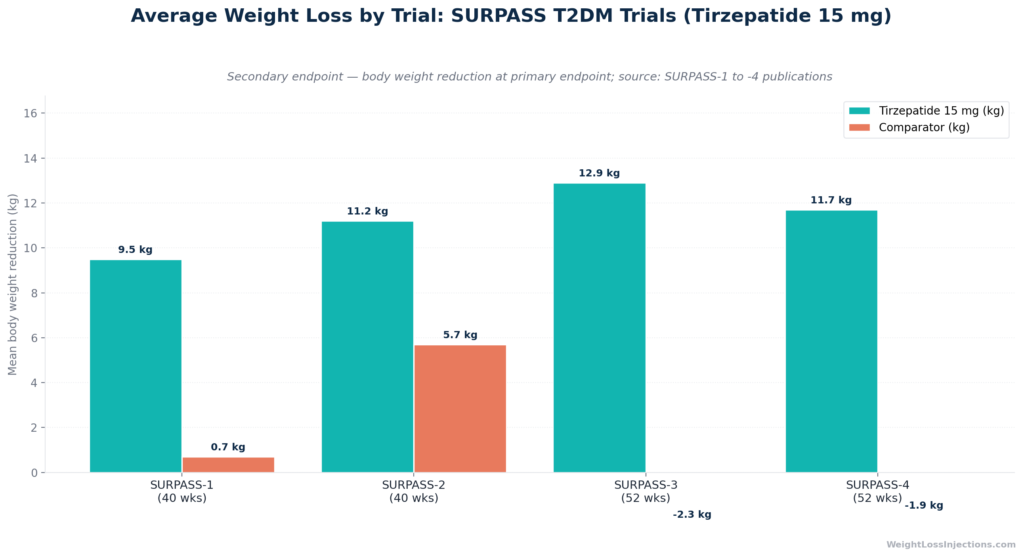
Weeks 5–16: Dose escalates from 2.5 → 5 → 7.5 mg. This is the steepest early loss window. SURPASS-2 showed tirzepatide 5 mg produced −7.6 kg in T2DM patients at 40 weeks; 15 mg produced −11.2 kg. (NEJM Frías et al.)
Months 4–12: Most patients reach 10–15 mg maintenance. SURMOUNT-1 72-week averages: −16.5% (5 mg), −21.4% (10 mg), −22.4% (15 mg) vs. −2.4% placebo — in non-T2DM patients. T2DM patients (SURPASS trials) average −11% to −13% at 15 mg. (PMC SURMOUNT-1 full text)
Non-scale victories are real: A1c reductions of 2.0–2.4% at higher doses, blood pressure improvement, reduced joint pain, and better sleep quality. (FDA Prescribing Information)
A 200-lb T2DM patient at 15 mg can realistically expect approximately 22–26 lbs of weight loss over 40–52 weeks based on SURPASS trial data.
Results require ongoing treatment: stopping Mounjaro typically causes significant weight regain, consistent with tirzepatide’s mechanism as a chronic therapy.
All images in this article are data charts — not stock photos or fabricated before-and-after images.
What “Before and After” Really Means on Mounjaro
Search for “Mounjaro before and after” and you will find striking transformation photographs: jawlines defined, waistbands loose, faces sharply changed. These images reflect real outcomes from real patients. They also represent a selective slice of the patient population — predominantly the top responders, typically photographed at 12–18 months of continuous treatment at maximum tolerated dose.
Understanding that distinction is not a minor footnote. It is the most important piece of context any prospective Mounjaro patient can have.
Mounjaro’s active ingredient is tirzepatide, the world’s first dual glucose-dependent insulinotropic polypeptide (GIP) receptor and glucagon-like peptide-1 (GLP-1) receptor agonist. Per the FDA Prescribing Information, Mounjaro is approved for adjunct treatment of type 2 diabetes mellitus (T2DM) — not for standalone chronic weight management, which is the indication for Zepbound (the same tirzepatide molecule under a different label). This distinction matters for insurance coverage and prescribing context, but it does not change the underlying pharmacology. Mounjaro and Zepbound are biochemically identical; the weight-loss data from the SURMOUNT obesity trials is directly relevant to Mounjaro patients. (WebMD comparison overview)
Two trial programs form the backbone of any evidence-based before-and-after discussion:
SURPASS program (T2DM population): Five Phase 3 trials enrolling patients with type 2 diabetes. Primary endpoint was HbA1c reduction at 40–52 weeks. Secondary endpoint was body weight change. Because these patients had T2DM — which creates metabolic resistance to weight loss — average weight reductions in SURPASS trials are lower than in pure obesity trials. This is the population most Mounjaro patients belong to.
SURMOUNT program (obesity population without T2DM): The trials that generated the headline weight-loss numbers (up to 22.4% at 72 weeks). SURMOUNT-1, published in the New England Journal of Medicine, is the most widely cited. Because Mounjaro and Zepbound are the same molecule, these numbers apply — but Mounjaro patients prescribed for T2DM should benchmark against SURPASS data, not SURMOUNT-1 headline numbers, for a realistic expectation.
The first 4 weeks on Mounjaro are not a meaningful weight-loss phase. The 2.5 mg starting dose is explicitly a tolerability initiation step — the FDA label states it is “not intended for glycemic control.” Steady-state plasma concentrations are not reached until approximately 4 weeks of once-weekly dosing. The “before” photo taken at week 0 is the right baseline. The “after” photo that represents a meaningful clinical outcome is typically taken at 6–12 months or beyond.
What many patients do notice almost immediately — often within the first few days — is a reduction in what patient communities describe as “food noise”: the persistent background pull toward eating, the intrusive thoughts about food between meals, the difficulty stopping partway through a portion. Tirzepatide’s dual GIP/GLP-1 mechanism begins dampening both appetite signaling and reward-driven eating behavior quickly, even before measurable weight change. The “before” on the scale looks unchanged at week 4. Biologically, the medication has already begun working.
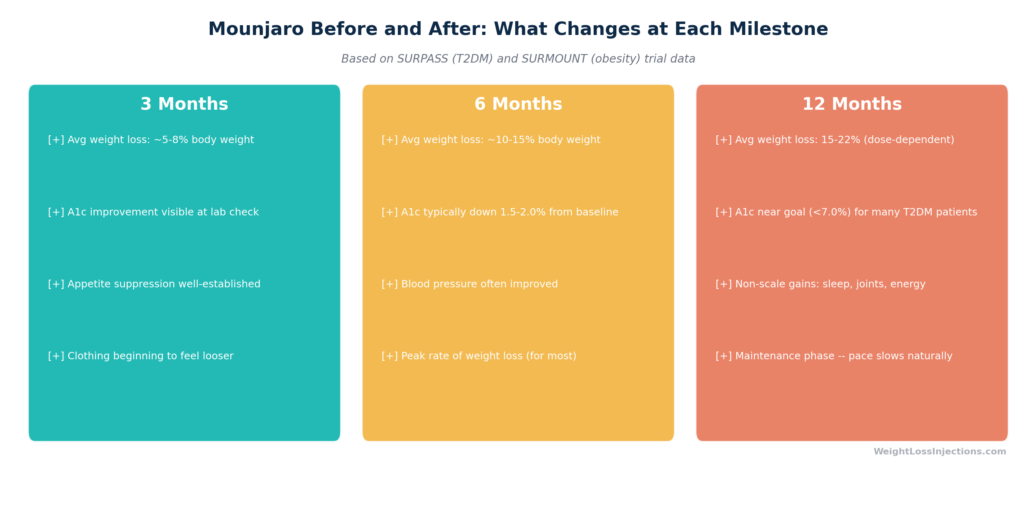
Typical weight loss in the first month reflects this: most patients see approximately 1–3% of body weight reduction, translating to roughly 2–5 lbs for a 200-lb patient. This is modest compared to what comes later but represents real physiological response.
Common early side effects during this phase include nausea, decreased appetite, and occasional GI discomfort. Per FDA Prescribing Information adverse reaction data, nausea occurs in 12–25% of patients in a dose-dependent manner, with the highest rates during titration. These effects typically peak at weeks 2–3 of any given dose step. Most patients find them manageable with smaller, lower-fat meals, adequate hydration, and avoiding lying down immediately after eating.
The “before” photo at week 0 typically looks exactly like your baseline. Visible changes are not yet present for most patients. That is not a problem — it is the correct stage of therapy.
Timeline infographic-style horizontal bar titled “Mounjaro Before and After: What Changes When” — X-axis: months 1–12; horizontal bars by outcome category: appetite suppression (month 1), visible…
Weeks 5–16: The Fastest Weight Loss Phase
This is the window that produces the most dramatic early before-and-after changes — and the one most likely to be captured in 3-month progress photos.
Per the FDA titration schedule, the dose increases from 2.5 mg to 5 mg at week 5, then to 7.5 mg at week 9 if additional glycemic control is needed. Each step is taken after at least 4 weeks at the current dose. For most patients, this phase places them in the 5–7.5 mg therapeutic range where measurable, sustained weight loss accelerates meaningfully.
SURPASS-2 data at 40 weeks — the most rigorous head-to-head comparison published — provides the key benchmarks for T2DM patients in this dose range: tirzepatide 5 mg produced −7.6 kg (−6.8%) of body weight loss; 10 mg produced −9.3 kg; 15 mg produced −11.2 kg versus −5.7 kg for semaglutide 1 mg. (NEJM Frías et al., SURPASS-2) These are not week-16 numbers — they are 40-week endpoints — but they illustrate the magnitude that T2DM patients can expect to approach as titration continues.
For context on what 3 months looks like for non-T2DM patients using tirzepatide for weight loss, early SURMOUNT-1 time-point data shows approximately 5–7% body weight reduction at 12 weeks at higher doses. (PMC SURMOUNT-1 full text) For a 200-lb patient, that means 10–14 lbs at the 3-month mark — real, visible progress but far short of the endpoint results often shown in circulating before-and-after content.
From a patient experience standpoint, weeks 5–16 are also the window where:
Energy often improves after week 6–8. As the body adapts to tirzepatide and caloric restriction stabilizes, many patients report noticeably improved energy and mobility — a non-scale victory that precedes dramatic weight loss.
Clothing fits differently before the scale shows a large number. Visceral abdominal fat is disproportionately targeted early; waist circumferences often change before total body weight shows dramatic movement.
T2DM patients see measurable A1c improvement around week 12 — typically the first lab-measurable glycemic milestone. SURPASS-2 at 40 weeks showed mean A1c reductions of −2.01% (5 mg) and −2.30% (15 mg) versus −1.86% for semaglutide 1 mg at the 40-week primary endpoint. (NEJM SURPASS-2)
Nausea and GI side effects often peak during each dose escalation. The side-effect profile at week 5 (new 5 mg dose) and week 9 (new 7.5 mg dose) typically mirrors the week 1–2 experience — modest adjustment discomfort that resolves within days to a week.
The 3-month before-and-after is real. It simply reflects a patient who is in the middle of the dose-escalation ramp, at sub-maximal therapeutic doses, with a substantial portion of their ultimate weight loss still ahead.
Months 4–12: Long-Term Results and Maintenance Dosing
By month 4 — approximately week 16 — most patients are approaching or have reached their maintenance dose, typically 10 mg or 15 mg. This is when the before-and-after photos that circulate most widely were taken: patients who are at maximum tolerated dose, several months into sustained therapy, with the compounding effect of sustained caloric deficit.
The primary endpoint data from the SURMOUNT and SURPASS programs tells this story precisely:
SURMOUNT-1 (obesity, no T2DM) at 72 weeks:
5 mg: −16.5% body weight vs. −2.4% placebo
10 mg: −21.4% body weight
15 mg: −22.4% body weight
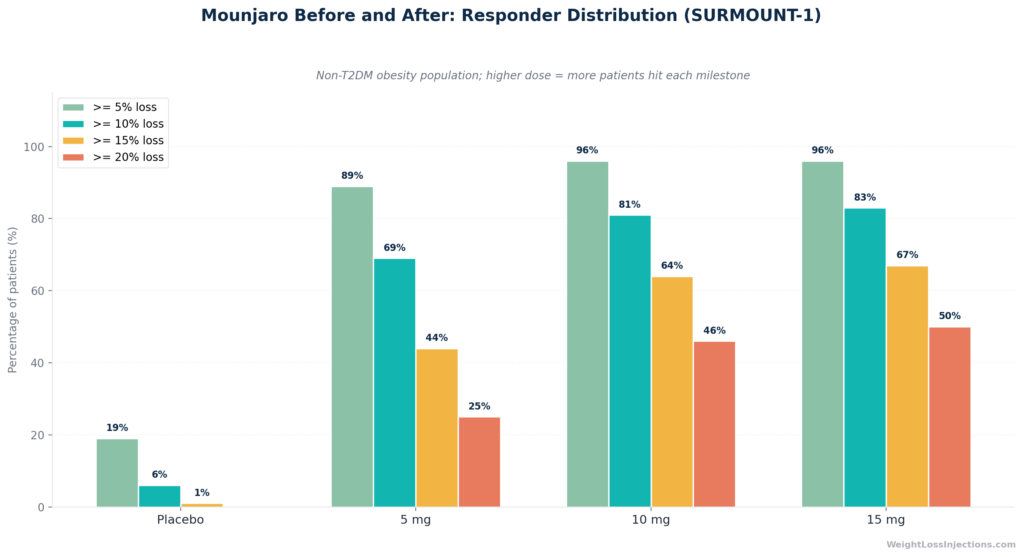
≥20% body weight loss achieved by 50% of patients on 10–15 mg
SURPASS-2 (vs. semaglutide 1 mg): −7.6 kg to −11.2 kg at 40 weeks (NEJM SURPASS-2)
SURPASS-3 (vs. insulin degludec): −7.5 kg to −12.9 kg at 52 weeks (Lancet SURPASS-3)
SURPASS-CVOT (vs. dulaglutide, ~4-year follow-up): −11.6% body weight vs. −4.5% for dulaglutide (NEJM SURPASS-CVOT 2025)
Translated to real-world pounds for a T2DM patient:
A 200-lb patient on Mounjaro 15 mg for 40–52 weeks in a T2DM population (SURPASS data) can realistically expect approximately 22–26 lbs of weight loss at 12 months. A patient without T2DM using tirzepatide at 15 mg for 72 weeks (SURMOUNT-1) would average approximately 45 lbs lost from a 200-lb starting weight. These are population averages — individual results vary — but they represent the most reliable available benchmarks.
What the pace looks like: Weight loss rate is fastest in months 2–6, then decelerates. After month 6, most patients continue losing weight but at a slower rate as the body adjusts to the new caloric equilibrium. This slowdown — often called a “plateau” — is expected, normal, and not a treatment failure. It reflects the defended set-point biology of body weight regulation, not inadequacy of the medication.
Non-scale victories at months 4–12 include:
A1c normalization: At 15 mg, SURPASS-2 showed 52% of T2DM patients achieving HbA1c below 5.7% (normoglycemia) by 40 weeks. (NEJM SURPASS-2)
Blood pressure improvement: Systolic BP reductions of approximately 5–8 mmHg across SURPASS trials.
Reduced joint pain and improved mobility: As body mass decreases, load on weight-bearing joints is reduced proportionally. Patients commonly report improved knee pain and walking capacity.
Better sleep quality: Weight loss reduces sleep apnea severity and improves sleep architecture.
Hair thinning (telogen effluvium): This side effect is not listed on the FDA label as a direct drug effect but is widely reported by patients and clinicians. It is understood to be a secondary response to rapid caloric restriction and weight loss — the same mechanism that causes hair thinning after any major weight-loss event. It typically peaks around months 3–6 and resolves as weight stabilizes. Increasing dietary protein to at least 1.2 g/kg of body weight daily can support hair follicle health during this phase. If you want to learn more, see our guide to hair thinning on Mounjaro.
Muscle mass preservation: Without structured resistance training, a meaningful portion of weight lost on tirzepatide includes lean mass alongside fat. Adequate protein intake and resistance exercise reduce this proportion and improve the long-term metabolic outcome. Aim for at least 1.2 g/kg of body weight in protein daily throughout active weight loss.
Grouped bar chart titled “Average Weight Loss by Dose Across SURPASS Trials” — X-axis: trial name (SURPASS-1, -2, -3, -4); Y-axis: kg lost at primary endpoint; grouped bars for tirzepatide 5 mg / 10…
Our Top 3 · September 2026
The best GLP-1 providers right now
Independently reviewed. Ranked by price, medication access, provider quality, and patient outcomes.
For patients comparing their results to published data, the following tables provide the most reliable benchmarks across the SURPASS and SURMOUNT programs.
In SURMOUNT-1, 50% of patients on 10–15 mg lost ≥20% of body weight at 72 weeks. (PMC SURMOUNT-1 full text) This is the headline statistic behind many of the most dramatic before-and-after photos — and it represents the non-diabetic, maximum-dose, long-duration patient. Most Mounjaro patients prescribed for T2DM will fall into the SURPASS range, not the SURMOUNT-1 range, when setting realistic expectations.
Why T2DM patients see less weight loss than SURMOUNT-1 headlines: Insulin resistance is itself a metabolic barrier to weight loss. T2DM patients have blunted adipose tissue lipolysis and altered energy homeostasis that reduces the magnitude of drug-driven caloric deficit. This is not a medication failure — it is the expected clinical picture. SURMOUNT-2 (Lancet 2023), which enrolled patients with both obesity and T2DM, showed approximately 15% weight loss at 15 mg — considerably less than SURMOUNT-1’s 22.4%, but substantially more than the SURPASS T2DM trials, reflecting the cleaner weight-loss signal when obesity (not T2DM management) is the enrollment criterion.
What the data means for a 200-lb patient at 15 mg:
Pure obesity trial (SURMOUNT-1 trajectory): expected ~45 lbs lost at 72 weeks
T2DM + obesity (SURMOUNT-2): expected ~30 lbs lost at 72 weeks
T2DM primary indication (SURPASS-3): expected ~26 lbs lost at 52 weeks
These are ranges based on population means, not predictions for any individual.
In SURPASS-CVOT — the longest-running tirzepatide cardiovascular outcomes trial, with a median follow-up of approximately 4 years — tirzepatide produced −11.6% body weight reduction versus −4.5% for dulaglutide (Trulicity), with superiority in all-cause mortality (HR 0.84) despite only meeting noninferiority (not superiority) on the primary MACE endpoint. (NEJM SURPASS-CVOT 2025) This long-term data confirms that Mounjaro’s weight loss and metabolic benefits are sustained over years of continued treatment.
Scatter plot titled “Body Weight Reduction vs
Real Patient Experiences: What Forum and Registry Data Shows
Clinical trial data tells one story. Real-world patient experience tells another — often confirming the trials, but with important nuances that trial populations cannot capture.
A 2025 retrospective real-world analysis of more than 4,000 women enrolled in a digital weight-loss service on tirzepatide found mean weight loss of 18.81% at 10 months of treatment; 96.6% of participants lost ≥5% of body weight, and 90.1% lost ≥10%. Digital engagement — active program participation — was associated with 21.02% mean weight loss. (Medscape real-world tirzepatide analysis, 2025) These numbers are closer to SURMOUNT-1 obesity-trial benchmarks than SURPASS T2DM benchmarks, reflecting a real-world population that included many patients using tirzepatide for weight management without the T2DM metabolic resistance factor.
Several patterns from patient community data align consistently with what clinical trials predict:
Weight-loss stalls are normal and nearly universal. The two most commonly reported stall windows — around weeks 8–10 and again around month 4 — correspond exactly to transitions between dose levels and the biological adjustment to sustained caloric restriction. A stall during Mounjaro therapy is not a sign that the medication has stopped working; it is a sign that the body is mounting its normal physiological defense against weight loss. Continuing treatment consistently, maintaining dietary adherence, and titrating to the next dose level when appropriate are the appropriate responses.
The scale lags behind body composition changes. Many patients report that clothing fits differently, belt holes change, and faces look slimmer before a proportional change appears on the scale. This reflects the early preferential reduction of visceral abdominal fat — the metabolically active fat depot targeted most aggressively by incretin-driven caloric deficit.
The highest-dose patients see the most dramatic results — but not everyone reaches 15 mg. Patients who cannot tolerate dose escalation above 5 mg due to persistent nausea or GI effects will see results consistent with the 5 mg column of the SURPASS tables — meaningful, but different from the 15 mg headline numbers. This is a real differentiator between patients’ before-and-after trajectories.
Social media before-and-afters are self-selected. Patients who see dramatic online results and become discouraged when their own results are more moderate have been misled by survivorship bias. Trial averages represent what a typical patient achieves; social media predominantly represents the top responders.
As the WeightLossInjections.com Staff notes: “When I counsel patients starting Mounjaro, I tell them two things: first, that your A1c will likely improve before you notice the weight changing significantly; and second, that comparing your week-12 experience to someone else’s week-72 photo is not a fair comparison. Give the medication the time the clinical trials gave it.”
Real-world patient-reported outcomes also emphasize that non-scale changes often motivate continued adherence more powerfully than scale numbers. Patients who report improved knee pain, better sleep, looser waistbands, and lower blood pressure at their 3-month visit are typically more engaged with continued therapy than patients fixating exclusively on scale weight. (FormBlends real-world before-and-after data)
Factors That Shape Your Personal Before-and-After Results
Within the trial populations, several variables reliably separate patients who achieve dramatic transformations from those who achieve more modest ones. Understanding these factors allows a realistic appraisal — and in many cases, actionable modification — of your personal trajectory.
Starting Weight and BMI
Higher baseline body weight consistently produces greater absolute weight loss in pounds, even when percentage loss is similar or lower. SURMOUNT-1 data shows a positive correlation between starting weight and absolute weight loss at 72 weeks: a patient starting at 300 lbs losing 20% loses 60 lbs; a patient starting at 200 lbs losing 20% loses 40 lbs. The photos that show the most dramatic visual transformations almost always originate from patients who started at higher BMIs, where the same percentage loss produces larger, more visually conspicuous changes.
T2DM Status
This is the single largest systematic modifier of expected outcome for Mounjaro patients. The SURPASS trials (T2DM population) show approximately 11–13% body weight loss at 15 mg over 40–52 weeks, compared to 22.4% in SURMOUNT-1’s non-T2DM population at 72 weeks. (SURPASS-2 NEJM); (SURMOUNT-1 NEJM) The difference is real, clinically relevant, and not a treatment failure — it reflects the metabolic environment of T2DM.
Dose Achieved
The dose you successfully reach and maintain is one of the strongest predictors of outcome magnitude. Patients who can tolerate and sustain 15 mg consistently outperform those limited to 5 mg. The response gap is not trivial: SURMOUNT-1 at 72 weeks shows 16.5% average loss at 5 mg versus 22.4% at 15 mg — a 5.9 percentage-point difference that translates to approximately 13 lbs on a 220-lb patient. Strategies that support dose escalation — smaller low-fat meals, adequate hydration, antiemetics when needed, and slower escalation schedules — are worth pursuing, because dose determines outcome magnitude in a dose-response relationship. See our guide to the Mounjaro dosing schedule for a full breakdown.
Dietary Adherence
Mounjaro reduces appetite; it does not eliminate it. Patients who continue to consume high-fat, high-sugar, ultra-processed diets dampen the medication’s effect. The drug creates a caloric deficit through appetite suppression and slowed gastric emptying — but a high-calorie dietary pattern can partially or fully offset that deficit. Structured dietary adherence, emphasizing protein-rich whole foods and limiting calorically dense processed foods, amplifies the medication’s effect.
Exercise, Especially Resistance Training
Exercise serves two purposes during Mounjaro therapy. First, it adds to the caloric deficit. Second — and more importantly for the long-term quality of body composition — resistance training preserves lean mass during active weight loss. Without structured resistance training, a meaningful fraction of weight lost on GLP-1/GIP agonists is lean tissue. Preserving lean mass during weight loss is not cosmetic; it sustains resting metabolic rate and functional strength, both of which matter for long-term maintenance. Aim for at least 2–3 resistance training sessions weekly.
Alcohol Intake
Alcohol adds caloric density with negligible satiety benefit, partially offsetting tirzepatide’s appetite suppression. In patients also using sulfonylureas or insulin alongside Mounjaro, alcohol adds meaningful hypoglycemia risk. Reducing alcohol intake is both calorie-smart and safety-appropriate during Mounjaro therapy.
Sleep Quality
Chronically poor sleep elevates cortisol, which directly opposes weight loss by promoting visceral fat accumulation and increasing appetite for calorically dense foods. Patients with untreated obstructive sleep apnea, insomnia, or shift-work sleep disruption may see slower progress until sleep is addressed alongside medication.
Comorbidities That Can Slow Progress
Hypothyroidism, polycystic ovary syndrome (PCOS), and untreated sleep apnea each create metabolic environments that can blunt tirzepatide’s effect. These should be optimally managed alongside Mounjaro therapy, not treated as secondary concerns. For PCOS patients specifically, tirzepatide’s insulin-sensitizing dual mechanism may offer additional metabolic benefit, though Mounjaro is not FDA-approved for PCOS. See our dedicated PCOS discussion for more context.
Our Take at WeightLossInjections.com
The before-and-after genre has a structural honesty problem. It selects for the most visually dramatic results, taken at the most favorable time point, from patients at maximum dose after the longest treatment duration — then presents these as what Mounjaro “does.” This is not technically inaccurate; those are real outcomes from real patients. But it reliably creates a gap between expectation and typical clinical reality that undermines patients’ confidence in treatments that are, by any objective clinical standard, genuinely effective.
The SURPASS trial data for T2DM patients is compelling on its own terms. Losing 11–13% of body weight in 40–52 weeks — paired with A1c reductions of 2.0–2.4% that move many patients out of the diabetic range entirely — is a clinically significant, life-changing outcome. In SURPASS-3, tirzepatide 15 mg produced −12.9 kg of weight loss versus a weight gain of 2.3 kg on insulin degludec, while achieving superior HbA1c reduction. (Lancet SURPASS-3) That comparison tells the real before-and-after story for a T2DM patient: the “before” includes insulin-driven weight gain; the “after” includes meaningful weight loss and substantially improved glycemic control.
WeightLossInjections.com connects patients with licensed providers who can evaluate candidacy for tirzepatide therapy, discuss whether Mounjaro or Zepbound is the appropriate option based on diagnosis and insurance, and structure a monitoring plan that tracks both metabolic and weight outcomes. For T2DM patients, Mounjaro is FDA-approved and covered by most commercial plans (Noom insurance guide, 2026); the Lilly Savings Card can reduce copays to as low as $25/month for eligible patients with commercial insurance coverage. (NiceRx savings card overview, March 2026) For weight-loss patients without T2DM, licensed providers can discuss Zepbound and other available options.
Consultations are available [$X/month] with [service detail]. The process involves a licensed clinician review, lab documentation where needed, and an ongoing monitoring program structured around your specific starting point and goals.
Physician Review Block: This article was reviewed for medical accuracy by the WeightLossInjections.com Staff. Reviewed June 2026.
See if you qualify — start your consultation today at WeightLossInjections.com.
FAQ
Most patients notice appetite suppression and early reduction in “food noise” within 1–2 weeks of starting the 2.5 mg initiation dose. Visible weight-loss changes — clothing fitting differently, facial slimming, belt-notch changes — typically become apparent around weeks 8–12 as patients approach the 5–10 mg range. External social recognition, where other people notice the change, more commonly begins around months 4–6. Maximum results accrue over 12–18 months of sustained therapy at the highest tolerated dose. The FDA titration schedule means the maximum 15 mg dose is not reached until at minimum week 20, so before-and-after comparisons made before that point reflect sub-maximal dosing.
Based on SURMOUNT-1 early time-point data, average loss at 12 weeks is approximately 5–8% of body weight depending on dose reached — typically 5–7.5 mg at that stage. (PMC SURMOUNT-1 full text) For a 200-lb patient, that translates to approximately 10–16 lbs. T2DM patients typically see somewhat less than non-T2DM patients at equivalent time points, consistent with SURPASS trial data versus SURMOUNT-1. The 3-month mark represents the beginning of meaningful weight loss — not the endpoint that trial benchmarks reflect.
Weight regain is common if Mounjaro is discontinued. SURMOUNT-4 extension data found that patients who stopped tirzepatide after achieving ~20% weight loss regained approximately two-thirds of their lost weight within 52 weeks of stopping — ending at approximately −9.9% from original baseline, versus continued loss to −25.3% for those who remained on treatment. (SURMOUNT-1/4 data, NEJM 2022) Obesity and T2DM are chronic conditions requiring long-term management. The before-and-after photos circulating online represent what the medication produces during continuous treatment — they are not permanent in the absence of continued therapy or significant lifestyle infrastructure.
Social media before-and-afters are disproportionately drawn from the top responders: patients at maximum dose, with the longest treatment duration, without T2DM metabolic resistance, who achieved ≥20–25% body weight loss. Clinical trial averages are more moderate and reflect the actual distribution of patient outcomes. Your pace is shaped by your starting dose, T2DM status, rate of titration, dietary pattern, exercise level, and adherence. Comparing your week-12 experience to someone’s week-72 photo at 15 mg is not a meaningful comparison. Review the SURPASS data tables in this article for the benchmarks appropriate to your clinical profile.
Yes — and for many patients, the non-scale changes are the most clinically meaningful part of the picture. Patients commonly report improved A1c (2.0–2.4% reduction at higher doses per SURPASS trials), lower blood pressure, reduced knee and joint pain, better sleep quality, improved energy levels, and in T2DM patients, reduced or eliminated need for other glucose-lowering medications. The SURPASS-2 trial found that 52% of T2DM patients on tirzepatide 15 mg achieved HbA1c below 5.7% — normoglycemia — at 40 weeks. (NEJM SURPASS-2) That metabolic before-and-after does not show up in a photo.
Yes — Mounjaro and Zepbound contain the identical active ingredient tirzepatide. The SURMOUNT obesity trial data showing up to 22.4% body weight loss at 72 weeks on 15 mg applies to the same molecule at the same doses. (SURMOUNT-1 NEJM) The primary differences between Mounjaro and Zepbound are the FDA-approved indication (T2DM vs. chronic weight management), the insurance coverage pathway, and the population in which each was primarily studied. For a T2DM patient on Mounjaro, the SURPASS T2DM data is the most appropriate benchmark for expected weight loss; SURMOUNT-1 data represents the upper bound of what the molecule can produce in a non-T2DM obesity population. See our guide on Mounjaro for weight loss for a full comparison.
This article is for educational purposes only and does not constitute medical advice. Mounjaro (tirzepatide) is FDA-approved for type 2 diabetes mellitus (NDA 215866, May 2022) as an adjunct to diet and exercise to improve glycemic control in adults. Off-label use for chronic weight management should be evaluated by a licensed provider. Weight loss results vary; trial averages represent population means, not guaranteed outcomes for any individual. All clinical data cited reflects published peer-reviewed sources; verify current prescribing information with your provider. WeightLossInjections.com’s editorial team reviews all content quarterly; last medical review: June 2026. Consult a licensed healthcare provider before starting or changing any prescription medication.

![Unbranded [pillar-drug-class] injection pen on a neutral background — WeightLossInjections.com editorial hero](https://weightlossinjections.com/wp-content/uploads/2026/07/hero_mounjaro_c5_lifestyle-1200x675.png)