How Much Does Mounjaro Lower A1c? A Full Look at the SURPASS Clinical Trial Evidence
Medically reviewed by WeightLossInjections.com Staff•Updated July 23, 2026•26 min readMedically reviewed
⤢
Medical Disclaimer: The A1c reduction figures cited in this article are derived from controlled clinical trials in specific patient populations. Individual results will vary based on baseline A1c, concurrent medications, diet, exercise, and other health factors. This article is for informational purposes only and does not constitute medical advice. Consult a licensed healthcare provider before making any changes to your diabetes treatment.
SURPASS trial A1c reductions: tirzepatide 5 mg, 10 mg, and 15 mg vs. comparators across all pivotal trials
A1c (hemoglobin A1c / HbA1c) reflects your average blood glucose over the past 2–3 months. Every 1% reduction in A1c cuts the risk of serious diabetes complications by a clinically meaningful margin.
Across the SURPASS phase 3 program, Mounjaro (tirzepatide) produced A1c reductions ranging from −1.87% to −2.58% at the 15 mg dose, depending on the trial and comparator population — the largest A1c reductions demonstrated by any approved GLP-1 receptor agonist in its class.
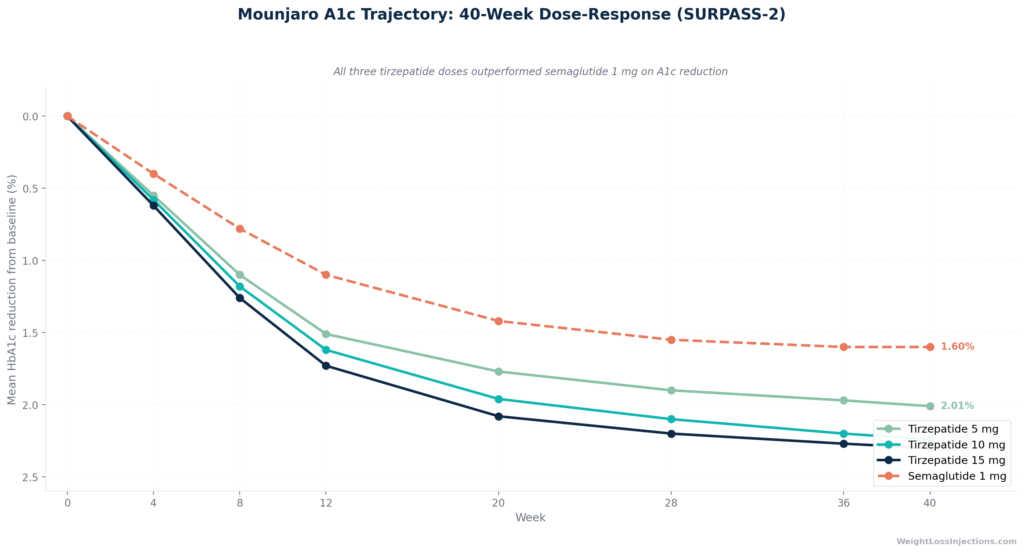
In SURPASS-2, the direct head-to-head trial, all three tirzepatide doses were statistically superior to semaglutide 1 mg (Ozempic). Tirzepatide 15 mg reduced A1c by −2.30% versus −1.86% for semaglutide.
A1c is a lagging indicator — you need at least 12 weeks on a stable dose before your lab result meaningfully reflects Mounjaro’s effect. Fasting glucose begins falling within the first few weeks.
Dose matters: the 10 mg and 15 mg doses consistently produce the largest A1c reductions. Most of Mounjaro’s glycemic benefit accumulates at the therapeutic doses, not the 2.5 mg initiation dose.
82–92% of patients on tirzepatide achieved the standard ADA A1c target of <7.0% in SURPASS trials — compared to 23–61% with comparators.
What to do if A1c is not falling after 3 months: rule out missed doses, assess diet quality, and discuss dose escalation with your prescriber.
What Is A1c and Why Does It Matter?
Before examining the clinical data, it helps to understand exactly what the A1c test is measuring and why physicians use it to evaluate diabetes medications.
The Biology of Hemoglobin A1c
A1c — also written HbA1c or glycated hemoglobin — is a blood test that measures the percentage of hemoglobin molecules in your red blood cells that have glucose attached to them. Because red blood cells live for approximately 90–120 days, the proportion of glycated hemoglobin reflects your average blood glucose concentration over roughly the past 2–3 months. A single fasting glucose reading tells you what your blood sugar was on one morning; your A1c tells you what your blood sugar has been doing while you slept, ate, exercised, and lived your life over the past quarter, per the NIDDK overview of A1c testing.
This makes A1c the gold-standard metric for evaluating long-term glycemic control — and the primary endpoint in every SURPASS clinical trial, per the FDA Mounjaro Prescribing Information.
Standard ADA treatment target for most adults with T2DM
Below 6.5%
Individualized target for select patients (younger, newly diagnosed, no hypoglycemia risk)
8.0% or higher
Indicates suboptimal glucose control; typically triggers medication intensification
For most adults living with type 2 diabetes, the clinical goal is to get A1c below 7.0% — and ideally as close to the normal range as safely achievable without inducing hypoglycemia.
Why Even a 1% A1c Reduction Is a Big Deal
The clinical significance of A1c reduction is not academic. In landmark diabetes outcome research, each 1% reduction in A1c is associated with:
A 37% reduction in microvascular complications, including diabetic retinopathy (eye disease), nephropathy (kidney disease), and neuropathy (nerve damage)
A 14% reduction in the risk of myocardial infarction (heart attack)
A 12% reduction in all-cause mortality
These associations mean that a patient whose A1c drops from 9.0% to 7.0% — a 2-point reduction similar to what tirzepatide achieves in clinical trials — is meaningfully reducing their lifetime risk of blindness, dialysis, amputation, and cardiovascular events. The absolute numbers in the SURPASS trials are not just statistically impressive; they translate directly into reduced complication burden.
A1c Is a Lagging Indicator
One practical point patients often miss: because A1c reflects a rolling 3-month average, it cannot capture changes that happened recently. If you start Mounjaro today, your A1c measured next week will look nearly identical to your baseline — not because the medication is failing, but because most of your red blood cells were formed before you started treatment. Meaningful A1c changes require a minimum of 12 weeks at a stable dose to register on a lab test, per the FDA Mounjaro Prescribing Information §12.3.
Mounjaro A1c Reduction by Dose — SURPASS Trial Overview
Mounjaro’s clinical evidence base is the SURPASS program: five pivotal phase 3 trials (SURPASS-1 through SURPASS-5) plus a large cardiovascular outcomes trial (SURPASS-CVOT), enrolling more than 20,000 adults with type 2 diabetes across dozens of countries. Every trial tested tirzepatide at three therapeutic doses — 5 mg, 10 mg, and 15 mg — each administered once weekly. The primary endpoint across all trials was mean change in HbA1c from baseline.
Here is a systematic review of what the trials found.
SURPASS-1: Mounjaro as Monotherapy vs. Placebo
Design: 40-week, double-blind, placebo-controlled trial; N=478; treatment-naïve T2DM patients on diet and exercise alone (no background diabetes medications); mean baseline HbA1c approximately 7.94%. Published in The Lancet, June 2021.
Treatment Arm
HbA1c Reduction
Body Weight Reduction
Tirzepatide 5 mg
−1.87%
−7.0 kg (−7.9%)
Tirzepatide 10 mg
−1.89%
−8.5 kg (−9.7%)
Tirzepatide 15 mg
−2.07%
−9.5 kg (−11.0%)
Placebo
+0.04%
−0.7 kg
The target achievement data from SURPASS-1 may be even more striking than the mean reductions. In the tirzepatide groups, 82–85% of patients achieved an A1c below 7.0% — the standard ADA treatment target — compared to only 23% in the placebo group. More remarkably, 31–52% of tirzepatide patients reached normoglycemia (A1c below 5.7%, the threshold for “normal” on the ADA scale) compared to just 1% on placebo, per the SURPASS-1 Lancet publication via Lilly’s investor release. For many patients, this represents the first time their blood sugar has been in the normal range in years — or ever since their diagnosis.
SURPASS-2: Mounjaro vs. Semaglutide (Ozempic) — Direct Head-to-Head
Design: 40-week, open-label, randomized trial; N=1,879; patients on background metformin; mean baseline HbA1c approximately 8.3%. Published in The New England Journal of Medicine, August 2021 (Frías et al.).
This is the most important comparative trial in tirzepatide’s clinical record — and the one most patients ask about when weighing Mounjaro against Ozempic.
Treatment Arm
HbA1c Change
Body Weight Change
vs. Semaglutide 1 mg
Tirzepatide 5 mg
−2.01%
−7.6 kg
Superior (ETD: −0.15%, p=0.02)
Tirzepatide 10 mg
−2.24%
−9.3 kg
Superior (ETD: −0.39%, p<0.001)
Tirzepatide 15 mg
−2.30%
−11.2 kg
Superior (ETD: −0.45%, p<0.001)
Semaglutide 1 mg
−1.86%
−5.7 kg
—
All three tirzepatide doses achieved both noninferiority and superiority over semaglutide 1 mg for HbA1c reduction — a threshold that the trial was not originally powered to achieve with the 5 mg dose, per the ACC SURPASS-2 summary. In clinical terms, Mounjaro at every tested dose outperformed the gold-standard GLP-1 receptor agonist for glycemic control.
Important caveat: SURPASS-2 used semaglutide at 1 mg/week — below the maximum 2 mg approved dose of Ozempic. No published head-to-head randomized trial has directly compared tirzepatide to semaglutide 2 mg. The magnitude of tirzepatide’s advantage may be somewhat smaller at the semaglutide 2 mg dose, per diaTribe’s tirzepatide summary. Patients comparing these medications should keep this caveat in mind when interpreting SURPASS-2 data.
SURPASS-3: Mounjaro vs. Insulin Degludec
Design: 52-week, open-label, randomized trial; N=1,444; patients on metformin ± SGLT2 inhibitor; mean baseline HbA1c approximately 8.17%. Published in The Lancet, August 2021.
Treatment Arm
HbA1c Reduction
Body Weight Change
Tirzepatide 5 mg
−1.93%
−7.5 kg
Tirzepatide 10 mg
−2.20%
−10.7 kg
Tirzepatide 15 mg
−2.37%
−12.9 kg
Insulin degludec
−1.34%
+2.3 kg
All tirzepatide doses were statistically superior to insulin degludec for both HbA1c reduction (p<0.0001) and body weight (p<0.0001). The estimated treatment differences versus degludec ranged from −0.59% (5 mg) to −1.04% (15 mg). Of note: 82–93% of tirzepatide patients achieved A1c <7.0% versus 61% with degludec — while simultaneously losing approximately 13 kg rather than gaining 2.3 kg.
SURPASS-4: Mounjaro vs. Insulin Glargine in High Cardiovascular Risk Patients
Design: 52-week (with 104-week follow-up reported), open-label, randomized trial; N=2,002; patients with T2DM and increased cardiovascular risk; mean baseline HbA1c approximately 8.52%. Published in The Lancet, November 2021 (Del Prato et al.).
Treatment Arm
HbA1c Change
Body Weight Change
Tirzepatide 5 mg
−2.24%
−7.1 kg
Tirzepatide 10 mg
−2.43%
−9.5 kg
Tirzepatide 15 mg
−2.58%
−11.7 kg
Insulin glargine
−1.44%
+1.9 kg
SURPASS-4 produced the largest absolute A1c reduction in the entire SURPASS program: −2.58% at the 15 mg dose. This population had a higher mean baseline A1c (8.52%) and higher cardiovascular risk than other SURPASS trials, which partially explains the larger absolute reduction — higher starting A1c gives more room to fall. The cardiovascular safety finding was also notable: tirzepatide showed no increased cardiovascular risk versus glargine (HR 0.74; 95% CI 0.51–1.08), per the Lilly SURPASS-4 press release.
SURPASS-CVOT: Long-Term A1c Data vs. Dulaglutide (Trulicity)
Design: Double-blind, randomized, noninferiority cardiovascular outcomes trial; N=13,299; patients with T2DM and established atherosclerotic cardiovascular disease; median follow-up approximately 4 years; tirzepatide up to 15 mg vs. dulaglutide 1.5 mg. Published in The New England Journal of Medicine, December 2025 (Nicholls et al.).
The SURPASS-CVOT HbA1c data confirms that tirzepatide’s glycemic advantage persists over the long term:
Tirzepatide: −1.66% HbA1c reduction
Dulaglutide 1.5 mg: −0.88% HbA1c reduction
Tirzepatide produced roughly double the A1c reduction of dulaglutide over a ~4-year follow-up period, alongside a 16% reduction in all-cause mortality (HR 0.84; 95% CI 0.75–0.94) versus dulaglutide — driven primarily by non-cardiovascular causes. The primary MACE endpoint met noninferiority (p=0.003) but not superiority (p=0.09), per the ACC SURPASS-CVOT summary.
Across the pooled SURPASS-1 through SURPASS-5 dataset, mean HbA1c reduction at the 10 mg and 15 mg doses averaged approximately 2.0–2.4%, and greater proportions of tirzepatide patients achieved HbA1c <7.0% combined with ≥5% weight loss and without hypoglycemia than any comparator — 43–82% vs. 4–51% with comparators, per the pooled SURPASS PubMed composite analysis.
How Quickly Does Mounjaro Lower A1c? Timeline and Milestones
Understanding when to expect A1c changes is just as important as knowing how much to expect — and a source of frustration for patients who test too early or lose confidence before the medication has had time to work.
Fasting plasma glucose decline over 40 weeks (SURPASS-2): tirzepatide 15 mg versus semaglutide 1 mg
The Pharmacokinetic Foundation
Tirzepatide has an elimination half-life of approximately 5 days, per the FDA Mounjaro Prescribing Information §12.3. With once-weekly dosing, steady-state plasma concentrations are reached after approximately 4 weeks — meaning the drug is not fully active at its target receptor occupancy until week 5 or later. Patients on the 2.5 mg initiation dose are not yet at a therapeutic dose for glycemic control; that dose is designed purely for tolerability, not efficacy. Meaningful glycemic effects begin accumulating at 5 mg (weeks 5–8) and increase progressively with each dose escalation.
Week-by-Week A1c Timeline
Weeks 1–4 (2.5 mg dose): Fasting plasma glucose may begin to decline, but changes are often modest. The drug is still reaching steady state. A1c tests at this point will show essentially no change from baseline — the 90-day rolling average has barely been affected. Do not interpret an unchanged early A1c as a sign of failure.
Weeks 5–8 (first therapeutic dose: 5 mg): Fasting glucose logs typically show a more consistent downward trend. The drug is now at steady state at 5 mg. Postprandial glucose spikes are also attenuated. However, A1c still reflects mostly pre-treatment blood sugar. An A1c test at week 8 will show only modest improvement.
Week 12 (3 months): The First Meaningful A1c Checkpoint At approximately 3 months, an A1c test begins to meaningfully capture tirzepatide’s glycemic effect. Most clinicians schedule the first diabetes follow-up A1c at this point. In SURPASS trials, substantial reductions were documented by the week-12 interim assessments. However, patients still on 5 mg at week 12 have not yet reached the 10 mg or 15 mg doses — full benefit is not yet realized.
Weeks 24–40: Dose Plateau and Maintenance As patients complete titration to their target dose (typically 10 or 15 mg), A1c continues to fall toward its nadir. In SURPASS-1 and SURPASS-2, the primary endpoint was measured at week 40 — approximately 10 months. This is when the headline trial results were recorded. Patients who achieve their target dose by weeks 16–20 should see their best A1c results by this window.
Weeks 40–72+ (Long-Term Data): SURPASS-3 and SURPASS-4 ran to 52 weeks, and SURPASS-CVOT followed patients for approximately 4 years. A1c reduction was sustained throughout these extended periods. There is no evidence of clinically meaningful A1c rebound or waning efficacy over time in patients who continue the medication at their target dose, per the SURPASS-CVOT NEJM 2025 publication.
Special case — very high baseline A1c (>10%): Patients starting with very elevated A1c (>10%) may see faster absolute drops early in treatment because there is more room to fall. But the 12-week minimum for a meaningful A1c reading still applies — a drop from 11.0% to 9.0% may look dramatic but still reflects only partial effect, not a plateau.
Why Fasting Glucose Is a Useful Leading Indicator
Because A1c is slow to change, patients on home glucose monitors can use fasting glucose as an early proxy for medication effect. If fasting glucose is trending downward by weeks 4–8, Mounjaro is working — the A1c catch-up will follow. If fasting glucose is not declining by week 8, that is a useful early signal to discuss dose escalation or other interventions with your prescriber rather than waiting for a delayed A1c result.
Mounjaro A1c vs. Other Diabetes Medications — Full Comparative Analysis
Tirzepatide’s dual GIP + GLP-1 receptor agonism distinguishes it mechanistically from every other approved GLP-1 receptor agonist. That mechanistic difference translates into a measurable glycemic advantage across the clinical evidence base.
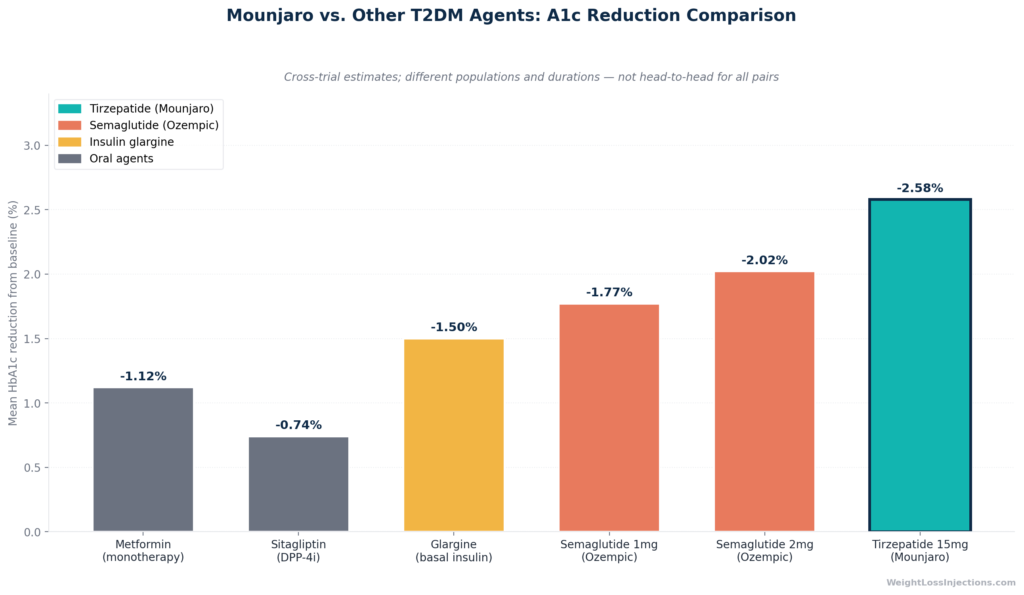
A1c reduction comparison by diabetes medication class — best results from clinical trial data
For broader context, tirzepatide’s A1c reductions also significantly exceed those of older diabetes drug classes:
Metformin (first-line oral): Typically reduces A1c by approximately −1.0–1.5% in clinical practice. It remains the recommended foundation of T2DM therapy per the ADA Standards of Care 2026, but its glycemic ceiling is far lower than tirzepatide’s.
Sulfonylureas (e.g., glipizide, glimepiride): Typical A1c reduction −1.0–2.0% with risk of hypoglycemia and weight gain — adverse profiles that tirzepatide avoids.
SGLT2 inhibitors (e.g., empagliflozin, dapagliflozin): A1c reduction approximately −0.5–1.0%, with independent cardiovascular and renal protective benefits that are distinct from glycemic efficacy.
Insulin glargine (basal insulin): In SURPASS-4, insulin glargine produced −1.44% A1c reduction — substantially below tirzepatide’s −2.58% in the same trial population, per the SURPASS-4 Lancet 2021 publication. Insulin also caused weight gain of +1.9 kg versus weight loss of −7.1 to −11.7 kg with tirzepatide.
DPP-4 inhibitors (e.g., sitagliptin, alogliptin): A1c reduction typically −0.5–0.8% — a modest effect suitable as add-on therapy for mild hyperglycemia.
Tirzepatide’s clinical advantage is most striking not just in the magnitude of A1c reduction but in the rate of target achievement: in SURPASS-1, over half of patients on the 15 mg dose reached normoglycemia (A1c <5.7%). No other approved T2DM medication has produced normoglycemia rates at that scale in a phase 3 trial.
The AACE/AACE Algorithm Context
The American Association of Clinical Endocrinology (AACE) comprehensive diabetes management algorithm positions tirzepatide as a preferred agent for patients with T2DM who have not achieved A1c targets on metformin and who prioritize both A1c reduction and weight loss. For patients with an A1c ≥9.0% at presentation — a population where older agents routinely fall short — tirzepatide’s ability to drive A1c reductions of 2+ percentage points makes it a frontline intensification option in current clinical practice.
Glycemic Variability, Hypoglycemia Risk, and CGM Data
A1c reduction is one dimension of glycemic improvement. Another — increasingly recognized as independently important — is glycemic variability: the degree to which blood sugar fluctuates throughout the day.
Tirzepatide and Hypoglycemia
Because tirzepatide’s insulin secretion mechanism is glucose-dependent — it only stimulates insulin release when blood glucose is elevated, not when it is already low — the medication has an intrinsically low risk of hypoglycemia when used without concurrent insulin or sulfonylureas, per the FDA Mounjaro Prescribing Information.
The SURPASS trial data reflects this. In SURPASS-1 (monotherapy vs. placebo), clinically significant hypoglycemia rates were very low in the tirzepatide groups — essentially comparable to placebo. In SURPASS-3 (vs. insulin degludec), documented hypoglycemia events were significantly lower in the tirzepatide arms than in the insulin arm, despite tirzepatide producing substantially greater A1c reduction. In SURPASS-4 (vs. insulin glargine), tirzepatide patients experienced fewer hypoglycemia events despite superior glycemic control, per the SURPASS-4 Lancet publication.
Exception: When tirzepatide is added to existing insulin or sulfonylurea therapy, hypoglycemia risk increases. Patients in this situation should work with their prescriber to reduce the dose of the insulin or sulfonylurea as tirzepatide’s glycemic effect accumulates, per the FDA Prescribing Information §5.2.
Glycemic Variability and CGM Metrics
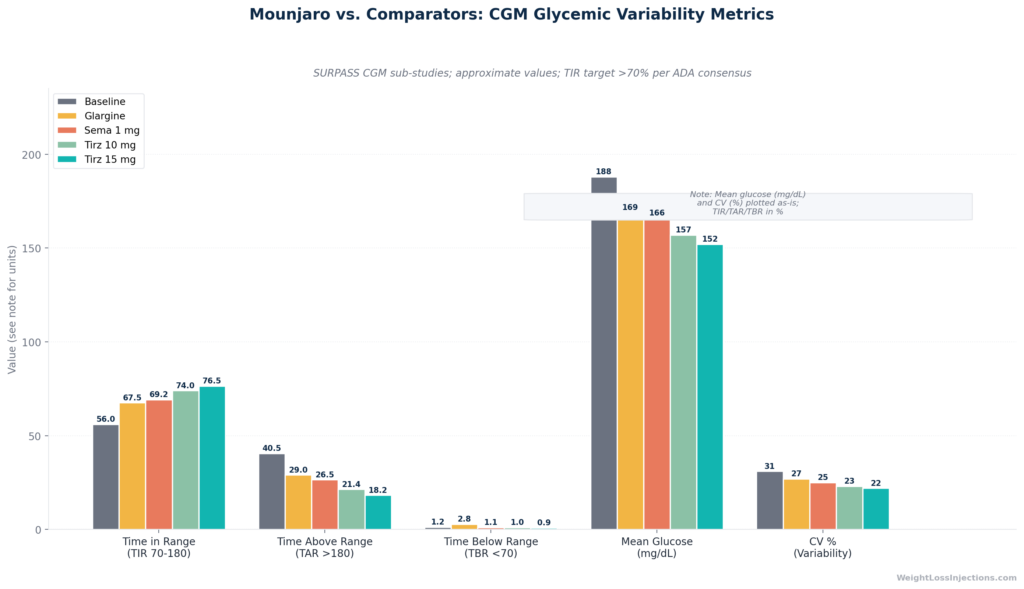
Patients using continuous glucose monitors (CGMs) often ask what tirzepatide looks like on their glucose traces. While tirzepatide CGM data are not a primary endpoint in SURPASS trials, available data and clinical experience suggest:
Reduced postprandial spikes: Tirzepatide slows gastric emptying and enhances glucose-dependent insulin secretion, directly attenuating the post-meal glucose excursions that contribute heavily to A1c in patients with good fasting glucose but poor postprandial control.
Improved time-in-range (TIR): Post-hoc analyses of SURPASS trials show that tirzepatide improved the proportion of time patients spent in the target glucose range (70–180 mg/dL), consistent with A1c improvements.
Reduced fasting glucose variability: The medication’s once-weekly pharmacokinetics provide stable, continuous receptor activation — unlike the dosing spikes and troughs seen with shorter-acting agents — contributing to more consistent glucose levels across the week.
For patients using CGMs, the most immediately visible effect of starting Mounjaro is often a reduction in postprandial glucose excursions within the first 2–4 weeks at the 2.5 mg dose, well before meaningful A1c changes are detectable.
Our Top 3 · September 2026
The best GLP-1 providers right now
Independently reviewed. Ranked by price, medication access, provider quality, and patient outcomes.
Dose and A1c Relationship: What to Expect at Each Titration Step
A common patient question: does it matter what dose I end up on? The answer, from the SURPASS data, is clearly yes.
A1c target achievement rates in SURPASS-1: percentage of patients reaching <7.0% and normoglycemia (<5.7%) by dose arm
Dose-Response A1c Table
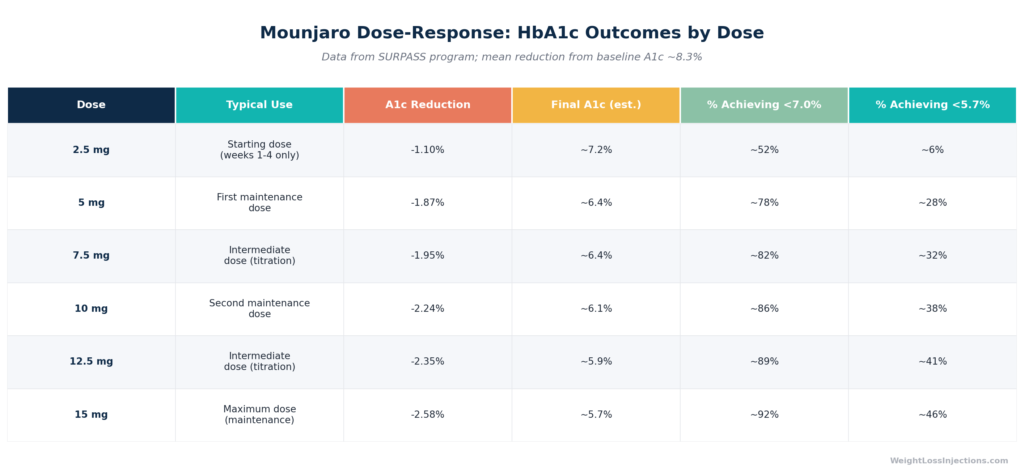
Drawing from SURPASS-1 and SURPASS-2 — the trials with the clearest dose-ranging data — the A1c response by dose shows a consistent gradient:
Dose
SURPASS-1 A1c Δ
SURPASS-2 A1c Δ
% Achieving <7.0% (SURPASS-1)
% Reaching <5.7% (SURPASS-1)
2.5 mg (initiation only)
Not tested as endpoint
Not tested
—
—
5 mg
−1.87%
−2.01%
~82%
~31%
10 mg
−1.89%
−2.24%
~84%
~40%
15 mg
−2.07%
−2.30%
~85%
~52%
The difference between 5 mg and 15 mg may appear modest in the SURPASS-1 table — a difference of about 0.20 percentage points. But two important nuances apply:
First, the proportion reaching normoglycemia nearly doubles from 5 mg (31%) to 15 mg (52%) — a clinically meaningful difference for patients with A1c targets in the normal range.
Second, in higher-risk populations (SURPASS-4), the dose-response gradient is steeper: 5 mg produced −2.24%, while 15 mg produced −2.58% — a 0.34 percentage point difference in absolute terms.
Clinical implication: Patients who are tolerating 5 mg or 7.5 mg should continue titrating toward 10 mg and 15 mg if A1c targets have not been met, rather than settling at a lower dose. Most of tirzepatide’s A1c benefit is available at the 10–15 mg range, and the additional 0.2–0.5% reduction at higher doses can mean the difference between achieving or missing the <7.0% target.
Why the 2.5 mg Dose Is Not a Therapeutic Dose
The 2.5 mg initiation dose — per the FDA-approved titration schedule — is designed exclusively for tolerability during the first 4 weeks, not for glycemic control, per the FDA Mounjaro Prescribing Information §2. Patients who remain at 2.5 mg for extended periods are not receiving meaningful A1c benefit. The first therapeutic dose is 5 mg.
Tips to Maximize A1c Improvement on Mounjaro
Understanding the clinical evidence is the first step; translating it into real-world A1c improvement requires attention to how you use the medication. Here are seven evidence-aligned strategies.
1. Allow Full Titration Time
The most common reason for suboptimal A1c response on Mounjaro is premature plateau at a low dose. Most of the drug’s A1c benefit accumulates at 10 mg and 15 mg — patients who remain at 5 mg because of initial GI side effects are not accessing the full glycemic efficacy. If GI side effects are limiting titration, work with your prescriber on slowing the titration schedule rather than stopping. A dose held at 5 mg for an extra 4–8 weeks can reduce nausea substantially, allowing a step up to 7.5 mg and beyond.
2. Pair with Dietary Glycemic Control
Tirzepatide’s appetite-suppressing effects create a natural opportunity to improve diet quality. High-glycemic foods — ultra-processed carbohydrates, sugary drinks, white bread, sweetened cereals — directly elevate postprandial glucose and A1c, partially counteracting the medication’s effect. The GLP-1 mechanism slows gastric emptying and reduces appetite; consuming lower-glycemic meals amplifies A1c reduction because the drug has less postprandial glucose to suppress, per the FDA Prescribing Information.
3. Never Skip Doses — Schedule Injections on the Same Day Weekly
Tirzepatide’s half-life of approximately 5 days means that a missed dose creates a period of subtherapeutic drug levels, disrupting steady-state glycemic coverage. In SURPASS trials, patients were on consistent once-weekly schedules. The FDA prescribing information permits changing the day of the week by ≥3 days (72 hours) without clinical consequence, but regular adherence is essential for optimal A1c outcomes. Set a recurring calendar reminder for your injection day and treat it with the same priority as any other medication.
4. Monitor Fasting Glucose Between A1c Tests
Fasting glucose is available daily — A1c is available every 3 months. Patients who track fasting glucose (even with a simple home glucometer or CGM) have much earlier feedback on whether the medication is working. A consistent fasting glucose decline from week 4 onward is a strong early signal of A1c improvement to come. If fasting glucose is not trending lower by week 8, that is actionable information to bring to your prescriber rather than waiting until a 3-month A1c.
5. Manage Concurrent Medications Carefully
If you are on a sulfonylurea (e.g., glipizide, glimepiride) or insulin alongside tirzepatide, your prescriber may need to reduce the dose of those agents as Mounjaro’s glycemic effect builds. Failure to make these adjustments can cause hypoglycemia — which not only carries its own risks but may also cause compensatory eating that blunts A1c reduction. Proactively review your full medication list with your prescriber at each titration step, per the FDA Mounjaro Prescribing Information §5.2.
6. Incorporate Aerobic and Resistance Exercise
Exercise improves insulin sensitivity through mechanisms independent of GLP-1 receptor signaling — it is additive to, not redundant with, Mounjaro’s effects. Resistance training in particular improves glucose uptake in muscle tissue and reduces post-meal glucose excursions. Aerobic exercise provides acute glucose-lowering and long-term insulin sensitization. Patients who combine Mounjaro with a consistent exercise program — even 150 minutes of moderate activity per week — typically achieve better A1c outcomes than those on medication alone.
7. Test A1c at the Right Time
A1c testing is most informative when performed at least 12 weeks after initiating a dose change — whether that is starting Mounjaro, escalating from 5 to 10 mg, or switching from another medication. Testing within the first 8 weeks of a new dose produces a misleading result: part of the A1c being measured reflects blood sugar from before the dose change. The standard clinical practice is to test every 3 months until A1c is stable, then every 6 months once the target is achieved, per the ADA Standards of Care 2026.
Monitoring support: For patients who want regular clinical oversight of their A1c trajectory and Mounjaro titration, telehealth providers affiliated with WeightLossInjections.com offer ongoing monitoring at [$X/month] through [service detail], including regular lab review and dose adjustment guidance.
Troubleshooting: What If Your A1c Isn’t Dropping?
If you have been on Mounjaro for 3 months or more and your A1c has not improved meaningfully, the following systematic checklist can help identify the cause.
Step 1: Confirm You Are at a Therapeutic Dose
The 2.5 mg initiation dose is not designed to lower A1c. The first therapeutic dose is 5 mg, escalating to 10–15 mg for optimal effect. If you are still on 2.5 mg or have been stuck at 5 mg due to GI side effects for more than 8 weeks, dose is the most likely explanation for a flat A1c.
Action: Discuss a slower titration approach with your prescriber. GI side effects often resolve substantially after 4–8 weeks at any given dose. A slower step-up (e.g., holding each dose for 6–8 weeks instead of 4) may allow titration to proceed with better tolerability.
Step 2: Rule Out Missed Doses
Review your injection log. A week of missed doses — even for legitimate reasons like illness, travel, or medication shortage — can significantly affect A1c, particularly early in treatment when the drug has not yet established its full glycemic effect.
Action: Establish a reminder system. Per the FDA prescribing information, if more than 4 days (96 hours) have passed since a missed dose, skip that dose and resume on the next regularly scheduled day rather than doubling up.
Step 3: Assess Dietary Glycemic Quality
Mounjaro reduces appetite and slows gastric emptying, but it does not override a very high-carbohydrate diet. Patients who maintain high consumption of refined carbohydrates, sugary beverages, or ultra-processed foods may see blunted A1c responses despite appropriate dosing. A 3-day food diary can reveal whether dietary patterns are partially offsetting the medication’s effect.
Action: Consult a registered dietitian with T2DM experience. Even modest dietary improvements — reducing sugary drinks, swapping refined carbs for vegetables and lean protein — can produce additive A1c benefits alongside tirzepatide.
Step 4: Check for Drug Interactions
Are you still on a full dose of a medication that is working in opposition to tirzepatide’s glycemic benefits? For example, corticosteroids (e.g., prednisone), atypical antipsychotics, or certain blood pressure medications can raise blood glucose and blunt A1c improvement. Review your full medication list with your prescriber or pharmacist.
Step 5: Consider Dose Escalation
If you are at 5 mg or 7.5 mg and A1c has plateaued above your target, escalating to 10 mg or 15 mg will typically produce additional A1c reduction. The dose-response relationship in SURPASS trials is clear and consistent. The 15 mg dose consistently produces the largest A1c reductions across all trial populations, per the pooled SURPASS analysis.
Step 6: Evaluate for Secondary Factors
Occasionally, A1c may not reflect the expected improvement for structural reasons:
Hemoglobin variants or conditions affecting red blood cell turnover (e.g., iron deficiency anemia, hemolytic anemia) can produce falsely elevated or falsely low A1c readings. If your CGM or fasting glucose data looks better than your A1c suggests, this is worth investigating with your provider.
Recent illness or metabolic stress can temporarily elevate blood glucose, raising A1c even while the medication is working.
Adherence to concurrent medications: If you are also on metformin, SGLT2 inhibitors, or other diabetes drugs, confirm those are being taken consistently.
Long-Term Durability: Does the A1c Benefit Last?
One of the most important questions for patients considering Mounjaro: does the A1c reduction hold over time, or does it erode after the initial response?
The SURPASS long-term data is reassuring. In SURPASS-3 and SURPASS-4, which ran to 52 weeks with 104-week follow-up in SURPASS-4, A1c reductions were maintained throughout the observation period without meaningful attenuation at stable doses. There was no evidence of tachyphylaxis (pharmacological tolerance) to tirzepatide’s glycemic effects over the studied duration.
The SURPASS-CVOT, with a median follow-up of approximately 4 years, provides the most compelling long-term evidence. In that trial, tirzepatide maintained an approximately −1.66% A1c advantage over dulaglutide across nearly 13,000 patients followed for up to 4 years — a large, generalizable result in patients with established cardiovascular disease, per the SURPASS-CVOT NEJM 2025 publication.
These findings are consistent with the pharmacological logic: tirzepatide’s mechanism is glucose-dependent and receptor-mediated. Unlike some older diabetes medications (e.g., sulfonylureas, whose efficacy wanes as beta-cell function further deteriorates), tirzepatide’s dual GIP + GLP-1 activation provides metabolic support through multiple pathways simultaneously, per the FDA Mounjaro Prescribing Information §12.1.
What happens if you stop Mounjaro? SURPASS trials do not include a formal drug-discontinuation extension, but clinical experience and data from analogous GLP-1 medications suggest A1c will gradually return toward pre-treatment levels after stopping — reflecting the chronicity of T2DM as a condition requiring ongoing management, not a one-time pharmacological cure.
Our Take at WeightLossInjections.com
The SURPASS data makes a straightforward case: tirzepatide is the most potent approved agent for A1c reduction in the GLP-1 / dual agonist class. In every controlled trial, at every dose tested, it outperformed its comparator — from placebo to semaglutide to insulin to dulaglutide — and the effect persists over years of follow-up.
What the headline numbers do not capture is the distribution of response. In SURPASS-1, roughly half of all patients on 15 mg reached full normoglycemia — an outcome that would have been unimaginable with older agents. That is not just a statistical result; for patients who have lived with elevated blood sugar for years or decades, achieving an A1c below 5.7% changes what they have to worry about.
The practical questions for most patients are about access: can they get to 15 mg despite GI side effects, can they afford the titration window on their plan, and is their prescriber proactively escalating the dose or settling too early? Our view is that the clinical evidence supports titrating aggressively toward 10–15 mg where tolerated, because that is where the data is.
We also want to be direct about what the data does not tell you: individual results vary considerably. The SURPASS mean reductions of −2.0–2.58% come from patients with baseline A1c averaging 8.0–8.5%. A patient with a baseline A1c of 7.2% will not have the same room to fall as a patient starting at 9.5%. Realistic expectations should be set with your clinician based on your specific baseline, concurrent medications, and health profile.
A telehealth provider affiliated with WeightLossInjections.com can help you establish a structured A1c monitoring plan and ensure you are titrating on the optimal schedule for your clinical situation — available through [service detail] starting at [$X/month].
Medical Disclaimer: This article is reviewed for accuracy by the WeightLossInjections.com Staff. All A1c reduction figures cited are derived from controlled clinical trials in specific patient populations. Individual results will vary. This content is for informational purposes and does not constitute medical advice. Always consult a licensed healthcare provider about your diabetes treatment plan.
FAQ
In SURPASS clinical trials, Mounjaro (tirzepatide) reduced A1c by −1.87% to −2.07% at 15 mg as monotherapy in treatment-naïve patients (SURPASS-1), by −2.30% in patients on metformin vs. semaglutide 1 mg (SURPASS-2), and by up to −2.58% in patients with high cardiovascular risk vs. insulin glargine (SURPASS-4). The range reflects different trial populations, comparators, and baseline A1c levels. For most patients on metformin who titrate to 15 mg, a reduction of approximately −2.0 to −2.3% is a realistic clinical expectation, per the SURPASS-2 NEJM publication and pooled SURPASS analysis.
Fasting glucose typically begins declining within the first 4 weeks. Because A1c reflects a 3-month rolling average, you need at least 12 weeks on a stable dose before a lab test meaningfully reflects Mounjaro’s glycemic effect, per the FDA Mounjaro Prescribing Information §12.3. Testing earlier than 12 weeks will produce a misleading baseline-inflated result. The most informative A1c checkpoint is at 3 months after reaching your target therapeutic dose, not 3 months from the first injection.
In the direct head-to-head SURPASS-2 trial, all three tirzepatide doses were statistically superior to semaglutide 1 mg for A1c reduction — with tirzepatide 15 mg achieving −2.30% versus −1.86% for semaglutide, per the SURPASS-2 NEJM 2021 publication. However, SURPASS-2 used semaglutide at 1 mg, below its maximum approved 2 mg dose (Ozempic). No head-to-head trial has tested tirzepatide versus semaglutide 2 mg. The magnitude of tirzepatide’s advantage may be smaller at the full Ozempic dose — a caveat worth discussing with your doctor, per diaTribe’s tirzepatide analysis.
In clinical trials with T2DM patients, the average A1c reduction at 15 mg ranged from −1.66% to −2.58% depending on the trial population. For patients starting on metformin with A1c around 8.0–8.5%, the SURPASS-2 data (−2.01 to −2.30%) is most representative. Real-world results vary based on baseline A1c, diet, exercise adherence, concurrent medications, and how far the titration proceeds. Patients with very high baseline A1c (>10%) may see larger absolute drops; patients already near target (<7.5%) will see smaller absolute reductions.
Yes — consistently. In SURPASS-1, 82–85% of patients on tirzepatide achieved an A1c below 7.0% (the standard ADA target) compared to just 23% on placebo, per the SURPASS-1 Lancet 2021 data. In SURPASS-3 vs. insulin degludec, 82–93% of tirzepatide patients reached <7.0% versus 61% with degludec. Additionally, 31–52% of tirzepatide patients in SURPASS-1 achieved normoglycemia (A1c <5.7%) — an outcome rarely seen with other approved diabetes medications.
The 15 mg dose consistently produced the largest A1c reductions across SURPASS trials. However, the 10 mg dose also achieved clinically excellent results in all trials and may be the practical maintenance dose for patients who experience persistent side effects at 15 mg. The 5 mg dose showed meaningful but lower A1c reductions — still superior to semaglutide 1 mg in SURPASS-2. Titrating as high as tolerated (toward 10–15 mg) is supported by the dose-response data.
Yes. The SURPASS-CVOT trial, with approximately 4 years of median follow-up in over 13,000 patients, demonstrated sustained A1c reduction of −1.66% with tirzepatide versus −0.88% with dulaglutide, per the SURPASS-CVOT NEJM 2025 publication. There is no evidence of clinically meaningful waning efficacy at stable doses over the studied time period. Discontinuing the medication will allow A1c to gradually return toward pre-treatment levels, consistent with T2DM as a chronic condition requiring ongoing management.

![Unbranded [pillar-drug-class] injection pen on a neutral background — WeightLossInjections.com editorial hero](https://weightlossinjections.com/wp-content/uploads/2026/07/hero_mounjaro_c5_lifestyle-1200x675.png)