Compounded Tirzepatide Cost in 2026: What You’ll Actually Pay
Medically reviewed by WeightLossInjections.com Staff•Updated July 23, 2026•25 min readMedically reviewed
⤢
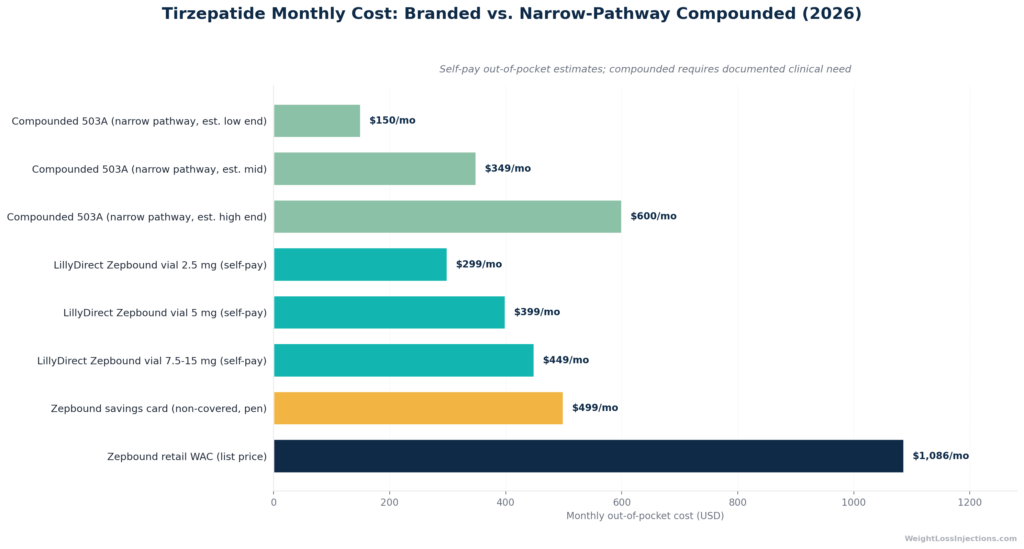
Tirzepatide Monthly Cost by Access Path (2026) — All verified prices as of June 2026.
Zepbound’s retail list price is $1,086/month — the number that drove hundreds of thousands of patients to seek compounded tirzepatide in 2023–2024.
Mass-market compounding ended in early 2025. As of June 2026, compounded tirzepatide is only legally available through 503A pharmacies for patients with a documented clinical justification (e.g., allergy to branded excipients, or a medically necessary non-standard dose) — and only at ≤4 prescriptions per month per pharmacy.
Where 503A personalized compounding is lawful, reported costs range from approximately $150–$600/month, depending on dose, pharmacy overhead, and any telehealth platform fee.
For most patients, the most accessible affordable option is Zepbound via LillyDirect: $299/month for the 2.5 mg starter dose, up to $449/month for maintenance doses — no insurance required.
Commercially insured patients with Zepbound formulary coverage can pay as little as $25/fill with the Lilly savings card.
Generic or biosimilar tirzepatide is a mid-2030s event at the earliest; Eli Lilly’s core patent does not expire until approximately December 2036.
This content is for informational purposes only and does not constitute medical advice. Consult a licensed healthcare provider before starting, changing, or discontinuing any medication. Prices are current as of June 2026 and subject to change; verify all costs directly with the pharmacy or program prior to purchase.
Why Compounded Tirzepatide Was Cheaper: The Pricing Gap Explained
To understand where tirzepatide pricing stands in 2026, you have to start with the gap that made compounded versions so attractive in 2023 and 2024.
At its peak availability, compounded tirzepatide cost roughly $349–$699/month at most telehealth-linked compounding pharmacies — a meaningful discount against Zepbound’s retail list price of $1,086 for a 28-day supply, which applies uniformly to all six dose strengths per Healthy Meals Incentives’ tirzepatide cost analysis. That gap — somewhere between $400 and $700 per month depending on the dose — was the engine behind an entire industry of GLP-1 compounding that proliferated through telehealth platforms, membership pharmacy models, and direct-to-consumer subscription services.
Where did that price gap come from? Eli Lilly’s retail price reflects the full cost of developing, manufacturing, and distributing a brand-name pharmaceutical: years of clinical trials, the FDA approval process, Current Good Manufacturing Practice (CGMP) facilities, the KwikPen autoinjector device, branded packaging, and the distribution margin that flows through wholesalers and retail pharmacies. A 503A compounding pharmacy has none of those overhead layers. Compounders sourced tirzepatide active pharmaceutical ingredient (API) in bulk, mixed it into sterile vials, and dispensed it — skipping the device, the brand premium, and the wholesale channel entirely. The result was dramatically lower per-unit cost, passed through to patients.
That model is no longer legal for most patients. The FDA declared the tirzepatide shortage resolved on December 19, 2024, per its Declaratory Order issued that day. With the shortage designation gone, the legal basis for widespread compounding evaporated: 503A enforcement discretion ended on February 18, 2025, and 503B outsourcing facilities lost their grace period on March 19, 2025, per the FDA’s GLP-1 compounding clarification page. In April 2026, the FDA went further by proposing to formally exclude tirzepatide from the 503B Bulks List — the mechanism that had previously permitted outsourcing-facility compounding during the shortage — per the FDA press announcement dated April 30, 2026.
The pricing math has changed in one other important way: Eli Lilly introduced a direct-to-patient self-pay pathway that substantially narrows the cost gap. LillyDirect vials now start at $299/month for the 2.5 mg starter dose and reach $449/month for maintenance doses (7.5–15 mg), according to Healthy Meals Incentives’ April 2026 data. That $299 entry point overlaps with the lower end of what compounded tirzepatide cost even during its period of widest availability. For the narrow category of patients who still lawfully qualify for 503A personalized compounding, the cost advantage over LillyDirect is no longer obvious — and may not exist at all.
Our take at WeightLossInjections.com: The pricing math has changed dramatically since 2023. Compounded tirzepatide isn’t the cost-competitive option it once was — and for most patients, it isn’t even a legal option anymore. We’ve compiled this complete breakdown to help you understand your real choices in 2026, including where compounding remains lawful and what it actually costs in that context.
What Compounded Tirzepatide Costs in 2026 — Where It’s Still Available
Before discussing specific prices, the most important framing point is this: compounded tirzepatide is not broadly available in 2026. This is not a technicality or a regulatory gray area — it is a clear legal line. Mass-market compounding of tirzepatide ended with the closure of both the 503A and 503B grace periods in early 2025. Understanding who qualifies for the narrow exception that remains is essential before any pricing discussion is meaningful.
Who Qualifies for the 503A Personalized Exception
As of April 1, 2026, the FDA clarified that a 503A state-licensed compounding pharmacy may compound tirzepatide if and only if the prescribing provider documents a clinically significant difference justifying compounding for that specific individual patient, per the FDA GLP-1 Compounding Clarification Page. Two categories reliably meet this standard:
Documented allergy or hypersensitivity to an inactive ingredient in the branded product — most commonly, cresol, the preservative used in the Zepbound and Mounjaro injection pens. Allergy documentation must be included in the prescription.
A dose strength not commercially available — for example, a prescriber-determined intermediate dose during titration if the patient cannot tolerate the standard 2.5 mg increment escalation pace. The dose must be meaningfully different, not a rounding variation within 10% of a commercially available strength.
Critically: patient preference for a lower-cost option, convenience, or general dissatisfaction with the branded product does not qualify as a documented clinical justification, per FDA guidance. A prescriber who writes “patient preference” as the clinical rationale is not in compliance with current requirements. The pharmacy also faces a hard cap: ≤4 prescriptions per calendar month of an essentially-copy product, regardless of how many patients have documented clinical needs — a structural constraint that sharply limits how many patients any single 503A pharmacy can serve under this exception, as clarified by the FDA’s April 1, 2026 update.
Legal analysis from Frier Levitt’s healthcare law update on tirzepatide compounding confirms that 503B outsourcing facilities have no lawful path to compound tirzepatide under current rules, as tirzepatide is neither on the shortage list nor currently listed on the 503B Bulks List.
Price Range for Lawful 503A Personalized Compounding
For patients who do qualify — a genuinely small population — reported costs from licensed 503A pharmacies in 2026 range from approximately $150 to $600/month, per Healthy Meals Incentives. This is a wide range, and the variability reflects several independent cost drivers:
Dose escalation: Higher doses require more API per injection. A patient at 2.5 mg pays for far less active ingredient per month than one at 10 mg. Unlike Zepbound’s flat WAC pricing across all doses, 503A compounding costs scale meaningfully with dose.
Pharmacy geography and overhead: A high-volume sterile compounding facility in a low-cost state will have different operating economics than a small-volume pharmacy in a major metropolitan market. Pharmacy overhead, USP <797> sterile compounding compliance costs, and state inspection requirements all factor into final pricing.
Telehealth platform layer: Most patients accessing compounded tirzepatide do so through a telehealth intermediary — a platform that connects them to a prescriber and manages their prescription flow. These platforms typically add a subscription fee of $50–$150/month for provider access and monitoring. This fee is on top of pharmacy costs and is not always transparently itemized in advertised prices.
Ancillary costs for vial-based compounding: Compounded tirzepatide is typically dispensed as a vial requiring syringe-based self-injection. Patients need syringes, needles, and alcohol swabs — a combined add-on of approximately $10–$20/month. Initial lab work (metabolic panel, thyroid function, lipids) before starting therapy runs $75–$200 depending on the panel and whether the patient’s existing provider orders it or the telehealth platform orders it independently.
The red-flag pricing pattern to avoid: Any service that offers compounded tirzepatide at any dose or quantity for a flat subscription fee, without an individualized provider assessment and documented clinical justification, is not operating within FDA’s current enforcement framework — regardless of how it is marketed. The 503A personalized exception is patient-specific by definition; a subscription model that bypasses individualized assessment is incompatible with compliance, per FDA guidance at the GLP-1 Compounding Clarification Page.
At WeightLossInjections.com, [service detail] — our program costs [$X/month] and operates within current FDA compliance requirements for the patients who qualify.
Tirzepatide Monthly Cost by Dose: LillyDirect Vials vs. Estimated 503A Personalized Compounded (2026)
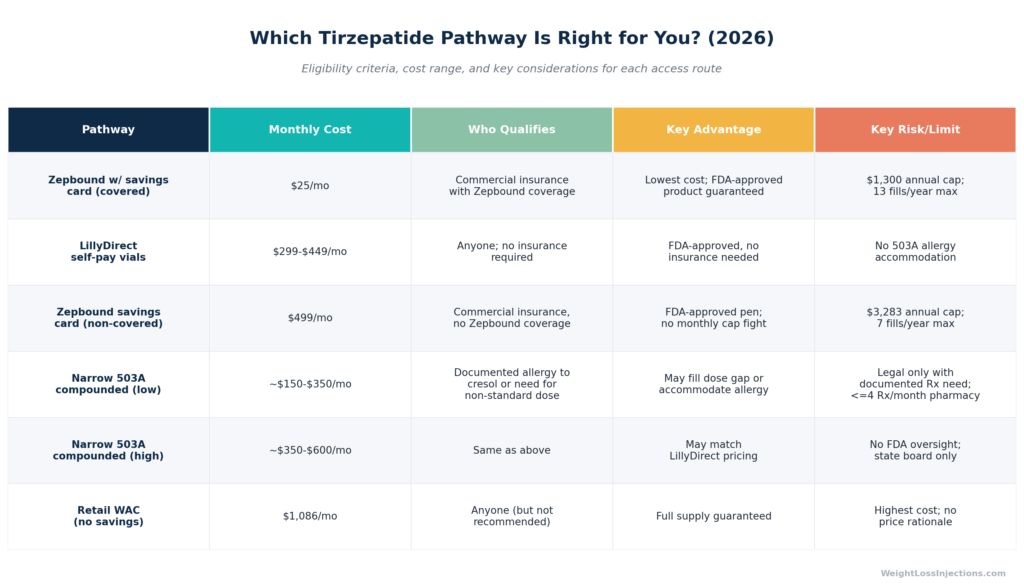
The Master Price Comparison — Compounded vs. Branded vs. Insurance
The most useful thing this article can do is give you a single verified reference for every pricing pathway available to tirzepatide patients in June 2026. The table below consolidates those pathways, followed by context on each one.
All costs current as of June 2026; verify directly with pharmacy or program before purchase. Prices subject to change.
Understanding Each Row
Personalized compounded tirzepatide (503A): This is the only remaining legal pathway for compounded tirzepatide as of June 2026. The $150–$600 range is wide because dose, pharmacy overhead, and telehealth fees vary substantially. Patients at the low end are typically at starter doses (2.5–5 mg) with minimal platform fees; patients at the high end are at therapeutic maintenance doses with full telehealth subscription costs included. These costs are per Healthy Meals Incentives’ comprehensive pricing analysis.
LillyDirect Self Pay Journey Program: This is Eli Lilly’s direct-to-patient channel for self-pay patients. It is the most important development in tirzepatide pricing since the compounding shutdown. Lilly sells Zepbound as single-dose vials or, since February 2026, as a multi-dose KwikPen — both at the same Self Pay Journey pricing. Vials are cheaper to manufacture than the original autoinjector pen, which is why Lilly can offer them at a sub-retail price. The $299 entry point is particularly significant: it places branded, FDA-approved, CGMP-manufactured Zepbound at a cost that is competitive with what low-dose compounded tirzepatide was selling for during the height of the compounding market.
The Journey Program requires active enrollment and adherence to a 45-day refill cadence. Missing the refill window may affect program pricing for that fill. Patients must have a valid prescription. No insurance is required.
Zepbound savings card with commercial insurance: For patients whose employer-sponsored or individual commercial plan covers Zepbound for weight management, the Lilly savings card reduces out-of-pocket cost to as little as $25/fill. This is unambiguously the lowest per-fill cost in the entire 2026 tirzepatide landscape. Whether your specific plan covers Zepbound depends on your formulary — a call to your insurer’s member services line is required to confirm. Approximately 43–45% of commercial plans had added Zepbound to their formulary for the weight management indication as of early 2026.
Retail WAC ($1,086): This number still matters because it is what you pay at a traditional retail pharmacy without any program, discount, or insurance. It remains the price that most uninsured patients see as a sticker shock when first inquiring — and the reason LillyDirect enrollment is so important to communicate. Almost no patient should pay $1,086/month when LillyDirect is available.
Mounjaro for T2D patients: Tirzepatide is also sold as Mounjaro (same molecule, FDA-approved for type 2 diabetes since May 2022). Patients with a T2D diagnosis have a distinct insurance access pathway: commercial plans and Medicare that cover diabetes medications may cover Mounjaro even when they do not cover Zepbound for weight management. T2D patients should explore both the Mounjaro and Zepbound coverage pathways with their prescriber.
Insurance, FSA/HSA, and Savings Programs — What Actually Covers Tirzepatide
The insurance landscape for GLP-1s has improved meaningfully since 2023, but it remains fragmented enough that there is no single answer to “does my insurance cover tirzepatide?” — the answer depends entirely on your specific plan.
Commercial Insurance
Commercial insurance coverage for Zepbound is inconsistent. Many commercial plans historically excluded anti-obesity medications (AOMs) from their formularies, treating weight management as a lifestyle rather than a medical condition. That is changing: employer attitudes toward obesity treatment coverage have shifted as evidence of downstream cost savings (reduced cardiovascular events, fewer hospitalizations) has accumulated. As of early 2026, roughly 43–45% of commercial plans cover Zepbound for the weight management indication, with employer-sponsored plans showing approximately 55% approval rates after prior authorization.
What this means practically: Do not assume your plan does not cover Zepbound without checking. Call your insurer’s member services number (on the back of your insurance card) and ask specifically: “Is tirzepatide/Zepbound covered on my formulary for weight management?” If it is, request the prior authorization (PA) requirements. If your provider documents weight-related comorbidities (hypertension, type 2 diabetes, dyslipidemia, obstructive sleep apnea) clearly on the PA form, approval rates improve significantly. A PA denial is not the end of the road — appeals succeed when documentation is thorough.
Medicare Coverage
Medicare Part D does not cover Zepbound for the weight management indication as of June 2026. The statutory anti-obesity medication exclusion under Medicare Part D remains in effect, as confirmed by the American College of Gastroenterology’s April 2025 analysis. However, two alternative Medicare pathways exist:
Medicare GLP-1 Bridge Program (July 1 – December 31, 2026): CMS established a temporary bridge program providing Zepbound coverage at a $50 copayment for eligible Part D enrollees with BMI ≥35, or BMI ≥27 with a qualifying clinical condition. This program operates outside the Part D benefit structure and is designed to transition into the longer-term BALANCE Model demonstration beginning January 1, 2027.
Zepbound for OSA via Part D: Zepbound received a second FDA approval in December 2024 for moderate-to-severe obstructive sleep apnea in adults with obesity. Since the OSA indication is not classified as a “weight loss drug” use, individual Medicare Part D plans have discretion to cover Zepbound for this indication at standard formulary terms — coverage is plan-dependent.
Medicare beneficiaries who have a T2D diagnosis should also ask their provider about Mounjaro (tirzepatide for T2D), which Medicare covers as a diabetes medication through standard Part D formularies.
Medicaid
Medicaid coverage for tirzepatide varies significantly by state. Some states have added AOM coverage to their Medicaid formularies; others have not. Check your specific state Medicaid program’s formulary directly — there is no federal mandate requiring Medicaid coverage of weight management medications as of June 2026.
The Zepbound Savings Card
For commercially insured patients with Zepbound formulary coverage, the Lilly savings card can reduce out-of-pocket cost to as little as $25/fill. The 2026 card terms include a maximum benefit of approximately $1,300 per calendar year, with a maximum of 13 fills per year. The card is available to activate at Zepbound’s savings page.
The savings card is explicitly not available to:
Medicare Part A or B enrollees
Medicaid beneficiaries
Veterans Administration (VA) or TRICARE beneficiaries
Any government-funded program participant
Patients with no commercial insurance (use LillyDirect instead)
This exclusion list follows standard manufacturer savings program design under U.S. anti-kickback rules. If you are on Medicare, the Bridge program described above is your primary 2026 option.
Note also: savings card payments do not count toward your deductible or out-of-pocket maximum in most states. Confirm your plan’s accumulator adjuster policy, as some plans have implemented accumulator adjustment programs that strip third-party assistance from OOP calculations.
FSA and HSA Coverage
Both Zepbound and Mounjaro — and compounded tirzepatide dispensed by a licensed 503A pharmacy with a valid Rx under the personalized-medicine exception — qualify as FSA/HSA-eligible medical expenses when prescribed by a licensed healthcare provider for a diagnosed medical condition. If you are enrolled in a high-deductible health plan with an HSA, pre-tax HSA funds can significantly reduce the effective out-of-pocket cost of any tirzepatide pathway. Confirm eligibility with your plan administrator before assuming this benefit applies to your specific product.
The Prior Authorization Process: A Practical Guide
The most common point of failure for commercially insured patients seeking Zepbound coverage is the prior authorization. Insurers will often issue an initial PA denial if the clinical documentation is incomplete. Patients and providers who work the PA process carefully have meaningfully higher approval rates. The most important documentation elements are:
Qualifying BMI: ≥30 (obesity) or ≥27 with at least one qualifying comorbidity
Comorbidity documentation: Weight-related conditions (hypertension, T2D, dyslipidemia, OSA, cardiovascular disease) should be explicitly listed and linked to weight
Prior treatment history: Documentation of prior dietary or lifestyle interventions and their outcomes
Medical necessity statement: Provider-written rationale for why GLP-1 therapy is medically indicated for this patient
At WeightLossInjections.com, [service detail] — our clinical team can assist patients with PA documentation preparation as part of the telehealth program starting at [$X/month].
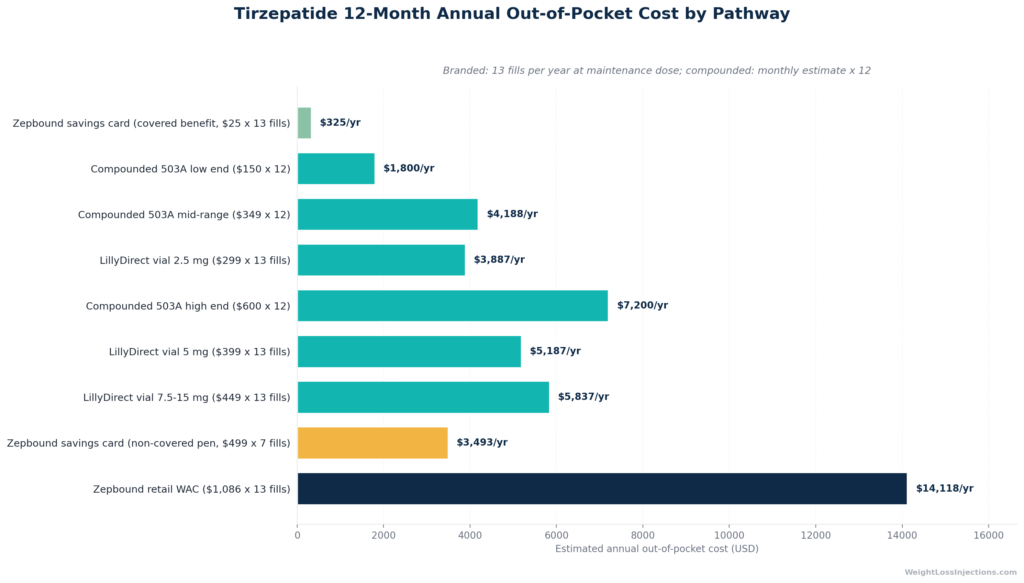
Our take at WeightLossInjections.com: The insurance landscape for GLP-1s is genuinely improving, but it’s still fragmented enough that patients who don’t actively navigate it are leaving significant savings on the table. A patient whose plan covers Zepbound could be paying $25/fill instead of $449/month — a difference of more than $5,000 per year. The PA process is the gate, and documentation quality is what determines whether you get through it. Our clinical team at [service detail] can help you navigate prior authorization and find the most affordable lawful pathway for your specific situation — including whether LillyDirect vials or insurance coverage is more cost-effective for you.
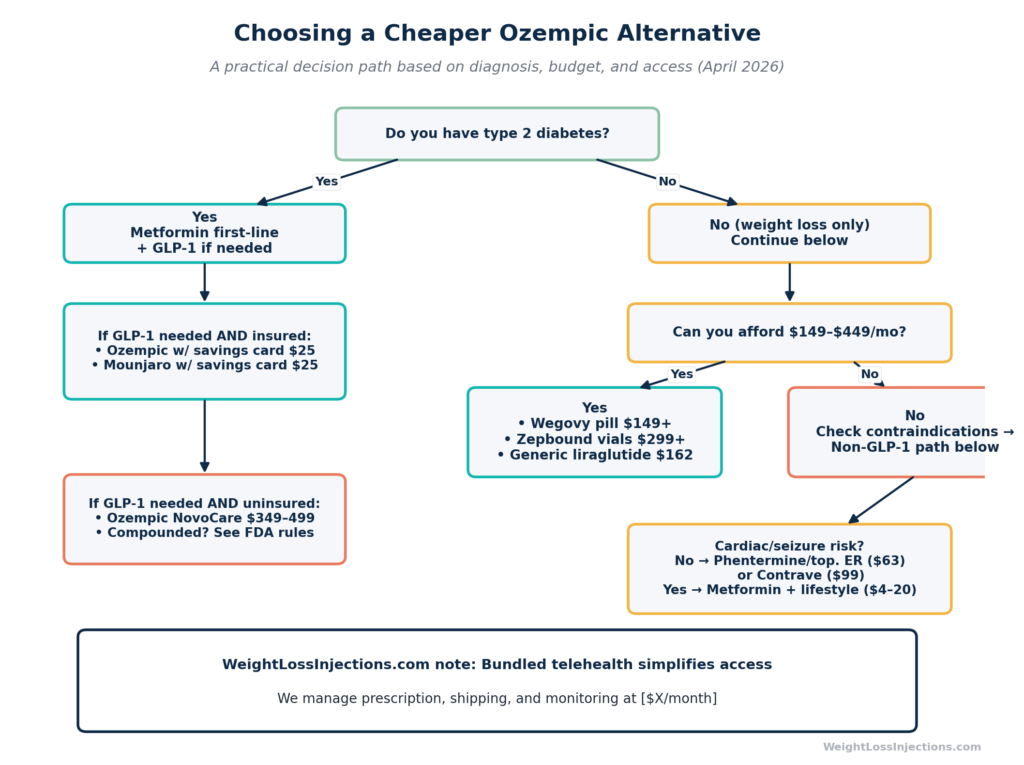
Tirzepatide Insurance Decision Flowchart: Finding Your Lowest Out-of-Pocket Path in 2026
Our Top 3 · October 2026
The best GLP-1 providers right now
Independently reviewed. Ranked by price, medication access, provider quality, and patient outcomes.
Safety and Quality Considerations: Why the Price Gap Carried Real Risk
Any honest cost comparison of compounded vs. branded tirzepatide has to address quality — because the price difference was not the only difference. During the 2023–2024 period when compounded tirzepatide was widely marketed, the FDA received and documented adverse event reports involving compounded GLP-1 products that raised specific safety concerns.
Potency and Sterility Failures
Compounded tirzepatide is a sterile injectable, it must be prepared in a USP <797>-compliant cleanroom environment under strict aseptic conditions. When those conditions are not met, the consequences are not mild: subpotent batches deliver less medication than intended (resulting in inadequate glucose control or weight loss), while superpotent batches, particularly with lyophilized (freeze-dried) powder formulations that require patient reconstitution — can deliver 5 to 10 times the intended dose. The FDA has documented superpotency cases in its adverse event reporting system. These are not theoretical risks.
Branded Zepbound, manufactured in Eli Lilly’s CGMP-inspected facilities with lot release testing for potency, identity, and sterility, does not carry these risks. The tradeoff for the price premium includes manufacturing consistency.
The B12 Combination Question
Many compounded tirzepatide formulations in the 2023–2024 period included vitamin B12 (cyanocobalamin or methylcobalamin) or lipotropic additives, marketed as enhancements to efficacy or tolerability. There is no peer-reviewed evidence base supporting the addition of B12 to tirzepatide for weight loss or GI tolerance. More importantly, the FDA clarified in its April 1, 2026 guidance that tirzepatide combination products — including tirzepatide + B12 — are considered “essentially copies” if the strengths are within 10% of commercially available products, per the FDA GLP-1 Compounding Clarification Page. Adding B12 does not create a lawful compounding justification.
What to Look For in a Legitimate 503A Pharmacy
For the narrow population of patients who qualify for the personalized-medicine exception, working with a reputable 503A pharmacy is non-negotiable. The following elements are minimum standards:
Active state pharmacy license: Verify on the dispensing state’s pharmacy board website; confirm no disciplinary history.
USP <797> compliance: Sterile injectable compounding requires documented compliance. Ask for the pharmacy’s most recent state inspection report.
Valid prescription with documented clinical justification: The Rx must specify the individual clinical need — allergy, non-standard dose — not just a patient preference.
Certificate of Analysis (CoA) from a third-party accredited lab: A reputable 503A pharmacy should provide a CoA confirming API identity, potency, and sterility for each dispensed lot.
Absence of red-flag markers: Products marketed as “research chemical,” “peptide,” or shipped from international sources (China, India, overseas peptide suppliers) are not compounded prescriptions from licensed U.S. pharmacies. Walk away.
The Long View: When Will Tirzepatide Get Cheaper? Generic and Biosimilar Outlook
For patients who are weighing current tirzepatide costs against future alternatives, the honest answer requires engaging with patent law and pharmaceutical regulatory timelines — and the honest timeline is a long one.
Patent Protection: What Eli Lilly Actually Holds
Tirzepatide is not a small-molecule drug in the conventional sense. It is a 39-amino-acid synthetic peptide — structurally complex enough that it straddles the traditional pharmaceutical and biologic regulatory categories. That complexity matters for the generic timeline.
Eli Lilly’s composition-of-matter patent on tirzepatide expires approximately December 2036, per Biology Insights’ analysis of GLP-1 generic timelines. But that is only the first line of patent protection. Formulation patents — covering how tirzepatide is prepared, stabilized, and packaged for injection — extend to approximately 2039. Method-of-use patents, covering the therapeutic indications themselves, extend protection further still, to approximately 2041, per the Peptide Journal’s analysis of the tirzepatide biosimilar pipeline. Eli Lilly has filed 53 U.S. patent applications for tirzepatide, with 16 patents granted as of early 2026.
The first ANDA challenge: The NCE-1 (new chemical entity) date — the earliest a competitor can file an Abbreviated New Drug Application (ANDA) challenging Lilly’s patents — was May 13, 2026. Empower Pharmacy filed the first Paragraph IV ANDA challenge against U.S. Patent 9,474,780 on May 22, 2025, per the Peptide Journal. Lilly retains statutory exclusivity until at least June 2027, per Harris Beach Murtha Cullina’s June 2026 enforcement summary. Even if a Paragraph IV challenge were successful — which requires years of patent litigation — commercial launch of a generic would still face manufacturing and regulatory hurdles.
The Biosimilar Pathway Problem
Unlike simple small-molecule drugs, where a generic manufacturer only needs to show pharmaceutical equivalence, tirzepatide’s peptide complexity means that any follow-on product would almost certainly need to navigate the biosimilar regulatory pathway — requiring extensive analytical characterization studies, animal data, and clinical pharmacology studies demonstrating that the follow-on product is “highly similar” to the reference product. This process is more expensive and more time-consuming than traditional generic drug development. The earliest realistic biosimilar or generic tirzepatide approval is the mid-2030s — and that estimate assumes patent challenges succeed and manufacturing can be validated. Do not cite earlier timelines; no regulatory or industry source supports them.
What the Semaglutide Generic Launch Means for Tirzepatide Patients
Semaglutide generics launched in the United States in early 2026, creating a lower-cost alternative in the GLP-1 class. For patients who cannot afford tirzepatide at current price points and for whom the GLP-1 mechanism alone (without the GIP receptor component) is clinically sufficient, semaglutide generics represent a meaningful development.
However, the clinical tradeoffs are significant. SURMOUNT-5 — published in the New England Journal of Medicine in May 2025 — was a 72-week head-to-head randomized trial in 751 adults comparing tirzepatide at maximum tolerated dose versus semaglutide at maximum tolerated dose. The primary endpoint result was stark: tirzepatide produced −20.2% mean body weight change versus −13.7% for semaglutide — approximately 47% greater weight loss in absolute terms (p<0.001). The proportion of patients achieving ≥25% weight loss was 31% with tirzepatide versus 16% with semaglutide. Tirzepatide’s dual GIP + GLP-1 receptor agonism — the mechanism that makes it a “twincretin” rather than just another GLP-1 — appears to drive clinically meaningful efficacy differences at the population level.
What this means for cost-conscious patients: if your primary clinical goal is achieving the largest possible reduction in excess body weight, the efficacy data support prioritizing tirzepatide access over switching to a semaglutide generic to save money — if it is financially possible to do so. If cost constraints make tirzepatide genuinely inaccessible, semaglutide generics are a real option with strong evidence of meaningful weight loss. Discuss the tradeoffs with your provider.
Practical Implication for 2026 Cost Planning
If you are a patient without the narrow 503A clinical justification, LillyDirect is currently the most accessible lower-cost branded pathway for tirzepatide. Generic price disruption for tirzepatide specifically is a decade away at the minimum. Planning your tirzepatide treatment budget for the next 5–10 years should be based on current LillyDirect pricing and the trajectory of commercial insurance AOM coverage expansion — not on an expectation of near-term generic availability.
Area chart, x-axis 2024–2040+, y-axis estimated average monthly out-of-pocket cost
Tirzepatide Cost Outlook 2024–2040: When Will Prices Drop With Generic or Biosimilar Entry?
How to Minimize Your Tirzepatide Costs in 2026: A Practical Decision Framework
Given everything above, here is the decision framework patients should work through when trying to minimize their out-of-pocket tirzepatide cost in 2026:
Step 1: Determine Your Insurance Situation
Contact your commercial insurer and ask whether Zepbound is on your formulary for weight management. This is the most high-leverage single action most patients can take — the difference between an insured patient on a covered plan ($25/fill with savings card) and an uninsured patient on LillyDirect ($449/month at maintenance dose) is more than $5,000 per year.
If your plan does not currently cover Zepbound, ask your HR benefits team whether your employer plan is considering adding AOM coverage. Many large employers added coverage in 2024–2025 as clinical evidence of downstream cost savings accumulated.
Step 2: If Uninsured or Uncovered — Enroll in LillyDirect
LillyDirect is your primary pathway. Navigate to the LillyDirect platform, enroll in the Self Pay Journey Program, and obtain a valid Zepbound prescription from a licensed provider. The Journey Program requires adherence to a 45-day refill cadence to maintain pricing. If you use insulin or have prior syringe experience, vials are a natural choice; if you prefer a device-based injection, the KwikPen (available since February 2026) is the same price and requires no separate syringe.
WeightLossInjections.com’s telehealth program — starting at [$X/month] — includes [service detail] and can coordinate your prescription, LillyDirect enrollment support, and ongoing clinical management.
Step 3: Use FSA/HSA Funds
If you are enrolled in an HSA-eligible high-deductible health plan or have a healthcare FSA, tirzepatide (branded or compounded from a licensed pharmacy with a valid Rx) qualifies as an eligible medical expense. Pre-tax contributions to these accounts meaningfully reduce your effective out-of-pocket cost. A patient in the 24% federal tax bracket paying $449/month from HSA funds is effectively paying approximately $341/month in pre-tax equivalent cost.
Step 4: Assess Medicare Options If Applicable
If you are a Medicare beneficiary, the GLP-1 Bridge Program running July 1 – December 31, 2026 provides Zepbound at a $50/month copay for eligible patients. If you have T2D, explore Mounjaro coverage under your Medicare drug plan. If you have been diagnosed with moderate-to-severe OSA, check whether your specific Part D plan covers Zepbound for that indication.
Step 5: Ask About Prior Authorization and Appeals
If your commercial insurer denies Zepbound coverage, do not stop at the initial denial. Prior authorization appeals with thorough clinical documentation — including BMI, comorbidities, prior treatment history, and provider medical necessity attestation — succeed at meaningful rates. Your prescriber’s office should have experience with this process; if not, WeightLossInjections.com’s clinical team at [service detail] can provide PA documentation support.
Our Take at WeightLossInjections.com
We have built this cost guide because the tirzepatide pricing landscape in 2026 is genuinely confusing — and that confusion has real consequences for patients. Patients who don’t know about LillyDirect are paying $1,086/month when they could pay $299. Patients who assume their commercial insurance doesn’t cover Zepbound haven’t checked — and roughly half of commercial plans now cover it with a proper prior authorization. Patients who read articles from 2023 or 2024 may still believe compounded tirzepatide is widely available and dramatically cheaper, when the reality is that mass-market compounding ended more than a year ago.
The current pricing landscape, honestly summarized: branded Zepbound via LillyDirect is the most accessible lower-cost tirzepatide option for most patients in 2026. At $299–$449/month, it is FDA-approved, CGMP-manufactured, and does not require any clinical justification beyond a standard Zepbound prescription. For patients with commercial insurance and Zepbound coverage, the savings card pathway to $25/fill is unmatched. For the narrow population with a genuine documented clinical need for personalized compounding, the 503A exception remains, at cost structures that are no longer dramatically below LillyDirect.
What doesn’t exist anymore — and should be treated as a red flag when marketed — is broadly available low-cost compounded tirzepatide for general self-pay patients. That market closed in March 2025. Providers or platforms marketing it as though it remains open are not operating in compliance with current FDA enforcement.
At WeightLossInjections.com, our program starts at [$X/month] and includes [service detail]. Our licensed providers can evaluate whether you qualify for any tirzepatide pathway — branded or, where lawfully applicable, personalized compounding — and help you navigate insurance prior authorization, LillyDirect enrollment, or FSA/HSA utilization. We work within the current legal framework because our patients deserve treatment that is both effective and safe. [STATE-SPECIFIC DISCLAIMER]
FAQ
For patients who qualify for the narrow 503A personalized-medicine exception — which requires a documented allergy to an inactive ingredient in the branded product (such as the cresol preservative in Zepbound/Mounjaro pens) or a prescriber-documented need for a medically necessary non-standard dose — compounded tirzepatide from a licensed 503A pharmacy may cost approximately $150–$600/month, depending on dose and pharmacy overhead, per Healthy Meals Incentives’ 2026 pricing data. Additional telehealth platform fees of $50–$150/month typically apply on top of pharmacy costs. For the majority of patients who do not qualify for this exception, the most affordable lawful options are Zepbound via LillyDirect ($299–$449/month depending on dose) or the Zepbound savings card ($25/fill for commercially insured patients with formulary coverage).
Not necessarily, and not for most patients. LillyDirect’s Self Pay Journey Program now offers Zepbound at $299/month for the 2.5 mg starter dose and $449/month for maintenance doses — pricing that overlaps substantially with the lower-to-middle range of what licensed 503A personalized compounding currently costs, per Healthy Meals Incentives. For patients with commercial insurance and Zepbound coverage, the savings card brings the cost to $25/fill — far below any compounded option. The price advantage of compounded tirzepatide that existed so clearly in 2023 and early 2024 has been substantially closed by Lilly’s direct-to-patient pricing and the structural changes compounding has undergone. Furthermore, compounded tirzepatide is only legally available to patients with a documented clinical justification — the cost comparison is moot for patients who don’t qualify.
LillyDirect sells single-dose vials and (since February 2026) multi-dose KwikPens directly to patients — formats that cost meaningfully less to manufacture than the original single-dose autoinjector pen sold through retail pharmacies. More importantly, Lilly bypasses the traditional wholesale and retail pharmacy distribution chain when selling directly, eliminating the markup that each intermediary takes. The trade-off for vials is that patients must self-inject using a separate syringe and needle (not included), rather than a push-button pen device. For patients comfortable with syringe-based injection, the vial format works well at a substantially lower price point, per Healthy Meals Incentives’ pricing analysis.
Generally no. Compounded medications are typically excluded from commercial insurance formularies. Even where compounded tirzepatide is legally available under the 503A personalized exception, patients should plan for out-of-pocket costs — coverage for compounded prescriptions exists only in specific cases involving documented medical necessity that the insurer accepts, which is rare in practice. FSA/HSA funds may be used for compounded tirzepatide dispensed by a licensed pharmacy with a valid Rx from a licensed healthcare provider — verify with your plan administrator, as eligibility depends on how the expense is categorized by your specific account.
Yes. Both Zepbound and Mounjaro — prescribed by a licensed healthcare provider for a diagnosed medical condition — qualify as FSA/HSA-eligible medical expenses. Compounded tirzepatide from a licensed 503A pharmacy, dispensed with a valid Rx that documents a clinically justified individual need, also qualifies. FSA/HSA eligibility applies to the medication cost itself, including the LillyDirect Self Pay Journey Program pricing. Syringes and needles for vial-based injection also qualify as FSA/HSA-eligible supplies. Confirm specific eligibility with your plan administrator before spending — some FSA/HSA plan administrators have specific requirements for substantiating prescription expenses.
The earliest realistic timeline for a generic or biosimilar tirzepatide is the mid-2030s. Eli Lilly’s composition-of-matter patent expires approximately December 2036, per Biology Insights’ GLP-1 generic timeline analysis, with formulation and method-of-use patents extending to approximately 2039 and 2041 respectively, per the Peptide Journal’s patent pipeline analysis. The first Paragraph IV ANDA challenge was filed by Empower Pharmacy in May 2025, but litigation timelines and manufacturing challenges mean commercial generic launch is not imminent. Semaglutide generics launched in early 2026 as a lower-cost alternative in the GLP-1 class, though SURMOUNT-5 data in NEJM 2025 shows tirzepatide produces approximately 47% greater weight loss in head-to-head comparisons. Discuss the cost-versus-efficacy tradeoff with your provider.
This article is for informational purposes only and does not constitute medical advice. All pricing reflects verified sources as of June 2026; prices and program availability are subject to change. WeightLossInjections.com editorial team reviews content quarterly; CMS team: update dateModified and verify all pricing figures at each quarterly review. [STATE-SPECIFIC DISCLAIMER] Consult a licensed healthcare provider before starting or changing any medication.

![Unbranded [pillar-drug-class] injection pen on a neutral background — WeightLossInjections.com editorial hero](https://weightlossinjections.com/wp-content/uploads/2026/07/hero_tirzepatide_c1_cost-1200x675.png)