
Foundayo (orforglipron) and Zepbound (tirzepatide) represent two very different approaches to GLP-1-based weight management. Foundayo is a once-daily oral small-molecule that activates a single receptor pathway; Zepbound is a once-weekly injectable that activates two — GLP-1 and GIP. That mechanistic difference shows up directly in the trial data, in how each drug is taken, and in what it costs.
This guide compares both across efficacy, mechanism, convenience, and cost so you and your healthcare provider can weigh the trade-offs. As your complete GLP-1 resource — injections and pills alike — WeightLossInjections.com built this comparison from FDA-reviewed trial data.
Key Takeaways
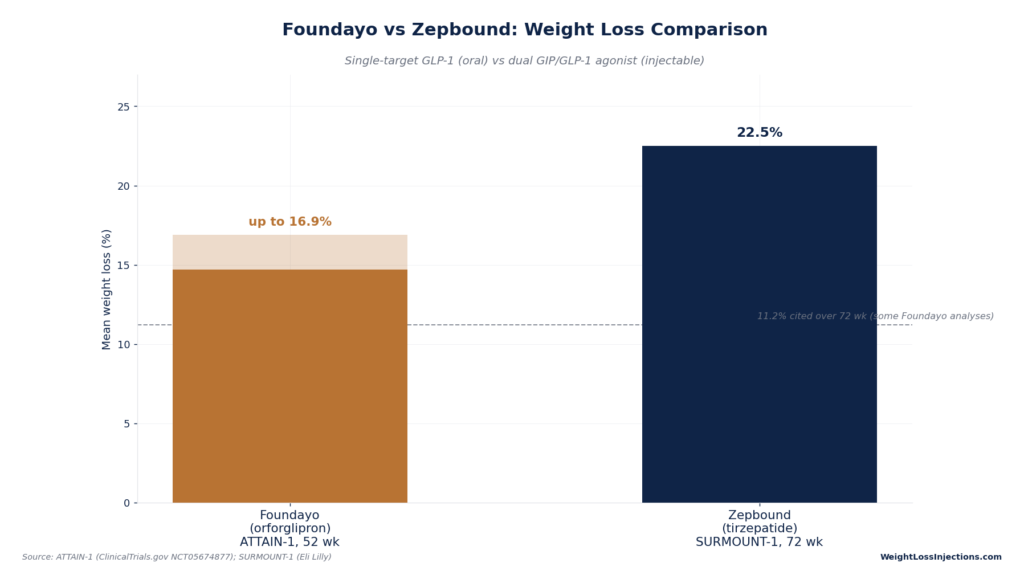
- Zepbound (tirzepatide) produced ~22.5% mean weight loss in SURMOUNT-1, a dual GIP/GLP-1 agonist effect that currently exceeds any single-target GLP-1 oral or injectable option.
- Foundayo (orforglipron) produced 14.7-16.9% mean weight loss at 52 weeks in ATTAIN-1 (11.2% cited over 72 weeks in some analyses), acting on the GLP-1 receptor alone.
- Foundayo is a daily oral tablet with no fasting requirement; Zepbound is a once-weekly self-injection.
- Foundayo can cost as little as $25/month with insurance or $149-349/month self-pay; Zepbound’s list price is commonly cited in the $1,000+/month range before insurance or savings programs.
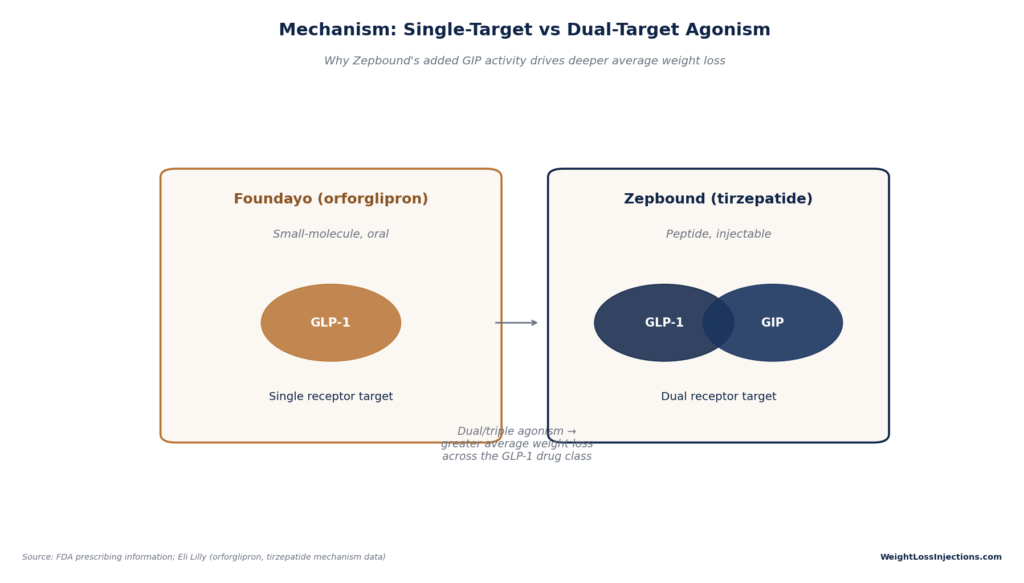
- The core difference is mechanism: Foundayo targets GLP-1 only; Zepbound targets GLP-1 and GIP together, which appears to drive its larger average effect.
Foundayo vs Zepbound: At a Glance
| Factor | Foundayo (orforglipron) | Zepbound (tirzepatide) |
|---|---|---|
| Manufacturer | Eli Lilly | Eli Lilly |
| Delivery | Oral tablet, once daily | Subcutaneous injection, once weekly |
| Mechanism | GLP-1 receptor agonist (small-molecule, mono) | Dual GIP/GLP-1 receptor agonist (peptide) |
| FDA approval | April 1, 2026 | November 2023 |
| Approved indication | Chronic weight management (obesity/overweight + comorbidity) | Chronic weight management + obstructive sleep apnea |
| Pivotal trial | ATTAIN-1 | SURMOUNT-1 |
| Mean weight loss | 14.7-16.9% at 52 weeks | ~22.5% at 72 weeks |
| Fasting required? | No | N/A (injectable) |
| Refrigeration | Not required | Required for pens |
| Self-pay range | $149-349/month | Commonly $1,000+/month list |
Weight loss figures are trial means from separate studies and vary by individual. Always discuss expected outcomes with your healthcare provider.
Efficacy: Single-Target vs. Dual-Target Agonism
The efficacy gap between these two drugs is the most notable data point in this comparison, and it comes down to mechanism rather than delivery method.
In ATTAIN-1, Foundayo produced 14.7-16.9% mean weight loss at 52 weeks across its dose range, compared to 2.3% for placebo. Zepbound’s SURMOUNT-1 trial reported approximately 22.5% mean weight loss — notably higher than Foundayo’s range and higher than any single-target GLP-1 agonist, oral or injectable, currently on the market.
The likely explanation is mechanistic rather than about pill-versus-injection convenience. Zepbound (tirzepatide) is a dual agonist that activates both the GIP (glucose-dependent insulinotropic polypeptide) and GLP-1 receptors, while Foundayo acts on the GLP-1 receptor alone. Dual and triple receptor agonism has consistently produced deeper average weight loss across the GLP-1 drug class, a pattern also seen with investigational triple agonists like retatrutide. This is a trial-to-trial comparison rather than a randomized head-to-head study, so individual results can vary from either average.
Mechanism: How Each Drug Works
- Foundayo (orforglipron): A first-in-class oral small-molecule, non-peptide GLP-1 receptor agonist. It’s chemically simple enough to survive digestion without an absorption enhancer, which is why it needs no fasting rules — but its effect is limited to the single GLP-1 pathway.
- Zepbound (tirzepatide): A peptide dual agonist that binds both the GIP and GLP-1 receptors. GIP is thought to enhance insulin sensitivity and may work synergistically with GLP-1’s appetite-suppressing effects, which researchers believe contributes to tirzepatide’s larger average weight-loss effect across its approved indications.
For a deeper explanation of how small-molecule and peptide GLP-1s differ mechanically, see our guide on why Foundayo is different.
Convenience: Daily Pill vs. Weekly Injection
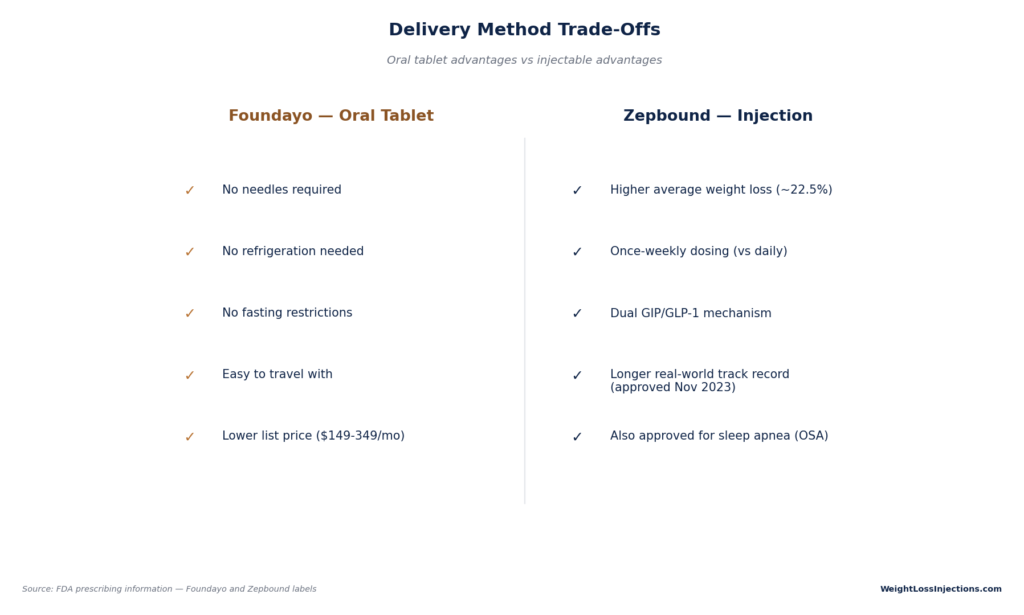
Foundayo’s biggest practical advantage is its dosing flexibility: one tablet, any time of day, with or without food or water. There’s no titration-day ritual, no needle, and no cold-chain logistics.
Zepbound requires a once-weekly subcutaneous injection using a prefilled pen, which must be refrigerated (or stored per label instructions within allowed room-temperature windows) and involves site rotation to reduce irritation. Some patients prefer the “set it and forget it” nature of a weekly injection over a daily pill; others strongly prefer avoiding needles altogether. Neither preference is inherently more effective — it’s a personal fit question best discussed with your provider.
Our Top 3 · October 2026
The best GLP-1 providers right now
Independently reviewed. Ranked by price, medication access, provider quality, and patient outcomes.
Renew GLP
Personalized GLP-1, GIP plans: Semaglutide & Tirzepatide.
Medvi
No membership or hidden fees. Everything you need is included.
Trimi
US-licensed clinicians and shipped to your door, from $99/mo.
Cost Comparison
| Payment scenario | Foundayo | Zepbound |
|---|---|---|
| List price / self-pay | $149-349/month | Commonly cited $1,000+/month depending on dose/vial vs. pen |
| With insurance + savings card | As low as $25/month | Manufacturer savings cards available; varies by plan |
| Medicare | $50/month via GLP-1 Bridge (from July 1, 2026) | Subject to standard Part D coverage rules |
Foundayo’s pricing structure benefits from Eli Lilly’s LillyDirect distribution model and a dedicated Medicare bridge program. Zepbound pricing varies more by formulation (single-dose vials vs. multi-dose pens) and insurance formulary placement. For the fuller cost picture across oral GLP-1s, see our oral GLP-1 cost guide.
Side Effects: Similar Core Profile, Different Add-Ons
Both drugs share the GLP-1 class’s core gastrointestinal side effects — nausea, vomiting, diarrhea, constipation, and decreased appetite — most pronounced during titration. Both carry the class boxed warning for thyroid C-cell tumors and are contraindicated in patients with a personal or family history of medullary thyroid carcinoma or MEN 2 syndrome.
Zepbound’s dual mechanism has been associated with a similar overall GI profile to single-target GLP-1s in trials, without a materially different rate of severe events. Foundayo’s trials additionally flagged transaminase elevations warranting monitoring — a signal not emphasized in tirzepatide’s labeling. Injection-related considerations like injection-site reactions apply to Zepbound but not Foundayo, given the delivery method difference. See our oral GLP-1 side effects guide for more.
Titration Considerations
Both drugs require a gradual dose increase to minimize gastrointestinal side effects, though the schedules reflect their different delivery methods. Zepbound’s titration follows a step-up pattern over several weeks, moving through incremental doses toward its maximum of 15 mg/week, with each increase typically spaced about four weeks apart to let the body adjust. Foundayo’s titration schedule, established through the ATTAIN program, similarly increases the dose over time but does so with a daily oral tablet rather than a weekly injection, meaning patients experience more frequent, smaller adjustments in their routine rather than periodic step-ups. Neither titration process should be accelerated without medical guidance, since doing so tends to increase the risk and severity of GI side effects. For more on how Foundayo’s schedule works, see our guide on Foundayo dosing.
Who Actually Prescribes Each Drug
Both Foundayo and Zepbound are prescribed by primary care physicians, endocrinologists, obesity medicine specialists, and increasingly through telehealth platforms such as Ro, Hims/Hers, LifeMD, and Mochi. Because Foundayo is distributed in part through LillyDirect alongside traditional retail pharmacies (CVS, Walgreens, Walmart, Kroger, Amazon), patients sometimes have more flexibility in how they fill a prescription compared to Zepbound, which is more commonly filled through standard retail or specialty pharmacy channels depending on insurance requirements. Prior authorization is common for both drugs when billed through insurance, particularly for weight-management indications, so expect your provider’s office to submit clinical documentation supporting medical necessity regardless of which drug you and your provider choose.
When to Consider Each
Foundayo may be worth discussing if:
- You strongly prefer avoiding needles
- Daily flexibility (no fasting, no fixed timing) matters more to you than maximizing peak weight loss
- Cost or insurance coverage make Foundayo meaningfully cheaper for your situation
Zepbound may be worth discussing if:
- You’re prioritizing the highest documented average weight loss currently available
- A once-weekly routine appeals to you more than a daily pill
- You have obstructive sleep apnea, an indication Zepbound specifically carries alongside weight management
This is ultimately a conversation for your healthcare provider, who can weigh your health profile, goals, and insurance coverage against the trial evidence.
FAQ
Is Foundayo as effective as Zepbound?
Not based on current trial data. Foundayo showed 14.7-16.9% mean weight loss in ATTAIN-1, while Zepbound showed approximately 22.5% in SURMOUNT-1. The difference is generally attributed to Zepbound’s dual GIP/GLP-1 mechanism versus Foundayo’s single-target GLP-1 action.
Why does Zepbound produce more weight loss than Foundayo?
Researchers believe Zepbound’s dual action on both the GIP and GLP-1 receptors produces a synergistic effect on appetite and insulin sensitivity that single-target GLP-1 agonists like Foundayo don’t achieve to the same degree. This isn’t a head-to-head trial finding, but a pattern observed across separate studies.
Can I take Foundayo if Zepbound isn’t covered by my insurance?
Foundayo is a distinct medication with its own FDA approval and mechanism, not a direct substitute. Whether it’s an appropriate alternative depends on your health profile and goals — a decision to make with your healthcare provider, not based on insurance coverage alone.
Does Foundayo require refrigeration like Zepbound?
No. Foundayo is an oral tablet and does not require refrigeration, unlike Zepbound’s injectable pens, which need cold storage per labeling.
Is Zepbound approved for anything Foundayo isn’t?
Yes. Zepbound carries an approved indication for obstructive sleep apnea in addition to chronic weight management, an indication Foundayo does not currently have.
Medical disclaimer: This article is for informational purposes only and does not constitute medical advice, diagnosis, or treatment recommendations. Foundayo (orforglipron) and Zepbound (tirzepatide) are prescription medications with important safety information and contraindications. Discuss any medication decision with a qualified healthcare provider. Content published by WeightLossInjections.com, your complete resource for GLP-1 medications — injections and pills alike.