Medically reviewed by WeightLossInjections.com Staff•Updated July 24, 2026•10 min readMedically reviewed
Medical disclaimer: This article is for general educational purposes only and does not constitute medical advice. GLP-1 medications carry different risks and benefits for older adults than for younger patients. Decisions about starting, adjusting, or stopping these medications should be made with a physician or geriatric specialist who can evaluate your full health history, frailty status, and current medications.
Older adults face a different risk-benefit calculation with GLP-1 drugs than younger patients — and 2026 brought major Medicare coverage changes.
Only 9% of adults 65+ currently take a GLP-1, versus 22% of adults 50-64, largely due to past Medicare coverage gaps (KFF, Nov. 2025).
That changed July 1, 2026: Medicare’s new “Bridge” program covers GLP-1s for obesity at a $50/month copay for qualifying beneficiaries — but it expires end of 2027 (CNBC).
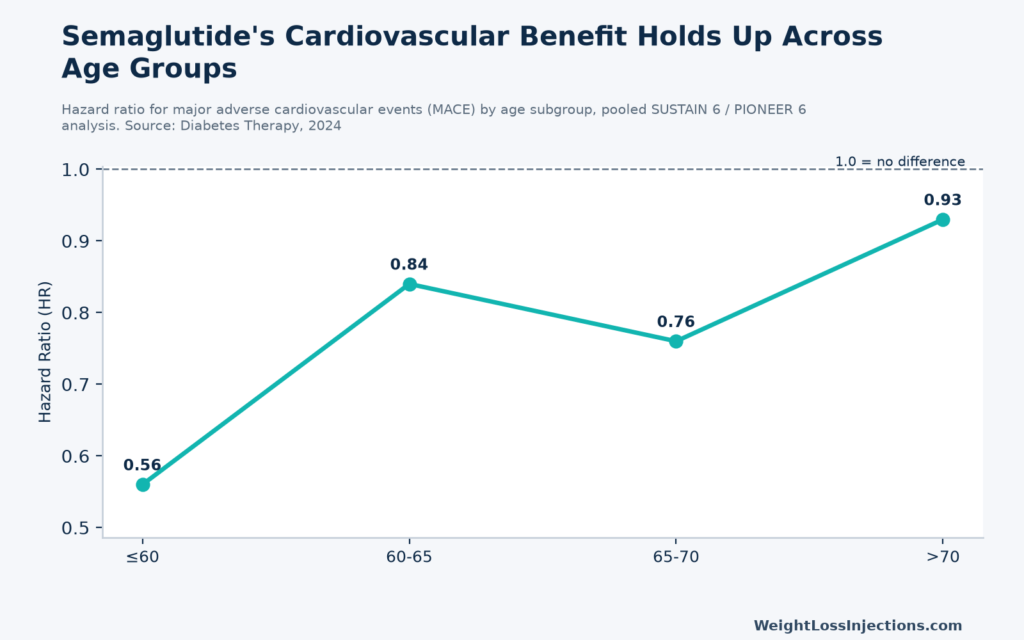
Cardiovascular and kidney benefits hold up with age. Semaglutide cut major cardiovascular events across all age bands through 70+ (Diabetes Therapy, 2024); FLOW’s average participant was 67 (ACC).
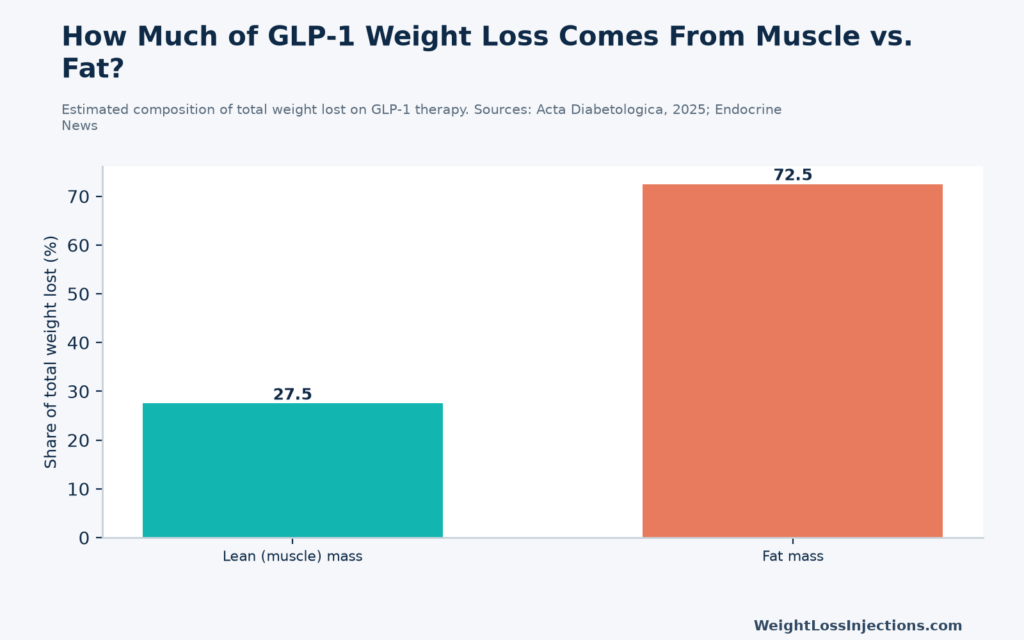
Muscle loss is a real concern. Roughly 25-30% of weight lost can be lean mass; tirzepatide users 65+ who developed muscle wasting had ~12x higher 18-month death risk (Reuters).
Trial data past 65 remains thin — under 3% of pooled trial participants were over 75, and GI-related discontinuation was higher in older users (AAMC).
Dementia data is mixed but intriguing — 20-70% lower risk in observational studies, yet Novo Nordisk’s dedicated evoke/evoke+ Alzheimer’s trials missed their endpoint in Nov. 2025 (Alzheimer’s Association).
Geriatricians recommend “start low, go slow” dosing plus resistance training and higher protein intake to protect muscle (Current Nutrition Reports, 2026).
Unintentional weight loss in seniors is a red flag, not a goal — losses over 10% of body weight are linked to higher mortality in older men (AAMC).
Introduction: Are GLP-1 drugs actually safe for people over 65?
Semaglutide (Ozempic, Wegovy), tirzepatide (Mounjaro, Zepbound), and liraglutide (Victoza, Saxenda) were tested and marketed on the strength of trials dominated by middle-aged adults. Yet the fastest-growing group of new users may be the group these trials studied least: Americans over 65. Medicare’s 69-million-person beneficiary pool just gained meaningful new access to these drugs in mid-2026, at the same moment researchers are publishing fresh warnings about muscle wasting, dehydration, and frailty in older users (CNBC; Reuters).
The tension is real. Large outcome trials — SELECT, FLOW, and STEP-HFpEF — enrolled thousands of participants in their 60s and 70s and found heart, kidney, and heart-failure benefits generally hold up with age (ACC; NEJM). But aging bodies are also more vulnerable to the downsides of rapid weight loss: sarcopenia, falls, bone loss, dehydration, and medication interactions common in later life (Journal of Diabetes, 2025). This guide pulls together the utilization data, age-stratified trial evidence, safety signals, and 2026 Medicare policy changes older adults and caregivers should understand before starting or continuing a GLP-1.
How many older adults are actually using GLP-1 drugs?
Despite the hype, GLP-1 use among seniors has lagged younger age groups — largely for financial and regulatory reasons, not medical ones. A November 2025 KFF poll found a stark usage gap by age, which pollsters attribute to “Medicare’s lack of coverage for drugs prescribed specifically for weight loss” (KFF). That gap has been narrowing from the supply side even before this year’s coverage expansion, as Part D formulary coverage for diabetes/CVD indications climbed sharply between 2022 and 2024, alongside a parallel rise in prior-authorization requirements, and Medicare spending on GLP-1-class drugs rose from millions to billions of dollars annually (JAMA Network Open, 2025).
WeightLossInjections.com editorial note: These figures reflect coverage and prescribing trends, not clinical recommendations — broader Part D coverage doesn’t mean a drug is appropriate for every older patient.
Do GLP-1 drugs work as well in patients over 65?
The honest answer: reasonably well for cardiometabolic outcomes, with caveats for pure weight loss. A pooled post-hoc analysis of SUSTAIN 6 and PIONEER 6 stratified over 6,400 type 2 diabetes participants into four age bands (≤60 to >70) and found semaglutide reduced major cardiovascular events across every subgroup, with hazard ratios from 0.56 (youngest) to 0.93 (oldest) and no significant age interaction (Diabetes Therapy, 2024). HbA1c reductions were slightly smaller in the oldest group, and weight reduction stayed consistent across ages.
Dedicated organ-outcome trials tell a similar story. FLOW, testing semaglutide in diabetes plus CKD, enrolled a population averaging 67; a June 2026 JACC subgroup analysis found it cut the primary kidney outcome by 24% and all-cause mortality by 20% (ACC). In heart failure with preserved ejection fraction — common in older adults — STEP-HFpEF found a 7.8-point greater improvement in symptom scores than placebo at 52 weeks, with STEP-HFpEF DM confirming similar benefit with type 2 diabetes (NEJM; PubMed).
On pure weight loss, older STEP and SURMOUNT participants lose somewhat less than younger ones, but the effect stays meaningful: a 2026 Nutrients review found weight loss in adults 65+ “broadly comparable… with slight attenuation at advanced age” for both drugs (Nutrients, 2026), with proportional fat/lean-mass changes versus younger groups (Current Nutrition Reports, 2026).
Our take at WeightLossInjections.com: The cardiovascular, kidney, and heart-failure data for older adults is genuinely strong. Weight-loss magnitude may be smaller in the oldest patients, but for many seniors with diabetes, heart disease, or CKD, the organ-protective benefits likely matter more than the number on the scale.
Semaglutide’s reduction in major cardiovascular events held up across every age band studied, including patients over 70.
What are the real risks for older adults?
This is where the evidence gets more cautionary, and geriatric specialists want more data.
Sarcopenia and muscle loss. Roughly 25-30% of total weight lost on GLP-1 drugs is lean mass, not fat (range 15-60%) (Endocrine News; Acta Diabetologica, 2025). Since aging already reduces skeletal muscle by 12-16%, older adults have “little margin before critical thresholds are crossed” (Endocrine News). A 2026 preprint of nearly 30,000 Medicare-age tirzepatide users found frailty conditions rare overall, but muscle wasting and dehydration each carried sharply higher 18-month death risk when they occurred, typically after six months (Reuters).
Bone, fall, and GI risks. Fracture evidence is mixed — one study linked semaglutide to a 15% fracture reduction overall (Endocrine Society), yet SELECT and JCEM cohort data found higher fracture rates with age and GLP-1 initiation. Falls tell an opposite story, with one cohort finding lower rates on semaglutide/tirzepatide than DPP-4 inhibitors. GI side effects raise dehydration and AKI risk, warranting caution in CKD (Kidney Medicine, 2021).
Gastroparesis, drug absorption, and hypoglycemia. GLP-1s slow gastric emptying by design, which can unmask subclinical gastroparesis, particularly with long-standing diabetes and autonomic neuropathy, and affect absorption of other oral medications — a real concern given geriatric polypharmacy (Revista Portuguesa de Diabetes, 2026). Hypoglycemia risk alone is low but rises with insulin or sulfonylureas; semaglutide-treated patients over 70 did not show higher severe hypoglycemia rates than younger users (Diabetes Therapy, 2024).
WeightLossInjections.com editorial note: Much of this data comes from observational studies, not dedicated randomized trials past 75, so real-world monitoring is filling gaps the original studies weren’t designed to answer.
Practical guidance: how should older adults approach these drugs?
Geriatric specialists converge on a few principles. John Batsis, MD, of UNC Chapel Hill sums up dosing simply: “Start low, and go slow” — a slower titration that gives the body time to adjust and makes side effects easier to catch early (AAMC). A 2026 Current Nutrition Reports review recommends pairing therapy with resistance exercise and 1.2-1.6 g/kg/day of protein, above general recommendations, to preserve muscle during weight loss (Current Nutrition Reports, 2026).
Several geriatricians stress that unintentional weight loss is a warning sign, not a goal. Cleveland Clinic’s Chitra Ganta, MD, notes weight loss over 10% of body weight is linked to higher mortality in older men and says she is “more cautious” prescribing GLP-1s to patients 65+ (AAMC). Baylor’s Ruchi Gaba, MD, frames the goal around function, not the scale: “It’s not just weight loss — it’s about preserving strength and independence and quality of life” (AAMC), and reviews a patient’s full medication list before prescribing, since delayed gastric emptying can affect how long other drugs stay active. A 2018 pooled Novo Nordisk analysis found GLP-1s generally safe past 65, but with higher GI-related discontinuation, and fewer than 3% of participants were over 75 (AAMC).
Semaglutide’s reduction in major cardiovascular events held up across every age band studied, including patients over 70.
Medicare coverage: what changed in 2025-2026
For most of the GLP-1 era, Medicare Part D was legally barred from covering these drugs for weight loss alone (FormBlends). That changed in stages, from the FDA’s March 2024 cardiovascular-risk approval for Wegovy, to a since-withdrawn 2024 Biden-era expansion proposal, to Medicare’s new “Bridge” demonstration, which began covering GLP-1s for obesity itself on July 1, 2026, at a flat $50 monthly copay for beneficiaries with a BMI of 35+ or a lower BMI plus a qualifying condition like prediabetes or prior heart attack (CNBC). That copay doesn’t count toward the Part D deductible or the $2,100 annual cap, and beneficiaries already covered for diabetes, CVD, or sleep apnea aren’t eligible for Bridge on top of that (CNBC).
Manufacturers estimate 15-20 million beneficiaries could qualify, while CMS expects “several million” to actually enroll (CNBC). The catch: Bridge is temporary, scheduled to expire end of 2027 absent an extension (CNBC).
Medicare GLP-1 coverage timeline
Development
Pre-2024
No Part D coverage for weight loss indication; diabetes/CVD coverage only
March 2024
FDA approves Wegovy for CVD risk reduction, enabling Part D coverage for that use (FormBlends)
Trump administration withdraws the proposal (Reuters)
July 1, 2026
Medicare Bridge demonstration launches: $50/month copay for eligible beneficiaries (CNBC)
End of 2027
Bridge program scheduled to expire absent further action (CNBC)
Emerging research: dementia and Parkinson’s
One of the most closely watched frontiers is whether GLP-1 drugs affect dementia risk. Observational evidence leans encouraging, though far from settled. A Swedish emulated-trial study of nearly 88,000 people with type 2 diabetes over 65 found GLP-1 use associated with 31% lower dementia risk versus sulfonylureas and 23% lower versus DPP-4 inhibitors (Journal of Alzheimer’s Disease Reports, 2025). A pooled randomized-trial analysis found a hazard ratio of 0.47 (Alzheimer’s & Dementia: Translational Research, 2022), and a 2025 cohort of over 295,000 patients found a 70% relative reduction (Journal of Alzheimer’s Disease Reports, 2025). But comparator choice matters: one 2026 study found GLP-1 users had lower dementia risk than DPP-4 inhibitor users but higher risk than SGLT2 inhibitor users (PubMed, 2026).
The most direct test came from Novo Nordisk’s dedicated evoke/evoke+ Alzheimer’s trials, which enrolled over 3,800 people ages 55-85 with mild cognitive impairment or dementia, testing oral semaglutide over two years. In November 2025, the company reported improved biomarkers but no slowing of clinical disease progression, missing the primary endpoint (Alzheimer Europe; Alzheimer’s Association).
On Parkinson’s, evidence is earlier-stage: preclinical studies show semaglutide reduces alpha-synuclein aggregation in animal models (PubMed), and Phase 2 trials (NCT03659682, and the newer MOST-ABLE study) are underway (PubMed, 2025), though a large real-world study found no significant Parkinson’s risk difference versus comparators (TCTMD).
Our take at WeightLossInjections.com: The dementia-risk signal in observational data is exciting, but the negative evoke/evoke+ results are a reality check: association doesn’t guarantee a treatment effect in a randomized trial. Don’t start a GLP-1 specifically for brain-health reasons based on current evidence.
Frequently Asked Questions
For many older adults with obesity, diabetes, cardiovascular disease, or CKD, GLP-1s offer meaningful benefit, with cardiovascular protection holding up across age groups (Diabetes Therapy, 2024), though geriatricians recommend a cautious, individualized approach given limited data past 75 (AAMC).
It depends on indication. Part D has long covered these for diabetes and, since March 2024, cardiovascular risk reduction. As of July 1, 2026, the temporary Bridge demonstration also covers obesity itself at a $50/month copay for qualifying beneficiaries, through 2027 (CNBC).
Yes — roughly 25-30% of total weight lost is lean muscle mass, a bigger concern for older adults with reduced muscle reserve (Acta Diabetologica, 2025). Resistance training and higher protein intake are recommended to offset this (Current Nutrition Reports, 2026).
Observational studies suggest lower dementia risk versus some other diabetes drugs (roughly 20-70% depending on comparator) (Journal of Alzheimer’s Disease Reports, 2025), but Novo Nordisk’s dedicated evoke/evoke+ Alzheimer’s trials showed no benefit on disease progression in late 2025 (Alzheimer’s Association).
Unintentional weight loss over roughly 10% of body weight in older men has been linked to higher all-cause mortality (AAMC). It should prompt evaluation for underlying illness, not be assumed to reflect treatment success.
Geriatricians recommend close follow-up of weight, muscle strength, hydration, and GI tolerance — especially in the first six months, when frailty signals most often emerge (Reuters).