![Unbranded [pillar-drug-class] injection pen on a neutral background — WeightLossInjections.com editorial hero](https://weightlossinjections.com/wp-content/uploads/2026/07/hero_mounjaro_c2_dosing-1200x675.png)
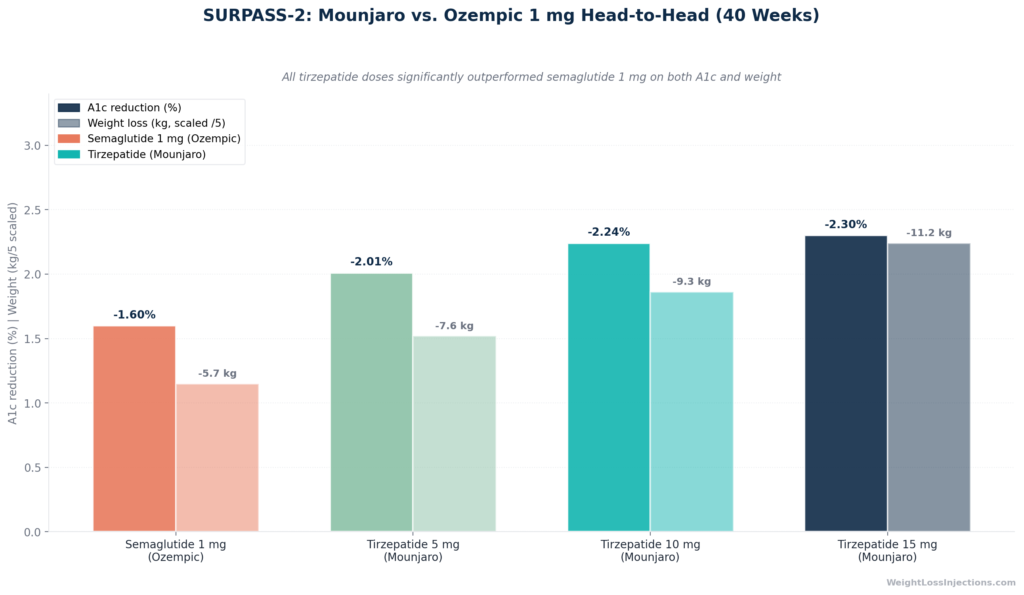
SURPASS-2 head-to-head data: Mounjaro (tirzepatide) versus Ozempic (semaglutide 1 mg), A1c reduction and weight loss at 40 weeks. All three tirzepatide doses achieved statistically superior outcomes on both endpoints.
Hundreds of thousands of adults in the United States are currently taking Ozempic (semaglutide) for type 2 diabetes. A growing proportion of them — and their providers — are now asking a pointed question: is Mounjaro (tirzepatide) a better option, and if so, how do you make the switch?
This is not a hypothetical question. The SURPASS-2 trial, published in the New England Journal of Medicine in August 2021, put both molecules in the same study — 1,879 T2DM patients on metformin — and tirzepatide outperformed semaglutide 1 mg on every primary endpoint over 40 weeks: A1c reduction (−2.30% vs. −1.86% at the highest doses) and body weight loss (−11.2 kg vs. −5.7 kg at the highest doses tested), per SURPASS-2, NEJM 2021 (Frías et al.). These numbers explain why the switch conversation has intensified.
But the question most patients actually need answered is not whether Mounjaro is superior on paper. It is: How exactly do I switch? Do I need a washout period? What dose do I start on? Will my side effects be worse? What should I expect in the first three months?
This guide answers all of those questions using published clinical protocols, the ADA 2025 Standards of Care switching guidance, the pharmacokinetics of semaglutide clearance, and the SURPASS trial data. It also covers the scenarios where switching is not the right decision — because Mounjaro is not always the obvious choice — and what to expect on the insurance side, including the step-therapy dynamics that can actually work in a switcher’s favor.
- Switching from Ozempic to Mounjaro is clinically supported and generally safe when done with appropriate timing.
- No formal washout is required, but most clinicians recommend 7–14 days after your last Ozempic injection before starting Mounjaro.
- Regardless of your prior Ozempic dose, start Mounjaro at 2.5 mg and titrate per the standard schedule.
- Expect a GI re-adjustment period during the first 4–8 weeks as your body adapts to tirzepatide’s added GIP receptor component.
- A new prior authorization is required — Ozempic coverage does not transfer to Mounjaro — but prior Ozempic use as a documented step-therapy trial may actually accelerate Mounjaro approval.
- If you have been on Ozempic and are meeting A1c and weight goals, the case for switching is weaker. If you are plateauing or under-responding, tirzepatide’s dual mechanism offers a meaningful clinical upgrade.
Why Patients Switch from Ozempic to Mounjaro
Switching from one medication to another is not a decision to take casually. But there are several well-documented clinical reasons why a switch from Ozempic to Mounjaro makes sense — and a few scenarios where it does not.
Reason 1: Insufficient A1c Response
The most straightforward reason to switch is unmet glycemic control. Ozempic (semaglutide) is a GLP-1 receptor agonist. Mounjaro (tirzepatide) is a dual GIP and GLP-1 receptor agonist — the first in its class — per the FDA Mounjaro Prescribing Information §12.1. The addition of GIP receptor agonism is not a minor pharmacological footnote. It contributes a distinct and additive insulin secretion pathway that semaglutide cannot replicate.
In SURPASS-2, the only randomized head-to-head trial between these two molecules, tirzepatide outperformed semaglutide 1 mg across all three tested doses on A1c reduction, per SURPASS-2, NEJM 2021 (Frías et al.):
| Treatment Arm | Mean HbA1c Change | Estimated Treatment Difference vs. Sema 1 mg |
|---|---|---|
| Tirzepatide 5 mg | −2.01% | −0.15% (p=0.02) |
| Tirzepatide 10 mg | −2.24% | −0.39% (p<0.001) |
| Tirzepatide 15 mg | −2.30% | −0.45% (p<0.001) |
| Semaglutide 1 mg | −1.86% | — |
All three tirzepatide doses met both the noninferiority and superiority thresholds against semaglutide 1 mg, per the ACC SURPASS-2 Clinical Trial Summary. For a patient starting with an A1c of 9.0%, tirzepatide at 15 mg has the clinical potential to bring them to approximately 6.7% — within the target range of below 7.0% recommended for most adults with T2DM. Ozempic at 1 mg in the same scenario would get to approximately 7.1%, which is meaningfully closer to target but may not reach it.
One important caveat that every honest discussion of SURPASS-2 must include: the semaglutide comparator was 1 mg, not Ozempic’s maximum approved dose of 2 mg. As diaTribe’s tirzepatide summary (2023) correctly notes, no head-to-head trial has tested tirzepatide against semaglutide at its full 2 mg ceiling. The true gap between maximum-dose Ozempic and maximum-dose Mounjaro on A1c remains untested in a controlled RCT. For patients on Ozempic 2 mg who are meeting A1c targets, this caveat matters.
Reason 2: More Weight Loss Desired
SURPASS-2’s weight data is the figure most patients cite when asking about a switch. At 40 weeks, tirzepatide 15 mg produced −11.2 kg of weight loss compared to −5.7 kg for semaglutide 1 mg — nearly double the mean weight reduction, per SURPASS-2, NEJM 2021. Even tirzepatide 5 mg (−7.6 kg) outperformed semaglutide 1 mg on weight.
The weight loss data from the SURMOUNT program — conducted with the same molecule under the Zepbound brand for obesity — shows even more dramatic results in the non-T2DM population: −16.5% at 5 mg, −21.4% at 10 mg, and −22.4% at 15 mg at 72 weeks versus −2.4% with placebo, per SURMOUNT-1, NEJM. These figures are not directly transferable to the T2DM population on Ozempic who is considering a switch — but they illustrate the ceiling of the tirzepatide molecule’s weight-reduction potential.
For a patient on Ozempic who has stabilized but not reached their weight goal, or whose weight loss has plateaued after 12–18 months, tirzepatide’s dual mechanism provides a meaningful pharmacological upgrade. Adding GIP receptor activation affects adipose tissue metabolism and central appetite regulation through pathways that GLP-1 alone cannot reach — which is likely why tirzepatide consistently outperforms semaglutide on weight endpoints across all available data, per diaTribe’s tirzepatide analysis.
Reason 3: Ozempic Shortage or Formulary Change
Not all switches are driven by efficacy preference. Periodic Ozempic supply disruptions — driven by global demand surges, manufacturing capacity, and Novo Nordisk’s production timelines — have caused patients to be switched to Mounjaro by their providers, sometimes involuntarily. Similarly, some insurance formularies have moved Mounjaro to a preferred tier or dropped Ozempic coverage, making a formulary-driven switch the financially logical choice regardless of clinical comparisons.
Step therapy also creates switch dynamics in the other direction: plans that require prior GLP-1 trial before approving Mounjaro effectively mandate an Ozempic (or equivalent) first step. Patients who complete that step and document the clinical response — even a good one — are positioned to move to tirzepatide with a documented prior GLP-1 trial in their record, per Healthline’s step therapy guide. This history can simplify Mounjaro prior authorization rather than complicate it.
Reason 4: Side Effect Tolerability
GI side effects — nausea, diarrhea, vomiting, constipation — are a class effect of GLP-1 receptor agonists, and both Mounjaro and Ozempic produce them, primarily during dose escalation. However, individual tolerability profiles differ across these molecules, and some patients report that switching from Ozempic to Mounjaro actually improves their GI experience — different quality, potentially more manageable.
Others report the opposite: that tirzepatide’s added GIP receptor component produces a distinct nausea pattern in the early weeks that semaglutide did not. The key point is that tirzepatide’s side effect profile is not identical to semaglutide’s — even though both drugs affect gastric emptying and appetite through overlapping mechanisms, per the FDA Mounjaro Prescribing Information §6. Patients intolerant to Ozempic’s GI profile should not assume they will automatically tolerate Mounjaro better — but switching to explore tolerability differences, with clinical supervision, is a legitimate reason.
When NOT to Switch
Not every Ozempic patient should switch to Mounjaro. Reasons to stay on Ozempic include:
- A1c is already at target. If your A1c is at or below your individualized goal and weight management is adequate, switching introduces titration risk, GI re-adjustment, and a new prior authorization without clear clinical upside.
- High pancreatitis history. Mounjaro, like all GLP-1 class agents, has not been studied in patients with a history of pancreatitis. Tirzepatide is not recommended if you have pancreatitis history, per the FDA Mounjaro Prescribing Information §1.
- Insurance won’t cover Mounjaro and cost is prohibitive. For commercially insured T2DM patients, this is relatively rare — most major commercial plans cover Mounjaro for the T2DM indication, per Noom’s insurance coverage guide, 2026. But if your plan specifically excludes tirzepatide or step therapy requirements have not been met, out-of-pocket costs can be significant.
- Established CVD where you specifically value Ozempic’s MACE superiority label. Ozempic has an FDA-approved cardiovascular risk reduction indication based on SUSTAIN-6 (HR 0.74; 95% CI 0.58–0.95, MACE superiority). Mounjaro demonstrated MACE noninferiority — not superiority — versus dulaglutide in SURPASS-CVOT, per SURPASS-CVOT, NEJM December 2025. Patients whose cardiovascular protection label is clinically central should discuss this distinction with their cardiologist before switching.
How These Drugs Work: The Mechanism Overlap That Makes Switching Safe
Understanding why switching between Ozempic and Mounjaro is pharmacologically safe — and why it does not require a lengthy washout — starts with understanding how their mechanisms overlap and differ.
Ozempic (semaglutide) is a GLP-1 receptor agonist. It mimics the incretin hormone GLP-1, which the gut releases in response to food intake. GLP-1 receptor activation stimulates insulin secretion in a glucose-dependent manner, suppresses glucagon, slows gastric emptying, and reduces appetite. This mechanism is shared by all GLP-1 class drugs: liraglutide, dulaglutide, exenatide, and semaglutide all target the same GLP-1 receptor.
Mounjaro (tirzepatide) is a dual GIP and GLP-1 receptor agonist — the first drug approved in this class, per the FDA Mounjaro Prescribing Information §12.1. Tirzepatide activates both the GIP receptor and the GLP-1 receptor simultaneously. The GLP-1 component overlaps completely with semaglutide’s mechanism. The GIP component is entirely new: it enhances insulin secretion through a second hormonal pathway, affects adipose tissue metabolism through GIP receptor signaling on fat cells, and engages central nervous system appetite-regulation circuits via both receptor systems.
For the purpose of switching, this overlap is reassuring: tirzepatide activates the same GLP-1 receptor that semaglutide activates. A patient transitioning from Ozempic to Mounjaro is not replacing a GLP-1 agonist with an entirely foreign mechanism — they are replacing it with a molecule that provides full GLP-1 receptor coverage plus the added GIP receptor signal. There is no “withdrawal” from GLP-1 activity during the transition, because tirzepatide immediately provides GLP-1 agonism from the first dose.
Why you cannot take both simultaneously: The FDA Prescribing Information for Mounjaro §7 explicitly states that Mounjaro should not be used in combination with another GLP-1 receptor agonist. Combining GLP-1 agonists provides no incremental glycemic or weight benefit — the GLP-1 receptor does not become more activated by having two agonists competing for it — and the combined GI side effect burden (nausea, vomiting, diarrhea) substantially increases. This prohibition is a hard boundary, not a preference.
Do You Need a Washout Period Before Starting Mounjaro?
This is the question most patients ask first, and the answer requires understanding semaglutide’s pharmacokinetics.
Semaglutide half-life: Ozempic’s elimination half-life is approximately 1 week (7 days), per the Ozempic FDA Prescribing Information. This means that after your last Ozempic injection, semaglutide’s concentration in your bloodstream decreases by half every 7 days. Full clearance (defined as five half-lives) would take approximately 5 weeks.
Why a 5-week washout is not recommended: A complete 5-week washout would leave T2DM patients without any GLP-1 coverage for a month. During that window, blood glucose typically rises as the GLP-1 signal is lost, appetite suppression diminishes, and some degree of weight regain can begin. The ADA 2025 Standards of Care emphasize individualized treatment decisions and continuity of glycemic coverage — a 5-week drug holiday between GLP-1 agents is neither necessary nor clinically advisable for most patients, per Helimeds’ ADA 2025 switching guidance (April 2026).
The clinically recommended transition gap:
- Minimum: 7 days after your last Ozempic injection before starting Mounjaro. At this point, semaglutide has cleared one half-life — its concentration is approximately 50% of the post-injection peak — and the safety concern about running two GLP-1 agonists simultaneously is substantially reduced, per the Peptide Dossier switching guide.
- Preferred: 10–14 days, particularly for patients who were on higher Ozempic doses (1 mg or 2 mg weekly). At 2 weeks, semaglutide is at approximately 25% of peak concentration. This window reduces the overlap enough to provide a cleaner transition while avoiding the 5-week glucose-coverage gap, per blog.aihavit.com’s 2026 evidence-based switching protocol (May 2026).
Practical timing rule most clinicians use: If your last Ozempic injection was 5 days or less ago, start Mounjaro on your regular weekly injection day without repeating the Ozempic dose. If more than 5 days have passed since your last Ozempic dose, wait for the next scheduled weekly day to start Mounjaro. This approach maintains the once-weekly cadence while building in the appropriate gap, per the Peptide Dossier switching guide.
For patients on maximum Ozempic dose (2 mg/week): Some clinicians prefer the full 14-day gap when patients have been on semaglutide 2 mg, citing the higher semaglutide drug load to clear and the greater potential for overlapping GI effects if tirzepatide is introduced too quickly. This is a clinical preference rather than a hard protocol requirement, per blog.aihavit.com’s 2026 protocol.
During the washout gap: Some patients notice increased appetite, reduced satiety, or a slight fasting glucose increase during the 7–14 day transition window. This is expected — semaglutide’s GLP-1 signal is fading, and tirzepatide has not yet been introduced. Maintaining consistent diet habits during this period minimizes the impact.
What Starting Dose of Mounjaro Do You Take After Ozempic?
This is the second most common question from patients considering a switch — and the answer may be surprising.
Regardless of what dose of Ozempic you were on, you start Mounjaro at 2.5 mg.
This is the ADA 2025 Standards of Care recommendation, per blog.aihavit.com’s 2026 switching protocol, and it is consistent with the FDA Mounjaro Prescribing Information §2, which establishes 2.5 mg as the universal initiation dose “for treatment initiation only and is not intended for adequate glycemic control.”
Why does it matter that you were on Ozempic 1 mg or even 2 mg? Because semaglutide and tirzepatide are entirely different molecules acting on partially different receptor systems. Milligram-for-milligram dose conversion between semaglutide and tirzepatide is not pharmacologically valid — the two drugs have different receptor binding profiles, different molecular weights, different half-lives (tirzepatide: ~5 days; semaglutide: ~7 days, per the FDA Mounjaro Prescribing Information §12.3), and most importantly, tirzepatide introduces a GIP receptor component that is completely new to your body regardless of your prior semaglutide experience.
The 2.5 mg initiation dose exists to allow your GIP receptors, your GI system, and your glucose regulation pathways to adjust to a pharmacologically novel signal before moving to therapeutic doses. Bypassing it by starting at a higher dose introduces the risk of more pronounced GI side effects without improving the probability of better glycemic outcomes.
What about clinicians who start at 5 mg? Some prescribers — particularly for patients who tolerated high-dose Ozempic well and showed minimal GI side effects — may start Mounjaro at 5 mg rather than 2.5 mg, with close follow-up monitoring. This reflects individual clinical judgment, not official guidance. The ADA 2025 position on GLP-1 class switching recommends individualized titration rather than assumption of tolerability from a prior agent, per Helimeds’ ADA 2025 conversion guide (April 2026).
Reference dose-mapping table (clinical guidance — no official equivalence established):
This table represents clinical practice patterns observed in the literature, not a formally validated conversion chart. No such official chart exists, and both the ADA and the FDA have not published dose-equivalency tables between semaglutide and tirzepatide. Always defer to your prescribing clinician.
| Prior Ozempic Dose | Suggested Mounjaro Starting Dose | Target Maintenance Range | Notes |
|---|---|---|---|
| 0.25 mg/week (initiation) | 2.5 mg | 5–15 mg | Standard default; always safest starting point |
| 0.5 mg/week | 2.5 mg | 5–15 mg | Standard; continue titration per schedule |
| 1.0 mg/week | 2.5 mg (most clinicians) | 7.5–15 mg | Some prescribers may start at 5 mg with close monitoring |
| 2.0 mg/week (maximum Ozempic) | 2.5–5.0 mg | 10–15 mg | Some clinicians start at 5 mg for tolerant patients; 2.5 mg remains safest default |
Sources: NiceRx Ozempic-to-Mounjaro Conversion Chart (2024); Helimeds ADA 2025 Conversion Guide (April 2026).
Standard Mounjaro titration from 2.5 mg (all patients, regardless of prior Ozempic dose), per the FDA Mounjaro Prescribing Information §2:
- Weeks 1–4: 2.5 mg (initiation, tolerability)
- Weeks 5–8: 5 mg (first therapeutic dose)
- Weeks 9–12: 7.5 mg (if additional glycemic control needed)
- Weeks 13–16: 10 mg (continuing titration)
- Weeks 17–20: 12.5 mg (continuing titration)
- Week 21+: 15 mg (maximum dose)
Each increase is implemented after at minimum 4 weeks on the current dose. Not all patients need to reach 15 mg — maintenance at any therapeutic dose is appropriate when glycemic and weight goals are achieved.
Week-by-Week: What to Expect After You Switch
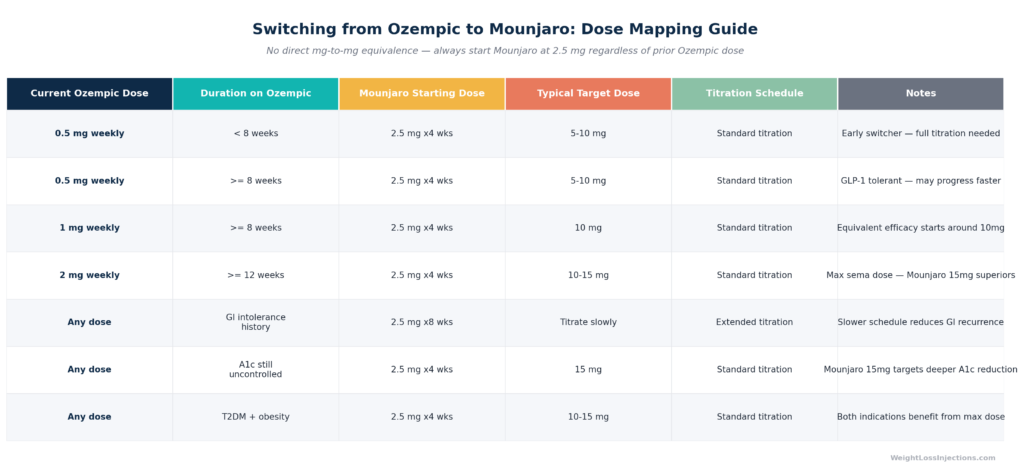
The Ozempic-to-Mounjaro transition timeline: from last semaglutide dose through the 6-month mark — covering the washout gap, Mounjaro initiation at 2.5 mg, titration steps, GI adjustment windows, and key A1c/weight milestones.
The transition period from Ozempic to Mounjaro unfolds across several distinct phases. Knowing what to expect in each phase is one of the most practical things you can do to manage the switch successfully.
The Transition Gap (Days 1–14 After Last Ozempic Dose)
During the 7–14 days between your last Ozempic injection and your first Mounjaro injection, semaglutide is gradually clearing from your system. Most patients notice subtle changes in this window: appetite may increase modestly, fasting glucose may tick up slightly, and the satiety signal that Ozempic provided may become less pronounced.
These changes are temporary and expected — they reflect semaglutide’s half-life clearance, not a permanent change in your metabolism. Do not interpret increased hunger during this window as a sign that you should stay on Ozempic or delay starting Mounjaro. Maintain consistent eating patterns, keep dietary choices stable, and monitor fasting glucose if you are doing so regularly, per Ro Health’s switching guide (2024).
If you are also on insulin or a sulfonylurea, pay particular attention to glucose levels during this gap — reduced GLP-1 coverage without corresponding reduction of your other diabetes medications can increase hypoglycemia risk in some patients. Discuss glucose monitoring frequency with your prescriber before starting the transition.
Weeks 1–4: Mounjaro 2.5 mg Initiation
The 2.5 mg dose is not a therapeutic dose — it is a tolerability dose, per the FDA Mounjaro Prescribing Information §2. Do not expect significant A1c changes or dramatic weight loss during this phase. The purpose of week 1 through week 4 is to introduce your GIP and GLP-1 receptors to tirzepatide’s molecular signal at a low intensity before escalating.
GI side effects: Many patients who switch from Ozempic to Mounjaro experience a re-adjustment GI period at 2.5 mg initiation, even if they had previously tolerated Ozempic well. This is because tirzepatide’s GIP receptor component introduces a pharmacologically novel signal — your GI system is adapting to a drug it has not encountered before, not just a stronger version of semaglutide. The most commonly reported GI effects are nausea, reduced appetite, and occasional loose stool, per blog.aihavit.com’s 2026 switching protocol.
Practical strategies for weeks 1–4:
- Eat smaller meals; do not eat until you feel discomfort
- Avoid high-fat, fried, or very spicy foods during the first weeks
- Stay well-hydrated — GI symptoms increase dehydration risk
- Inject on the same day each week to maintain consistent drug levels
- Start a brief daily log of glucose readings, GI symptoms, and weight to share at your 4-week follow-up
Weeks 5–8: Titration to Mounjaro 5 mg (First Therapeutic Dose)
Week 5 marks the first titration step: your dose increases to 5 mg. This is when tirzepatide’s glycemic effect begins to become clinically relevant. Most patients start to notice a more pronounced appetite suppression signal during this phase — sometimes stronger than what they experienced on Ozempic — as the dual GIP/GLP-1 engagement reaches a meaningful concentration level.
Expect GI side effects to potentially worsen briefly around the dose increase, then stabilize within 1–2 weeks. This pattern — GI symptoms peaking during dose escalation, then diminishing at the stable dose — is characteristic of the entire GLP-1 class and is expected and normal, per the FDA Mounjaro Prescribing Information §6. If GI side effects are intolerable during dose escalation, do not force the titration — discuss with your prescriber about staying at the current dose for additional weeks before increasing. The titration schedule is a minimum wait, not a mandatory escalation deadline.
Fasting glucose should start trending downward in weeks 5–8. Most patients begin to see meaningful glucose reduction in this window, though A1c changes require 6–8 weeks minimum to reflect in lab values. Weight loss may also become more apparent during this phase — tirzepatide’s appetite suppression often produces a noticeable caloric reduction effect at 5 mg that some patients describe as stronger than their experience at comparable Ozempic doses.
Weeks 9–16: Titration to 7.5–10 mg (Reaching Therapeutic Range)
This is typically the phase where the most clinically significant changes become apparent. By week 12, a meaningful A1c reduction should be visible in lab work — your prescriber should order an A1c and comprehensive metabolic panel at approximately the 3-month mark of your Mounjaro use, per blog.aihavit.com’s 2026 protocol.
Body weight loss often becomes clearly noticeable in this window. In the SURPASS clinical trials, T2DM patients who ultimately reached 10–15 mg tirzepatide saw approximately 11–13% body weight reduction over 40 weeks, per the pooled SURPASS-1 through SURPASS-5 PubMed analysis (2022). The trajectory of your weight loss in weeks 9–16 is a reasonable early indicator of how your response to tirzepatide compares with your previous response to semaglutide.
GI side effects should be substantially diminished by week 12 for most patients — the titration-phase GI adjustment is behind them, and the body has adapted to the GIP/GLP-1 combined signal. Some patients find that the constipation component of tirzepatide’s GI profile is more prominent in this range than with Ozempic; maintaining hydration and fiber intake is particularly important.
Weeks 17–24+: Plateau at Maintenance Dose
By week 16–20, most patients are approaching or at their maintenance Mounjaro dose — typically 10–15 mg. The full A1c benefit of tirzepatide accrues over 24–40 weeks, per SURPASS-2’s 40-week timeline, per SURPASS-2, NEJM 2021. Patients who achieve the 15 mg maintenance dose in a T2DM population can expect mean A1c reductions of approximately 2.30% and mean body weight reductions approaching 11–13% based on SURPASS trial data.
At 6 months, a comprehensive metabolic review with your prescriber — A1c, lipid panel, renal function, blood pressure, and weight — provides a clear picture of your Mounjaro response relative to your prior Ozempic baseline.
Our Top 3 · October 2026
The best GLP-1 providers right now
Independently reviewed. Ranked by price, medication access, provider quality, and patient outcomes.
Renew GLP
Personalized GLP-1, GIP plans: Semaglutide & Tirzepatide.
Medvi
No membership or hidden fees. Everything you need is included.
Trimi
US-licensed clinicians and shipped to your door, from $99/mo.
Switching from Wegovy to Mounjaro: What Is Different?
Wegovy is semaglutide at a higher dose than Ozempic — 2.4 mg/week at its maximum maintenance dose — and it is FDA-approved for chronic weight management rather than T2DM. Patients on Wegovy who want to switch to Mounjaro are making the same semaglutide-to-tirzepatide transition, but the clinical context differs in several important ways.
Pharmacokinetics are identical: Wegovy uses the same semaglutide molecule as Ozempic, just at a higher dose. The half-life (~1 week), washout timing, and transition gap recommendations apply identically: 7–14 days minimum, with some clinicians preferring the full 14 days for patients who were on maximum Wegovy dose (2.4 mg), per Pandameds’ switching guide (2025).
Starting dose is the same: Regardless of prior Wegovy dose, begin Mounjaro at 2.5 mg per ADA 2025 guidance, per Helimeds’ ADA 2025 switching guide (April 2026).
The T2DM requirement: This is the key difference from the Ozempic-to-Mounjaro switch. Mounjaro is FDA-approved for T2DM only. If you are on Wegovy for obesity and do not have T2DM, a Mounjaro prescription would be off-label, and insurance coverage is highly unlikely. For patients in this situation without a T2DM diagnosis, Zepbound — tirzepatide under its obesity indication — is the appropriate target medication. Insurance coverage for Zepbound follows the obesity formulary, which is a separate pathway from Mounjaro’s T2DM formulary, per the FDA Mounjaro Prescribing Information §1.
Cost comparison for the Wegovy-to-Mounjaro transition: For T2DM patients switching from Wegovy (~$1,349/month at WAC) to Mounjaro, the cost differential is immediately favorable. Mounjaro’s WAC is $1,079.77/month per the Lilly Official WAC Disclosure Sheet, and commercially insured T2DM patients can access Mounjaro through the Lilly Savings Card at as low as $25/month — a substantial cost reduction compared to Wegovy’s self-pay or commercially insured pricing, per NiceRx’s savings card overview (March 2026).
Insurance, Prior Authorization, and Cost When Switching
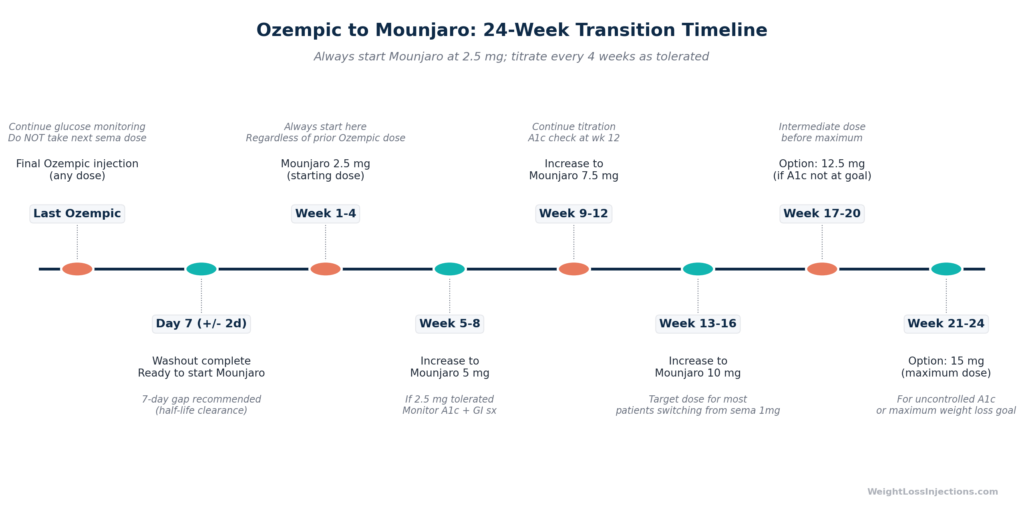
Reference dose-mapping guide: prior Ozempic dose versus suggested Mounjaro starting dose and maintenance target range. This is a clinical practice reference, not an official conversion chart — no formal equivalence exists between semaglutide and tirzepatide.
A New Prior Authorization Is Required
Ozempic and Mounjaro are treated as completely separate medications by every insurance plan in the United States. Existing Ozempic prior authorization approval does not transfer to Mounjaro, and existing Ozempic coverage does not guarantee Mounjaro coverage, per the FDA Mounjaro Prescribing Information §1. A new prior authorization (PA) request must be submitted by your prescriber before your insurance will cover Mounjaro.
Plan for 1–4 weeks for PA processing. Common requirements for Mounjaro PA include: documented T2DM diagnosis (ICD-10: E11.x), recent A1c typically ≥7.0%, documentation of metformin trial at maximally tolerated dose, and confirmation of T2DM indication (not off-label weight loss), per the Cigna PA Policy for Mounjaro.
Step Therapy Can Work in Your Favor
Here is the piece of the insurance picture that often surprises patients switching from Ozempic: your prior Ozempic use may actually help your Mounjaro PA, not hinder it.
Many commercial insurance plans — particularly BCBS plans — place Mounjaro at a step-therapy tier that requires documentation of a prior GLP-1 agonist trial before approving tirzepatide, per Healthline’s step therapy guide and the Sprypt step therapy program guide (2026). If you have been on Ozempic, you have already completed that step-therapy requirement. Your prescriber can submit documentation of your prior semaglutide trial, your clinical response, and the rationale for switching (e.g., inadequate A1c response, plateau, weight goals not met) — and this documented history directly satisfies the step-therapy requirement for Mounjaro authorization.
This is not a theoretical benefit: patients who have been on Ozempic and are switching to Mounjaro often receive faster PA approvals than new-to-GLP-1 patients, precisely because the step-therapy documentation is already established.
Cost Breakdown
With commercial insurance + Lilly Savings Card:
- Commercially insured T2DM patients: as low as $25/month (up to $150/month savings, annual maximum $1,950, up to 13 fills per year)
- Commercially insured patients where insurance does NOT cover Mounjaro: as low as $499/month
- Card not available for Medicare or Medicaid beneficiaries
- Card valid through December 31, 2026
Enroll at mounjaro.lilly.com/savings-resources or text “MJ” to 85099, per NiceRx’s savings card overview (March 2026).
LillyDirect self-pay vials (no insurance required, valid prescription required):
- 2.5 mg: $299/month
- 5 mg: $399/month
- 7.5–15 mg: $449/month
Per the Lilly Official WAC Disclosure Sheet, these are branded Mounjaro vials, not compounded tirzepatide.
Cash price at major pharmacies (no coupon, Q1–Q2 2026):
- CVS: ~$1,025–$1,125/month
- Walgreens: ~$1,015–$1,193/month
- Costco: ~$850–$1,075/month (typically lowest among major chains)
- With GoodRx: ~$875–$1,000/month depending on pharmacy
Per FormBlends Q1 2026 cash pricing guide.
Ozempic cost for comparison: Ozempic carries a WAC of approximately $935/month. At list price, Mounjaro is slightly more expensive. However, for commercially insured T2DM patients accessing the $25 Lilly Savings Card, Mounjaro is often less expensive out-of-pocket than Ozempic — a key practical consideration when counseling switchers, per WeightFAQ GLP-1 comparison (May 2026).
Step-by-Step: How to Execute the Switch
The following checklist converts all of the guidance in this article into a practical action sequence. Use this as a reference framework when working with your prescribing provider.
Step 1: Have the clinical conversation with your provider.
Bring your most recent A1c, current weight, and a summary of your Ozempic experience (how long you’ve been on it, what dose, how you’ve tolerated it, what your current A1c and weight trajectory look like). Discuss the specific rationale for switching — inadequate glycemic control, weight plateau, formulary change, or other. If you have SURPASS-2 data questions, this article’s citation links give you primary sources to reference in that conversation.
Step 2: Get a new Mounjaro prescription.
Your prescriber must write a new prescription for tirzepatide 2.5 mg. An Ozempic prescription cannot be modified or transferred to cover Mounjaro — these are different NDC numbers and different NDA approvals. For prescription access support, WeightLossInjections.com connects patients with licensed providers through [service detail] for [$X/month] — no in-person visit required.
Step 3: Take your last Ozempic dose and note the date.
Plan to start Mounjaro 7–14 days after this date. If your last Ozempic dose was 0.5 mg or below, a 7-day gap is typically sufficient. If you were on 1–2 mg, consider the full 14-day interval, per blog.aihavit.com’s 2026 protocol.
Step 4: Submit the new Mounjaro prior authorization.
Your prescriber’s office initiates this with your insurance. Key documentation to request your prescriber include in the PA submission: T2DM diagnosis (ICD-10: E11.x), recent A1c result, documented metformin use, and your prior Ozempic trial with clinical response (or lack of adequate response). Allow 1–4 weeks for processing. Do not assume your prior Ozempic authorization covers Mounjaro, per the Cigna PA Policy.
Step 5: Enroll in the Lilly Savings Card if eligible.
Commercially insured T2DM patients: enroll at mounjaro.lilly.com/savings-resources or text “MJ” to 85099. This reduces your monthly cost to as low as $25/month through December 31, 2026, per NiceRx’s savings card overview (March 2026).
Step 6: Fill your Mounjaro prescription and take your first 2.5 mg injection.
Inject subcutaneously in the abdomen, thigh, or upper arm. Rotate sites with each injection. Mounjaro can be administered at any time of day, with or without food, per the FDA Mounjaro Prescribing Information §2.
Step 7: Start a 12-week symptom and outcome diary.
Log weekly: body weight (same day, same conditions), fasting glucose if monitoring, and any GI symptoms (nausea, vomiting, diarrhea severity, constipation). This record is invaluable for your 3-month follow-up visit and for any PA renewal that requires documented clinical response.
Step 8: Schedule a 3-month follow-up lab check.
At approximately 12 weeks on Mounjaro, your prescriber should check A1c and a comprehensive metabolic panel (CMP) at minimum. This is the first data point that directly measures Mounjaro’s effect on your glycemic control compared to your Ozempic baseline. Most insurance PA renewals also require documented A1c improvement (typically ≥0.5% reduction from baseline), per the Cigna PA Policy.
Managing Side Effects During the Switch
The side effect question is one where realistic expectations matter more than reassurance. Here is what the evidence and clinical experience show.
GI effects are expected and temporary. Nausea, reduced appetite, loose stool, and occasional vomiting are documented adverse reactions occurring in ≥5% of tirzepatide patients at higher doses, per the FDA Mounjaro Prescribing Information §6. They are most pronounced during dose escalation and typically diminish once a stable maintenance dose is reached. For patients switching from Ozempic, the GI experience during Mounjaro initiation may feel different — not necessarily worse — than what they experienced on semaglutide.
The GIP component produces a distinct signal. Mounjaro’s GIP receptor activation affects gastric emptying and GI motility through pathways that semaglutide does not engage. Some patients who switch from Ozempic to Mounjaro describe the early weeks of tirzepatide as producing a “different” nausea — sometimes described as less acute but more persistent than semaglutide’s nausea pattern. This is a qualitative difference reflecting the novel receptor engagement, per the FDA Mounjaro Prescribing Information §12.1.
Constipation may be more prominent. Some clinical observations suggest tirzepatide produces more pronounced constipation for some patients than semaglutide. This is likely related to GIP receptor effects on gut motility distinct from the GLP-1 gastric emptying effect. Dietary fiber, hydration, and activity level are the primary management tools; discuss with your provider if persistent.
Hypoglycemia risk during transition. If you are also taking a sulfonylurea or insulin alongside your GLP-1 therapy, discuss dose adjustment of those agents with your prescriber before or at the time of the switch. Both Ozempic and Mounjaro lower blood glucose — transitioning between them while continuing the same sulfonylurea or insulin dose increases hypoglycemia risk during the gap period and immediately after Mounjaro initiation, per the FDA Mounjaro Prescribing Information §5.
When to call your provider: Severe vomiting (unable to keep fluids down), signs of dehydration (dark urine, dizziness), severe abdominal pain (possible pancreatitis — discontinue and seek evaluation), or glucose readings significantly outside your expected range. These are not common, but they are the signs that warrant prompt clinical contact.
How Much More Weight Can You Expect to Lose After Switching?
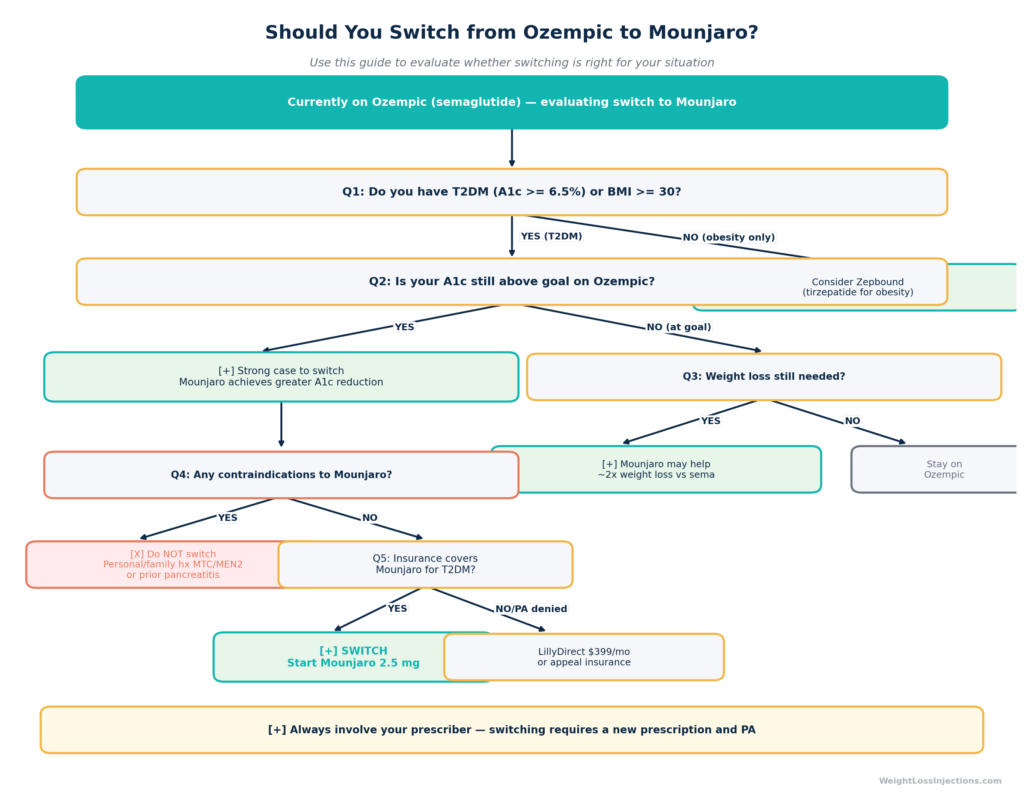
Projected weight loss trajectories based on clinical trial data: continuing Semaglutide 1 mg versus switching to tirzepatide 15 mg in a T2DM population. Curves diverge substantially by week 16 onward. Individual results vary — these projections reflect SURPASS trial population averages, not guaranteed individual outcomes.
This is the question patients most want answered, and the honest answer requires two things: the best available trial data, and an acknowledgment of what that data cannot tell you.
What the trial data shows for T2DM patients:
- Semaglutide 1 mg: −5.7 kg over 40 weeks in SURPASS-2, per SURPASS-2, NEJM 2021 (Frías et al.)
- Semaglutide at T2DM doses (SUSTAIN program): approximately 6–10% body weight over 52+ weeks
- Tirzepatide 15 mg in T2DM population (SURPASS trials): approximately 11–13% body weight at 40–52 weeks, per the pooled SURPASS PubMed analysis (2022)
- Tirzepatide 15 mg in obesity population without T2DM (SURMOUNT-1): −22.4% at 72 weeks, per SURMOUNT-1, NEJM
For a practical example: A patient currently at 250 lb (113 kg) who is on Ozempic 1 mg and has lost 8 lb over a year might expect — based on SURPASS-2 population averages — an additional 12–16 lb of weight loss by switching to Mounjaro 15 mg over the following 40 weeks, compared to remaining on Ozempic. This is not a guarantee for any individual patient — it is a population average projection.
What the data cannot tell you: How much of your current body weight loss from Ozempic represents your maximum response to GLP-1 agonism versus how much room for additional loss remains. Some patients have already extracted most of the GLP-1 pathway’s benefit; for them, the added GIP mechanism of tirzepatide will produce a larger incremental benefit than for patients who are still on lower semaglutide doses with room to increase. Individual metabolic responses to any drug class vary substantially.
The most clinically reasonable expectation: If you are currently on maximum Ozempic (2 mg) and have plateaued at a weight you find inadequate, switching to Mounjaro and titrating to 10–15 mg gives you the best evidence-based option for restarting weight loss progress — because you are introducing a pharmacologically distinct mechanism (GIP receptor agonism) that your current drug cannot provide. The available head-to-head and mechanistic data consistently supports tirzepatide’s superior weight outcomes, and this is the primary clinical reason most endocrinologists and obesity medicine specialists recommend the switch for patients who are under-responding to semaglutide on weight.
Our Assessment at WeightLossInjections.com
The switch from Ozempic to Mounjaro is one of the most clinically well-supported transitions in contemporary diabetes and obesity pharmacology. The evidence base is clear: tirzepatide’s dual GIP/GLP-1 mechanism consistently outperforms semaglutide’s single-receptor approach on both A1c reduction and body weight outcomes in head-to-head trial data. The safety profile of the transition — with an appropriate 7–14 day gap, restart at 2.5 mg, and standard titration — is well-established in clinical practice.
That said, a few caveats warrant honest acknowledgment. SURPASS-2 compared tirzepatide against semaglutide 1 mg — not the maximum 2 mg Ozempic dose. The gap between maximum-dose Ozempic and maximum-dose Mounjaro is not tested in a head-to-head RCT. Patients on Ozempic 2 mg who are meeting A1c and weight targets have a weaker case for switching than patients who are on lower doses and not meeting goals. And the switch requires a new prior authorization, a GI re-adjustment period, and ongoing titration — it is not a passive change.
For patients who are under-responding to Ozempic on A1c, plateauing on weight, navigating a formulary change, or seeking the strongest available pharmacological option for their metabolic goals, Mounjaro represents the evidence-based next step. The WeightLossInjections.com licensed provider network can evaluate your full profile — current medications, A1c trend, weight history, cardiovascular status, and insurance coverage — and guide the switching protocol from prescription to first injection. Connect with a licensed provider through [service detail] for [$X/month].
Medical Disclaimer: Switching between GLP-1 medications requires clinical evaluation and should be supervised by a licensed healthcare provider. No official dose-equivalency conversion chart exists between semaglutide and tirzepatide — the conversion table in this article represents clinical practice guidance, not an official recommendation. WeightLossInjections.com does not prescribe medications. All references to ADA guidelines and clinical trial data are for informational purposes only. Consult your prescriber before making any changes to your medication regimen.
FAQ
Yes, with a short transition period. Most clinicians recommend waiting 7–14 days after your last Ozempic injection before starting Mounjaro. The 7-day minimum reflects semaglutide’s one-week half-life, per the Peptide Dossier switching guide. You should not take both simultaneously — the FDA Mounjaro Prescribing Information §7 explicitly states not to combine Mounjaro with another GLP-1 receptor agonist. Combining GLP-1 agonists provides no clinical benefit and substantially increases GI side effect burden.
Regardless of your Ozempic dose, begin Mounjaro at 2.5 mg and titrate per the standard schedule. The ADA 2025 Standards of Care recommend starting tirzepatide at its initiation dose rather than attempting a milligram-for-milligram conversion — no official conversion chart exists, per Helimeds’ ADA 2025 guidance (April 2026). Some clinicians may start patients who tolerated Ozempic 1–2 mg well at 5 mg, but 2.5 mg is the standard and safest default.
Possibly, during the first 4–8 weeks. Mounjaro’s GIP receptor component is a new pharmacological signal that your GI system has not previously encountered — even patients who tolerated Ozempic well may experience a re-adjustment period, per blog.aihavit.com’s 2026 switching protocol. Starting at 2.5 mg minimizes this risk. The GI pattern may be qualitatively different from what you experienced on Ozempic, not necessarily more severe.
Clinical trial data suggests yes, on average. In SURPASS-2, tirzepatide 15 mg achieved −11.2 kg versus −5.7 kg for semaglutide 1 mg in T2DM patients over 40 weeks, per SURPASS-2, NEJM 2021. However, individual results vary based on dose achieved, dietary adherence, metabolic factors, and baseline body composition. The SURPASS-2 semaglutide comparator was 1 mg, not the maximum 2 mg dose — the gap versus maximum-dose Ozempic has not been directly tested.
Yes. Mounjaro and Ozempic are treated as completely separate medications by insurers. A new prior authorization must be submitted even with existing Ozempic approval. Allow 1–4 weeks for processing, per the Cigna PA Policy for Mounjaro. However, your documented Ozempic trial may satisfy step-therapy requirements that accelerate Mounjaro approval on plans that require prior GLP-1 use.
Yes, using the same washout and starting dose protocol as the Ozempic switch. However, if you do not have T2DM, Mounjaro prescribing would be off-label and insurance coverage is unlikely. Without a T2DM diagnosis, Zepbound — tirzepatide under its obesity indication — is the appropriate path. For Wegovy-to-Mounjaro switchers who do have T2DM, the washout, starting dose, and titration protocols are identical to the Ozempic transition, per Pandameds’ switching guide (2025).
No. No official dose-equivalency chart between semaglutide and tirzepatide exists from the FDA, ADA, or Eli Lilly. These are different molecular entities with different receptor mechanisms and different dose ranges — milligram-for-milligram comparison is not pharmacologically valid. The table in this article represents clinical practice guidance based on published switching protocols, per NiceRx’s conversion reference (2024). Always defer to your prescribing clinician for individualized dose decisions.