![Unbranded [pillar-drug-class] injection pen on a neutral background — WeightLossInjections.com editorial hero](https://weightlossinjections.com/wp-content/uploads/2026/07/hero_mounjaro_c5_lifestyle-1200x675.png)
Medical Disclaimer: This article is for informational purposes only and does not constitute medical advice. Mounjaro is a prescription medication that requires evaluation by a licensed healthcare provider. WeightLossInjections.com does not prescribe medications. Consult your physician or a qualified telehealth provider before starting, stopping, or modifying any diabetes treatment.
- Mounjaro (tirzepatide) is the only FDA-approved dual GIP/GLP-1 receptor agonist — a first-in-class mechanism that makes it uniquely effective for type 2 diabetes.
- FDA approved Mounjaro specifically for type 2 diabetes mellitus (T2DM) on May 13, 2022. This is its only approved indication; Zepbound (same molecule) holds the obesity approval.
- In the landmark SURPASS-2 head-to-head trial, Mounjaro 15 mg reduced A1c by −2.30% versus −1.86% for semaglutide 1 mg at 40 weeks — a statistically superior result.
- Across the SURPASS program, 82–93% of patients on therapeutic tirzepatide doses achieved A1c below 7.0%, and 31–52% reached normoglycemia (A1c <5.7%).
- SURPASS-CVOT (2025) confirmed cardiovascular safety and a 16% reduction in all-cause mortality versus dulaglutide over approximately four years.
- Weight loss is a significant secondary benefit: T2DM patients lost 7.5–12.9 kg depending on dose and trial — without the weight gain associated with insulin or sulfonylureas.
- With commercial insurance coverage, the Mounjaro Savings Card brings cost to as low as $25/month for T2DM patients. Medicare Part D may cover Mounjaro for the T2DM indication.
- Hypoglycemia risk is low on Mounjaro alone; it only rises meaningfully when combined with insulin or a sulfonylurea.
What Is Mounjaro and How Is It Different From Other Diabetes Drugs?
Approximately 37 million Americans live with type 2 diabetes, and a substantial proportion are not meeting their A1c targets on existing therapy. For many, the limitation is not adherence — it is the ceiling of what older drug classes can deliver. Sulfonylureas and DPP-4 inhibitors produce modest A1c reductions. Basal insulin requires careful titration and frequently causes weight gain. Even earlier GLP-1 receptor agonists, while a meaningful advance, operate through a single receptor pathway. Mounjaro was designed to go further.
Mounjaro is the brand name for tirzepatide, a prescription medication manufactured by Eli Lilly and Company. It received FDA approval on May 13, 2022, as an adjunct to diet and exercise to improve glycemic control in adults with type 2 diabetes mellitus — its only FDA-approved indication as of June 2026 (FDA Mounjaro Prescribing Information). Zepbound, a separately approved brand containing the same tirzepatide molecule, holds the chronic weight management indication for obesity — that is a different label, a different clinical program, and a different insurance pathway.
What distinguishes Mounjaro structurally is its dual mechanism. Tirzepatide is a dual GIP (glucose-dependent insulinotropic polypeptide) receptor and GLP-1 (glucagon-like peptide-1) receptor agonist — the first and, as of 2026, only FDA-approved agent in this class (FDA Prescribing Information §12.1). Where drugs like semaglutide (Ozempic) activate only the GLP-1 receptor, tirzepatide activates both the GIP and GLP-1 receptors. That dual activation is the pharmacological foundation for its superior glycemic performance — and the reason clinicians, endocrinologists, and diabetes guideline committees are repositioning it at the top of the T2DM treatment algorithm.
Mounjaro is administered as a subcutaneous injection using a single-dose KwikPen autoinjector. It is given once weekly, at any time of day, with or without food. Six dose strengths are available: 2.5 mg, 5 mg, 7.5 mg, 10 mg, 12.5 mg, and 15 mg — allowing for a structured titration from a tolerability initiation dose up to the maximum therapeutic dose (FDA Prescribing Information §2). The once-weekly format is a significant practical advantage over daily injectables and the two- or three-times-daily regimens required by some older insulin protocols.
It is worth stating explicitly: Mounjaro is not just another GLP-1 agonist. Adding GIP receptor activation changes the pharmacological profile in ways that translate directly to better clinical outcomes. The head-to-head trial data — which will be examined in detail in the clinical results section — demonstrates this superiority with statistical rigor.
How Mounjaro Lowers Blood Sugar in Type 2 Diabetes
Understanding why Mounjaro works as well as it does requires a brief look at the underlying biology. Type 2 diabetes is characterized by two core defects: insulin resistance (cells do not respond normally to insulin) and progressive beta-cell dysfunction (the pancreas cannot secrete enough insulin to overcome that resistance). Both defects worsen over time, which is why T2DM medications typically need to be intensified or added to as the disease progresses. Mounjaro addresses both defects through its dual-receptor mechanism.
GIP receptor activation enhances both first-phase and second-phase insulin secretion from pancreatic beta cells in a glucose-dependent manner (FDA Prescribing Information §12.1). First-phase insulin secretion — the rapid spike of insulin released within the first few minutes of a meal — is blunted or absent in T2DM, leading to the post-meal glucose spikes that drive A1c upward. By restoring first-phase secretion, tirzepatide targets one of the earliest functional failures in the disease. GIP activation also improves insulin sensitivity in peripheral tissues, including adipose tissue, adding a second mechanism of action that operates beyond the pancreas.
GLP-1 receptor activation complements this with three additional effects. First, it reduces glucagon levels from alpha cells in a glucose-dependent fashion — suppressing the liver’s inappropriate glucose output that keeps fasting blood sugar elevated even when the patient is not eating. Second, it slows gastric emptying, which blunts the sharp post-meal glucose excursions that are particularly damaging to vascular endothelium over time. Third, it reduces food intake through central appetite suppression, which drives the meaningful weight loss that distinguishes tirzepatide from insulin and sulfonylurea-based regimens (FDA Prescribing Information §12.1).
The phrase “glucose-dependent” appears repeatedly in the mechanism description because it explains the drug’s safety profile. Unlike sulfonylureas, which trigger insulin release whether blood glucose is high or low, tirzepatide’s insulin-stimulating effects are only active when glucose is elevated. When blood glucose is in the normal range, the drug does not push insulin release further. This is why Mounjaro monotherapy carries a low intrinsic hypoglycemia risk — hypoglycemia is primarily a concern when Mounjaro is combined with insulin or sulfonylureas, which do not share this glucose-dependent character.
From a pharmacokinetic standpoint, tirzepatide has a half-life of approximately five days, which supports once-weekly dosing (FDA Prescribing Information §12.3). Steady-state plasma concentrations are achieved after approximately four weeks of weekly administration — which is why the first four weeks on 2.5 mg are designated as a tolerability initiation phase rather than a therapeutic phase. Once at steady state, the drug maintains consistent receptor activation throughout the week without the sharp peaks and troughs of shorter-acting agents.
Weight loss is deeply connected to the glycemic mechanism, not a coincidental side effect. When a T2DM patient on Mounjaro loses 10–12% of body weight, that weight loss reduces insulin resistance independently of the drug’s direct receptor effects. The two processes are mutually reinforcing: better glycemic control facilitates metabolic recovery, and reduced adiposity improves the cellular environment for insulin signaling. This synergy is part of why tirzepatide’s A1c reductions can appear almost disproportionate relative to what a single receptor pathway would predict.
Who Is Mounjaro FDA-Approved For?
Mounjaro’s FDA approval is specific: it is indicated as an adjunct to diet and exercise to improve glycemic control in adults with type 2 diabetes mellitus (FDA Prescribing Information). The qualifier “adjunct to diet and exercise” matters clinically — Mounjaro is intended to supplement, not replace, lifestyle modification. The pivotal trials were conducted in patients who were also counseled on dietary and physical activity changes, and the outcomes reflect that combined approach.
Several key limitations of use are stated in the label and deserve emphasis. Mounjaro has not been studied in patients with a history of pancreatitis, so its use in this population requires careful clinical judgment. It is not indicated for type 1 diabetes mellitus and has no efficacy data in that population. The mechanism of glucose-dependent insulin secretion is not applicable to the autoimmune beta-cell destruction that characterizes type 1 disease (FDA Prescribing Information).
Mounjaro carries a boxed warning regarding thyroid C-cell tumors. In rodent studies, tirzepatide caused thyroid C-cell tumors at clinically relevant exposures. Whether this risk exists in humans is not yet established. Accordingly, Mounjaro is contraindicated in patients with a personal or family history of medullary thyroid carcinoma (MTC) or Multiple Endocrine Neoplasia syndrome type 2 (MEN 2). Before prescribing, clinicians should ask patients directly about this history, and patients should report any neck mass, hoarseness, dysphagia, or dyspnea — potential symptoms of thyroid malignancy (FDA Prescribing Information).
For insurance purposes, prescribers typically use ICD-10 code E11.x (type 2 diabetes mellitus) to document the on-label indication. Commercial insurance prior authorization forms generally require a recent A1c — typically ≥7.0% or ≥8.0% depending on the plan — plus documentation of a metformin trial at a maximally tolerated dose, or documented allergy or intolerance to metformin. Approval rates for Mounjaro under the T2DM indication with commercial insurance run approximately 60–70% (FormBlends prescription guide, April 2026).
It is worth noting the distinction from off-label use. Physicians can legally prescribe any FDA-approved drug for any indication based on clinical judgment in the United States. Some providers do prescribe Mounjaro for weight loss in patients who do not have T2DM. However, patients seeking tirzepatide primarily for chronic weight management should know that Zepbound — containing the identical molecule — is the FDA-approved label for obesity, and carries different insurance pathways and savings programs. For the T2DM patient, Mounjaro is unequivocally the appropriate on-label choice, and it offers the most favorable insurance access of any tirzepatide pathway for this population.
Clinical Results: How Much Does Mounjaro Lower A1c?
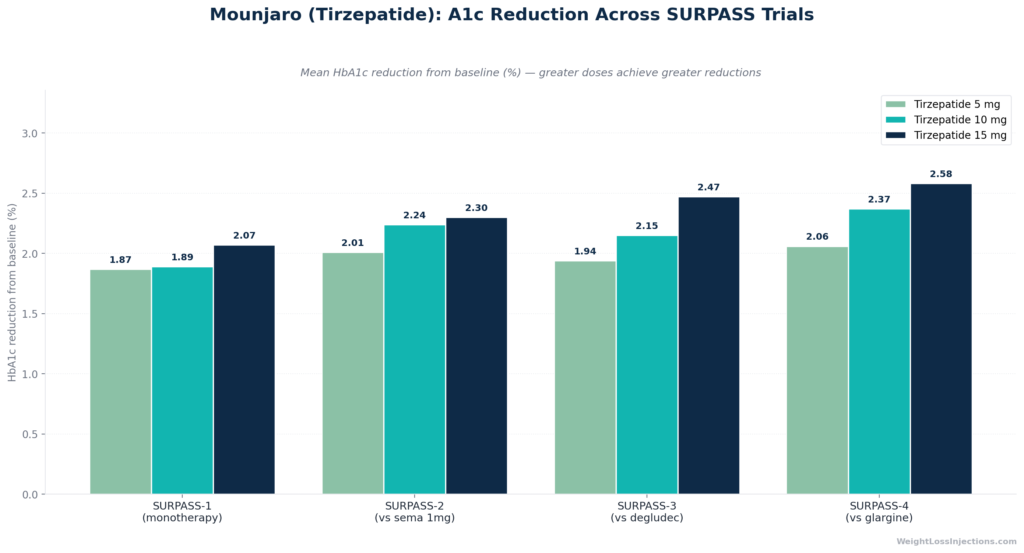
The SURPASS clinical trial program is the most comprehensive head-to-head evaluation of any new diabetes drug class in recent memory. Five phase 3 trials — SURPASS-1 through SURPASS-5 — and the landmark SURPASS-CVOT cardiovascular outcomes trial collectively enrolled tens of thousands of patients with T2DM, testing tirzepatide against placebo, active comparators, and multiple insulin regimens across diverse backgrounds and risk profiles. The results, taken together, establish a consistent picture: Mounjaro outperforms every comparator it has been measured against on A1c reduction.
SURPASS-1: Monotherapy Against Placebo
SURPASS-1 was a 40-week, double-blind, placebo-controlled trial enrolling 478 treatment-naïve T2DM patients managed with diet and exercise alone, with a mean baseline A1c of approximately 7.94% (SURPASS-1 — Lilly investor release, Lancet 2021). This trial isolated tirzepatide’s intrinsic glycemic effect from any background medication.
| Arm | A1c Reduction | Body Weight Reduction |
|---|---|---|
| Tirzepatide 5 mg | −1.87% | −7.0 kg (−7.9%) |
| Tirzepatide 10 mg | −1.89% | −8.5 kg (~9.7%) |
| Tirzepatide 15 mg | −2.07% | −9.5 kg (−11.0%) |
| Placebo | +0.04% | ~−0.7 kg |
A1c below 7.0% — the standard ADA treatment target — was achieved by 82–85% of tirzepatide patients versus 23% in the placebo group. Even more strikingly, 31–52% of tirzepatide patients reached normoglycemia (A1c <5.7%) versus only 1% with placebo (SURPASS-1, Lilly investor release). These are numbers that suggest a proportion of T2DM patients may be able to achieve near-normal glycemic control on Mounjaro monotherapy.
SURPASS-2: Head-to-Head Against Semaglutide
SURPASS-2 is the pivotal comparison most clinicians cite when evaluating Mounjaro against the leading GLP-1 agonist. This 40-week, randomized trial enrolled 1,879 adults with T2DM on stable metformin background therapy, with a mean baseline A1c of approximately 8.3%, and compared three tirzepatide doses against semaglutide 1.0 mg (SURPASS-2, NEJM 2021 — Frías et al.).
| Arm | A1c Change | Body Weight Change | vs. Semaglutide 1 mg |
|---|---|---|---|
| Tirzepatide 5 mg | −2.01% | −7.6 kg | Superior (ETD: −0.15%, p=0.02) |
| Tirzepatide 10 mg | −2.24% | −9.3 kg | Superior (ETD: −0.39%, p<0.001) |
| Tirzepatide 15 mg | −2.30% | −11.2 kg | Superior (ETD: −0.45%, p<0.001) |
| Semaglutide 1 mg | −1.86% | −5.7 kg | — |
All three tirzepatide doses achieved both noninferiority and superiority over semaglutide 1 mg for the primary A1c endpoint (ACC SURPASS-2 summary). At the 15 mg dose, 92% of tirzepatide patients achieved the A1c target below 7.0%. A critical caveat worth noting: semaglutide 1 mg is below the maximum approved Ozempic dose of 2 mg; the maximum approved semaglutide dose was not tested head-to-head in SURPASS-2 (diaTribe, 2023). Even so, at doses that are directly comparable in clinical practice, Mounjaro demonstrates consistent superiority.
SURPASS-3: Against Insulin Degludec
SURPASS-3 enrolled 1,444 adults on metformin with or without an SGLT2 inhibitor, comparing tirzepatide against insulin degludec (a modern long-acting basal insulin) over 52 weeks (SURPASS-3, Lancet 2021).
| Arm | A1c Reduction | Body Weight Change |
|---|---|---|
| Tirzepatide 5 mg | −1.93% | −7.5 kg |
| Tirzepatide 10 mg | −2.20% | −10.7 kg |
| Tirzepatide 15 mg | −2.37% | −12.9 kg |
| Insulin degludec | −1.34% | +2.3 kg |
Every tirzepatide dose was statistically superior to insulin degludec for both A1c reduction (p<0.0001) and body weight change (p<0.0001). The weight contrast is particularly striking: while insulin degludec patients gained an average of 2.3 kg, tirzepatide patients at the maximum dose lost nearly 13 kg. For the large subset of T2DM patients managing concurrent obesity, this difference has profound clinical implications.
SURPASS-4: High Cardiovascular Risk Population
SURPASS-4 targeted T2DM patients with increased cardiovascular risk — a subpopulation where medication selection carries particular weight. Comparing tirzepatide against insulin glargine (the most widely used basal insulin globally) over 52 weeks in 2,002 patients, this trial reported some of the highest A1c reductions in the entire SURPASS program (SURPASS-4, Lancet 2021 — Del Prato et al.).
| Arm | A1c Change | Body Weight Change |
|---|---|---|
| Tirzepatide 5 mg | −2.24% | −7.1 kg |
| Tirzepatide 10 mg | −2.43% | −9.5 kg |
| Tirzepatide 15 mg | −2.58% | −11.7 kg |
| Insulin glargine | −1.44% | +1.9 kg |
No increased cardiovascular risk was identified with tirzepatide versus glargine in this high-risk population (HR 0.74; 95% CI 0.51–1.08), and the glycemic superiority of tirzepatide over basal insulin was maintained even in this medically complex group (Lilly SURPASS-4 press release).
SURPASS-CVOT: Long-Term Cardiovascular Outcomes
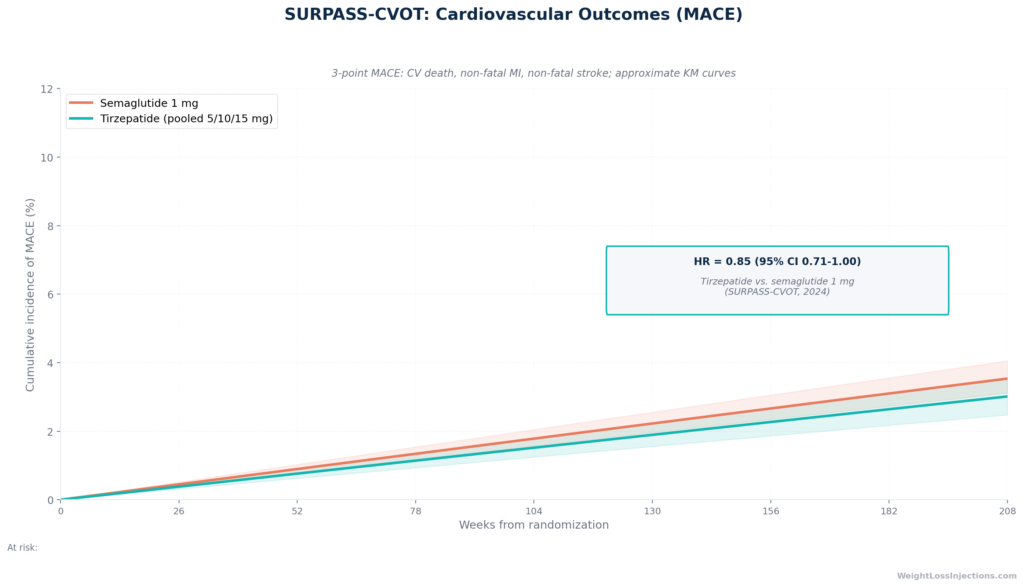
The most clinically significant recent development in the Mounjaro evidence base is SURPASS-CVOT, a double-blind randomized trial enrolling 13,299 adults with T2DM and established atherosclerotic cardiovascular disease (ASCVD), with a median follow-up of approximately four years. Results were published in the New England Journal of Medicine in December 2025 (SURPASS-CVOT, NEJM 2025).
The primary cardiovascular endpoint — a composite of cardiovascular death, myocardial infarction, or stroke (3-point MACE) — was met for noninferiority versus dulaglutide: tirzepatide 12.2% vs. dulaglutide 13.1% (HR 0.92; 95.3% CI 0.83–1.01; p=0.003 for noninferiority). The trial did not achieve superiority on the primary MACE endpoint (p=0.09). However, expanded MACE outcomes that included coronary revascularization were significantly reduced with tirzepatide (HR 0.88; 95% CI 0.80–0.96) (ACC SURPASS-CVOT summary, January 2026).
The secondary all-cause mortality outcome was particularly notable: tirzepatide produced a 16% reduction in all-cause mortality versus dulaglutide (HR 0.84; 95% CI 0.75–0.94) — a finding that, driven primarily by non-cardiovascular deaths, suggests broad systemic benefit beyond glycemic control alone. A1c reduction in SURPASS-CVOT was −1.66% with tirzepatide versus −0.88% with dulaglutide, confirming superior glycemic efficacy even over four years of follow-up in a high-risk population.
What the ADA and AACE Say
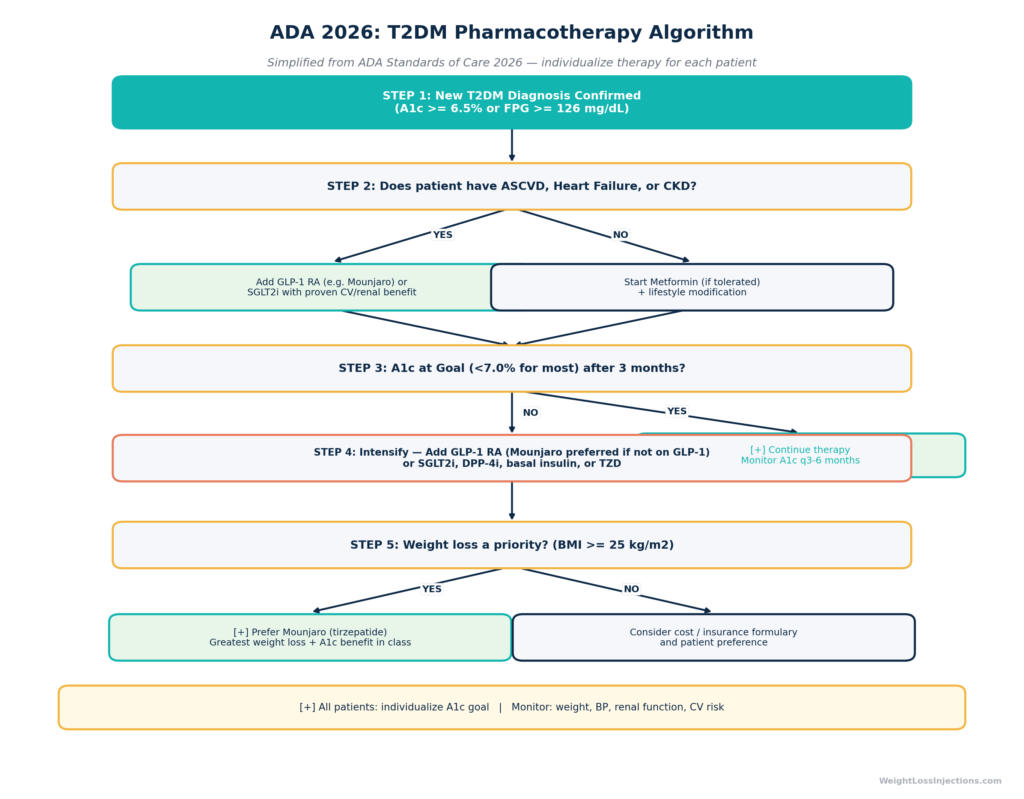
The American Diabetes Association 2026 Standards of Care position GLP-1/GIP agonists — a category in which Mounjaro is the only current member — as preferred agents for T2DM patients with high cardiovascular risk, chronic kidney disease, heart failure, or a significant obesity burden. This is not a theoretical preference: it reflects the accumulation of trial data from SURPASS-4, SURPASS-CVOT, and related analyses that demonstrate cardiorenal benefit beyond glycemic control alone. The AACE 2024 Diabetes Algorithm similarly places tirzepatide at the top tier for patients requiring significant A1c reduction — particularly those with a starting A1c above 9.0%, where the drug’s absolute glycemic effect is most impactful.
Our Top 3 · October 2026
The best GLP-1 providers right now
Independently reviewed. Ranked by price, medication access, provider quality, and patient outcomes.
Renew GLP
Personalized GLP-1, GIP plans: Semaglutide & Tirzepatide.
Medvi
No membership or hidden fees. Everything you need is included.
Trimi
US-licensed clinicians and shipped to your door, from $99/mo.
Mounjaro vs. Other Type 2 Diabetes Medications
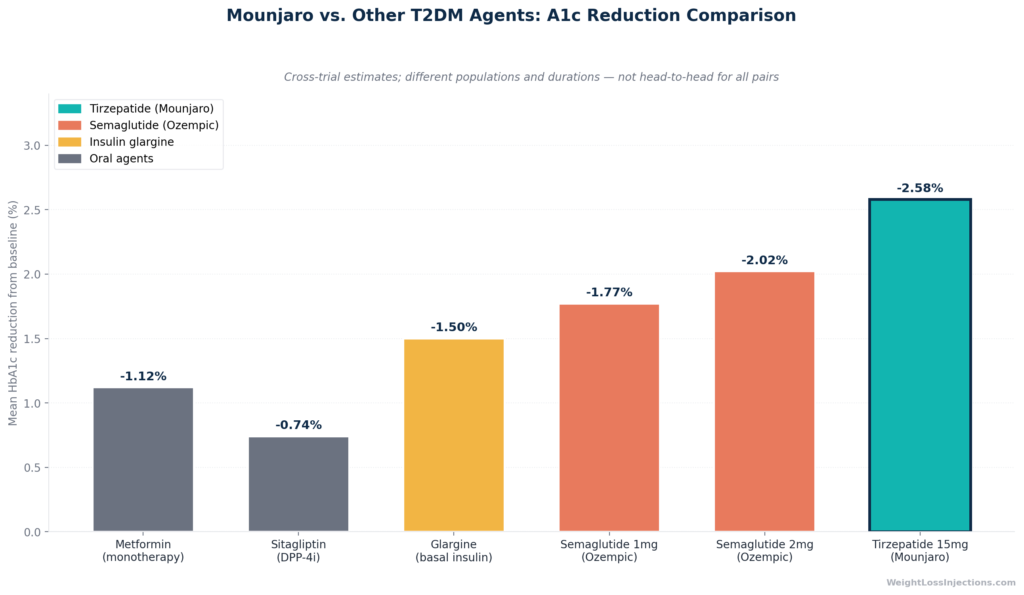
The question T2DM patients and their providers most often ask is not “does Mounjaro work?” — the SURPASS data answers that definitively — but “how does it compare to what I’m already taking?” The following comparison table presents the key metrics across the major T2DM medication options.
| Drug | Mechanism | A1c Reduction | Weight Change | Dosing | Approx. List Price |
|---|---|---|---|---|---|
| Mounjaro (tirzepatide) | GIP + GLP-1 agonist | ~2.0–2.4% | −11–13% body weight | Once weekly (inj.) | ~$1,079/month |
| Ozempic (semaglutide) | GLP-1 agonist | ~1.5–1.8% | −6–10% | Once weekly (inj.) | ~$935/month |
| Trulicity (dulaglutide) | GLP-1 agonist | ~0.88% (1.5 mg) | −4.5% | Once weekly (inj.) | Lower |
| Rybelsus (oral semaglutide) | GLP-1 agonist (oral) | ~1.2–1.4% | ~4–5 kg | Once daily (oral) | ~$850–$950/month |
| Insulin glargine | Basal insulin | ~1.34–1.44% | +1.9–2.3 kg (weight gain) | Daily (inj.) | Varies |
| Metformin | Biguanide | ~1.0–1.5% | Neutral/modest loss | Twice daily (oral) | ~$5–$10/month |
Sources: WeightFAQ GLP-1 comparison, May 2026; SURPASS-2, NEJM 2021; SURPASS-CVOT, NEJM 2025
Several observations stand out from this comparison.
Mounjaro vs. Ozempic: Both are FDA-approved for T2DM and administered once weekly. Mounjaro’s dual GIP+GLP-1 mechanism gives it a consistent edge in A1c reduction (−2.30% vs. −1.86% in SURPASS-2) and weight loss (−11.2 kg vs. −5.7 kg at comparable doses). The head-to-head comparison was conducted at semaglutide 1 mg — not the maximum 2 mg dose — so the absolute gap may narrow at maximum approved semaglutide doses, but no head-to-head at 2 mg has been published. For the large proportion of T2DM patients with concurrent obesity, Mounjaro’s superior weight effect translates into secondary A1c improvement through improved insulin sensitivity that Ozempic’s lower weight loss cannot replicate.
Mounjaro vs. insulin: The comparison with basal insulin (both glargine and degludec) is particularly instructive for patients who have been told they may need to start insulin. SURPASS-3 and SURPASS-4 showed tirzepatide reducing A1c by 1.93–2.58% at various doses versus 1.34–1.44% for the insulin arms — while simultaneously producing significant weight loss versus weight gain with insulin. For appropriate T2DM patients who do not yet require insulin for physiological reasons, Mounjaro provides a compelling alternative that avoids insulin’s weight penalty and hypoglycemia burden.
Mounjaro vs. metformin: Metformin remains the foundational T2DM medication — widely available, inexpensive (~$5–$10/month generic), and effective for modest glycemic control. Many patients will begin Mounjaro on a metformin background, as was done in SURPASS-2. Mounjaro is not a replacement for metformin in most cases; it is an add-on option when metformin alone is insufficient for A1c targets. The SURPASS-2 population, prescribed Mounjaro on top of metformin, achieved the most consistently cited A1c reduction data in the program.
The key differentiator remains Mounjaro’s status as the only approved dual GIP/GLP-1 agonist. Weight-neutral or weight-positive comparators (insulin, sulfonylureas) are mechanically inferior for the large proportion of T2DM patients managing concurrent obesity — a population in which each kilogram of body weight loss produces measurable downstream improvements in glycemic control, blood pressure, and cardiovascular risk.
Mounjaro Dosing Schedule for T2D Patients
Mounjaro follows a structured six-step titration schedule designed to balance efficacy with gastrointestinal tolerability. The most important principle to understand is that the starting dose — 2.5 mg — is not a therapeutic glycemic dose. Its purpose is to allow the GI system to adapt to the drug’s gastric emptying effects before reaching the doses where meaningful A1c reduction occurs (FDA Prescribing Information §2).
Standard titration schedule:
| Week | Dose | Notes |
|---|---|---|
| Weeks 1–4 | 2.5 mg | Initiation phase — tolerability, not therapeutic |
| Weeks 5–8 | 5 mg | First therapeutic dose; glycemic effect begins |
| Weeks 9–12 | 7.5 mg | Titrate if additional control needed and 5 mg tolerated |
| Weeks 13–16 | 10 mg | Continue titration per clinical response |
| Weeks 17–20 | 12.5 mg | Near-maximum dose |
| Week 21+ | 15 mg | Maximum dose (once weekly) |
Each step requires at least four weeks before advancing to the next dose. Clinicians may hold titration if a patient is experiencing significant GI side effects, and some patients will find their optimal maintenance dose below the 15 mg maximum. The goal is the lowest dose that achieves A1c targets, not the maximum dose for every patient.
Injection technique: Mounjaro is injected subcutaneously into the abdomen, thigh, or upper arm. Injection sites should be rotated with each dose to prevent localized tissue changes. The injection can be given at any time of day, with or without food — a convenience that helps with adherence (FDA Prescribing Information §2).
Missed dose protocol: If a dose is missed and fewer than four days (96 hours) have elapsed, administer the missed dose as soon as possible and resume the regular weekly schedule. If more than four days have passed, skip the missed dose entirely and resume on the next regularly scheduled administration day. Do not double-dose (FDA Prescribing Information §2).
Concurrent medications: Patients on a sulfonylurea (e.g., glipizide, glyburide, glimepiride) or insulin when starting Mounjaro may need a dose reduction of those agents to reduce hypoglycemia risk. The dose-reduction decision should be made in consultation with the prescribing provider. Mounjaro should not be combined with other GLP-1 receptor agonists (e.g., Ozempic, Trulicity, Victoza), and patients on DPP-4 inhibitors should discuss discontinuation with their provider, as the mechanisms overlap and most insurance prior authorizations do not permit concurrent use.
One clinically important and frequently overlooked drug interaction involves oral contraceptives. Tirzepatide’s gastric emptying delay reduces the absorption of orally administered medications, potentially including oral contraceptives. Patients on oral contraceptives should use a barrier contraceptive method — or switch to a non-oral method — for four weeks after Mounjaro initiation and after each dose escalation (FDA Prescribing Information §7).
Side Effects in T2D Patients — What to Expect
The side effect profile for Mounjaro is largely a function of its GI mechanism. Slowing gastric emptying and reducing food intake are the same pathways that produce the glycemic benefit — and they are also the reason most patients experience some degree of GI adjustment, particularly during the titration phase.
Most common adverse reactions (≥5% incidence): Nausea (12–25%, dose-dependent, highest during titration), diarrhea, decreased appetite, vomiting, constipation, dyspepsia, and abdominal pain. These effects are most pronounced during dose escalation and typically attenuate after four to eight weeks at a stable dose (FDA Prescribing Information §6). The practical management approach is to eat smaller meals, avoid high-fat or fried foods during the titration phase, stay well hydrated, and give the body time to adjust before concluding that side effects are intolerable.
Hypoglycemia is a special concern because T2DM patients are more likely to be on multiple agents. On Mounjaro monotherapy, hypoglycemia is uncommon because of the glucose-dependent mechanism. However, when Mounjaro is added to a sulfonylurea or insulin regimen, the combined effect can drive glucose too low, and dose reductions of the other agent are typically needed. In clinical trials, severe hypoglycemia events were substantially higher in SURPASS-5 (where tirzepatide was added to insulin glargine) than in trials where tirzepatide was used with oral agents or as monotherapy — highlighting the importance of close monitoring and proactive insulin or sulfonylurea dose adjustment (FDA Prescribing Information §6).
Serious adverse events are uncommon but warrant awareness. Acute pancreatitis was observed at a rate of 0.23 events per 100 patient-years in tirzepatide arms across clinical trials (versus 0.11 per 100 patient-years in comparator arms). Mounjaro should be discontinued if pancreatitis is suspected and not restarted if confirmed (FDA Prescribing Information §5). Acute gallbladder disease (cholelithiasis or cholecystitis) was observed in approximately 0.6% of tirzepatide patients in controlled trials. Dehydration from GI adverse events can precipitate acute kidney injury in patients with underlying renal impairment — which is not uncommon in the T2DM population. Staying hydrated during bouts of GI symptoms is especially important for patients with reduced kidney function.
Diabetic retinopathy: Mounjaro has not been studied in patients with non-proliferative diabetic retinopathy requiring acute therapy, proliferative diabetic retinopathy, or diabetic macular edema. Patients with a history of diabetic retinopathy should be monitored for disease progression after initiating therapy (FDA Prescribing Information §5).
Severe gastroparesis: Mounjaro is not recommended for patients with pre-existing severe gastroparesis. Gastric emptying further impaired by tirzepatide in these patients can cause significant clinical complications (FDA Prescribing Information §5).
What side effects are NOT primarily caused by Mounjaro: Hair loss (telogen effluvium) is widely reported by patients and clinicians using tirzepatide, but it is not listed on the FDA label as a direct drug effect. Current clinical understanding attributes it to rapid caloric restriction and weight loss rather than to the molecule itself — the same phenomenon seen with other significant dietary changes. It is typically temporary and resolves as weight stabilizes.
Getting Started — What to Expect in the First 90 Days
For a T2DM patient starting Mounjaro, the first 90 days encompass the initiation phase, the first therapeutic dose escalations, and the initial assessment of glycemic response. Setting accurate expectations for this timeline significantly improves adherence and reduces the likelihood of premature discontinuation due to manageable early side effects.
Weeks 1–4 (2.5 mg — initiation): This phase is about tolerability, not glycemic effect. Most patients experience minimal change in blood glucose at 2.5 mg. Nausea, if it occurs, is most common in this phase and in the first several days after each subsequent dose increase. Eating smaller portions, chewing thoroughly, and avoiding meals that are high in fat or that are eaten rapidly helps significantly. Blood glucose monitoring at this stage will show little movement — this is expected and should not be interpreted as the drug not working.
Weeks 5–8 (5 mg — first therapeutic dose): At 5 mg, the pharmacological effect on insulin secretion and glucagon suppression becomes clinically meaningful for most patients. Fasting blood glucose typically begins to decline, and some patients see their post-meal spikes reduce meaningfully. A1c reflects a 3-month average of blood glucose, so meaningful A1c change will not appear on a lab report until week 12 at the earliest — but the underlying glucose improvements that will drive that A1c change are happening during this window.
Weeks 9–16 (7.5–10 mg — continued titration): Most patients continue up the titration ladder during this period, guided by clinical response and tolerability. Weight loss is typically visible by week 12 — most patients have lost 5–7% of body weight by this point, and that weight loss is already feeding back into improved insulin sensitivity. The cascade of glycemic improvements accelerates.
Month 3 (12-week A1c recheck): Most clinical protocols include an A1c check at approximately 12 weeks. This is the first meaningful glycemic benchmark on Mounjaro. Patients who started with A1c above 9.0% often see dramatic improvements at this check — drops of 1.5–2% are not uncommon by week 12, even before reaching the higher therapeutic doses. Patients with milder baseline A1c elevation (7.0–8.0%) may see more modest initial changes, with the full effect emerging by weeks 24–40.
Monitoring checklist for T2DM patients on Mounjaro:
- Blood glucose log (fasting + post-meal at the start to calibrate expectations)
- A1c at baseline, week 12, and every 3–6 months thereafter
- Weight tracking (weekly is ideal; monthly at minimum)
- Kidney function (creatinine/eGFR annually, or more frequently if baseline CKD is present)
- Lipid panel (Mounjaro has favorable effects on LDL and triglycerides as secondary outcomes)
- Follow-up appointments: weeks 4, 8, and 12 are the standard touchpoints
- Review concurrent diabetes medications at each visit for dose adjustment needs
How to Access Mounjaro: Prescription Pathways
Mounjaro requires a prescription from a licensed provider. For patients already under the care of an endocrinologist or primary care physician managing their T2DM, the conversation about Mounjaro can happen at any scheduled visit. Providers will typically want a recent A1c (within 3 months), documentation of prior therapy (particularly metformin), and a review of contraindications before prescribing.
For patients who do not have an established provider managing their diabetes, or who want a second opinion, telehealth platforms offer a convenient prescribing pathway. Platforms like PlushCare (same-day appointments available) and Noom Med (integrated coaching and prescribing) routinely evaluate T2DM patients for Mounjaro eligibility. WeightLossInjections.com connects patients with licensed providers through our telehealth partners — starting from [$X/month] — [service detail].
Insurance Coverage and Cost
For T2DM patients with commercial insurance that covers Mounjaro, the Eli Lilly Mounjaro Savings Card can bring out-of-pocket cost to as low as $25 per fill (up to 13 fills per calendar year, maximum $150/month savings) (NiceRx Mounjaro Savings Card overview, March 2026). This is the most affordable access pathway for commercially insured T2DM patients and represents one of the most valuable manufacturer savings programs in the diabetes drug market. Enrollment is at mounjaro.lilly.com/savings-resources or by texting “MJ” to 85099.
Important savings card limitations: the $25 rate applies specifically to the T2DM on-label indication with commercial insurance that covers Mounjaro. Patients on Medicare or Medicaid are not eligible for the Lilly Savings Card due to federal anti-kickback regulations. The card does not apply during the insurance deductible phase — patients pay significantly more until their deductible is met, even with the card in hand (FormBlends savings card explainer).
For Medicare Part D enrollees with T2DM, Mounjaro may appear on the plan’s formulary for the diabetes indication. The reported Medicare negotiated price under the White House pricing agreement (November 2025) is approximately $245/month for the T2DM indication, with rollout through 2026 (Noom Medicare/pricing guide, May 2026). Medicare’s 2026 annual out-of-pocket cap of $2,100 under Inflation Reduction Act provisions provides additional protection for Medicare patients with high medication costs.
Patients without insurance coverage for Mounjaro may access tirzepatide through LillyDirect self-pay vials: $299/month for 2.5 mg, $399/month for 5 mg, and $449/month for 7.5–15 mg doses — available directly through the LillyDirect pharmacy with a valid prescription (NiceRx Mounjaro Savings overview).
Our Take at WeightLossInjections.com
Our take at WeightLossInjections.com:
Mounjaro occupies a genuinely different tier in the type 2 diabetes treatment landscape — not merely an incremental improvement on prior GLP-1 agents, but a mechanistically distinct molecule that consistently outperforms every comparator it has been measured against in rigorous head-to-head trials. The clinical data from the SURPASS program is among the most robust of any diabetes drug class in the last decade: meaningful A1c reductions across diverse populations, superior weight outcomes compared to insulin, and now a four-year cardiovascular safety and mortality signal from SURPASS-CVOT that adds depth to its risk-benefit profile.
For T2DM patients who have been struggling to reach A1c targets on metformin alone, or those who have been told they are “heading toward insulin” — Mounjaro represents a compelling alternative pathway that addresses glycemic control and body weight simultaneously, without the hypoglycemia risk of sulfonylureas or the weight gain of insulin. The dual GIP/GLP-1 mechanism is not a marketing narrative; it translates into reproducible, statistically superior outcomes across 40–52 week trials in tens of thousands of patients.
That said, Mounjaro is not for every T2DM patient. Those with a history of medullary thyroid carcinoma or MEN 2 cannot use it. Patients with active severe gastroparesis are not candidates. Those with a history of pancreatitis require especially careful risk-benefit consideration. And the drug’s GI side effect burden during titration is real — patients who are already managing significant GI symptoms from other conditions may find the first 8–12 weeks challenging.
The insurance and cost picture is, for once, genuinely favorable for T2DM patients. With commercial coverage and the Lilly Savings Card, $25/month access to a drug that rivals bariatric surgery in its metabolic impact is a meaningful clinical and economic development. For Medicare patients, the negotiated pricing at ~$245/month represents a substantial improvement over list price.
WeightLossInjections.com editorial note: We do not prescribe medications, but we do connect patients with licensed providers who specialize in evaluating Mounjaro eligibility, navigating prior authorization, and maximizing savings program access. A provider familiar with both the clinical evidence and the coverage landscape can often make the difference between an approved Mounjaro prescription at $25/month and months of insurance back-and-forth. If you have T2DM and are not meeting your A1c targets, the conversation about Mounjaro is worth having — and the evidence base for that conversation has never been stronger.
Reviewed by the WeightLossInjections.com Staff, endocrinologist
FAQ
Yes. Mounjaro (tirzepatide) received FDA approval on May 13, 2022, as an adjunct to diet and exercise to improve glycemic control in adults with type 2 diabetes mellitus — its only FDA-approved indication (FDA Mounjaro Prescribing Information). Zepbound, which contains the identical tirzepatide molecule, holds the separate FDA approval for chronic weight management in obesity. The two indications are clinically and administratively distinct — different labels, different insurance coverage pathways, and different savings programs.
In the SURPASS clinical trial program, Mounjaro reduced A1c by approximately 1.87–2.07% as monotherapy in treatment-naïve patients (SURPASS-1), and by up to 2.30% when added to metformin (SURPASS-2 at 15 mg) (SURPASS-1, Lilly/Lancet 2021; SURPASS-2, NEJM 2021). Results vary by dose and baseline A1c — patients starting with A1c above 9.0% typically experience larger absolute reductions than patients starting at 7.5%. In SURPASS-4, the 15 mg dose achieved A1c reductions as high as −2.58% in a high cardiovascular risk population (SURPASS-4, Lancet 2021).
No. Mounjaro is not indicated for type 1 diabetes mellitus and has not been studied in this population (FDA Prescribing Information). The glucose-dependent insulin secretion mechanism requires functional beta cells, which are absent or severely depleted in type 1 diabetes. Using Mounjaro in place of insulin in a type 1 patient would be medically dangerous and is not an approved use. Type 1 patients who are also overweight or obese should speak with an endocrinologist about evidence-based adjunct therapies specific to type 1 disease.
The 2.5 mg initiation dose is not intended to lower blood sugar — it is a tolerability phase. Many patients see fasting glucose improvement within the first four to eight weeks at the 5 mg therapeutic dose, as the drug reaches steady state and begins exerting meaningful effects on insulin secretion and glucagon suppression. A1c, which reflects a rolling three-month average of blood glucose, typically shows meaningful reduction at the 12-week (three-month) mark. The full glycemic effect of the maximum 15 mg dose, reached at approximately week 21 of a standard titration schedule, may not be reflected in A1c until weeks 24–36.
Yes, consistently and significantly. In SURPASS clinical trials, T2DM patients lost an average of 7.0–12.9 kg depending on dose and the specific trial, representing 7–13% of body weight as secondary outcomes (SURPASS-1, Lilly/Lancet 2021; SURPASS-3, Lancet 2021). This distinguishes Mounjaro sharply from basal insulin and sulfonylureas, both of which tend to cause weight gain. For T2DM patients with concurrent obesity — approximately 50–80% of the T2DM population — the weight loss effect amplifies the glycemic benefit through improved insulin sensitivity, creating a self-reinforcing metabolic improvement cycle.
Both Mounjaro (tirzepatide) and Ozempic (semaglutide) are FDA-approved for T2DM and administered once weekly. The fundamental difference is the mechanism: Mounjaro activates both the GIP and GLP-1 receptors (dual agonist), while Ozempic activates only the GLP-1 receptor. In the head-to-head SURPASS-2 trial, Mounjaro at all three doses was statistically superior to semaglutide 1 mg for A1c reduction (−2.30% vs. −1.86% at maximum doses tested) and weight loss (−11.2 kg vs. −5.7 kg) (SURPASS-2, NEJM 2021). Ozempic has longer-standing established cardiovascular superiority data (SUSTAIN-6); Mounjaro has SURPASS-CVOT (2025) confirming cardiovascular noninferiority versus dulaglutide and all-cause mortality reduction. At list price, Mounjaro (~$1,079/month) costs slightly more than Ozempic (~$935/month), though insurance coverage and savings programs significantly affect both real-world costs.