![Unbranded [pillar-drug-class] injection pen on a neutral background — WeightLossInjections.com editorial hero](https://weightlossinjections.com/wp-content/uploads/2026/07/hero_mounjaro_c5_lifestyle-1200x675.png)
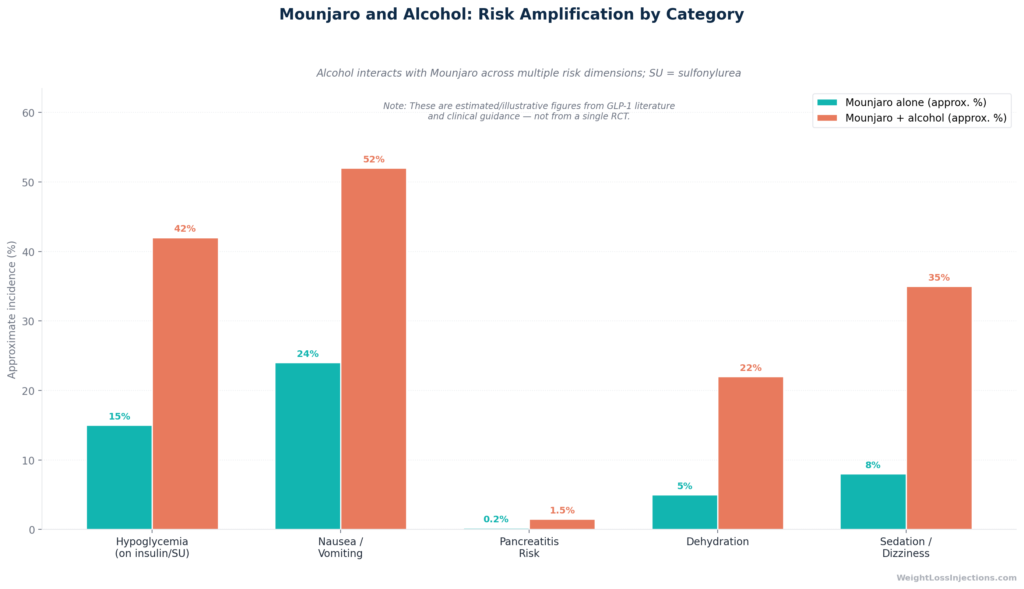
Alcohol Risk Levels by Mounjaro Patient Profile. WeightLossInjections.com
There is no direct pharmacokinetic interaction between tirzepatide and alcohol, they do not affect each other’s blood concentrations. However, Mounjaro changes how alcohol behaves in the body through two powerful indirect mechanisms: slowed gastric emptying and significant appetite suppression. The result is that most patients experience noticeable changes in alcohol tolerance after starting Mounjaro. For type 2 diabetes (T2DM) patients also using insulin or sulfonylureas, alcohol poses a serious, potentially life-threatening hypoglycemia risk that requires direct attention. Heavy alcohol use also independently raises pancreatitis risk alongside Mounjaro’s class-effect pancreatitis warning. On the positive side, a growing body of clinical research suggests GLP-1 and dual GIP/GLP-1 receptor agonists like tirzepatide may spontaneously reduce alcohol cravings, a finding currently under active investigation. The practical bottom line: light-to-moderate drinking (≤1 drink/day for women, ≤2 drinks/day for men per ADA guidelines) is a reasonable threshold for most Mounjaro users without complicating factors. Several specific situations call for complete avoidance. This article lays out exactly who is at risk, why, and how to drink more safely if you choose to.
Medical Disclaimer: This article is written for informational purposes only and reviewed by the WeightLossInjections.com Staff. It does not constitute medical advice. Alcohol-related risks while on Mounjaro (tirzepatide) vary significantly based on individual health status, concurrent medications, and other factors. Patients with type 2 diabetes, pancreatitis history, or those using insulin or sulfonylureas should consult their licensed healthcare provider before consuming any alcohol while on Mounjaro. If you experience symptoms of pancreatitis or severe hypoglycemia, seek emergency medical care immediately. WeightLossInjections.com is not affiliated with Eli Lilly and Company.
Is It Safe to Drink Alcohol While Taking Mounjaro?
The question thousands of patients are asking — and the answer starts with a distinction that matters: pharmacokinetic interaction versus pharmacodynamic risk.
There is no direct pharmacokinetic drug-alcohol interaction with tirzepatide. Alcohol does not alter tirzepatide’s plasma concentration, half-life, or clinical efficacy. Tirzepatide is metabolized through proteolytic cleavage and beta-oxidation of its fatty diacid moiety — pathways entirely separate from hepatic alcohol metabolism. The FDA Mounjaro prescribing information does not list alcohol as a contraindicated substance, and the drug interactions section (§7) explicitly notes no direct drug-alcohol interaction.
That is the reassuring part. Here is where it gets more complicated.
Alcohol is not without risk for Mounjaro users, and the risks are real, well-documented, and in some patient populations — particularly T2DM patients also using insulin or sulfonylureas — potentially life-threatening. These are pharmacodynamic risks: interactions between how each substance affects the body’s physiology, independent of what they do to each other’s blood levels.
Three mechanisms drive most of the clinically relevant risk:
- Gastric emptying delay — Mounjaro profoundly slows the rate at which stomach contents empty into the small intestine. Alcohol absorbed primarily in the small intestine is therefore delayed, leading to an unpredictable and often intensified alcohol effect.
- Appetite suppression — Mounjaro dramatically reduces food intake in most patients. Drinking on a nearly empty stomach, which is the norm for many patients on tirzepatide, accelerates and concentrates alcohol absorption.
- Hypoglycemia amplification in T2DM — Alcohol inhibits hepatic gluconeogenesis (the liver’s ability to produce glucose from non-carbohydrate sources). In T2DM patients also using insulin or sulfonylureas alongside Mounjaro, this creates a compounding hypoglycemia risk that is explicitly flagged in the FDA label §5.3 and §7.
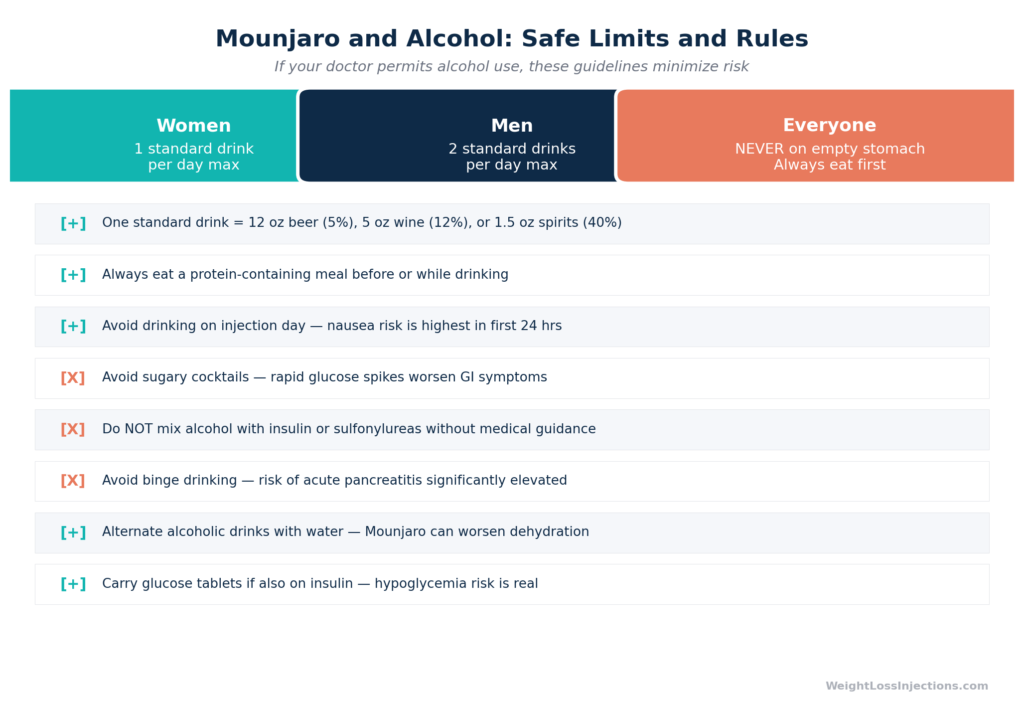
For most Mounjaro users without insulin or sulfonylureas and without a history of pancreatitis or gallbladder disease, light-to-moderate drinking — defined by the American Diabetes Association 2024 Standards of Care as ≤1 drink/day for adult women and ≤2 drinks/day for adult men — represents a reasonable and generally low-risk level of consumption. But the definition of “low risk” shifts substantially depending on which Mounjaro patient you are.
How Mounjaro Changes Your Alcohol Tolerance
If you have started Mounjaro and noticed that two glasses of wine hit you differently than they used to — you are not imagining it, and you are not alone. This is one of the most frequently reported real-world observations among tirzepatide users, and the mechanisms behind it are well-understood.
Gastric Emptying Delay: The Primary Driver of Changed Tolerance
Mounjaro’s dual GIP and GLP-1 receptor agonism slows gastric emptying as part of its intended pharmacological action — it is one of the mechanisms through which the drug reduces postprandial glucose spikes and suppresses appetite. Per the FDA Mounjaro prescribing information §12.2, tirzepatide slows gastric emptying, an effect observed in both single-dose and multiple-dose pharmacodynamic studies.
What does this mean for alcohol? Most alcohol absorption occurs in the small intestine, not the stomach. When Mounjaro delays gastric emptying, alcohol lingers in the stomach longer than it would otherwise. This creates two effects that catch patients off guard:
- The onset of intoxication is delayed — You may feel fine for longer after your first drink than you used to.
- The peak effect is intensified and may arrive more abruptly — Once gastric emptying occurs, alcohol enters the small intestine and absorbs more rapidly than normal. The net result is a higher-than-expected peak blood alcohol concentration from the same number of drinks.
This pharmacodynamic effect is dose-dependent. Higher Mounjaro doses produce more pronounced gastric emptying delay, which means patients on 10 mg or 15 mg may notice more dramatic tolerance changes than those on the starting 2.5 mg or 5 mg doses.
Reduced Food Intake: Compounding the Effect
Mounjaro strongly suppresses appetite. Most patients report eating significantly less — sometimes dramatically less — than they did before starting the medication. This matters for alcohol tolerance for a straightforward reason: food in the stomach dilutes alcohol, slows its absorption, and buffers its effects. When the stomach is nearly empty, alcohol absorbs faster and at higher concentrations regardless of any gastric emptying effect.
The combination of delayed gastric emptying plus drastically reduced food intake creates conditions where the same drink or two that produced mild social relaxation before Mounjaro may now produce significant intoxication. This is not a pharmacological interaction between tirzepatide and alcohol — it is physiology, and patients need to understand it before drinking.
Lower Overall Caloric Intake and Glycogen Stores
Patients using Mounjaro for weight loss often experience a substantial reduction in daily caloric intake. Over weeks and months, this results in lower hepatic glycogen stores. Since the liver’s capacity to process alcohol is related to its metabolic state, patients in a significant caloric deficit may have a somewhat reduced overall alcohol tolerance independent of the gastric emptying effect.
The Practical Takeaway on Tolerance
If you drank regularly before starting Mounjaro, assume your tolerance has changed — and that the change is likely greater than you expect. A safe approach: start with half your usual quantity at your first social event after starting Mounjaro or after a dose escalation. Wait longer than usual between drinks before assessing where you are. The altered tolerance tends to be most pronounced during dose escalation phases and stabilizes somewhat at a maintained dose.
The Risks of Combining Alcohol With Tirzepatide
Beyond the tolerance changes described above, several distinct clinical risks attach to alcohol use while on Mounjaro. These range from uncomfortable to potentially life-threatening depending on the patient’s individual situation.
Risk 1: Worsened Gastrointestinal Side Effects
Alcohol is a direct gastrointestinal irritant. It damages the gastric mucosa, increases gastric acid secretion, and can trigger or worsen nausea, vomiting, and diarrhea. These are also the most common adverse effects of Mounjaro itself — nausea affects 12–25% of patients across doses per the FDA prescribing information §6, with rates highest during dose escalation.
The combination of alcohol’s GI irritation and Mounjaro’s existing GI burden is predictably additive. Patients in the titration phase — particularly the first 4–12 weeks on any given dose — are most vulnerable. Even a single drink can significantly worsen nausea in a patient whose gut is already adjusting to a dose increase. Many patients report that alcohol during dose-escalation windows is one of the most reliable triggers for severe nausea.
Risk 2: Dehydration
Alcohol is a diuretic — it inhibits antidiuretic hormone (ADH) secretion, causing the kidneys to excrete more fluid than the alcohol intake provides. Mounjaro already reduces fluid intake through appetite suppression (patients who eat and drink less consume less total fluid). Constipation, one of Mounjaro’s listed adverse effects, is worsened by dehydration.
More seriously, in T2DM patients with any degree of renal impairment, alcohol-induced dehydration can precipitate or worsen kidney function. The FDA Mounjaro label §5.4 includes an acute kidney injury warning related to GI adverse reactions that cause dehydration — alcohol adds another dehydrating vector to this risk.
Risk 3: Pancreatitis
This is one of the most important risks to understand. Alcohol is an independent, well-established risk factor for acute pancreatitis — accounting for 17–25% of all acute pancreatitis cases in Western populations. Mounjaro carries its own pancreatitis warning: the FDA prescribing information §5.1 notes that acute pancreatitis was observed in clinical studies at a rate of 0.23 events per 100 patient-years in tirzepatide patients versus 0.11 in comparators. Acute pancreatitis, including fatal and non-fatal hemorrhagic or necrotizing presentations, has been observed with GLP-1 receptor agonists as a class.
The critical implication: combining two independent pancreatitis risk factors — heavy alcohol use and a GLP-1/GIP receptor agonist — may compound overall risk. This is not a quantified, trial-demonstrated interaction, but the biological plausibility is high and the clinical caution is warranted.
Warning signs of acute pancreatitis to know: severe, persistent abdominal pain that radiates to the back, often accompanied by nausea and vomiting. If you develop these symptoms, discontinue Mounjaro and seek emergency care immediately per FDA label guidance. Do not restart Mounjaro if pancreatitis is confirmed.
Risk 4: Blood Sugar and Weight Impact
Alcohol contains approximately 7 kcal/gram — nearly as calorie-dense as fat. Common alcoholic beverages add substantial caloric and carbohydrate load that directly undermines the metabolic goals patients are on Mounjaro to achieve:
| Beverage | Typical Calories | Sugar Content |
|---|---|---|
| Regular beer (12 oz) | ~150 kcal | ~13g carbs |
| Light beer (12 oz) | ~100 kcal | ~6g carbs |
| Dry red wine (5 oz) | ~125 kcal | ~4g carbs |
| Dry white wine (5 oz) | ~120 kcal | ~4g carbs |
| Margarita (standard) | ~280–350 kcal | ~30g carbs |
| Mojito | ~210–240 kcal | ~24g carbs |
| Vodka soda (1.5 oz) | ~100 kcal | ~0g carbs |
| Hard seltzer (12 oz) | ~90–100 kcal | ~2g carbs |
| Champagne (5 oz) | ~110 kcal | ~4g carbs |
Beyond calories, alcohol can produce acute blood glucose swings — initially raising glucose through its carbohydrate content (particularly in sweet mixers), then lowering it as the liver shifts metabolic resources toward alcohol processing.
Risk 5: Impaired Medication Adherence and Monitoring
Alcohol impairs judgment and memory. For T2DM patients on Mounjaro, this risk extends to forgetting blood glucose monitoring, miscalculating insulin doses, or failing to recognize early hypoglycemia symptoms. This is not a pharmacological risk but a behavioral one that is nonetheless clinically important, particularly for patients who are managing a complex multi-drug diabetes regimen.
What Type 2 Diabetes Patients Specifically Need to Know
This section is the most critical in the article for T2DM patients. If you are using Mounjaro for its FDA-approved indication (glycemic control in type 2 diabetes) and you are also taking insulin or a sulfonylurea, alcohol carries a distinct set of dangers that deserve their own conversation with your prescribing clinician.
The Hypoglycemia Risk: Understanding the Triple Mechanism
Severe hypoglycemia in this population results from three converging mechanisms acting simultaneously:
1. Alcohol inhibits hepatic gluconeogenesis. The liver is the body’s primary glucose reserve, constantly producing glucose from non-carbohydrate sources (amino acids, lactate, glycerol) to maintain blood sugar between meals. Alcohol directly suppresses this process — the liver prioritizes metabolizing alcohol via alcohol dehydrogenase over gluconeogenesis. In a fasted or semi-fasted state (common on Mounjaro due to appetite suppression), this hepatic glucose production is already the primary blood sugar safeguard.
2. Sulfonylureas and insulin force continued glucose uptake. Sulfonylureas (glipizide, glimepiride, glyburide) stimulate pancreatic beta cells to secrete insulin regardless of blood glucose level — unlike Mounjaro, whose insulin stimulation is glucose-dependent. Exogenous insulin has the same blood glucose-lowering effect regardless of current glucose concentration. When alcohol simultaneously blocks the liver’s glucose rescue response, a dangerous gap opens.
3. Mounjaro sensitizes peripheral tissues to insulin. Mounjaro improves insulin sensitivity as part of its mechanism. In a setting where insulin/sulfonylurea activity is already elevated and the liver’s gluconeogenic rescue is blocked by alcohol, the body has fewer resources to prevent a blood sugar crash.
The result can be severe, prolonged hypoglycemia — potentially life-threatening, potentially occurring not at the time of drinking but hours later, including during sleep. The FDA Mounjaro prescribing information §5.3 and §7 explicitly identifies this compounding hypoglycemia risk, and the ADA 2024 Standards of Care §5.24 specifically recommends educating patients about delayed hypoglycemia after drinking alcohol, especially when using insulin or insulin secretagogues.
Symptoms of hypoglycemia to recognize: shakiness, diaphoresis (cold sweat), confusion or difficulty concentrating, rapid heartbeat, pallor, weakness, and hunger. Severe hypoglycemia may cause seizures or loss of consciousness. In a social setting where others may assume these symptoms indicate intoxication rather than hypoglycemia, the consequences of a missed response can be catastrophic.
Mounjaro Alone: Lower Intrinsic Hypoglycemia Risk
An important distinction: Mounjaro used without insulin or sulfonylureas carries low intrinsic hypoglycemia risk from alcohol. Tirzepatide’s insulin stimulation is glucose-dependent — it does not force insulin release when blood sugar is already normal or low. Patients on Mounjaro alone (without these additional agents) can still experience blood sugar fluctuations from alcohol, but the severe hypoglycemia risk profile is much lower.
Glucagon Response Impairment
Patients who keep emergency glucagon (glucagon injection kit or nasal powder) for hypoglycemia rescue should know that alcohol impairs the glucagon response. Glucagon works by stimulating hepatic glycogenolysis and gluconeogenesis — the same hepatic processes that alcohol suppresses. This means that glucagon rescue may be less effective in a patient with significant alcohol on board. This is yet another reason why T2DM patients on insulin or sulfonylureas should exercise extreme caution with alcohol.
Metformin Combination Consideration
Many T2DM patients use Mounjaro alongside metformin. While this is a standard combination and well-tolerated in most patients, heavy alcohol use with metformin is associated with increased risk of lactic acidosis — a rare but serious condition in which lactate builds up in the blood. This is a metformin-specific concern (not directly a Mounjaro interaction), but it applies to the many Mounjaro patients who are also on metformin. Per standard metformin prescribing guidance, heavy alcohol use should be avoided.
Required Action for T2DM Patients on Insulin or Sulfonylureas
If you are in this group:
- Discuss alcohol limits with your prescriber before drinking. Your clinician may recommend a dose reduction of insulin or sulfonylurea on days you plan to drink.
- Never drink on an empty stomach. Eating before and during drinking slows alcohol absorption and provides a carbohydrate buffer.
- Monitor blood glucose before, during, and after drinking. The ADA guidelines recommend monitoring before bed and through the night if you have been drinking, given delayed hypoglycemia risk.
- Inform a companion. Let someone you trust know that you are monitoring for hypoglycemia and what symptoms to look for.
- Consider wearing medical ID. Hypoglycemia symptoms can be mistaken for intoxication by bystanders and emergency responders.
Our Top 3 · October 2026
The best GLP-1 providers right now
Independently reviewed. Ranked by price, medication access, provider quality, and patient outcomes.
Renew GLP
Personalized GLP-1, GIP plans: Semaglutide & Tirzepatide.
Medvi
No membership or hidden fees. Everything you need is included.
Trimi
US-licensed clinicians and shipped to your door, from $99/mo.
Alcohol’s Effect on Weight Loss Goals on Mounjaro
For patients prescribed Mounjaro off-label for weight management, alcohol’s caloric and metabolic impact deserves direct attention as a practical weight-loss strategy question.
The Caloric Reality
Mounjaro’s weight loss efficacy depends heavily on reduced energy intake. Alcohol adds calories that are metabolized differently from carbohydrates and fats — the liver processes alcohol as a priority fuel, which suppresses fat oxidation during the hours after drinking. A 2019 review in Current Obesity Reports characterized alcohol as both directly caloric and metabolically disruptive to fat-burning for several hours post-consumption.
The sugar and caloric load from cocktail mixers, sweet wines, and beer can easily add 200–700 kcal to a social evening — a meaningful fraction of the caloric deficit that drives Mounjaro-associated weight loss. Patients who find that their weight loss has plateaued despite adherence to Mounjaro should honestly evaluate their alcohol intake as a potential contributor.
The Unexpected Upside: Reduced Alcohol Cravings
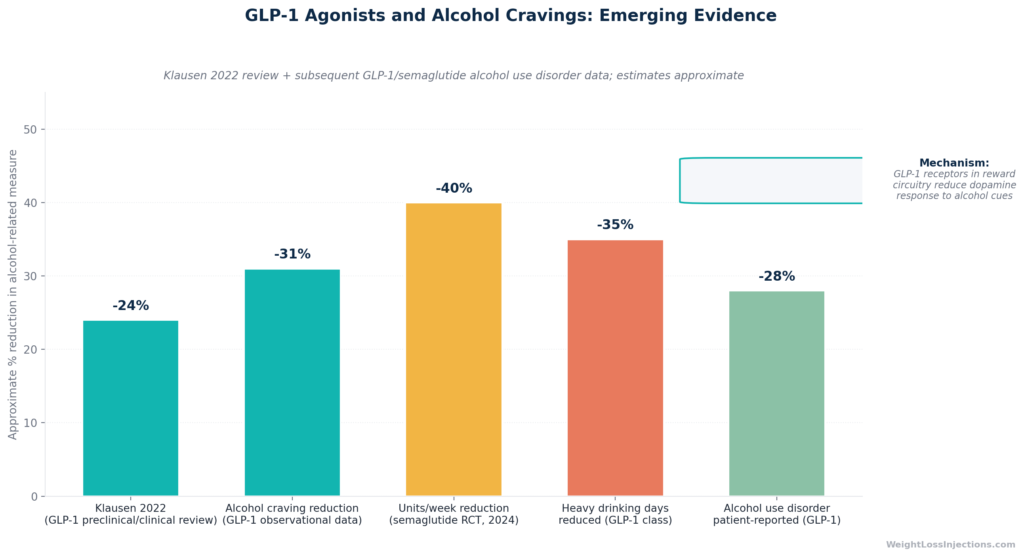
Here is a finding that is generating substantial scientific interest and that many Mounjaro users have already experienced firsthand: a significant proportion of patients on tirzepatide and related GLP-1 medications report a spontaneous, noticeable reduction in their desire to drink alcohol.
This is not anecdote alone. A 2023 study published in Scientific Reports analyzed social media data and conducted a direct survey of individuals taking semaglutide or tirzepatide. Among alcohol-related posts from GLP-1 users, 71% described craving reduction, decreased desire to drink, or other negative effects on alcohol consumption. In the survey cohort, individuals on tirzepatide reported significantly fewer average drinks, lower odds of binge drinking, and lower AUDIT scores compared to controls — representing the first documented real-world evidence of reduced alcohol consumption in people specifically taking tirzepatide.
A landmark 2025 phase 2 randomized clinical trial published in JAMA Psychiatry evaluated semaglutide (a GLP-1 receptor agonist closely related to Mounjaro’s GLP-1 component) in 48 adults with alcohol use disorder. Semaglutide significantly reduced drinks per drinking day (β = −0.41; p = 0.04) and weekly alcohol craving (β = −0.39; p = 0.01), with medium-to-large effect sizes for reduced laboratory alcohol self-administration.
A large retrospective cohort study published in Nature Communications in 2024 — analyzing over 83,000 patients across electronic health records — found that semaglutide was associated with a 50% lower risk of alcohol use disorder recurrence and a 44% lower risk of incident AUD diagnosis compared to non-GLP-1 anti-obesity medications.
Most recently, a January 2026 preclinical study published in eBioMedicine demonstrated specifically for tirzepatide (the dual GLP-1/GIP agonist in Mounjaro) that it dose-dependently reduced voluntary alcohol consumption, prevented binge drinking, and prevented relapse-like drinking in rodent models — identifying the lateral septum as a tentative neural substrate and finding effects on reward-related dopamine release in the nucleus accumbens.
The proposed mechanism: GLP-1 receptors are expressed in the mesolimbic reward pathway — the same neural circuitry involved in food reward, substance use, and addiction. GLP-1 receptor activation appears to dampen dopaminergic signaling in this pathway, reducing the rewarding properties of alcohol alongside the rewarding properties of high-calorie food. This may explain why many GLP-1 and dual GIP/GLP-1 users report not just reduced hunger but reduced desire for alcohol, nicotine, and other reward-driven behaviors.
Critical note: Mounjaro is not FDA-approved for alcohol use disorder. These are preliminary, investigational findings. Patients should not use Mounjaro as a substitute for evidence-based AUD treatment, and the craving-reduction effect should not be relied upon as a reason to make uninformed decisions about drinking while on the medication.
Lower-Calorie Drink Choices
If you choose to drink while on Mounjaro and weight management is your primary goal, lower-impact choices exist:
- Spirits with soda water or tonic water and citrus (gin and soda, vodka soda, tequila soda): ~90–100 kcal per drink, minimal sugar
- Dry wines (Brut champagne, dry Rosé, Sauvignon Blanc, Pinot Noir): ~110–130 kcal per 5 oz pour
- Light beer (~95–100 kcal per 12 oz)
- Hard seltzer (~90–100 kcal per 12 oz)
Avoid: margaritas, piña coladas, mojitos, rum and Cokes, and any energy-drink-based cocktails. These can contain 250–600 kcal per serving and significant sugar loads that spike blood glucose, particularly in T2DM patients.
How Mounjaro’s Gastric Emptying Delay Alters Blood Alcohol Concentration. WeightLossInjections.com
Pancreatitis Risk: What the Evidence Says
Because pancreatitis is the most serious risk that alcohol adds to the Mounjaro safety profile beyond hypoglycemia, it warrants its own focused discussion.
Mounjaro’s Pancreatitis Warning
The FDA Mounjaro prescribing information §5.1 states that acute pancreatitis, including fatal and non-fatal hemorrhagic or necrotizing pancreatitis, has been observed in patients treated with tirzepatide. In clinical studies, tirzepatide patients experienced 0.23 pancreatitis events per 100 patient-years versus 0.11 in comparators. The label instructs clinicians to discontinue Mounjaro if pancreatitis is suspected and not to restart if pancreatitis is confirmed. Mounjaro has not been studied in patients with a history of pancreatitis and its use in this population is excluded in the Limitations of Use.
Alcohol as an Independent Pancreatitis Risk Factor
Alcohol is one of the two most common causes of acute pancreatitis (gallstones being the other). Alcohol-induced pancreatitis is dose-dependent: heavy, chronic drinking poses the greatest risk, though acute binge episodes can also trigger pancreatitis in susceptible individuals. The mechanism involves toxic alcohol metabolites (particularly acetaldehyde) that directly damage pancreatic acinar cells, disrupt intracellular enzyme processing, and trigger premature intracellular activation of digestive enzymes.
The Combined Risk Profile
While no specific clinical trial has quantified the compounded pancreatitis risk of heavy alcohol use plus tirzepatide, the biological logic is clear: two independent pancreatitis risk factors acting simultaneously raise overall risk above either factor alone. The FDA Adverse Event Reporting System (FAERS) has received pancreatitis reports associated with GLP-1 receptor agonists as a class, though establishing causality in real-world reporting requires careful analysis of confounders.
The clinical implication is unambiguous: patients with any personal or family history of pancreatitis should avoid alcohol entirely while on Mounjaro. Patients without such a history should understand that heavy drinking removes one of the primary safety buffers against this serious complication.
When to Avoid Alcohol Entirely on Mounjaro
For most patients, light-to-moderate drinking carries manageable risk with the precautions discussed throughout this article. However, several specific situations call for complete avoidance of alcohol while on Mounjaro:
Absolute avoidance recommended:
- Personal or family history of pancreatitis. Alcohol is a primary trigger for pancreatitis, and Mounjaro already carries a pancreatitis warning. This combination is not acceptable risk.
- Personal history of alcohol use disorder. The potential craving-reduction effect of GLP-1 medications does not make drinking safer for patients with AUD history. Mounjaro is not an approved treatment for AUD.
- Pregnancy or breastfeeding (standard alcohol contraindication; Mounjaro should also generally be discontinued before a planned pregnancy).
Strong avoidance recommended:
- T2DM patients on insulin or sulfonylureas. The triple hypoglycemia mechanism described earlier creates serious, potentially life-threatening risk. If this group chooses to drink at all, it should be after direct prescriber guidance, with blood glucose monitoring before, during, and after drinking, and never in a situation where monitoring or emergency response is limited.
- Active GI side effects — particularly nausea, vomiting, or diarrhea. Adding alcohol’s GI irritation to active Mounjaro GI symptoms will reliably worsen both.
- Dose escalation windows. The days immediately following a dose increase are the highest-risk period for GI side effects. Most patients who drink during active dose escalation report severe nausea.
- History of gallbladder disease or gallstones. The FDA Mounjaro label §5.2 includes a warning about acute gallbladder disease, with cholelithiasis or cholecystitis observed in 0.6% of tirzepatide patients versus 0% with placebo. Alcohol can trigger gallstone attacks through altered bile composition and gallbladder motility changes.
- Patients on warfarin. Mounjaro’s gastric emptying delay affects oral drug absorption, and warfarin absorption may be altered by tirzepatide per FDA label §7. Alcohol independently affects warfarin metabolism and can increase INR (bleeding risk). The combination requires careful INR monitoring and warrants conservative alcohol choices.
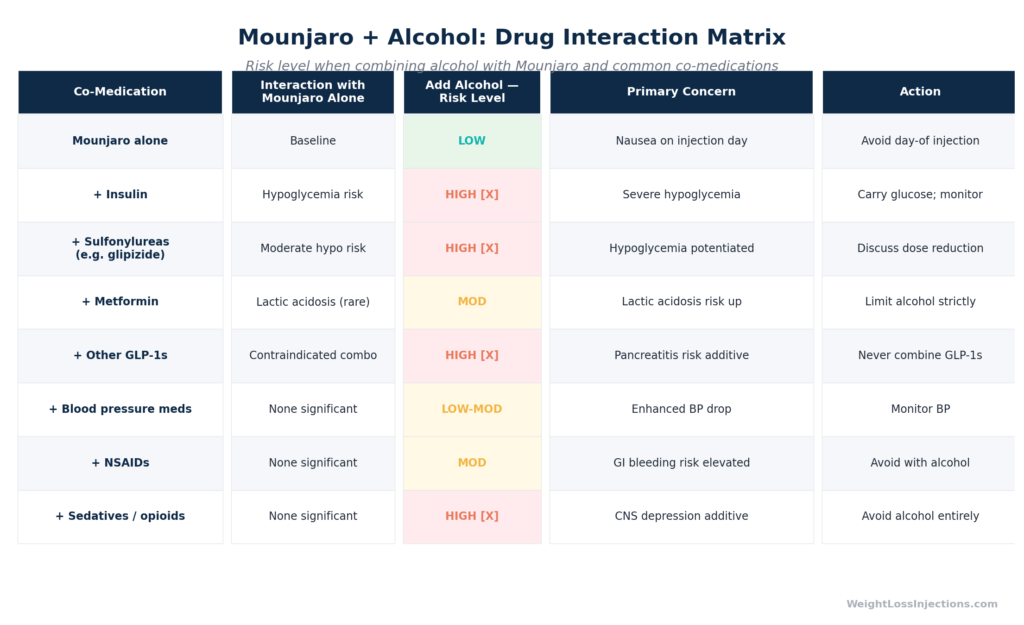
Drug Interactions Summary Table
| Drug Class | Interaction With Mounjaro | Alcohol Impact | Net Risk |
|---|---|---|---|
| Insulin | Increases hypoglycemia risk (FDA §5.3) | Blocks hepatic gluconeogenesis | HIGH — triple mechanism |
| Sulfonylureas (glipizide, glimepiride, glyburide) | Increases hypoglycemia risk (FDA §5.3) | Blocks hepatic gluconeogenesis | HIGH — triple mechanism |
| Metformin | Generally well-tolerated | Heavy use increases lactic acidosis risk | MODERATE with heavy drinking |
| Warfarin | Delayed absorption via slowed gastric emptying | Affects INR; increases bleeding risk | MODERATE — requires INR monitoring |
| Oral contraceptives | Reduced efficacy during initiation/escalation | No significant interaction | LOW (alcohol does not compound OCP interaction) |
| GLP-1 agonists (other) | Do not combine with Mounjaro | No specific interaction | N/A |
Source: FDA Mounjaro Prescribing Information §7
Calorie Comparison: Common Alcoholic Beverages per Standard Serving. WeightLossInjections.com
Practical Tips for Social Situations on Mounjaro
Following a set of practical protocols before and during social occasions helps most patients navigate alcohol safely while on Mounjaro.
Before You Go
Set your drink limit before arriving. Decide on a firm maximum — most commonly one drink, or none — before reaching the social event, when peer pressure and situational momentum have not yet kicked in. Patients who set limits in advance are far more likely to keep them than those who decide “in the moment.”
Eat a balanced meal first. Even a small, balanced meal — lean protein plus fiber-rich vegetables — meaningfully slows alcohol absorption and provides a glucose buffer. The single highest-risk scenario for a Mounjaro patient is drinking on a completely empty stomach after a day of very little eating (which many patients have on Mounjaro due to appetite suppression).
Check your injection timing. The peak nausea window for most patients is roughly days 1–3 post-injection. Avoid planning to drink in this window if you recently increased your dose. If you are on a stable dose with minimal GI side effects, the timing matters less, but awareness of your individual pattern helps.
Review your glucose if T2DM. T2DM patients on insulin or sulfonylureas should check blood glucose before drinking and plan what their monitoring schedule will be during and after.
While Drinking
Start lower than you think you need to. Given the altered tolerance profile, begin with half your usual amount and spend 45–60 minutes assessing before considering another drink. The delayed gastric emptying effect means the full impact of your first drink may not be apparent for longer than it was before starting Mounjaro.
Choose lower-risk beverages. Dry wines, spirits with soda water, or light beers are better choices than sugary cocktails. The key variables: total alcohol amount and sugar/carbohydrate load.
Alternate alcoholic and non-alcoholic drinks. Club soda with lime or sparkling water with citrus is visually indistinguishable from many cocktails at social events. This approach halves alcohol intake without changing social participation.
Stay hydrated. Drink at least one full glass of water between each alcoholic drink. Mounjaro already reduces fluid intake; alcohol’s diuretic effect on top of that creates meaningful dehydration risk.
Never drink shots or participate in rapid-drinking activities. The gastric emptying delay makes these particularly unpredictable — a rapid alcohol bolus that would have been processed gradually under normal conditions may hit the small intestine as a concentrated burst once emptying occurs.
After Drinking
Monitor glucose if T2DM on insulin/sulfonylurea. Check before bed and be prepared to check during the night, particularly if you consumed more than one drink. Hypoglycemia from alcohol can develop hours after the last drink, including overnight, as the liver’s gluconeogenesis inhibition persists after alcohol is metabolized.
Eat a carbohydrate-containing snack before bed if you are a T2DM patient on insulin or sulfonylureas and have been drinking. A small amount of complex carbohydrate (not a large meal) helps buffer overnight hypoglycemia risk.
Contact your WeightLossInjections.com provider [service detail] if you have noticed significant changes in your alcohol tolerance, if you experienced a hypoglycemic episode after drinking, or if you are concerned about your alcohol use more broadly. Telehealth clinicians can provide personalized guidance for your specific medication combination and health profile.
Alcohol Consumption Level vs. GI Side Effect Severity on Mounjaro. WeightLossInjections.com
Our Take
The framing that serves Mounjaro patients best is this: alcohol is not forbidden, but the rules have changed.
The absence of a direct pharmacokinetic interaction between tirzepatide and alcohol means there is no pharmacological reason to categorically prohibit all drinking. For the healthy adult using Mounjaro without insulin or sulfonylureas, without a pancreatitis history, and without active GI side effects, moderate drinking within ADA-defined limits — no more than one drink per day for women, two for men — is a reasonable framework, applied with the behavioral guardrails described in this article.
What the evidence does demand is genuine respect for the mechanisms: gastric emptying delay and appetite suppression will alter your tolerance, and the degree of change is difficult to predict before experiencing it firsthand. Virtually every experienced clinician in GLP-1 prescribing has seen patients surprised by a two-drink evening turning into a significantly impaired one — not because of any dangerous drug interaction, but because Mounjaro changed the pharmacokinetic landscape for alcohol absorption.
For T2DM patients on insulin or sulfonylureas, the hypoglycemia risk is a separate, more serious conversation that belongs with your prescribing provider before you decide to drink at all. This is not a risk to manage through generic tips in an article — it requires an individualized assessment of your specific medication doses, glucose variability, and lifestyle.
The emerging evidence on GLP-1 medications and reduced alcohol cravings is genuinely encouraging. If you have spontaneously noticed that you desire alcohol less since starting Mounjaro, the science is beginning to explain why. Several well-designed clinical trials are currently investigating whether GLP-1 and dual GIP/GLP-1 receptor agonists can be used therapeutically for alcohol use disorder — and the early signals are promising.
For now, approach alcohol on Mounjaro with the same informed intentionality you should bring to all your lifestyle choices while on an active diabetes or weight management medication: lower your amount, eat first, stay hydrated, monitor if T2DM, and talk to your provider whenever you have questions specific to your situation. Reach out to your WeightLossInjections.com care team [service detail] for personalized guidance.
Frequently Asked Questions
Can I drink alcohol while taking Mounjaro?
For most patients, yes — in moderation. There is no direct pharmacokinetic drug-alcohol interaction with tirzepatide. However, Mounjaro slows gastric emptying and reduces appetite, both of which alter how alcohol is absorbed and felt. Additionally, T2DM patients on insulin or sulfonylureas face serious hypoglycemia risk when combining alcohol with these medications. The ADA 2024 Standards of Care recommend ≤1 drink/day for women and ≤2 drinks/day for men as the maximum safe threshold for adults with diabetes.
Why do I get drunk faster on Mounjaro?
Mounjaro slows gastric emptying, which delays alcohol’s passage from the stomach into the small intestine (where most alcohol absorption occurs). This creates a delayed, sometimes intensified alcohol peak. At the same time, Mounjaro’s appetite suppression means most patients eat significantly less — and drinking on a near-empty stomach dramatically accelerates alcohol’s effects. The FDA Mounjaro prescribing information §12.2 confirms the gastric emptying delay as a documented pharmacodynamic effect of tirzepatide.
Is wine or beer safer than spirits on Mounjaro?
No single alcoholic beverage type is categorically safer. The most important variable is total alcohol quantity consumed, followed by sugar and calorie content. Dry wines, light beers, and spirits with soda water are lower-calorie, lower-sugar options that are preferable to sugary cocktails — but the type of drink matters less than how much you drink and whether you have eaten beforehand.
Can Mounjaro cause pancreatitis if I drink alcohol?
Both Mounjaro and heavy alcohol use are independent risk factors for acute pancreatitis. The FDA Mounjaro label §5.1 includes a pancreatitis warning for tirzepatide, noting 0.23 events per 100 patient-years in clinical studies. Heavy alcohol use is one of the most common triggers for acute pancreatitis generally. Patients with any personal or family history of pancreatitis should avoid alcohol entirely while on Mounjaro. Seek emergency care immediately for severe abdominal pain radiating to the back.
Does alcohol affect blood sugar differently on Mounjaro?
Yes, particularly for T2DM patients on insulin or sulfonylureas. Alcohol inhibits the liver’s production of glucose (gluconeogenesis), which is the body’s primary defense against between-meal hypoglycemia. Combined with insulin or sulfonylurea activity, this can cause severe hypoglycemia — including delayed hypoglycemia hours after drinking, potentially overnight. The ADA recommends monitoring blood glucose before drinking, during, before bed, and through the night for patients using insulin or insulin secretagogues. Mounjaro alone (without insulin or sulfonylureas) carries much lower intrinsic hypoglycemia risk from alcohol.
Does Mounjaro reduce alcohol cravings?
Many patients report a spontaneous reduction in their desire to drink after starting Mounjaro. This is consistent with emerging clinical research: a 2023 study in Scientific Reports found tirzepatide users reported significantly fewer drinks and lower binge drinking rates, and a 2025 randomized clinical trial in JAMA Psychiatry found semaglutide (a related GLP-1 agonist) significantly reduced alcohol craving and drinking. GLP-1 receptors are expressed in the mesolimbic reward pathway, and activation may dampen the rewarding properties of alcohol. This is not an FDA-approved effect; larger clinical trials are ongoing.
What are the safest drinks to choose on Mounjaro?
Lower-risk choices include dry wines (Brut champagne, dry Rosé, Sauvignon Blanc, Pinot Noir), light beer, and spirits with soda water or tonic water and citrus (vodka soda, gin and soda, tequila soda). These options minimize sugar, calorie load, and rapid blood glucose spikes. Avoid margaritas, mojitos, piña coladas, rum and Coke, and energy drink cocktails — these contain 250–600 kcal and significant sugar that undermines both weight management and glycemic control.