![Unbranded [pillar-drug-class] injection pen on a neutral background — WeightLossInjections.com editorial hero](https://weightlossinjections.com/wp-content/uploads/2026/07/hero_mounjaro_c5_lifestyle-1200x675.png)
Split-frame composition showing foods to avoid on Mounjaro (fried foods, greasy meals, sugary drinks) versus Mounjaro-friendly foods (lean protein, vegetables, whole grains) — clean clinical photography style, bright neutral background.
- Mounjaro (tirzepatide) significantly slows gastric emptying — the wrong foods don’t just linger longer in your stomach, they amplify nausea and GI discomfort that can persist for 24–48 hours or more
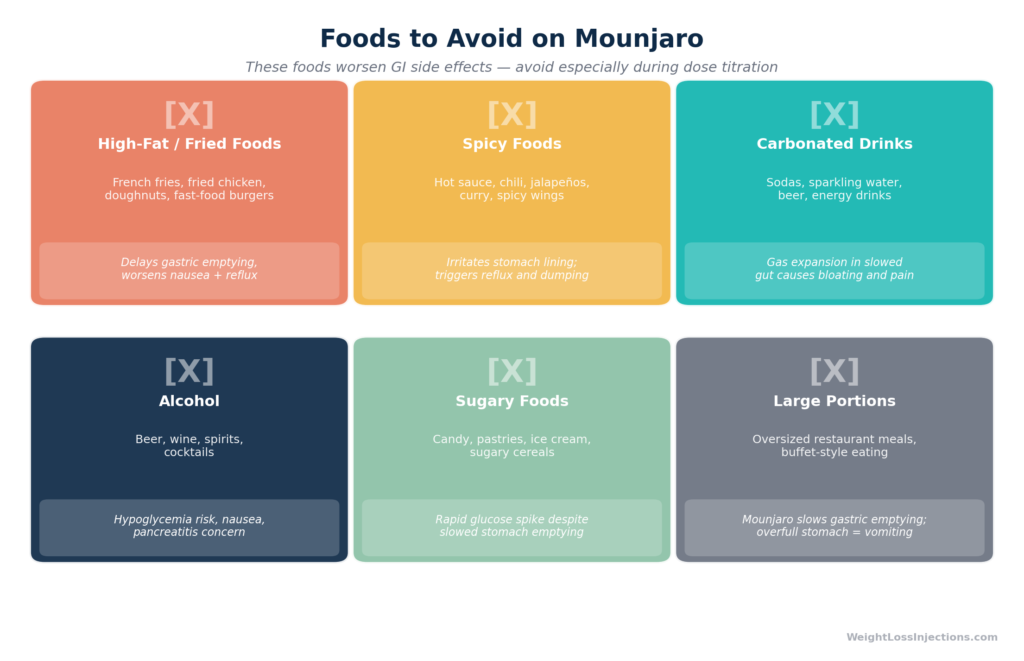
- The top foods to avoid: fried and greasy foods, high-fat meats, alcohol, carbonated beverages, high-sugar foods, refined carbohydrates, spicy foods, and oversized portions
- Fried and fatty foods are the single biggest trigger — dietary fat is the primary signal that activates the ileal brake and slows gastric emptying further on top of what Mounjaro is already doing
- For T2DM patients on Mounjaro: alcohol carries added hypoglycemia risk when combined with insulin or sulfonylureas, and high-sugar foods directly undermine the drug’s glycemic control benefit
- What to eat instead: lean proteins, non-starchy vegetables, whole grains in small portions, and hydrating foods form the foundation of a Mounjaro-compatible diet
- There is no FDA-mandated Mounjaro diet — but smart dietary choices can be the difference between tolerating side effects and being stopped in your tracks by them
- WeightLossInjections.com offers [service detail] for nutrition support alongside your Mounjaro prescription at [$X/month]
Medical Disclaimer: This article is written for informational purposes only and reviewed by the WeightLossInjections.com Staff. It does not constitute nutritional or medical advice. Individual dietary tolerances vary; patients should work with their healthcare provider and a registered dietitian to develop a personalized eating plan while on Mounjaro (tirzepatide). WeightLossInjections.com is not affiliated with Eli Lilly and Company.
Reviewed by: the WeightLossInjections.com Staff | Last updated: June 2026
How Mounjaro Changes Your Relationship With Food
Before you can understand which foods cause problems on Mounjaro, you need to understand what Mounjaro does to your digestive system. The drug does not simply suppress appetite — it fundamentally restructures how your gastrointestinal tract processes everything you eat.
Mounjaro (tirzepatide) is a first-in-class dual agonist of the GIP receptor (glucose-dependent insulinotropic polypeptide receptor, or GIPR) and the GLP-1 receptor (glucagon-like peptide-1 receptor, or GLP-1R), as detailed in the FDA Mounjaro Prescribing Information (NDA 215866). This dual mechanism produces three distinct changes that make food choice more consequential than it is for most people not on the medication.
First: Mounjaro slows gastric emptying. Tirzepatide delays the rate at which food moves from the stomach into the small intestine, per FDA label §12.2. Under normal circumstances, a typical mixed meal clears the stomach in roughly 2–4 hours. On Mounjaro — particularly during the dose escalation phase — food can remain in the stomach for 4 to 8 hours or longer depending on what was eaten. This delayed gastric emptying is a therapeutic benefit: it flattens postprandial glucose spikes and extends satiety. But it also means that foods which inherently slow gastric emptying — primarily high-fat, fried, and heavy foods — compound the drug’s effect in ways that cause prolonged, sometimes debilitating nausea.
Second: appetite is strongly suppressed. Mounjaro activates GLP-1 receptors in the hypothalamus that signal satiety, while GIP receptor activation may further modulate food reward pathways, per FDA label §12.1. Most patients experience significant reductions in appetite, particularly during dose escalation phases, and early satiety — the sensation of being full after a much smaller quantity of food than usual. This is the mechanism driving weight loss, but it also means that attempting to eat a normal-sized meal can produce uncomfortable fullness and nausea because the stomach is already working under reduced capacity.
Third: blood sugar regulation is fundamentally altered. Tirzepatide stimulates insulin secretion in a glucose-dependent manner and suppresses glucagon, lowering both fasting and postprandial glucose levels per FDA label §12.1. High-sugar foods and refined carbohydrates cause rapid glucose spikes that work against this mechanism — for type 2 diabetes patients in particular, these food choices undermine the primary clinical benefit of the drug and can contribute to glycemic instability.
The FDA label confirms that GI adverse events — nausea, diarrhea, vomiting, constipation, and decreased appetite — occur in 12–25% of patients during dose titration, per FDA label §6. These are dose-dependent and most pronounced during the first 4–16 weeks of treatment when the escalation schedule (2.5 mg → 5 mg → 7.5 mg → continuing upward in 2.5 mg increments every 4 weeks per the FDA label) places the most stress on GI adaptation.
What this means practically: the foods you eat are not just a lifestyle consideration on Mounjaro — they are a clinical variable. A fried fast-food meal on the evening of an injection can trigger 12–24 hours of nausea that disrupts sleep, work, and daily function. A glass of wine for a T2DM patient also on a sulfonylurea can tip blood glucose dangerously low. Conversely, a well-structured meal plan built around lean proteins, cooked vegetables, and modest portions can allow most patients to tolerate dose escalation with manageable side effects.
This guide is organized around what to avoid and why — with the mechanism explained for each category — followed by what to eat instead, practical strategies, a sample meal plan, and supplement considerations. Think of it not as a restrictive diet but as working with the drug’s pharmacology rather than against it.
The Foods Most Likely to Worsen Mounjaro Side Effects
Most patients starting Mounjaro encounter the same frustrating discovery: certain foods that were perfectly fine before the medication now reliably trigger hours of nausea, bloating, and discomfort. Understanding the pattern — and why each food category causes problems — makes the required adjustments far easier to sustain.
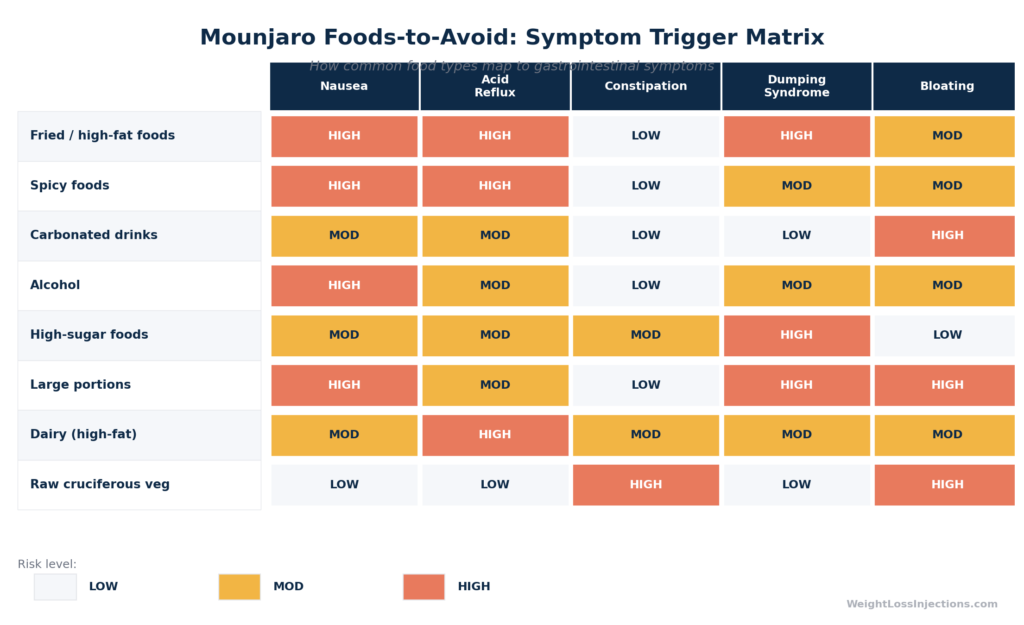
Food categories rated by gastric tolerability impact on Mounjaro — red = avoid, yellow = moderate caution, green = generally well-tolerated. Data based on gastric emptying research and GI adverse event profiles from the FDA Mounjaro prescribing label.
The following table provides a quick reference, followed by detailed explanations of each category.
| Food Category | Examples | Why It Worsens Mounjaro Side Effects |
|---|---|---|
| Fried and greasy foods | French fries, fried chicken, doughnuts, onion rings, chips | High fat content triggers the ileal brake and cholecystokinin (CCK) release, compounding Mounjaro’s gastric emptying delay — food can sit in the stomach for 6+ hours |
| High-fat meats | Bacon, sausage, pork belly, heavily marbled steak, processed deli meats | Same fat-CCK-gastric retention mechanism; high saturated fat content also worsens cardiovascular risk factors |
| High-sugar foods and drinks | Candy, pastries, regular soda, fruit juice, sweetened cereals | Rapid glucose spikes counteract glycemic control benefit; worsen bloating and GI discomfort; empty caloric load |
| Large portions | Any meal above ~400–500 calories eaten in one sitting | Mounjaro reduces gastric capacity; overfilling a stomach that empties slowly causes gastric distension, nausea, and vomiting |
| Spicy foods | Hot sauces, jalapeños, heavily spiced curries, chili peppers | Capsaicin irritates the GI tract lining; worsens heartburn and reflux in patients with already-altered gut motility |
| Carbonated beverages | Soda, sparkling water, beer, hard seltzer | CO2 gas causes stomach distension and bloating on a stomach that is already slow to empty |
| Alcohol | Wine, beer, cocktails, spirits in large quantities | Adds empty calories; worsens GI side effects; hypoglycemia risk in T2DM patients on insulin or sulfonylureas |
| Refined carbohydrates | White bread, white rice (large portions), pastries, regular crackers | Rapid glycemic spikes; minimal satiety; worsen glycemic variability in T2DM patients |
| Reflux-triggering foods | Citrus juice, tomato sauce, chocolate, mint, coffee (in excess) | Lower esophageal sphincter relaxation + slowed gastric emptying = increased acid reflux and heartburn |
| High-fiber foods (excessive early on) | Large portions of raw cruciferous vegetables, very high-fiber legume servings | Excess soluble fiber in early phases worsens gas, bloating, and diarrhea; introduce gradually |
The sections below provide deeper explanations for the most clinically important categories. Understanding the mechanism — not just the rule — helps patients make smarter decisions in situations where they can’t avoid every trigger.
Why Fatty and Greasy Foods Are the Biggest Problem
Of all the food categories to avoid on Mounjaro, fried and greasy foods deserve the most attention. They consistently produce the worst GI outcomes, and the reason is not arbitrary — it traces directly to a well-established physiological pathway that interacts with Mounjaro’s mechanism in a compounding way.
Dietary fat is the primary macronutrient signal that activates the ileal brake — a negative feedback mechanism in which nutrients, especially fat, arriving in the ileum trigger release of hormones (including GLP-1, peptide YY, and cholecystokinin) that slow gastric emptying and intestinal transit, according to Healthline’s Mounjaro diet guide. Cholecystokinin (CCK) in particular is a potent inhibitor of gastric motility: it signals the stomach to slow down and causes the pyloric sphincter to remain partially closed, keeping food in the stomach longer. This is the normal digestive mechanism for handling fat — the body slows transit to allow adequate time for fat digestion and absorption.
Under normal conditions, this process works smoothly. On Mounjaro, it creates a serious problem: tirzepatide is already slowing gastric emptying significantly via its GLP-1 receptor activity. Adding a high-fat meal on top of that pharmacological effect produces a double-brake situation — the drug slows the stomach, then the fat from the meal triggers additional slowing on top. Food that might sit in the stomach for 5–6 hours on Mounjaro alone can remain there for 8–12 hours after a high-fat meal, according to the gastric emptying mechanism discussion in the FDA Mounjaro Prescribing Information §12.2. For many patients, this manifests as nausea that begins 1–2 hours after eating and can persist into the following morning.
The practical implication: a single large greasy meal — fried chicken, fast-food burgers and fries, a cream-based pasta — consumed on injection day or the day after can cause nausea lasting 12–24 hours. Many patients in online Mounjaro communities report this as their most severe side effect experience, and it is almost always traceable to a high-fat meal eaten during the peak drug concentration window (the first 2–3 days after injection, when tirzepatide is approaching its peak serum concentration at Tmax of 8–72 hours per FDA label §12.3).
Practical guidance for common situations:
- Fast food: If unavoidable, choose grilled over fried, skip the fries, and eat a portion smaller than usual. Grilled chicken sandwiches, garden salads with protein, or rice-based bowls without fried toppings are better choices than fried items.
- Restaurant dining: Request sauces on the side (most restaurant sauces are cream- or butter-heavy), ask for baked or grilled preparations instead of sautéed in oil, and skip the cheese course or appetizers that are primarily fat-based.
- Home cooking: Choose olive oil in small quantities (1–2 tsp) rather than butter or large amounts of cooking oil; use baking, steaming, grilling, and air-frying in preference to deep-frying or pan-frying in fat.
- High-fat dairy: Limit full-fat cheese, heavy cream, and butter during early titration. Low-fat Greek yogurt, part-skim cheeses, and unsweetened almond milk are well-tolerated alternatives.
An important nuance: Mounjaro does not require patients to eliminate all fat from their diet. Healthy fats — avocado, olive oil in moderate amounts, nuts, fatty fish — are nutritionally important and are generally well-tolerated when eaten in reasonable portions (¼ avocado, 1 oz nuts, 1–2 tsp olive oil). The problem is specifically saturated and trans fats from fried foods, processed meats, and heavy cream — not monounsaturated and polyunsaturated fats from whole food sources.
Alcohol and Mounjaro — What You Need to Know
Alcohol warrants its own discussion because the risks on Mounjaro are more layered than most patients realize, and because guidance online tends toward two unhelpful extremes — either “alcohol is completely off-limits” or “there’s no interaction so drink normally.” The reality is more nuanced.
The FDA Mounjaro Prescribing Information §7 does not list a direct pharmacokinetic drug–drug interaction between tirzepatide and ethanol — the two substances do not directly alter each other’s blood concentrations. However, there are four clinically significant indirect concerns that make alcohol problematic for many Mounjaro patients.
Concern 1: Worsened GI side effects. Alcohol relaxes the lower esophageal sphincter and irritates the gastric mucosa. On a stomach that is already emptying slowly due to tirzepatide, alcohol can significantly worsen nausea, heartburn, and acid reflux. This is most relevant during dose escalation phases when GI side effects are already at their peak.
Concern 2: Empty calories and glycemic disruption. Alcohol provides approximately 7 calories per gram — more calorie-dense than carbohydrates or protein — with no satiety benefit and no nutritional value. Cocktails, sweet wines, and beer also deliver substantial sugar loads that spike blood glucose, which counteracts Mounjaro’s glycemic control mechanism in T2DM patients.
Concern 3: Hypoglycemia risk in T2DM patients. This is the most clinically serious concern. For T2DM patients on Mounjaro who are also taking insulin or sulfonylureas (common combination regimens), alcohol poses a meaningful hypoglycemia risk, per FDA label §7. Alcohol impairs hepatic gluconeogenesis — the liver’s ability to produce and release glucose into the bloodstream — which means the liver cannot compensate when blood glucose drops. Combined with the glucose-lowering effects of insulin or a sulfonylurea, moderate to heavy alcohol consumption can produce hypoglycemic episodes that are difficult to correct. T2DM patients on these combinations should discuss alcohol consumption specifically with their prescriber.
Concern 4: Increased alcohol sensitivity. Many patients on GLP-1 receptor agonists including Mounjaro report that they become intoxicated faster on smaller amounts of alcohol than they did before starting the medication, per patient reports cited in Healthline’s Mounjaro diet guide. The likely mechanism is slowed gastric emptying — alcohol that would normally be absorbed gradually across a fuller GI transit time is instead sitting in a slow-emptying stomach, and smaller amounts produce higher peak blood alcohol concentrations.
Practical guidance: For Mounjaro patients without T2DM or without insulin/sulfonylurea co-medication, moderate alcohol consumption as defined by standard guidelines — up to one drink per day for women, up to two drinks per day for men — is generally considered low-risk once GI side effects have stabilized after the early titration phase. Higher intake is not recommended. During active dose escalation, minimizing or avoiding alcohol is the safest approach. T2DM patients on insulin or sulfonylureas should have an explicit conversation with their prescriber about alcohol limits. For a complete guide, see our article on Mounjaro and alcohol.
Carbonated Beverages, Spicy Foods, and Reflux Triggers
Beyond fried foods and alcohol, three additional food categories cause disproportionate problems on Mounjaro due to the interaction between their specific mechanisms and tirzepatide’s GI effects.
Carbonated Beverages
Soda, sparkling water, hard seltzer, and beer all introduce CO2 gas into the stomach. Under normal circumstances, this gas dissipates within minutes as the stomach empties and the GI tract moves contents forward. On Mounjaro, where gastric emptying is slowed, that gas has nowhere to go quickly. The result is prolonged gastric distension — the stomach expanding as it fills with both food and gas — which stretches the stomach wall and activates stretch-receptor-mediated nausea signals. The bloating and belching associated with carbonated beverages on Mounjaro can persist for 2–4 hours.
The fix is straightforward: still water, herbal teas, and broth-based beverages replace carbonated drinks with no compromise on hydration. If the patient misses sparkling water, allowing the carbonation to partially dissipate before drinking (leaving the glass open for 20–30 minutes) reduces gas volume significantly.
Spicy Foods
Capsaicin — the active compound in chili peppers, hot sauces, and heavily spiced dishes — binds to TRPV1 receptors in the GI tract mucosa, which triggers pain and irritation signaling. In a normal-functioning gut, this irritation resolves as food moves forward. In a Mounjaro patient’s slowed GI tract, spicy food lingers longer against the GI mucosa, extending the irritation window. The primary clinical consequence is worsened heartburn and acid reflux, since capsaicin also relaxes the lower esophageal sphincter — the same mechanism that makes GERD worse when lying down with undigested food in the stomach.
Individual tolerance varies considerably. Some Mounjaro patients can tolerate moderate spice levels without incident; others find that a small amount of hot sauce on injection day produces hours of reflux. During early titration, conservative avoidance of heavily spiced foods is prudent; tolerance can be tested cautiously once dose stabilization is achieved.
Foods That Commonly Trigger Acid Reflux
Because Mounjaro already slows gastric emptying — and therefore increases the time that stomach acid remains in contact with the lower esophageal sphincter and esophagus — foods that relax the LES or increase gastric acid production are problematic. The standard reflux-triggering food list applies, with amplified impact on Mounjaro patients according to general gastroenterology guidance on GERD management:
- Citrus juice and fruits (grapefruit, orange juice, lemon) — high acidity; can worsen reflux in susceptible patients
- Tomato-based sauces and products — acidic; worsens esophageal irritation when gastric acid refluxes
- Chocolate — contains both caffeine and theobromine, both of which relax the LES
- Mint (peppermint tea, mint-flavored products) — menthol is a potent LES relaxant
- Coffee in excess — moderate consumption (1–2 cups) is generally tolerated; high intake worsens acid secretion and reflux
- High-fat dairy (especially late at night) — fat delays emptying while lying down increases reflux risk
For patients experiencing significant reflux on Mounjaro, avoiding eating within 2–3 hours of bedtime is the single most effective mitigation strategy, since it allows partial gastric emptying before the reflux-prone horizontal sleeping position.
Our Top 3 · October 2026
The best GLP-1 providers right now
Independently reviewed. Ranked by price, medication access, provider quality, and patient outcomes.
Renew GLP
Personalized GLP-1, GIP plans: Semaglutide & Tirzepatide.
Medvi
No membership or hidden fees. Everything you need is included.
Trimi
US-licensed clinicians and shipped to your door, from $99/mo.
Refined Carbohydrates and High-Sugar Foods
For T2DM patients, this category deserves particular emphasis because these foods don’t just worsen GI symptoms — they directly undermine the primary clinical purpose of Mounjaro.
Refined carbohydrates (white bread, white rice in large quantities, pastries, regular crackers, sugary cereals, instant oatmeal with added sugar) and high-sugar foods (candy, sugar-sweetened beverages, desserts, fruit juice) both cause rapid postprandial glucose spikes. While Mounjaro is highly effective at blunting these spikes through its insulin-stimulating and glucagon-suppressing mechanisms per FDA label §12.1, high-sugar dietary patterns require the drug to work harder to maintain glycemic targets and produce greater glycemic variability — the up-and-down glucose swings that are associated with poor long-term diabetic outcomes.
Diabetes Care dietary studies consistently demonstrate that pairing pharmacological glucose lowering with low-glycemic dietary patterns produces better HbA1c outcomes than medication alone. Mounjaro prescribers at major diabetes centers consistently recommend limiting refined carbohydrates not as a matter of general weight-loss optimization, but as an integral component of the drug’s intended glycemic effect.
Beyond the glycemic mechanism, high-sugar foods cause rapid fermentation in the gut, producing gas and bloating — both of which are worsened by Mounjaro’s slowed gastric emptying. Patients who consume high amounts of sugar on Mounjaro frequently describe cramping, bloating, and altered bowel habits that are distinctly worse than their pre-medication baseline.
What to eat instead: The carbohydrate replacement strategy is not about eliminating carbohydrates but substituting refined sources with complex, lower-glycemic alternatives:
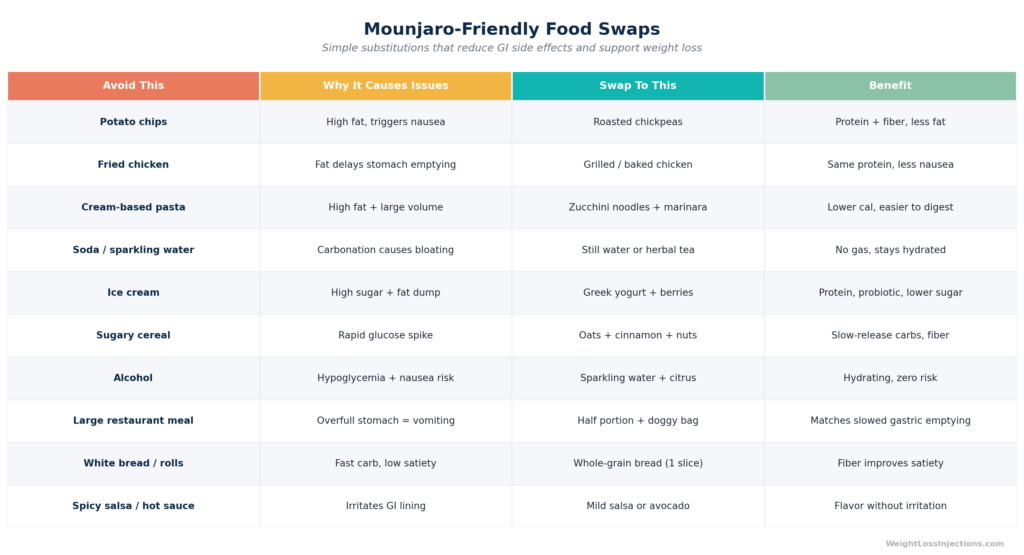
| Refined/High-Sugar (Avoid or Limit) | Better Alternative |
|---|---|
| White bread, baguette | Whole grain bread, sourdough (slow fermentation lowers GI) |
| White rice (large portions) | Brown rice, quinoa, cauliflower rice |
| Regular pasta | Whole wheat pasta, legume-based pasta, zucchini noodles |
| Sugary cereals | Steel-cut or rolled oats, plain puffed wheat, bran |
| Regular soda | Still water, sparkling water (small amount after partial degassing), herbal tea |
| Fruit juice | Whole fresh fruit (fiber slows glucose absorption) |
| Candy, pastries, cookies | Small portion of fresh berries, a square of dark chocolate (>70% cacao) |
| Sweetened yogurt | Plain low-fat Greek yogurt (sweeten with a few fresh berries) |
Best Foods to Eat While on Mounjaro
Understanding what to avoid is only half the picture. A Mounjaro-compatible diet has an equally important positive framework — foods that work with the drug’s mechanism to support tolerability, preserve lean muscle, and enhance metabolic outcomes.
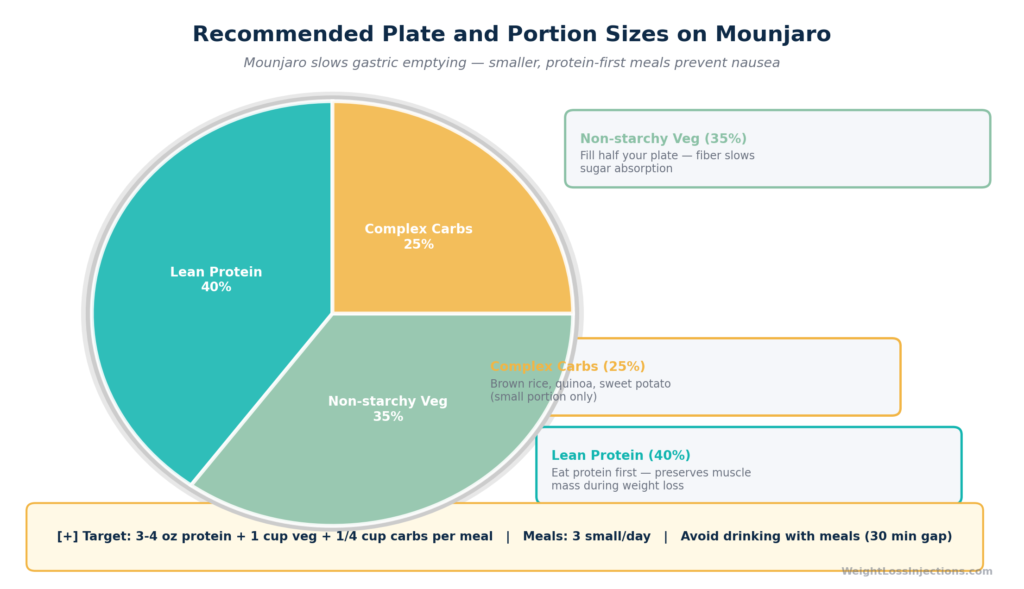
Mounjaro-optimized meal macronutrient split (protein ~30%, complex carbs ~40%, healthy fats ~30%) versus a typical Western diet (protein ~15%, refined carbs ~55%, fat ~30%). Data based on protein-forward recommendations for GLP-1 patients and general clinical nutrition guidance for T2DM management.
Lean Proteins — The Foundation
Mounjaro drives weight loss through appetite suppression and the resulting calorie deficit. Without adequate protein intake, a significant portion of that weight loss can come from lean muscle mass rather than fat — an outcome that reduces metabolic rate and impairs long-term body composition. Most clinical guidance for patients on GIP/GLP-1 receptor agonists recommends approximately 1.2–1.6 grams of protein per kilogram of ideal body weight per day, substantially higher than the general recommendation of 0.8 g/kg. For a 160-pound patient, this translates to roughly 88–117 grams of protein per day.
The best protein sources for Mounjaro patients combine high protein content with digestive tolerability:
- Chicken breast and turkey breast: lean, high protein per ounce, versatile. Baked, grilled, or poached — not fried.
- Fish and seafood: salmon (approximately 23 g protein per 4 oz, plus omega-3 fatty acids), cod, tilapia, halibut, shrimp, water-packed canned tuna.
- Eggs: highly bioavailable, easy to prepare, easy on the stomach. Two large eggs provide approximately 12 g protein.
- Low-fat Greek yogurt and cottage cheese: 20–25 g protein per cup; cold temperature makes these easy to tolerate during active nausea.
- Legumes: lentils, chickpeas, black beans, edamame — excellent protein-fiber combination. Introduce gradually during early titration to avoid worsening gas and bloating.
- Protein powder: whey or plant-based (pea, hemp, rice-based) supplements are useful when appetite suppression is making it difficult to meet protein targets through food alone.
Non-Starchy Vegetables
Non-starchy vegetables — leafy greens (spinach, kale, arugula, Swiss chard), broccoli, cauliflower, bell peppers, cucumber, zucchini, asparagus — are low in calorie density, high in fiber and micronutrients, and beneficial for overall metabolic health. They are among the best foods for Mounjaro patients as long as the timing caveat is respected: during the first 4–8 weeks at each new dose level, large raw servings of cruciferous vegetables can worsen bloating and gas. Introduce them cooked first (steaming and roasting reduce fiber irritation significantly), then gradually add raw forms as GI adaptation progresses.
Whole Grains in Moderate Portions
Brown rice, quinoa, oats (steel-cut or rolled, not instant with added sugar), whole wheat bread, and whole-grain pasta provide sustained energy without the rapid glucose spikes of refined alternatives. They are also higher in fiber, which supports bowel regularity — important because Mounjaro’s slowed GI motility is a contributing factor in the constipation some patients experience. The critical qualifier: keep portions modest due to the reduced gastric capacity on Mounjaro. A half-cup of cooked quinoa alongside a protein source is appropriate; a full cup of pasta as the primary component of a meal is likely to produce uncomfortable fullness.
Healthy Fats in Moderate Amounts
As noted in the prior section, the goal is not to eliminate fat but to select the right type and quantity. Avocado (¼ to ½ fruit), nuts (a small closed handful, approximately 1 oz), seeds (chia, flaxseed, sunflower), and olive oil (1–2 teaspoons) are well-tolerated and provide monounsaturated and polyunsaturated fats that support cardiovascular health — particularly relevant given that many Mounjaro patients are managing T2DM with associated cardiovascular risk.
Hydrating Foods
Because Mounjaro suppresses appetite to the extent that patients sometimes inadvertently reduce fluid intake alongside food intake, hydrating foods serve double duty. Cucumber, watermelon, zucchini, celery, broth-based soups, and cold herbal teas contribute to the fluid intake that supports kidney function (important given the rare but documented risk of acute kidney injury secondary to dehydration from severe GI side effects per FDA label §5.5) and helps prevent constipation.
The full best-foods reference table:
| Food Category | Best Examples | Primary Benefit on Mounjaro |
|---|---|---|
| Lean protein | Chicken breast, turkey, salmon, cod, eggs, low-fat Greek yogurt | Preserves lean muscle mass; well-tolerated; supports satiety |
| Non-starchy vegetables | Spinach, zucchini, bell peppers, broccoli (cooked), cucumber | Low calorie density; fiber for bowel regularity; micronutrients |
| Whole grains (small portions) | Brown rice, quinoa, steel-cut oats, whole wheat bread | Sustained energy; lower glycemic impact; fiber |
| Legumes (moderate portions) | Lentils, chickpeas, black beans | Protein + fiber; low glycemic index; heart-protective |
| Healthy fats (small portions) | Avocado (¼–½), olive oil (1–2 tsp), walnuts (1 oz) | Anti-inflammatory; cardiovascular support; moderate satiety |
| Low-sugar fruits | Berries (strawberries, blueberries, raspberries), apple, pear | Lower glycemic index; fiber; antioxidants |
| Hydrating foods | Cucumber, watermelon, broths, herbal teas | Fluid support; kidney protection; constipation prevention |
| Ginger | Ginger tea, ginger chews, ginger candies | Evidence-based anti-nausea; safe with Mounjaro |
| Cold, bland staples (nausea rescue) | Plain crackers, banana, plain white rice, applesauce | Nausea management during peak GI episodes |
Practical Eating Strategies to Reduce Mounjaro Nausea
Knowing which foods to avoid is necessary but not sufficient. How patients eat on Mounjaro — portion size, meal frequency, timing relative to injection, eating speed — is equally important for managing GI side effects.
Eat Smaller, More Frequent Meals
The most consistently effective change patients can make is shifting from three standard-sized meals to four to five smaller meals distributed across the day. Because Mounjaro slows gastric emptying, a standard 700–900 calorie meal presents a much larger gastric workload than the stomach can comfortably process. Most patients find that meals in the 300–450 calorie range are well-tolerated; a single 800–900 calorie meal is a reliable nausea trigger for many patients, especially during escalation phases.
Eat Slowly and Stop Before Full
Mounjaro blunts the fullness signal in ways that can cause patients to under-register satiety during eating, leading to a delayed recognition of being overfull — often several bites past the point of comfort. Eating slowly (aim for 20 minutes or more per meal), taking small bites, chewing thoroughly, and pausing between bites allows the stomach’s stretch receptors time to communicate satiety to the brain. A practical target: stop eating when you feel approximately 70–80% full.
Time Injections Strategically
Mounjaro’s peak serum concentration occurs 8–72 hours post-injection per FDA label §12.3, meaning the worst GI period for most patients falls in the first 1–3 days after the weekly injection. Planning injection timing around days when lighter eating is feasible — or avoiding days with planned large meals or celebrations — can significantly reduce nausea burden. Discuss injection day adjustment with your prescriber at WeightLossInjections.com [service detail].
Avoid Eating Within 2–3 Hours of Bedtime
Lying down with a stomach that is still processing its last meal (which on Mounjaro means several hours of incomplete emptying) creates the conditions for overnight reflux and nausea. A firm pre-bedtime eating cutoff — at minimum 2 hours, ideally 3 hours — allows partial gastric emptying and significantly reduces nighttime GI symptoms.
Stay Upright After Meals
Sitting or standing for at least 30 minutes after eating facilitates gastric emptying through gravity. This is a simple behavioral modification that most patients can implement immediately.
Hydrate Between Meals, Not During Them
Aim for at least 64 oz (8 cups) of still water per day. The counterintuitive timing instruction: drink fluids primarily between meals rather than during them. Drinking large amounts of liquid during a meal adds to the gastric volume at exactly the moment the stomach is already at capacity with food, worsening distension and nausea. A small amount — 4–6 oz — with meals is appropriate; the bulk of fluid intake should fall in the gaps between meals.
Keep Ginger on Hand
Ginger — in the form of ginger tea, ginger chews, crystallized ginger, or ginger lozenges — has well-documented anti-nausea properties and is safe to use alongside Mounjaro. Many patients find a cup of ginger tea in the morning on injection day and the following morning preemptively reduces nausea severity. This is a low-risk, low-cost adjunct that the vast majority of Mounjaro patients tolerate well.
Plan for Cold and Bland Foods During Peak Nausea Windows
During the 1–3 days of peak nausea after dose escalation, cold foods are frequently better tolerated than hot meals because hot food generates stronger aromas that can trigger nausea independently of GI distension. Cold plain Greek yogurt, refrigerated overnight oats, crackers, cold water, and banana are all easier to manage during high-nausea periods than a hot cooked dinner. Having these items stocked at home before each dose escalation is practical preparation.
Sample Mounjaro-Friendly Meal Plan (3 Days)
The following three-day plan illustrates how to apply the principles above across a typical early-titration week. Day 1 represents injection day (lightest; maximum tolerability focus); Day 2 represents the peak-nausea window; Day 3 begins the transition back toward more varied eating.
This plan is illustrative, not prescriptive. Individual calorie needs, protein targets, and GI tolerances vary. A registered dietitian can create a personalized plan tailored to your specific dose, body composition goals, and clinical situation. WeightLossInjections.com offers [service detail] for nutrition support.
Day 1 — Injection Day (Lightest; Tolerability First)
- Breakfast: ½ cup rolled oats cooked with water or low-sugar almond milk, topped with ½ cup fresh blueberries and a pinch of cinnamon — approximately 280–300 cal, 8 g protein
- Lunch: 3 oz grilled chicken breast over large bed of mixed greens, cucumber slices, and cherry tomatoes; olive oil + fresh lemon dressing (dressing on the side) — approximately 320–350 cal, 25 g protein
- Snack: ½ cup low-fat plain Greek yogurt + small handful of walnuts — approximately 190–210 cal, 13 g protein
- Dinner: 4 oz baked salmon fillet + ½ cup steamed broccoli + ¼ cup cooked brown rice — approximately 420–450 cal, 30 g protein
- Evening: Ginger tea (unsweetened)
- Day 1 note: Avoid alcohol, carbonated beverages, fried foods, and large portions entirely today and tomorrow. Inject at your usual time.
Day 2 — Peak Nausea Window (Gentle, Small, Frequent)
- Breakfast: 2 scrambled eggs + 1 slice whole-grain toast (no butter) — approximately 250–280 cal, 15 g protein
- Mid-morning snack: ½ banana + ginger tea
- Lunch: 1 cup lentil soup (homemade or low-sodium canned) + small side salad with light lemon dressing — approximately 280–310 cal, 14 g protein
- Afternoon snack: ½ cup cottage cheese + a few sliced strawberries — approximately 130–150 cal, 14 g protein
- Dinner: 3–4 oz baked cod or tilapia + ½ cup plain mashed sweet potato (no butter or cream) + ½ cup steamed zucchini — approximately 350–380 cal, 26 g protein
- Day 2 note: If nausea is high, prioritize fluids — broth, water, and ginger tea — and fall back to plain crackers and banana until symptoms ease. Protein shakes are useful if solid food feels difficult.
Day 3 — GI Transition (Expanding Variety)
- Breakfast: Low-fat Greek yogurt parfait: ½ cup plain Greek yogurt + ¼ cup low-sugar granola + ½ cup mixed fresh berries — approximately 280–300 cal, 16 g protein
- Lunch: Tuna salad lettuce wraps: 3 oz water-packed canned tuna mixed with 1 tsp light mayo + celery + lemon, served in 2–3 butter lettuce leaves — approximately 230–260 cal, 22 g protein
- Snack: Celery sticks + 2 tbsp hummus — approximately 90–110 cal
- Dinner: 4 oz grilled tilapia + ½ cup cooked quinoa + ½ cup roasted asparagus — approximately 400–430 cal, 32 g protein
- Day 3 note: GI effects are typically declining. Begin reintroducing more varied vegetables. If you tolerated Days 1–2 well, you can start adding a small portion of healthy fats at this meal — ¼ avocado or a drizzle of olive oil.
Adjustments for higher doses (10–15 mg): At higher maintenance doses, many patients find that GI effects have diminished significantly relative to early titration. The same meal plan structure works, but portion sizes can expand modestly and food variety can broaden. The core principles — lean protein anchor, cooked vegetables, small portions of whole grains, limited fried and fatty foods — remain valid throughout the treatment course.
A registered dietitian can provide a personalized plan aligned with your specific calorie and macronutrient targets. Discuss [service detail] at WeightLossInjections.com for nutrition support.
Nutritional Supplements to Consider on Mounjaro
Because Mounjaro substantially reduces food intake — particularly at higher doses — prolonged treatment without attention to nutritional adequacy creates real risks of micronutrient and macronutrient deficiencies. This is an area where proactive monitoring and supplementation can prevent downstream health issues.
Nutritional monitoring priorities on long-term Mounjaro treatment: protein, vitamin B12, vitamin D/calcium, and electrolytes, showing typical shortfall patterns versus recommended targets. Based on clinical guidance for GLP-1/GIP receptor agonist patients and T2DM management recommendations.
Protein: At higher Mounjaro doses, appetite suppression is so effective that patients can find themselves consuming 800–1,200 calories per day without deliberate restriction. At this calorie level, reaching 90–120 g protein per day through food alone requires conscious planning. When appetite suppression makes solid protein sources hard to consume, a protein supplement — whey or plant-based protein powder mixed in a small smoothie or with water — provides a practical bridge. Protein adequacy directly protects lean muscle mass, which is the most important body composition outcome during weight loss treatment.
Vitamin B12: GLP-1 receptor agonists combined with metformin — a common regimen for T2DM patients on Mounjaro — may reduce vitamin B12 absorption. Metformin specifically reduces B12 absorption in the ileum, per Mayo Clinic nutrition guidance for diabetes. Annual B12 monitoring via blood test is recommended for patients on this combination. Supplementation with sublingual B12 (which bypasses the absorption issue in the ileum) is an appropriate preventive measure.
Vitamin D and Calcium: Weight loss accelerates bone turnover, and Mounjaro patients — particularly post-menopausal women losing weight rapidly — face increased bone density loss risk. Vitamin D3 (1,000–2,000 IU daily) and calcium supplementation (500–1,000 mg per day through diet or supplements, depending on dietary intake) are standard recommendations for sustained weight-loss regimens. Discuss monitoring and targets with your prescriber.
Electrolytes: During periods of significant GI side effects — particularly if diarrhea or vomiting is prominent during dose escalation — electrolyte depletion can occur. Low-sugar electrolyte supplements (avoiding those with high sugar or artificial sweeteners that may worsen GI symptoms) or oral rehydration solutions provide sodium, potassium, and magnesium replenishment. Plain coconut water in small amounts is also a natural electrolyte source that most patients tolerate well.
What to avoid: Stimulant weight-loss supplements, thermogenic products, high-dose caffeine supplements, and herbal weight-loss products should be avoided while on Mounjaro. These can worsen nausea, increase heart rate and blood pressure, and create unpredictable interactions with the drug’s cardiovascular effects. Always discuss any supplement regimen with your prescribing provider at WeightLossInjections.com [service detail].
Our Take at WeightLossInjections.com
Mounjaro is a genuinely powerful medication — the SURPASS clinical trial program showed HbA1c reductions of 2.0–2.4% and body weight reductions of 11–13% in T2DM populations at higher doses, per SURPASS-2 published in NEJM in August 2021. For patients who are also managing weight, the SURMOUNT data using the same molecule (tirzepatide, the active ingredient in both Mounjaro and Zepbound) showed mean weight reductions of 15–22% at 72 weeks depending on dose, per the Lancet SURMOUNT-2 trial (2023). These are outcomes that redefine what is achievable with pharmacological treatment.
But the patients who tolerate the medication best and achieve the most durable results are the ones who treat diet as a genuine component of the treatment plan — not an optional add-on. When you understand that dietary fat directly compounds Mounjaro’s gastric-emptying slowdown, that alcohol creates hypoglycemia risk in T2DM patients on sulfonylureas, and that large portions put a slowed stomach in an impossible position, the food choices described in this article stop feeling like restrictions. They start feeling like the rational response to understanding the pharmacology.
The single most impactful change most Mounjaro patients can make is straightforward: avoid fried and greasy foods, especially during the first 1–3 days after each weekly injection. This one adjustment eliminates the worst nausea triggers for the majority of patients and makes the dose escalation phase dramatically more manageable. Everything else in this guide builds from that foundation.
For patients who want structured support beyond these guidelines, WeightLossInjections.com offers [service detail] — including licensed providers who can evaluate your eligibility for Mounjaro and nutrition guidance that adapts as you progress through the titration schedule. Ready to start Mounjaro with a plan? Connect with a licensed provider at WeightLossInjections.com today at [$X/month].
FAQ
Avoid fried and greasy foods, high-fat meats (bacon, sausage, pork belly), high-sugar foods and beverages, large portion sizes, spicy foods, carbonated beverages, and alcohol during dose escalation. These foods worsen nausea and bloating because Mounjaro slows gastric emptying, and fatty foods specifically activate the ileal brake and CCK pathway that compounds this effect further, per the FDA Mounjaro Prescribing Information §12.2. Refined carbohydrates should also be limited, particularly for T2DM patients, as they cause rapid glucose spikes that counteract the drug’s glycemic control mechanism.
Occasional consumption may be tolerable for some patients once dose escalation has stabilized, but greasy, high-fat fast food is one of the most consistently reported triggers for severe breakthrough nausea on Mounjaro, per dietary guidance at Healthline’s Mounjaro diet guide. If you do eat at a fast food restaurant, choose grilled over fried items, skip the fries, and eat a noticeably smaller portion than you would have eaten before starting the medication. Avoid entirely on injection day and the following day.
There is no FDA-mandated Mounjaro diet, but dietary choices significantly affect both side effect severity and weight loss outcomes. A diet built around lean proteins, non-starchy vegetables, whole grains in modest portions, and limited saturated fat works with tirzepatide’s mechanism to reduce nausea, preserve muscle mass, and support glycemic control. The FDA Mounjaro label specifically prescribes Mounjaro as an “adjunct to diet and exercise” — the dietary component is part of the approved treatment framework, not optional.
Moderate coffee consumption — 1–2 cups per day — is generally well-tolerated by most Mounjaro patients. High caffeine intake may worsen GI symptoms, increase anxiety, and disrupt sleep in some patients. Avoid adding high-fat creamers, large amounts of sugar, or flavored syrups. If you experience worsened reflux with coffee, try cold brew (lower acidity) or reduce to 1 cup per day during active dose escalation phases.
Discuss with your prescribing provider. The most commonly warranted supplements include protein (to prevent muscle mass loss), vitamin B12 (particularly for T2DM patients also on metformin, due to metformin’s effect on B12 absorption per Mayo Clinic diabetes nutrition guidance), and vitamin D with calcium (for bone density support during significant weight loss). Avoid stimulant weight-loss supplements and high-dose thermogenics, which can worsen nausea and cardiovascular risk factors.
The first 1–3 days after each weekly dose — and especially after each dose escalation step — represent the highest-nausea-risk window, as tirzepatide approaches peak serum concentration per FDA label §12.3. Consuming fatty, fried, or greasy foods during this window dramatically amplifies nausea severity and duration. Many patients adopt the practice of eating their lightest, cleanest meals on injection day and the day after, then gradually returning to a broader dietary range by Days 4–7 of the weekly cycle when GI effects have typically diminished.
This content is for informational purposes only and does not constitute medical or dietary advice. Consult a licensed healthcare provider or registered dietitian before making significant dietary changes, especially while on prescription medication. WeightLossInjections.com editorial content is reviewed by licensed medical providers. Mounjaro (tirzepatide) is an FDA-approved prescription medication for type 2 diabetes; results vary by individual. Trial averages represent population means, not guaranteed outcomes for any individual patient. WeightLossInjections.com is not affiliated with Eli Lilly and Company. Last medical review: June 2026.