![Unbranded [pillar-drug-class] injection pen on a neutral background — WeightLossInjections.com editorial hero](https://weightlossinjections.com/wp-content/uploads/2026/07/hero_mounjaro_c1_cost-1200x675.png)
Horizontal decision flowchart showing Mounjaro coverage pathway — T2DM diagnosis? → Commercial/Medicare/Medicaid → PA approved? → Denied? → Appeal or alternatives
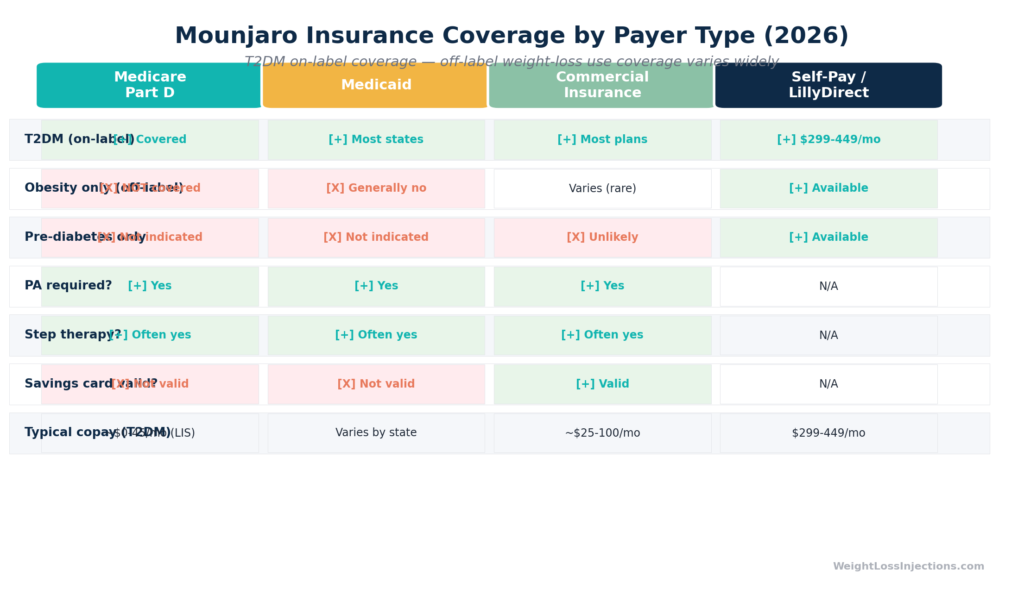
- Insurance covers Mounjaro for type 2 diabetes (T2DM) only — not for weight loss. The FDA approved Mounjaro solely for T2DM management (ICD-10: E11.x), per the FDA Prescribing Information. If your goal is weight loss without a diabetes diagnosis, the correct medication for coverage purposes is Zepbound (same molecule, separate obesity indication).
- Most major commercial plans cover Mounjaro for T2DM with prior authorization. Approval rates run approximately 60–70% for T2DM indication and only 15–25% for weight-loss-only indication in 2026, per FormBlends April 2026.
- Medicare Part D covers Mounjaro for T2DM if it appears on your plan’s formulary. Medicare cannot cover Mounjaro for weight loss by statute. A 2026 IRA out-of-pocket cap of $2,100 applies to Part D enrollees, per meetaugust.ai 2026.
- Medicaid covers Mounjaro for T2DM in all 50 states plus DC with PA. Coverage for obesity alone is limited to approximately 4 states, per FormBlends Medicaid guide.
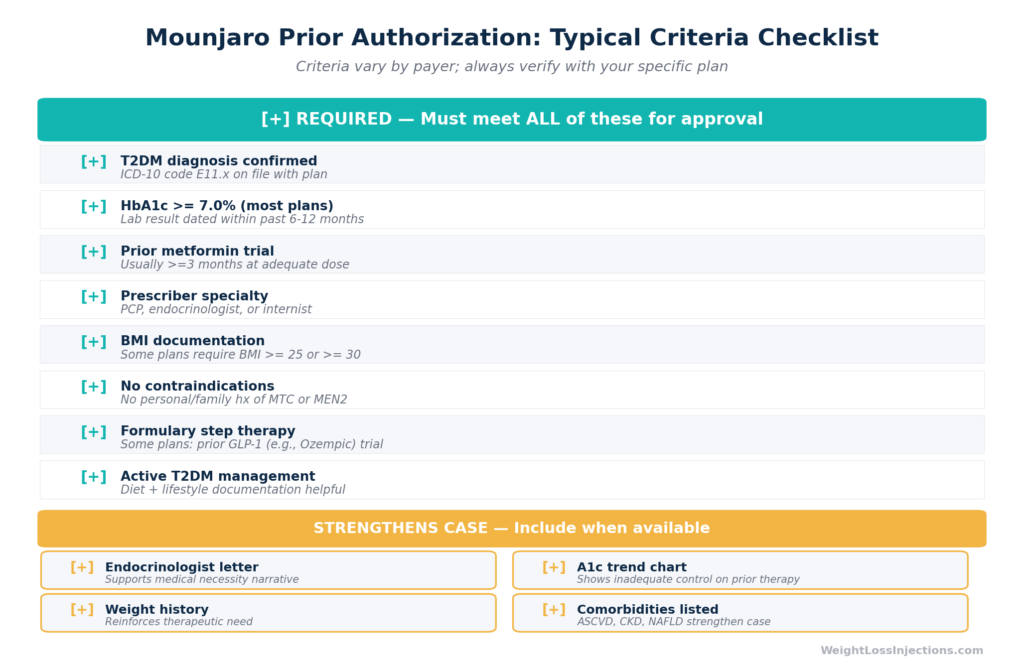
- PA requirements typically include: A1C ≥7.0%, metformin trial documentation, T2DM diagnosis, and no concurrent GLP-1 or DPP-4 inhibitor — per Cigna PA policy and Kaiser Permanente PA form.
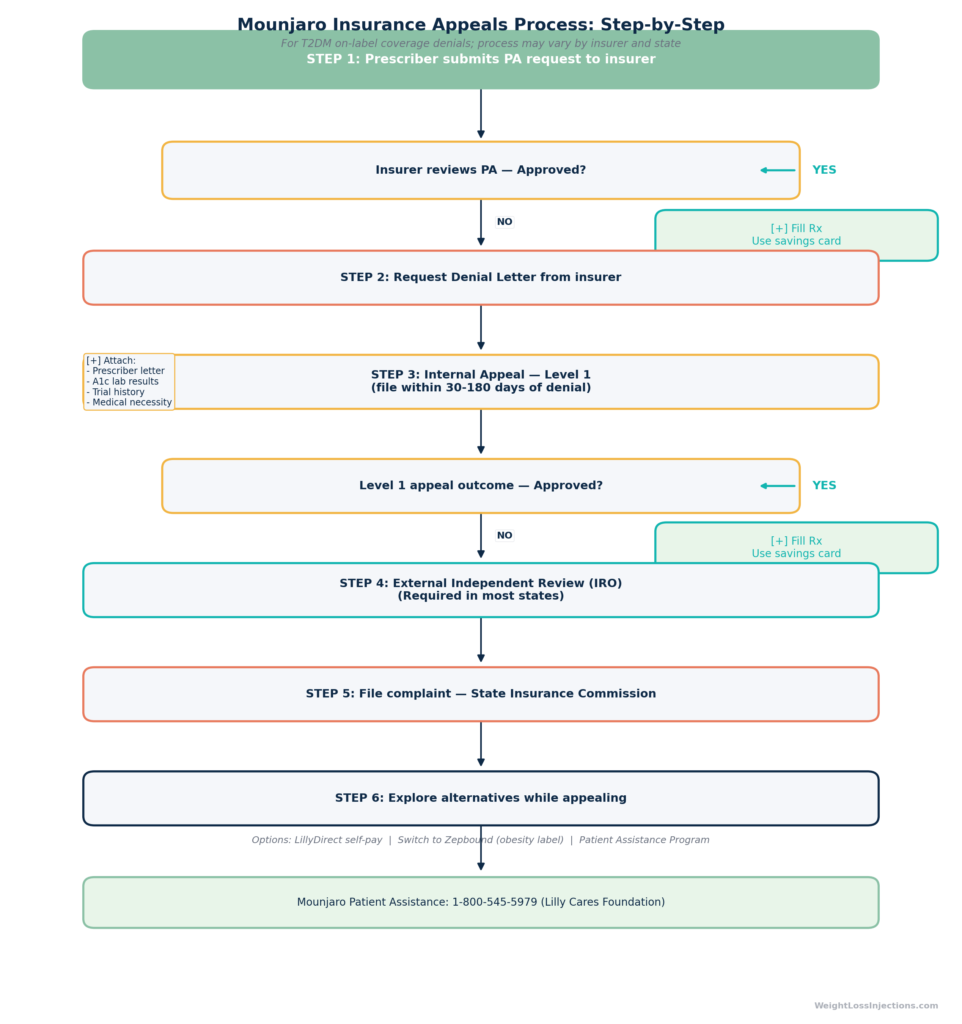
- Denials are common and frequently reversible on appeal. A strong letter of medical necessity from your prescriber overturns many first-level denials.
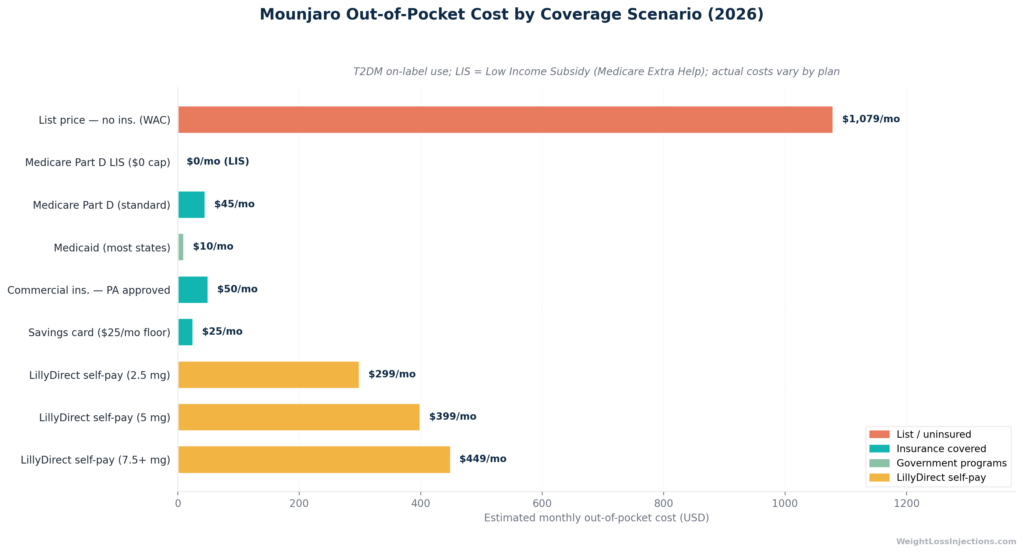
- With qualifying commercial coverage + Lilly Savings Card: as low as $25/month for T2DM patients, per NiceRx March 2026.
WeightLossInjections.com editorial note: Insurance formularies, prior authorization criteria, and coverage policies change frequently and vary by plan. All policy information in this article reflects verified sources as of Q1–Q2 2026. Always confirm your specific plan’s formulary and PA requirements directly with your insurer or pharmacy before filling your prescription.
Does Insurance Cover Mounjaro? The Short Answer
The one-sentence answer is yes — but with a critical condition that determines whether your claim gets approved or denied the moment your pharmacist submits it. Insurance covers Mounjaro almost universally when the prescription is written for its FDA-approved indication: type 2 diabetes mellitus. It covers Mounjaro rarely, and inconsistently, when the prescription is written for weight loss.
This distinction is not incidental. It is the entire architecture of how Mounjaro fits into the U.S. drug benefit landscape in 2026, and getting it wrong at the prescription stage means starting a weeks-long prior authorization process with a near-certain denial.
Why the T2DM Indication Is the Gateway
Mounjaro received FDA approval on May 13, 2022, as an adjunct to diet and exercise to improve glycemic control in adults with type 2 diabetes mellitus. That is its only FDA-approved indication, per the FDA Prescribing Information. Chronic weight management is explicitly not part of the Mounjaro label. For that indication, Eli Lilly obtained a separate approval under the brand name Zepbound — the same active molecule (tirzepatide), a different regulatory approval, and a completely different insurance coverage pathway.
Insurers care about FDA indications because most pharmacy benefit designs are built around them. A claim for Mounjaro submitted with an ICD-10 code of E11.x (type 2 diabetes mellitus) enters the diabetes formulary pathway. A claim submitted with an obesity code — E66.x — enters an entirely different evaluation framework, one where most commercial plans, Medicare, and the majority of state Medicaid programs have not extended coverage to Mounjaro. Per FormBlends April 2026, the practical consequence is that approval rates for the T2DM indication run approximately 60–70% in 2026, while approval rates for weight-loss-only claims on Mounjaro run approximately 15–25%. That 40-to-55-percentage-point gap in approval rates is the most important single fact in this article for anyone approaching Mounjaro coverage.
The Three Coverage Pathways
The rest of this guide walks through three distinct coverage environments:
- Commercial insurance (employer-sponsored, ACA marketplace) — the most common scenario for working-age adults
- Medicare Part D — for beneficiaries age 65+ or with qualifying disability, with important statutory restrictions on weight-loss coverage
- Medicaid — state-by-state variation with all states covering T2DM but most restricting obesity coverage
Each pathway has different prior authorization requirements, different appeals processes, and different cost outcomes with and without the Lilly Savings Card. Understanding which pathway applies to you before your prescriber submits a claim is the most productive use of the 10 minutes before your next doctor’s appointment.
Commercial Insurance Coverage for Mounjaro (T2DM vs. Weight Loss)
Most major commercial insurance plans — employer-sponsored group coverage, ACA marketplace plans from carriers including BCBS, Aetna, Cigna, and UHC — include Mounjaro on their diabetes formularies when the prescription carries a T2DM indication. The coverage exists, but it almost always comes with strings: prior authorization, step therapy requirements in some cases, and a copay tier structure that makes the Lilly Savings Card a critical secondary enrollment.
T2DM Coverage: What to Expect from Major Carriers
For commercially insured patients with a documented T2DM diagnosis, Mounjaro is typically placed at Tier 3 or Tier 4 on the pharmacy benefit formulary — the specialty drug tiers where cost-sharing before assistance can run $100–$300+ per fill, per Noom’s 2026 insurance coverage guide. This tier placement is what makes prior authorization both necessary (to access coverage at all) and consequential (because getting approved drops your net cost dramatically).
With an approved PA and the Lilly Mounjaro Savings Card active at the time of fill, T2DM patients with qualifying commercial insurance pay as low as $25/month — with a maximum savings cap of $1,950/year ($150/month cap), per NiceRx March 2026. The savings card is enrolled at mounjaro.lilly.com/savings-resources or by texting “MJ” to 85099, and is valid through December 31, 2026.
One important caveat: the savings card does not apply during your plan’s deductible phase. Patients who have not yet met their annual deductible will pay considerably more on the first fill or fills of the year, even with the card enrolled, per FormBlends savings card explainer. If you are enrolled in a high-deductible health plan and starting Mounjaro in January or February, plan for the deductible phase explicitly — it is the single most common source of unexpected cost in the first months of treatment.
Off-Label Weight-Loss Coverage: The Realistic Picture
For patients who do not have a T2DM diagnosis and are seeking Mounjaro for weight management, the commercial insurance picture is substantially less favorable. Coverage for off-label Mounjaro for weight loss runs approximately 15–25% on commercial plans, per FormBlends April 2026. Insurers generally expect obesity-indication prescriptions to use the Zepbound brand — tirzepatide’s weight-management-labeled equivalent — and their obesity formularies are built around Zepbound’s FDA indication, not Mounjaro’s T2DM label.
This creates a practical fork in the road: patients who have both T2DM and obesity may be covered under the T2DM pathway on Mounjaro, which is often the path of least resistance. Patients who have obesity without T2DM are better served pursuing coverage through Zepbound (for insured coverage under the obesity indication) or LillyDirect self-pay pricing ($299–$449/month for the same molecule), rather than trying to push Mounjaro through a weight-loss coverage route with a 15–25% approval rate.
WeightLossInjections.com editorial note: If you have obesity without T2DM and your prescriber wrote for Mounjaro, ask whether switching the prescription to Zepbound would improve your coverage odds. Zepbound’s FDA-approved indication for chronic weight management means it enters a different formulary lane — one where obesity drug coverage policies apply rather than diabetes formularies.
T2DM + Obesity: The Best-Case Scenario
Patients who carry both a T2DM diagnosis (E11.x) and obesity have access to the most favorable insurance pathway. Their Mounjaro prescription can be submitted under the diabetes indication, triggering the T2DM formulary lane with higher approval rates and savings card eligibility. Clinically, this also reflects the FDA-approved use — Mounjaro is indicated for glycemic control in T2DM, and weight reduction is a secondary benefit in that population rather than the primary indication. Prescribers can document both conditions, but the T2DM code is the operative coverage trigger.
Prior Authorization: Step-by-Step Requirements for Mounjaro
Nearly all commercial insurance plans and Medicaid programs require prior authorization before they will cover Mounjaro. PA is not an anomaly — it is the standard gatekeeping mechanism for high-cost specialty drugs, and understanding what documentation is needed before your prescriber submits prevents the most common denial reasons.
The Standard PA Checklist
Based on published PA criteria from Kaiser Permanente’s PA form for incretin-mimetic antihyperglycemics, Cigna’s coverage position criteria for Mounjaro, and Johns Hopkins PPMCO’s PA documentation form, the typical PA checklist across commercial insurers includes:
- Documented T2DM diagnosis — ICD-10 code E11.x, confirmed in the patient’s medical record, with supporting clinical notes
- Recent A1C result — typically within the past three months; most plans require A1C ≥7.0% or ≥8.0% depending on the specific plan’s threshold
- Prior metformin trial — documentation of metformin at maximally tolerated dose (≥2,000 mg/day) for at least three months, OR documented allergy, contraindication (e.g., eGFR <30), or intolerance with specific notation of the adverse effect
- Indication confirmation — documentation that Mounjaro is being prescribed for T2DM, not for chronic weight management
- No concurrent conflicting therapy — many plans require that the patient is not currently on another GLP-1 receptor agonist (Ozempic, Trulicity, Victoza, Byetta) or DPP-4 inhibitor (sitagliptin, saxagliptin) — these are viewed as either duplicative or to be discontinued before Mounjaro initiation
- Clinical notes and comorbidities — supporting documentation of diabetes complications, cardiovascular risk factors, or treatment history that supports medical necessity
The initial PA authorization period is typically 4–12 months depending on the plan. Renewal requires documentation of A1C improvement of ≥0.5% reduction from baseline and confirmation of medication adherence, per Cigna’s PA policy. If your A1C has not improved by at least 0.5% at renewal, your plan may deny continuation — a clinical and administrative reality that makes monitoring A1C at appropriate intervals a coverage issue, not just a clinical one.
Who Submits the PA and How Long Does It Take?
Prior authorization is submitted by your prescriber or their staff, not by the patient directly. Your role is to ensure your prescriber has all the required documentation before they submit — including current A1C results (ideally within the past three months), a summary of your metformin history, and any documentation of prior diabetes medication trials.
Most insurers respond within 3–14 business days for standard PA requests. Urgent cases — where clinical need is time-sensitive — may qualify for expedited review within 24–72 hours. Your prescriber’s office can specify expedited review on the PA submission if appropriate.
If your insurer has not responded within the expected window, your prescriber can call the plan’s PA line directly. Many PA systems allow status checks online through the insurer’s provider portal as well.
What Your Prescriber Needs Ready
The most common reason PA submissions are delayed or denied on first submission is incomplete documentation. Before your prescriber submits, confirm they have:
- A copy of your most recent lab results including A1C, basic metabolic panel (for kidney function documentation), and weight
- A prescription history showing metformin use — including dates, doses, and any documented reasons for stopping or dose limitation
- Your complete medication list to confirm no concurrent GLP-1 or DPP-4 inhibitor
- ICD-10 codes for T2DM (E11.x) and any relevant comorbidities (hypertension, hyperlipidemia, cardiovascular disease) that strengthen the medical necessity narrative
A thorough, well-documented PA submission is faster than a denial-and-resubmission cycle by a wide margin.
Grouped horizontal bar chart — Insurance Approval Rates by Indication and Payer Type
Step Therapy: What It Means and How to Navigate It
Prior authorization and step therapy are distinct hurdles, though they often appear in the same PA submission process. Step therapy is a specific type of coverage requirement in which an insurer mandates that a patient try one or more lower-cost or preferred drugs first — and document inadequate response or intolerance — before the higher-cost agent (Mounjaro) will be authorized.
How Step Therapy Applies to Mounjaro
Mounjaro sits near the top of most diabetes formulary step sequences, given its recency, its cost, and the fact that effective, lower-cost diabetes medications exist. The typical step therapy sequence for Mounjaro follows this ladder, per Healthline’s step therapy guide:
Step 1: Metformin (generic biguanide — first-line T2DM treatment; inexpensive and well-tolerated in most patients)
Step 2: An oral diabetes agent — typically a generic SGLT2 inhibitor, sulfonylurea, or generic DPP-4 inhibitor — representing the second-line oral class. Plans vary in which specific agents they prefer at this step.
Step 3 (some plans): A first-generation GLP-1 receptor agonist — commonly semaglutide (Ozempic) or dulaglutide (Trulicity) — before authorizing Mounjaro at Step 4.
Step 4: Mounjaro authorization, conditional on documented failure, intolerance, or contraindication at each prior step.
Certain BCBS plans are particularly known for placing Mounjaro at Step 2 or higher in their GLP-1 sequencing, requiring prior trial of agents like Ozempic before approving Mounjaro, per Sprypt’s step therapy guide. Some BCBS plans go further and require two prior GLP-1 failures before authorizing Mounjaro. Not all plans require this full sequence — Cigna’s PA policy allows auto-adjudication of lower starting doses (2.5 mg and 5 mg) for patients with an active diabetes claim in the prior period, per the Cigna coverage policy, bypassing step therapy for some patients who are straightforwardly initiating treatment.
Documenting Step Therapy Completion
If step therapy applies to your plan, what counts as an “adequate trial” matters. Most insurers define an adequate trial as:
- Duration: A minimum of 8–12 weeks at a therapeutic dose
- Dose: At or near the maximum approved dose, unless documented intolerance prevented titration
- Inadequate response: A1C remaining above target despite the trial, with documentation
- Intolerance: Specific adverse effects documented in the chart, with clinical justification for discontinuation
Intolerance at sub-therapeutic doses — stopping metformin at 500 mg because of mild nausea without attempting 1,000 mg — may not satisfy an insurer’s intolerance criterion. Your prescriber’s documentation should be specific about what was tried, at what dose, for how long, and what happened.
Step Therapy Exceptions and State Protections
If your prescriber believes step therapy is clinically inappropriate — for example, if your cardiovascular risk profile makes Mounjaro’s efficacy profile significantly more favorable than a prior GLP-1, or if you have documented intolerance to all required step agents — a step therapy exception or medical necessity exception can be requested. Most states have enacted step therapy protection laws that require insurers to consider and respond to exception requests within defined timeframes.
Step therapy protections exist across a substantial number of states and apply to non-grandfathered commercial plans. Your prescriber can submit the exception request in writing with clinical justification; insurers are required under these laws to respond on a defined timeline and grant exceptions that meet specified clinical criteria. If you are in a state with step therapy protections and your plan’s step sequence seems clinically unjustified given your health history, this exception pathway is worth pursuing concurrently with the standard PA process.
What to Do If Your Insurance Denies Mounjaro
Denial is not the end of the process — it is often the beginning of a more deliberate access effort. Data from patient communities and appeal processes consistently show that Mounjaro PA denials are frequently reversible on first or second appeal, per accounts in the Reddit r/Mounjaro insurance denial community. Understanding why your claim was denied and following the structured appeals path significantly improves outcomes.
Step 1: Understand the Denial Reason
Insurers are required to provide a written denial notice specifying the reason for the denial. The most common denial reasons for Mounjaro include:
- A1C below the plan’s threshold — e.g., plan requires ≥8.0% but patient’s A1C was 7.4%
- Missing metformin documentation — prior metformin trial was not documented in the PA submission
- Weight-loss indication — the claim was coded under an obesity ICD-10 code rather than E11.x T2DM
- Step therapy not completed — plan requires prior trial of Step 1 or Step 2 agents that are not documented
- Drug not on formulary — less common for major plans but possible, particularly with narrow formulary plans or certain employer self-insured plans
- Concurrent therapy — patient is currently on another GLP-1 or DPP-4 inhibitor per claims data
Read the denial reason carefully. The appeal strategy differs significantly depending on which of these applies.
Step 2: File an Internal Appeal
Every commercially insured patient has the right to file an internal appeal of any insurance denial. The appeal should be submitted to your insurer’s appeals department and should include:
- A letter of medical necessity from your prescriber — the single most important document in an appeal. This letter should address the specific denial reason directly, cite your A1C results, your metformin history, any relevant comorbidities (cardiovascular risk, CKD, hepatic function) that make Mounjaro the appropriate next agent, and explicit documentation that the prescription is for T2DM management
- Current A1C documentation — dated within the past three months
- Prior therapy records — pharmacy fill history showing prior agents tried
- Clinical notes — relevant sections of your chart supporting the medical necessity narrative
Internal appeal timelines are typically 30–60 days for standard appeals and 72 hours for expedited appeals involving urgent clinical need, under ACA appeal timelines.
Step 3: Request an Expedited Appeal If Medically Urgent
If your clinical situation is time-sensitive — for example, you are transitioning off a failing regimen and have documented A1C that requires urgent intervention — your prescriber can invoke the expedited appeal process. The insurer is required to respond within 72 hours under federal guidelines for expedited internal appeals. Document the clinical urgency explicitly in the appeal submission.
Step 4: Request an External Independent Review
If the internal appeal is denied, ACA-compliant non-grandfathered plans are required to offer external independent review — review by an independent review organization (IRO) that is not affiliated with the insurer. External review decisions under the ACA are typically binding on the insurer. This process typically takes 30–45 days for standard reviews.
The external review process is meaningful leverage: the IRO evaluates the denial on the clinical merits against published treatment guidelines, not against your specific plan’s PA criteria. If your prescriber’s case is clinically well-supported and the denial reflected administrative criteria rather than clinical inappropriateness, external review often produces a different outcome.
Step 5: Bridge Options While You Appeal
Navigating an appeal takes weeks. During that time, patients who need Mounjaro have several options that do not require waiting for the process to conclude:
- LillyDirect self-pay vials: $299/month (2.5 mg) to $449/month (7.5–15 mg) — branded Mounjaro, not compounded, no insurance required, per BestMedsHub May 2026
- Mounjaro Savings Card (non-covered track): As low as $499/month for commercially insured patients whose plan does not cover Mounjaro, with annual savings cap of $8,411/year, per NiceRx March 2026 — note this requires commercial insurance enrollment and is not available to Medicare or Medicaid beneficiaries
- Compounded tirzepatide via a licensed telehealth platform: [$X/month] at some 503A/503B pharmacy partners, representing the same active molecule at reduced cost — though the FDA’s enforcement landscape around compounded GLP-1s has narrowed significantly since 2025 and legal status should be verified with your specific platform
WeightLossInjections.com offers [service detail] connecting patients with clinical consultants who can help prepare letter-of-medical-necessity documentation and review the PA submission for completeness before the appeal is filed.
Our Top 3 · October 2026
The best GLP-1 providers right now
Independently reviewed. Ranked by price, medication access, provider quality, and patient outcomes.
Renew GLP
Personalized GLP-1, GIP plans: Semaglutide & Tirzepatide.
Medvi
No membership or hidden fees. Everything you need is included.
Trimi
US-licensed clinicians and shipped to your door, from $99/mo.
Medicare and Mounjaro — What Part D Covers in 2026
For Medicare beneficiaries, Mounjaro coverage in 2026 is shaped by a combination of plan-specific formulary placement, the statutory prohibition on anti-obesity drug coverage, and meaningful cost changes under the Inflation Reduction Act.
Medicare Part D Covers Mounjaro for T2DM
Medicare Part D plans may cover Mounjaro when prescribed for the FDA-approved type 2 diabetes indication (ICD-10: E11.x), provided Mounjaro appears on your specific plan’s formulary, per Healthgrades Medicare overview and the HealthRX Medicare Part D guide. Coverage is not universal — “Medicare covers Mounjaro” means the Part D framework permits it, not that every Part D plan includes it. You must check your specific plan’s formulary (via medicare.gov’s formulary finder or by calling your plan directly) to confirm placement and tier.
PA requirements for Medicare Part D mirror commercial insurance: documented T2DM diagnosis, recent A1C, prior therapy documentation, and indication confirmation. The process and documentation requirements are nearly identical to commercial PA, though the review body is your specific Part D plan rather than a commercial carrier.
Medicare Does NOT Cover Mounjaro for Weight Loss
The Social Security Act historically excluded anti-obesity drugs from Medicare Part D coverage — a statutory exclusion that remains in force for Mounjaro, per Wellcare’s CMS explanation. This is not a plan-level decision that can be overridden by appealing to your specific plan; it is federal law as applied to the Mounjaro indication. Medicare beneficiaries who are prescribed Mounjaro for weight loss without a T2DM diagnosis have no coverage pathway under Part D for that use.
The July 2026 Medicare GLP-1 Bridge Program — Applies to Zepbound, Not Mounjaro
A Medicare GLP-1 Bridge Program launched on July 1, 2026, covering Zepbound — tirzepatide’s weight-management brand — at approximately $50/month for eligible Part D enrollees with obesity, per understoodcare.com’s patient advocate guide. This program is notable and meaningful, but it is critical to understand what it does and does not cover:
- It covers Zepbound (tirzepatide for obesity indication) — not Mounjaro
- It applies to weight management — Medicare beneficiaries with obesity who want tirzepatide for weight loss should pursue Zepbound under this program, not Mounjaro
- Mounjaro is not affected by this bridge program — T2DM patients on Medicare should continue pursuing Mounjaro coverage through their Part D plan’s standard formulary
The practical implication: Medicare beneficiaries who have both T2DM and obesity have two potential tirzepatide pathways in 2026 — Mounjaro under T2DM formulary coverage, and Zepbound under the obesity bridge program. Which is more favorable depends on your specific plan’s formulary and the bridge program’s eligibility criteria.
2026 Medicare Negotiated Price and Out-of-Pocket Cap
Two significant financial changes in 2026 affect Medicare beneficiaries’ Mounjaro costs:
White House-negotiated price: Under a November 2025 pricing agreement, the Medicare-negotiated price for Mounjaro for T2DM is approximately $245/month — a substantial reduction from the $1,079.77 WAC, per Noom’s May 2026 pricing analysis. The rollout timeline for this negotiated price varies by plan; confirm with your Part D plan whether it applies to your specific formulary.
IRA $2,100 annual out-of-pocket cap: The Inflation Reduction Act established a $2,100 annual out-of-pocket cap for Medicare Part D enrollees starting in 2026, per meetaugust.ai’s Medicare coverage guide. For T2DM patients on Mounjaro, this cap means that even in years where cost-sharing accumulates, total annual out-of-pocket exposure is bounded — a meaningful protection for patients on fixed incomes.
The Savings Card Exclusion: Hard and Absolute
The Mounjaro Savings Card is categorically unavailable to Medicare and Medicaid beneficiaries. This exclusion exists under the federal anti-kickback statute, which prohibits manufacturer copay assistance for patients enrolled in federal healthcare programs, per HealthRX’s patient assistance FAQ. There is no exception, no workaround, and no partial availability. Medicare beneficiaries relying on the savings card — for example, patients who aged into Medicare after using the card on commercial insurance — will find it deactivates upon Medicare enrollment.
Medicare T2DM patients’ cost protection comes instead from the IRA out-of-pocket cap, the negotiated pricing rollout, and their plan’s formulary design — not from the commercial savings card.

Horizontal bar chart — Monthly Out-of-Pocket Cost by Coverage Scenario
Horizontal bar chart — Monthly Out-of-Pocket Cost by Coverage Scenario
Medicaid and Mounjaro Coverage by State
Medicaid’s Mounjaro coverage in 2026 follows a more uniform pattern than commercial insurance for the T2DM indication, but diverges sharply on the question of obesity coverage — and several states have recently moved to restrict coverage even further due to budget pressures.
T2DM Coverage: All 50 States + DC
All 50 states and the District of Columbia cover Mounjaro for type 2 diabetes with prior authorization, per FormBlends’ Medicaid coverage guide. This is the floor of Medicaid GLP-1 coverage — universally established, though the specific PA requirements vary by state. The standard requirements parallel commercial PA criteria: documented T2DM diagnosis with ICD-10 E11.x, recent A1C documentation (≥7.0% in most states), prior metformin trial, and indication confirmation.
For Medicaid beneficiaries with T2DM, the out-of-pocket cost for an approved Mounjaro fill is typically $0–$3 per fill, depending on the state’s Medicaid copay structure. The gross cost is borne by the state-federal Medicaid program, not the patient — making coverage approval the critical access variable rather than cost-sharing.
Obesity Coverage: A Narrow State Exception
Coverage for Mounjaro or other GLP-1 agonists prescribed for obesity (without a concurrent T2DM diagnosis) is available in only a small number of states. Approximately four states — Vermont, Rhode Island, Connecticut, and Minnesota — have extended Medicaid GLP-1 coverage to obesity with qualifying criteria (typically BMI ≥35 plus at least one obesity-related comorbidity), per FormBlends’ Medicaid coverage guide. The remaining 43 states plus DC limit Medicaid GLP-1 coverage to the diabetes indication.
This state-level variation reflects competing fiscal and clinical priorities. GLP-1 drugs represent a significant budget item for state Medicaid programs, and most states have not yet extended obesity coverage despite clinical evidence supporting their efficacy. The KFF tracks state Medicaid GLP-1 coverage decisions and is the most current resource for state-by-state status.
States Restricting Coverage in 2025–2026
Several states moved in the opposite direction in 2025–2026, restricting GLP-1 obesity coverage due to budget constraints. Michigan, for example, restricted GLP-1 obesity coverage effective January 1, 2026, per findHonestCare’s 2026 Medicaid guide. States that previously extended coverage may have since limited it; the state-by-state landscape is volatile, and confirming current status with your state Medicaid program directly is essential before relying on coverage for obesity indications.
This restriction trend makes the T2DM indication even more important as a coverage anchor for Medicaid patients. Patients who have both T2DM and obesity should ensure their T2DM diagnosis is documented and the prescription carries the E11.x code to preserve coverage access regardless of what happens to state obesity policies.
Medicaid PA Requirements by State
While the T2DM coverage floor is universal, the specific PA criteria vary:
- A1C threshold: Most states require A1C ≥7.0%; some require ≥8.0% or ≥9.0% for initial authorization
- Prior therapy: A metformin trial is required in most states, with some states requiring additional oral agent trials before GLP-1 authorization
- Duration of diagnosis: Some states require a T2DM diagnosis of at least three to six months before authorizing newer agents
- Prescriber type: A small number of states restrict GLP-1 prescribing to endocrinologists or diabetes specialists for Medicaid patients, though most allow primary care prescribing
Your prescriber or Medicaid managed care plan can provide the specific PA form for your state. For Medicaid patients who are denied coverage for obesity without a T2DM diagnosis, telehealth platforms offering [$X/month] programs may provide the most accessible supervised path to tirzepatide via [service detail].
Alternatives When Insurance Won’t Cover Mounjaro
Denial or coverage gap is not a permanent barrier — it is a redirection toward one of several well-defined alternative pathways, each with its own cost, process, and clinical considerations.
LillyDirect Self-Pay Vials: Lowest-Cost Branded Option
For patients whose insurance has denied Mounjaro and who have a valid prescription, LillyDirect represents the most compelling alternative in 2026. As a direct-to-consumer pharmacy program from Eli Lilly, LillyDirect offers single-dose tirzepatide vials — branded Mounjaro product, not compounded — at the following self-pay prices, per BestMedsHub May 2026:
| Dose | LillyDirect Monthly Price |
|---|---|
| 2.5 mg | $299/month |
| 5 mg | $399/month |
| 7.5–15 mg | $449/month (45-day refill window) |
No insurance is required. A valid Mounjaro prescription from a licensed provider is required. Vials are shipped directly to your home; they are not available at retail pharmacy locations. Patients transitioning from the standard KwikPen format should note that vials require a separate syringe and needle for each injection — the administration technique is different but straightforward for anyone familiar with insulin injection.
The 45-day refill window at maintenance doses is operationally important: filling outside this window at the 7.5–15 mg tier can push the cost to $849–$1,049 for that fill. Set a refill reminder at 38–40 days post-delivery for every maintenance dose fill.
Mounjaro Savings Card (Non-Covered Track)
For patients with commercial insurance whose plan denies Mounjaro coverage, the savings card’s non-covered track offers a partial reduction: as low as $499/month with annual savings of up to $8,411/year ($647/month cap), per NiceRx March 2026. This requires active commercial insurance enrollment and is not available to Medicare or Medicaid beneficiaries.
Patients weighing the non-covered savings card track ($499/month) against LillyDirect ($449/month at maintenance doses) should note that LillyDirect is the lower-cost option for patients on 7.5 mg and above. The savings card non-covered track may be preferable for patients who need to fill at a retail pharmacy for logistical reasons or for the 2.5 mg and 5 mg starting doses where LillyDirect’s advantage is smaller.
GoodRx and SingleCare Discount Coupons
Prescription discount cards negotiate pre-set rates with retail pharmacies and pass the savings to patients at the counter. For Mounjaro at retail pharmacies:
- GoodRx: Approximately $875–$1,000/month depending on pharmacy, per FormBlends Q1 2026
- SingleCare: Approximately $872–$987/month at participating pharmacies, per SingleCare pricing
Both are free, require no enrollment, and can be used at most major retail pharmacies. They cannot be combined with insurance. For patients who absolutely cannot access LillyDirect and have no coverage, these represent a real but partial reduction from retail WAC pricing.
Compounded Tirzepatide
Compounded tirzepatide — the same active molecule formulated by licensed 503A or 503B pharmacies through telehealth platforms — costs approximately $249–$449/month, per FormBlends’ cash pricing guide. It is the same active ingredient, though formulations, inactive ingredients, and quality controls vary by pharmacy.
The compounded tirzepatide landscape has changed significantly since 2025. The FDA declared the tirzepatide shortage resolved in late 2024, setting enforcement deadlines for 503A pharmacies (February 2025) and 503B outsourcing facilities (March 2025). As of mid-2026, general-scale compounding for Mounjaro equivalent is more restricted than it was at peak availability; narrow exceptions for documented patient-specific needs (excipient allergies, specific dose requirements) remain. Patients pursuing compounded tirzepatide should verify the compounding pharmacy’s licensure status, use a licensed telehealth provider with appropriate clinical oversight, and understand the FDA’s quality and safety concerns about compounded GLP-1 products before choosing this route.
Patient Assistance Programs
Eli Lilly’s patient assistance programs — including LillyAnswers and LillyInsulinValue — provide Mounjaro at low or no cost for patients who meet income eligibility thresholds. Eligibility is income-based and requires a licensed provider’s certification of medical need. Patients can check eligibility and apply at Lilly.com or through the HealthRX patient assistance guide. These programs are separate from the savings card and do not require insurance enrollment.
Quick-reference cost comparison for all pathways:
| Pathway | Monthly Cost | Notes |
|---|---|---|
| Retail WAC | $1,079.77 | All doses, no assistance |
| Major pharmacy cash | ~$850–$1,193 | Chain and location variation |
| GoodRx / SingleCare | ~$872–$1,000 | Cannot combine with insurance |
| LillyDirect — 2.5 mg | $299 | Valid Rx required; mail-order |
| LillyDirect — 5 mg | $399 | Valid Rx required; mail-order |
| LillyDirect — 7.5–15 mg | $449 | 45-day refill window applies |
| Savings card (covered T2DM) | $25 | Commercial insurance + T2DM Rx required |
| Savings card (non-covered) | $499 | Commercial insurance required; not Medicare/Medicaid |
| Medicare (negotiated, T2DM) | ~$245 | Part D formulary; rollout in progress |
| Compounded tirzepatide | $249–$449 | Narrow legal availability; licensing required |
Sources: Lilly WAC disclosure; BestMedsHub May 2026; NiceRx March 2026; SingleCare; FormBlends Q1 2026; meetaugust.ai 2026; Noom May 2026
Bar chart or map — Medicaid Mounjaro GLP-1 Coverage Status by State
The Zepbound Alternative: When Mounjaro Coverage Doesn’t Work
A recurring theme throughout this guide is that Mounjaro’s insurance landscape is built around the T2DM indication. When that pathway is unavailable — because you don’t have T2DM, your plan doesn’t cover Mounjaro even for diabetes, or you’re a Medicare or Medicaid beneficiary seeking obesity treatment — Zepbound is the rational alternative.
Same Molecule, Different Coverage Lane
Mounjaro and Zepbound are the same active ingredient (tirzepatide) at the same doses (2.5 mg through 15 mg weekly), manufactured by the same company (Eli Lilly), with the same clinical trial evidence base. The only regulatory difference is the FDA-approved indication: Mounjaro for T2DM, Zepbound for chronic weight management and obstructive sleep apnea. That regulatory difference translates into completely separate coverage pathways — Zepbound enters obesity formularies, Mounjaro enters diabetes formularies.
For patients without T2DM who are pursuing tirzepatide for weight loss, pursuing Zepbound coverage under a commercial plan’s obesity benefit (where it exists) is almost always more productive than pushing Mounjaro through a diabetes coverage pathway on an off-label basis. The 15–25% approval rate for off-label Mounjaro for weight loss, per FormBlends April 2026, versus Zepbound’s own PA requirements under its obesity indication, makes the label switch the strategically superior path.
The July 2026 Medicare bridge program covering Zepbound at $50/month is another example of this lane separation: Medicare beneficiaries with obesity who want tirzepatide have a bridge through Zepbound, not through Mounjaro. The Mounjaro coverage pathway for Medicare remains T2DM-exclusive.
The Practical Switching Conversation
If your prescriber has written for Mounjaro for weight loss and commercial coverage has been denied, the conversation to have is: “Would switching this prescription to Zepbound improve my coverage odds?” In many cases the answer is yes — particularly if your plan has a separate obesity drug benefit or if the denial reason was the obesity indication rather than a clinical criterion.
The clinical experience for the patient is identical — same medication, same dosing schedule, same administration technique. The administrative work of resubmitting a PA under the correct brand is a one-time prescriber task that can meaningfully change the cost outcome for the duration of treatment.
Our Take at WeightLossInjections.com
Our take at WeightLossInjections.com: The most common error we see in Mounjaro insurance navigation is mismatching the ICD-10 code to the coverage pathway. Patients with T2DM who are prescribed Mounjaro under an obesity code — or who have their prescriber submit the PA with inadequate metformin documentation — create preventable denials that delay access by weeks and generate unnecessary out-of-pocket costs during the appeal cycle. Getting the documentation right the first time is the highest-value intervention in this entire process.
For T2DM patients with commercial insurance, the combination of an approved PA and the Lilly Savings Card reduces Mounjaro to $25/month — making it more affordable than many generic medications. The appeals process is worth pursuing for most denials: a well-written letter of medical necessity from your prescriber, addressing the specific denial reason, overturns a substantial share of first-level denials.
For Medicare beneficiaries with T2DM, the 2026 negotiated pricing near $245/month and the IRA $2,100 out-of-pocket cap represent meaningful improvements from prior years. The savings card exclusion is absolute — do not rely on it for Medicare fills.
For Medicaid patients, coverage for T2DM is universal but subject to state-by-state PA thresholds. A1C documentation and metformin trial documentation are the universal bottlenecks; ensuring your prescriber has both current and complete before PA submission is the practical accelerator.
For patients denied at every insurance level: LillyDirect at $299–$449/month for branded product is the reliable fallback. The per-fill cost at LillyDirect maintenance doses is approximately 42% of retail WAC — still a significant expense, but a fraction of what retail pharmacy exposure would be without any program.
WeightLossInjections.com’s clinical team helps patients navigate the PA documentation process, supports appeal preparation with [service detail], and connects patients to the most appropriate pricing pathway for their coverage status. Understanding which lane you are in — T2DM commercial, T2DM Medicare, T2DM Medicaid, or off-label without coverage — before you start the access process is the difference between a smooth path to treatment and a months-long bureaucratic loop.
FAQ
Does insurance cover Mounjaro for weight loss?
Rarely. Mounjaro is FDA-approved only for type 2 diabetes mellitus, not for chronic weight management. Commercial insurers typically require the Zepbound brand (same active ingredient tirzepatide, separate obesity FDA indication) for weight-loss coverage. Approval rates for off-label Mounjaro for weight loss are approximately 15–25% in 2026, per FormBlends April 2026. Patients without a T2DM diagnosis seeking tirzepatide for weight loss are better served pursuing Zepbound coverage through their plan’s obesity benefit pathway.
How do I get prior authorization for Mounjaro?
Your prescriber initiates the PA process — patients do not submit PA requests directly. Your prescriber will need: your documented T2DM diagnosis (ICD-10: E11.x), a recent A1C result (within the past three months, typically ≥7.0% or ≥8.0% depending on the plan), evidence of prior metformin use at maximally tolerated dose or documented intolerance, and confirmation that the prescription is for T2DM management. PA decisions typically take 3–14 business days, per Kaiser Permanente’s PA form and Cigna’s coverage policy.
What happens if my insurance denies Mounjaro?
File an internal appeal with a letter of medical necessity from your doctor that addresses the specific denial reason. Include current A1C documentation and prior therapy records. If the internal appeal is denied, request external independent review — under the ACA, non-grandfathered plans must comply with external review decisions. While appealing, consider LillyDirect self-pay vials ($299–$449/month) or the Mounjaro Savings Card non-covered track ($499/month for commercially insured patients), per BestMedsHub May 2026 and NiceRx March 2026.
Does Medicare cover Mounjaro in 2026?
Medicare Part D may cover Mounjaro for type 2 diabetes if it appears on your specific plan’s formulary and is prescribed under the T2DM indication (ICD-10: E11.x). Medicare does not cover Mounjaro for weight loss — the Social Security Act’s historical exclusion of anti-obesity drugs from Part D remains in effect for the Mounjaro label, per Wellcare’s CMS explanation. A Medicare GLP-1 Bridge Program launched July 1, 2026 covers Zepbound (not Mounjaro) for obesity at approximately $50/month for eligible enrollees, per understoodcare.com 2026. The 2026 Medicare Part D annual out-of-pocket cap is $2,100, per meetaugust.ai 2026.
Can I use the Mounjaro Savings Card with Medicare?
No. The Mounjaro Savings Card is not available to Medicare or Medicaid beneficiaries under any circumstances. This exclusion is based on the federal anti-kickback statute, which prohibits manufacturer copay assistance for patients enrolled in government healthcare programs, per HealthRX patient assistance FAQ. There is no exception or workaround. Medicare beneficiaries’ cost protection comes from the IRA $2,100 out-of-pocket cap and their plan’s negotiated pricing.
Does Medicaid cover Mounjaro?
All 50 states and DC cover Mounjaro for type 2 diabetes with prior authorization, per FormBlends Medicaid guide. Coverage for weight loss varies by state: approximately four states (Vermont, Rhode Island, Connecticut, Minnesota) cover GLP-1s for obesity with qualifying BMI and comorbidities. The majority of states limit Medicaid GLP-1 coverage to the diabetes indication. Several states restricted obesity coverage in 2025–2026 due to budget constraints, per findHonestCare 2026. Check your state Medicaid program directly for current coverage status.
What are the typical prior authorization requirements for Mounjaro?
Typical PA requirements across commercial plans and Medicaid include: (1) documented T2DM diagnosis with ICD-10 E11.x, (2) recent A1C ≥7.0% (within past three months; some plans require ≥8.0%), (3) prior metformin trial at ≥2,000 mg/day for ≥3 months or documented contraindication/intolerance, (4) confirmation Mounjaro is not for chronic weight management, and (5) no concurrent GLP-1 agonist or DPP-4 inhibitor on some plans. Sources: Kaiser Permanente PA form; Johns Hopkins PA form.
Medical Disclaimer: This article is written for informational purposes only and reviewed by the WeightLossInjections.com Staff. It does not constitute medical or legal advice. Insurance coverage policies change frequently; verify your specific plan’s formulary and prior authorization requirements directly with your insurer. Mounjaro (tirzepatide) is FDA-approved for type 2 diabetes mellitus. WeightLossInjections.com is not affiliated with Eli Lilly and Company or any insurance provider. Always consult a licensed healthcare provider before making medication decisions.