![Unbranded [pillar-drug-class] injection pen on a neutral background — WeightLossInjections.com editorial hero](https://weightlossinjections.com/wp-content/uploads/2026/07/hero_mounjaro_c4_compare-1200x675.png)
Hero grouped bar chart — “A1c Reduction & Weight Loss: Mounjaro vs
Medical Disclaimer: Both Mounjaro (tirzepatide) and Trulicity (dulaglutide) are prescription medications FDA-approved for type 2 diabetes mellitus. Neither is approved for chronic weight management as a standalone indication (Mounjaro’s off-label weight-loss use is a separate clinical context). Switching between medications requires evaluation by a licensed prescriber. This article is for educational purposes only. WeightLossInjections.com does not provide medical advice.
- Both Mounjaro (tirzepatide) and Trulicity (dulaglutide) are made by Eli Lilly and approved for type 2 diabetes as once-weekly subcutaneous injections.
- Mounjaro is a dual GIP + GLP-1 receptor agonist; Trulicity is a GLP-1 agonist only — that extra mechanism is the foundation of every efficacy advantage Mounjaro shows in trial data.
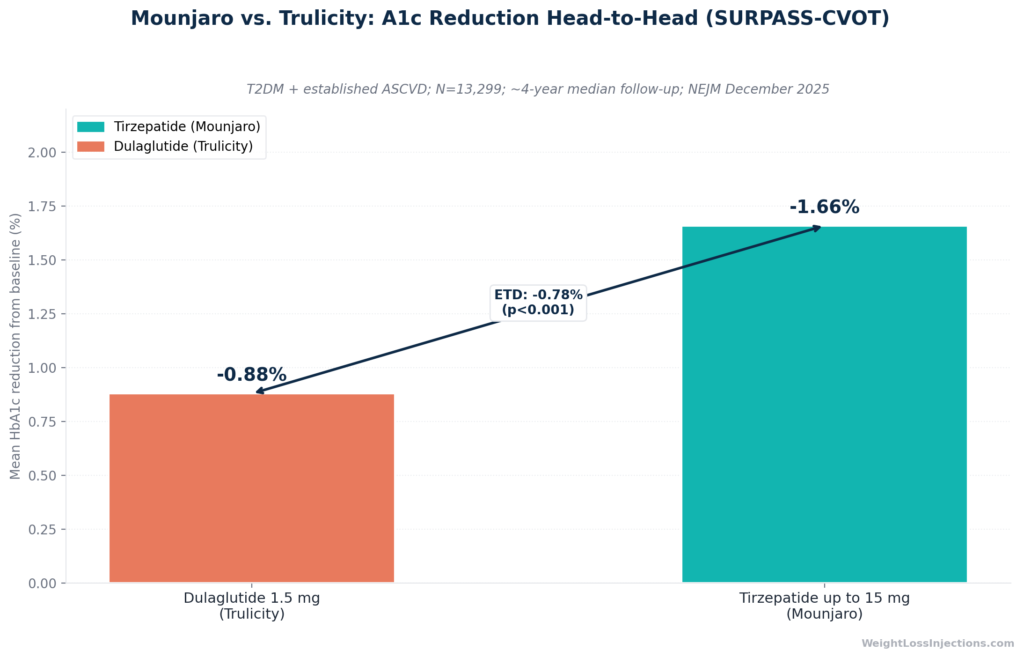
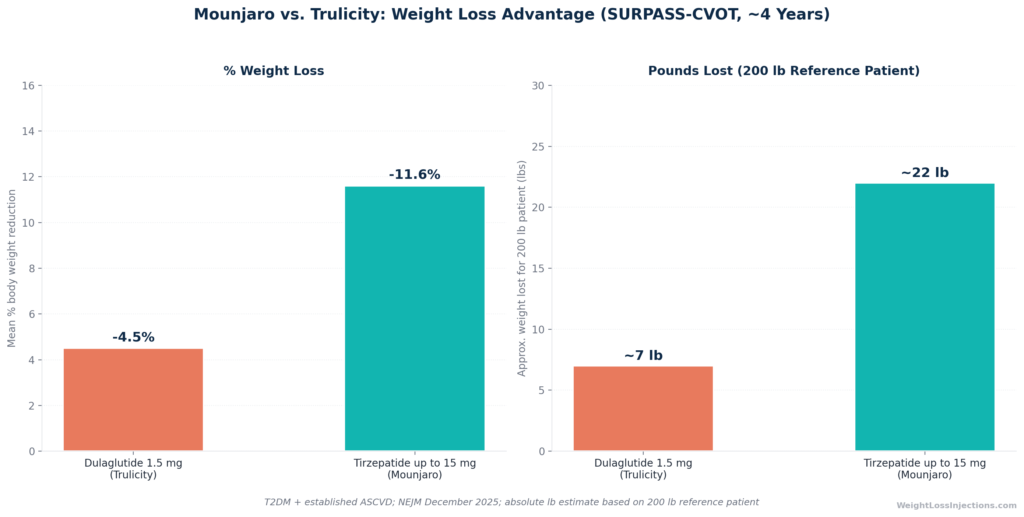
- SURPASS-CVOT — the only large-scale, randomized, head-to-head comparison — found tirzepatide cut HbA1c by −1.66% versus −0.88% for dulaglutide and reduced body weight by −11.6% versus −4.5% over roughly four years.
- Tirzepatide also reduced all-cause mortality by 16% (HR 0.84) in SURPASS-CVOT; the trial met cardiovascular noninferiority but not superiority on primary 3-point MACE.
- Trulicity carries a lower list price and is often positioned as a Step 1 GLP-1 by insurers; documented inadequate response to Trulicity is the strongest clinical and administrative case for switching to Mounjaro.
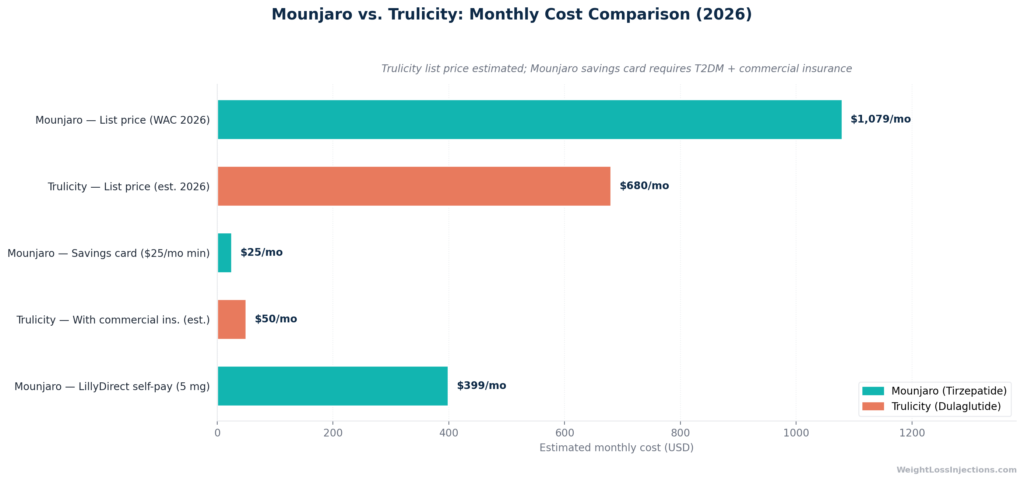
- Mounjaro costs approximately $1,079.77/month at WAC but is available for as low as $25/month for insured T2DM patients with the Lilly Savings Card.
Mounjaro and Trulicity — Two GLP-1s for Type 2 Diabetes
Trulicity and Mounjaro sit at adjacent places on the type 2 diabetes treatment ladder. Both come from the same manufacturer — Eli Lilly and Company — and both are administered as once-weekly subcutaneous injections for adults with type 2 diabetes mellitus (T2DM). On those surface dimensions, they look nearly interchangeable. The clinical data tells a different story.
Trulicity (dulaglutide) was FDA-approved in September 2014 and became one of the most widely prescribed GLP-1 receptor agonists in the United States over the following decade. It works through a single receptor — the GLP-1 receptor — stimulating glucose-dependent insulin secretion, suppressing glucagon, slowing gastric emptying, and reducing appetite. Its maximum approved dose is 4.5 mg once weekly. It has an established cardiovascular outcomes trial (REWIND) that demonstrated a reduction in MACE in T2DM patients with mixed cardiovascular risk profiles, cementing its place in clinical practice guidelines.
Mounjaro (tirzepatide) was FDA-approved on May 13, 2022 — eight years after Trulicity — as the first dual GIP and GLP-1 receptor agonist ever approved. Its maximum dose is 15 mg once weekly. It was developed specifically to test whether adding GIP receptor agonism on top of GLP-1 receptor agonism could push glycemic and weight outcomes further than GLP-1 therapy alone, per the FDA Mounjaro prescribing information. The answer from the clinical trial program — including the landmark SURPASS-CVOT head-to-head — is a clear yes.
The fact that both drugs come from Eli Lilly matters for one practical reason: insurance formulary placement. Because they share a manufacturer, some plans tier them together and apply unified step therapy rules; others position Trulicity as a required Step 1 before Mounjaro will be approved. Understanding that dynamic — not just the clinical data — is critical for any patient researching a switch, per Healthline’s step therapy explainer.
The central question this article answers: does the newer, more mechanistically complex tirzepatide translate into meaningfully better real-world outcomes for T2DM patients — and under what circumstances does making the switch make clinical and financial sense?
Mechanism Difference — Dual GIP/GLP-1 vs. GLP-1 Only
To understand why SURPASS-CVOT data looks the way it does, the mechanism difference between these two drugs must be understood, not just noted.
How Trulicity (Dulaglutide) Works
Trulicity is a selective GLP-1 receptor agonist — it binds to and activates the glucagon-like peptide-1 receptor. That single receptor activation produces several therapeutically useful effects: it enhances glucose-dependent insulin secretion from pancreatic beta cells (meaning it only stimulates insulin when glucose is present, reducing hypoglycemia risk), suppresses glucagon secretion from alpha cells, slows gastric emptying, and reduces food intake through central hypothalamic pathways. The result is improved postprandial glucose control, modest fasting glucose reduction, and modest weight loss as a class effect. These are well-characterized, reproducible effects that made GLP-1 agonists the backbone of second-line T2DM therapy for over a decade.
How Mounjaro (Tirzepatide) Works
Tirzepatide is the first approved dual GIP (glucose-dependent insulinotropic polypeptide) receptor AND GLP-1 receptor agonist — a pharmacological class that did not exist before its approval, per the FDA Mounjaro prescribing information §12.1. It activates both incretin pathways simultaneously. The GLP-1 component delivers everything dulaglutide delivers. The GIP component adds:
- Enhanced first- and second-phase insulin secretion in a glucose-dependent manner — a more robust insulin response than GLP-1 alone at every phase of the meal cycle.
- Additional appetite reduction via central GIP receptors — GIP receptors exist in the hypothalamus and other brain regions that regulate food intake; activating them amplifies the satiety signal beyond what GLP-1 agonism alone achieves.
- Adipose tissue effects — GIP receptors on adipocytes appear to reduce adipogenesis (fat cell formation) and enhance fat oxidation, contributing to the substantially greater weight loss seen with tirzepatide compared to any pure GLP-1 agonist.
“The dual incretin mechanism represents a qualitative step forward from GLP-1 monotherapy,” notes the WeightLossInjections.com Staff. “Activating both the GIP and GLP-1 receptors simultaneously produces metabolic effects that are additive or possibly synergistic — particularly on body weight — in a way that simply increasing a GLP-1 agonist dose cannot replicate.”
Pharmacokinetics: Why Once-Weekly Works for Both
The two drugs share a pharmacokinetic rationale for once-weekly dosing. Tirzepatide has a half-life of approximately five days and reaches steady-state plasma concentrations after about four weeks of once-weekly administration, per the FDA Mounjaro prescribing information §12.3. Dulaglutide also has a half-life of approximately five days with a similar time-to-steady-state profile. This mechanistic parallel explains why both drugs use the same dosing interval despite activating different receptors — and why switching from Trulicity to Mounjaro on the same weekly injection day is clinically straightforward.
The dual mechanism is the primary — and most rigorously supported — explanation for why tirzepatide produces substantially greater A1c reduction and body weight loss than dulaglutide in every head-to-head comparison, a conclusion supported by diaTribe’s tirzepatide clinical summary.
The Head-to-Head Trial — What SURPASS-CVOT Shows
Kaplan-Meier-style curve — “Cumulative MACE Events: Tirzepatide vs
Trial Data Disclaimer: The SURPASS-CVOT trial compared tirzepatide (up to 15 mg) to dulaglutide 1.5 mg — not the maximum approved Trulicity dose of 4.5 mg. Results at higher dulaglutide doses may differ. No head-to-head randomized trial has directly compared tirzepatide to dulaglutide 4.5 mg.
SURPASS-CVOT is the landmark study that defines this comparison. It is the only large-scale, randomized, double-blind, controlled trial that directly pits tirzepatide against dulaglutide in the same population at the same time. Every other comparison between these drugs before December 2025 was indirect — drawing on different trial programs run at different times with different patient populations.
Trial Design
SURPASS-CVOT enrolled 13,299 adults with type 2 diabetes and established atherosclerotic cardiovascular disease (ASCVD), all aged 50 or older. Participants were randomized to tirzepatide (starting at 2.5 mg, titrated up to a maximum of 15 mg once weekly) or dulaglutide (1.5 mg once weekly). The median follow-up was approximately four years. The trial was designed as a noninferiority cardiovascular outcomes study — it was not powered as a pure efficacy superiority trial. Results were published in the New England Journal of Medicine on December 17, 2025, per SURPASS-CVOT NEJM 2025 (PubMed).
Primary Cardiovascular Endpoint
The primary endpoint was three-point MACE: a composite of cardiovascular death, nonfatal myocardial infarction, or nonfatal stroke.
- Tirzepatide: 12.2% of patients experienced a primary-endpoint event
- Dulaglutide: 13.1% of patients experienced a primary-endpoint event
- Hazard ratio: 0.92 (95.3% CI: 0.83–1.01) — noninferiority was met (p=0.003); superiority was NOT achieved (p=0.09), per SURPASS-CVOT NEJM 2025
In practical terms: tirzepatide demonstrated that it is not worse than dulaglutide for cardiovascular protection in high-risk T2DM patients — the standard that class agents need to clear. It did not prove superiority on the primary MACE endpoint, but the direction of effect was consistently favorable throughout the trial.
Secondary Outcomes — Where Tirzepatide Clearly Wins
The secondary outcomes from SURPASS-CVOT are the most clinically important data points for T2DM patients comparing these two drugs for day-to-day diabetes management:
| Outcome | Tirzepatide | Dulaglutide 1.5 mg | Difference |
|---|---|---|---|
| HbA1c reduction from baseline | −1.66% | −0.88% | −0.78 percentage points |
| Body weight reduction | −11.6% | −4.5% | −7.1 percentage points |
| All-cause mortality | HR 0.84 (95% CI 0.75–0.94) | — | 16% reduction with tirzepatide |
| Expanded MACE (+ revascularization) | HR 0.88 (95% CI 0.80–0.96) | — | Significantly reduced with tirzepatide |
| Discontinuation due to adverse events | 13.2% | 10.1% | Higher with tirzepatide (GI) |
Sources: SURPASS-CVOT NEJM 2025; TCTMD SURPASS-CVOT coverage; ACC SURPASS-CVOT summary, January 2026.
The all-cause mortality finding — a 16% reduction with tirzepatide driven primarily by non-cardiovascular deaths — is particularly notable. This result, combined with the expanded MACE reduction, has provided new clinical rationale for prescribers considering tirzepatide in high-cardiovascular-risk T2DM patients, per the ACC SURPASS-CVOT summary.
The 1.5 mg Dose Caveat — What It Means
The dulaglutide comparator dose in SURPASS-CVOT was 1.5 mg — not the 3.0 mg or 4.5 mg doses that are also FDA-approved for Trulicity and that produce greater glycemic and weight effects. This design decision was made because 1.5 mg was the standard of care dose most commonly used in ASCVD management at the time of trial design. It is a legitimate scientific limitation: the true magnitude of tirzepatide’s advantage over maximum-dose dulaglutide (4.5 mg) is not established by any randomized trial. Patients and clinicians should interpret the A1c and weight data accordingly — the gap may be narrower at higher dulaglutide doses. That said, no head-to-head trial comparing tirzepatide to dulaglutide 4.5 mg has been published, and the SURPASS-CVOT data remains the best available evidence, per TCTMD SURPASS-CVOT coverage.
A1c Reduction — Which Controls Blood Sugar Better?
Grouped bar chart — “A1c Reduction: Tirzepatide vs
The A1c data from SURPASS-CVOT is the single most important clinical data point for a T2DM patient comparing these two drugs. Tirzepatide reduced HbA1c by −1.66% versus −0.88% for dulaglutide — nearly double the glycemic reduction from a single medication switch, per SURPASS-CVOT NEJM 2025.
To make that concrete: if a patient enters the trial with an A1c of 9.0%:
- On tirzepatide 15 mg, expected A1c outcome: approximately 7.3% or lower (within or near the ADA goal of <7.0%)
- On dulaglutide 1.5 mg, expected A1c outcome: approximately 8.1% (still above most treatment targets)
That gap has direct clinical implications — patients remaining above the 7.0% target are at ongoing elevated risk for microvascular complications including diabetic nephropathy, retinopathy, and neuropathy.
Context from the Broader SURPASS Program
SURPASS-CVOT sits within a larger clinical development program that provides additional A1c context:
- SURPASS-1 (tirzepatide as monotherapy vs. placebo, 40 weeks): tirzepatide 15 mg reduced HbA1c by −2.07% from a baseline of ~7.94%; 82–85% of patients achieved HbA1c <7.0%, per the Lilly SURPASS-1 investor release.
- SURPASS-2 (tirzepatide vs. semaglutide 1 mg): tirzepatide 15 mg reduced HbA1c by −2.30% versus −1.86% for semaglutide — all three tirzepatide doses met both noninferiority and superiority versus semaglutide 1 mg for A1c, per the SURPASS-2 NEJM 2021.
- SURPASS-3 (tirzepatide vs. insulin degludec): tirzepatide 15 mg reduced A1c by −2.37%, per the SURPASS-3 Lancet 2021.
- Trulicity (all doses, AWARD trial program): typical A1c reductions of 0.7–1.5%, with 4.5 mg achieving the upper end of that range.
Normoglycemia Rates: A Tirzepatide Signature
One metric that distinguishes tirzepatide from all prior T2DM therapies — including dulaglutide — is the proportion of patients achieving normoglycemia (A1c <5.7%). Across SURPASS trials, 31–52% of tirzepatide patients achieved this threshold, which has no equivalent in dulaglutide or any other GLP-1 monotherapy data, per the pooled SURPASS analysis on PubMed. For a patient who has lived with T2DM and elevated blood sugar for years, the prospect of reaching normal glucose levels is clinically and psychologically significant.
Our Top 3 · October 2026
The best GLP-1 providers right now
Independently reviewed. Ranked by price, medication access, provider quality, and patient outcomes.
Renew GLP
Personalized GLP-1, GIP plans: Semaglutide & Tirzepatide.
Medvi
No membership or hidden fees. Everything you need is included.
Trimi
US-licensed clinicians and shipped to your door, from $99/mo.
Weight Loss Comparison — Mounjaro vs. Trulicity
The weight loss differential between tirzepatide and dulaglutide in SURPASS-CVOT is clinically meaningful by any standard metric: −11.6% for tirzepatide versus −4.5% for dulaglutide over approximately four years, a 7.1 percentage-point gap, per SURPASS-CVOT NEJM 2025.
To anchor that in real-world terms: for a patient weighing 220 pounds at baseline:
- Tirzepatide: expected to lose approximately 25.5 lbs (approximately 11.6% of 220 lbs)
- Dulaglutide 1.5 mg: expected to lose approximately 9.9 lbs (approximately 4.5% of 220 lbs)
That is a difference of roughly 15–16 lbs over four years from a single medication change. At the 15 mg tirzepatide dose in SURPASS-3, mean body weight reduction reached −12.9 kg (~12.9 lbs per 100 kg of body weight), further supporting the upper bound of tirzepatide’s weight-loss potential in T2DM populations, per SURPASS-3 Lancet 2021.
Why This Matters for T2DM Management
For type 2 diabetes patients who also carry excess body weight — which describes the majority of T2DM patients — weight loss is not a cosmetic goal. It is a therapeutic one. A reduction of 5–10% or more in body weight produces measurable improvements in insulin sensitivity, blood pressure, LDL cholesterol, triglycerides, and obstructive sleep apnea risk. Losing more than 10% of body weight is associated with diabetes remission in some patients, reduction in cardiovascular risk factors, and improved quality of life, per the WeightFAQ GLP-1 comparison.
Trulicity does produce some weight loss — typically 1–3 kg at standard doses, and up to approximately 4.5 kg in the SURPASS-CVOT comparison arm. This GLP-1 class weight effect is real but modest. Mounjaro’s additional GIP mechanism appears to be the driver of the substantially larger weight reduction — an effect so pronounced that tirzepatide (as Zepbound, its obesity-indication brand) is now also FDA-approved for chronic weight management in people without T2DM.
For T2DM patients currently on Trulicity who are not meeting weight-related treatment goals — particularly those with BMI ≥30 or ≥27 with comorbidities — the SURPASS-CVOT weight loss differential is often the primary clinical argument that prescribers use when considering a switch.
Side Effects and Tolerability — How Do They Differ?
Both drugs belong to the incretin class, and both share a characteristic GI side-effect profile. The key question for patients comparing them is not whether side effects occur but how frequently, how severe, and whether the tirzepatide-specific profile introduces new considerations.
Shared Class-Effect Side Effects
The following adverse reactions occur with both dulaglutide and tirzepatide as a result of their shared GLP-1 mechanism:
- Nausea — most common; dose-dependent; highest during titration, diminishing at stable maintenance dose
- Diarrhea — frequency declines after titration
- Vomiting — especially during dose escalation
- Constipation — less common than nausea/diarrhea but reported with both
- Abdominal pain and dyspepsia — GI class effect
Both drugs also carry the same boxed warning for thyroid C-cell tumors based on rodent carcinogenicity data. The FDA’s label states that human relevance is unknown, but both are contraindicated in patients with a personal or family history of medullary thyroid carcinoma (MTC) or Multiple Endocrine Neoplasia syndrome type 2 (MEN 2), per the FDA Mounjaro prescribing information §5.1. Both also carry class warnings for pancreatitis, acute gallbladder disease, acute kidney injury (secondary to dehydration from GI effects), and hypoglycemia risk when combined with insulin or sulfonylureas.
Tolerability Comparison: SURPASS-CVOT Data
SURPASS-CVOT provides the most direct tolerability comparison available. Adverse events leading to drug discontinuation occurred in:
- Tirzepatide: 13.2% of patients
- Dulaglutide: 10.1% of patients
The difference — approximately 3 percentage points — was primarily driven by GI side effects, particularly nausea and vomiting during the titration phase with tirzepatide, per SURPASS-CVOT NEJM 2025. This reflects tirzepatide’s more potent mechanism and the additional GIP-mediated GI activity that pure GLP-1 agonists do not produce.
What this means in practice: most patients who tolerate Trulicity reasonably well can transition to Mounjaro and manage the adjustment period, but the first four to eight weeks at starting doses carry a modestly higher discontinuation risk. Careful dose titration — adhering to the standard 2.5 mg starting dose regardless of prior Trulicity dose — minimizes this risk. “When I switch a patient from Trulicity to Mounjaro, I always restart the titration sequence from 2.5 mg,” notes the WeightLossInjections.com Staff. “Even patients who tolerated 4.5 mg Trulicity without issue need the same adjustment time — the dual receptor mechanism creates a different qualitative experience for the GI tract.”
Injection Device Comparison
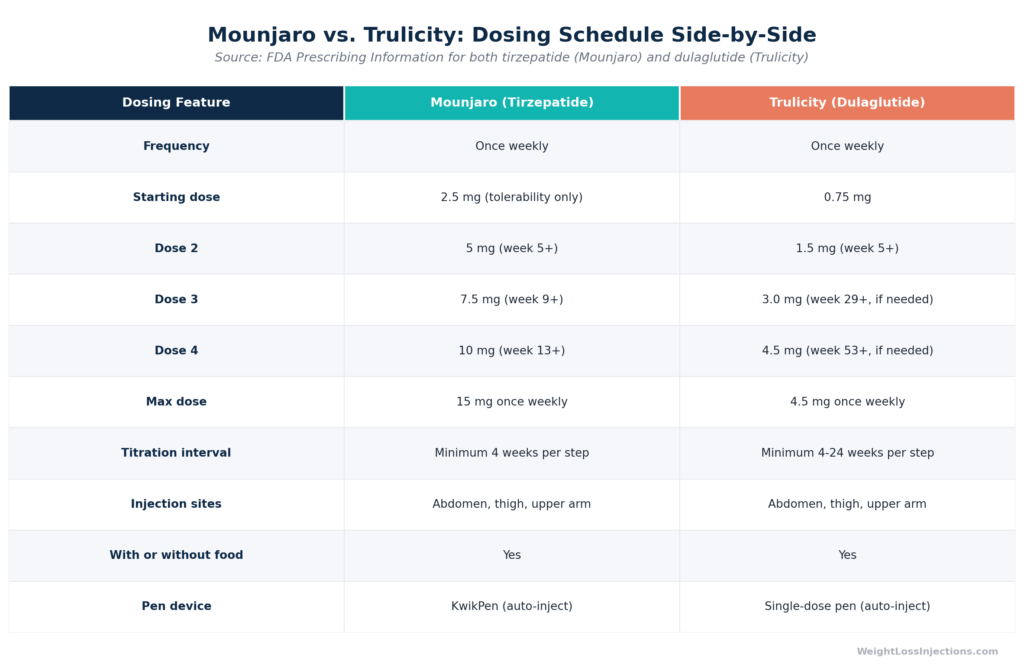
Both are subcutaneous injections into the abdomen, thigh, or upper arm, rotated with each dose. Trulicity uses a single-dose autoinjector pen. Mounjaro uses the KwikPen. Both are designed for self-injection; patients new to injectable medications typically adapt to either device without significant difficulty. Patients switching from Trulicity should receive device training on the KwikPen — the injection mechanics are comparable but the pen design differs, per the FDA Mounjaro prescribing information §2.
Hypoglycemia Risk
Both drugs have low standalone hypoglycemia risk because their insulin-stimulating effects are glucose-dependent (they enhance insulin secretion only when blood glucose is elevated). The clinically important hypoglycemia risk with either drug arises when they are combined with a sulfonylurea or insulin — in those situations, dose reduction of the sulfonylurea or insulin may be necessary when initiating or titrating either agent, per the FDA Mounjaro prescribing information §7.
Cost and Insurance — Mounjaro vs. Trulicity in 2026
The cost and coverage landscape for these two drugs is one of the most practically important dimensions of this comparison for real patients.
Comparison table chart — “Mounjaro vs
List Pricing and Self-Pay Options
Mounjaro (tirzepatide) carries a wholesale acquisition cost of $1,079.77 per 28-day supply (4 pens), uniform across all dose strengths as of January 1, 2026, per the Lilly official WAC disclosure.
For self-pay T2DM patients, LillyDirect offers branded Mounjaro tirzepatide vials at cash-pay prices:
- 2.5 mg: $299/month
- 5 mg: $399/month
- 7.5–15 mg: $449/month (within 45-day refill window)
These are not compounded tirzepatide — they are the branded Mounjaro product in a single-dose vial format.
Trulicity (dulaglutide) has a lower list price than Mounjaro. Generic dulaglutide has been anticipated in coming years, which would change this cost equation significantly once available.
Mounjaro Savings Card (2026 Terms)
For T2DM patients with commercial insurance that covers Mounjaro, the Lilly Savings Card reduces out-of-pocket cost to as low as $25/month (for 1-, 2-, or 3-month fills). Annual maximum savings: $1,950/year ($150/month cap). The card is valid through December 31, 2026, per NiceRx’s Mounjaro savings card overview.
Important caveats: the card does not apply during the deductible phase of your insurance plan, and it is not available to Medicare or Medicaid beneficiaries due to federal anti-kickback regulations.
Step Therapy and Prior Authorization
The insurance dynamic specific to this comparison is worth understanding in detail, because it explains why many patients are on Trulicity in the first place — not entirely by clinical preference.
Many commercial insurers use step therapy protocols that position Trulicity (dulaglutide) as a Step 1 or Step 2 GLP-1 agonist before they will approve Mounjaro. A typical step therapy sequence might look like this: metformin → oral diabetes agent (SGLT2 inhibitor or sulfonylurea) → GLP-1 agonist (Ozempic or Trulicity) → Mounjaro. Some BCBS plans require documentation of two prior GLP-1 failures before approving tirzepatide, per Sprypt’s step therapy guide.
This is a cost-containment policy, not a clinical recommendation. It means some patients are on Trulicity specifically because their insurer required it — not because their prescriber chose it as the superior option.
Typical prior authorization criteria for Mounjaro:
- Documented type 2 diabetes diagnosis (ICD-10: E11.x)
- Recent A1c ≥7.0% or ≥8.0% (varies by plan, within ~3 months)
- Documentation of metformin trial at maximally tolerated dose (≥2,000 mg) for ≥3 months, or documented intolerance
- In step therapy plans: documented prior GLP-1 trial (e.g., Trulicity or Ozempic) with inadequate response
That last criterion is the most relevant here: documented failure or inadequate response to Trulicity is the strongest clinical evidence supporting a prior authorization approval for Mounjaro, per Healthline’s Mounjaro step therapy guide. If you are currently on Trulicity and not meeting your A1c or weight goals, that clinical record creates the administrative pathway to coverage for Mounjaro.
Medicare Considerations
Medicare Part D plans may cover Mounjaro when it is prescribed for its FDA-approved type 2 diabetes indication (not for weight loss). The negotiated Medicare price for Mounjaro under the White House pricing agreement is approximately $245/month, with rollout anticipated during 2026. Medicare beneficiaries are not eligible for the Lilly Savings Card. The 2026 Medicare Part D annual out-of-pocket cap is $2,100 under IRA provisions. Medicare does not cover either drug prescribed solely for weight loss.
Why Doctors Are Switching Patients from Trulicity to Mounjaro
The publication of SURPASS-CVOT in December 2025 accelerated a clinical trend that had been building since Mounjaro’s 2022 approval. Prescribers now have large-scale, long-term, randomized head-to-head data supporting what earlier SURPASS trials had suggested: tirzepatide is a meaningfully stronger option for most T2DM patients who need better glycemic control, more weight loss, or both.
Clinical Reasons to Make the Switch
1. Inadequate A1c control on Trulicity. The most common clinical trigger for a switch. If a patient remains above their A1c target (typically 7.0–8.0% depending on patient profile) despite 1.5 mg, 3.0 mg, or even 4.5 mg of dulaglutide, the SURPASS-CVOT data provides direct evidence that tirzepatide produces nearly twice the A1c reduction. For a patient with A1c of 8.5% on maximally titrated Trulicity, the expected improvement from switching to tirzepatide 15 mg is substantial, per the ACC SURPASS-CVOT summary.
2. Need for additional weight loss benefit. T2DM patients with obesity who tolerate Trulicity but see only modest weight loss (the typical 1–3 kg) may benefit substantially from tirzepatide’s additional weight reduction. The −11.6% vs. −4.5% gap in SURPASS-CVOT — representing roughly 15 extra pounds for a 200-lb patient over four years — translates into meaningful downstream improvements in blood pressure, lipid profiles, sleep apnea risk, and joint load.
3. Reduction in all-cause mortality. The SURPASS-CVOT finding of a 16% reduction in all-cause mortality with tirzepatide (HR 0.84; 95% CI 0.75–0.94) is an increasingly important consideration for high-risk T2DM patients — particularly those with established ASCVD, per SURPASS-CVOT NEJM 2025. For this patient population, the switch carries a cardiovascular rationale beyond glycemic and weight outcomes.
4. Both drugs well-tolerated but Trulicity has plateaued. Some patients tolerate Trulicity without difficulty but are not advancing toward their goals. These patients tend to be the best candidates for switching — they have a demonstrated track record of GLP-1 tolerability, and their transition to Mounjaro is likely to be smooth.
When Not to Switch
The switch from Trulicity to Mounjaro is not universally appropriate:
- Patient is meeting A1c and weight goals on Trulicity. If current therapy is achieving treatment targets, there is no clinical reason to change. The higher discontinuation rate with tirzepatide (13.2% vs. 10.1% in SURPASS-CVOT) represents a real, if modest, risk for a patient who is currently stable.
- Patient cannot tolerate GI side effects during Mounjaro titration. Some patients who tolerated Trulicity will still experience increased GI side effects at tirzepatide’s titration doses. This is manageable with dose adjustment but should be anticipated.
- Insurance step therapy requires documented Trulicity trial. In plans that mandate a Trulicity trial before Mounjaro approval, it may be clinically and administratively pragmatic to complete that trial, document the result, and then pursue the Mounjaro prior authorization with the supporting evidence.
- Medicare patient with cost barriers. Medicare beneficiaries ineligible for the Lilly Savings Card face different cost calculations. Prescribers and patients should review the specific plan formulary before proceeding with a switch.
Switching Protocol: What to Expect
No strict washout period is required when switching from Trulicity to Mounjaro — the switch can be made on the next weekly injection day. However, per ADA 2025 standards of care, the tirzepatide titration sequence should restart from the beginning at 2.5 mg regardless of the dulaglutide dose previously taken. This is not because tirzepatide is weaker at 2.5 mg than Trulicity at 4.5 mg — it is because the GIP component of tirzepatide introduces a different pattern of GI receptor activation that the body needs time to accommodate. Expect the adjustment period to last four to eight weeks, per TCTMD SURPASS-CVOT coverage.
“When my patients ask how long it takes to see results after switching from Trulicity to Mounjaro, I tell them to give it three months,” says the WeightLossInjections.com Staff. “The titration period means the first four to eight weeks aren’t a meaningful comparison point — it’s the 90-day A1c and the scale at month three where you see the true difference.”
Our Take at WeightLossInjections.com
For the majority of T2DM patients who are not meeting their glycemic or weight goals on Trulicity, the evidence from SURPASS-CVOT is clear and compelling. Tirzepatide’s dual GIP/GLP-1 mechanism produces approximately twice the A1c reduction and two-and-a-half times the body weight loss of dulaglutide 1.5 mg over a four-year follow-up — differences that are not marginal but clinically transformative for patients managing a progressive chronic disease. The 16% reduction in all-cause mortality adds a layer of clinical rationale that extends well beyond glycemic control.
That said, “better on the data” is not the same as “right for every patient.” Trulicity remains a legitimate, well-tolerated, and effective first-line GLP-1 option for T2DM patients who are achieving their treatment targets on it. Its lower list price and anticipated generic availability make it a relevant cost consideration, particularly for patients on Medicare or without commercial insurance. The modestly higher discontinuation rate with tirzepatide (13.2% vs. 10.1%) is a real clinical consideration for patients who have achieved stability on Trulicity.
The patients for whom the case to switch is strongest are those who came to Trulicity through insurer step therapy rather than clinical first choice — who are either above their A1c goal, not seeing meaningful weight reduction, or both. For that population, SURPASS-CVOT now provides the head-to-head randomized evidence that prescribers need to support a prior authorization appeal and a confident clinical recommendation.
If your Trulicity prescription is not getting your A1c or weight to goal, the clinical data supports a conversation with a licensed provider about whether Mounjaro is the right next step. [service detail] at WeightLossInjections.com connects you with a licensed clinician for [$X/month] — a provider who can review your current T2DM management, your A1c history, and your insurance situation to map out the most appropriate path forward.
Physician Review: This article was reviewed for medical accuracy by the WeightLossInjections.com Staff. Reviewed June 2026.
FAQ
Based on the best available head-to-head evidence — the SURPASS-CVOT trial, published in the New England Journal of Medicine in December 2025 — tirzepatide (Mounjaro) produced significantly greater HbA1c reduction (−1.66% vs. −0.88%) and body weight loss (−11.6% vs. −4.5%) compared to dulaglutide 1.5 mg (Trulicity) over approximately four years. Tirzepatide also reduced all-cause mortality by 16% (HR 0.84), per SURPASS-CVOT NEJM 2025. The cardiovascular primary endpoint (3-point MACE) showed noninferiority but not superiority. For most T2DM patients who need better glycemic control or weight loss, the evidence strongly favors Mounjaro. Trulicity remains an appropriate option for patients meeting their targets on current therapy or who have cost constraints.
Many commercial insurers use step therapy protocols that require a documented trial of an older, less expensive GLP-1 agonist (such as Trulicity) before approving a newer agent (Mounjaro). This is a cost-containment policy, not a clinical recommendation. Per Sprypt’s step therapy guide, if your provider documents inadequate glycemic response to Trulicity — meaning your A1c remains above your target despite appropriate dosing — that record becomes the primary evidence to support a prior authorization approval for Mounjaro. Work with your prescriber to ensure your chart reflects your actual treatment outcomes on Trulicity clearly.
Because Mounjaro starts at the 2.5 mg titration dose (regardless of your prior Trulicity dose), the first four to eight weeks represent a dose-escalation phase rather than a therapeutic comparison point. Most patients notice changes in appetite suppression and glucose readings within the first two to four weeks, but meaningful A1c improvement is typically visible at the three-month lab check — the point when tirzepatide is at or near an efficacious maintenance dose and steady state has been established, per diaTribe’s tirzepatide clinical summary. The full benefit at your optimal maintenance dose (7.5 mg, 10 mg, 12.5 mg, or 15 mg) may take six months or more to assess.
No strict washout period is required. The switch can be made on your next weekly injection day — you take your last Trulicity dose on your regular schedule, then begin Mounjaro (at 2.5 mg) the following week. Your provider may recommend specific timing to minimize GI overlap during the transition. Critically: restart the full tirzepatide titration sequence at 2.5 mg regardless of the Trulicity dose you were taking, as the ADA 2025 standards of care recommend initiating the standard titration when switching between GLP-1 class agents. Do not attempt to “dose-match” from a prior Trulicity dose to a numerically similar Mounjaro dose — the drugs have different potencies and different receptor profiles.
Trulicity’s list price is generally lower than Mounjaro’s WAC of approximately $1,079.77/month, per the Lilly WAC disclosure. However, for T2DM patients with commercial insurance, the Lilly Mounjaro Savings Card can reduce Mounjaro cost to as low as $25/month, potentially making it less expensive out-of-pocket than Trulicity for insured patients. Generic dulaglutide (Trulicity) is expected in coming years, which would significantly change the cost comparison in Trulicity’s favor. For Medicare beneficiaries, the negotiated Mounjaro price of approximately $245/month is worth asking your Part D plan about. Per NiceRx’s savings card overview, the savings card is valid through December 31, 2026; re-enrollment is required for calendar year 2027.
Trulicity does produce weight loss as a GLP-1 class effect — typically 1–3 kg at standard doses, and up to approximately 4.5 kg in the SURPASS-CVOT trial. That is real, but modest. Mounjaro’s dual GIP + GLP-1 mechanism produces substantially greater weight loss — approximately −11.6% of body weight versus −4.5% in the same SURPASS-CVOT population over four years, per SURPASS-CVOT NEJM 2025. For a T2DM patient weighing 200 pounds, that difference is roughly 14 additional pounds lost with Mounjaro over the same period. For T2DM patients whose obesity is a treatment priority alongside glycemic control, Mounjaro’s additional weight loss benefit — driven by its GIP receptor agonism — is clinically meaningful in ways that go beyond a scale reading, including improvements in blood pressure, lipids, and downstream cardiovascular risk.