![Unbranded [pillar-drug-class] injection pen on a neutral background — WeightLossInjections.com editorial hero](https://weightlossinjections.com/wp-content/uploads/2026/07/hero_mounjaro_c4_compare-1200x675.png)
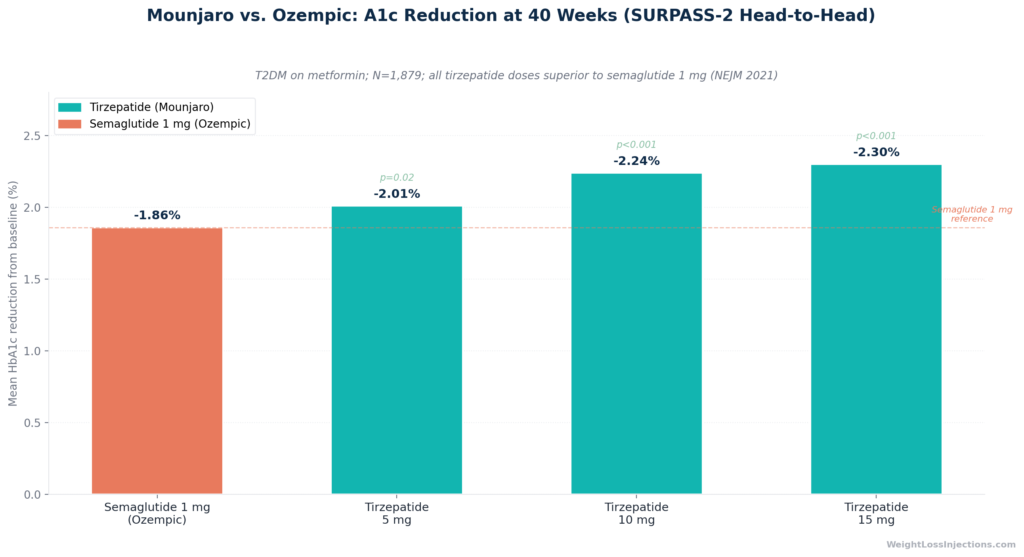
Side-by-side overview comparison table showing Mounjaro (tirzepatide) and Ozempic (semaglutide) key specs: mechanism, FDA indication, max dose, A1c reduction, weight loss, list price, and CV data —…
- Mounjaro (tirzepatide, Eli Lilly) and Ozempic (semaglutide, Novo Nordisk) are both FDA-approved once-weekly injectable medications for type 2 diabetes (T2DM). Neither is FDA-approved for weight loss — that is Zepbound and Wegovy, respectively.
- Mounjaro works on two hormone receptors (GIP + GLP-1); Ozempic activates only the GLP-1 receptor. This dual mechanism likely explains Mounjaro’s edge in head-to-head data.
- In SURPASS-2 — the only direct randomized trial comparing the two drugs — tirzepatide at all three doses (5, 10, and 15 mg) achieved statistically superior A1c reduction and weight loss versus semaglutide 1 mg over 40 weeks. The critical caveat: Ozempic’s maximum approved dose (2 mg) was not tested.
- Tirzepatide 15 mg produced −2.30% A1c reduction and −11.2 kg weight loss; semaglutide 1 mg produced −1.86% and −5.7 kg in the same trial.
- Ozempic has the more established cardiovascular outcomes track record, with FDA-approved MACE reduction. Mounjaro demonstrated MACE noninferiority (not superiority) versus dulaglutide in the 2025 SURPASS-CVOT trial.
- List prices: Mounjaro ~$1,079.77/month versus Ozempic ~$935/month. Mounjaro’s savings card can reduce cost to as low as $25/month for insured T2DM patients.
- The right choice depends on your glycemic goals, weight goals, cardiovascular history, and insurance — not on which drug is “stronger” in a vacuum.
Mounjaro and Ozempic at a Glance — Key Differences
Before getting into trial data, it helps to establish exactly what these drugs are — and what they are not.
Both Mounjaro and Ozempic are prescription, subcutaneous, once-weekly injections for adults with type 2 diabetes. Both require a prior authorization from most commercial insurance plans. Both are manufactured by major pharmaceutical companies with long GLP-1 class experience: Mounjaro by Eli Lilly and Ozempic by Novo Nordisk. And critically, neither carries an FDA approval for weight management — patients and providers frequently conflate Mounjaro with Zepbound and Ozempic with Wegovy, but these are legally distinct products with different regulatory designations.
Here is the foundational comparison:
| Feature | Mounjaro | Ozempic |
|---|---|---|
| Generic name | Tirzepatide | Semaglutide |
| Manufacturer | Eli Lilly | Novo Nordisk |
| FDA indication | T2DM (glycemic control) | T2DM + cardiovascular risk reduction |
| Mechanism | Dual GIP + GLP-1 receptor agonist | GLP-1 receptor agonist only |
| Available doses | 2.5, 5, 7.5, 10, 12.5, 15 mg weekly | 0.25, 0.5, 1, 2 mg weekly |
| Maximum dose | 15 mg/week | 2 mg/week |
| WAC list price | ~$1,079.77/month | ~$935/month |
| Weight-management brand | Zepbound (same molecule) | Wegovy (same molecule, higher dose) |
| FDA approval date | May 13, 2022 | December 2017 |
Sources: FDA Mounjaro Prescribing Information; WeightFAQ GLP-1 Comparison, May 2026; Lilly WAC Disclosure Sheet.
One practical consequence of the distinction between T2DM-branded and weight-management-branded versions: a patient whose insurance covers Mounjaro for T2DM is operating under a completely different formulary pathway than a patient whose plan covers Zepbound for obesity. The two drugs cannot be substituted on a prescription without a new prior authorization, even though tirzepatide is tirzepatide regardless of the box it comes in.
Ozempic’s cardiovascular risk reduction indication — added following the SUSTAIN-6 trial — means it is the only one of the two drugs with a regulatory label that specifically addresses MACE in patients with established atherosclerotic cardiovascular disease (ASCVD). This distinction matters in clinical practice for high-risk patients, and we cover the CV data in detail below.
Mechanism Difference — Dual GIP/GLP-1 vs. GLP-1 Only
The pharmacological difference between these two drugs is not one of dose or potency — it is one of mechanism. Understanding this distinction is essential to interpreting the efficacy data correctly.
Ozempic (semaglutide) is a selective GLP-1 (glucagon-like peptide-1) receptor agonist. It mimics the incretin hormone GLP-1, which the body naturally releases in response to food intake. GLP-1 receptor activation produces three key effects relevant to T2DM and weight: it stimulates insulin release in a glucose-dependent manner (meaning it works primarily when blood sugar is elevated), it suppresses glucagon (the hormone that raises blood sugar), and it slows gastric emptying — which reduces appetite and post-meal glucose spikes. This mechanism is shared by the entire GLP-1 class: liraglutide, dulaglutide, exenatide, and semaglutide all work through this same pathway.
Mounjaro (tirzepatide) is in a different pharmacological category entirely. It is the first-in-class dual GIP (glucose-dependent insulinotropic polypeptide) receptor and GLP-1 receptor agonist, per the FDA Mounjaro Prescribing Information §12.1. Tirzepatide activates both the GIP receptor and the GLP-1 receptor simultaneously with a single molecular entity. The added GIP receptor engagement contributes several metabolic effects that semaglutide cannot replicate:
- Enhanced first- and second-phase insulin secretion in a glucose-dependent manner — beyond what GLP-1 activation alone produces.
- Suppression of glucagon (also glucose-dependent) through both receptor pathways.
- Direct effects on adipose tissue via GIP receptor signaling, which may reduce fat storage through mechanisms independent of appetite suppression.
- Broader central nervous system engagement affecting food intake and energy regulation through both receptor pathways.
The clinical implication, per diaTribe’s summary of tirzepatide’s mechanism: GLP-1 alone is like pressing one metabolic lever — appetite suppression and insulin signal. Tirzepatide presses two levers simultaneously. The dual mechanism is the leading hypothesis for why tirzepatide consistently outperforms semaglutide on both glycemic and weight endpoints in every head-to-head dataset available.
“The dual GIP and GLP-1 agonism of tirzepatide produces a qualitatively different hormonal response than a GLP-1 agonist alone — not just more of the same signal, but a broader activation of the incretin axis that reaches metabolic pathways semaglutide cannot target,” notes the WeightLossInjections.com Staff. “This helps explain why we see tirzepatide producing greater A1c and weight outcomes even at doses where the GLP-1 signal would appear saturated.”
It is worth noting that tirzepatide’s half-life is approximately 5 days, which supports once-weekly dosing, per the FDA Prescribing Information §12.3. Bioavailability following subcutaneous injection is approximately 80%. Both drugs share the same injection schedule (once weekly, any time of day, with or without food) and the same route of administration (subcutaneous injection in the abdomen, thigh, or upper arm).
Head-to-Head Weight Loss — What SURPASS-2 Actually Showed
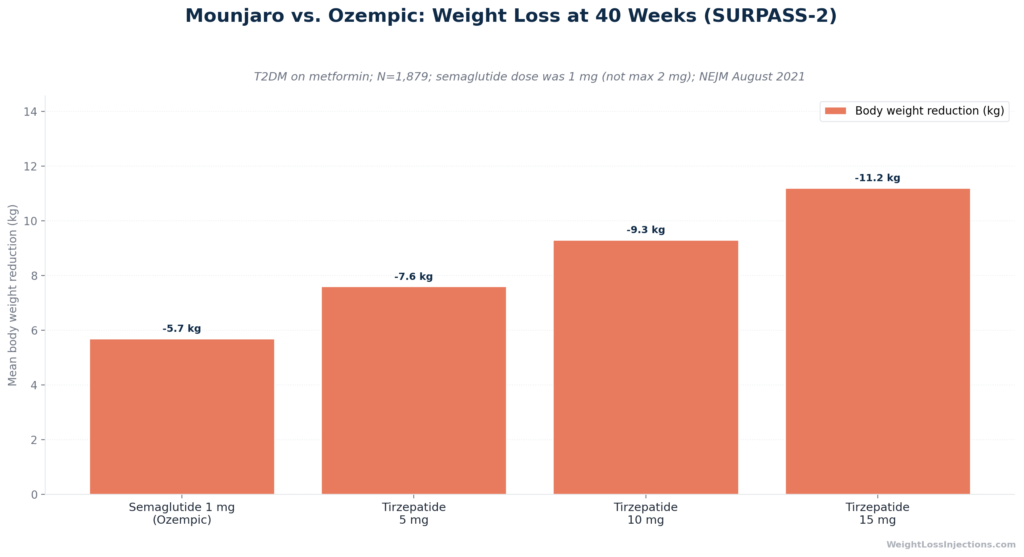
Grouped bar chart — “Weight Loss (kg): Mounjaro vs
SURPASS-2 is the only randomized controlled trial that has directly compared tirzepatide (Mounjaro) against semaglutide (Ozempic) in the same patient population. Published in the New England Journal of Medicine in August 2021 (Frías et al.), it remains the primary evidence base for any head-to-head efficacy claim between these two drugs.
Trial design: SURPASS-2 enrolled 1,879 adults with T2DM who had inadequate glycemic control on metformin. Patients were randomized to tirzepatide 5 mg, 10 mg, or 15 mg, or semaglutide 1 mg once weekly. The trial ran for 40 weeks. Baseline HbA1c was approximately 8.3%, per the NEJM publication.
Weight loss results:
| Treatment Arm | Mean Body Weight Change (40 wks) |
|---|---|
| Tirzepatide 5 mg | −7.6 kg |
| Tirzepatide 10 mg | −9.3 kg |
| Tirzepatide 15 mg | −11.2 kg |
| Semaglutide 1 mg | −5.7 kg |
All three tirzepatide doses achieved statistically superior weight loss compared to semaglutide 1 mg (p<0.001 for each comparison), per the ACC SURPASS-2 Clinical Trial Summary. At the maximum tirzepatide dose of 15 mg, patients lost nearly double the weight of those on semaglutide 1 mg over the same 40-week period.
The critical limitation that every patient should understand: The semaglutide comparator in SURPASS-2 was 1 mg per week — Ozempic’s mid-range approved dose, not its maximum of 2 mg. The trial was designed as a T2DM glycemic comparison, not a weight-loss maximum-dose competition. Critics of the head-to-head data correctly point out that semaglutide at 2.0 mg (Ozempic’s ceiling for T2DM) or 2.4 mg (Wegovy’s dose) was never directly tested against tirzepatide, per diaTribe’s tirzepatide analysis. The true gap at maximum doses of both molecules remains untested in a head-to-head RCT.
Real-world context: A 2025 observational study published in Nature Medicine examined cardiovascular outcomes for tirzepatide versus semaglutide in clinical practice. The real-world comparative cardiovascular benefit was comparable between the two drugs (HR 1.06; 95% CI 0.95–1.18), suggesting that in everyday clinical use — with patient selection, dose variability, and adherence patterns — the gap seen in SURPASS-2’s controlled setting may narrow on certain outcomes. Weight loss superiority for tirzepatide was consistent across the available data, however.
SURPASS context for weight loss scale: In the broader SURPASS program, tirzepatide 15 mg produced weight reductions of −7.5 to −12.9 kg across SURPASS-1 through SURPASS-4, depending on the background therapy and population, per the pooled SURPASS analysis (PubMed, 2022). These consistently exceed what semaglutide produced at its labeled T2DM doses in the SUSTAIN program (~6–10% body weight at max doses).
A1c Reduction — Which Lowers Blood Sugar More?
For patients whose primary concern is glycemic control — getting their A1c down to target — the SURPASS-2 data is particularly instructive. Both drugs produced meaningful A1c reductions in T2DM patients, but the advantage for tirzepatide was statistically demonstrated across all three doses tested.
SURPASS-2 A1c results:
| Treatment Arm | Mean HbA1c Change | ETD vs. Sema 1 mg | p-value |
|---|---|---|---|
| Tirzepatide 5 mg | −2.01% | −0.15% | p=0.02 |
| Tirzepatide 10 mg | −2.24% | −0.39% | p<0.001 |
| Tirzepatide 15 mg | −2.30% | −0.45% | p<0.001 |
| Semaglutide 1 mg | −1.86% | — | — |
Source: SURPASS-2, NEJM 2021 (Frías et al.). ETD = estimated treatment difference. All three tirzepatide doses met both noninferiority and superiority thresholds over semaglutide 1 mg for HbA1c reduction — a statistically demanding dual standard, per the ACC SURPASS-2 summary.
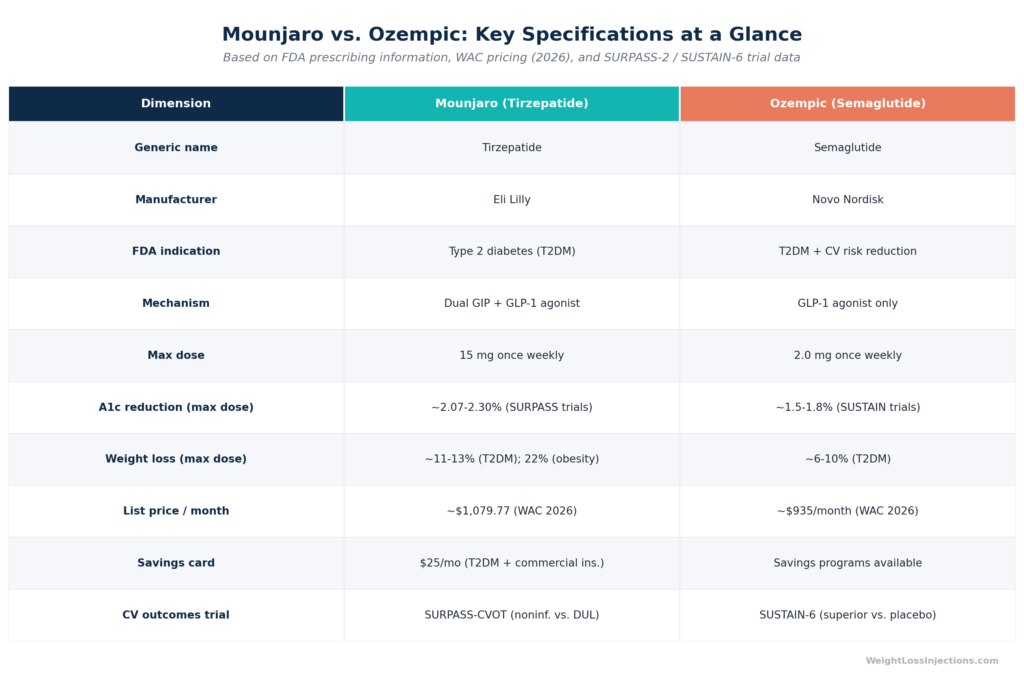
Grouped bar chart — “A1c Reduction: Mounjaro vs
What these numbers mean in practice: For a patient starting with an A1c of 9.0%, tirzepatide at 15 mg could potentially bring them to approximately 6.7%, which is within or close to the target range of below 7.0% that most clinical guidelines recommend for T2DM management. Ozempic at 1 mg would bring the same patient to approximately 7.1% — still meaningful improvement, but potentially short of target in some patients.
Looking beyond SURPASS-2, the pooled data from SURPASS-1 through SURPASS-5 shows mean HbA1c reductions of approximately 2.0–2.4% at tirzepatide doses of 10 and 15 mg across diverse T2DM populations, per the pooled SURPASS PubMed analysis (2022). The proportion of patients achieving normoglycemia (HbA1c below 5.7%) ranged from 31% to 52% with tirzepatide in SURPASS-1 (versus 1% with placebo), per the same analysis — a striking finding that suggests tirzepatide can not only lower A1c but potentially push a significant fraction of patients into the non-diabetic range.
By contrast, Ozempic’s SUSTAIN trial program showed average A1c reductions of approximately 1.5–1.8% at the 1–2 mg dose range across T2DM populations. The SUSTAIN-2 trial (semaglutide 0.5 and 1 mg vs. sitagliptin) and SUSTAIN-3 (vs. exenatide extended release) established Ozempic’s glycemic efficacy, but no trial has tested semaglutide 2.0 mg head-to-head against tirzepatide to determine whether the maximum Ozempic dose narrows the A1c gap observed in SURPASS-2.
The same caveat that applies to the weight loss comparison applies here: the A1c difference between tirzepatide and semaglutide 1 mg in SURPASS-2 was statistically real but modest at the 5 mg dose (−0.15%). For the majority of patients, both drugs will achieve meaningful glycemic improvement. The clinical significance of the difference depends on where a patient’s A1c starts and where their target is.
Our Top 3 · October 2026
The best GLP-1 providers right now
Independently reviewed. Ranked by price, medication access, provider quality, and patient outcomes.
Renew GLP
Personalized GLP-1, GIP plans: Semaglutide & Tirzepatide.
Medvi
No membership or hidden fees. Everything you need is included.
Trimi
US-licensed clinicians and shipped to your door, from $99/mo.
Side Effect Profile: How Do They Compare?
Both Mounjaro and Ozempic belong to the incretin receptor agonist class, and both share the class-defining side effect profile: predominantly gastrointestinal adverse events that are most prominent during dose escalation and typically diminish once a stable maintenance dose is reached.
Shared GI side effects (both drugs):
| Adverse Reaction | Notes |
|---|---|
| Nausea | Most common; ~12–25% for Mounjaro at higher doses; similar range for Ozempic |
| Diarrhea | Frequency typically decreases after full titration to maintenance dose |
| Vomiting | Particularly during initial titration steps |
| Constipation | Slightly more frequently reported by Mounjaro patients in clinical observation |
| Decreased appetite | Related to mechanism; considered a desired effect in most patients |
| Dyspepsia/abdominal discomfort | Reported with both |
Source: FDA Mounjaro Prescribing Information §6.
Shared boxed warning — thyroid C-cell tumors: Both Mounjaro and Ozempic carry a black box warning based on rodent data showing thyroid C-cell tumor formation at clinically relevant exposures. The human relevance is unknown. Both drugs are contraindicated in patients with a personal or family history of medullary thyroid carcinoma (MTC) or Multiple Endocrine Neoplasia syndrome type 2 (MEN 2), per the FDA Mounjaro Prescribing Information. This parallel warning applies to both drugs and to the broader GLP-1 receptor agonist class.
Additional serious risks shared by both:
- Pancreatitis: Acute pancreatitis including fatal and non-fatal hemorrhagic or necrotizing events has been observed with GLP-1 receptor agonists. In SURPASS clinical studies, pancreatitis events occurred at a rate of 0.23 per 100 patient-years with tirzepatide versus 0.11 with comparators. Discontinue if pancreatitis is suspected; do not restart if confirmed. Neither drug has been studied in patients with a history of pancreatitis, per the FDA Mounjaro Prescribing Information §6.
- Acute gallbladder disease: Cholelithiasis or cholecystitis reported at 0.6% in tirzepatide patients versus 0% with placebo in controlled trials.
- Acute kidney injury: GI adverse reactions causing dehydration can precipitate AKI; maintain hydration, especially during titration.
- Hypoglycemia: Substantially elevated risk when combined with insulin or sulfonylureas; dose reduction of concomitant agents may be necessary.
Discontinuation rates: In the SURPASS-CVOT trial — the largest outcomes trial for tirzepatide — adverse events led to drug discontinuation in 13.2% of tirzepatide patients versus 10.1% of dulaglutide patients (note: dulaglutide, not semaglutide, was the comparator), per SURPASS-CVOT, NEJM December 2025. GI adverse events drove the majority of these discontinuations. No direct discontinuation comparison between tirzepatide and semaglutide is available from a randomized trial.
A key practical nuance: Mounjaro’s GIP receptor component may produce a slightly different quality or pattern of GI side effects than pure GLP-1 agonists like Ozempic. Some patients who switch from Ozempic to Mounjaro report a different GI experience — not necessarily worse, but qualitatively distinct — likely reflecting the additive GIP receptor engagement on gut motility and gastric physiology. Clinicians familiar with both drugs often advise patients switching to Mounjaro to expect a re-adjustment period even if they previously tolerated Ozempic well.
Hair loss: Both drugs are associated with patient-reported hair shedding. This is not listed on either FDA label as an adverse reaction. The current clinical consensus is that hair loss in this context is telogen effluvium — a stress-related response to rapid caloric restriction and weight loss — rather than a direct pharmacological effect of either drug. It is typically temporary and resolves as body weight stabilizes.
Cardiovascular Outcomes — What the Data Shows
Cardiovascular protection is an area where Ozempic currently holds a regulatory advantage that Mounjaro does not yet match — though the 2025 publication of SURPASS-CVOT substantially updated the picture for tirzepatide.
Ozempic’s MACE superiority data (SUSTAIN-6): Ozempic’s cardiovascular risk reduction indication is based on the SUSTAIN-6 trial, which enrolled 3,297 adults with T2DM and high cardiovascular risk. Ozempic demonstrated MACE superiority versus placebo with a hazard ratio of 0.74 (95% CI 0.58–0.95), reflecting a 26% relative risk reduction in the composite of cardiovascular death, non-fatal MI, or non-fatal stroke. The FDA subsequently added cardiovascular risk reduction as an approved indication for Ozempic, making it one of a small number of T2DM medications with a formal CV protection label.
Mounjaro’s SURPASS-CVOT results (NEJM, December 2025): The SURPASS-CVOT trial, published in the New England Journal of Medicine in December 2025 (Nicholls et al.), enrolled 13,299 adults with T2DM and established ASCVD (age ≥50). Patients were randomized to tirzepatide up to 15 mg or dulaglutide 1.5 mg, with a median follow-up of approximately 4 years. Key results:
- Primary endpoint (3-point MACE): Tirzepatide 12.2% versus dulaglutide 13.1%; HR 0.92 (95.3% CI 0.83–1.01) — met prespecified noninferiority threshold (p=0.003) but did not meet superiority (p=0.09), per the ACC SURPASS-CVOT Summary, January 2026.
- All-cause mortality: Tirzepatide reduced all-cause mortality by 16% versus dulaglutide (HR 0.84; 95% CI 0.75–0.94) — a secondary endpoint that did reach statistical significance.
- Expanded MACE (including coronary revascularization): Significantly reduced with tirzepatide (HR 0.88; 95% CI 0.80–0.96).
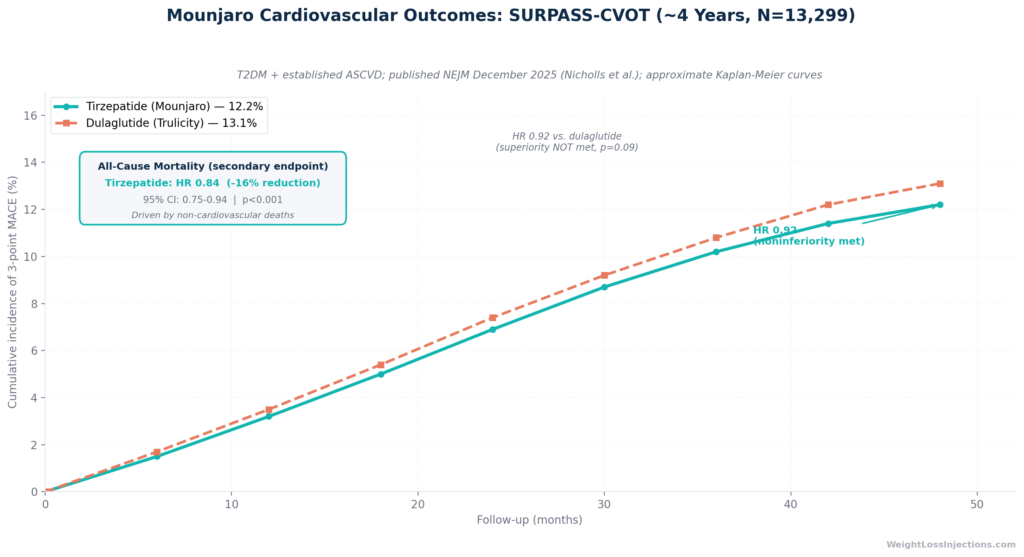
Line chart — “Cardiovascular Event Rates: SURPASS-CVOT Tirzepatide vs
What this means for the Mounjaro vs. Ozempic decision on CV grounds:
There is no direct head-to-head cardiovascular outcomes RCT between tirzepatide and semaglutide. SURPASS-CVOT used dulaglutide (Trulicity) as the active comparator — a GLP-1 agonist with less established cardiovascular evidence than semaglutide. Comparing SURPASS-CVOT results to SUSTAIN-6 results is an indirect comparison across different trials, different populations, and different active comparators — a methodologically problematic cross-study inference.
What can be said with reasonable confidence:
- Ozempic has a demonstrated MACE superiority over placebo in a high-CV-risk T2DM population, and this is reflected in its FDA label.
- Mounjaro demonstrated MACE noninferiority versus an active GLP-1 comparator and produced a significant all-cause mortality reduction — a meaningful result for a drug at this patient risk level.
- For patients with T2DM and established CVD who need a drug with a formal CV protection label, Ozempic’s regulatory standing currently provides stronger documentation of that benefit.
- The real-world observational data from Nature Medicine (2025) found comparable cardiovascular benefit between tirzepatide and semaglutide in clinical practice (HR 1.06; 95% CI 0.95–1.18), suggesting the real-world CV gap between these two molecules may be smaller than trial differences in comparator selection imply.
The clinical guidance from the ACC SURPASS-CVOT summary: tirzepatide is now an evidence-supported choice for T2DM patients with established ASCVD, though clinicians who specifically value the MACE superiority label may continue to favor semaglutide for the highest-risk patients until a direct comparative CVOT exists.
Cost and Insurance Coverage — Mounjaro vs. Ozempic in 2026
For many patients, the decision between these two drugs ultimately turns on cost and coverage — because clinical superiority means nothing if a drug is unaffordable.
WAC list prices:
- Mounjaro: $1,079.77/month (all dose strengths, 4 single-dose pens), per the Lilly Official WAC Disclosure Sheet
- Ozempic: approximately $935/month at WAC
Mounjaro carries a slightly higher list price than Ozempic. For uninsured patients paying cash, neither drug is accessible at list price without assistance programs.
Savings programs:
Mounjaro Savings Card (Eli Lilly, 2026 terms):
- Commercial insurance covers Mounjaro for T2DM: as low as $25/month (up to $150/month savings, annual maximum $1,950, up to 13 fills per calendar year)
- Commercial insurance does not cover Mounjaro: as low as $499/month (annual maximum savings $8,411)
- Medicare, Medicaid, or government plans: NOT eligible
- Card valid through December 31, 2026
Savings Card Disclaimer: Mounjaro savings card eligibility requires commercial insurance and T2DM diagnosis. Not available for Medicare, Medicaid, or off-label weight-loss prescriptions. Terms valid through December 31, 2026; verify current terms at mounjaro.lilly.com.
Source: NiceRx Mounjaro Savings Card overview, March 2026.
LillyDirect Self-Pay Vials (for cash-pay patients with a valid prescription):
- 2.5 mg: $299/month
- 5 mg: $399/month
- 7.5–15 mg: $449/month
Note: LillyDirect vials are the branded Mounjaro product, not compounded tirzepatide, per Lilly WAC Disclosure.
Ozempic Savings (Novo Nordisk): Novo Nordisk offers a comparable savings card structure for commercially insured T2DM patients. Check current Novo Nordisk program terms at ozempic.com, as savings program eligibility and limits are subject to change.
Insurance coverage landscape:
Both Mounjaro and Ozempic are covered for the T2DM indication on most major commercial insurance plans (employer-sponsored, marketplace/ACA), with prior authorization required. Common PA requirements for Mounjaro include: documented T2DM diagnosis (ICD-10: E11.x), A1c ≥7.0% within approximately three months, documented metformin trial at maximally tolerated dose, and confirmation that the drug is being used for T2DM, not off-label weight loss, per the Cigna PA Policy for Mounjaro.
Step therapy: Many commercial plans — particularly BCBS plans — place Mounjaro in a step-therapy position that requires a documented prior trial of an older GLP-1 agonist before approving tirzepatide. In practice, this means some BCBS plans require an Ozempic (or similar) trial before approving Mounjaro. The standard step sequence is: metformin → SGLT2 inhibitor or DPP-4 inhibitor → GLP-1 agonist (e.g., Ozempic/Trulicity) → Mounjaro, per Noom’s insurance coverage guide, 2026. Not all plans enforce step therapy, and this sequence varies by payer.
With the Mounjaro savings card + commercial coverage: Many insured T2DM patients can access Mounjaro at a copay as low as $25/month — potentially less than they would pay for Ozempic on their plan — making the slightly higher WAC of Mounjaro less relevant in practice. The savings card can make Mounjaro cost-competitive with or less expensive than Ozempic for insured patients, even if Ozempic’s list price is lower.
With GoodRx, both medications are typically reduced approximately 10–15% from WAC at major pharmacies, per WeightFAQ GLP-1 Comparison, May 2026.
Which Should You Choose — and How to Decide With Your Provider
Neither drug is objectively better for every patient. The right choice depends on your specific medical goals, your cardiovascular risk profile, your insurance formulary, and your history with GLP-1 medications. Here is a framework for thinking through the decision with your provider.
If your primary goal is glycemic control (A1c reduction):
The SURPASS-2 data gives tirzepatide the edge at all three tested doses over semaglutide 1 mg. If your A1c is far from target and aggressive reduction is the goal, Mounjaro’s statistically superior A1c performance is a clinically meaningful consideration, per SURPASS-2 NEJM 2021. The pooled SURPASS data showing 2.0–2.4% A1c reduction at 10–15 mg supports Mounjaro as the more potent glycemic agent in the T2DM population, per pooled SURPASS analysis, PubMed 2022.
If your primary goal is weight loss alongside T2DM management:
Tirzepatide again leads on the available clinical data. Mounjaro and Zepbound are the same molecule — and SURMOUNT trial data showing dramatic weight reductions (up to −22.4% at 72 weeks in the non-T2DM population) reflects the ceiling of what this molecule can achieve at its maximum dose. For patients managing both T2DM and obesity who want maximum metabolic benefit, tirzepatide’s dual mechanism provides the most comprehensive profile in the published literature.
If you have established cardiovascular disease:
Both drugs now have supportive cardiovascular outcome trial data. Ozempic holds the stronger and more established regulatory label for CV protection, based on SUSTAIN-6’s MACE superiority versus placebo. Mounjaro’s SURPASS-CVOT demonstrated noninferiority versus dulaglutide and a meaningful all-cause mortality reduction, but superiority on the primary MACE endpoint was not achieved, per SURPASS-CVOT NEJM 2025. For patients with a recent MI, stroke, or severe CAD for whom the cardiovascular indication is clinically central, discussing Ozempic’s longer track record with your cardiologist or endocrinologist is reasonable.
If you are currently tolerating Ozempic well:
There is no strong clinical reason to switch from Ozempic to Mounjaro if your glycemic and weight goals are being met. Switching introduces a new titration period, a new prior authorization process, and a period of GI adjustment to the GIP component. If your A1c is at target and your weight management is adequate, stability has value.
If your insurance requires step therapy through Ozempic first:
This is a practical reality for many patients on BCBS and other plans. Completing an Ozempic trial to satisfy step therapy requirements — and documenting the clinical outcomes — is often the fastest path to Mounjaro approval and the Lilly savings card.
Questions to ask your prescribing provider:
- “What is my A1c goal, and does the current drug get me there?”
- “Does my insurance cover Mounjaro, and do I need to try Ozempic first?”
- “Am I eligible for the Lilly Savings Card at $25/month?”
- “Given my cardiovascular history, does the Ozempic CV indication apply to me?”
- “If I switch from Ozempic to Mounjaro, what is the protocol?” (See our guide to switching from Ozempic to Mounjaro for detailed titration and washout guidance.)
Switching protocol basics: If you and your provider decide to transition from Ozempic to Mounjaro, the standard guidance per the 2025 Diabetes Care switching protocol is to allow 7–14 days after your last Ozempic injection before starting Mounjaro, and to begin Mounjaro at the 2.5 mg initiating dose regardless of your prior Ozempic dose, per Helimeds’ ADA 2025 switching guidance. Never take both drugs simultaneously — tirzepatide activates the same GLP-1R that semaglutide targets, and concurrent use is a pharmacological and safety concern.
At WeightLossInjections.com, our licensed providers evaluate your full profile — BMI, A1c, comorbidities, cardiovascular history, and insurance status — before making a prescription recommendation. If you are weighing Mounjaro against Ozempic and want a personalized assessment, connect with a licensed provider through [service detail] for [$X/month]. No in-person visit is required.
Our Take at WeightLossInjections.com
The framing of “Mounjaro vs. Ozempic” can mislead if it implies these are interchangeable drugs where one is simply better. They are different molecules, with different mechanisms, different regulatory histories, and different clinical profiles for different patient types.
The head-to-head SURPASS-2 data is unambiguous on one point: tirzepatide outperformed semaglutide 1 mg on every clinical endpoint tested — A1c reduction, body weight reduction, and the proportion of patients achieving normoglycemia. The dual GIP+GLP-1 mechanism is a pharmacologically meaningful distinction that appears to translate to clinical outcomes. For patients whose primary concern is glycemic control or metabolic weight management alongside T2DM, the data consistently favors tirzepatide.
Where we urge caution: SURPASS-2 is not a maximum-dose comparison. Semaglutide 1 mg is below Ozempic’s ceiling. A trial that tested tirzepatide 15 mg against semaglutide 2 mg head-to-head does not exist. The apparent superiority of tirzepatide should be interpreted as established at semaglutide’s mid-range dose — not necessarily at the molecule’s full clinical ceiling. For patients on Ozempic 2 mg who are achieving A1c targets, the argument for switching to Mounjaro is clinically weaker than SURPASS-2 data alone might suggest.
On cardiovascular outcomes: the honest read is that Ozempic has the more mature regulatory CV label right now, and SURPASS-CVOT’s failure to achieve superiority on the primary MACE endpoint is a meaningful data point — not a failure, but a limit. However, the all-cause mortality reduction tirzepatide produced in SURPASS-CVOT (16% reduction, HR 0.84) is not a minor result, and the real-world observational data from Nature Medicine (2025) suggests the CV gap between these molecules in practice may be smaller than regulatory label differences imply.
Our practical recommendation: if you have T2DM, inadequate glycemic control or weight goals on current therapy, and commercial insurance that either covers Mounjaro or allows you to access the $25 Lilly Savings Card, Mounjaro is the drug with more clinical evidence for superior metabolic outcomes. If you have established CVD and specifically need the regulatory CV protection label, discuss Ozempic’s documented MACE reduction with your cardiologist before switching. And if the step therapy requirement puts Ozempic first on your formulary, complete that step thoroughly and document your clinical response — it is the fastest path to Mounjaro coverage and the most defensible one.
Neither drug is a shortcut. Both require diet and exercise as adjuncts, both require ongoing clinical monitoring, and both should be prescribed and supervised by a licensed provider who knows your full medical history.
This article was reviewed for medical accuracy by the WeightLossInjections.com Staff. Reviewed June 2026.
FAQ
Clinical trial data from SURPASS-2 shows tirzepatide achieved greater weight loss than semaglutide 1 mg at all three doses tested — −7.6 kg (5 mg), −9.3 kg (10 mg), and −11.2 kg (15 mg) versus −5.7 kg for semaglutide 1 mg at 40 weeks, per SURPASS-2, NEJM 2021. All three tirzepatide doses were statistically superior (p<0.001). The important caveat: SURPASS-2 did not test Ozempic at its maximum approved dose of 2.0 mg, so the gap may be smaller at full-dose Ozempic. Additionally, neither drug is FDA-approved for weight loss — Zepbound and Wegovy are the respective weight-management branded versions.
In SURPASS-2, all three tirzepatide doses achieved statistically superior HbA1c reduction compared to semaglutide 1 mg, with estimated treatment differences of −0.15% (5 mg, p=0.02), −0.39% (10 mg, p<0.001), and −0.45% (15 mg, p<0.001), per SURPASS-2, NEJM 2021. Tirzepatide’s dual GIP+GLP-1 mechanism likely explains this advantage, as GIP receptor activation contributes additional insulin secretion pathways that semaglutide’s single-receptor approach cannot replicate, per the FDA Mounjaro Prescribing Information §12.1. The pooled SURPASS analysis confirmed mean reductions of approximately 2.0–2.4% at higher doses, per PubMed pooled SURPASS analysis (2022).
Yes — many patients switch when they want better glycemic control or weight loss outcomes. The standard 2025 Diabetes Care guidance recommends starting Mounjaro at 2.5 mg regardless of your prior Ozempic dose, with a 7–14 day gap after your last Ozempic injection before beginning tirzepatide, per Helimeds ADA 2025 switching guidance. Some clinicians may consider starting at 5 mg for patients who tolerated Ozempic 1–2 mg well, but 2.5 mg is the safest and most widely recommended default. Always coordinate the switch with your prescribing provider and allow time to submit a new prior authorization — insurance approval for Ozempic does not transfer to Mounjaro. For a detailed switching protocol, see our switching from Ozempic to Mounjaro guide.
Mounjaro has a slightly higher WAC list price ($1,079.77/month versus approximately $935/month for Ozempic), per the Lilly WAC Disclosure Sheet. However, Mounjaro’s savings card can reduce the cost to as low as $25/month for commercially insured T2DM patients — which may make it less expensive out-of-pocket than Ozempic for many insured patients, per NiceRx Mounjaro Savings Card overview. For uninsured cash-pay patients, LillyDirect offers Mounjaro vials starting at $299/month. The final cost comparison depends heavily on your specific insurance plan, formulary tier placement, and eligibility for each manufacturer’s savings program.
Both have cardiovascular outcome trial data. Ozempic demonstrated MACE superiority versus placebo in the SUSTAIN-6 trial (HR 0.74; 95% CI 0.58–0.95) in a T2DM population with high CV risk, and carries an FDA-approved cardiovascular risk reduction indication. Mounjaro demonstrated MACE noninferiority (not superiority) versus dulaglutide in the SURPASS-CVOT trial published in December 2025 (HR 0.92; 95.3% CI 0.83–1.01) — but did produce a significant 16% reduction in all-cause mortality (HR 0.84; 95% CI 0.75–0.94), per SURPASS-CVOT, NEJM 2025. No direct head-to-head CV outcomes RCT between Mounjaro and Ozempic currently exists. The ACC SURPASS-CVOT summary provides the most current clinical interpretation.
Both cause GI side effects — nausea, diarrhea, vomiting, and constipation — as a class effect, and both carry identical boxed warnings for thyroid C-cell tumors. The profiles are broadly similar; individual patients may tolerate one better than the other. One clinically relevant difference: Mounjaro’s added GIP receptor component may produce a slightly different GI pattern than pure GLP-1 agonists like Ozempic. Some patients who switch from Ozempic to Mounjaro report a re-adjustment period, per FDA Mounjaro Prescribing Information §6. Both drugs are also associated with patient-reported hair shedding, which is considered a secondary effect of rapid weight loss (telogen effluvium) rather than a direct pharmacological effect of either molecule.