![Unbranded [pillar-drug-class] injection pen on a neutral background — WeightLossInjections.com editorial hero](https://weightlossinjections.com/wp-content/uploads/2026/07/hero_mounjaro_c3_safety-1200x675.png)
Hero — annotated area chart showing Mounjaro nausea intensity across 24+ weeks, with labeled peaks at each dose escalation step (2.5mg → 5mg → 7.5mg → 10mg → 12.5mg → 15mg) and a declining baseline…
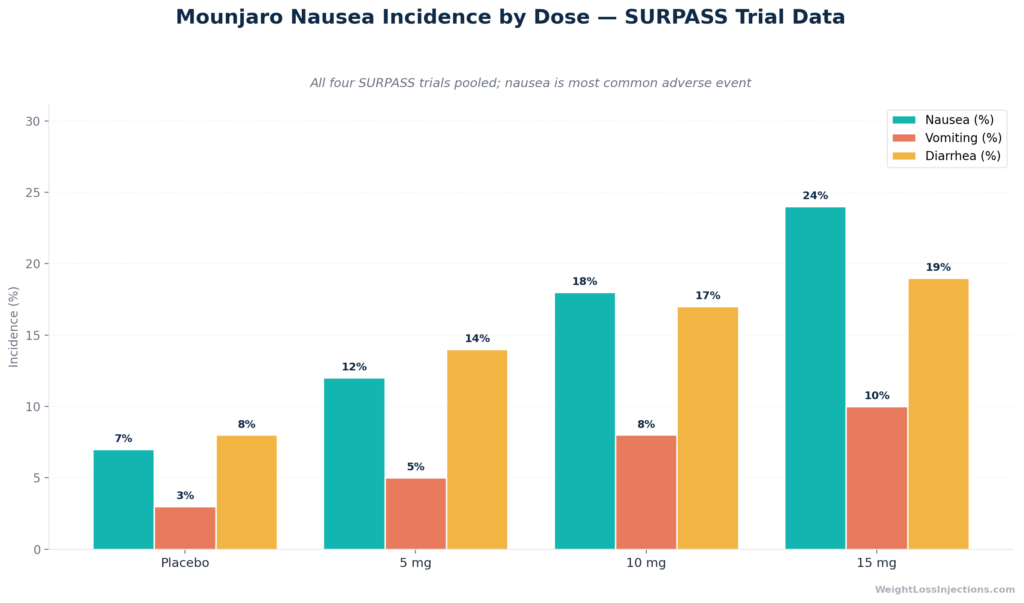
- Nausea is the single most common Mounjaro side effect, affecting approximately 12–18% of patients in clinical trials depending on dose — versus under 5% on placebo, per the FDA Mounjaro prescribing information.
- It is caused primarily by tirzepatide’s gastric emptying delay and direct stimulation of nausea receptors in the brainstem — both dose-dependent effects.
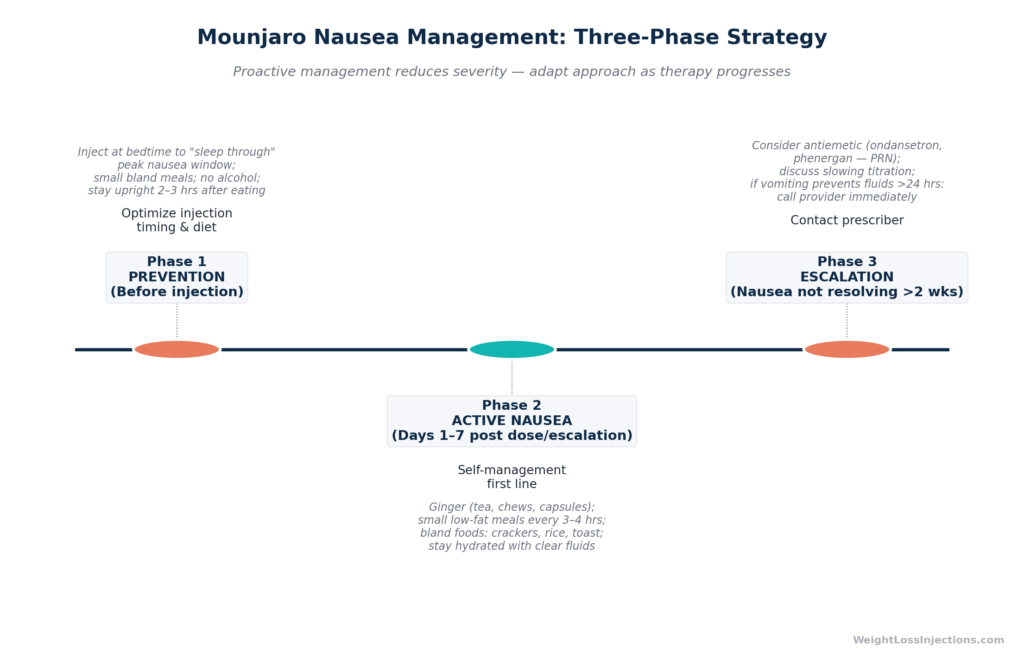
- Nausea is most intense during the first 1–2 weeks at each new dose. It peaks around days 2–5 after each injection and recurs at every dose escalation step throughout the titration schedule.
- After 8–12 weeks on a stable dose without escalation, GI side effects decline substantially and most patients report nausea is no longer a daily concern.
- Eight evidence-based strategies — from meal size and food choices to injection timing and antiemetic options — can meaningfully reduce symptom severity without requiring treatment discontinuation.
- Nausea alone is rarely a clinical reason to stop Mounjaro. If nausea is severe, the right move is a provider conversation about slowing titration — not stopping the drug.
- Red flags that require immediate or urgent medical attention: severe abdominal pain radiating to the back (possible pancreatitis), upper right abdominal pain with fever (possible gallbladder disease), or inability to keep fluids down for more than 24 hours.
Safety notice: This article is for educational purposes only. It does not constitute medical advice. The strategies below are evidence-based and consistent with the Mounjaro prescribing information. They do not replace guidance from your prescribing provider. If nausea is severe, persistent, or accompanied by abdominal pain radiating to the back, seek medical attention immediately. Physician reviewer: the WeightLossInjections.com Staff.
Why Does Mounjaro Cause Nausea?
If you are experiencing nausea on Mounjaro, the first thing worth knowing is this: it is not a sign that something has gone wrong. It is a predictable, pharmacologically explainable consequence of how tirzepatide works — and understanding the mechanism makes it significantly easier to manage.
The Primary Driver: Gastric Emptying Delay
Tirzepatide is a dual GIP (glucose-dependent insulinotropic polypeptide) receptor and GLP-1 (glucagon-like peptide-1) receptor agonist — the first drug of its class approved for type 2 diabetes (FDA Mounjaro prescribing information, §12.1). GLP-1 receptor activation directly slows gastric emptying — the rate at which food moves from the stomach into the small intestine. When gastric emptying is slowed, food remains in the stomach longer than normal, creating prolonged gastric distension. That stretch, combined with hormonal signals from incompletely emptied stomach contents, generates the sensation of nausea and early satiety that most patients describe in the first days after each dose.
This is not a side effect separate from Mounjaro’s mechanism — it is the mechanism. The same gastric emptying delay that causes nausea also reduces how quickly you feel hungry again, which drives the reduced caloric intake and weight loss that the drug produces. You cannot have one without the other, which is why nausea management focuses on working with the mechanism rather than blocking it.
The effect is dose-dependent: higher doses slow gastric emptying more aggressively, which explains why nausea rates increase with dose escalation and why each step up the titration ladder can bring a fresh episode. Per the FDA prescribing information, nausea affected approximately 12% of patients on 5 mg, 15% on 10 mg, and 18% on 15 mg in the placebo-controlled SURPASS trials — compared with under 5% on placebo. That incremental increase by dose is the gastric emptying effect made visible in trial data.
The Secondary Pathway: Brainstem Receptor Activation
Tirzepatide does not only act in the gut. GLP-1 receptors are expressed in the brainstem — specifically the area postrema, which is the chemoreceptor trigger zone (CTZ) that directly activates the brain’s vomiting center. When tirzepatide stimulates these central GLP-1 receptors, it can generate nausea independently of what is happening in the stomach (FDA Mounjaro prescribing information, §12.1). This is why some patients feel nauseated even on an empty stomach, and why nausea can begin within hours of injection rather than only after eating.
The brainstem receptor response is also what naturally diminishes over time. With sustained GLP-1 stimulation, the central receptors undergo partial adaptation — a process sometimes called receptor downregulation — which is the primary mechanism behind the well-documented improvement in nausea after weeks on a stable dose. The gut adapts; the brain’s nausea pathway adapts. But both need time, and neither adapts instantaneously to a new, higher dose.
Why the Dual-Agonist Mechanism Matters
Unlike semaglutide (Ozempic, Wegovy), which acts solely on GLP-1 receptors, tirzepatide also activates GIP receptors — adding a second pharmacological pathway with its own GI and central nervous system distribution. This dual-agonist mechanism is responsible for tirzepatide’s superior efficacy over semaglutide 1 mg on HbA1c and weight outcomes in SURPASS-2 (Frías et al., NEJM 2021). It also means the nausea mechanism is more complex than with GLP-1–only agents, and that patients who previously tolerated a GLP-1 agonist without incident may still experience nausea when starting Mounjaro.
Head-to-head in SURPASS-2, tirzepatide and semaglutide 1 mg showed broadly similar overall GI adverse event frequencies despite tirzepatide’s superior efficacy profile — indicating that the dual mechanism produces more clinical benefit without a proportionate increase in GI side effect burden at comparable doses. But the dual receptor engagement does mean that Mounjaro can produce a qualitatively different GI experience than prior GLP-1 experience might lead a patient to expect.
Appetite Suppression as Perceived Nausea
There is a fourth mechanism worth mentioning. GLP-1 receptor activation in the hypothalamus generates strong satiety signaling. Some patients interpret this profound suppression of hunger — a feeling of complete absence of appetite accompanied by mild queasiness — as nausea, even when the stomach itself is not grossly distended. This neurological proximity of satiety and nausea is real, and it helps explain why some patients report feeling “sick” even on an empty stomach, particularly in the early weeks of treatment before adaptation occurs.
When Nausea Is Most Likely to Occur: The Three-Phase Pattern
Nausea on Mounjaro is not random. It follows a predictable three-phase pattern tied to the titration schedule. Understanding this pattern in advance is one of the most effective things a patient can do — not because it makes nausea disappear, but because expected nausea is far more manageable than unexpected nausea.
Phase 1: The Starting Dose (Week 1 at 2.5 mg)
The 2.5 mg starting dose is not a therapeutic dose. It is a deliberate tolerability initiation step — the lowest dose at which tirzepatide can be given to allow the body a measured first exposure before any glycemic effect is expected (FDA prescribing information, §2). As a result, Phase 1 nausea is typically the mildest of any phase: the absolute drug concentration is low, and the GI tract is encountering tirzepatide’s mechanism for the first time rather than being rechallenged at a higher level.
Nausea in Phase 1 typically begins on days 1–3 after the first injection, reaching its peak around days 2–5 — consistent with the drug’s time to maximum plasma concentration (Tmax of 8–72 hours after subcutaneous injection, per the FDA prescribing information, §12.3). For most patients, it resolves within 7–10 days as the body begins the adaptation process. Expect mild queasiness, possible reduced appetite, and occasional light-headedness after eating. Vomiting at 2.5 mg is uncommon.
A common Phase 1 mistake: patients feel fine in the first days after injection, eat a large or high-fat meal on day 3 or 4 when nausea is actually peaking biologically, and conclude that the meal caused the nausea rather than the drug timing. Understanding that days 2–5 are the expected peak window helps patients plan food choices in advance rather than responding reactively.
Phase 2: Each Dose Escalation Step
This is the phase that surprises patients most, and it is the one that most commonly triggers unnecessary treatment discontinuation. Patients tolerate 2.5 mg without significant problems, feel confident at the 4-week mark, escalate to 5 mg — and nausea returns. They adapt. They escalate to 7.5 mg — nausea returns again. The Mounjaro prescribing information outlines a minimum five-escalation titration schedule: 2.5 → 5 → 7.5 → 10 → 12.5 → 15 mg, with at least 4 weeks between each step. At minimum, there are five potential escalation-triggered nausea windows between the starting dose and the maximum dose.
Escalation nausea typically begins within 2–7 days of the new (higher) dose and resolves within 7–14 days per escalation step — possibly slightly longer at the higher transitions (10 → 12.5 → 15 mg) because the absolute dose increment and resulting gastric effect are more pronounced. Phase 2 nausea is often more intense than Phase 1 for exactly that reason. The practical message: do not assume that tolerating one dose well predicts how the next escalation will feel. Each new dose is a new pharmacological event requiring its own adaptation period.
A critical point from the FDA prescribing information: providers may hold titration during significant GI adverse events and resume once tolerated. Staying at 2.5 mg for 8 weeks instead of the minimum 4 before moving to 5 mg is clinically acceptable and consistent with the label. Slower titration is not treatment failure — it is appropriate individualization.
Phase 3: Stable Maintenance Dose
After 8–12 weeks on a consistent dose without further escalation, the combination of central receptor adaptation and GI habituation substantially reduces nausea burden. As noted in the FDA prescribing information, “the majority of reports of nausea, vomiting, and/or diarrhea occurred during dose escalation and decreased over time.” Most patients on long-term stable Mounjaro treatment report that nausea is no longer a meaningful day-to-day concern. Residual Phase 3 nausea, when it occurs, is typically intermittent and mild — triggered by specific dietary choices (large meals, high-fat foods) rather than by the drug itself on a continuous basis.
This is the endgame. Patients who power through the escalation windows with good dietary practices and provider communication almost universally reach Phase 3. Patients who stop during Phase 2 — often at the 5 mg or 7.5 mg escalation — typically do so at the moment when adaptation is 7–10 days away.

Numbered icon-based tips infographic — 8 strategies to reduce Mounjaro nausea with a brief label and rationale for each
Numbered icon-based tips infographic — 8 strategies to reduce Mounjaro nausea with a brief label and rationale for each
8 Evidence-Based Tips to Reduce Mounjaro Nausea
The following strategies are grounded in the pharmacology of tirzepatide-associated nausea and consistent with guidance in the Mounjaro prescribing information. The most important practical note: implement two or three of these simultaneously rather than testing them one at a time. Mounjaro nausea involves multiple concurrent mechanisms, and addressing only one — say, food choice — while ignoring injection timing or portion size leaves the other contributors unmanaged.
Tip 1: Eat Smaller, More Frequent Meals
Target 4–6 small meals or snacks per day rather than 3 standard meals. Smaller food volumes produce less gastric distension in a stomach that is emptying more slowly than normal. With tirzepatide-induced gastric emptying delay, a large meal that would have cleared the stomach in 3–4 hours may now take 5–7 hours — and the resulting prolonged distension is the primary driver of post-meal nausea.
Eat to 70–80% fullness and stop deliberately. Tirzepatide means that fullness continues building for 20–30 minutes after the meal ends. What feels like a reasonable 80% at the table can feel like overfilling an hour later. The Mounjaro prescribing information specifically notes that smaller meal sizes reduce GI adverse event burden — direct prescribing guidance, not general wellness advice.
Tip 2: Avoid High-Fat, Fried, and Greasy Foods
Fat is the slowest macronutrient to digest, and on tirzepatide it compounds the gastric emptying delay dramatically. A high-fat meal that might sit in an unmedicated stomach for 4 hours could remain for 7–9 hours on Mounjaro, creating sustained distension and worsening nausea well past the meal itself. The FDA prescribing information specifically recommends avoiding high-fat foods to reduce GI adverse events. The highest-risk items during peak nausea days: fried foods, fast food, full-fat dairy in large quantities, heavy cream sauces, and pizza with heavy cheese. Healthy fats from avocado and olive oil remain appropriate in modest amounts at lower-nausea points in the week.
For a comprehensive dietary guide, see our article on Mounjaro foods to avoid.
Tip 3: Space Fluids Away from Meals
Drinking large amounts of fluid immediately before, during, or after meals adds volume to a stomach that is already emptying slowly. The combined distension from food and fluid together is worse than either alone. A practical protocol: avoid drinking more than a few sips in the 30 minutes before a meal and for 30–60 minutes after eating. Stay adequately hydrated throughout the day via consistent small increments — sipping water between meals rather than gulping during them.
Hydration is especially important because nausea can suppress both appetite and thirst simultaneously. If you are not eating or drinking much during peak nausea days, you are at risk of meaningful dehydration — which not only worsens nausea in a self-reinforcing cycle but also increases the risk of the acute kidney injury that the FDA prescribing information §5.5 identifies as a potential complication of severe GI adverse events. Actively tracking fluid intake during high-nausea periods prevents this from becoming a more serious problem.
Tip 4: Choose Injection Timing Strategically
Mounjaro can be injected at any time of day, with or without food — per the FDA prescribing information §2. Many patients find evening or bedtime injections work best: the worst 8–12 hours of rising drug concentration occur during sleep rather than a workday. Others prefer morning injections to monitor their response and hydrate actively. Both approaches are valid — what matters is consistency. A fixed weekly injection day allows you to plan around the predictable days 2–5 peak window. If morning injections are significantly impairing your daytime functioning, discuss an evening injection trial with your provider.
Tip 5: Eat Bland Foods During Peak Nausea Days (Days 2–5 Post-Injection)
During the days 2–5 window after each injection — when nausea intensity peaks — defaulting to low-stimulation foods reduces the dietary load at a time when the GI system is already taxed. This is not a permanent dietary restriction; it is a strategic protocol for the highest-risk window each week.
The BRAT approach (bananas, rice, applesauce, toast) is the classic GI illness framework, and it translates directly here. Additional options well-tolerated during peak nausea: plain oatmeal, plain crackers, clear broth, plain pasta, boiled or baked potato without heavy toppings, and small portions of lean protein (chicken breast, white fish). Avoid spicy foods, highly acidic foods (citrus, tomatoes, vinegar-based dressings), very sweet or high-sugar items, carbonated drinks, and strong-smelling foods during this window. The principle is to reduce every GI stimulus simultaneously — because tirzepatide is already providing more than enough stimulus on its own.
Small snacks every 2–3 hours during peak days are preferable to forcing standard meals. Do not eat simply because it is mealtime if nausea is active — a small snack maintains blood sugar and prevents the rebound hunger that often triggers a large compensatory meal and significantly worse nausea.
Tip 6: Stay Upright After Eating
Tirzepatide’s gastric emptying delay means food sits in the stomach longer than normal. Lying down with a distended stomach — regardless of meal size — increases the mechanical pressure on the lower esophageal sphincter, promoting gastroesophageal reflux and substantially worsening nausea. Reflux and nausea compound each other: reflux acid reaching the throat adds a distinct acidic irritation on top of the baseline nausea from gastric distension.
The practical rule: remain upright (seated or standing) for at least 20–30 minutes after any meal or snack. A gentle 10–20 minute walk after eating can actively improve outcomes — mild physical activity promotes gastric motility and helps move food through the system, reducing the duration of post-meal distension. This is not vigorous exercise (which would redirect blood flow away from digestion); it is a slow, deliberate walk specifically to stimulate GI transit.
Avoid reclining on a sofa or couch immediately after eating during the first weeks at each new dose. If watching television after dinner is your routine, consider sitting upright rather than reclining for the 30 minutes post-meal during peak nausea weeks.
Tip 7: Try Ginger
Ginger has demonstrated anti-nausea properties across multiple well-studied contexts — chemotherapy-induced nausea, pregnancy-related morning sickness, and postoperative nausea — through mechanisms including 5-HT3 receptor antagonism (the same receptor class targeted by ondansetron) and modulation of gastric motility. While no large RCT has been conducted specifically for GLP-1–associated nausea, the mechanistic overlap is directly relevant to tirzepatide’s pathways. Options: fresh ginger tea, ginger chews (widely available at pharmacies), or ginger capsules at 250–500 mg doses. Take it preventively — before the expected days 2–5 peak window rather than after nausea is established. Patients on anticoagulants should discuss dose with their provider.
Tip 8: Discuss Antiemetic Options with Your Provider
For nausea severe enough to interfere with daily function or adequate nutrition, prescription and OTC antiemetic options are available and appropriate when managed by a provider. Ondansetron (Zofran) is the most commonly used prescription antiemetic for GLP-1–associated nausea — a 5-HT3 receptor antagonist with an established safety record. OTC options to discuss with your provider: meclizine (Dramamine Less Drowsy), Emetrol, and bismuth subsalicylate (Pepto-Bismol — confirm there are no interactions with your diabetes medications). Acupressure wristbands targeting the P6 (Neiguan) acupoint are a drug-free alternative; some patients report meaningful relief within 20–30 minutes.
Do not stop Mounjaro unilaterally because of nausea. Contact your provider to discuss antiemetic options, a temporary dose hold, or a delayed titration schedule. Per the FDA prescribing information, dose holds for GI adverse events are explicitly contemplated — this is clinically normal, not treatment failure.

Two-column comparison table: “Foods That Worsen Mounjaro Nausea” vs
Two-column comparison table: “Foods That Worsen Mounjaro Nausea” vs
Our Top 3 · October 2026
The best GLP-1 providers right now
Independently reviewed. Ranked by price, medication access, provider quality, and patient outcomes.
Renew GLP
Personalized GLP-1, GIP plans: Semaglutide & Tirzepatide.
Medvi
No membership or hidden fees. Everything you need is included.
Trimi
US-licensed clinicians and shipped to your door, from $99/mo.
Foods and Eating Habits That Make Mounjaro Nausea Worse
Understanding the dietary triggers most likely to worsen Mounjaro nausea is as important as knowing the strategies that help. In clinical practice, most patients who report severe nausea during titration can identify a dietary contributor after the fact — a large restaurant meal on day 3, a high-fat breakfast on day 4, carbonated drinks during peak days. Preventing these triggers in advance is almost always easier than recovering from them.
Foods Most Likely to Trigger or Amplify Nausea
High-fat and fried foods head the list for the mechanistic reason already described — fat compounds tirzepatide’s gastric emptying delay more than any other macronutrient. French fries, fried chicken, pizza with heavy cheese, greasy fast food, and full-fat creamy sauces are the most common culprits. The FDA prescribing information specifically identifies avoidance of high-fat foods as a strategy to reduce GI adverse events.
Spicy foods stimulate GI motility and mucosal receptors in ways that add a distinct irritation pathway on top of tirzepatide’s existing GI effects. Capsaicin in particular can trigger nausea by stimulating gastric TRPV1 receptors, worsening the discomfort of a stomach that is already working sluggishly.
Very sweet foods and sugary beverages promote rapid osmotic shifts in a stomach with delayed emptying, which can trigger a reflex nausea response. High-sugar drinks — including fruit juice in large quantities — are particularly problematic because they add caloric load and osmotic stimulus without the satiety value of solid food.
Carbonated beverages introduce gas into a stomach that has limited capacity to manage it efficiently when emptying is slowed. The resulting gastric pressure and bloating amplify both nausea and early satiety. This includes sparkling water, soda, and carbonated mixers — avoid all of these during peak nausea days.
Alcohol can increase GI mucosal irritation and worsen nausea. For patients also using insulin or sulfonylureas alongside Mounjaro, alcohol adds a meaningful hypoglycemia risk. See our article on Mounjaro and alcohol for a full discussion.
Very large meal portions — regardless of food type — are the most common single trigger for post-injection nausea episodes. The drug-food interaction is dose-dependent: more food in a slower-emptying stomach means more distension, more nausea, more distress. Even healthy food in large quantities can trigger significant nausea during peak escalation weeks.
Eating Habits That Make Nausea Worse
Beyond food choices, several behavioral patterns reliably worsen Mounjaro nausea:
- Skipping meals and then eating a large compensatory meal. Nausea often suppresses appetite sufficiently that patients skip breakfast and lunch, then feel genuinely hungry by dinner and eat a full meal. The resulting large-meal distension in a stomach that has been quiet all day can trigger the most severe nausea episodes of the week.
- Eating within 30 minutes of lying down. The reclined position with a slow-emptying stomach dramatically increases reflux and nausea. Evening meals followed immediately by couch or bed are a common pattern in patients with the worst nausea reports.
- Drinking carbonated beverages with or immediately after meals. Gas and gastric distension together are significantly worse than either alone during peak nausea days.
- Rushing through meals. Eating quickly prevents the incremental fullness signals that should moderate intake. In a stomach with delayed emptying, rapid eating reliably leads to overfilling before the sensation of fullness can register.
Eating Habits That Help
A practical framework for managing Mounjaro nausea through food behavior:
- Smaller plates. Using a physically smaller plate automatically reduces default portion sizes and makes 70–80% fullness easier to achieve without ongoing mental calculation.
- Utensil pausing. Put down your fork between bites. This simple habit slows the eating pace enough that fullness signals — which are biologically delayed on tirzepatide — can register before the next portion is consumed.
- Food diary during peak weeks. Tracking what you eat and noting which specific foods or meal sizes correspond to worse nausea days is one of the most effective personalization tools available. Tolerance varies considerably between patients — some handle dairy well during escalation weeks; others cannot. A brief food log during the first 2–3 weeks at each new dose builds an individualized picture that generalizes to all subsequent escalations.
Dietary guidance framework consistent with Healthline’s Mounjaro diet review and FDA patient counseling guidance in the prescribing information.
Does Mounjaro Nausea Mean It’s Working?
This is one of the most common questions patients ask, and the answer is more nuanced than yes or no.
Nausea is not a direct indicator of glycemic efficacy. It reflects the drug’s gastric-emptying and central nausea-pathway activation — mechanisms that are present regardless of whether the drug is achieving therapeutic HbA1c reduction. In SURPASS-1 (tirzepatide monotherapy vs. placebo, published in The Lancet, June 2021), patients who did and patients who did not experience significant GI adverse events both achieved meaningful HbA1c reductions. The drug works independent of whether you are nauseated.
That said, nausea and efficacy share a common cause. The same gastric emptying delay that causes nausea also reduces how much food you consume and how quickly you feel hungry — both of which directly contribute to the caloric deficit that drives weight loss. In that sense, early nausea is a sign that tirzepatide’s central mechanism is active. But patients with minimal nausea are not getting less of the drug’s benefit; they have simply adapted more readily to the pharmacological effect that produces both nausea and appetite suppression.
The clinical interpretation: nausea that resolves does not mean the drug has stopped working. Adaptation to GI effects is expected and normal. The resolution of nausea on a stable dose is not a failure of efficacy — it is the goal of the titration protocol. Similarly, the return of nausea at each escalation step is not the drug “starting to work again” — it is the pharmacological response to a new, higher dose that will also resolve over time.
Some patients find early nausea psychologically reassuring — confirmation that the drug is active and doing something. Others find it demoralizing and worry that the absence of nausea means the drug is not working. Both perspectives are understandable, and the clinical reality supports neither interpretation in isolation. The appropriate marker of Mounjaro’s efficacy is not nausea — it is HbA1c reduction and body weight change at the scheduled monitoring timepoints.
When Nausea Is a Warning Sign: Know These Red Flags
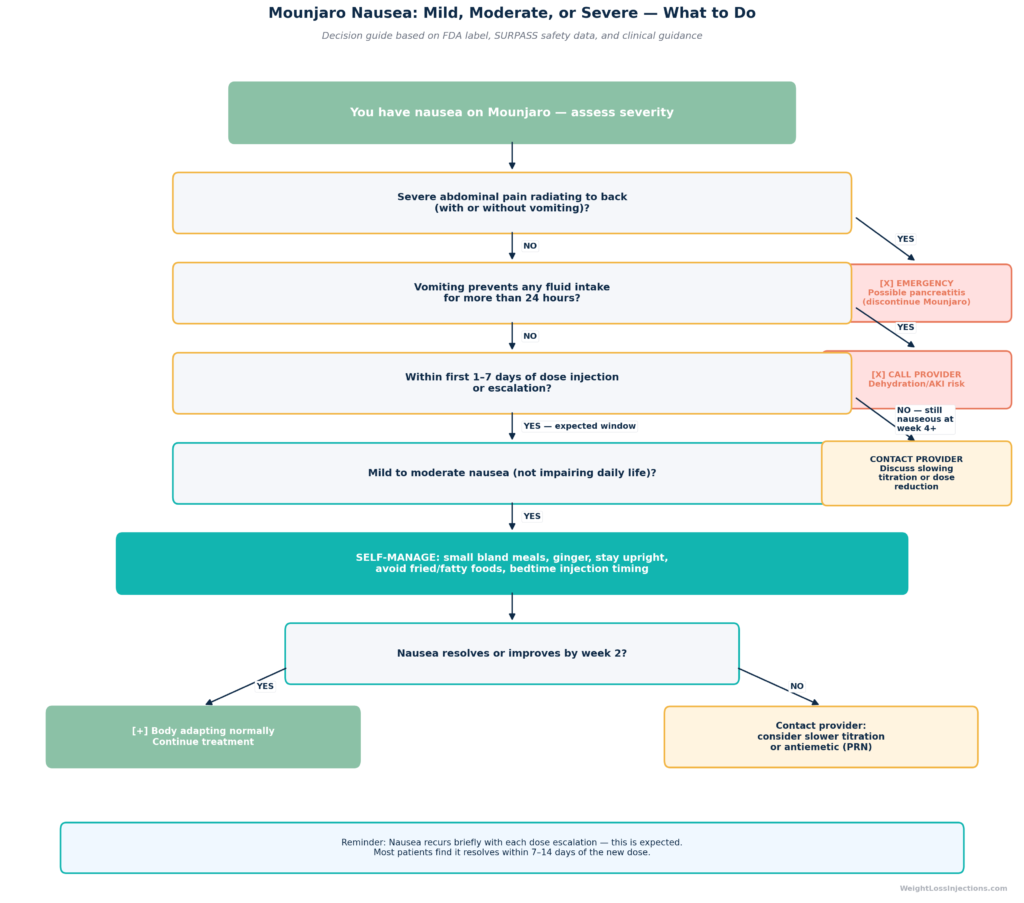
Most Mounjaro nausea is physiologically benign — uncomfortable but not dangerous, and fully expected within the normal dose-escalation arc. However, nausea can also be the presenting symptom of a serious underlying complication requiring immediate attention. Distinguishing between expected drug-related nausea and a developing emergency is clinically critical.
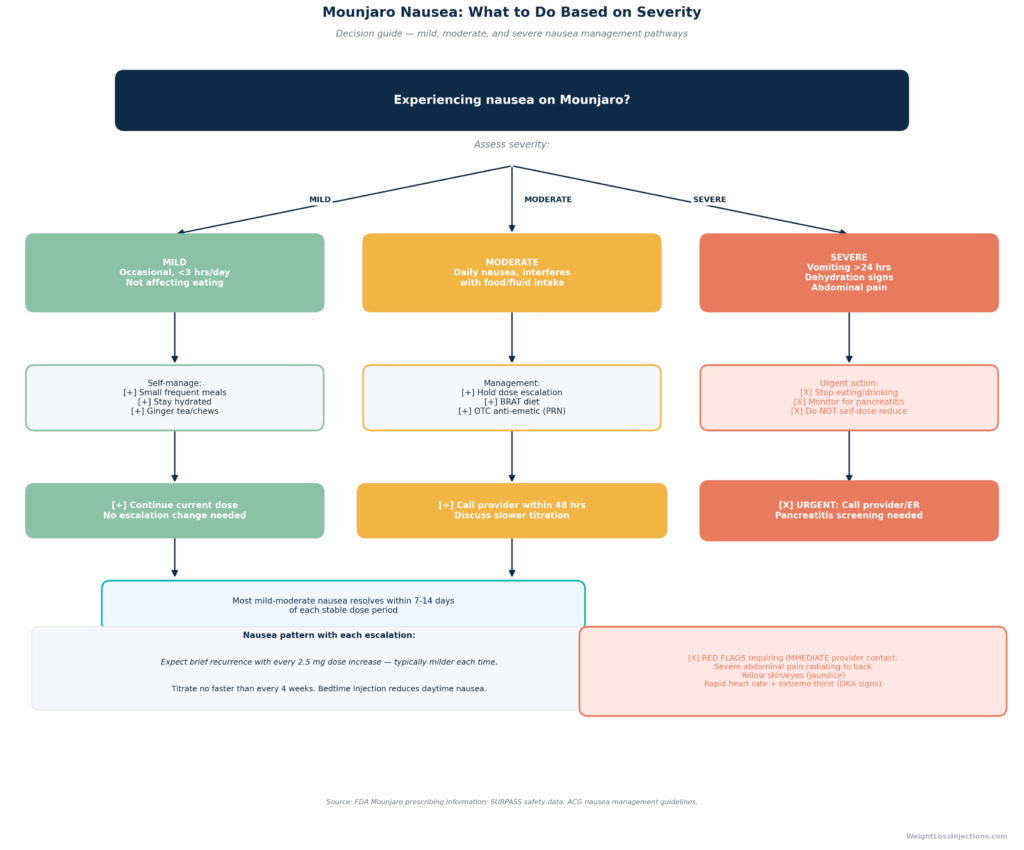
Decision flowchart — “Experiencing Mounjaro nausea?” with severity-based branching
Seek Emergency Care Immediately For:
Severe abdominal pain radiating to the back. This combination is the cardinal presentation of acute pancreatitis. Per the FDA Mounjaro prescribing information §5.2, acute pancreatitis — including fatal and non-fatal hemorrhagic or necrotizing pancreatitis — has been observed with GLP-1 receptor agonists. In SURPASS clinical trials, pancreatitis events occurred in 0.23 per 100 patient-years for tirzepatide versus 0.11 per 100 patient-years for comparators. If you develop severe mid-to-upper abdominal pain that radiates to the back — with or without vomiting — discontinue Mounjaro and seek emergency evaluation immediately. Per the FDA label, if pancreatitis is confirmed, do not restart Mounjaro. This is a different clinical situation from typical Mounjaro nausea. Do not wait to see if it improves.
Seek Urgent Provider Contact For:
Nausea combined with upper right abdominal pain, fever, or jaundice. These signs together suggest acute gallbladder disease — cholelithiasis (gallstones) or cholecystitis (gallbladder inflammation). Per the FDA prescribing information §5.3, cholelithiasis and cholecystitis were reported in 0.6% of tirzepatide patients versus 0% with placebo in controlled clinical trials. GLP-1 receptor activation is thought to affect bile composition and gallbladder contractility — making this a class-level risk. Pain localized to the right side below the rib cage, particularly if it radiates to the right shoulder, that accompanies nausea is not typical drug-related nausea and warrants prompt evaluation.
Vomiting preventing any fluid intake for more than 24 hours. The FDA prescribing information §5.5 specifically identifies acute kidney injury (AKI) as a risk when GI adverse events cause significant volume depletion. If you cannot keep fluids down for 24 hours, you are at meaningful risk of dehydration sufficient to impair kidney function. Patients with pre-existing renal impairment, or who take diuretics, ACE inhibitors, ARBs, or NSAIDs, face elevated AKI risk at lower levels of fluid loss and should have a lower threshold for contacting their provider.
Signs of dehydration warranting same-day contact: dark yellow or amber urine, fewer than three urinations in 24 hours, dizziness or lightheadedness on standing, rapid heart rate, or pronounced weakness.
Call Your Provider (Non-Emergency) When:
- Nausea persists at moderate-to-severe intensity for more than 14 days without improvement at a stable dose — this is outside the expected pattern and suggests a dose adjustment conversation is warranted
- Nausea is preventing adequate nutrition — if you cannot sustain reasonable caloric and protein intake across several consecutive days, your provider needs to know
- You are actively considering stopping Mounjaro because of nausea — discuss dose hold or reduction before making that decision unilaterally; stopping without a plan has glycemic consequences for T2DM management
- You have lost more than 5% of body weight in the first 2–3 weeks of treatment — this may indicate excessive caloric restriction secondary to unmanaged nausea rather than therapeutic weight loss
Adjusting the Titration Schedule (Discuss With Your Provider):
The Mounjaro prescribing information explicitly allows for dose holds and titration delays during significant GI adverse events. If nausea is still significantly impairing daily function at week 4 on a given dose, ask your provider about staying at the current dose for 8 weeks instead of escalating at week 4. Staying at 2.5 mg for 8 weeks before advancing to 5 mg — rather than the minimum 4 weeks — is clinically acceptable and reduces escalation-triggered nausea without meaningfully delaying therapeutic benefit. The same option is available at every subsequent escalation step.
If tolerability is the primary barrier to treatment, the clinical goal is the lowest effective maintenance dose — not the highest dose achievable on the fastest possible schedule. Meaningful T2DM benefit occurs at 5 mg and 7.5 mg; 15 mg is the maximum, not the target.
Our Take at WeightLossInjections.com
Nausea is the aspect of Mounjaro treatment that most consistently determines whether patients stay on therapy long enough to see its full benefit — and in our view, it is also the most manageable aspect of treatment when patients are given the right information before it starts.
The patterns we see in clinical practice align closely with what the trial data shows: nausea is expected, dose-dependent, front-loaded in the titration phase, and almost universally improvable with the right combination of dietary strategy, injection timing, and — when needed — provider-guided antiemetics or titration adjustment. The patients who struggle most with Mounjaro nausea are not necessarily those with the greatest biological sensitivity; they are often those who were not told what to expect and therefore had no plan in place when days 2–5 of each escalation arrived.
The single most predictive factor for managing Mounjaro nausea successfully is preparation. Patients who enter the first escalation knowing that nausea peaks at days 2–5 post-injection, knowing which foods to avoid that week, knowing that the symptom will improve within 7–14 days, and knowing that escalation recurrence is pharmacologically normal — these patients adapt. Patients who encounter nausea as a surprise, interpret it as a sign of harm or treatment failure, and make impulsive decisions about discontinuation — these patients stop prematurely.
If you are currently on Mounjaro and struggling with nausea, the strategies in this article are your starting point. Implement two or three simultaneously, give each escalation the full 7–14 days to show improvement before drawing conclusions about tolerability, and involve your provider in any decision about dose adjustment or antiemetic support.
If you are considering starting Mounjaro and want to do so with a provider who actively manages side effects throughout titration — adjusting your schedule based on tolerance, monitoring for red flag symptoms, and supporting dietary strategy from the first dose — WeightLossInjections.com connects you with licensed telehealth providers who treat nausea management as part of the protocol, not an afterthought. Starting at [$X/month] with [service detail] included in your treatment plan.
FAQ
It depends on which phase of treatment you are in. First-dose nausea at 2.5 mg typically peaks on days 2–5 post-injection and resolves within 7–10 days for most patients. With each subsequent dose escalation, nausea recurs and usually resolves within 7–14 days per step, per the Mounjaro prescribing information. After 8–12 weeks on a stable maintenance dose without escalation — consistent with the front-loaded nausea pattern documented in SURPASS trials — nausea rates decline substantially and most patients report it is no longer a meaningful daily concern. Nausea that persists beyond two weeks on a stable dose without any improvement is outside the expected pattern and warrants a provider conversation.
Yes — but with an important qualification. Nausea improves after the body adapts to each dose level, but it returns when the dose increases. The pattern is: nausea at first exposure → adaptation over 1–2 weeks → nausea returns at the next escalation step → adaptation again. This cycle can repeat up to five times across the full titration schedule from 2.5 mg to 15 mg (FDA prescribing information §2). Once a patient reaches their maintenance dose and remains stable on it, the escalation cycle ends and nausea typically subsides to a background level. So the answer is “yes, eventually” — but patients should understand that “getting better” is not a linear progression; it is a series of peaks and valleys tied to the titration schedule. The long-term endpoint is a substantially better quality of life than the early escalation weeks suggest.
Start with non-pharmacological approaches: smaller and less frequent large meals, avoiding high-fat and fried foods, staying upright after eating, adjusting injection timing to evenings, and ginger tea or ginger chews during peak nausea days (days 2–5 post-injection). These are low-risk, widely available, and effective for the majority of patients with mild-to-moderate nausea. If nausea is severe or interfering with daily function or nutrition, discuss antiemetic options with your prescribing provider. Ondansetron (Zofran) is commonly prescribed off-label for GLP-1–associated nausea — it has an established safety record and is effective for tirzepatide-related symptoms in clinical practice. OTC options to discuss with your provider include meclizine (Dramamine Less Drowsy) and bismuth subsalicylate (Pepto-Bismol). Do not take any new medication without confirming with your provider that it is appropriate alongside your existing medication regimen, particularly if you are on insulin or sulfonylureas.
The foods most likely to worsen Mounjaro nausea are: fried and greasy foods (the single most mechanistically significant category — fat dramatically compounds the gastric emptying delay that tirzepatide causes), spicy foods, carbonated beverages, very sweet and high-sugar foods, alcohol, and large portions of any type. The FDA prescribing information specifically recommends avoiding high-fat meals to reduce GI adverse events. During the peak nausea window of days 2–5 after each injection, sticking to bland, low-fat, easily digestible foods — the BRAT framework (bananas, rice, applesauce, toast), clear broth, plain crackers, plain oatmeal — meaningfully reduces symptom severity for most patients. For a full dietary reference guide, see our article on Mounjaro foods to avoid.
Not directly. Nausea reflects tirzepatide’s pharmacological effects on gastric emptying and central nausea pathways — mechanisms that operate independent of HbA1c-lowering efficacy. Patients who experience significant nausea and patients who experience minimal nausea both achieve meaningful glycemic and weight outcomes in the SURPASS-1 trial (The Lancet, June 2021). The same mechanism produces both nausea and appetite suppression — so in a narrow sense they share a cause — but the FDA prescribing information does not identify nausea as a marker of efficacy, and the absence of nausea does not mean the drug is inactive. The appropriate marker of Mounjaro’s efficacy is HbA1c reduction and weight change at scheduled monitoring appointments — not the presence or intensity of GI side effects. Nausea resolving on a stable dose is normal adaptation, not loss of drug effect.
Not without first consulting your prescribing provider. Nausea alone — absent the serious red flag symptoms described above — is almost never sufficient clinical reason to discontinue Mounjaro. The drug’s gastric-emptying mechanism produces expected, temporary nausea during titration; this is built into the prescribing protocol. Before making any decision about stopping, contact your provider to discuss the options: a temporary dose hold, a slower titration schedule (staying at your current dose for 8 weeks instead of 4 before escalating), or an antiemetic prescription for use during peak nausea days. These adjustments resolve the overwhelming majority of nausea complaints without requiring discontinuation. Stopping Mounjaro abruptly has clinical consequences for T2DM blood sugar management and removes the glycemic benefit of treatment. Nausea management is a solvable problem; work through it with your provider before stopping.
This article is for educational purposes only and is not a substitute for professional medical advice, diagnosis, or treatment. WeightLossInjections.com’s medical team reviews content regularly; last medical review: June 2026. Physician reviewer: the WeightLossInjections.com Staff. Always consult your licensed healthcare provider before making any changes to your medication regimen.