![Unbranded [pillar-drug-class] injection pen on a neutral background — WeightLossInjections.com editorial hero](https://weightlossinjections.com/wp-content/uploads/2026/07/hero_mounjaro_c2_dosing-1200x675.png)
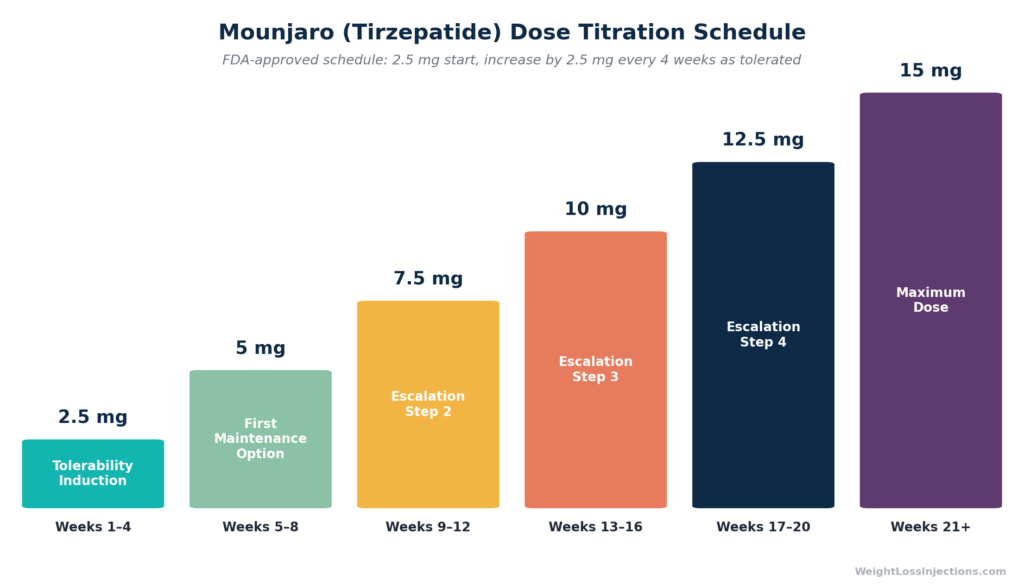
Step-up titration chart — gantt-style or step-chart visual
- Mounjaro (tirzepatide) starts at 2.5 mg once weekly — a tolerability-only step that is explicitly not intended to control blood sugar.
- After 4 weeks, the dose increases to 5 mg, then advances in 2.5 mg increments every ≥4 weeks.
- FDA-approved maintenance doses are 5 mg, 10 mg, and 15 mg; the 7.5 mg and 12.5 mg doses are titration steps, not long-term maintenance options.
- The maximum dose is 15 mg once weekly — it cannot be exceeded.
- Minimum time from start to maximum dose: 20 weeks.
- If you miss a dose and ≤4 days have passed, take it immediately. If >4 days have passed, skip it and resume your regular schedule.
- All dosing information in this article is derived from the FDA Mounjaro Prescribing Information. Your provider determines your individual titration schedule — do not adjust your dose without medical guidance.
The Full Mounjaro Dose Escalation Schedule (Complete Reference Table)
Mounjaro’s titration design is intentional and methodical. Unlike some medications where you simply start at a therapeutic dose, tirzepatide requires patients to work through a six-step escalation ladder before reaching the maximum dose. That design reflects the drug’s dual mechanism — activating both GIP and GLP-1 receptors simultaneously has a more pronounced effect on gastric emptying than single-receptor GLP-1 drugs, and the body needs time to adapt before full therapeutic doses are tolerated.
The table below is the complete titration sequence per FDA Mounjaro Prescribing Information, Section 2:
| Step | Dose | Approximate Timing | Clinical Purpose | Approved Maintenance Dose? |
|---|---|---|---|---|
| 1 | 2.5 mg | Weeks 1–4 (first 4 weeks) | Tolerability initiation — NOT for glycemic control | No |
| 2 | 5 mg | Weeks 5–8 (after ≥4 weeks at 2.5 mg) | First therapeutic / maintenance dose | Yes |
| 3 | 7.5 mg | Weeks 9–12 (after ≥4 weeks at 5 mg) | Titration step only | No |
| 4 | 10 mg | Weeks 13–16 (after ≥4 weeks at 7.5 mg) | Second maintenance option | Yes |
| 5 | 12.5 mg | Weeks 17–20 (after ≥4 weeks at 10 mg) | Titration step only | No |
| 6 | 15 mg | Week 21+ (after ≥4 weeks at 12.5 mg) | Maximum dose; third maintenance option | Yes |
Source: FDA Mounjaro Prescribing Information §2
Key Points About the Titration Structure
Three maintenance doses, not six. Not every dose level is a long-term stopping point. Per the FDA prescribing information, Mounjaro has three officially designated maintenance doses: 5 mg, 10 mg, and 15 mg. The 7.5 mg and 12.5 mg doses serve purely as titration steps — they exist to smooth the transition between maintenance levels, not to serve as indefinite treatment doses. Patients experiencing good tolerability at 7.5 mg typically continue to 10 mg (the next maintenance level) rather than remaining there long-term.
The 4-week minimum is not negotiable. The interval between dose increases is a minimum of 4 weeks — this comes directly from the FDA label, not from general prescribing convention. Rushing the titration schedule does not improve outcomes; it increases the likelihood of GI adverse events that can cause patients to discontinue treatment entirely.
Escalation is not required. The prescribing information explicitly does not require patients to reach 15 mg. If your blood sugar targets are met at 5 mg or 10 mg — and side effects are manageable at that level — there is no clinical mandate to escalate further. The goal is the lowest effective dose, not the highest tolerated dose.
Administration details (all doses): Once weekly at any time of day, with or without food. Injection sites: abdomen, outer thigh, or upper arm — rotate with each dose. Do not inject the same site two weeks in a row. The injection day may be changed as long as the new day and the old day are at least 3 days (72 hours) apart, per FDA Prescribing Information §2.
WeightLossInjections.com editorial note: The dosing schedule above reflects the FDA-approved prescribing information for Mounjaro (tirzepatide) as of 2026. Individual providers may slow the titration pace based on tolerability — some patients stay at 2.5 mg for 6–8 weeks before advancing. This is clinically appropriate and does not represent a failure. Do not change your dose without direct guidance from your prescribing provider. Reviewed by the WeightLossInjections.com Staff.
Why Tirzepatide Starts at 2.5 mg — Not at a Therapeutic Dose
This is one of the most important things to understand about Mounjaro before you fill your first prescription: the starting dose is not doing what you think it’s doing.
The 2.5 mg dose is explicitly classified in the FDA Prescribing Information §2 as a “treatment initiation” dose — and the label specifies directly that it is “not intended for glycemic control.” That language is unusual in drug labeling. Normally a starting dose is the lowest effective dose; for Mounjaro, the starting dose is entirely a tolerability measure.
Why the Body Needs This Adaptation Period
Tirzepatide is a dual GIP and GLP-1 receptor agonist — the first drug approved in its class, per FDA Prescribing Information §12.1. Both the GIP receptor and the GLP-1 receptor independently slow gastric emptying when activated. Mounjaro activates both simultaneously. The combined effect on gastric motility is substantially more pronounced than what patients experience with GLP-1-only drugs like Ozempic or Trulicity, particularly when first starting treatment.
The practical result: if patients began at a full therapeutic dose (5 mg or higher), the rate of nausea, vomiting, and diarrhea severe enough to cause treatment discontinuation would be far higher. The 2.5 mg initiation step allows the GI tract to adapt to the drug’s mechanism before therapeutic concentrations are introduced.
The pharmacokinetics support this rationale. Tirzepatide has a half-life of approximately 5 days, and steady-state plasma concentrations are achieved after approximately 4 weeks of weekly dosing, per FDA Prescribing Information §12.3. This means that after four weeks at 2.5 mg, the body has fully equilibrated to that concentration level — which is precisely when it becomes safe to introduce the first therapeutic dose of 5 mg.
Clinical Evidence: When Side Effects Peak
In the SURPASS phase 3 clinical trials — the program that supported Mounjaro’s FDA approval — GI adverse events were most common during the first 4 weeks and at each dose-escalation transition, per data reported with the SURPASS-1 results published in The Lancet, June 2021. This pattern is consistent with the mechanism: every time the dose increases, the GI tract needs to adapt again, which is why side effects tend to resurface briefly at each step and then resolve.
What to Expect at 2.5 mg
Patients starting on 2.5 mg should expect two things: (1) possible mild nausea or GI discomfort during the first few weeks, and (2) little to no improvement in blood sugar or body weight — and that is completely normal. The dose is not failing. It is performing exactly as designed. Glucose improvement and weight loss begin at the 5 mg maintenance level.
One additional point for patients switching from other GLP-1 medications: do not skip the 2.5 mg starting dose even if you have previously used Ozempic, Trulicity, or another GLP-1 agonist. Mounjaro’s dual GIP/GLP-1 mechanism is pharmacologically distinct, and the GI adaptation required is independent of prior GLP-1 experience. Starting at a higher dose after GLP-1 experience without a 2.5 mg initiation period is not supported by the prescribing information and increases tolerability risk.
How and When to Increase Your Mounjaro Dose
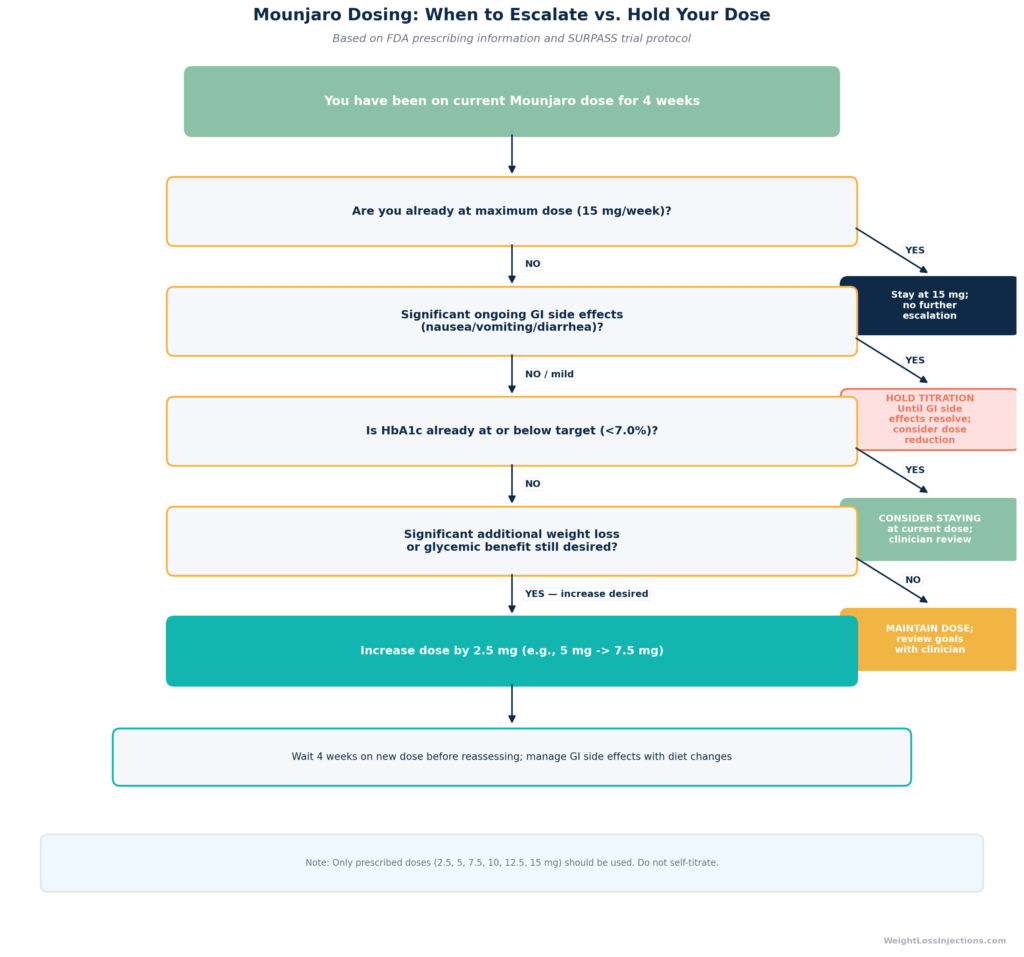
The titration schedule described above is the framework — but the decision of when to increase within that framework belongs to your prescriber, not to you, and not to a fixed calendar date.
The Clinical Decision to Escalate
The FDA Prescribing Information §2 establishes the minimum interval between increases (4 weeks) and describes escalation as appropriate “if additional glycemic control is needed.” Both conditions matter:
- Minimum interval not met: Do not escalate sooner than 4 weeks, even if side effects are minimal.
- Glycemic targets already met: If your A1C is at goal, there may be no clinical reason to escalate further.
- GI side effects unresolved: Do not escalate if nausea, vomiting, or diarrhea are still significantly affecting quality of life. Hold at the current dose until symptoms are manageable, then reassess.
A dose hold — staying at your current step for longer than 4 weeks because of tolerability — is not a failure of the protocol. It is the protocol working as intended.
What Each Dose Step Actually Delivers
The SURPASS-1 trial (40-week, double-blind, placebo-controlled; N=478; treatment-naïve T2DM patients) provides the most direct evidence of what each maintenance dose achieves when used as monotherapy. Published in The Lancet, June 2021:
| Dose | HbA1c Reduction (from ~7.94% baseline) | Body Weight Reduction |
|---|---|---|
| Placebo | +0.04% | −0.7 kg |
| 5 mg | −1.87% | −7.0 kg (−7.9%) |
| 10 mg | −1.89% | −8.5 kg (~9.7%) |
| 15 mg | −2.07% | −9.5 kg (−11.0%) |
Several things stand out in this data. First, the 5 mg dose produced −1.87% HbA1c reduction — a clinically substantial improvement, exceeding most clinical targets for a diabetes medication at the lowest maintenance dose. Second, the difference between 5 mg and 10 mg on HbA1c is relatively small (−1.87% vs. −1.89%), while the weight difference is more meaningful (−7.0 kg vs. −8.5 kg). Third, 15 mg provides the highest HbA1c reduction and body weight reduction, but the gap between 10 mg and 15 mg is incremental rather than dramatic for most patients.
Additionally, in SURPASS-1, 82–85% of tirzepatide-treated patients achieved HbA1c below 7.0% (a common clinical target) versus 23% on placebo — and 31–52% achieved normoglycemia (HbA1c below 5.7%) across dose groups versus just 1% on placebo, per Dr.Oracle SURPASS trial summary.
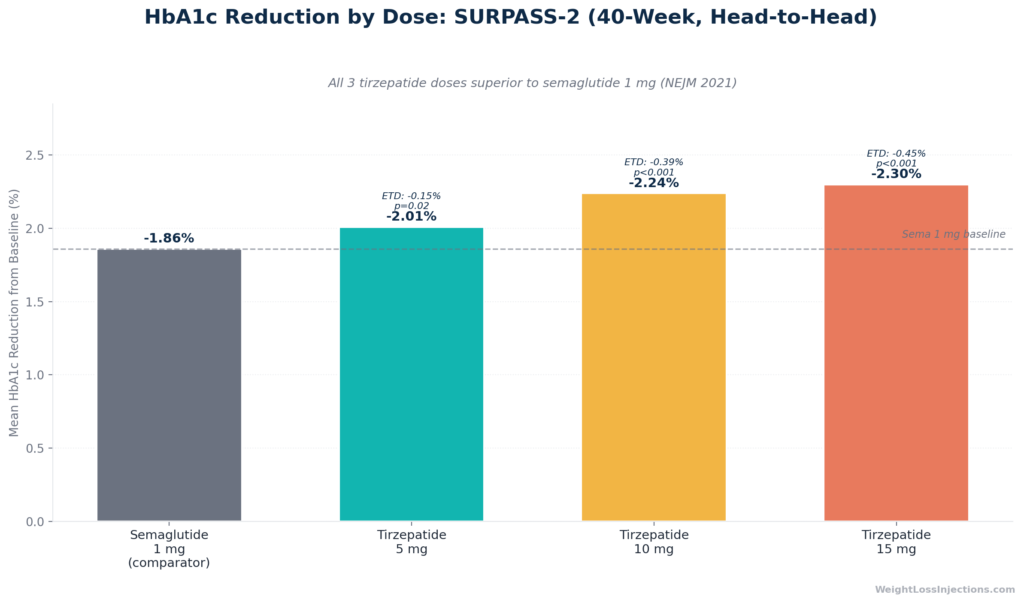
Grouped bar chart — dose-efficacy comparison from SURPASS-1
Head-to-Head vs. Semaglutide
In SURPASS-2 — a 40-week head-to-head trial (N=1,879) comparing tirzepatide at all three maintenance doses versus semaglutide 1 mg (Ozempic) in patients on metformin — all three tirzepatide doses achieved both noninferiority and superiority over semaglutide 1 mg for HbA1c reduction, per NEJM, Frías et al., 2021:
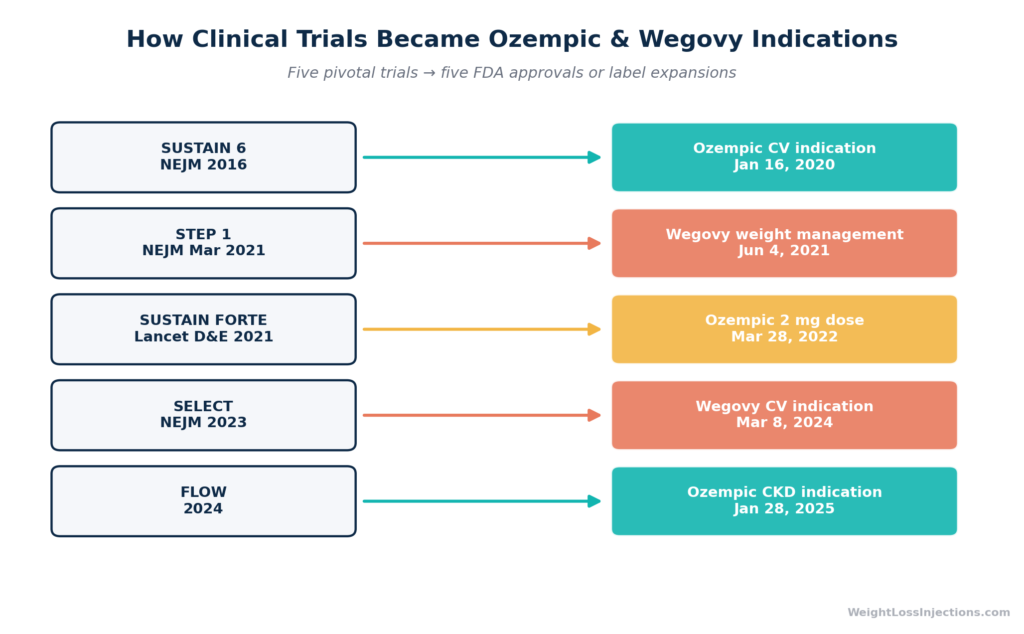
| Arm | HbA1c Change | Body Weight Change |
|---|---|---|
| Semaglutide 1 mg | −1.86% | −5.7 kg |
| Tirzepatide 5 mg | −2.01% | −7.6 kg |
| Tirzepatide 10 mg | −2.24% | −9.3 kg |
| Tirzepatide 15 mg | −2.30% | −11.2 kg |
At 15 mg, tirzepatide produced −2.30% HbA1c reduction versus −1.86% for semaglutide 1 mg (ETD: −0.45%, p<0.001), per NEJM SURPASS-2. An important caveat: semaglutide 1 mg is not the maximum approved Ozempic dose (2 mg); this trial did not test the highest semaglutide dose head-to-head against tirzepatide.
Weight Loss Context
For patients and providers also focused on body weight alongside glycemic control, the SURMOUNT-1 trial — testing the same molecule (tirzepatide) in people without type 2 diabetes — found −22.4% mean body weight reduction at 15 mg versus −2.4% placebo at 72 weeks, per PMC SURMOUNT-1 summary. This data comes from Zepbound/SURMOUNT trials (obesity indication), not from the Mounjaro T2DM trials, and should not be conflated with SURPASS glycemic data — but because tirzepatide is the identical molecule, it illustrates the drug’s potential at maximum dosing in appropriate weight-loss populations.
What Is the Maximum Dose of Mounjaro?
The maximum approved dose of Mounjaro is 15 mg once weekly — and this is a hard ceiling. There is no scenario in which a provider may prescribe more than 15 mg per week under the current FDA approval, per FDA Prescribing Information §2.
Do All Patients Need to Reach 15 mg?
No — and this is a point worth addressing directly, because patients sometimes assume that higher must mean better. The SURPASS-1 data show that 5 mg produced −1.87% HbA1c reduction and 10 mg produced −1.89% — both clinically meaningful results that exceed the threshold most clinicians consider a successful diabetes medication response. Patients who achieve their glycemic targets at 5 mg or 10 mg with acceptable tolerability have no clinical rationale to escalate further. Escalation is a tool, not a goal.
Pharmacokinetics at Maximum Dose
At 15 mg, steady-state plasma concentrations are significantly higher than at 5 mg. The drug’s half-life remains approximately 5 days at all dose levels, meaning it takes roughly 4 weeks to reach steady state at any new dose, per FDA Prescribing Information §12.3. This half-life also explains why missing a single dose does not cause an immediate and dramatic loss of drug effect — the drug lingers in the system for several days — and why the 4-day missed-dose rule (discussed in the next section) is the clinically relevant threshold.
Dose Adjustments in Special Populations
One pharmacokinetically notable characteristic of tirzepatide: no dose adjustment is required for renal or hepatic impairment. The drug’s pharmacokinetics are unchanged across all stages of renal impairment including end-stage renal disease, and unchanged in hepatic impairment, per FDA Prescribing Information §12.3. This is distinct from some other diabetes medications that require dose reduction in renal impairment.
Drug Interactions That Matter at Every Dose
Several drug interactions become clinically significant at any Mounjaro dose, and are important for patients and providers to track as the dose escalates:
Insulin and sulfonylureas: Using Mounjaro alongside insulin or a sulfonylurea (e.g., glipizide, glimepiride) increases the risk of hypoglycemia, including severe hypoglycemia. The sulfonylurea or insulin dose may need to be reduced when Mounjaro is added or when the dose is escalated, per FDA Prescribing Information §7. If you use both Mounjaro and insulin, administer them as separate injections — never mix them in the same syringe. They may be injected in the same body region but not at adjacent sites.
Other GLP-1 receptor agonists: Do not combine Mounjaro with another GLP-1 agonist (Ozempic, Trulicity, Victoza, Byetta, Rybelsus). There is no clinical benefit to combining GLP-1 receptor agonists, and the additive GI side effect burden is significant, per FDA Prescribing Information §7.
Narrow-therapeutic-index drugs: Mounjaro delays gastric emptying, which can alter absorption of orally administered drugs. Warfarin (INR should be monitored closely) and levothyroxine (TSH should be monitored) are the most clinically important examples, per FDA Prescribing Information §7.
Our take at WeightLossInjections.com: Many patients assume higher is always better, but 5 mg produced −1.87% HbA1c reduction in SURPASS-1 — a clinically significant improvement. Your provider’s goal is the lowest effective dose, not the highest tolerated dose. Discuss your A1C targets and weight goals at each appointment to make dose decisions data-driven.
Our Top 3 · September 2026
The best GLP-1 providers right now
Independently reviewed. Ranked by price, medication access, provider quality, and patient outcomes.
Renew GLP
Personalized GLP-1, GIP plans: Semaglutide & Tirzepatide.
Medvi
No membership or hidden fees. Everything you need is included.
Trimi
US-licensed clinicians and shipped to your door, from $99/mo.
What to Do If You Miss a Dose — or Need to Lower Your Dose
The Missed-Dose Protocol (Per FDA Label)
Missing a weekly Mounjaro injection happens — travel, illness, pharmacy delays, or simply forgetting. The FDA Prescribing Information §2 provides specific, unambiguous guidance:
| Time Since Missed Dose | Action |
|---|---|
| ≤4 days (96 hours) since scheduled injection | Administer the missed dose as soon as possible; resume your regular weekly schedule |
| >4 days (>96 hours) since scheduled injection | Skip the missed dose entirely; administer the next dose on your next regularly scheduled day |
| Any circumstance | Never administer two doses in one week to compensate |
The 4-day threshold is the key decision point. If you realize Wednesday that you missed your Sunday injection (4 days = 96 hours exactly), you are still within the window to administer. If it is Thursday, you have crossed into the skip-and-resume territory.
The pharmacokinetic rationale: with a half-life of approximately 5 days, a single missed dose does not immediately eliminate drug efficacy — blood levels fall gradually rather than dropping to zero overnight. Taking a missed dose within 4 days keeps your drug exposure relatively continuous. Taking it beyond 4 days would begin compressing the schedule in a way that could increase GI side effect risk.
Decision flowchart for missed dose protocol
Changing your injection day: If you need to shift your weekly injection day (travel, schedule change), the prescribing information permits this — as long as the new day and your last injection day are at least 3 days (72 hours) apart. After the one-time shift, resume the new day consistently each week.
Dose Reduction for GI Side Effects
The FDA Prescribing Information §2 and §5 explicitly supports dose reduction when tolerability issues are severe or persistent:
- If you experience persistent, intolerable nausea, vomiting, or diarrhea at your current dose, your provider may reduce you to the previous dose level. This is formally sanctioned by the FDA label — it is not off-label practice or a treatment failure.
- During active, significant GI adverse events: do not escalate. Hold at the current dose until symptoms resolve or become manageable before any upward adjustment.
- Severe gastroparesis: Mounjaro has not been studied in patients with severe gastroparesis and is not recommended in this population, per FDA Prescribing Information §5.
How Dose Changes Affect Other Medications
Each time the Mounjaro dose changes, you may need to adjust other medications:
- Sulfonylurea or insulin: Both may require dose reduction to avoid hypoglycemia when Mounjaro is added or when the dose is escalated, per FDA Prescribing Information §7.
- Oral contraceptives: This is a patient-safety point that is easy to overlook. Because Mounjaro delays gastric emptying, it can reduce the absorption of oral contraceptive pills. Per FDA Prescribing Information §7, backup contraception (non-oral method or barrier method) is required for 4 weeks after Mounjaro initiation and for 4 weeks after each dose escalation. This applies at every dose step — not just at initiation.
- Warfarin: INR monitoring should be increased following any Mounjaro dose change, as delayed gastric absorption may alter warfarin exposure.
- Levothyroxine: TSH monitoring is recommended, as thyroid hormone absorption may be affected by gastric-emptying changes.
Mounjaro Dosing for Off-Label Weight Loss vs. Type 2 Diabetes
One of the most common questions WeightLossInjections.com receives is: “Does the dosing schedule change if I’m taking Mounjaro for weight loss rather than diabetes?”
The answer is no — the titration schedule is pharmacologically identical regardless of indication.
Same Molecule, Same Schedule
Mounjaro is FDA-approved exclusively for type 2 diabetes mellitus (T2DM), per FDA Prescribing Information §1. When physicians prescribe Mounjaro off-label for weight loss in patients without T2DM — which is legal under U.S. prescribing law — the titration protocol is identical: start at 2.5 mg, advance in 2.5 mg steps every ≥4 weeks, maximum 15 mg. The body does not differentiate between on-label and off-label use; the pharmacology is the same.
For patients who have both T2DM and obesity, Mounjaro is on-label and the diabetes indication drives the prescribing. For patients with obesity but without T2DM, Zepbound (tirzepatide for chronic weight management) is the FDA-approved option — same drug, different label. The dosing schedule for Zepbound is identical to Mounjaro’s. The two brands are pharmacologically interchangeable, differing only in FDA indication and the insurance coverage pathway that each label opens.
Insurance Implications of Indication
The indication matters enormously for cost access:
- For patients with T2DM, Mounjaro is covered by most major commercial insurance plans (approximately 60–70% approval rate), and the Lilly Savings Card can reduce out-of-pocket cost to as low as $25/month for commercially insured patients, per FormBlends Prescription Guide, April 2026.
- For patients without T2DM pursuing off-label weight loss on Mounjaro, commercial insurance coverage rates drop to approximately 15–25%, per FormBlends, April 2026. The Lilly Savings Card for Mounjaro requires the FDA-approved T2DM indication — it does not apply to off-label weight-loss prescriptions.
- Off-label weight-loss patients on Mounjaro who do not have insurance coverage are effectively self-pay patients and should be aware of LillyDirect pricing options (see next section).
Weight-Loss Efficacy Data
For patients using Mounjaro off-label for weight loss, the most relevant clinical evidence comes from the SURMOUNT program — the trials conducted with the same molecule (tirzepatide) under the Zepbound label. SURMOUNT-1 enrolled 2,539 adults with obesity (BMI ≥30) or overweight (BMI ≥27 with comorbidity) who did not have T2DM, and demonstrated −22.4% mean body weight reduction at the 15 mg dose at 72 weeks versus −2.4% for placebo, per PMC SURMOUNT-1 summary. For adults with both obesity and T2DM, SURMOUNT-2 demonstrated approximately 15% weight reduction at higher doses, per The Lancet SURMOUNT-2, 2023.
These figures are from Zepbound/tirzepatide trials and reflect the weight-loss population — they should not be cited in place of SURPASS glycemic data for T2DM patients, but they are clinically relevant for understanding the full potential of the molecule at each dose level.
LillyDirect Self-Pay Pricing by Dose (2026)
For patients without commercial insurance coverage — or without coverage at their specific dose — Eli Lilly’s LillyDirect program offers branded Mounjaro tirzepatide single-dose vials at below-WAC cash prices, per BestMedsHub, May 2026:
| Dose Strength | LillyDirect Monthly Price |
|---|---|
| 2.5 mg | $299/month |
| 5 mg | $399/month |
| 7.5 mg | $449/month |
| 10 mg | $449/month |
| 12.5 mg | $449/month |
| 15 mg | $449/month |
Source: BestMedsHub, May 2026
Bar chart — LillyDirect self-pay monthly price by Mounjaro dose strength
What the Pricing Structure Means in Practice
One important observation about the LillyDirect cost structure: pricing is flat across 7.5 mg through 15 mg. Escalating from 7.5 mg to 10 mg to 12.5 mg to 15 mg costs the same $449/month on LillyDirect. For self-pay patients using LillyDirect, the financial barrier to reaching a higher maintenance dose is effectively removed once you clear the 5 mg level.
This contrasts with the full WAC (wholesale acquisition cost) price: as of January 1, 2026, Mounjaro’s official WAC is $1,079.77 per 28-day supply across all dose strengths (uniform pricing per Lilly official WAC disclosure). LillyDirect pricing is substantially below WAC and represents the most accessible self-pay option for patients with a valid prescription.
For commercially insured patients (T2DM indication), the Lilly Savings Card can reduce cost to as low as $25/month with commercial coverage, or $499/month for patients whose insurance does not cover Mounjaro, per NiceRx Savings Card guide, March 2026. The card is valid through December 31, 2026 for up to 13 fills per calendar year.
Note: LillyDirect vials are the authentic branded Mounjaro product — not compounded tirzepatide. They require a valid prescription from a licensed provider and are intended for patients who need a cost-accessible route to genuine Lilly-manufactured tirzepatide.
Our Take at WeightLossInjections.com
The Mounjaro titration schedule is one of the most carefully engineered dose escalation protocols in modern diabetes pharmacotherapy — and patients who understand it are significantly better positioned to get through the early weeks, manage side effects intelligently, and ultimately reach a dose that delivers meaningful results.
A few points we emphasize to every patient we work with:
The 2.5 mg phase is a test of the medication, not of you. Feeling nausea or mild GI discomfort in weeks 1–4 is the drug working as designed. The absence of blood sugar improvement at 2.5 mg is not a signal that Mounjaro isn’t going to work — it is the FDA label telling you exactly what to expect.
Four weeks is the floor, not the target. If you are experiencing manageable but real GI symptoms at your current dose, there is no urgency to move to the next step the moment the calendar hits four weeks. Many patients do better on a 5–6 week hold at each step. The clinical data are clear that patients who tolerate dose escalation well do better long-term than patients who rush through the schedule and discontinue due to side effects.
Lower doses are not underperforming. SURPASS-1 data showed that 5 mg produced −1.87% HbA1c reduction — a clinically significant response by any benchmark for a diabetes drug. Tens of thousands of patients are meeting their glycemic goals at 5 mg or 10 mg and experiencing better tolerability than they would at 15 mg. Your goal is not the maximum dose; it is the minimum dose that achieves your clinical objectives.
Drug interactions require proactive management. The oral contraceptive interaction in particular is frequently overlooked during dose escalations. If you use oral birth control and your dose is increasing, you need backup contraception for four weeks following each escalation step — not just at initiation. This is a firm FDA label requirement.
WeightLossInjections.com connects you with licensed telehealth providers who build personalized titration plans, monitor your A1C and weight response at each step, and help you navigate side effects throughout your dose escalation. Our program starts at [$X/month] — [service detail]. If you’re starting Mounjaro and want clinical guidance on your dose schedule, [service detail].
Frequently Asked Questions
The starting dose of Mounjaro is 2.5 mg once weekly for the first 4 weeks. This dose is classified by the FDA Prescribing Information §2 as a “treatment initiation” dose only — it is not intended for glycemic control and is not expected to lower blood sugar or produce meaningful weight loss. Its sole purpose is to allow the GI tract to adapt to tirzepatide’s mechanism before therapeutic doses are introduced. After 4 weeks at 2.5 mg, the dose increases to 5 mg — the first therapeutic and approved maintenance dose.
The minimum time from Mounjaro initiation to the 15 mg maximum dose is 20 weeks — five consecutive 4-week steps (2.5 mg → 5 mg → 7.5 mg → 10 mg → 12.5 mg → 15 mg), per FDA Prescribing Information §2. In practice, many patients take longer. If GI side effects require holding at a dose step for 6–8 weeks rather than 4, the total timeline extends proportionally. There is no clinical urgency to reach 15 mg on a fixed schedule — and not all patients need to reach the maximum dose. The four-week interval is a floor; how long you remain at any step before escalating is a clinical decision made by you and your provider.
Yes. 5 mg is one of three FDA-approved maintenance doses for Mounjaro, alongside 10 mg and 15 mg, per FDA Prescribing Information §2. There is no clinical requirement to escalate beyond 5 mg if your glycemic targets are being met. In SURPASS-1, tirzepatide 5 mg produced −1.87% HbA1c reduction and −7.0 kg body weight loss at 40 weeks — clinically meaningful outcomes that many patients achieve as their treatment goal, per SURPASS-1 The Lancet 2021. The decision to stay at 5 mg indefinitely versus escalating should be driven by A1C response, weight goals, and tolerability at each appointment.
Per FDA Prescribing Information §2: if 4 days (96 hours) or fewer have passed since your scheduled injection, administer the missed dose as soon as possible and resume your regular weekly schedule. If more than 4 days have passed since the scheduled day, skip the missed dose entirely and administer your next dose on the next regularly scheduled day. Under no circumstances should you take two doses in the same week. The 4-day threshold exists because tirzepatide’s ~5-day half-life means the drug remains in your system for several days after a missed injection — within the 4-day window, the drug effect is still partially sustained and taking the missed dose keeps plasma levels more consistent.
No — and the FDA label says so explicitly. The 2.5 mg dose is stated to be “not intended for glycemic control” in FDA Prescribing Information §2. It exists entirely as a tolerability initiation step. Clinically meaningful blood sugar improvement begins at the 5 mg maintenance dose. Patients who feel their blood sugar is unchanged after 4 weeks at 2.5 mg are observing the medication performing exactly as designed. The glycemic effect of 5 mg — −1.87% HbA1c reduction in SURPASS-1 — becomes apparent after sustained use at the first maintenance level, per SURPASS-1 The Lancet 2021.
No — not beyond 15 mg. The maximum approved dose of Mounjaro is 15 mg once weekly, and this ceiling cannot be exceeded under the current FDA label, per FDA Prescribing Information §2. No dosing above 15 mg has been studied in the SURPASS trials, and there is no regulatory pathway to exceed this dose. Within the approved range (2.5 mg–15 mg), your provider absolutely can individualize your titration — moving more slowly through the schedule, holding doses longer, reducing back to a prior dose, or remaining at any maintenance dose indefinitely. The flexibility is in the pace and endpoint of titration, not in going beyond the approved maximum.
This article is for informational purposes only and does not constitute medical advice. Dosing decisions — including initiation, escalation, hold, and reduction — are made by your prescribing clinician based on your individual clinical picture. Prescribing information, pricing, and regulatory status reflect data as of June 2026 and are subject to change. WeightLossInjections.com editorial team verifies content quarterly; last verified June 2026.