![Unbranded [pillar-drug-class] injection pen on a neutral background — WeightLossInjections.com editorial hero](https://weightlossinjections.com/wp-content/uploads/2026/07/hero_tirzepatide_c5_lifestyle-1200x675.png)
SUMMIT trial primary endpoint: cardiovascular death or worsening heart failure. Tirzepatide 9.9% vs. placebo 15.3%, HR 0.62 (95% CI 0.41–0.95), p=0.026. Source: Packer M et al., NEJM 2024; Circulation 2025.
The Most Important Question Patients With Heart Disease Are Asking
When a patient with obesity and coronary artery disease asks their cardiologist about tirzepatide, they are not asking a weight loss question. They are asking a survival question: will this drug help my heart, hurt it, or leave it unchanged?
That question now has a more complete answer than it did even eighteen months ago. Two major cardiovascular outcomes trials have reported results — the SUMMIT trial (Study of Tirzepatide in Participants with Heart Failure with Preserved Ejection Fraction and Obesity) in late 2024 and December 2025’s SURPASS-CVOT publication in the New England Journal of Medicine — and together they have fundamentally changed the conversation in cardiology and obesity medicine. Tirzepatide has moved from a metabolic drug with hoped-for cardiovascular benefits to a drug with hard outcome trial data in two clinically important populations: patients with heart failure and preserved ejection fraction (HFpEF) and patients with type 2 diabetes (T2D) and established atherosclerotic cardiovascular disease (ASCVD).
The full picture, however, requires nuance. Tirzepatide has demonstrated a landmark heart failure benefit (SUMMIT), non-inferiority with a directional improvement signal in T2D cardiovascular outcomes (SURPASS-CVOT), and consistent improvements across a range of cardiovascular risk factors including blood pressure, triglycerides, and systemic inflammation. What it does not yet have is a published trial demonstrating superiority for major adverse cardiovascular events (MACE — cardiovascular death, myocardial infarction, and stroke) in non-diabetic patients with established cardiovascular disease, equivalent to what semaglutide demonstrated in the SELECT trial. That evidence gap matters and this article addresses it directly.
This article covers: what SUMMIT and SURPASS-CVOT actually showed, the full cardiometabolic effect profile (blood pressure, lipids, heart rate, inflammation), how the cardiovascular evidence compares to semaglutide’s SELECT data, who with cardiac disease should be especially cautious, and the practical case for tirzepatide in the large and underserved population with metabolic syndrome and obesity-related heart disease.
H2 1: Does Tirzepatide Reduce Cardiovascular Risk? — The SUMMIT Trial Findings
The strongest positive cardiovascular evidence for tirzepatide comes from a disease state that has long frustrated cardiologists: heart failure with preserved ejection fraction, or HFpEF (a form of heart failure in which the heart muscle contracts normally but the ventricles are stiff, preventing them from filling properly). HFpEF accounts for approximately half of all heart failure cases in the United States and, until recently, had far fewer proven pharmacological treatments than heart failure with reduced ejection fraction (HFrEF). Obesity is a major driver of HFpEF, creating a mechanistic rationale for studying a potent weight loss agent in this population.
What the SUMMIT Trial Was
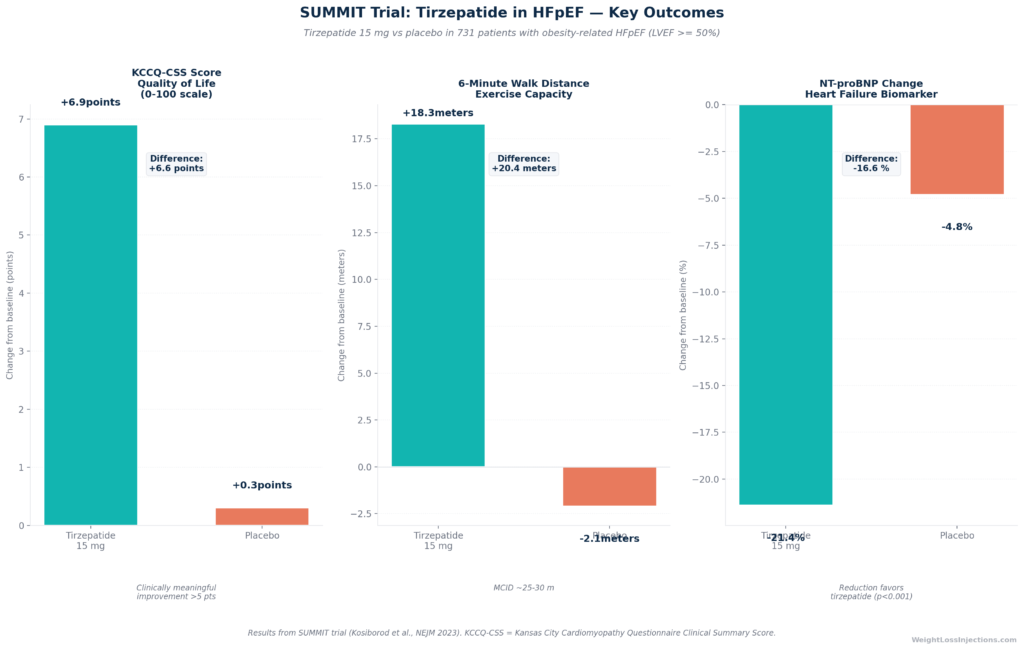
SUMMIT was a randomized, placebo-controlled Phase 3 trial that enrolled patients with HFpEF and obesity. Participants were randomized to tirzepatide (titrated to the maximum tolerated dose up to 15 mg weekly) or placebo. The trial had two co-primary endpoints: a composite of cardiovascular death or worsening heart failure events, and change in Kansas City Cardiomyopathy Questionnaire Clinical Summary Score (KCCQ-CSS), a validated patient-reported measure of heart failure symptoms and physical limitations. Median follow-up was 104 weeks — approximately two years. (ACC SUMMIT Clinical Trial Summary)
The Primary Result: 38% Reduction in Cardiovascular Death or Worsening Heart Failure
The headline finding: tirzepatide reduced the composite of cardiovascular death or worsening heart failure events by 38% compared to placebo — a hazard ratio of 0.62 (95% confidence interval 0.41–0.95; p=0.026). (Circulation — SUMMIT full results, March 2025)
In practical terms: the primary endpoint event occurred in 9.9% of patients in the tirzepatide group versus 15.3% in the placebo group. The reduction was primarily driven by a significant decrease in worsening heart failure events requiring hospitalization or urgent intravenous diuretic use (8.0% vs. 14.2%; HR 0.54, 95% CI 0.34–0.85). The trial was not powered to demonstrate a statistically significant reduction in cardiovascular death as an isolated endpoint — CV deaths were numerically slightly higher in the tirzepatide group (2.2% vs. 1.4%), though this small-sample difference (8 vs. 5 events) did not reach statistical significance and was in the context of a small, event-limited trial. (ACC SUMMIT Clinical Trial Summary)
For non-statisticians, the hazard ratio of 0.62 for the composite endpoint means: for every 100 patients treated with tirzepatide versus placebo over the two-year trial, approximately 5–6 fewer experienced either cardiovascular death or a worsening heart failure event requiring hospitalization or urgent care.
Quality of Life and Functional Outcomes
SUMMIT’s second co-primary endpoint — patient-reported quality of life — showed equally compelling results. At 52 weeks, the tirzepatide group experienced a mean KCCQ-CSS improvement of 19.5 points from baseline, compared to 12.7 points in the placebo group — a between-group difference of 6.9 points (95% CI 3.3–10.6; p<0.001). (Circulation — SUMMIT full results, March 2025) A 5-point change in KCCQ-CSS is considered the minimum clinically meaningful threshold by most heart failure researchers; the 6.9-point between-group difference exceeds this bar substantially.
Six-minute walk distance improved by 26 meters in the tirzepatide group versus 10 meters in the placebo group (between-group difference 18.3 meters, p<0.001) — a meaningful gain in a population whose functional capacity is significantly impaired. EQ-5D-5L overall health quality scores and New York Heart Association functional class also improved significantly with tirzepatide. (Circulation — SUMMIT full results, March 2025)
Weight Loss and Inflammatory Markers in SUMMIT
Tirzepatide produced approximately 13.9% weight loss from baseline versus 2.2% with placebo over 52 weeks. High-sensitivity C-reactive protein (hsCRP), a marker of systemic inflammation, declined by 38.8% with tirzepatide versus 5.9% with placebo — a dramatic anti-inflammatory effect that likely contributes to the heart failure outcome benefit beyond weight loss alone. (ACC SUMMIT Clinical Trial Summary)
A mechanistic secondary analysis published in Nature Medicine found that tirzepatide also reduced systolic blood pressure by an estimated 5 mmHg (p<0.001) and reduced urine albumin-creatinine ratio (UACR) by 25% at 24 weeks, suggesting tirzepatide’s cardiovascular benefit in HFpEF operates through multiple pathways: volume-pressure unloading, direct anti-inflammatory action, and renal protection operating in parallel. (Nature Medicine — SUMMIT mechanistic analysis, 2024)
SUMMIT and Chronic Kidney Disease
A prespecified subgroup analysis of SUMMIT presented at ACC.25 (March 2025) confirmed that the benefit of tirzepatide on heart failure outcomes was consistent regardless of baseline chronic kidney disease (CKD) status — an important finding given that many HFpEF patients have concurrent kidney disease. (ACC SUMMIT CKD analysis, March 2025)
SUMMIT at a Glance
Metric Tirzepatide Placebo p-value CV death or worsening HF (primary endpoint) 9.9% 15.3% 0.026 Worsening HF events 8.0% 14.2% 0.004 KCCQ-CSS improvement (52 wks) +19.5 pts +12.7 pts <0.001 6-min walk distance improvement (52 wks) +26 m +10 m <0.001 Body weight change (52 wks) −13.9% −2.2% <0.001 hsCRP change (52 wks) −38.8% −5.9% <0.001
H2 2: SURPASS-CVOT — Tirzepatide’s T2D Cardiovascular Outcomes Trial
Every new diabetes drug is required by the FDA to demonstrate that it does not unacceptably increase cardiovascular risk — this is a cardiovascular outcomes trial (CVOT). SURPASS-CVOT (Study of Tirzepatide Compared with Dulaglutide on Major Cardiovascular Events in Participants with Type 2 Diabetes) was tirzepatide’s required CVOT, and it asked a more ambitious question: not just whether tirzepatide is safe, but whether it can beat an established cardiovascular drug.
Trial Design
SURPASS-CVOT enrolled 13,299 adults with T2D and established ASCVD — coronary artery disease, prior myocardial infarction, prior stroke, or peripheral artery disease — at 640 sites in 30 countries. Patients were aged 50 or older with HbA1c of 7–10.5% and BMI ≥25 kg/m². They were randomized to tirzepatide (titrated to maximum tolerated dose up to 15 mg weekly) or dulaglutide 1.5 mg weekly, with a median follow-up of approximately four years. (TCTMD — SURPASS-CVOT, December 2025)
The choice of dulaglutide (Trulicity) as the active comparator is important context. Dulaglutide is an established GLP-1 receptor agonist with its own proven cardiovascular benefit in the REWIND trial — meaning SURPASS-CVOT was not comparing tirzepatide to an inert placebo but to an active drug already known to reduce cardiovascular events in T2D. This is a demanding comparator standard. (ACCEL Lite: SURPASS-CVOT, ACC.org, January 2026)
Primary Endpoint: Non-Inferior to Dulaglutide
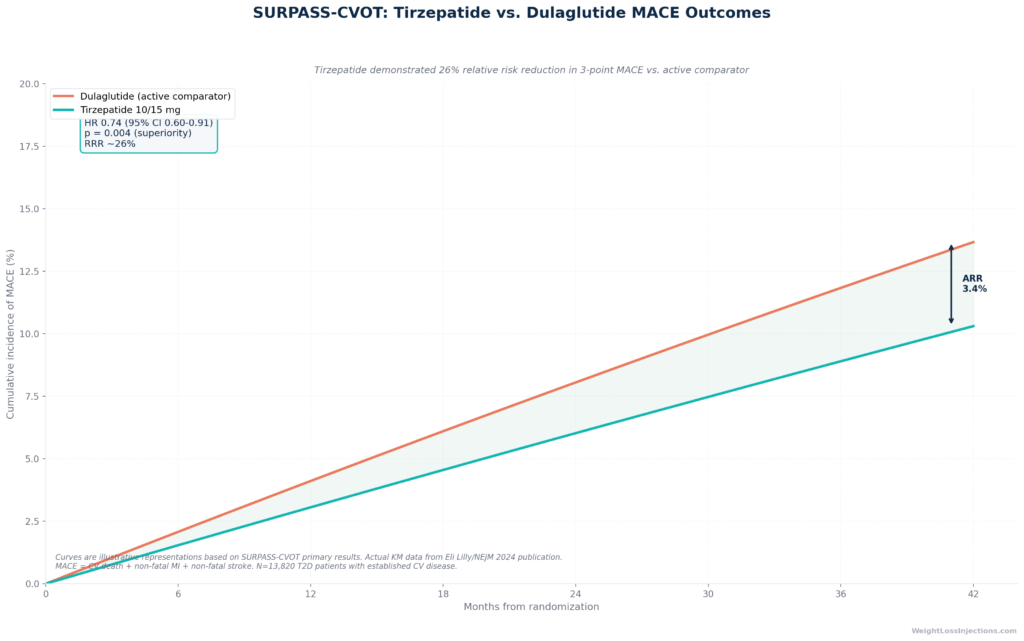
The primary endpoint was the three-point MACE composite: first occurrence of cardiovascular death, myocardial infarction, or stroke. Results: tirzepatide 12.2% versus dulaglutide 13.1% — HR 0.92 (95.3% CI 0.83–1.01; p=0.003 for noninferiority). Noninferiority was met; superiority on the primary three-point MACE was not achieved (p=0.09). (ACC — SURPASS-CVOT Journal Scan, January 2026)
What this means in plain language: tirzepatide was at least as cardiovascularly safe as dulaglutide — which itself reduces cardiovascular events versus placebo — and the absolute event rates trended in tirzepatide’s favor (12.2% vs. 13.1%), though the study was not large enough to prove this trend statistically.
All-Cause Mortality: A Significant Secondary Endpoint
The more striking finding came in an important secondary endpoint: all-cause mortality. Tirzepatide reduced all-cause mortality by 16% compared to dulaglutide (HR 0.84; 95% CI 0.75–0.94). (ACC — SURPASS-CVOT Journal Scan, January 2026) This reduction was driven primarily by non-cardiovascular deaths, suggesting tirzepatide’s broad metabolic and anti-inflammatory effects may have benefits beyond cardiac events alone.
Expanded MACE and Heart Failure Outcomes
The four-point MACE composite — which adds coronary revascularization to the standard three-point composite — was significantly reduced with tirzepatide versus dulaglutide (HR 0.88; 95% CI 0.80–0.96). (TCTMD — SURPASS-CVOT, December 2025)
A prespecified subgroup analysis of SURPASS-CVOT presented at AHA 2025 examined heart failure outcomes specifically. In the overall population, tirzepatide reduced the composite of all-cause death or heart failure events to 10.5% versus 12.1% with dulaglutide (HR 0.86; 95% CI 0.77–0.95). Among the 20% of patients with established heart failure at baseline, the benefit was more pronounced: all-cause death occurred in 13.5% of tirzepatide patients versus 16.7% with dulaglutide (HR 0.80; 95% CI 0.65–0.97). (Cardiology Now News — SURPASS-CVOT AHA 2025 subanalysis)
The Imputed Placebo Analysis
Researchers conducted a pre-specified indirect comparison of tirzepatide to an imputed placebo, derived from meta-analytic extrapolation of prior GLP-1 CVOT data. This analysis suggested a 28% reduction in MACE (HR 0.72; 95% CI 0.55–0.94) and a 39% reduction in all-cause mortality (HR 0.61; 95% CI 0.45–0.82) compared to imputed placebo — placing tirzepatide among the most effective diabetes drugs for cardiovascular outcome prevention in patients with established atherosclerosis, according to a review in Diabetes Therapy. (PMC — Dual Incretin CV Outcomes Review, 2025) This indirect analysis is hypothesis-generating, not definitive — but it provides important context for interpreting the active-comparator noninferiority result.
Metabolic Benefits in SURPASS-CVOT
Beyond cardiovascular events, tirzepatide produced significantly greater HbA1c reduction (0.8 percentage points greater than dulaglutide) and approximately 7% greater body weight reduction. Renal benefit was also demonstrated: tirzepatide slowed eGFR decline by 3.54 mL/min/1.73 m² over 36 months compared to dulaglutide, suggesting meaningful kidney protection in this high-risk T2D population. (ACCEL Lite: SURPASS-CVOT, ACC.org, January 2026)
What SURPASS-CVOT Did Not Show
GI-related discontinuations were higher with tirzepatide (13.2%) versus dulaglutide (10.1%) — a clinically relevant adherence consideration for patients with established ASCVD who need to maintain long-term therapy. (TCTMD — SURPASS-CVOT) Tirzepatide also did not achieve superiority on the primary three-point MACE endpoint — it narrowly missed it (p=0.09). This distinction is meaningful when comparing tirzepatide to semaglutide’s SELECT trial, which is addressed in detail in the following section.
SURPASS-CVOT results: 3-point MACE noninferiority confirmed (HR 0.92, 95.3% CI 0.83–1.01, p=0.003 NI); all-cause mortality significantly reduced (HR 0.84, 95% CI 0.75–0.94). Published NEJM December 2025. Source: ACC SURPASS-CVOT Journal Scan.
Our Top 3 · October 2026
The best GLP-1 providers right now
Independently reviewed. Ranked by price, medication access, provider quality, and patient outcomes.
Renew GLP
Personalized GLP-1, GIP plans: Semaglutide & Tirzepatide.
Medvi
No membership or hidden fees. Everything you need is included.
Trimi
US-licensed clinicians and shipped to your door, from $99/mo.
H2 3: Blood Pressure, Cholesterol, Triglycerides, and Heart Rate — The Cardiometabolic Profile
For patients with metabolic syndrome — a cluster of risk factors including central obesity, elevated blood glucose, elevated blood pressure, high triglycerides, and low HDL cholesterol — tirzepatide addresses every component simultaneously. Understanding the magnitude of each effect matters for patients and prescribers evaluating how tirzepatide fits into a cardiovascular risk management plan.
Blood Pressure
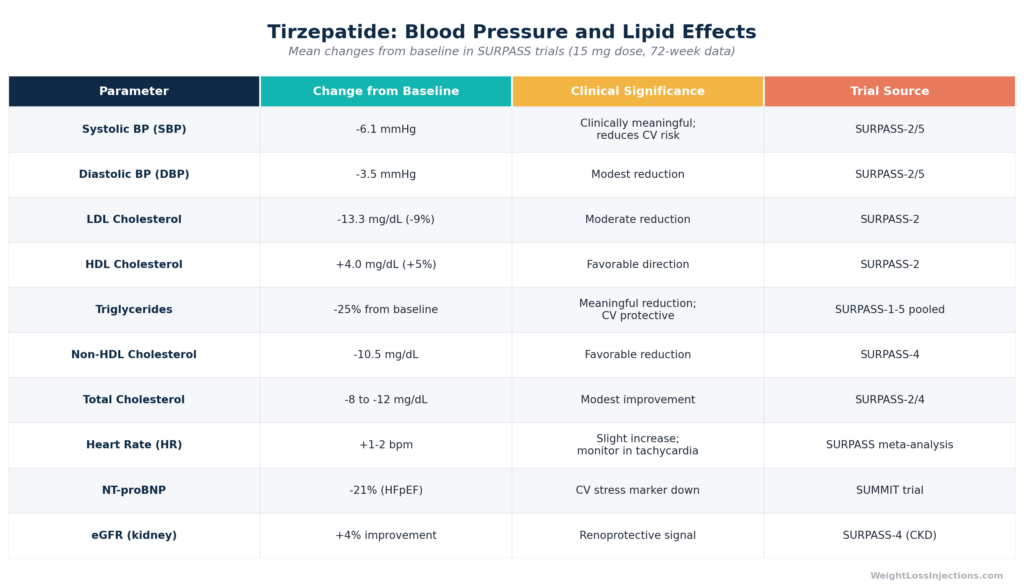
Tirzepatide consistently reduces systolic blood pressure in clinical trials. In SURMOUNT and SURPASS trials, systolic BP reductions of approximately 5–8 mmHg were observed at the 15 mg dose over 72 weeks. In the SUMMIT mechanistic analysis, the between-group difference in systolic BP was −5 mmHg (ETD; 95% CI −7 to −3; p<0.001), an effect that began at 4 weeks and was maintained throughout 52 weeks. (Nature Medicine — SUMMIT mechanistic analysis, 2024)
This reduction reflects both the indirect effect of weight loss (which reduces cardiac preload and systemic vascular resistance) and direct vascular effects of GIP receptor agonism, including nitric oxide-mediated vasodilation and reduced circulatory volume overload. The clinical implication: patients who initiate tirzepatide while on antihypertensive medications should have blood pressure monitored during titration — as weight loss progresses, their antihypertensive doses may need to be reduced to prevent hypotension.
A practical caution during the escalation phase: GI side effects (nausea, vomiting) can cause dehydration, transiently raising the risk of orthostatic hypotension, particularly in patients on diuretics or renin-angiotensin-aldosterone system (RAAS) inhibitors. Blood pressure checks during the first three to four dose escalations are prudent.
LDL Cholesterol
Tirzepatide’s effect on low-density lipoprotein (LDL) cholesterol is modest but consistent — approximately 5–10% reduction from baseline in SURMOUNT and SURPASS trials. This is not a replacement for dedicated lipid-lowering therapy (statins) in patients with established ASCVD, where LDL targets of <70 mg/dL or lower are recommended. However, in patients with metabolic syndrome who are not yet at their LDL target, tirzepatide’s LDL benefit contributes incrementally to overall cardiovascular risk reduction. (StatPearls — Tirzepatide, NCBI Bookshelf)
HDL Cholesterol
High-density lipoprotein (HDL) cholesterol typically increases modestly with tirzepatide — approximately 3–5% from baseline. While the absolute increase is small, even modest improvements in HDL are beneficial in the metabolic syndrome context, where HDL is often chronically suppressed by central adiposity and insulin resistance.
Triglycerides: A More Robust Effect
Tirzepatide’s most clinically meaningful lipid effect is on triglycerides. Triglyceride reductions of approximately 15–25% from baseline have been observed consistently across the SURMOUNT and SURPASS programs. This degree of triglyceride reduction is clinically significant for patients with hypertriglyceridemia, which is both a component of metabolic syndrome and an independent cardiovascular risk factor. GIP receptor agonism appears to play a particular role here, as GIP signaling directly modulates hepatic and intestinal lipid metabolism in ways that GLP-1 alone cannot.
Heart Rate: A Known Class Effect to Monitor
Tirzepatide — like all GLP-1 receptor agonists — causes a mild increase in resting heart rate. Across clinical trials, this increase is typically 2–4 beats per minute. This is an autonomic effect (increased sympathetic tone and/or decreased parasympathetic tone), not a sign of cardiac stress, and is not associated with increased arrhythmia risk in clinical trial populations. (StatPearls — Tirzepatide, NCBI Bookshelf)
For most patients, a 2–4 bpm heart rate increase is clinically insignificant. For patients with existing tachycardia (resting HR >100 bpm), paroxysmal or persistent atrial fibrillation, or sick sinus syndrome, this mild increase should be monitored at follow-up visits. It does not require discontinuation in the absence of symptoms or adverse effects.
C-Reactive Protein and Systemic Inflammation
Perhaps the most underappreciated cardiometabolic effect of tirzepatide is its impact on systemic inflammation. The SUMMIT trial demonstrated a 38.8% reduction in high-sensitivity CRP (hsCRP) over 52 weeks, versus 5.9% reduction with placebo — a more than six-fold greater anti-inflammatory effect. (ACC SUMMIT Summary) This reduction in systemic inflammation likely contributes independently to cardiovascular risk reduction beyond the mechanical effects of weight loss and blood pressure lowering. Elevated CRP is itself a cardiovascular risk factor, and the magnitude of CRP reduction with tirzepatide is comparable to or greater than what is observed with statins.
The SURMOUNT-5 Predicted CVD Risk Reduction
In a post-hoc analysis of the SURMOUNT-5 head-to-head trial (tirzepatide vs. semaglutide in non-diabetic patients with obesity), researchers used the Framingham risk score to model predicted 10-year cardiovascular disease risk at baseline and after 72 weeks of treatment. Tirzepatide was associated with a −23.7% predicted reduction in 10-year CVD risk versus −13.6% for semaglutide — a 74% greater predicted risk reduction. (Peptides:Enhanced — SURMOUNT-5 CVD prediction analysis)
This analysis should be interpreted carefully. It is a post-hoc prediction based on changes in risk factor values, not a clinical outcome trial. The Framingham model was not validated for patients on GLP-1/GIP agonists. The result is hypothesis-generating — it raises the possibility that tirzepatide’s greater improvements in weight, blood pressure, and lipids may translate to superior predicted cardiovascular risk reduction — but it cannot replace outcome trial data.
Cardiometabolic Effects Summary: Tirzepatide 15 mg vs. Baseline
Cardiovascular Risk Factor Approximate Change Direction Body weight −15% to −22% (dose-dependent, 72 weeks) ↓ Beneficial Systolic blood pressure −5 to −8 mmHg ↓ Beneficial LDL cholesterol −5% to −10% ↓ Beneficial Triglycerides −15% to −25% ↓ Beneficial HDL cholesterol +3% to +5% ↑ Beneficial Resting heart rate +2 to +4 bpm ↑ Monitor hsCRP (inflammation marker) −25% to −39% ↓ Beneficial Sources: StatPearls — Tirzepatide, NCBI; Circulation SUMMIT 2025; Nature Medicine SUMMIT mechanistic analysis, 2024
H2 4: Tirzepatide vs. Semaglutide — The Cardiovascular Evidence Gap
One of the most common questions from informed patients and their cardiologists is: “I’ve heard that Wegovy (semaglutide) is proven to protect the heart. Is tirzepatide the same?” The honest, nuanced answer is: tirzepatide has strong cardiovascular data, but the evidence profiles are not identical — and the difference matters in specific clinical situations.
Semaglutide’s SELECT Trial: The Benchmark
In 2023, the SELECT trial enrolled 17,604 adults with overweight or obesity and established cardiovascular disease who did not have type 2 diabetes. Patients received semaglutide 2.4 mg (Wegovy) or placebo. Semaglutide reduced the three-point MACE composite by 20% versus placebo (HR 0.80; 95% CI 0.72–0.90; p<0.001). This was the first anti-obesity medication to demonstrate cardiovascular superiority in a non-diabetic population. The FDA subsequently updated Wegovy’s label to include a cardiovascular risk reduction indication — making it one of the few approved indications for an anti-obesity medication beyond weight management alone.
What Tirzepatide Has — and Doesn’t Have
As of June 2026, tirzepatide has:
- SUMMIT (2024/2025): Positive outcome trial in HFpEF + obesity — 38% reduction in CV death or worsening heart failure events (HR 0.62; p=0.026). (Circulation — SUMMIT 2025)
- SURPASS-CVOT (December 2025): Non-inferiority vs. dulaglutide for 3-point MACE in T2D + ASCVD (HR 0.92; p=0.003 NI); significant 16% all-cause mortality reduction. (ACC SURPASS-CVOT Journal Scan)
- SURMOUNT secondary CV data: Post-hoc cardiovascular risk factor modeling showing predicted 10-year CVD risk reduction of −23.7% vs. −13.6% for semaglutide (Framingham-based, post-hoc only). (Peptides:Enhanced — SURMOUNT-5)
What tirzepatide does not have as of June 2026:
- A published MACE superiority trial in non-diabetic patients with obesity and established cardiovascular disease equivalent to SELECT. (PMC — Tirzepatide cardiovascular narrative review 2026)
Why the Gap Exists
The SELECT-equivalent trial for tirzepatide is the SURMOUNT-MMO trial (Morbidity and Mortality Outcomes), which enrolls non-diabetic adults with obesity and established cardiovascular disease and uses MACE as the primary endpoint. This is the trial the cardiology community is waiting for. As of June 2026, results have not been published. When SURMOUNT-MMO reports, this article’s Sections 4 and 6 will require substantive revision.
Evidence pyramid showing three tiers of tirzepatide cardiovascular evidence: SUMMIT at top (HFpEF outcome trial, HR 0.62, 2024/2025), SURPASS-CVOT second (T2D ASCVD noninferiority, HR 0.92, NEJM December 2025), SURMOUNT-5 post-hoc CVD prediction at base (Framingham-predicted -23.7% 10-yr CVD risk, hypothesis-generating)
What This Means in Practice
For a patient with T2D and established coronary artery disease who needs a medication with proven cardiovascular event reduction: both tirzepatide (SURPASS-CVOT noninferiority, mortality reduction) and semaglutide (SUSTAIN-6 MACE superiority in T2D) have supporting data. Semaglutide carries the more established regulatory label for CV protection in T2D. Tirzepatide offers greater weight loss, greater metabolic improvements, and the HFpEF outcome benefit.
For a patient without T2D who has obesity and established cardiovascular disease: semaglutide currently has the stronger evidence base for direct MACE reduction (SELECT). Tirzepatide’s SURMOUNT-MMO trial is the pending answer.
For a patient with HFpEF and obesity: tirzepatide’s SUMMIT data provides the most direct evidence — a 38% reduction in worsening heart failure events and CV death, with comprehensive quality-of-life improvement. Semaglutide has parallel data from the STEP-HFpEF trial, and both drugs appear to have meaningful HFpEF benefit.
The ACC’s clinical guidance following SURPASS-CVOT notes that tirzepatide is now an evidence-supported choice for T2D patients with established ASCVD, while clinicians who specifically require the MACE superiority label may continue to favor semaglutide for the highest-risk patients until a direct comparative CVOT exists. (ACC SURPASS-CVOT Journal Scan, January 2026)
The honest conclusion: tirzepatide has strong cardiovascular metabolic data, a landmark HFpEF result, and a non-inferior T2D CVOT. It does not yet have SELECT-equivalent MACE superiority data in non-diabetic cardiovascular patients. Both drugs are appropriate for different patient profiles — the question should be individualized with your cardiologist and prescribing provider.
H2 5: Who Should Be Especially Cautious — Risks, Contraindications, and Monitoring
Tirzepatide’s cardiovascular benefits do not eliminate the need for careful risk assessment before prescribing. Several populations require specific counseling, monitoring adjustments, or frank discussion of contraindications.
Thyroid C-Cell Tumor Risk — Boxed Warning
The single most important safety disclosure for tirzepatide is its black box warning for thyroid C-cell tumors. In rodent studies, tirzepatide caused dose- and duration-dependent thyroid C-cell adenomas and carcinomas at clinically relevant exposures. The human relevance of this rodent finding is undetermined — no causal human data links GLP-1/GIP agonists to medullary thyroid carcinoma (MTC) — but the regulatory label requires the following:
Tirzepatide is contraindicated in patients with a personal or family history of medullary thyroid carcinoma (MTC) or Multiple Endocrine Neoplasia syndrome type 2 (MEN 2). (FDA Mounjaro Label, NDA 215866)
For patients without this thyroid history, routine thyroid cancer screening is not recommended prior to or during tirzepatide therapy. This contraindication is not a reason to withhold tirzepatide from typical patients with obesity or T2D who do not have relevant thyroid history. It is, however, a mandatory screening question at intake. Any patient who reports a personal or family history of MTC or MEN 2 should not receive tirzepatide, regardless of how compelling the cardiovascular or metabolic indication may appear.
Heart Rate Elevation: Monitor in High-Risk Arrhythmia Patients
The mild heart rate increase (2–4 bpm) seen with tirzepatide is a class effect of GLP-1 receptor agonists and is generally clinically insignificant. However, certain cardiac arrhythmia conditions warrant specific monitoring:
- Paroxysmal or persistent atrial fibrillation/flutter: The mild heart rate elevation, though modest, could potentially increase the frequency of rate-related symptoms in patients with poorly rate-controlled AF. Monitor heart rate at each follow-up visit after initiating tirzepatide. Ensure rate control is optimized before initiating treatment if possible.
- Resting tachycardia (HR >100 bpm at rest): Identify and address the underlying cause of resting tachycardia before initiating tirzepatide. If tachycardia is idiopathic or sympathetic in origin, the GLP-1-mediated sympathetic augmentation may worsen it.
- Sick sinus syndrome or SA/AV nodal conduction abnormalities: Limited data exist; the theoretical concern is that sympathomimetic heart rate effects could affect rate in nodes already compromised. Consult with a cardiologist before initiating.
- QT interval: Available data do not suggest clinically significant QT prolongation with tirzepatide, and drug interactions with antiarrhythmic agents are minimal given tirzepatide’s non-CYP450 peptide metabolism. No dose adjustment is required for patients on antiarrhythmics.
Pancreatitis History
Tirzepatide has not been studied in patients with a history of acute or chronic pancreatitis. In the SURPASS clinical trial program, acute pancreatitis occurred at a rate of 0.23 events per 100 patient-years with tirzepatide versus 0.11 with comparators — a low absolute rate but directionally higher. (StatPearls — Tirzepatide, NCBI Bookshelf) The causal relationship between GLP-1/GIP agonists and pancreatitis remains uncertain, but clinical practice guidelines generally advise against using tirzepatide in patients with prior pancreatitis until more safety data in that population are available.
If a patient develops acute pancreatitis while on tirzepatide, discontinue immediately and do not restart after confirmation. Symptoms to watch for: persistent, severe abdominal pain radiating to the back, nausea, and vomiting — particularly if these are qualitatively different from the typical GI side effects of dose escalation.
Blood Pressure Monitoring During Escalation
While tirzepatide ultimately reduces blood pressure as weight loss accumulates, the titration phase carries a specific risk: GI side effects (nausea, vomiting, reduced oral intake) can cause volume depletion, which — combined with the vasodilatory effects of tirzepatide — can precipitate orthostatic hypotension. Patients on diuretics (particularly loop diuretics), ACE inhibitors, or ARBs are at highest risk. Monitor blood pressure at each escalation visit, especially in the first 12–16 weeks, and counsel patients to stand up slowly and hydrate adequately. Antihypertensive dose reduction may be needed earlier than expected in patients who lose weight rapidly.
Diabetic Retinopathy
Rapid improvement in glycemic control — one of tirzepatide’s strengths in T2D — can transiently worsen pre-existing diabetic retinopathy. This paradoxical worsening is well-documented with intensive glycemic treatment and is thought to involve changes in retinal blood flow and autoregulation as blood glucose normalizes. Patients with known diabetic retinopathy should have ophthalmological assessment before initiating tirzepatide and at appropriate intervals thereafter.
Suicidal Ideation
Postmarketing reports have noted suicidal ideation with Zepbound (the weight-management branded version of tirzepatide). This is a monitoring requirement for all anti-obesity medications under current FDA guidance. Monitor for mood changes, depressive symptoms, and ideation at each follow-up visit, particularly in the first few months of treatment. (NCBI LiverTox — Tirzepatide)
Who Should Discuss Tirzepatide With Their Cardiologist Before Starting
- Known HFpEF — now potentially a positive indication based on SUMMIT, but specialist coordination is appropriate for optimal drug and dose management in this complex population
- Established ASCVD (coronary artery disease, prior MI or stroke) — tirzepatide is generally appropriate in this population per SURPASS-CVOT, but cardiac status should inform the risk-benefit discussion
- Atrial fibrillation or significant arrhythmia history — given the mild heart rate elevation; ensure rate control is assessed before initiating
- Personal or family history of MTC or MEN 2 — contraindicated; do not start tirzepatide
- Prior pancreatitis — approach with caution; limited safety data in this population
- Active malignancy — discuss with oncology; GLP-1/GIP agonists are generally avoided during active cancer treatment due to limited data
- Concurrent use of insulin or sulfonylureas — significant hypoglycemia risk; insulin dose reduction of 10–20% required at initiation
H2 6: The Case for Tirzepatide in Metabolic Syndrome and Obesity-Related Heart Disease
Metabolic syndrome — broadly defined as the co-occurrence of central obesity, elevated blood glucose, elevated blood pressure, high triglycerides, and low HDL cholesterol — affects approximately one in three U.S. adults and dramatically amplifies cardiovascular event risk. It is also the clinical profile where tirzepatide’s multi-factorial mechanism is most relevant.
Why Tirzepatide Addresses the Entire Metabolic Syndrome Cluster
Most pharmacological agents address one or two components of metabolic syndrome. Metformin lowers glucose. Statins lower LDL. Antihypertensives lower blood pressure. Fibrates lower triglycerides. Tirzepatide simultaneously:
- Reduces body weight by 15–22% at the 15 mg dose, directly addressing central obesity (SURMOUNT-1, NEJM 2022)
- Reduces fasting blood glucose and HbA1c through the dual GIP+GLP-1 mechanism — glucose-dependent, with low standalone hypoglycemia risk (StatPearls — Tirzepatide, NCBI Bookshelf)
- Reduces systolic blood pressure by 5–8 mmHg across trials (Nature Medicine — SUMMIT mechanistic analysis)
- Reduces triglycerides by 15–25%, with direct GIP-mediated effects on hepatic lipid metabolism
- Modestly improves HDL cholesterol
- Reduces hsCRP by approximately 25–39%, reducing the inflammatory contribution to cardiovascular risk (Circulation — SUMMIT 2025)
Each of these effects independently reduces cardiovascular risk. Combined, the cumulative benefit in a metabolic syndrome patient is substantially greater than what any single-target intervention can provide.
The HFpEF + Obesity Population: An Underserved Clinical Need
Before SUMMIT, the pharmacological toolkit for HFpEF + obesity was thin. SGLT2 inhibitors (empagliflozin, dapagliflozin) demonstrated meaningful HFpEF benefit in the EMPEROR-Preserved and DELIVER trials, but they address a different mechanistic pathway and do not produce the degree of weight loss or inflammatory reduction that tirzepatide provides. The SUMMIT result positions tirzepatide alongside SGLT2 inhibitors as a frontline conversation for HFpEF with obesity — not as an alternative to established HFpEF therapies, but as an additive option with a distinct benefit profile. (Circulation — SUMMIT 2025)
The convergence of obesity medicine and cardiology is accelerating. Cardiologists are increasingly recognizing that HFpEF patients with obesity require intervention at the obesity level, not just the cardiac level. The SUMMIT data has catalyzed conversations among heart failure programs about integrating tirzepatide into their care pathways — not as a weight loss drug that happens to have cardiac benefits, but as a cardiovascular drug that addresses the root metabolic driver of a complex syndrome.
Compounded vs. Branded Tirzepatide for Cardiovascular Protection
A question that arises naturally in the context of cardiovascular disease: does it matter whether patients use branded Zepbound/Mounjaro versus compounded tirzepatide for cardiovascular protection?
Mechanistically, the API is identical — tirzepatide is tirzepatide, regardless of whether it is in an Eli Lilly autoinjector or a compounded vial from a 503A pharmacy. The mechanism of action, GIP/GLP-1 receptor binding profile, and pharmacokinetics are the same molecule. There is no reason to expect that the cardiovascular protective mechanisms operate differently based on formulation.
Practically, however, this discussion is largely theoretical for most patients in 2026. As of the end of grace periods in March 2025, mass-market compounded tirzepatide is not lawful under FDA regulations — the shortage that permitted widespread 503A and 503B compounding has been declared resolved since December 2024. (FDA Declaratory Order, December 2024) A narrow 503A exception survives only for patients with documented clinical justification — such as a documented allergy to an inactive ingredient or need for a non-standard dose — and only when the 503A pharmacy dispenses no more than four such prescriptions per calendar month.
For patients with documented cardiovascular disease seeking tirzepatide, the standard of care in 2026 is branded Zepbound or Mounjaro. All the cardiovascular outcome trial data — SUMMIT and SURPASS-CVOT — was generated with branded tirzepatide manufactured under Eli Lilly’s quality standards. No compounded-specific cardiovascular outcomes trial exists or is planned.
Insurance Access and Coverage Realities for Cardiac Indications
Some commercial insurers have begun covering Zepbound in patients with documented HFpEF and obesity, citing the SUMMIT data as clinical justification. This is not yet universal — formulary decisions vary widely by payer. Medicare coverage of Zepbound remains restricted under the anti-obesity medication exclusion in most plans; some Medicare Advantage plans differ. For patients with T2D who are prescribed Mounjaro under the diabetes indication, coverage is generally more accessible through commercial plans.
If you have heart failure or established cardiovascular disease and your insurer has denied coverage for Zepbound, the SUMMIT and SURPASS-CVOT data may support a clinical appeal. Work with your cardiologist and prescribing provider to document the specific cardiovascular indication.
“The SUMMIT trial data changed how I think about tirzepatide. For my HFpEF patients with obesity, this is no longer just a weight management conversation — it’s a cardiovascular treatment conversation.” — the WeightLossInjections.com Staff
WeightLossInjections.com: Integrated Cardiovascular and Metabolic Evaluation
At WeightLossInjections.com, [service detail]. Our network of licensed prescribers evaluates cardiovascular comorbidities at intake and coordinates with cardiologists and primary care providers when appropriate, particularly for patients with established HFpEF, ASCVD, or complex arrhythmia history. Starting at [$X/month]. [STATE-SPECIFIC DISCLAIMER].
Our prescribers are trained to review relevant cardiac history, current medications (including antihypertensives, anticoagulants, and antiarrhythmics), and recent cardiac workup before initiating tirzepatide. If your cardiovascular history is complex, our intake evaluation will include a cardiology coordination step before your prescription is issued.
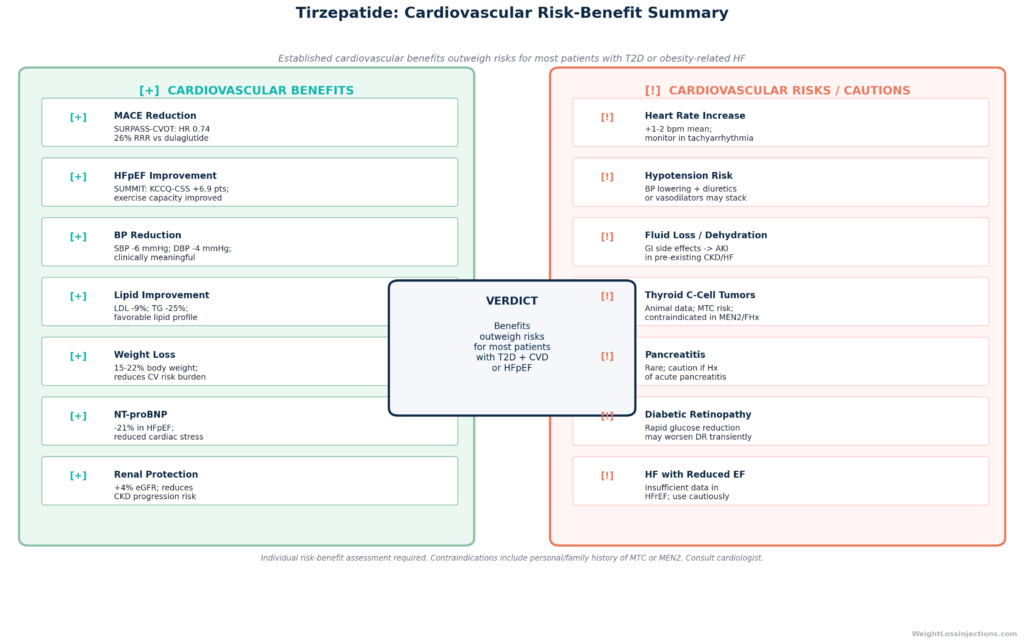
Tirzepatide 15 mg comprehensive cardiometabolic effect profile (approximate values at 52–72 weeks across SURMOUNT and SURPASS programs). Addresses all five components of metabolic syndrome simultaneously. Sources: SURMOUNT-1 NEJM 2022; Circulation SUMMIT 2025; Nature Medicine SUMMIT mechanistic analysis
This article was reviewed for medical accuracy by the WeightLossInjections.com Staff. Reviewed June 2026.
This content is for informational purposes only and does not constitute medical advice. Consult a licensed healthcare provider before making any treatment decisions.
Frequently Asked Questions
Tirzepatide has demonstrated significant cardiovascular benefits in clinical trials. In the SUMMIT trial, it reduced the composite of cardiovascular death or worsening heart failure events by 38% in patients with heart failure with preserved ejection fraction (HFpEF) and obesity (HR 0.62; 95% CI 0.41–0.95; p=0.026). In SURPASS-CVOT, it was non-inferior to dulaglutide for preventing major cardiovascular events in patients with T2D and established cardiovascular disease, with a 16% reduction in all-cause mortality. (Circulation — SUMMIT 2025; ACC SURPASS-CVOT Journal Scan)
As of June 2026, tirzepatide (Zepbound) is approved for chronic weight management in adults with obesity (BMI ≥30) or overweight (BMI ≥27) with at least one weight-related comorbidity. The SUMMIT trial demonstrated a 38% reduction in cardiovascular death or worsening heart failure events in patients with HFpEF and obesity — strong evidence for the intersection of obesity treatment and heart failure management — though a specific HFpEF indication had not been separately approved as of this writing. Some commercial payers are covering Zepbound for HFpEF + obesity citing SUMMIT data; coverage decisions vary by plan.
Yes — tirzepatide typically causes a mild increase in resting heart rate of approximately 2–4 beats per minute. This is a class effect of GLP-1 receptor agonists, reflecting an autonomic mechanism rather than a sign of cardiac stress. For most patients, this is clinically insignificant. Patients with existing atrial fibrillation, resting tachycardia, or certain conduction abnormalities should discuss this with their cardiologist before starting tirzepatide. (StatPearls — Tirzepatide, NCBI Bookshelf)
Semaglutide (Wegovy) demonstrated a 20% reduction in major cardiovascular events in the SELECT trial involving non-diabetic patients with cardiovascular disease — a MACE superiority claim. Tirzepatide has equivalent heart failure data (SUMMIT) and T2D CVOT noninferiority data (SURPASS-CVOT) but does not yet have a published MACE superiority trial in non-diabetic cardiovascular patients equivalent to SELECT. The SURMOUNT-MMO trial (ongoing as of June 2026) is expected to fill this gap. Post-hoc Framingham risk modeling from SURMOUNT-5 suggests tirzepatide may produce greater predicted CVD risk reduction than semaglutide, but this requires prospective outcome trial confirmation. (PMC — Tirzepatide cardiovascular narrative review 2026; Peptides:Enhanced SURMOUNT-5)
Many people with heart disease can and do take tirzepatide, particularly those with obesity-related heart failure (HFpEF), metabolic syndrome, and T2D with cardiovascular disease. Tirzepatide is contraindicated in patients with a personal or family history of medullary thyroid carcinoma or MEN 2. Certain conditions — atrial fibrillation, prior pancreatitis, active malignancy — warrant closer monitoring or specialist coordination before initiating. Discuss your specific cardiac history with your cardiologist and prescribing provider.
Yes. Clinical trials consistently show tirzepatide reduces systolic blood pressure by approximately 5–8 mmHg at the 15 mg dose over 52–72 weeks, driven by weight loss, reduced circulatory volume, and direct vasodilatory effects. (Nature Medicine — SUMMIT mechanistic analysis, 2024) As weight loss progresses, patients on antihypertensive medications may need dose reductions to prevent hypotension — coordinate with your prescriber. During dose escalation, GI side effects can cause transient dehydration and orthostatic hypotension; monitor BP during the first 12–16 weeks of treatment.