![Unbranded [pillar-drug-class] injection pen on a neutral background — WeightLossInjections.com editorial hero](https://weightlossinjections.com/wp-content/uploads/2026/07/hero_tirzepatide_c5_lifestyle-1200x675.png)
Hero flat-lay photograph showing a well-composed tirzepatide-friendly meal spread: grilled salmon, Greek yogurt, steamed vegetables, whole grain toast, fresh berries, and a glass of water — bright,…
- Tirzepatide significantly slows gastric emptying — the wrong foods stay in your stomach far longer than usual, amplifying nausea, bloating, and GI discomfort
- Build every meal around lean protein first: chicken, fish, eggs, Greek yogurt, and legumes help preserve muscle mass during the calorie restriction tirzepatide creates
- Limit fatty and fried foods, spicy foods, carbonated drinks, alcohol, and refined carbohydrates — especially on injection day and during the first several days at each new dose level
- Small, frequent meals (4–6 per day) are easier on your stomach than two or three large ones
- Hydration matters more than most patients expect: dehydration compounds GI side effects and carries a rare but real risk of kidney injury
- These dietary guidelines apply whether you are taking branded tirzepatide (Zepbound® or Mounjaro®) or a compounded formulation prepared under a valid prescription
- The sample 7-day meal plan below is a template, not a prescription — individual calorie needs vary and a registered dietitian can tailor these targets for you
Nutrition Disclaimer: This dietary guidance is for informational purposes only and is based on general evidence about GLP-1/GIP receptor agonist medications and balanced nutrition principles. Individual dietary needs vary; consult a registered dietitian or licensed healthcare provider for personalized nutrition advice. This content does not substitute for medical guidance.
Why Diet Matters More on Tirzepatide (Not Less)
There is a common and understandable misconception among patients starting tirzepatide: that the medication does the hard dietary work for them. Tirzepatide is, after all, extraordinarily effective — participants in SURMOUNT-1 lost an average of 15–21% of their body weight over 72 weeks depending on dose. It is tempting to conclude that the drug handles weight loss and diet is optional.
That framing is wrong, and it explains why some patients get dramatically better results than others on the same medication at the same dose.
Tirzepatide is a first-in-class dual agonist of the GIP receptor (GIPR) and the GLP-1 receptor (GLP-1R), the active ingredient in both Zepbound® (FDA-approved for chronic weight management in November 2023) and Mounjaro® (FDA-approved for type 2 diabetes in May 2022), as described in the StatPearls tirzepatide reference on NCBI Bookshelf. This dual mechanism creates three important physiological changes that interact directly with what you eat:
1. Gastric emptying slows dramatically. Tirzepatide delays how quickly food moves from your stomach into the small intestine, per StatPearls / NCBI Bookshelf. Food that would normally clear the stomach in 2–4 hours now lingers for 4–8 hours or more. This is part of how the drug suppresses appetite. It is also why the wrong foods — particularly fatty, fried, or very spicy meals — produce prolonged, intense nausea. The food has nowhere to go quickly.
2. Appetite is suppressed centrally and peripherally. Tirzepatide reduces food intake through hypothalamic GLP-1 receptor signaling and peripheral satiety hormone activity. This creates the calorie deficit that drives weight loss. But the quality of those reduced calories determines whether you lose mostly fat versus a combination of fat and lean muscle — and whether GI side effects are manageable or miserable.
3. Blood sugar regulation improves. Tirzepatide stimulates insulin secretion in a glucose-dependent manner and suppresses glucagon, per StatPearls / NCBI Bookshelf. High-sugar and high-glycemic foods partially counteract this mechanism, spiking blood glucose in ways that work against the medication’s metabolic benefits — especially important for the large proportion of tirzepatide patients who have pre-diabetes or type 2 diabetes.
The Three Dietary Goals on Tirzepatide
Every food choice on tirzepatide serves one or more of three overlapping goals:
- Minimize GI side effects — especially during dose escalation, when nausea, vomiting, and constipation peak. GI adverse events affect 39% of patients at 5 mg, 46% at 10 mg, and 49% at 15 mg across pooled data, per Dr. Oracle’s tirzepatide adverse effects analysis. Dietary choices can significantly push individual risk within this distribution higher or lower.
- Maximize weight loss results — through protein-forward eating that preserves lean muscle mass while the drug creates the caloric deficit that drives fat loss.
- Support long-term health — through anti-inflammatory, cardiovascular-protective foods, which is particularly relevant given that many tirzepatide patients are managing hypertension, dyslipidemia, or cardiovascular risk alongside obesity.
These goals are mostly complementary. They occasionally create minor tension: high-fiber vegetables are excellent for long-term health and long-term satiety, but can worsen bloating and gas during the first 4–8 weeks at each new dose level. This article addresses that timing distinction throughout.
The Short Version: On tirzepatide, emphasize lean protein, cooked and soft vegetables, and small frequent meals. Limit fatty and fried foods, large portions, carbonated drinks, and alcohol. Timing matters — eat lighter on injection day and for the first 24–48 hours after each dose.
Foods That Minimize Side Effects — Especially During Dose Escalation
The number-one concern for most patients in their first weeks on tirzepatide, and again every time the dose increases, is managing GI side effects. Nausea affects up to 30% of patients at higher doses in obesity trials, per the Fella Health tirzepatide side effects guide, and vomiting affects up to 12%. These rates are dose-dependent — the FDA Mounjaro label (NDA 215866) confirms GI adverse events are dose-related and typically worst during escalation phases.
The good news: dietary modification is the most effective non-pharmacological intervention for GI side effects on tirzepatide. These specific foods consistently help.
Foods That Ease Nausea
Plain, easily digestible starches are the foundation of nausea management:
- Plain white rice (not brown rice, which is high in insoluble fiber)
- Plain mashed potatoes (no butter or cream)
- Plain pasta (small portions, no rich sauces)
- Saltines and low-fat crackers
- Plain toast or dry whole-grain bread
These foods are gentle on the stomach precisely because they are low in fat and low in insoluble fiber — they move through a slowed digestive system without adding insult to injury.
Bananas deserve a specific mention: they are easy to digest, provide potassium (which can be depleted by vomiting or diarrhea), have a bland flavor that doesn’t trigger smell-related nausea, and are convenient for patients who have little appetite.
Broth-based soups — chicken broth, vegetable broth, miso — are hydrating, warming, and easy to tolerate. The liquid component counts toward fluid intake, and the sodium helps with electrolyte balance during periods of GI stress. Avoid cream-based soups; the fat content is exactly what you are trying to minimize.
Ginger has well-documented anti-nausea properties and is safe to use alongside tirzepatide. Ginger tea, ginger chews, and ginger lozenges are all appropriate options. Many patients find that a cup of ginger tea in the morning on injection day or the day after preemptively reduces nausea severity.
Cold or room-temperature foods are often better tolerated than hot meals during active nausea episodes. Hot food generates stronger aromas, which can trigger nausea in patients whose stomachs are already uncomfortable. This is why refrigerated Greek yogurt, a cold banana, or crackers with cold cottage cheese can work better than a warm cooked meal when nausea is high.
Meal Size and Frequency
How much and how often you eat matters as much as what you eat. Clinical guidance consistently recommends 4–6 smaller meals per day rather than 2–3 larger ones for tirzepatide patients — particularly during dose escalation. A smaller volume of food creates less gastric distension, and since tirzepatide is already slowing emptying, smaller meals move through on a manageable timeline.
The most important behavioral habit: stop eating before you feel full. Tirzepatide blunts the fullness signal — some patients don’t register that they are overfull until they are already uncomfortable and nauseous. Eating slowly (20 minutes or more per meal) gives the stretch receptors in the stomach time to communicate satiety to the brain. Taking small bites, pausing between bites, and putting down utensils periodically all help.
Hydration During GI Distress
Dehydration compounds every GI side effect and carries its own serious risk. NCBI LiverTox notes that acute kidney injury on tirzepatide is rare but typically occurs secondary to dehydration from severe GI side effects. Staying hydrated is not optional.
Target 8–10 glasses (64–80 oz) of still water per day. The critical protocol: sip fluids between meals, not during them. Drinking large amounts of liquid with food adds to gastric volume at exactly the wrong time — when the stomach is already full of food that is emptying slowly. Drinking 4–8 oz with a meal is fine; drinking a full glass of water immediately before or after eating a full meal is not.
Avoid carbonated beverages entirely during high-nausea periods. CO2 gas causes stomach distension and bloating that dramatically worsens discomfort when gastric emptying is already slowed.
Foods That Maximize Weight Loss Results on Tirzepatide
Once you are past the most acute side-effect phase — typically 4–8 weeks after each dose increase — the dietary focus shifts from damage control to optimization. This is where food choices determine whether tirzepatide delivers fat loss with muscle preservation or just weight loss with significant lean mass depletion.
Horizontal bar chart titled “Protein Content per 4 oz Serving — Best Protein Sources on Tirzepatide” showing grams of protein for: chicken breast (~35g), canned tuna (~26g), salmon (~23g), shrimp…
High-Protein Foods — The Most Important Category
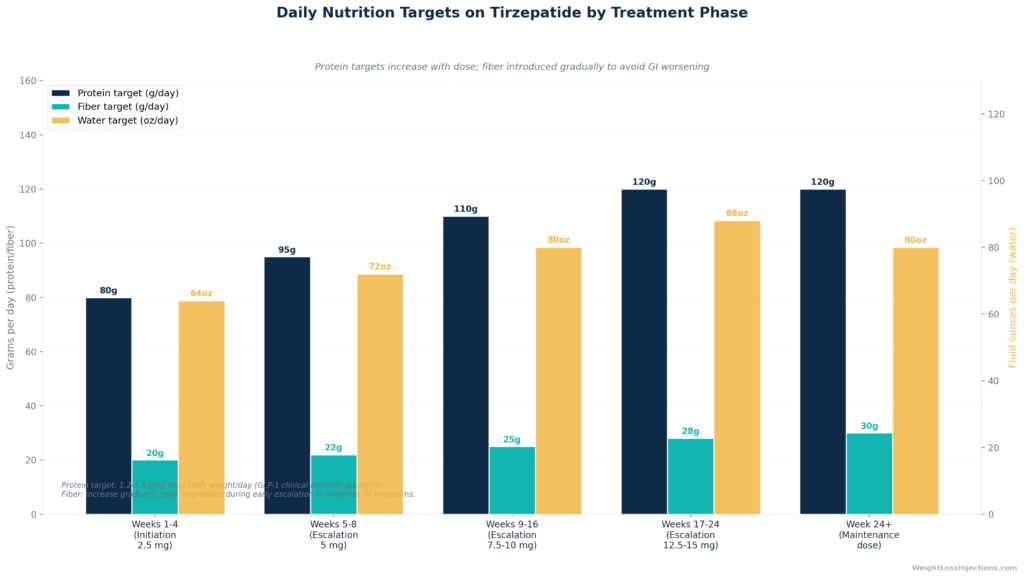
Tirzepatide drives weight loss primarily through appetite suppression and the resulting calorie deficit. Without adequate protein intake, a significant portion of that weight loss comes from lean muscle mass, not just fat. Muscle loss reduces metabolic rate, impairs functional strength, and compromises body composition outcomes that the scale does not reflect.
Most clinical guidance for patients on GLP-1/GIP medications recommends approximately 1.2–1.6 grams of protein per kilogram of ideal body weight per day. This is substantially higher than standard dietary recommendations of 0.8 g/kg for sedentary adults. For a 160-pound (73 kg) person, this target works out to roughly 88–117 grams of protein per day. For patients doing resistance training alongside tirzepatide — which is strongly recommended for muscle preservation — targets at the higher end are appropriate.
The best protein sources for tirzepatide patients combine high protein content with tolerability (low fat, easy digestion):
- Chicken breast and turkey breast: lean, versatile, high protein per ounce, low fat. Grilled, baked, or poached — not fried.
- Fish: salmon (4 oz provides approximately 23 g protein plus cardioprotective omega-3 fatty acids), cod, tilapia, halibut, and canned tuna (water-packed for lower fat content).
- Eggs: highly bioavailable protein, versatile preparation, easy on the stomach. Two large eggs provide approximately 12 g protein.
- Greek yogurt and cottage cheese: both provide 20–25 g protein per cup, are cold and easy to tolerate during nausea episodes, and make excellent snacks or meal components.
- Legumes: lentils, chickpeas, black beans, and edamame provide both protein and fiber — a strong nutritional combination. Note the timing caveat below: introduce legumes gradually during dose escalation phases because their high fiber content can worsen GI symptoms initially.
- Protein powder: whey protein or plant-based protein powder (pea, hemp, or rice-based blends) is useful for patients who struggle to meet protein targets through food alone, particularly during high-nausea periods when solid protein sources are hard to eat.
Practical tip: build every meal around a protein source before deciding on carbohydrates or fats. If you start meal-planning from the protein anchor, adequate intake follows naturally.
High-Fiber Foods — With a Timing Consideration
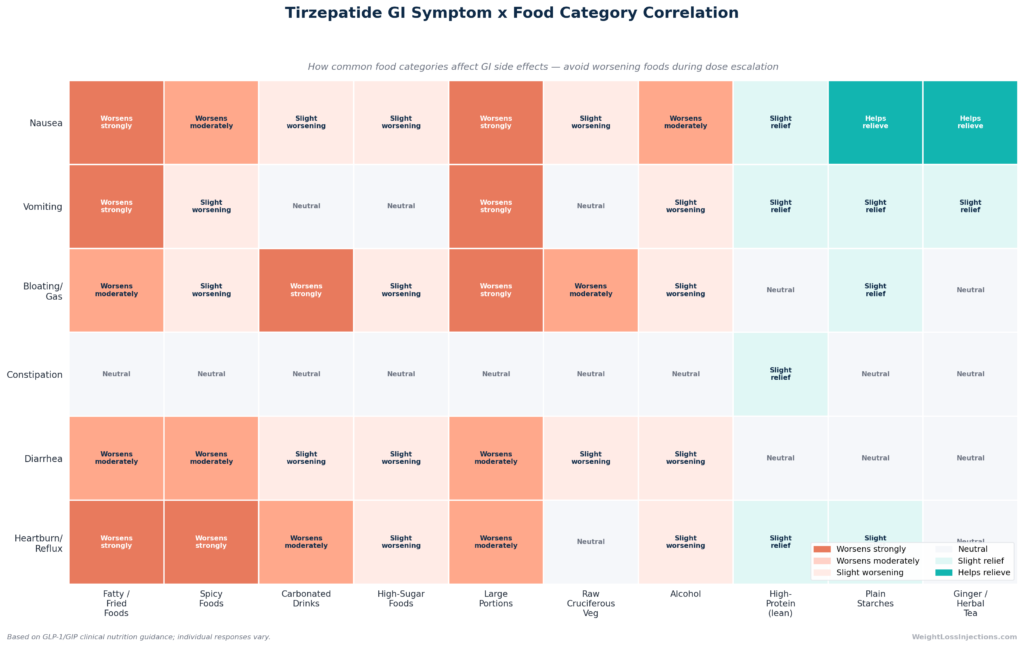
Dietary fiber supports satiety, gut microbiome health, cardiovascular health, and bowel regularity. Long-term, it is an essential part of a tirzepatide-compatible diet. The caution applies specifically to the first 4–8 weeks at each new dose level, when high-fiber foods — particularly raw cruciferous vegetables and large servings of legumes — can worsen the bloating, gas, and diarrhea that already peak during dose escalation.
After the initial adjustment period, reintroduce fiber-rich foods gradually:
- Non-starchy vegetables: broccoli, spinach, zucchini, bell peppers, asparagus, cucumber (steamed or cooked first; add raw forms over time)
- Berries: blueberries, strawberries, raspberries — low glycemic index, high antioxidants, reasonable fiber
- Apples, pears (with peel after adjustment period)
- Whole grains: oats, quinoa, brown rice, whole-grain bread
- Legumes: lentils, chickpeas, black beans (moderate portions, well-cooked)
Anti-Inflammatory and Heart-Protective Foods
Many tirzepatide patients are being treated for cardiovascular risk factors alongside obesity. SURPASS-CVOT, published in NEJM in December 2025, confirmed that tirzepatide is non-inferior to dulaglutide for major cardiovascular events in T2D patients — and the SUMMIT trial published in Circulation in March 2025 demonstrated tirzepatide reduced cardiovascular death or worsening heart failure events by 38% in patients with HFpEF and obesity. Dietary choices that support the medication’s cardiovascular benefits amplify its overall impact:
- Olive oil in place of butter for cooking and dressings — small amounts, 1–2 teaspoons
- Fatty fish (salmon, mackerel, sardines, herring) — omega-3 fatty acids reduce inflammation and support cardiac function; 2–3 servings per week is the target
- Berries — high polyphenol content, low glycemic impact, high antioxidant load
- Avocado — healthy monounsaturated fats; one-quarter to one-half avocado per serving is appropriate
- Nuts and seeds (almonds, walnuts, chia seeds, flaxseed) — moderate portions, about 1 oz or a small closed handful
- Leafy greens (spinach, kale, arugula, Swiss chard) — rich in folate, magnesium, and potassium; excellent with cooked preparations during initial dose escalation
Low-Glycemic Carbohydrates
Tirzepatide’s blood sugar stabilization mechanism works best when dietary carbohydrate choices support glycemic stability rather than creating rapid glucose swings. Low-glycemic carbohydrate sources provide steady energy, better satiety, and less interference with the medication’s glucose-dependent insulin secretion:
- Sweet potatoes — moderate glycemic index, high fiber, vitamin A
- Quinoa — complete protein, low glycemic index, gluten-free
- Oats (steel-cut or rolled, not instant with added sugar) — beta-glucan fiber has specific evidence for improving insulin sensitivity
- Legumes — consistently among the lowest-glycemic foods available
- Non-starchy vegetables — nearly all non-starchy vegetables have low glycemic impact
Avoid refined carbohydrates — white bread, sweetened cereals, pastries, regular crackers, sugary drinks — which provide calories with minimal satiety contribution and cause glucose spikes that work against tirzepatide’s metabolic mechanism.
Foods to Avoid on Tirzepatide
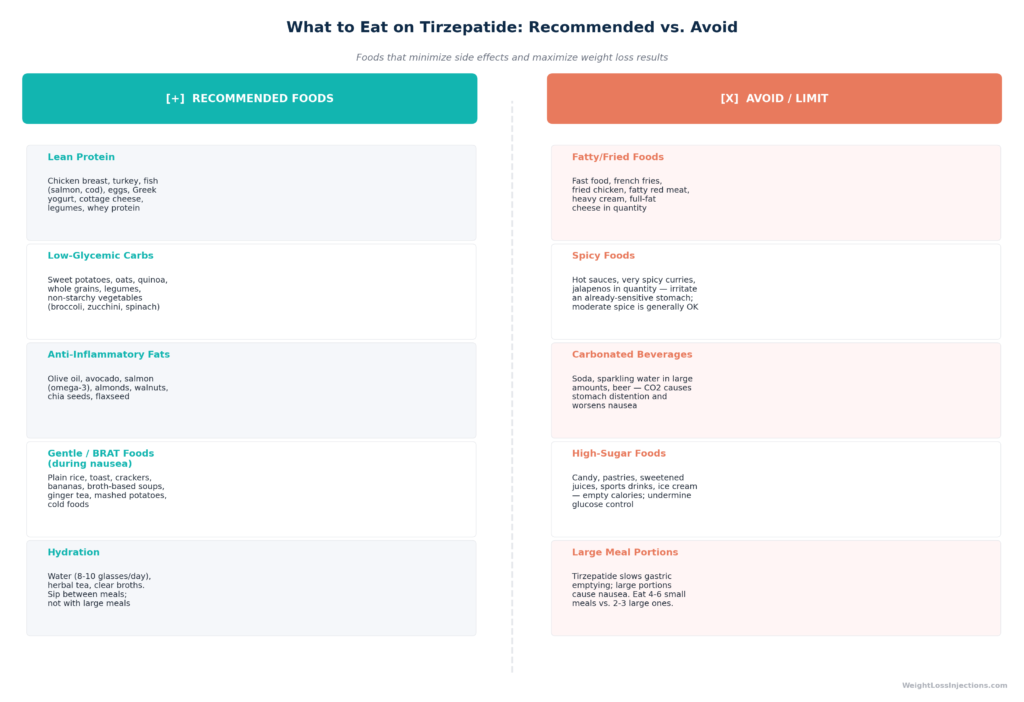
This section frames avoidances not as permanent restrictions but as foods that make tirzepatide harder to tolerate and undermine weight loss progress. Some restrictions (fatty, fried foods; alcohol during escalation) are strongest in early phases; others (refined carbohydrates, high-sugar foods) apply throughout the treatment course.
Two-column visual grid labeled “Eat More” (green column) and “Limit/Avoid” (red column)
| Food Category | Why to Limit | Better Alternative |
|---|---|---|
| Fatty / fried foods | Tirzepatide slows gastric emptying; fat slows it further — combined effect dramatically prolongs nausea | Baked, grilled, or steamed preparations; olive oil in small amounts |
| Spicy foods | Irritate stomach lining and lower esophageal sphincter; worsen nausea and heartburn | Mild herbs and spices; black pepper, cumin, turmeric in moderate amounts |
| Carbonated beverages | CO2 causes stomach distension and bloating on an already-slow-emptying stomach | Still water, herbal tea, broth |
| Alcohol | Worsens GI side effects; empty calories; hypoglycemia risk with insulin/sulfonylureas | Low-sugar kombucha (small amounts); sparkling water without carbonation concern if tolerated |
| High-sugar foods and drinks | Spike blood glucose; counteract tirzepatide’s glucose stabilization; empty calories | Fresh berries, a small amount of dark chocolate (>70%) |
| Ultra-processed snacks | High calorie density; low nutrition; may partially override appetite suppression | Whole food snacks: apple + almond butter, Greek yogurt, string cheese |
| Large meal portions | Causes prolonged gastric distension; reliable nausea trigger | 4–6 smaller meals; stop eating at 70–80% fullness |
| Refined carbohydrates | Rapid glucose spikes; minimal satiety | Whole grain equivalents: brown rice, quinoa, oats, whole-grain bread |
Fatty and Fried Foods in Detail
Fat is the slowest macronutrient to digest under normal circumstances — a high-fat meal can take 4–6 hours to clear the stomach in a healthy person. When tirzepatide is further slowing that process, a greasy meal can produce nausea that lasts 3–8 hours after eating. The FDA Mounjaro label (NDA 215866) directly identifies fatty and greasy foods as triggers to avoid for managing GI adverse events.
Examples to minimize or avoid: fast food (burgers, fries, fried chicken), heavily marbled red meat, pork belly, bacon in large quantities, processed sausages, butter-heavy sauces, cream-based pasta dishes, heavy cream, full-fat cheese in large portions, hollandaise, and mayo-heavy preparations.
This does not mean eliminating all fat. Healthy fats in small amounts — a teaspoon of olive oil, a quarter avocado, a tablespoon of nut butter, a small handful of almonds — are nutritionally appropriate and do not typically trigger GI distress in moderate quantities.
Alcohol
There is no direct pharmacokinetic interaction between tirzepatide and alcohol, per the SHARED_SPEC drug interactions section. However, alcohol creates multiple indirect problems:
- It worsens GI side effects by relaxing the lower esophageal sphincter, increasing acid reflux risk when the stomach is already slow to empty
- It provides approximately 7 calories per gram — more than carbohydrates or protein — with no satiety effect or nutritional benefit
- It carries a hypoglycemia risk for patients also taking insulin or sulfonylureas, by blunting hepatic glucose production
Most providers recommend minimizing alcohol, especially on injection day, during dose escalation, and in the first months of treatment. For comprehensive alcohol guidance on tirzepatide, see the dedicated tirzepatide and alcohol guide.
Our Top 3 · October 2026
The best GLP-1 providers right now
Independently reviewed. Ranked by price, medication access, provider quality, and patient outcomes.
Renew GLP
Personalized GLP-1, GIP plans: Semaglutide & Tirzepatide.
Medvi
No membership or hidden fees. Everything you need is included.
Trimi
US-licensed clinicians and shipped to your door, from $99/mo.
Meal Timing Around Weekly Injections
Area/line chart titled “Typical GI Side Effect Intensity Across the Weekly Injection Cycle” — X-axis: Day 0 (Injection Day) through Day 7; Y-axis: Relative Nausea/GI Intensity (Low to High); curve…
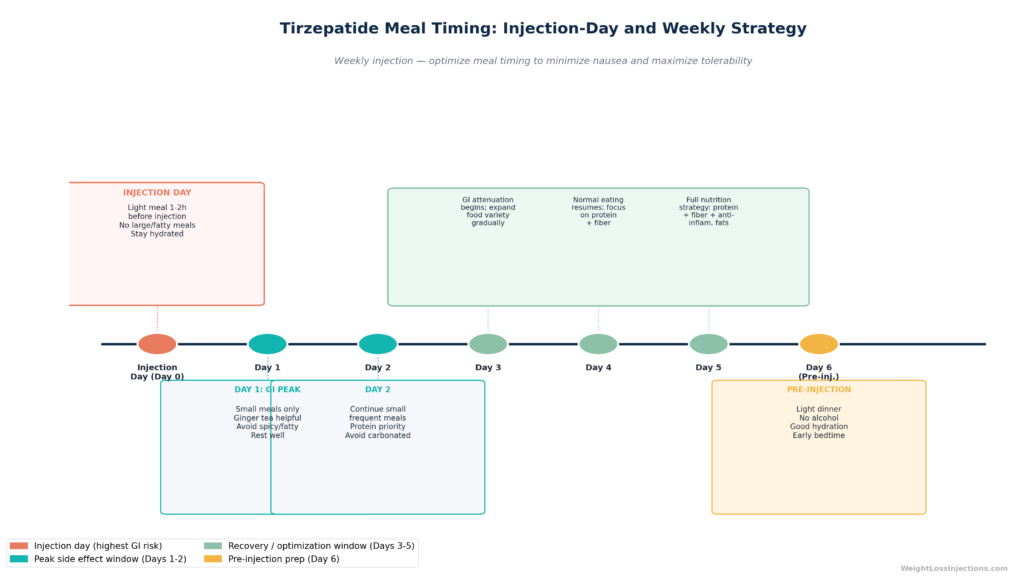
Tirzepatide is injected once weekly, with peak serum concentration (Tmax) reached 8–72 hours post-injection, per StatPearls / NCBI Bookshelf. This means GI side effects — and the dietary modifications that manage them — follow a predictable weekly rhythm. Understanding this rhythm allows you to align your eating patterns with where you are in the injection cycle.
Injection Day Strategy
Choose injection day strategically. Many patients do best injecting on a day when they can eat flexibly and rest if needed — often a Friday evening so that the peak GI window (Saturday–Sunday) falls on a weekend, or conversely, a Sunday when Monday’s work schedule enforces mindful, smaller eating.
On injection day: eat smaller, lower-fat meals throughout the day. Avoid what you might think of as a “celebration meal” on injection night — a large, rich dinner on injection day is a reliable recipe for several hours of subsequent nausea. Some patients find it easier to inject at bedtime and sleep through the early ramp-up phase, dealing with any residual nausea the following morning on a light stomach.
Sample injection-day eating pattern:
- Light breakfast: 2-egg scramble with spinach, 1 slice whole-grain toast, herbal tea
- Small lunch: chicken and vegetable broth soup with a small whole-grain roll
- Small dinner (before or after injection): 3–4 oz grilled chicken, ½ cup plain white rice, ½ cup cooked zucchini
- Evening: banana and ginger tea if hungry
Days 1–3 Post-Injection: Highest GI Risk Window
This is when nausea and vomiting risk peaks, per Fella Health’s tirzepatide side effects guide. Adhere most strictly to the low-fat, small-meal guidance during these days:
- Prioritize hydration above all else
- Protein shakes, Greek yogurt, cottage cheese, and eggs may be easier to tolerate than heavier cooked protein sources
- Cold or room-temperature foods are often better tolerated than hot meals
- If nausea prevents eating solid food, focus on broth, banana, plain crackers, and ginger tea — maintaining hydration is the priority
- For patients on escalating doses (see the tirzepatide dosing chart), the first several days of each new dose level require the same stringent approach as the first week of treatment
Days 4–7 Post-Injection: The Optimal Eating Window
As GI effects diminish in the second half of the injection week, appetite suppression remains strong while nausea recedes. This is the best window for consistent, high-quality eating:
- Appetite suppression is working well — the “I naturally want less food” effect is most reliable here
- Expand toward more varied whole-food eating: add raw vegetables back, a wider variety of grains, a moderate portion of healthy fats
- Use this window for batch-cooking: prepare proteins and vegetables for the week so that when nausea returns in Days 1–3 of the next cycle, healthy options are ready without requiring effort to prepare
General Meal Timing Principles
Avoid eating within 2–3 hours of bedtime. Tirzepatide’s gastric-emptying slowdown increases reflux and heartburn risk when you lie down with a stomach that isn’t empty yet. The NCBI LiverTox tirzepatide entry notes GERD as a recognized adverse event — keeping a pre-sleep gap minimizes this risk.
Don’t skip breakfast. Some patients on tirzepatide report barely feeling hungry until noon or later. While reduced appetite is expected and desirable for weight loss, skipping breakfast entirely tends to result in later overcompensation — a rushed, large meal when hunger finally breaks through. Smaller regular meals prevent this cycle.
Gap between meals: 3–4 hours minimum. This allows partial gastric emptying before the next meal arrives. Eating again before the previous meal has cleared significantly compounds distension and nausea.
Sample Tirzepatide Meal Plan — One Week
This 7-day plan is a template and source of inspiration, not a prescription. Individual calorie and macronutrient needs vary based on body weight, activity level, metabolic rate, and clinical goals. A registered dietitian can personalize these targets for your situation. These dietary guidelines apply whether you are taking branded tirzepatide (Zepbound or Mounjaro) or a compounded formulation prepared under a valid prescription from a licensed provider.
General targets embedded in this plan: approximately 90–120 g protein/day, moderate fiber (higher in mid-week when nausea is typically lowest), low to moderate fat, anti-inflammatory food choices. Calorie totals are not specified — adjust portions to your individual targets under clinical guidance.
Day 1 — Injection Day (lightest day; focus on tolerability)
- Breakfast: 2-egg scramble with fresh spinach, 1 slice whole-grain toast | 1 cup plain Greek yogurt | Herbal tea or black coffee
- Lunch: Small bowl of chicken and vegetable broth soup | 1 small whole-grain roll
- Dinner: 3–4 oz grilled chicken breast | ½ cup plain white rice | ½ cup cooked zucchini, softly steamed
- Snack: 1 medium banana | Ginger tea
- Day 1 note: Keep fat content minimal. Plain, simply prepared foods only. No alcohol, no fried items, no carbonation.
Day 2 — Post-Injection (highest nausea risk; gentle whole foods)
- Breakfast: Plain oatmeal (½ cup dry, cooked) with a few blueberries stirred in | Optional: ½ scoop protein powder mixed in if tolerated
- Lunch: ½ cup cottage cheese with cucumber slices | 4–5 whole-grain crackers
- Dinner: 3–4 oz baked cod or tilapia | ½ cup mashed sweet potato (no butter) | ½ cup steamed green beans
- Snack: Apple slices | 1 tablespoon almond butter (small amount)
- Day 2 note: Prioritize hydration. Sip 8 oz of still water between each meal. If nausea is high, fall back to Day 1 foods.
Day 3 — GI transition day; cautious diversification
- Breakfast: Greek yogurt parfait: ½ cup plain Greek yogurt, ¼ cup low-sugar granola, mixed berries
- Lunch: Large mixed-greens salad with 4 oz grilled turkey breast, cherry tomatoes, cucumber, and olive oil-lemon dressing (dressing on the side)
- Dinner: 4 oz baked salmon fillet | ½ cup quinoa | Roasted asparagus (4–6 spears)
- Snack: 1 oz (small handful) raw almonds
- Day 3 note: GI effects typically declining. Begin reintroducing more vegetables. Dressings and sauces on the side to control fat content.
Day 4 — Mid-week; varied and protein-forward
- Breakfast: 2-egg veggie omelette with diced bell pepper and onion | 1 slice whole-grain toast, lightly spread
- Lunch: 1 cup lentil soup | Side salad (romaine, cucumber, tomato, light vinaigrette on the side)
- Dinner: 4 oz skinless grilled chicken thigh | Roasted sweet potato (½ medium) | Broccoli (steamed, ½ cup)
- Snack: Celery sticks with 2 tablespoons hummus
- Day 4 note: Best appetite suppression window. Eat mindfully; stop when satisfied, not full. Lentils provide protein + fiber — if they cause bloating, substitute with cottage cheese or an egg.
Day 5 — Active nutrition day; lean and varied
- Breakfast: Protein smoothie: 1 scoop whey or plant-based protein powder, 1 cup unsweetened almond milk, ½ banana, 1 cup spinach, ice — blend until smooth
- Lunch: Turkey wrap: 1 whole-grain wrap, 3 oz sliced turkey breast, lettuce, tomato, mustard (not mayo)
- Dinner: 4 oz shrimp stir-fry with mixed vegetables (snap peas, bell pepper, bok choy) in light soy sauce with sesame oil | ½ cup brown rice
- Snack: 1 piece string cheese | 1 medium pear
- Day 5 note: Good window for experimenting with slightly more varied whole foods. Brown rice replaces white rice as GI tolerance is typically better mid-cycle.
Day 6 — Toward end of cycle; satisfying, heart-protective
- Breakfast: ½ cup cottage cheese with a fruit salad of mixed berries and melon
- Lunch: Water-packed tuna salad (3 oz, mixed with a small amount of plain Greek yogurt instead of mayo) served in romaine lettuce wrap cups | Side of sliced cucumber
- Dinner: 4 oz lean beef tenderloin or sirloin (trimmed, grilled) | Roasted Brussels sprouts | ½ cup mashed cauliflower
- Snack: Small handful of walnuts | 1 small orange
- Day 6 note: Red meat in moderation (1–2x per week) is appropriate; lean cuts only. Walnuts provide omega-3s and are heart-protective in small quantities.
Day 7 — Pre-injection day; satisfying and nutritionally complete
- Breakfast: 1 slice whole-grain avocado toast (½ avocado mashed) | 2 poached eggs
- Lunch: Greek salad: feta cheese (small amount), olives, tomatoes, cucumber, chickpeas, olive oil dressing | 3 oz grilled chicken
- Dinner: 5 oz baked or cedar-plank salmon | ½ cup wild rice pilaf | Steamed edamame (½ cup)
- Snack: Low-fat plain Greek yogurt with a drizzle of honey
- Day 7 note: Tomorrow is injection day again — enjoy satisfying, high-quality food today, but don’t overeat. Begin moderating fat and portion size in the evening to set up a comfortable injection day.
Meal Plan Notes:
- Adjust portion sizes for your individual calorie goals — consult a registered dietitian for personalized targets specific to your body weight and activity level
- On days when nausea is unexpectedly high, fall back to Day 1 or Day 2 lighter meals regardless of where you are in the week
- Protein target: aim for 25–35 g protein per meal; adjust total upward if you are doing resistance training (highly recommended for muscle preservation on tirzepatide)
- Hydration: drink 8–10 glasses (64–80 oz) of still water per day; sip between meals, not during
Special Considerations — Navigating Social Eating and Restaurants on Tirzepatide
One of the most frequently underappreciated challenges of tirzepatide isn’t the injection or the side effects — it’s the social dimension of eating less. Restaurants, celebrations, holidays, and travel all create situations where the dietary principles above come into friction with real life. Here is practical guidance for each.
Restaurants
The good news: tirzepatide has likely already changed what feels like a satisfying meal. Patients frequently report that a portion size that would once have felt like an appetizer is now completely satisfying as a main course. Lean into this.
Menu navigation:
- Lead with protein-forward choices: grilled fish, roasted chicken, lean steak, legume-based dishes. Most menus have at least one of these options
- Request dressings and sauces on the side — restaurant sauces are often butter- or cream-based, and even a modest pour can contain more fat than you intend to eat
- Skip the bread basket or ask for it to be removed before you sit down — not because a single slice is catastrophic, but because even a small piece of bread on a slowed stomach can create early satiety that crowds out your ability to eat the more nutritious parts of your meal
- Ask for a half-portion or plan explicitly to take half home before you begin eating; once food is on the plate in a restaurant environment, finishing it is a powerful social norm
- Avoid alcohol at restaurants, especially during dose escalation; if you are later in treatment and your GI system has stabilized, one glass of wine with dinner is a reasonable choice for many patients — but never on an empty stomach
Social Pressure
Eating noticeably less than others at social meals can draw well-meaning but unwelcome attention. A simple, comfortable explanation: “I’m on a medication that affects my appetite — I’m not being difficult, I just genuinely can’t eat as much as I used to.” Most people accept this without further interrogation. You do not need to explain the medication further.
Holidays and Celebrations
Plan injection timing when you can. If a major holiday meal falls on what would be your injection day or the day after, consider adjusting your injection day for that week — inject 2–3 days earlier if your schedule allows, so the peak GI window is behind you before the celebration. (Discuss schedule changes with your prescribing provider before adjusting injection timing.)
At the table: eat the protein and vegetables first. Taste a small portion of the special holiday dish. A small serving of anything is almost always manageable — the problem arises with the cumulative volume of multiple dishes in large portions.
Travel
Air travel and road trips create dietary hazards: airport food is predominantly high-fat, fast food is ubiquitous, and healthy options can be genuinely difficult to find.
Pack portable protein: protein bars (low-sugar, whey- or plant-protein-based), individual Greek yogurt cups (in a small cooler), string cheese, hard-boiled eggs, and small bags of almonds or walnuts all travel well. Having these options reduces dependence on airport concessions or gas-station food.
On the plane: choose water over any carbonated beverage; the reduced cabin pressure already causes some bloating — adding carbonation compounds it. If ordering a meal, choose the lowest-fat option available.
Alcohol at Social Events
If you choose to drink at a social event, one to two low-sugar options — a glass of dry wine, spirits with soda water (or still water), a light beer — over a full evening is less likely to cause problems than multiple cocktails or sweet mixed drinks. Never drink on an empty stomach. Avoid alcohol entirely during active dose escalation. For comprehensive guidance, see the tirzepatide and alcohol guide.
Our Take at WeightLossInjections.com
Tirzepatide is genuinely remarkable — SURMOUNT-1 data showing 15–21% mean weight loss at 72 weeks represents outcomes that were essentially unachievable with prior non-surgical interventions, and the 47% greater weight loss versus semaglutide in SURMOUNT-5 confirms tirzepatide’s position as the most effective pharmaceutical weight management option currently available.
But the patients who get the best results — who lose the most fat, preserve the most muscle, tolerate the medication through dose escalation, and sustain their results — consistently treat tirzepatide as one powerful tool within a larger lifestyle framework. Not as a standalone cure.
The dietary approach in this article isn’t about willpower or deprivation. It’s about understanding the pharmacology and working with it. A large, fried, late-evening meal on injection day isn’t a treat — it’s putting your stomach in an impossible position at the worst possible moment. A plate anchored by grilled chicken, roasted vegetables, and a half-cup of quinoa isn’t deprivation — it’s what your appetite is now naturally steering you toward, and it’s accelerating your results at the same time.
Most patients who struggle with GI side effects in the first 4–8 weeks are inadvertently making things worse through diet — not because they are reckless, but because the mechanism isn’t always explained clearly. When the connection between a specific meal and several hours of subsequent nausea becomes clear, the dietary changes feel less like restrictions and more like common sense.
The patients who report the best early experience are the ones who:
- Keep injection-day meals light and low-fat from day one
- Build every meal around a protein source
- Drink water consistently between (not during) meals
- Stop eating before they feel full
- Have a go-to nausea plan (ginger tea, plain crackers, broth) ready for the first days at each new dose
If you want personalized dietary guidance alongside your tirzepatide prescription, WeightLossInjections.com offers a bundled telehealth program at [$X/month] that includes [service detail] — including licensed providers who can evaluate your eligibility for tirzepatide and adapt your dietary recommendations as you progress through the titration schedule. Ready to start tirzepatide with a plan? Connect with a licensed provider at WeightLossInjections.com today.
FAQ
To reduce nausea on tirzepatide — especially during dose escalation — focus on small, frequent meals of easily digestible foods: plain crackers, white rice, plain toast, broth-based soups, bananas, and eggs. Avoid fatty, fried, and spicy foods, which worsen nausea by further slowing gastric emptying that tirzepatide has already slowed significantly, per StatPearls / NCBI Bookshelf. Ginger tea or ginger chews can provide additional relief. Cold and room-temperature foods are often easier to tolerate than hot meals during active nausea because hot food generates stronger aromas.
The main foods to limit or avoid are fatty and fried foods (french fries, fried chicken, heavy cream sauces), spicy foods, carbonated beverages (soda and sparkling water in large amounts), alcohol, high-sugar foods, refined carbohydrates, and large meal portions. These worsen GI side effects including nausea, bloating, and vomiting, as documented in the FDA Mounjaro label (NDA 215866), or undermine tirzepatide’s weight loss and blood sugar stabilization mechanisms. The avoidance of fatty foods is most critical during dose escalation phases; the avoidance of refined carbohydrates and sugar applies throughout treatment.
Tirzepatide doesn’t require a specific prescribed diet, but a protein-forward, whole-food approach dramatically improves both outcomes and tolerability. Prioritizing lean protein (chicken, fish, eggs, Greek yogurt, legumes) helps preserve muscle mass during the calorie restriction the medication creates. Limiting processed foods, refined carbohydrates, and high-fat meals reduces GI side effects. The SURMOUNT-1 trial that generated the pivotal weight loss data enrolled participants on a reduced-calorie diet alongside tirzepatide — dietary modification is built into the evidence base, not optional. SURMOUNT-4 data published in JAMA in 2024 further underscores that sustainable lifestyle habits are critical to maintaining tirzepatide results long-term.
Yes — significantly. GI side effects, particularly nausea, tend to peak in the 24–48 hours after each injection as tirzepatide reaches peak serum concentration (Tmax 8–72 hours, per StatPearls / NCBI Bookshelf). Eating smaller, lower-fat, easily digestible meals on injection day and the day after substantially reduces nausea risk. Avoid large, fatty, or spicy meals on injection day specifically. Many patients find that lighter eating on injection day and the morning after is the single most impactful dietary change they can make to improve their experience on tirzepatide.
Most clinical guidance for patients on GLP-1/GIP medications recommends approximately 1.2–1.6 grams of protein per kilogram of ideal body weight per day. This is substantially higher than standard dietary recommendations and reflects the importance of preserving lean muscle mass during the calorie restriction tirzepatide creates. For a 160-pound (73 kg) person, this target works out to roughly 88–117 grams of protein per day. For patients doing resistance training — which is recommended alongside tirzepatide for optimal body composition — targets at the higher end of that range are appropriate. If meeting protein targets through food alone is difficult during high-nausea periods, a protein shake (whey or plant-based) is a practical solution.
There is no direct pharmacokinetic interaction between tirzepatide and alcohol, per the SHARED_SPEC drug interactions reference. However, alcohol can worsen GI side effects including nausea and acid reflux, provides empty calories that undermine weight loss, and carries a hypoglycemia risk for patients also taking insulin or sulfonylureas. Most providers recommend minimizing alcohol on tirzepatide — especially during dose escalation and on injection day itself. If you do choose to drink later in treatment when GI side effects have stabilized, one to two low-sugar drinks (dry wine, spirits with still water) over an evening is less likely to cause problems than multiple drinks or sugary cocktails. See the dedicated tirzepatide and alcohol guide for full guidance.
This content is for informational purposes only and does not constitute medical or dietary advice. Consult a licensed healthcare provider or registered dietitian before making significant dietary changes, especially while on prescription medication. WeightLossInjections.com editorial content is reviewed by licensed medical providers. Tirzepatide is an FDA-approved prescription medication; results vary by individual. Trial averages represent population means, not guaranteed outcomes for any individual patient. Last medical review: June 2026.