![Unbranded [pillar-drug-class] injection pen on a neutral background — WeightLossInjections.com editorial hero](https://weightlossinjections.com/wp-content/uploads/2026/07/hero_tirzepatide_c2_dosing-1200x675.png)
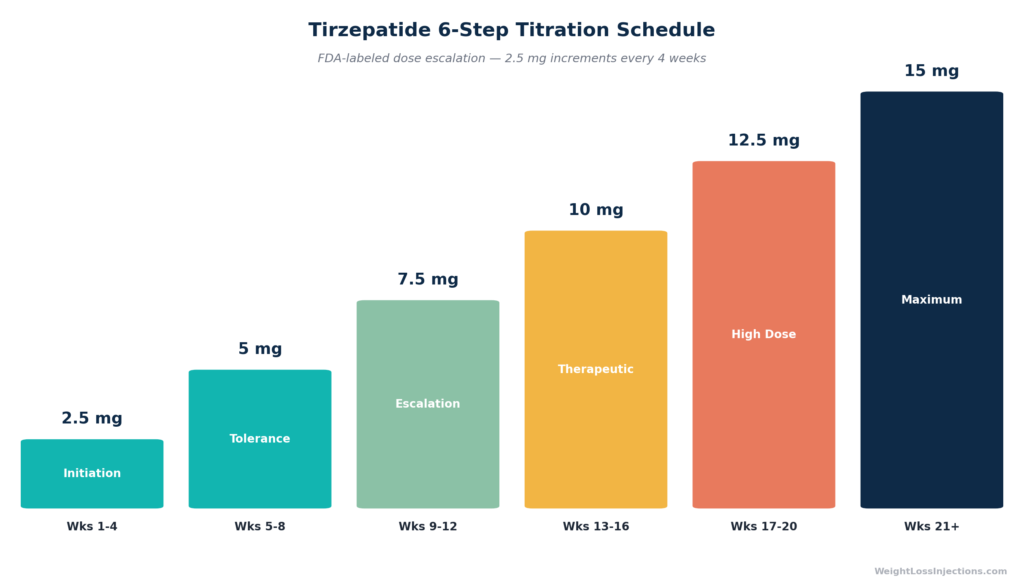
Step-line chart showing tirzepatide dose escalation from 2.5 mg to 15 mg over 20+ weeks, with each dose tier labeled by week range and color-graded from light teal (2.5 mg) to deep teal (15 mg)
- Tirzepatide (Mounjaro® for type 2 diabetes, Zepbound® for weight management) starts at 2.5 mg once weekly for the first four weeks — a tolerability-only initiation dose, not a therapeutic one.
- The standard FDA-labeled schedule escalates in 2.5 mg increments every ≥4 weeks, reaching a maximum of 15 mg once weekly at week 21 or later.
- Approved maintenance doses are 5 mg, 10 mg, and 15 mg — not every patient needs to reach the maximum.
- Clinical trials showed dose-dependent weight loss: −15.0% (5 mg), −19.5% (10 mg), −20.9% (15 mg) at 72 weeks versus −3.1% for placebo in SURMOUNT-1.
- Compounded tirzepatide under the narrow 503A personalized-medicine exception may follow a different titration pace, but must be individually prescribed with documented clinical justification.
- If you miss a dose: inject within 4 days of your scheduled day; otherwise skip and resume the following week — never double dose.
- All dosing decisions must be made by your prescribing clinician. WeightLossInjections.com does not provide medical advice.
Tirzepatide Dose Escalation Chart — The Complete Schedule
Tirzepatide’s step-up dosing protocol is not arbitrary. The molecule — a first-in-class dual GIP and GLP-1 receptor agonist (meaning it activates two separate gut-hormone pathways simultaneously) — produces meaningful appetite suppression and slowed gastric emptying that can trigger nausea, vomiting, and constipation, particularly during the early weeks of treatment. The entire logic of the escalation schedule is to give the gastrointestinal tract time to adapt before each upward step, which dramatically improves tolerability and long-term adherence.
The FDA-labeled titration schedule below applies to both Mounjaro® (tirzepatide for type 2 diabetes, NDA 215866) and Zepbound® (tirzepatide for chronic weight management, NDA 217806). Both products contain the same molecule at the same doses; the difference lies in their approved indications, not their pharmacology.
Standard FDA-Labeled Titration Table
| Week Range | Dose | Clinical Purpose |
|---|---|---|
| Weeks 1–4 | 2.5 mg once weekly | Tolerability initiation — not a therapeutic dose |
| Weeks 5–8 | 5.0 mg once weekly | First therapeutic maintenance dose |
| Weeks 9–12* | 7.5 mg once weekly | Titration step |
| Weeks 13–16* | 10 mg once weekly | Second approved maintenance dose |
| Weeks 17–20* | 12.5 mg once weekly | Titration step |
| Week 21+* | 15 mg once weekly | Maximum approved dose; third maintenance option |
*Each starred step requires a minimum of 4 weeks at the preceding dose before escalating. Providers may hold at any step based on individual tolerability. Source: FDA Zepbound NDA Medical Review 217806; FDA Mounjaro label NDA 215866.
Understanding the 2.5 mg Starting Dose
It bears repeating: 2.5 mg is not a therapeutic dose. Its exclusive purpose is tolerability priming. Patients who begin at 2.5 mg and notice no appetite suppression, no weight movement, and minimal side effects in weeks 1–4 are not experiencing treatment failure — they are experiencing the schedule working as designed. Per the FDA Zepbound NDA Medical Review 217806, clinically meaningful weight loss begins at the 5 mg maintenance level. The 2.5 mg period is a calibration step, not a weight-loss step.
This matters practically: patients who interpret the silent 2.5 mg weeks as “this drug isn’t working for me” and discontinue early never reach the doses where the clinical trial results — and the real-world weight loss — actually occur. Holding to the protocol through that initial four-week period is one of the most important factors for long-term success.
Approved Maintenance Doses
Three doses are FDA-approved as long-term maintenance levels: 5 mg, 10 mg, and 15 mg once weekly. The 7.5 mg and 12.5 mg doses exist as titration steps only — they allow gradual escalation but are not intended as indefinite maintenance doses per GoodRx Mounjaro Dosage Guide. Not every patient needs to reach 15 mg; the appropriate maintenance dose is the lowest one that achieves a patient’s weight-management goals with acceptable tolerability, as determined by their prescriber.
Dose increases must occur in 2.5 mg increments — jumping from 5 mg directly to 10 mg, for example, is outside the labeled protocol and substantially increases GI side effect risk per StatPearls / NCBI Bookshelf — Tirzepatide.
What Each Dose Tier Feels Like — Week-by-Week Expectations
Understanding what is normal at each dose tier — and what is not — helps patients and their caregivers navigate the escalation schedule with confidence rather than alarm. The following is grounded in clinical trial safety data and published side effect frequency analyses.
Weeks 1–4: 2.5 mg — The Quiet Phase
Most patients at 2.5 mg report minimal or no GI side effects. Appetite suppression is typically absent or very mild. This is expected. The drug is accumulating toward steady-state plasma levels (reached after approximately 4 weeks of weekly dosing, given tirzepatide’s ~5-day half-life per FDA Clinical Pharmacology Review NDA 215866), but receptor occupancy at this dose is insufficient to produce the full pharmacodynamic effect. Patients should not increase their dose before week 5 regardless of how well they feel — early escalation bypasses the physiological adaptation the schedule is designed to build.
Weeks 5–8: 5 mg — First Meaningful Response
The 5 mg transition marks the first dose at which most patients experience meaningful appetite suppression. In days 1–3 after the initial 5 mg injection, mild nausea is common — it reflects gastric emptying slowing more substantially than at 2.5 mg. Per Fella Health Tirzepatide Side Effects Guide, nausea affects a substantial proportion of patients during early therapeutic dosing and typically peaks in the first few days post-injection, then attenuates across the following week. Eating smaller meals, avoiding high-fat foods, and staying hydrated in the 24–48 hours after injection can meaningfully reduce nausea intensity.
Clinical trials showed that participants in the 5 mg arm of SURMOUNT-1 achieved a mean body weight reduction of −15.0% at 72 weeks compared to −3.1% for placebo — nearly five times the placebo response, per PubMed SURMOUNT-1, NEJM 2022. For a 220-pound patient, that represents approximately 33 pounds of mean weight reduction at the lowest approved maintenance dose.
Weeks 9–16: 7.5 mg and 10 mg — The Peak Side-Effect Window
For many patients, the 7.5 mg to 10 mg range represents the most challenging phase of the escalation. GI adverse events — nausea, constipation, diarrhea, vomiting, and abdominal discomfort — occur most frequently during these transitions. Pooled data from tirzepatide clinical trials shows that GI adverse events occur in approximately 39% of patients at 5 mg, rising to 46% at 10 mg per StatPearls / NCBI Bookshelf.
Constipation deserves particular attention at these doses: it is often underreported but clinically significant, and can be managed with increased hydration, dietary fiber, and short-term use of stool softeners as directed by a prescriber. Fatigue during the first week at a new dose is also commonly reported — the body is adjusting to stronger appetite suppression and reduced caloric intake, and energy levels typically stabilize within 7–10 days.
The SURMOUNT-1 trial demonstrated that participants at 10 mg achieved a mean weight loss of −19.5% at 72 weeks, with 89% achieving clinically meaningful weight loss of ≥5% versus 35% on placebo, per PubMed SURMOUNT-1, NEJM 2022.
Weeks 17–21+: 12.5 mg and 15 mg — Acceleration and Adaptation
At higher doses, something clinically important happens: the body has generally adapted to the drug’s GI effects, so side effects for many patients actually become less disruptive at 12.5–15 mg than they were during the 7.5–10 mg transition. Physiological tachyphylaxis — the reduction in a response after repeated exposure — tends to reduce nausea intensity over time, even as the dose rises. Weight loss often accelerates at these doses for patients who have not yet reached their plateau.
At 15 mg, SURMOUNT-1 participants achieved a mean body weight change of −20.9% at 72 weeks, with 57% of participants losing ≥20% of their body weight and 91% achieving ≥5% weight loss per PubMed SURMOUNT-1, NEJM 2022. These outcomes are dose-dependent and represent the maximum labeled efficacy of the drug.
Vertical decision flowchart with three outcome branches: “Escalate” (green), “Stay at current dose” (amber), “Consult prescriber / step back” (red)
Compounded Tirzepatide Dosing Protocols: How They May Differ
Before discussing compounded tirzepatide dosing, it is important to understand the current legal landscape — because it has changed significantly since the peak of the shortage era.
The Narrow Lawful Pathway in 2026
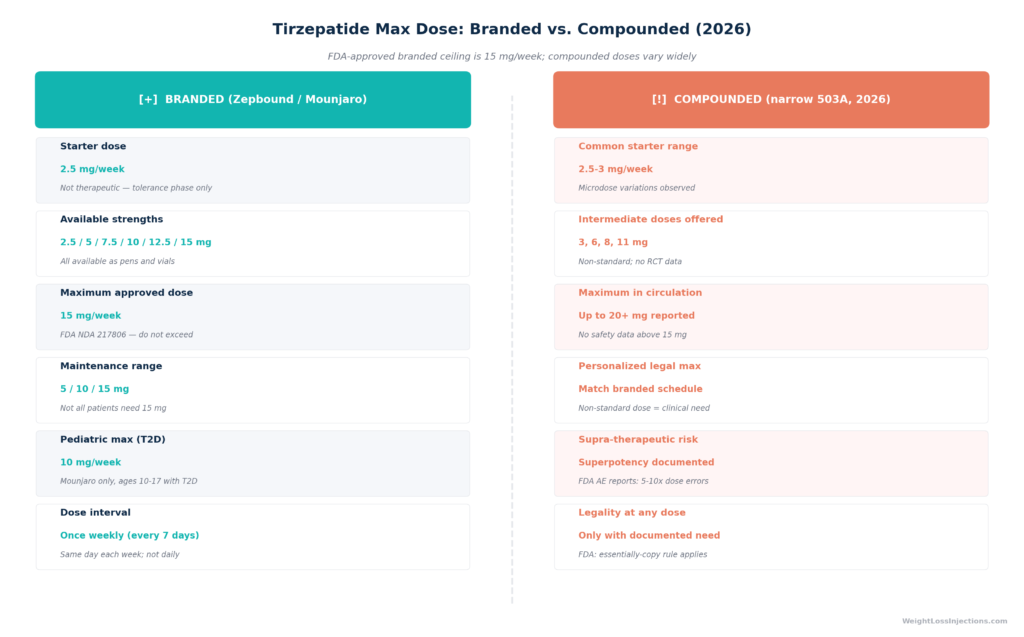
Mass-market compounding of tirzepatide is not lawful as of June 2026. The FDA formally declared the tirzepatide shortage resolved on December 19, 2024, per the FDA Drug Shortage Clarification Page, and enforcement discretion for 503A compounding pharmacies ended March 10, 2025. The FDA subsequently proposed to exclude tirzepatide from the 503B Bulks List in April 2026, per FDA press announcement, April 30, 2026.
A narrow exception survives under the 503A personalized-medicine pathway: a state-licensed compounding pharmacy may compound tirzepatide for an individual patient if the prescriber documents a clinically significant difference justifying the compounded product — for example, a documented allergy to an inactive ingredient in the branded pen (such as the cresol preservative), or a documented need for a dose strength not commercially available. The pharmacy must also compound no more than four such prescriptions per calendar month of that essentially-copy product, per the FDA GLP-1 Compounding Clarification Page. A generic cost or preference rationale does not qualify.
WeightLossInjections.com connects patients with licensed prescribers who operate within this lawful framework. [service detail]
Non-Standard Dose Options in Compounded Protocols
When compounded tirzepatide is lawfully prescribed under the 503A exception, the prescriber may include dose strengths not in the standard FDA schedule. Three patterns appear in current clinical practice:
“Microdoses” — sub-2.5 mg starting doses. Some prescribers initiate compounded tirzepatide at 1 mg or 1.5 mg, reasoning that patients with extreme GI sensitivity may benefit from an even slower on-ramp than the standard 2.5 mg start. Small case series suggest tolerability advantages during initiation at microdoses, but there are no published randomized controlled trial data confirming efficacy equivalence at these levels — the evidence is anecdotal per StatPearls / NCBI Bookshelf. Patients considering microdose protocols should discuss the evidence base clearly with their prescriber.
Intermediate doses during escalation. Some patients cannot tolerate the standard 2.5 mg step-ups — jumping from 5 mg to 7.5 mg, for example, may produce significant GI distress. A documented clinical need for intermediate doses (e.g., 6 mg) between standard tiers can serve as legitimate justification for a 503A prescription. This is one of the clearest legitimate use cases for compounded tirzepatide under current FDA guidance, per FDA GLP-1 Compounding Clarification Page.
Doses above 15 mg. Some compounding platforms have historically offered doses exceeding the FDA-approved maximum. WeightLossInjections.com does not endorse supra-maximum dosing. Controlled safety data do not exist for doses above 15 mg/week per FDA Zepbound NDA Medical Review 217806, and the risks — including amplified GI adverse events and unknown cardiovascular effects — are undefined.
Vial vs. Pen Delivery
Branded Mounjaro® and Zepbound® use single-dose autoinjector KwikPens with a built-in dose-locking mechanism — the pen delivers exactly one pre-set dose. Compounded tirzepatide is typically supplied as a multi-dose vial requiring the patient to draw up the correct volume with a syringe. Dose accuracy with a vial depends entirely on the patient’s measurement technique; errors in volume calculation can result in significantly under- or over-dosing. If you are using a compounded vial, follow your pharmacy’s written instructions precisely, and verify the concentration (mg/mL) with your pharmacy before each new vial.
Concentration is the most common source of vial-dosing errors. Compounded tirzepatide vials are dispensed at varying concentrations — for example, 2.5 mg/mL, 5 mg/mL, or 10 mg/mL — depending on the pharmacy and the prescription. A patient who switches between pharmacies or between batches from the same pharmacy without verifying concentration may inject a very different dose than intended. Before drawing up any compounded dose, confirm the concentration stated on the vial label, calculate the required volume in milliliters based on that concentration, and double-check your calculation. Your prescriber or pharmacist should walk through this calculation with you at initiation. If you are ever uncertain, do not inject until you have verified — dose errors with GLP-1 receptor agonists can cause severe GI events, dehydration, and electrolyte imbalances.
Patients using compounded tirzepatide should only follow the dosing schedule documented in their written prescription — not protocols from social media, online forums, or any source other than their licensed prescriber.
How Dose Adjustments Work: When to Stay, When to Escalate
One of the most common misconceptions about tirzepatide dosing is that the 4-week minimum between dose increases is also a target — a floor that is supposed to be hit as quickly as possible. It is not. The label establishes a minimum interval to protect patients from escalating too quickly; it says nothing about how long patients must escalate before reaching a maintenance dose. Many patients benefit from a slower, more individualized schedule.
Signs You May Need to Stay at Your Current Dose Longer
The following signals — when persistent and not resolving after 3–4 weeks at a dose — are indicators that a prescriber may recommend holding at the current dose for an extended period (typically 8–12 weeks) before escalating:
- Nausea or vomiting that disrupts daily activities — not passing queasiness, but nausea that prevents normal eating, working, or functioning.
- Diarrhea requiring intervention — more than two to three loose stools per day, or diarrhea causing dehydration.
- Significant fatigue or dehydration — especially if the patient is unable to maintain adequate fluid intake due to GI symptoms.
- Inability to maintain adequate nutrition — patients who are eating very little due to nausea at a given dose may not benefit from escalating until nutritional status stabilizes.
Per FDA Mounjaro label NDA 215866, if a maintenance dose is not tolerated after an appropriate attempt, the prescriber may reduce to the previous dose. This dose reduction is explicitly permitted under the FDA label — it is not off-label practice, and it does not represent a treatment failure.
Signs You May Be Ready to Escalate
The following suggest a patient may tolerate moving to the next dose tier:
- GI side effects at the current dose have resolved or become minimal (not just tolerable, but genuinely not interfering with daily life).
- The patient has been at the current dose for at least 4 weeks.
- Weight loss has appeared to plateau at the current dose and the prescriber agrees escalation is clinically appropriate.
Weight loss plateau alone is not sufficient justification to escalate without prescriber guidance — plateaus at lower doses may reflect appropriate response, not inadequate dosing, particularly if the patient is near their weight goal per GoodRx Mounjaro Dosage Guide.
Signs Your Prescriber May Suggest Stepping Back
- Persistent side effects that do not attenuate even after 6–8 weeks at the current dose.
- Inability to maintain adequate nutrition or hydration for multiple consecutive weeks.
- Significant weight loss occurring too rapidly (beyond what the patient’s overall health status can support).
the WeightLossInjections.com Staff at WeightLossInjections.com advises: [service detail]. All dose decisions must be made by a licensed prescriber. WeightLossInjections.com does not provide medical advice.
Our Top 3 · October 2026
The best GLP-1 providers right now
Independently reviewed. Ranked by price, medication access, provider quality, and patient outcomes.
Renew GLP
Personalized GLP-1, GIP plans: Semaglutide & Tirzepatide.
Medvi
No membership or hidden fees. Everything you need is included.
Trimi
US-licensed clinicians and shipped to your door, from $99/mo.
Maximum Dose and Plateau Considerations
The 15 mg Ceiling
The maximum FDA-approved dose of tirzepatide is 15 mg once weekly, confirmed in the Zepbound HCP dosage page — Lilly. There is no labeled dose above 15 mg, and no controlled clinical trial has evaluated safety or efficacy at higher doses. The maximum dose is the same across both branded indications — Mounjaro® for type 2 diabetes and Zepbound® for weight management.
Pediatric note: Mounjaro® (the T2D indication) has received approval for patients aged 10–17 with type 2 diabetes, with a maximum dose of 10 mg once weekly for this population. As of June 2026, there is no FDA approval for tirzepatide (Zepbound®) in the pediatric weight management indication per FDA Zepbound NDA Medical Review 217806.
What Happens When Weight Loss Stalls at 15 mg
Reaching 15 mg and experiencing a weight-loss plateau is expected, not alarming. As the body loses weight, it adapts homeostatically — resting metabolic rate decreases, and appetite-signaling pathways push back toward the prior set-point. Tirzepatide counteracts these forces, but cannot permanently override them at any dose. Weight loss will eventually slow and stabilize, even at maximum dosing.
The timeline of this plateau varies considerably between individuals. Some patients on 15 mg continue to lose weight slowly for 18–24 months; others plateau more quickly. SURMOUNT-1’s 72-week data represent a meaningful long-term window, but the drug’s weight effects are not fully characterized beyond that timeframe for most patient populations. What the data do confirm is that continued dosing maintains weight loss, even when active loss has slowed — the drug is doing work even when the scale is not moving, by counteracting the body’s homeostatic drive toward regain per PubMed SURMOUNT-4, JAMA 2024.
The critical mistake at this point is discontinuing therapy. SURMOUNT-4 data, published in JAMA 2024, make the outcome of stopping tirzepatide unambiguous: after a 36-week open-label lead-in producing mean weight loss of −20.9%, participants randomized to placebo (effectively stopping tirzepatide) regained an average of +14.0% of body weight from their week-36 baseline over the subsequent 52 weeks. By contrast, participants who continued tirzepatide lost an additional −5.5%, reaching a total mean weight loss of −25.3% from baseline, per PubMed SURMOUNT-4, JAMA 2024. The data support treating tirzepatide as a chronic, long-term medication — analogous to antihypertensives — rather than a finite course.
Maintenance Dosing: What the Evidence Supports
Approved maintenance doses — 5 mg, 10 mg, and 15 mg — represent the three dose levels at which the FDA has confirmed both safety and efficacy for long-term use. Clinical practice has increasingly moved toward individualizing maintenance dose, with patients remaining at 5 or 10 mg if those doses produced adequate weight loss and are well tolerated.
The SURMOUNT-MAINTAIN trial (anticipated completion 2026) is currently investigating whether reducing tirzepatide from the maximum tolerated dose to 5 mg can maintain weight loss comparable to continuing the higher dose — a question that has major practical significance for long-term tolerability and cost management per PMC SURMOUNT-MAINTAIN trial design. Results from this trial will help define the lowest effective maintenance dose for long-term obesity management.
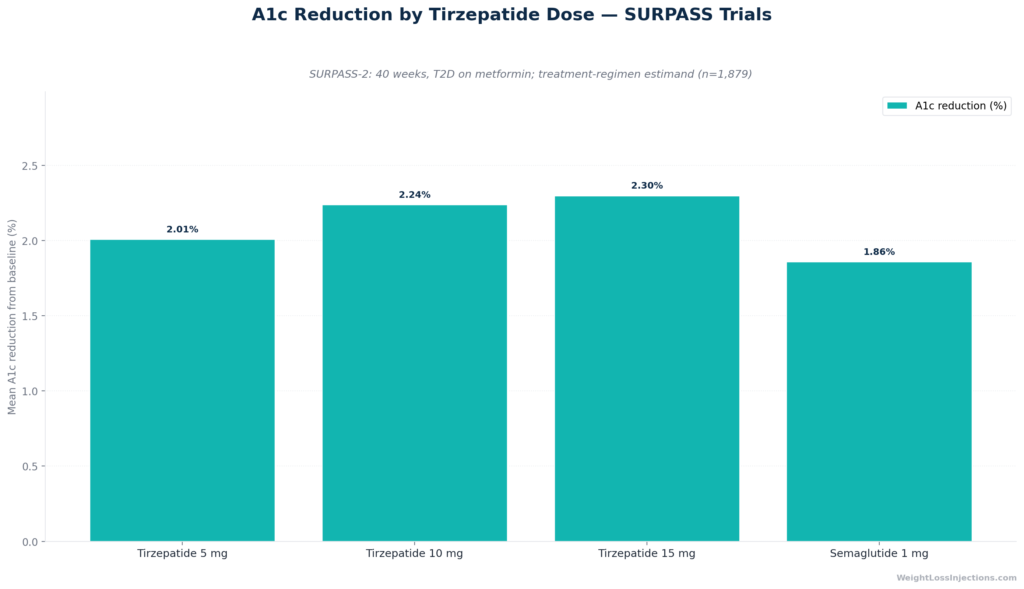
Simple two-branch decision tree for tirzepatide missed dose
Missed Dose Guidance and Injection Timing
Weekly Injection Timing
Tirzepatide is administered once weekly, subcutaneously (under the skin), into the abdomen, outer thigh, or back of upper arm. Choosing the same day each week — for example, every Sunday morning — and setting a recurring reminder is strongly recommended. Consistency in injection timing helps maintain stable trough plasma levels between doses, which supports more even appetite suppression throughout the week.
The three approved injection sites are interchangeable in terms of pharmacokinetics — there is no clinically meaningful difference in absorption between abdomen, thigh, or upper arm, per StatPearls / NCBI Bookshelf. However, rotating among sites within those three locations reduces the risk of lipohypertrophy (localized fat tissue thickening from repeated injections in the same spot), which can impair drug absorption.
One practical question that frequently arises: can you shift your injection day? Yes — if you need to change your weekly injection day (for example, switching from Sunday to Wednesday due to a schedule change), the label permits changing days as long as the old and new injection days are at least 3 days (72 hours) apart. You do not need to restart the protocol; simply adjust the day and continue your regular weekly cadence from the new day forward. If your travel or schedule creates a situation where you are unsure whether to inject early or wait, contact your prescriber for guidance rather than making that call independently.
A note on injection timing and food: Tirzepatide can be injected at any time of day, with or without food. Unlike some medications, there is no requirement to inject on an empty stomach or at a specific time relative to meals. Many patients find injecting in the morning on their chosen day — before eating — helps them remember, and some report that injecting shortly before sleep reduces the perception of nausea during the first few post-injection hours. Neither practice is required by the label, but both are reasonable personal strategies.
Missed Dose Protocol
| Time Since Scheduled Injection | Action |
|---|---|
| ≤4 days (96 hours) since your scheduled day | Inject as soon as you remember; resume regular weekly schedule — do not change your weekly day |
| >4 days (>96 hours) since your scheduled day | Skip the missed dose entirely; resume on your next normally scheduled injection day |
| Any circumstance | Never take two doses in one week to compensate |
The pharmacokinetic rationale: Tirzepatide has an approximately 5-day half-life per FDA Clinical Pharmacology Review NDA 215866. A single missed dose injected within 96 hours causes only a modest, clinically acceptable dip in plasma concentration. Once more than 4 days have elapsed, the gap in plasma levels becomes more pronounced — and resuming at the next scheduled time restores steady-state more safely than a late injection that would compress the dosing interval.
Storage Requirements
Correct storage is critical for maintaining drug potency. The following applies to both branded Mounjaro®/Zepbound® pens and vials:
- Refrigeration: Store at 36°F–46°F (2°C–8°C) in original packaging until ready for use. Keep away from the refrigerator’s cooling element — do not freeze. Frozen tirzepatide must be discarded, per FDA Mounjaro label NDA 215866.
- Room temperature: Once removed from the refrigerator, branded pens and vials may be stored at room temperature not exceeding 86°F (30°C) for up to 21 days.
- Light protection: Keep in original carton until use; protect from direct sunlight.
- Inspection before injection: The solution should be colorless to slightly yellow and free of particles. Do not inject if the solution appears cloudy, discolored, or contains visible particles.
Compounded vials: Follow your compounding pharmacy’s specific written storage instructions precisely. Lyophilized (freeze-dried) powder formulations require correct reconstitution steps before injection — do not improvise. Compounded tirzepatide vials that have been reconstituted incorrectly may deliver inaccurate doses with serious consequences. If you have any doubt about reconstitution technique, contact your pharmacy before injecting.
For WeightLossInjections.com patients with missed-dose questions: [service detail].
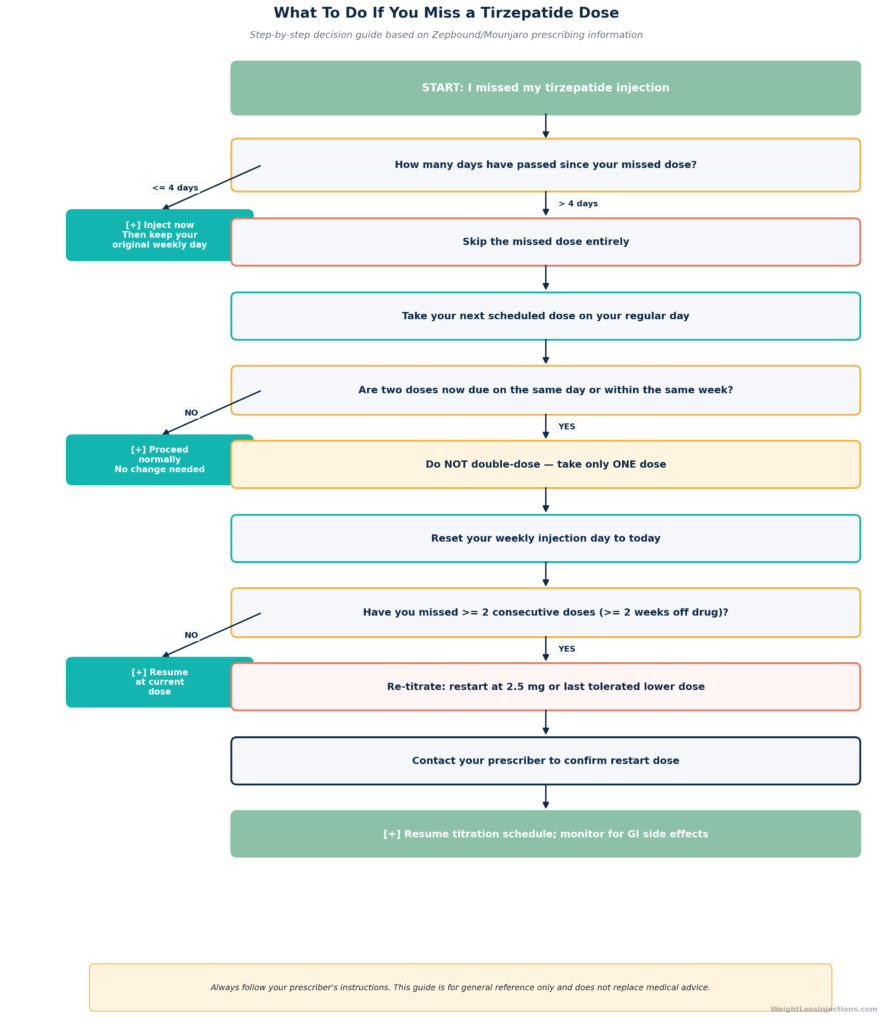
Grouped bar chart
Getting Tirzepatide at WeightLossInjections.com
WeightLossInjections.com connects patients with licensed healthcare providers who evaluate individual medical history, BMI, comorbidities, and treatment goals to design a personalized dosing plan. Whether you are a candidate for branded Zepbound® through insurance or the LillyDirect self-pay program, or meet the documented clinical criteria for compounded tirzepatide under the narrow 503A exception, our providers navigate all lawful options with you.
How the process works: [service detail] — including the telehealth consultation process, turnaround time, and state availability.
Dosing supervision: All dose escalation and adjustment decisions are made by a licensed prescriber who reviews your progress at each checkpoint. WeightLossInjections.com does not dispense medication independently or endorse self-directed dose changes.
Pricing: Telehealth and program services start at [$X/month], with the medication cost depending on your insurance coverage and the product your prescriber determines is most appropriate for your clinical situation.
Services are available where legally permitted. Prescribers supervise all dose decisions and comply with applicable state medical practice laws. Not all services are available in every state — [service detail] for current state availability.
Our Take at WeightLossInjections.com
The tirzepatide dosing chart is one of the most referenced pieces of information for patients starting treatment — and one of the most misunderstood. Two misreadings come up repeatedly: the belief that 2.5 mg should “do something” in the first month, and the belief that reaching 15 mg as fast as possible is the goal.
Neither is correct.
The 2.5 mg initiation period exists entirely for tolerability. Patients who get through those four weeks with minimal side effects and then complain that “nothing is happening” are in exactly the right position: their GI tract has quietly adapted, and they are about to begin the first real therapeutic dose. The silent start is the point.
And the 15 mg maximum is not a destination everyone needs to reach. The SURMOUNT-1 data are instructive: at 72 weeks, the difference in mean weight loss between 10 mg and 15 mg was approximately 1.4 percentage points (−19.5% vs. −20.9%), per PubMed SURMOUNT-1, NEJM 2022. For many patients, that marginal difference does not justify pushing to a higher dose if they are achieving their goals at 10 mg and tolerating it well. The 15 mg dose does meaningfully increase the proportion of patients achieving ≥20% weight loss — and for patients with significant obesity who need that level of result, it is worth pursuing. But the right dose is the lowest one that achieves the outcome with acceptable tolerability, as determined by a prescriber who knows your full clinical picture.
What genuinely matters more than dose ceiling is time on therapy. SURMOUNT-4 showed clearly that discontinuing tirzepatide — at any dose — results in substantial weight regain. The drug does not permanently reprogram body weight set-point; it actively counteracts the body’s adipostatic drive as long as it is present. Patients who stay on therapy at 5 mg or 10 mg consistently achieve far better long-term outcomes than patients who reach 15 mg briefly and then stop.
At WeightLossInjections.com, our providers work with you to find the dose that keeps you on therapy — not the dose that looks most impressive on paper. That means taking the escalation schedule seriously, managing side effects proactively, and building a titration plan that your life can accommodate. The goal is sustainable weight management, not a sprint to maximum dose. Programs start at [$X/month]. [service detail]
This content is for informational purposes only and does not constitute medical advice. Consult a licensed healthcare provider before starting, changing, or stopping any medication.
FAQ
The starting dose is 2.5 mg once weekly for the first four weeks. This is an initiation dose designed entirely for tolerability — it is not an approved therapeutic maintenance dose and is not expected to produce significant appetite suppression or weight loss on its own. Per FDA Zepbound NDA Medical Review 217806, clinically meaningful weight loss begins at the 5 mg maintenance level. Patients who notice no effect at 2.5 mg are not experiencing treatment failure — they are experiencing the protocol working as designed.
Following the standard schedule with the minimum 4-week interval at each tier, patients can reach 15 mg at week 21 at the earliest. However, many patients take longer — if GI side effects require holding at 5 mg, 7.5 mg, or 10 mg for 6–12 weeks before escalating, the timeline extends accordingly, and that is clinically appropriate. Not every patient reaches or needs 15 mg; approved maintenance doses of 5 mg and 10 mg are used long-term by many patients per GoodRx Mounjaro Dosage Guide. There is no clinical requirement to reach the maximum dose on a specific timeline.
Yes. The 4-week minimum between dose increases is a floor, not a ceiling. If GI side effects are significant at a given dose, your prescriber may recommend staying at that dose for 8–12 weeks — or longer — before escalating. The FDA label also explicitly permits reducing to the previous dose if a higher dose proves intolerable after an extended attempt, per FDA Mounjaro label NDA 215866. Any adjustments to your escalation schedule must be discussed with and approved by your prescribing clinician.
Per FDA Mounjaro label NDA 215866: if 4 days (96 hours) or fewer have passed since your scheduled injection day, administer the missed dose as soon as you remember and resume your regular weekly schedule. If more than 4 days have passed since your scheduled injection, skip the missed dose entirely and resume on your next regularly scheduled injection day. Never take two doses in the same week to compensate for a missed one. Tirzepatide’s ~5-day half-life means a timely makeup injection has minimal clinical impact, while double-dosing significantly increases the risk of severe GI adverse events.
Compounded tirzepatide prescribed under the narrow 503A personalized-medicine exception may follow a different schedule than the standard FDA-labeled protocol, including smaller starting doses, intermediate steps between standard tiers, or other individually tailored escalation plans. These variations require documented clinical justification from the prescriber — a general preference or cost consideration is not sufficient under current FDA guidance per the FDA GLP-1 Compounding Clarification Page. Always follow the specific protocol written in your prescription, not generalized protocols from non-prescriber sources.
Generally, clinical trials show a dose-dependent relationship: SURMOUNT-1 demonstrated mean body weight reductions of −15.0% (5 mg), −19.5% (10 mg), and −20.9% (15 mg) at 72 weeks versus −3.1% for placebo per PubMed SURMOUNT-1, NEJM 2022. However, this is an average across trial participants — individual responses vary considerably. Some patients achieve their weight-loss goals at 5 or 10 mg and do not need or cannot tolerate 15 mg. Additionally, GI adverse events occur at higher rates at higher doses (39% at 5 mg vs. 49% at 15 mg across pooled data per StatPearls / NCBI Bookshelf). The goal is the lowest effective dose — not the highest achievable dose.
This article is for informational purposes only and does not constitute medical advice. Dosing decisions — including initiation, escalation, and hold — are made by your prescribing clinician. Prescribing information and regulatory status reflect data as of June 2026 and are subject to change. WeightLossInjections.com editorial team verifies content quarterly; last verified June 2026.